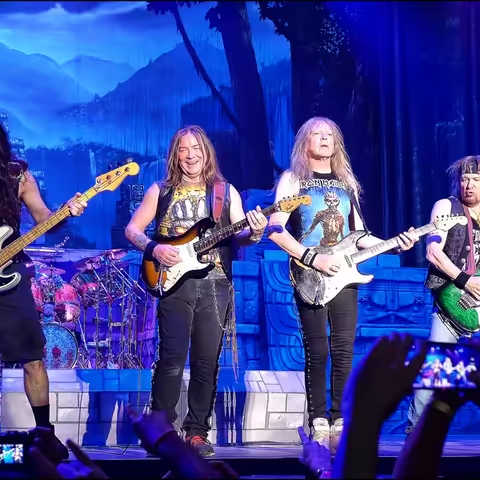
Neal Kay ran a heavy metal disco in the back room of a north London pub, and it had a singles chart of its own. In early 1979 the number one record on that chart was a demo by an unsigned band from Leyton called Iron Maiden. The pub was the Prince of Wales in Kingsbury, the disco was Kay's Heavy Metal Soundhouse, and the chart got printed every week in Sounds magazine, where a young writer named Geoff Barton had started covering a rabble of unsigned British bands that no one else would touch. In May 1979 Sounds ran a headline over one of Barton's gig reviews that gave the whole thing its name: the New Wave of British Heavy Metal. It was half a joke. It turned into the most influential movement heavy metal has ever produced.
For roughly five years a flood of British bands, hundreds of them, plugged the heaviness of Black Sabbath and Deep Purple into the speed and do-it-yourself attitude of punk, pressed their own seven-inch singles, and turned a few sweaty clubs and one Newcastle studio above a bingo hall into a launch pad. Two of those bands, Iron Maiden and Def Leppard, became some of the biggest acts on the planet. Most of the rest released a single and vanished. And a Danish teenager named Lars Ulrich loved all of it so much that he built a band called Metallica out of the wreckage, took the sound to California, and invented thrash. This is the complete story of the New Wave of British Heavy Metal, from a pub in Kingsbury to a worldwide revival, where it came from, who built it, what it sounded like, why it died, and how it came back.
NWOBHM: Scene Facts
| Field | Detail |
|---|---|
| Scene | The New Wave of British Heavy Metal |
| Also called | NWOBHM (pronounced "new-wobbum") |
| Origin | Across Britain: London, Sheffield, Newcastle, Barnsley, the West Midlands |
| Peak years | 1979 to 1983 |
| Roots and forebears | Black Sabbath, Deep Purple, Led Zeppelin, Judas Priest and Thin Lizzy, collided with the speed and DIY energy of punk |
| Defining bands | Iron Maiden, Saxon, Def Leppard, Diamond Head, Venom, Motorhead, Girlschool |
| Defining albums | Lightning to the Nations (1980), Wheels of Steel (1980), The Number of the Beast (1982), Black Metal (1982), Pyromania (1983) |
| Key labels | Neat Records, EMI, Bronze, Carrere, Heavy Metal Records, Ebony |
| Key venues | Neal Kay's Heavy Metal Soundhouse (Prince of Wales, Kingsbury), the Music Machine, Monsters of Rock at Donington |
| Key media | Sounds magazine and Geoff Barton, the Soundhouse chart, Kerrang! (from 1981), the Metal for Muthas compilation |
| Sound in a line | Twin-guitar harmonies and galloping riffs at punk speed, clean soaring vocals, lyrics of war, fantasy and the occult |
| Subgenres and offshoots | Thrash metal, speed metal, power metal, black metal, the wider extreme-metal family |
| Decline | 1982 to 1984: the big bands went global, MTV and glam metal took over, a saturated market collapsed |
| Revival | Late-2000s onward: the New Wave of Traditional Heavy Metal (Enforcer, Night Demon, Visigoth), with the originals still headlining |
The Roots: Where NWOBHM Came From
Heavy metal was born in Britain, but by the middle of the 1970s the bands that invented it were in trouble. Led Zeppelin had slowed down amid tragedy and discord, Deep Purple splintered and briefly broke up, and Black Sabbath had begun the slow unravelling that would end with the sacking of Ozzy Osbourne in 1979. The records these giants were releasing were not generally regarded as matching their earlier work, and the music press had moved on to disco, glam and the first electronic pop. The founding fathers were tired, and a generation of British teenagers who had grown up on Sabbath's Paranoid and Master of Reality wanted something faster and meaner of their own.
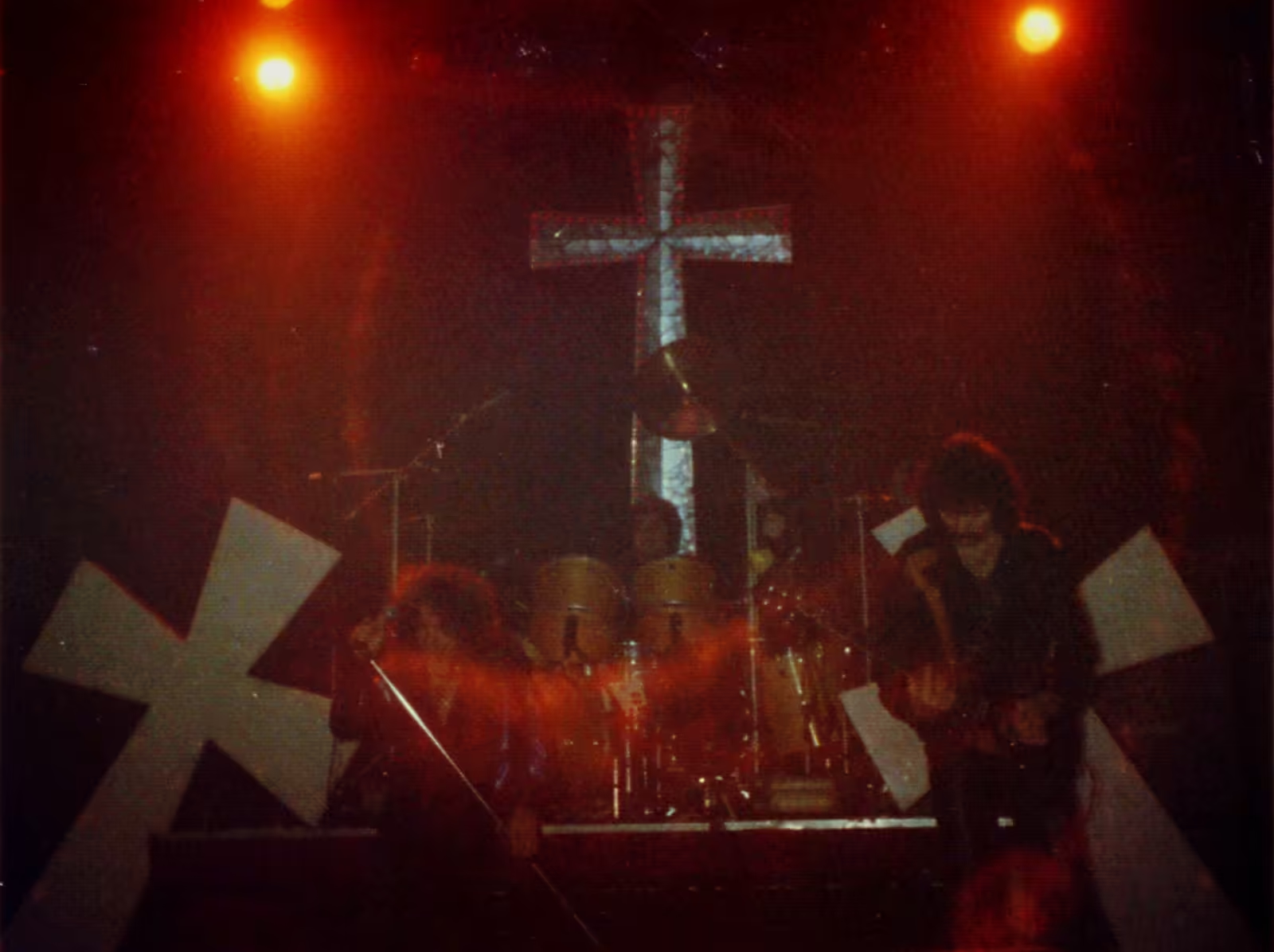
Then came punk, and it changed everything. When the Sex Pistols and the Damned tore through Britain in 1976 and 1977, plenty of young metal fans hated the music but loved the lesson: you did not need a major label, a producer or even much technique to make a record, get on a stage and matter. Punk's speed, its aggression and above all its do-it-yourself ethic seeped straight into the metal kids who watched it happen. The result was a sound that resurrected the heavy metal of the early 1970s and injected it with the intensity of punk, producing fast, aggressive songs and a wave of raw, self-financed singles. Paul Di'Anno, Iron Maiden's first singer, was open about leaning toward punk's attitude, and the Tygers of Pan Tang guitarist Robb Weir put the overlap bluntly, saying that punk "wasn't a million miles away" from what the new metal bands were doing.
The economic weather mattered too. Britain in the late 1970s and early 1980s was a place of recession, deindustrialisation and mass unemployment, which peaked in early 1983 and fell hardest on working-class youth. For a teenager in Sheffield or Barnsley or Wallsend with no job and a cheap guitar, a band was both an escape and a long-shot career. Two existing acts showed the way forward. Judas Priest, from West Bromwich, had already stripped the blues out of metal and sharpened it into twin-guitar steel. And Motorhead, formed by Lemmy in 1975, played faster and louder than anyone, welcomed punks and metalheads alike, and proved that sheer velocity and a "fuck them all" attitude could carry a band. Saxon's Biff Byford has always credited that bridge.
"I think ourselves and Motorhead helped start it. That style of fast and furious playing, with aggressive lyrics and a 'fuck 'em all' attitude. I think that's one of the reasons why Lemmy liked us and took us on tour in '79."
Biff Byford, Saxon, Classic Rock
The Name, the Soundhouse and the Labels
Every scene needs somewhere to happen, and the New Wave of British Heavy Metal happened first in the back room of a pub. Since 1975 a London DJ called Neal Kay had been building a heavy metal discotheque at the Bandwagon, in the Prince of Wales pub in Kingsbury, north-west London, a room that held around 700 headbangers who came to hear loud records when punk owned everywhere else. Kay compiled a weekly chart of the most-requested songs, and the writer Geoff Barton started printing it in Sounds as the Soundhouse chart. When Iron Maiden handed Kay a rough demo in January 1979, their song "Prowler" shot to number one on it, giving an unsigned band from East London its first national exposure.
"Punk was the prevalent music in 1978, but since 1975 I'd been building up a small venue in Kingsbury as a heavy metal discotheque. It was known as the Bandwagon in the Prince of Wales pub, but I rechristened it the Heavy Metal Soundhouse."
Neal Kay, Classic Rock
The name itself arrived in May 1979. Barton reviewed a gig at the Music Machine in London on 8 May, headlined by Angel Witch with Iron Maiden and Samson, and the piece ran in Sounds under a headline that christened the whole movement. Exactly who deserves the credit is a small, much-loved argument. The phrase is usually attributed to Sounds editor Alan Lewis, who wrote it as a headline, while Barton used it in print and became its great champion, later founding Kerrang! and carrying the bands with him. Lewis himself was happy to take the blame.
"I coined NWOBHM, New Wave of British Heavy Metal, as a front-page headline. But it was sort of an in-joke."
Alan Lewis, Sounds editor, Classic Rock
The clumsy, brilliant name stuck, and around it grew a whole ecosystem. Iron Maiden self-released The Soundhouse Tapes in November 1979, a three-track EP named after Kay's club, pressed in just 5,000 mail-order copies that sold out in weeks. Steve Harris, the band's bassist and founder, remembered how little money was behind it.
"It was only 50 pounds, but we'd used all our money. The next week, we went back to buy the tape, and the buggers had gone over it."
Steve Harris, Iron Maiden, Classic Rock
The major labels noticed. EMI signed Iron Maiden in December 1979 and, with Neal Kay's help, assembled the compilation Metal for Muthas, released in February 1980 and reaching number 12 in the UK. It put the earliest Iron Maiden recordings ("Sanctuary" and "Wrathchild") alongside Praying Mantis, Angel Witch and Samson, and gave the wider public its first organised taste of the scene. But the heart of the movement beat in the independents. The most important was Neat Records, founded in 1979 by David Wood out of his Impulse Studios in Wallsend, a room above a bingo hall on Tyneside that became, in effect, the CBGB of British metal. Neat launched Venom, Raven, Tygers of Pan Tang, Jaguar, Fist and Blitzkrieg, helping splinter metal into the speed, thrash and black metal of the years to come. The seven-inch single and the cheap EP, the punk model, were the scene's lifeblood, and a flood of them appeared on Neat, Heavy Metal Records, Ebony and a hundred tiny labels.
The press caught up fast. In June 1981 Sounds spun off a heavy metal supplement with Angus Young of AC/DC on the cover, edited by Geoff Barton and named Kerrang! after the sound of a power chord. It sold out, became a standalone magazine, and turned into the bible of British metal for decades. And the scene got its festival cathedral: the first Monsters of Rock at Castle Donington, on 16 August 1980, was headlined by Rainbow but featured Saxon and Judas Priest, with Neal Kay as compere, drawing some 35,000 fans to a Leicestershire racetrack. The infrastructure was complete. Now it needed the songs.
What NWOBHM Actually Sounds Like
Strip the scene back to the music and a handful of features do the heavy lifting. The first is the twin guitar. Following Judas Priest and Thin Lizzy, NWOBHM bands built their identity on two guitars playing harmonised lead lines, the melodies weaving in thirds rather than the old blues-based soloing. Iron Maiden made it their signature, and it became the sound of the whole genre. The second is the gallop: Steve Harris's relentless, triple-note bass picking that drives Iron Maiden songs forward like a cavalry charge, functioning as both rhythmic engine and harmonic anchor. The third is speed. NWOBHM ran faster than the metal of the early 1970s, with the punk-derived urgency built into its DNA, shorter songs, bigger choruses and a rawness that came straight off those self-produced singles.
The voices soared. Where punk sneered and 1970s metal often growled, NWOBHM singers like Bruce Dickinson, Biff Byford and Diamond Head's Sean Harris reached for clean, high, anthemic melodies. And the words turned away from everyday life toward something grander and stranger: war and history, fantasy and science fiction, horror films, the occult and a great deal of Satanic and Christian imagery deployed mostly for shock. Iron Maiden wrote about Genghis Khan and the charge of the Light Brigade; Saxon wrote about motorbikes, fighter planes and the bands themselves; Venom wrote about the Devil with a wink and a smirk.
The scene was never one uniform thing. It split, roughly, into two branches. One was fast and aggressive, the Iron Maiden, Saxon, Venom and Raven end, where the speed and attack pointed straight at the thrash metal to come. The other was more melodic and blues-rooted, fond of ballads and the occasional keyboard, the branch that Def Leppard rode all the way to American radio. What united them was the energy and the do-it-yourself spirit, and the fact that, for a few years, a country full of bored, broke, ambitious teenagers all picked up guitars at once.
The First Wave: Maiden, Saxon and Def Leppard Break Out
The breakthrough year was 1980, and three bands led it. Iron Maiden, formed in 1975 by Steve Harris and fronted then by the punky Paul Di'Anno, released their self-titled debut in April 1980. Powered by "Running Free" and "Sanctuary" and fronted on the sleeve by their new mascot Eddie, the painted ghoul created by artist Derek Riggs, Iron Maiden reached number four in the UK. Its follow-up, Killers, came in early 1981 and reached number 12, the first album with guitarist Adrian Smith and the last with Di'Anno, whose drink and drug problems were already pulling the band apart.
Saxon, from Barnsley, were arguably the first true NWOBHM band to land a hit album. Their self-titled 1979 debut, which Biff Byford has called the first NWOBHM album, did not chart, but Wheels of Steel in April 1980 reached number five and went gold, carried by two of the genre's defining singles, the title track and "747 (Strangers in the Night)", which climbed to number 13. A slot on Top of the Pops changed their lives overnight.
"We were big in Britain, no argument. Probably the biggest of our generation of metal bands. We'd done it through hard graft and killer songs, none of that trendy image rubbish."
Biff Byford, Saxon, Classic Rock
Saxon followed Wheels of Steel with Strong Arm of the Law later in 1980 and Denim and Leather in 1981, which reached number nine and gave the genre an anthem in "Princess of the Night". Their working-class image was no act: Byford had worked down a coal mine before he sang for a living, and Saxon's songs about wheels, leather and the road spoke directly to the kids in the crowd.
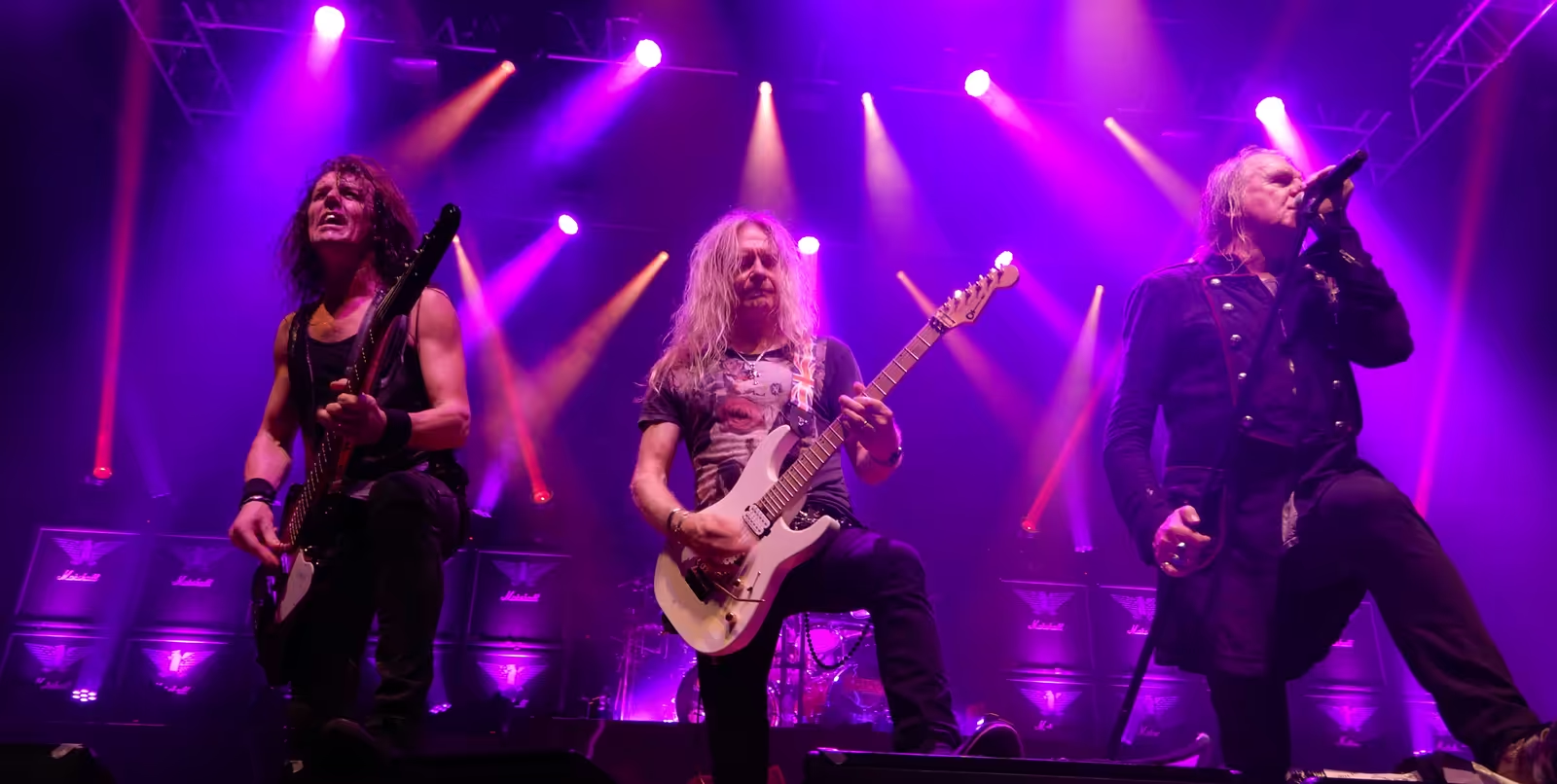
The third band of the first wave looked west almost immediately. Def Leppard, from Sheffield, had self-released their debut EP in January 1979 on their own Bludgeon Riffola label, got a play from John Peel, and were signed and marketed hard. Their debut On Through the Night reached number 15 in 1980, but the British press, Sounds included, turned on them for openly chasing American success, and a hostile reception at the Reading Festival in August 1980 convinced them there was nothing left for them at home. They hired producer Robert John "Mutt" Lange for High 'n' Dry in 1981, sharpened their sound for MTV, and set their sights on the United States. Years later Joe Elliott summed up the survival rate of the whole scene with a single line.
"The fact of the matter is, only two bands of note survived the NWOBHM tag, that's us and Iron Maiden, and we're vastly different bands."
Joe Elliott, Def Leppard, uDiscover Music, 2020
1982: The Number of the Beast and the Peak
If the scene had a summit, it was reached in 1982 by Iron Maiden, and it began with a new singer. Bruce Dickinson, who had been fronting Samson under the stage name "Bruce Bruce", joined Iron Maiden in late 1981, replacing Di'Anno. His operatic, air-raid-siren voice transformed the band, and his first album with them, The Number of the Beast, released in March 1982, entered the UK chart at number one, the band's first chart-topper, and broke them in America, reaching number 33 on the Billboard 200. It produced "Run to the Hills", their first UK top ten single, and the title track, and it remains one of the most important metal albums ever made.
The making of the record was anything but smooth. The band clashed constantly, Dickinson and Harris in particular, and the singer has admitted he was nearly fired within a month of joining. But producer Martin Birch knew what they had on their hands, telling them it would transform their career. He was right. Maiden toured America relentlessly on the Beast on the Road tour, roughly 180 shows, and Eddie went with them, the inflatable, papier-mache and painted mascot who turned the band into a brand. The follow-up, Piece of Mind in 1983, reached number three in the UK and number 14 in America and became their first US platinum album. Estimates of Iron Maiden's career sales now run past 100 million records worldwide, depending on how you count, making them one of the most successful British bands of any genre.
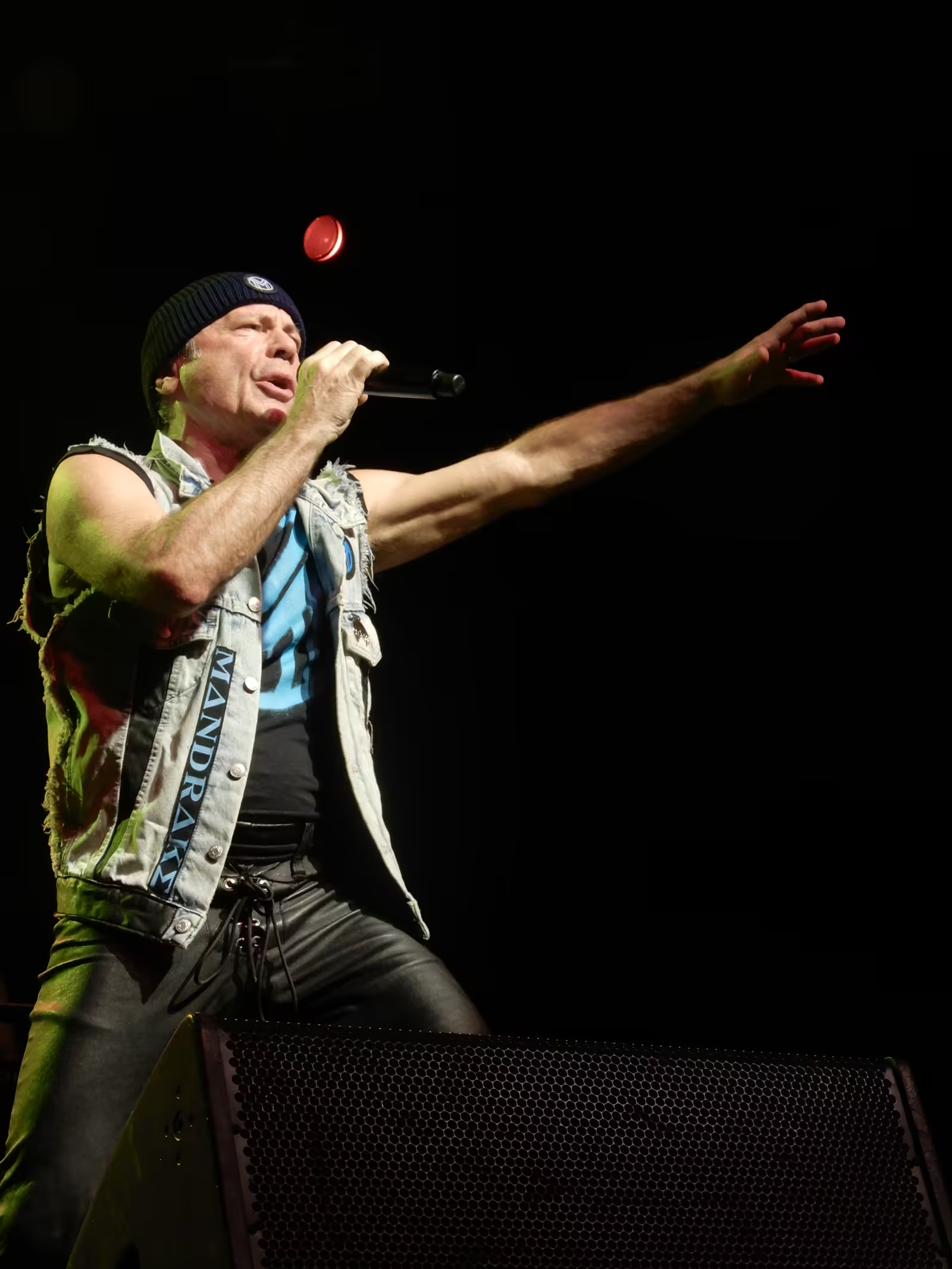
By the time Iron Maiden were headlining arenas, they had stopped being a scene and started being an institution. The same was about to happen, even more spectacularly, to Def Leppard. The New Wave of British Heavy Metal had launched two of the biggest rock bands in the world. The strange part of the story is everyone else.
Motorhead, Venom and the Extreme Edge
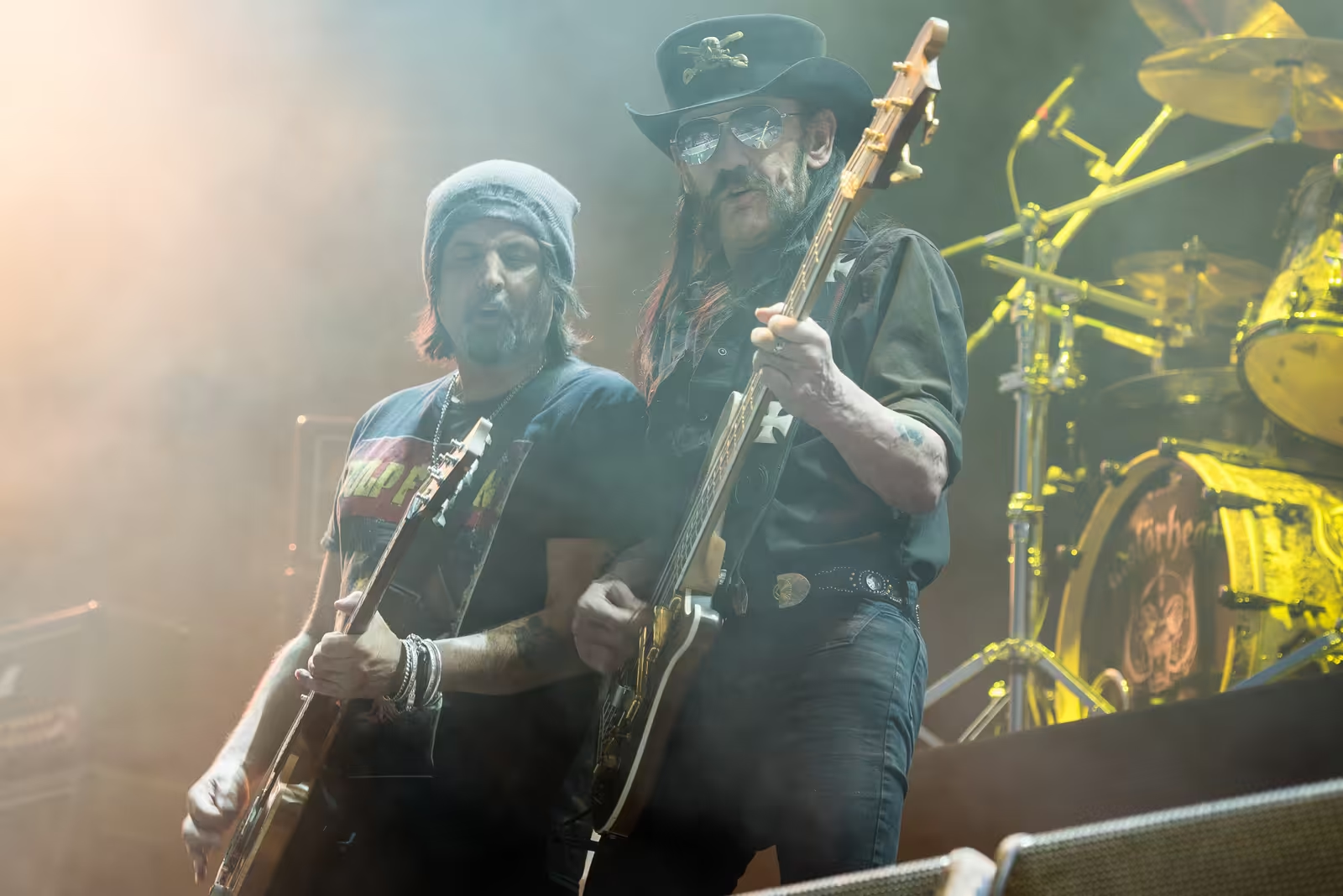
Motorhead sat alongside the New Wave of British Heavy Metal rather than inside it, older and ornerier than the bands it inspired, and Lemmy spent his life rejecting the heavy metal tag altogether. But the band's velocity and volume were essential to the whole story. Overkill and Bomber both charted in 1979, and then came Ace of Spades in 1980, which reached number four in the UK on the strength of a title single that became the most famous metal song of its era. The live album No Sleep 'til Hammersmith entered the UK chart at number one in 1981, the band's only chart-topper. Lemmy, as ever, refused to be filed neatly.
"We were always more of a punk band than a heavy metal band. We've got a lot more in common with the Damned than Judas Priest. But we had long hair, so they had to rack us in with heavy metal."
Lemmy, Motorhead, Kerrang!
If Motorhead pushed the scene toward speed, Venom pushed it off a cliff. Formed in Newcastle in the late 1970s and signed to Neat Records, the trio of Cronos, Mantas and Abaddon were barely competent musicians who compensated with sheer Satanic theatre and noise. Their 1981 debut Welcome to Hell, recorded in three days at Impulse Studios, was crude, fast and genuinely shocking. The follow-up, Black Metal, released in November 1982, did something almost no record ever does: it named a whole genre. The album lent its title to black metal, and Venom's music, lyrics, cover art and attitude became a founding text for thrash, death and black metal alike. Cronos always insisted the provocation was the point.
"Black metal was coined because I wanted to describe how different we were to other bands."
Cronos, Venom, Metal Hammer
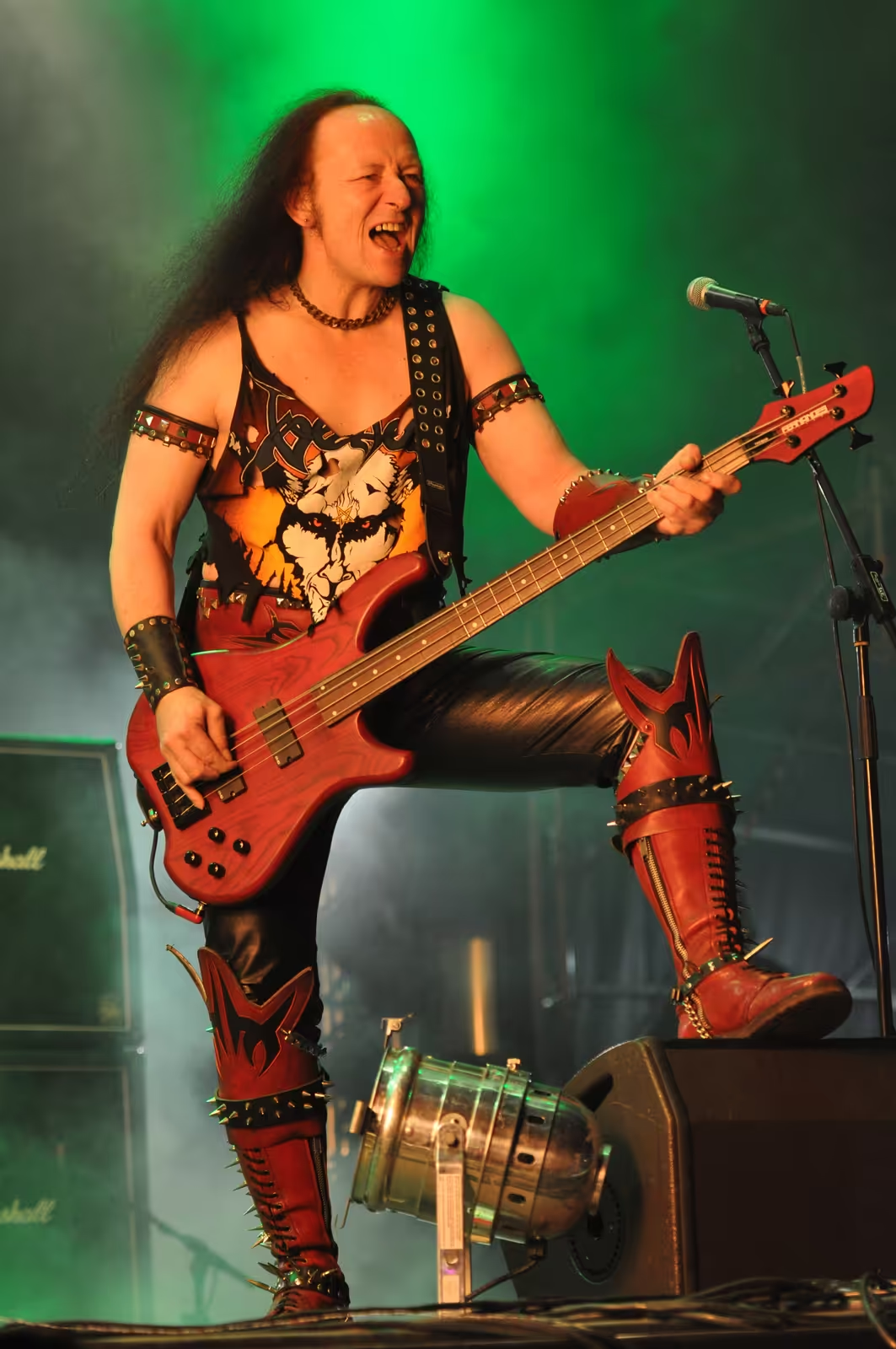
The reach of these two bands is hard to overstate. A young Lars Ulrich worshipped them, and the whole architecture of extreme metal, the speed of thrash, the morbidity of death metal, the corpse-paint menace of Norwegian black metal, can be traced back through Venom and Motorhead to a few cheap records cut in the north-east of England.
Diamond Head and the Ones Who Got Away
For every Iron Maiden there were a hundred bands who made one great record and disappeared, and the most important of them was Diamond Head. Formed in Stourbridge in 1976, they released their debut album, Lightning to the Nations, in 1980. It was as do-it-yourself as records get: the band could not afford artwork, so it came in a blank white sleeve signed by hand, pressed in around a thousand copies sold by mail order and at gigs. Inside were some of the greatest songs the genre ever produced, "Am I Evil?", "The Prince", "Helpless" and "It's Electric". Guitarist Brian Tatler had a simple ambition.
"I can remember wanting to write a song heavier than Black Sabbath's Symptom of the Universe."
Brian Tatler, Diamond Head, Metal Hammer
Diamond Head should have been huge. Instead, amateurish management, no American touring and a costly, experimental third album, Canterbury in 1983, that alienated their fans saw them dropped by their label and broken up by the mid-1980s. Their highest-charting album of the period, Borrowed Time, only reached number 24. They are the great "what if" of the scene, and the reason they are remembered at all is a teenage drummer in California who is the subject of the next chapter.
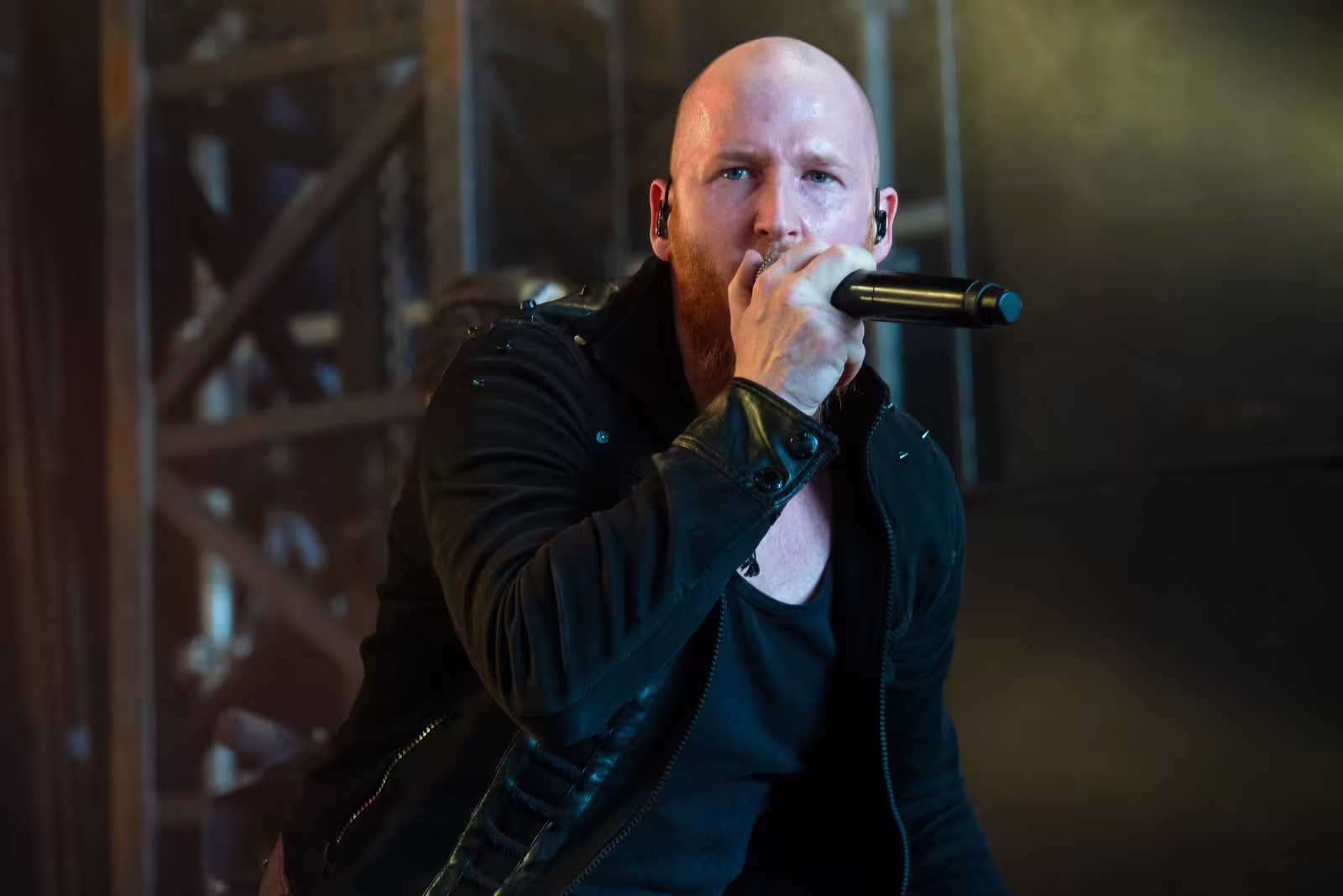
The depth of the scene beneath the headline acts is what still astonishes. Girlschool, an all-female band from London, made the genre's case as well as anyone, reaching number five in the UK with the album Hit and Run in 1981 and joining forces with Motorhead, under the combined name Headgirl, for the St Valentine's Day Massacre EP, which also hit number five. The Tygers of Pan Tang, from Whitley Bay, launched the guitarist John Sykes, later of Thin Lizzy and Whitesnake. Raven, the Newcastle brothers John and Mark Gallagher, called their frantic style "athletic rock" and would soon take a young Metallica on their first American tour. Angel Witch made a beloved self-titled debut in 1980. Praying Mantis brought melody and polish, Samson gave Bruce Dickinson his apprenticeship, Witchfinder General pointed back toward doom, Holocaust came down from Edinburgh, and Jaguar, from Bristol, played so fast that guitarist Garry Pepperd reckoned they were thrash metal before the word existed.
Key Bands of the Scene
| Band | Years | Base | Signature album | Status |
|---|---|---|---|---|
| Iron Maiden | 1975 onward | Leyton, East London | The Number of the Beast (1982) | Active, still headlining |
| Def Leppard | 1977 onward | Sheffield | Pyromania (1983) | Active |
| Saxon | 1977 onward | Barnsley | Wheels of Steel (1980) | Active |
| Motorhead | 1975 to 2015 | London | Ace of Spades (1980) | Ended on Lemmy's death |
| Diamond Head | 1976 onward | Stourbridge | Lightning to the Nations (1980) | Active |
| Venom | c.1979 onward | Newcastle | Black Metal (1982) | Active (as Venom Inc. and Venom) |
| Girlschool | 1978 onward | London | Hit and Run (1981) | Active |
| Tygers of Pan Tang | 1978 onward | Whitley Bay | Wild Cat (1980) | Active |
| Raven | 1974 onward | Newcastle | Rock Until You Drop (1981) | Active |
| Angel Witch | 1977 onward | London | Angel Witch (1980) | Active |
| Praying Mantis | 1974 onward | London | Time Tells No Lies (1981) | Active |
| Samson | 1977 to 2002 | London | Head On (1980) | Ended on Paul Samson's death |
| Witchfinder General | 1979 to 1984 | Stourbridge | Death Penalty (1982) | Disbanded |
| Holocaust | 1977 onward | Edinburgh | The Nightcomers (1981) | Intermittently active |
| Jaguar | 1979 onward | Bristol | Power Games (1983) | Intermittently active |
| Blitzkrieg | 1980 onward | Leicester | A Time of Changes (1985) | Active |
| Tank | 1980 onward | London | Filth Hounds of Hades (1982) | Active |
| Quartz | 1974 onward | Birmingham | Quartz (1977) | Intermittently active |
Key Albums of the Scene
| Album | Band | Year | Why it mattered |
|---|---|---|---|
| Overkill | Motorhead | 1979 | Double-kick speed that pointed the whole scene forward |
| The Soundhouse Tapes | Iron Maiden | 1979 | The self-released EP that lit the fuse |
| Iron Maiden | Iron Maiden | 1980 | Debut hit number four and introduced Eddie |
| Wheels of Steel | Saxon | 1980 | The first big NWOBHM hit album, UK number five |
| Lightning to the Nations | Diamond Head | 1980 | The blank-sleeve cult classic that became Metallica's songbook |
| Ace of Spades | Motorhead | 1980 | The most famous metal song of the era |
| Angel Witch | Angel Witch | 1980 | Occult metal that influenced a generation |
| Welcome to Hell | Venom | 1981 | Crude, fast and a blueprint for extreme metal |
| Hit and Run | Girlschool | 1981 | The all-female band's UK number five |
| Denim and Leather | Saxon | 1981 | Anthems for the people in the crowd |
| The Number of the Beast | Iron Maiden | 1982 | UK number one and the band's American breakthrough |
| Black Metal | Venom | 1982 | Named an entire subgenre |
| Pyromania | Def Leppard | 1983 | The MTV crossover that ended the scene and conquered America |
| Power Games | Jaguar | 1983 | Proto-thrash speed before thrash had a name |
The Decline: When and Why NWOBHM Died Off
No single event killed the New Wave of British Heavy Metal. It was worn away across 1982 to 1984 by its own success, by technology and by fashion. Geoff Barton, the man who had named it, lost faith first, reportedly declaring the movement finished as early as 1981, disappointed by the quality of the new bands and disgusted by how easily the record labels exploited the gold rush. Hundreds of bands had formed, most of them managed to release one single or one album, and the market simply could not absorb them. The flood became a glut, and the glut became a clear-out.
Two outside forces finished the job. The first was MTV, which launched in 1982 and turned the music video from a promotional extra into the essential way to reach an audience, favouring polished, photogenic acts over scruffy underground bands with no budget. The second was the new sound that MTV rewarded, the slicker, more melodic glam metal pouring out of America, and the British band that showed everyone the way was one of their own. Def Leppard's Pyromania, released in early 1983 and produced by Mutt Lange, reached number two on the Billboard 200, held off the top only by Michael Jackson's Thriller, and went on to be certified diamond in the United States for sales past ten million. Its single "Photograph" briefly became the most-requested video on MTV.
Pyromania's triumph sent a signal to every label on both sides of the Atlantic: the money was in melodic, FM-friendly metal aimed at America, and the gnarly British underground was yesterday's news. NWOBHM bands found themselves crowded out of their own market by American groups. Def Leppard's later Hysteria in 1987 would sell even more, completing their transformation from a Sheffield NWOBHM band into a transatlantic pop-metal machine. Joe Elliott had seen it coming when the British press attacked them for it years earlier.
"There was nowhere else left in Britain to play. The next logical thing to do was what every great British band has ever done, go to the States."
Joe Elliott, Def Leppard, Classic Rock, 2020
At home, fashion turned hard against metal. The New Romantics, Duran Duran, Spandau Ballet and the synth-pop wave, owned the British charts, MTV and the magazine covers, and long hair and denim looked suddenly old-fashioned. Bands that tried to chase the new money often lost the fans they had. Diamond Head's progressive, slickly produced Canterbury is the textbook example, derided at the time as a betrayal of everything that made them great. By 1984 the New Wave of British Heavy Metal as a coherent movement was over. Iron Maiden and Def Leppard had escaped it into superstardom, a handful of others soldiered on, and the rest were gone. But the scene's second life was just beginning, four thousand miles away.
Legacy: How NWOBHM Built Thrash
The New Wave of British Heavy Metal did not really die. It emigrated. Across America in the early 1980s, a generation of teenagers had been devouring those imported British singles through a tape-trading network that swapped demos and records across oceans, and they took the speed and the riffing and made something even more extreme. Thrash metal, as the history books put it, fused the double-bass drumming and complex guitar work of NWOBHM with the velocity of hardcore punk, and the British scene is routinely named as its direct progenitor. The single most important link in that chain was a Danish-born Los Angeles teenager called Lars Ulrich.
Ulrich was a NWOBHM obsessive who flew to England to follow the bands, briefly lived with Diamond Head, and built Metallica in their image. Metallica's debut Kill 'Em All in 1983 was thick with the British scene's DNA, and across their career they recorded so many NWOBHM covers that they eventually gathered them on the 1998 collection Garage Inc., including four Diamond Head songs, plus Blitzkrieg's "Blitzkrieg" and Holocaust's "The Small Hours". Their cover of Diamond Head's "Am I Evil?" became a permanent part of Metallica's live set, and the royalties, Brian Tatler has said with enormous gratitude, changed his life.
"I'm thankful that they did cover us, because I don't know what I'd do without the songwriter's royalties."
Brian Tatler, Diamond Head, Metal Hammer
It was not only Metallica. The entire Big Four of thrash were built on British foundations, from Slayer's Reign in Blood to Anthrax's Among the Living to Megadeth's Peace Sells, and the whole Bay Area thrash scene that gave the world Metallica and Exodus was, in its bones, a NWOBHM tribute act that learned to play faster. Anthrax's Scott Ian has been unequivocal about the debt.
"There's no band more responsible for Anthrax being a band than Iron Maiden. In those early days, even pre-Anthrax, Maiden was everything."
Scott Ian, Anthrax, Loudwire
Venom's reach ran further still, into the speed, death and black metal scenes, with the Norwegian black metal movement of the early 1990s borrowing its name, its imagery and its attitude wholesale from a Newcastle band who had mostly been joking. Ulrich, looking back, framed the whole movement not as a sound but as a spirit.
"The spirit of that whole movement was about keeping it real."
Lars Ulrich, Metallica, Blabbermouth, 2010
The critical reassessment has been just as generous. Far from a footnote, NWOBHM is now widely regarded as the moment that rescued metal from its own exhaustion, the bridge between the 1970s pioneers and everything heavy that followed. The metal historian Eduardo Rivadavia put the case as plainly as anyone.
"The New Wave of British Heavy Metal saved metal from itself, when it simultaneously replaced and legitimized the efforts of many critically abused '70s pioneers."
Eduardo Rivadavia, Ultimate Classic Rock, 2017
The Resurgence: Is NWOBHM Back?
Yes, on two fronts at once. The first is the originals, who are not just alive but, in several cases, headlining the biggest stages of their lives. Iron Maiden launched their Run For Your Lives world tour in May 2025, a 50th-anniversary celebration drawing on their first nine albums, the first major Maiden tour in more than 40 years without drummer Nicko McBrain, who retired from the road in December 2024 and was replaced behind the kit by Simon Dawson. They remain one of the biggest live draws on earth. Saxon, too, are busier than ever, releasing the well-received Hell, Fire and Damnation in January 2024 and touring relentlessly. In one of the loveliest twists in the whole story, Diamond Head's Brian Tatler has joined Saxon as a guitarist, and Biff Byford could not be happier about it.
"In some respects Brian is a member of Saxon now. Things have gone further than we envisaged, but that's life."
Biff Byford, Saxon, Classic Rock, 2024
Diamond Head themselves remain active, releasing a live album in 2025 while Tatler keeps busy with Saxon. Raven marked their 50th anniversary with new music and global touring, and Girlschool, the Tygers of Pan Tang, Praying Mantis and Angel Witch all still tour and record. The bands that survived the cull of the early 1980s are, four decades on, a thriving live circuit in their own right, headlining the festivals that grew up to celebrate exactly this music.
The second front is entirely new, and it is global. Since the late 2000s a movement usually called the New Wave of Traditional Heavy Metal, NWOTHM for short, has revived the sound and the look of NWOBHM as a conscious reaction against nu-metal and metalcore. These are young bands who grew up on Iron Maiden and Diamond Head and set out to play denim-and-leather metal with clean vocals, twin-guitar harmonies and fantasy lyrics, and to do it on their own terms. Sweden's Enforcer, a project started by Olof Wikstrand in the mid-2000s, were among the first out of the gate, and Wikstrand has a sharp read on why the music endures.
"The entire metal scene or rock scene today, it's a nostalgia show. You go to festivals, there are no rock festivals. They're like nostalgia festivals because they only book old bands."
Olof Wikstrand, Enforcer, BraveWords
The new wave runs deep and wide. Night Demon, from Ventura in California, have become one of its flag-bearers, releasing the album Outsider in 2023 and running their own festival, Frost and Fire, in their home town. Cauldron and Skull Fist came out of Toronto, Holy Grail out of Pasadena, Visigoth out of Salt Lake City, and Haunt out of Fresno, the prolific project of Trevor William Church. Add Eternal Champion from Austin, Seven Sisters from London, Spell and Traveler and Riot City from Canada, RAM and Ambush from Sweden, and dozens more, and you have a genuine worldwide scene. Night Demon's Jarvis Leatherby has been one of its great organisers, and he understands that, in the streaming age, the music alone is not enough.
"You can see the bands anywhere, so you gotta create some magic around it."
Jarvis Leatherby, Night Demon, Ride Into Glory
The infrastructure of this revival mirrors the original almost exactly, only digitised. Where the first scene had Neat Records and the seven-inch single, the new one has labels like Germany's High Roller, Italy's Cruz Del Sur and its Gates of Hell offshoot, and Germany's Dying Victims, plus the great leveller of Bandcamp, where bands self-release demos and albums and bypass the majors entirely. Where the originals had the Soundhouse and Monsters of Rock, the revival has dedicated festivals: Keep It True in Germany, Up The Hammers in Greece, Hell Heroes in Houston, Legions of Metal in Chicago and Night Demon's own Frost and Fire. The main difference, the revival bands cheerfully admit, is modern recording gear and high-gain amplifiers. The spirit is identical. As Haunt's Trevor Church put it, the only thing he changes about the old formula is the technology that captures it.
"When it comes to modernizing the sound the only thing that comes to mind is modern recordings and high-gain amps."
Trevor Church, Haunt, Bandcamp Daily, 2018
The New Wave of British Heavy Metal, in other words, has outlived almost everything that came after it. The bands it created became some of the biggest in the world. The genre it fathered, thrash, conquered metal in the 1990s. And the sound itself, denim, leather, twin guitars and a chorus you can shout, is healthier, more global and more loved than it has been since Geoff Barton wrote that headline as a joke.
Riffology Podcast Episodes from the Scene
Several records in this story, plus the roots it grew from and the places it ended up, have a full Riffology podcast episode that pulls them apart track by track. Follow the album to listen.
| Album | Band | On the Riffology podcast |
|---|---|---|
| The Number of the Beast | Iron Maiden | The UK number one that crowned the scene and broke Maiden in America. |
| Paranoid | Black Sabbath | The foundational heavy metal album the whole movement grew from. |
| Hysteria | Def Leppard | Where a Sheffield NWOBHM band ended up: a transatlantic monster. |
Things You Might Not Know
| Fact | Detail |
|---|---|
| A joke headline | The phrase "New Wave of British Heavy Metal" began as a half-joking Sounds headline, usually credited to editor Alan Lewis, over a 1979 gig review by Geoff Barton. |
| A pub chart | Iron Maiden's first national exposure was topping a chart of requests at Neal Kay's heavy metal disco in the back room of the Prince of Wales pub in Kingsbury. |
| The blank white album | Diamond Head's Lightning to the Nations came in a plain white sleeve signed by hand because the band could not afford to print artwork. |
| Only 5,000 copies | Iron Maiden's debut EP The Soundhouse Tapes was pressed in just 5,000 mail-order copies in 1979 and sold out within weeks. |
| Bruce Bruce | Bruce Dickinson fronted Samson under the stage name "Bruce Bruce", borrowed from a Monty Python sketch, before joining Iron Maiden in 1981. |
| A genre named by accident | Venom's 1982 album Black Metal gave an entire subgenre its name, and the Norwegian band Mayhem took their name from a Venom song. |
| Above a bingo hall | Neat Records, the label behind Venom, Raven and the Tygers of Pan Tang, ran out of Impulse Studios above a bingo hall in Wallsend, Tyneside. |
| Lars lived with them | Metallica's Lars Ulrich was so obsessed with Diamond Head that he flew to England, met the band and briefly lived with them as a teenager. |
| Kept off number one by Thriller | Def Leppard's Pyromania reached number two on the US Billboard 200 in 1983, held off the top only by Michael Jackson's Thriller. |
| Headgirl | Girlschool and Motorhead joined forces as "Headgirl" for the St Valentine's Day Massacre EP, which reached number five in the UK in 1981. |
| Athletic rock | Newcastle's Raven called their frantic style "athletic rock", wore sports gear on stage, and took a young Metallica on their first US tour. |
| Kerrang was a Sounds baby | Kerrang! launched in June 1981 as a Sounds heavy metal supplement with Angus Young on the cover and quickly became metal's leading magazine. |
| A guitarist swap for the ages | Diamond Head founder Brian Tatler is now a member of Saxon, playing on their 2024 album Hell, Fire and Damnation. |
| Maiden without Nicko | Iron Maiden's 2025 to 2026 Run For Your Lives tour was their first major tour in over 40 years without drummer Nicko McBrain, who retired in 2024. |
The Riffology Podcast
The New Wave of British Heavy Metal is built for arguing about, which makes it perfect podcast fuel. On the Riffology podcast, Neil and Chris dig into the records that defined the scene, from a self-released EP sold by mail order to a number one that broke a band in America, pulling apart how they were made and why they still hit so hard. If this story sent you back to your old records, the episodes are where the deep dives live, and we would love to hear which NWOBHM band you would put at the very top. You can find Riffology on all the major podcast platforms.
Comments