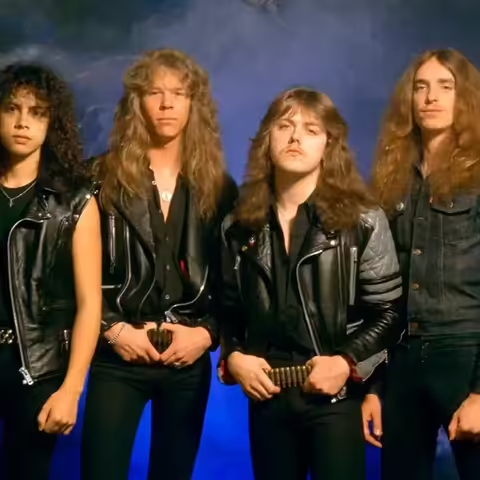
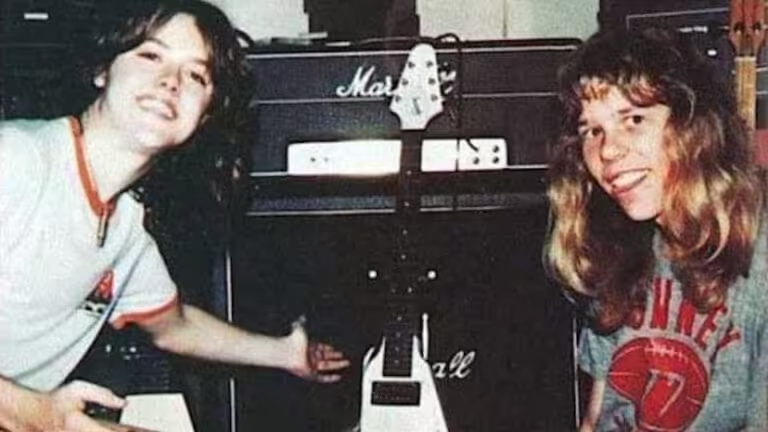
Lars Ulrich was a teenage tennis prodigy from Denmark who swapped the racket for a record collection, flew to California chasing a sound that barely existed in America yet, and in 1981 placed a small classified advert in the Los Angeles paper The Recycler looking for musicians to jam with the New Wave of British Heavy Metal bands he loved: Tygers of Pan Tang, Diamond Head, Iron Maiden. A shy rhythm guitarist named James Hetfield answered it. Neither of them was much of a singer, neither had a band worth the name, and the first time they tried to play together it went nowhere. They are still in the room together 45 years later.
What grew out of that advert became the biggest heavy metal band the world has ever produced, a group that survived the death of its most gifted musician, fired the man who would form its fiercest rival, declared war on its own fans over a file-sharing website, very nearly fell apart on camera in front of a therapist, and then spent the 2020s playing the largest tour of its life. This is the complete story of Metallica, from a five-dollar demo tape to a stadium run that is, as this is written in June 2026, still rolling across Europe.
Band Facts
| Field | Detail |
|---|---|
| Origin | Los Angeles, California, later the San Francisco Bay Area |
| Formed | 1981 (first rehearsal October 1981) |
| Years active | 1981 to present |
| Original lineup | James Hetfield, Lars Ulrich, Dave Mustaine, Ron McGovney |
| Classic lineup | James Hetfield, Lars Ulrich, Kirk Hammett, Cliff Burton |
| Current lineup | James Hetfield, Lars Ulrich, Kirk Hammett, Robert Trujillo |
| Notable past members | Cliff Burton (died 1986), Jason Newsted, Dave Mustaine, Ron McGovney |
| Labels | Megaforce, Elektra, Vertigo, Warner Bros., Blackened Recordings |
| Genres | Thrash metal, heavy metal, hard rock |
| Studio albums | 11, plus the covers album Garage Inc. |
| Key producers | Bob Rock, Rick Rubin, Greg Fidelman |
| Records sold | More than 150 million worldwide (over 160 million by some 2023 counts) |
| Rock and Roll Hall of Fame | Inducted 4 April 2009 |
| Defining moment | Master of Puppets, the Black Album, and the loss of Cliff Burton |
Formation in Los Angeles (1981 to 1983)
Heavy metal in 1981 was, to most American ears, either the cartoon pomp of stadium acts or the dying embers of the 1970s. Ulrich heard something else entirely on the import singles he smuggled back from England, and he wanted to play it faster and louder than anyone had dared. The band name arrived almost by accident. Ulrich's friend Ron Quintana was brainstorming titles for a metal fanzine and floated two ideas past him: MetalMania and Metallica. Ulrich told him to go with MetalMania, then quietly kept the better word for the band he did not yet have.
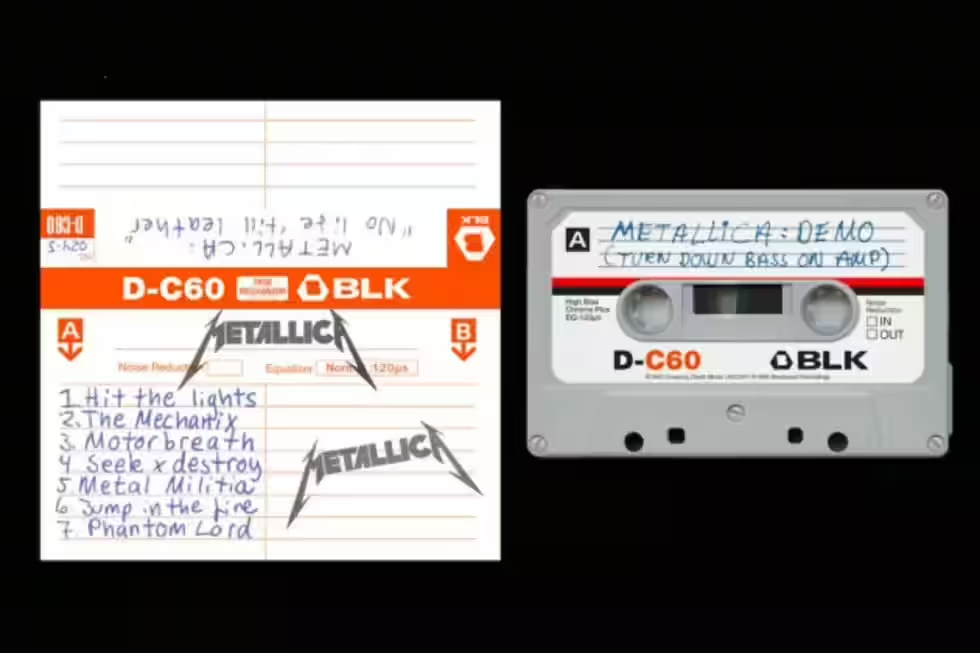
The early lineup was a churn of personalities. Lead guitarist Dave Mustaine and bassist Ron McGovney rounded out the first stable four-piece, and Mustaine's playing was good enough that the band recorded its earliest demos and landed a track, "Hit the Lights", on the 1982 compilation Metal Massacre, where their name was promptly misspelled as "Mettallica". Mustaine, though, was volatile, and his drinking and aggression made him impossible to keep. The other piece fell into place when Ulrich and Hetfield saw a bassist named Cliff Burton play with the band Trauma in Los Angeles and decided on the spot that they had to have him. Burton agreed on one condition: the band had to move north to his world, the San Francisco Bay Area. They moved.
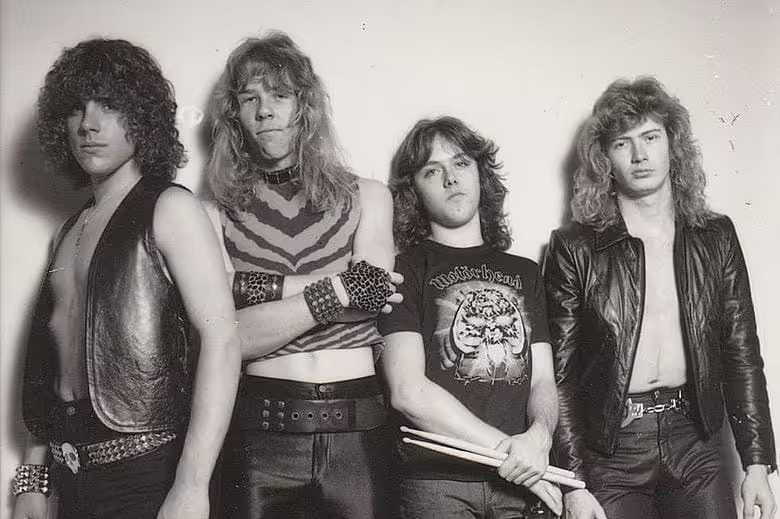
By the spring of 1983 Mustaine's behaviour had run out of road. On 11 April 1983 the band fired him, putting him on a bus back to Los Angeles with no warning and no second chance. The bitterness of that sacking would fuel one of metal's longest feuds, because Mustaine went straight home and formed Megadeth, a band built in part to beat the one that had thrown him out. His replacement was already waiting in the wings. Kirk Hammett, guitarist with the Bay Area thrash band Exodus, auditioned and was hired the same afternoon Mustaine was dismissed. He has held the job ever since.
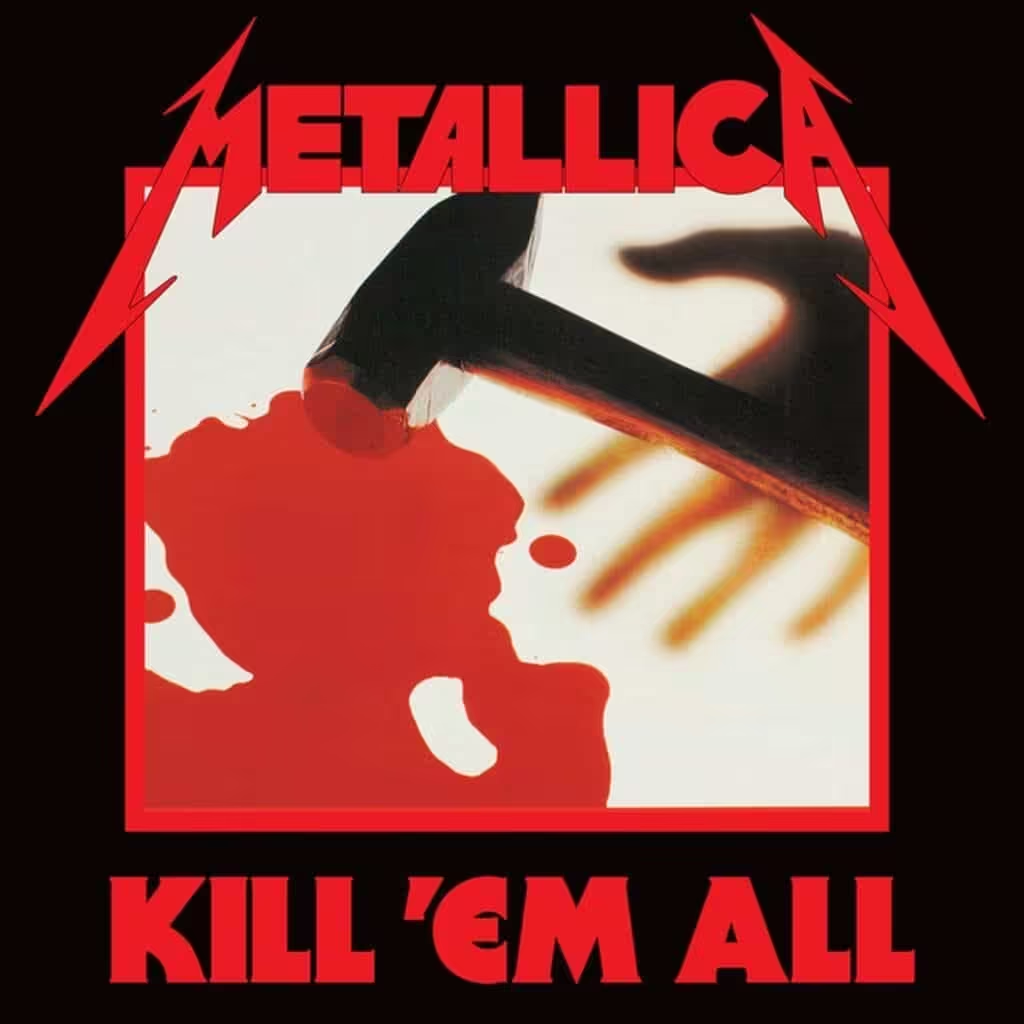
With Hammett in place, the band travelled east to Rochester, New York, and recorded its debut on a shoestring. Originally to be titled Metal Up Your Ass, the record was renamed Kill 'Em All after the distributor balked, and released on the independent Megaforce label on 25 July 1983. It did not trouble the upper reaches of any chart at the time, but among the small, fervent network of tape-trading metal fans it landed like a thunderclap. The songs were faster, tighter and angrier than almost anything else on American shelves, and "Whiplash" and "Seek and Destroy" became instant underground anthems. Thrash metal, as a movement, now had its flagship.
Ride the Lightning, Master of Puppets and the Loss of Cliff Burton (1984 to 1986)
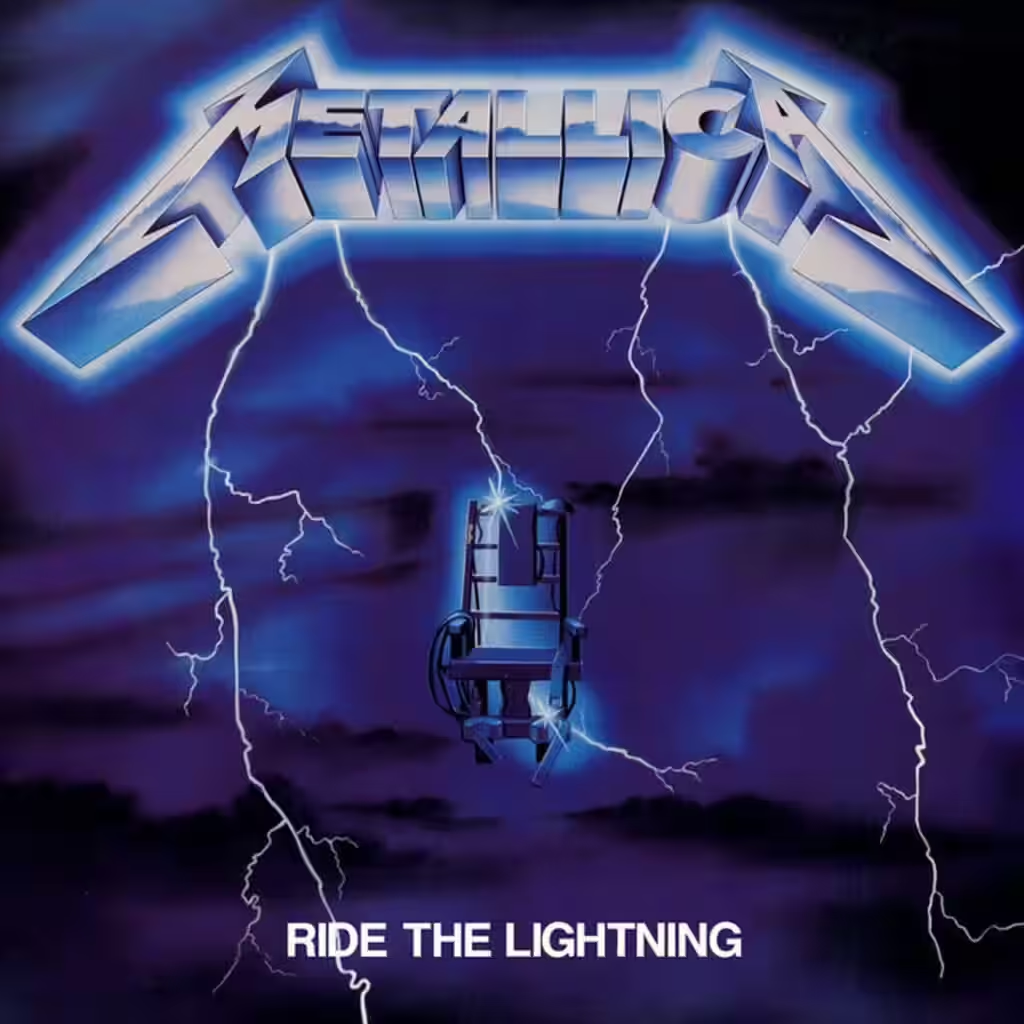
Where Kill 'Em All was a sprint, the follow-up showed a band already reaching for something larger. Ride the Lightning, released on 27 July 1984, paired the speed of the debut with the dynamics and ambition that Burton, a classically curious musician who adored Bach as much as he did Black Sabbath, pushed the band towards. The acoustic introduction to "Fight Fire with Fire", the eight-minute instrumental "The Call of Ktulu" and the despairing ballad "Fade to Black" announced a group that could do far more than thrash. The major label Elektra signed them on the strength of it.
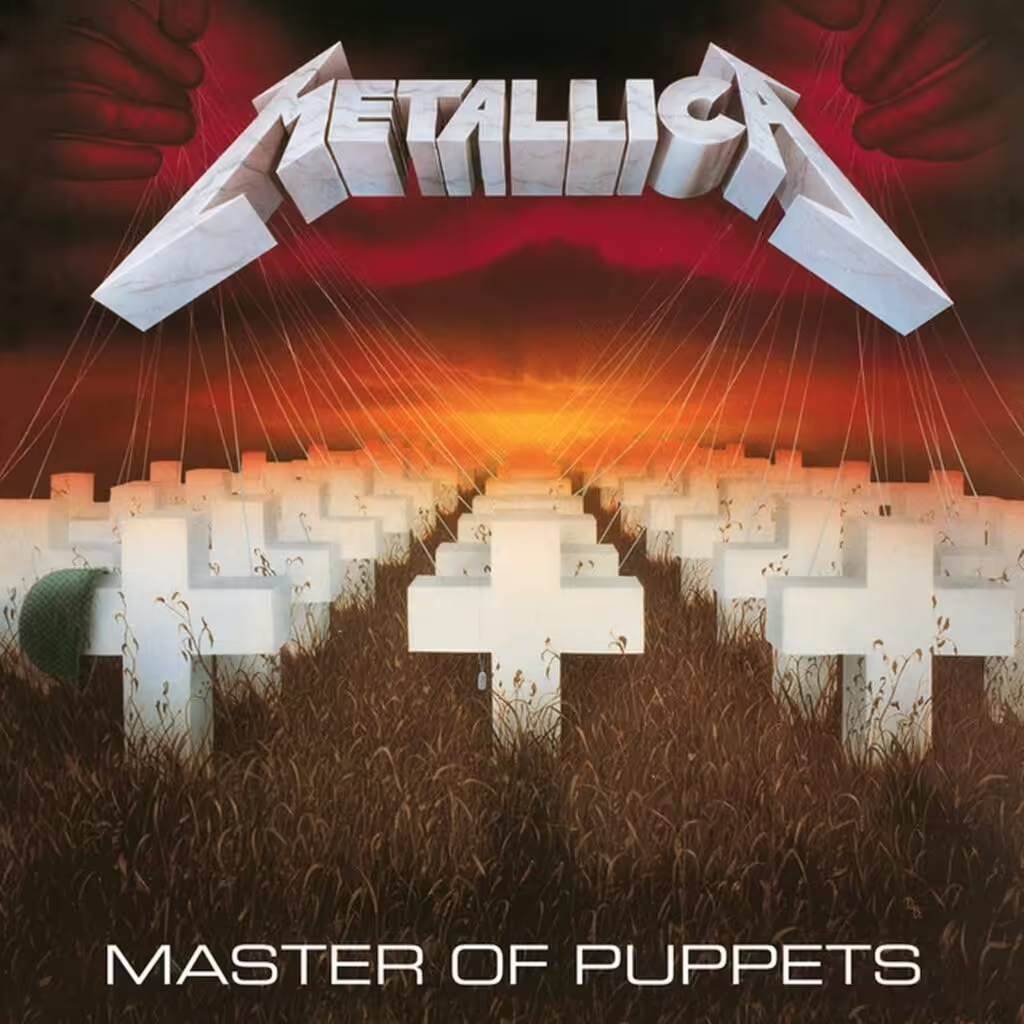
Then came the record that changed everything. Master of Puppets, released on 3 March 1986, is regularly cited as one of the greatest metal albums ever made, an eight-track masterclass that opens with the gallop of "Battery" and never lets the tension drop across its title track, the instrumental "Orion" and the asylum nightmare of "Welcome Home (Sanitarium)". It was Metallica's first album to be certified gold, reached number 29 on the Billboard 200 with no radio play and no proper single, and it earned the band a slot opening for Ozzy Osbourne across America. The underground act was now a genuine force, and the record has since been certified eight times platinum in the United States.
The triumph was cut short by tragedy. On 27 September 1986, on the European leg of the Damage, Inc. Tour, the band's tour bus skidded on a dark road near Dorarp in southern Sweden and overturned. The members had drawn cards that night for the pick of the bunks. Burton had won, and chosen the bunk that Hammett would otherwise have taken. He was thrown through a window as the bus rolled and was crushed beneath it. He was 24. Hetfield's memory of the scene has never softened.
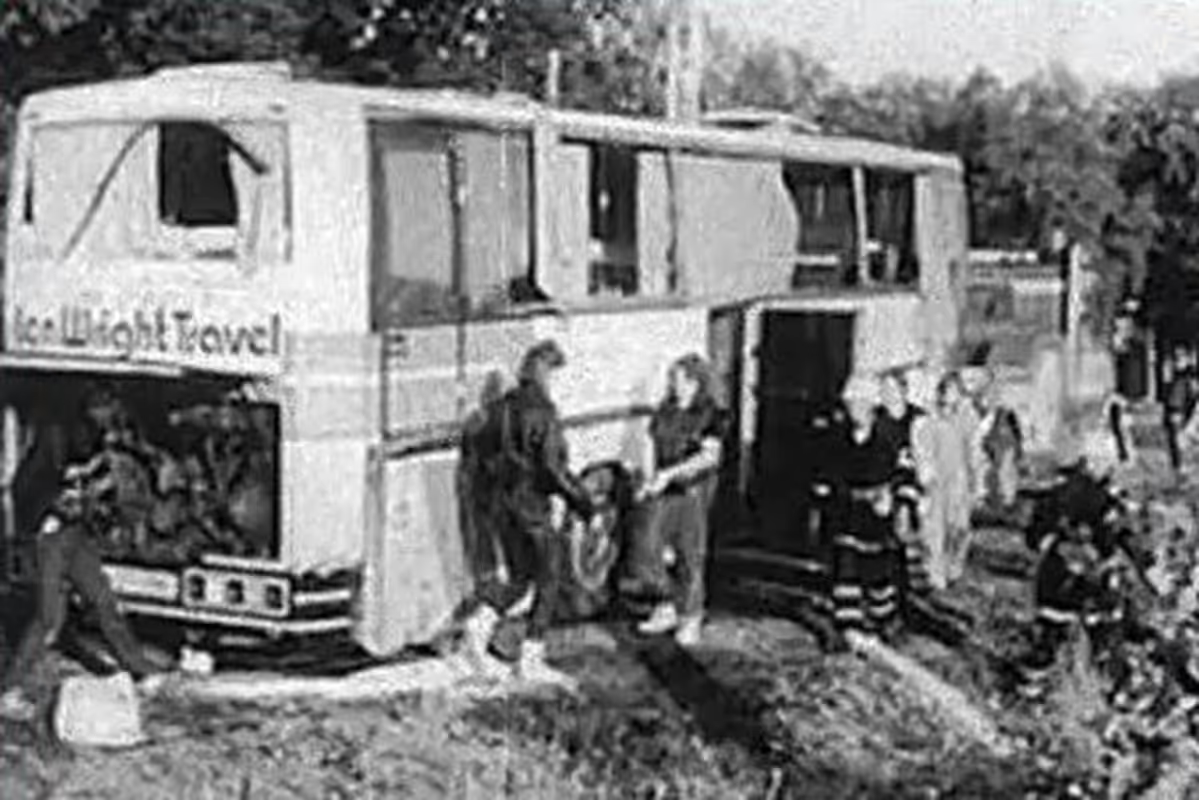
"I saw the bus lying right on him. I saw his legs sticking out. I freaked."
James Hetfield, recalling the morning Cliff Burton died
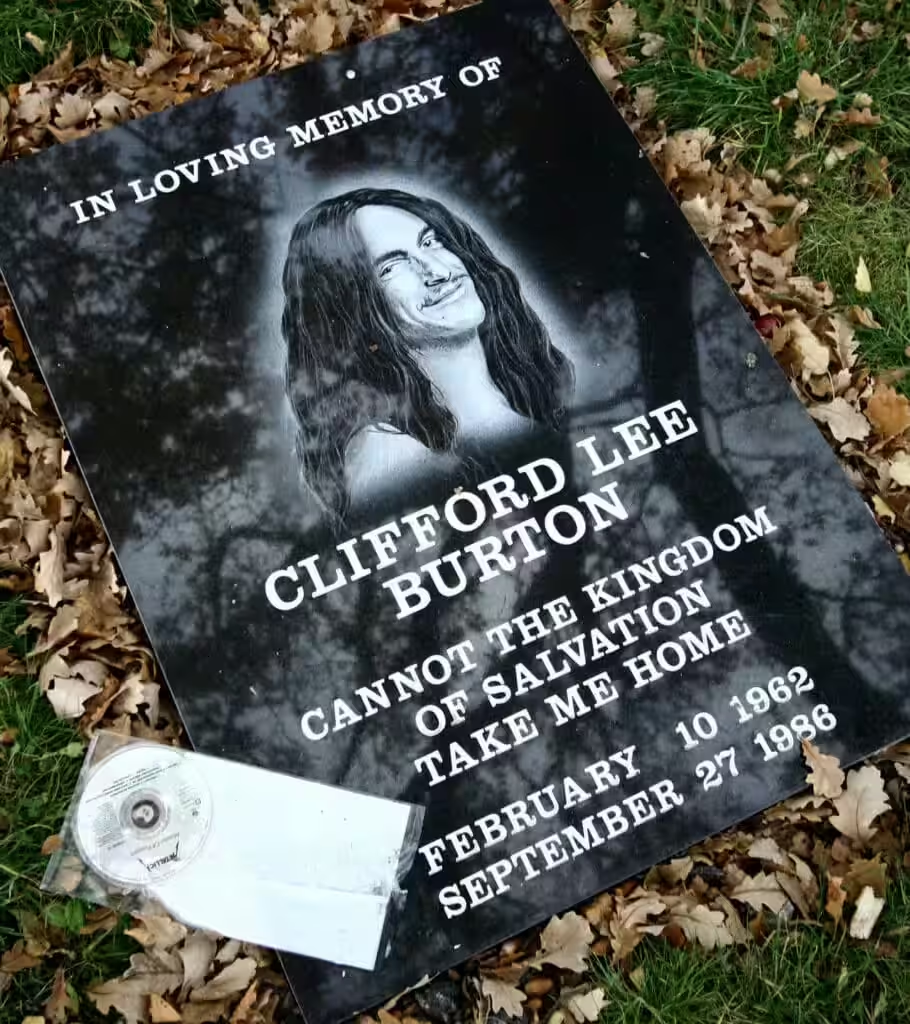
Hetfield reportedly walked the streets of the nearby town that night, screaming and smashing shop windows in grief. The band held together by the thinnest of threads, and with the blessing of Burton's family they decided to continue. A memorial stone now stands near the crash site, a place of pilgrimage for fans who travel to Sweden to leave guitar picks and bottles of beer.
Newsted, And Justice for All and the Black Album (1986 to 1994)
Replacing Burton was an almost impossible task, both musically and emotionally. Around 40 bassists auditioned before the job went to Jason Newsted of the Arizona band Flotsam and Jetsam. He won it on talent, then paid a heavy price for being the new man, hazed by the others and, on his recorded debut, all but erased from the mix. Newsted's first studio album with the band was ...And Justice for All, released on 25 August 1988, a dense, complex, deliberately cold record whose most infamous feature is that the bass guitar is almost completely inaudible, buried by Hetfield and Ulrich during mixing. It remains one of the most debated production choices in metal.
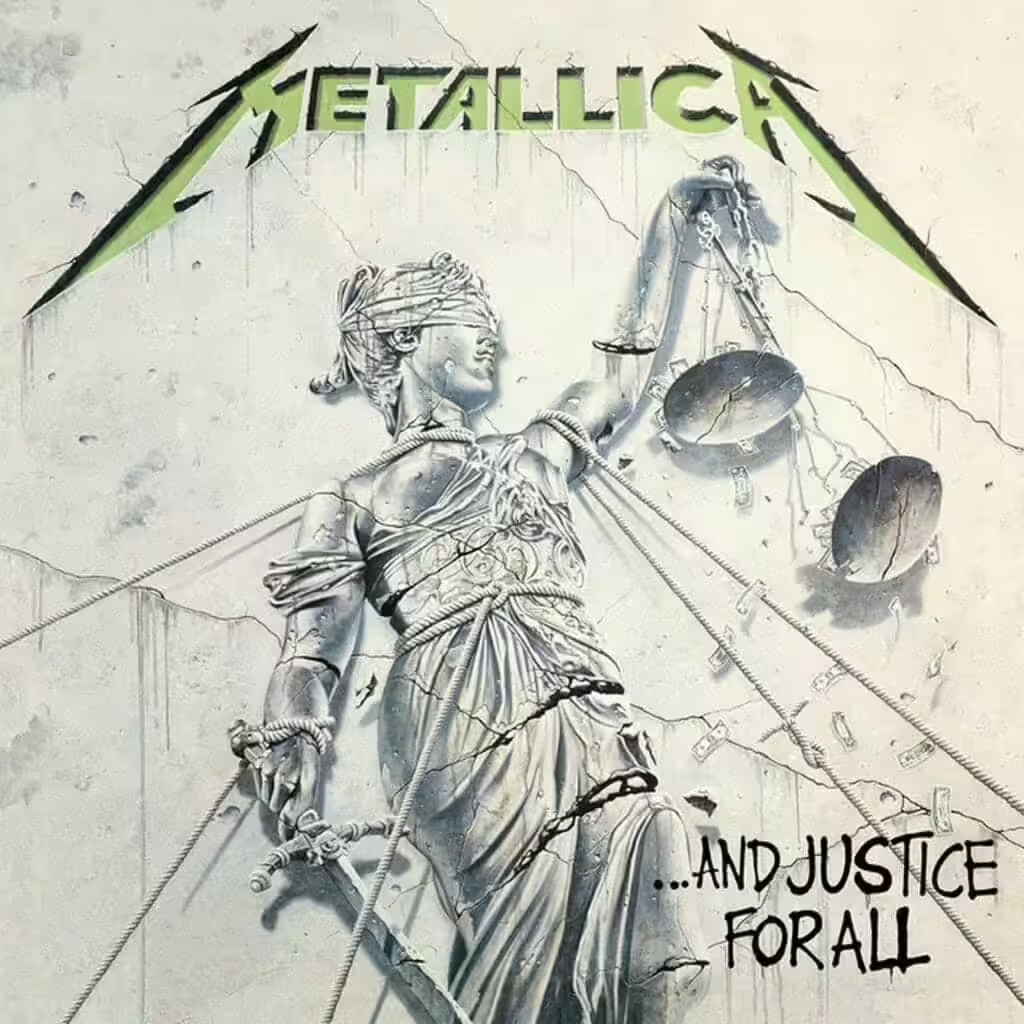
The album reached number six, the band's first American top 10, and its centrepiece "One", an anti-war epic inspired by the novel Johnny Got His Gun, gave Metallica its first music video and first true hit. It also dragged them into Grammy folklore. At the 1989 ceremony, the first to feature a hard rock and metal category, Metallica were the overwhelming favourites and lost to the prog-folk band Jethro Tull, a result so absurd it is still listed among the worst decisions in the awards' history.
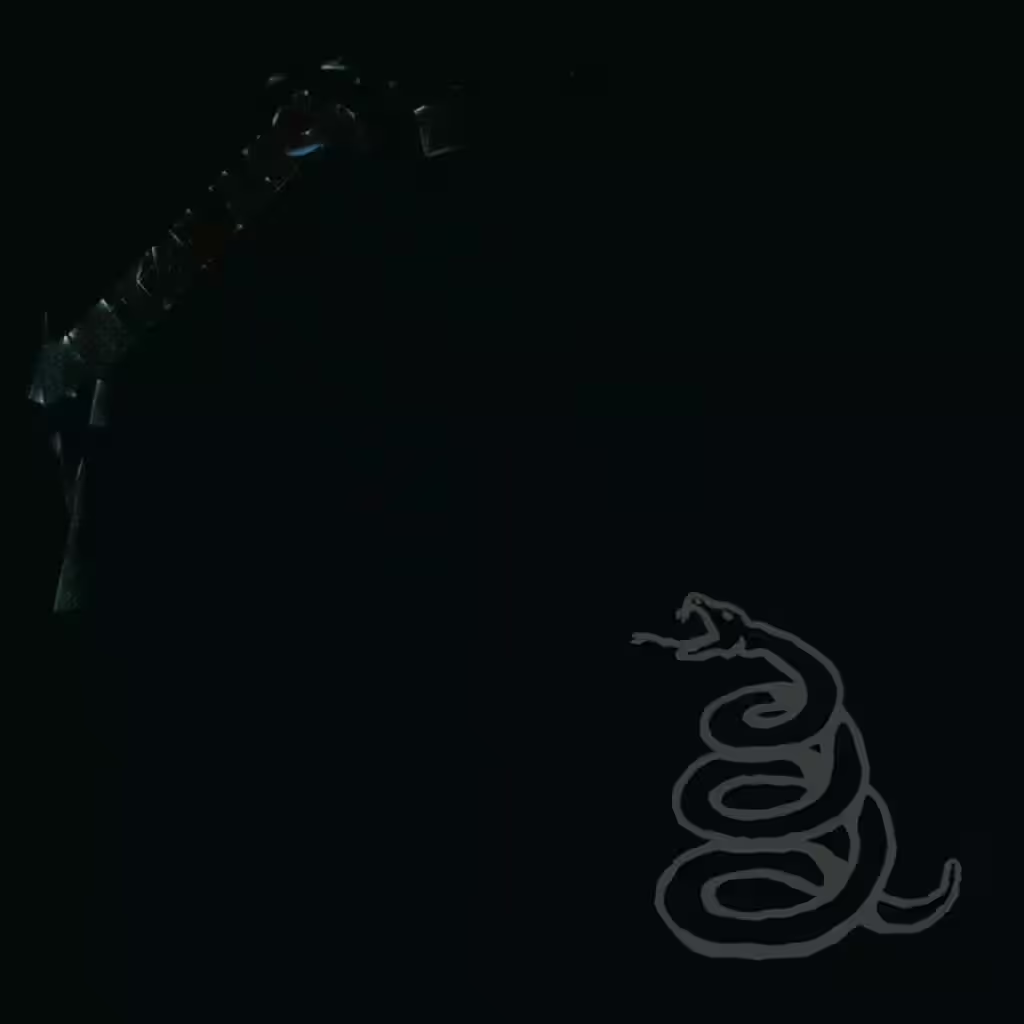
What came next made the argument moot. For their fifth album the band stripped everything back, slowed the songs down, and hired the Canadian producer Bob Rock to make them sound enormous. Released on 12 August 1991, the self-titled Metallica, universally known as the Black Album, was a phenomenon. It entered the Billboard 200 at number one, spawned "Enter Sandman", "The Unforgiven", "Nothing Else Matters" and "Sad but True", and went on to sell more than 17 million copies in the United States alone, certified 16 times platinum. It is one of the best-selling albums of the SoundScan era and the record that turned a thrash band into one of the biggest acts on the planet.
The tour that followed was vast and, at one point, very nearly fatal a second time. On 8 August 1992, during a co-headlining stadium run with Guns N' Roses, Hetfield walked into a pyrotechnic flare on stage in Montreal during "Fade to Black" and suffered second and third-degree burns to his arm and hand. He was back fronting the band within weeks, with guitar tech John Marshall covering rhythm guitar while Hetfield sang. A year earlier the band had played to a crowd estimated at well over a million at the Monsters of Rock festival in Moscow, a symbol of just how far the music had travelled.
Load, Reload and the Napster War (1994 to 2001)
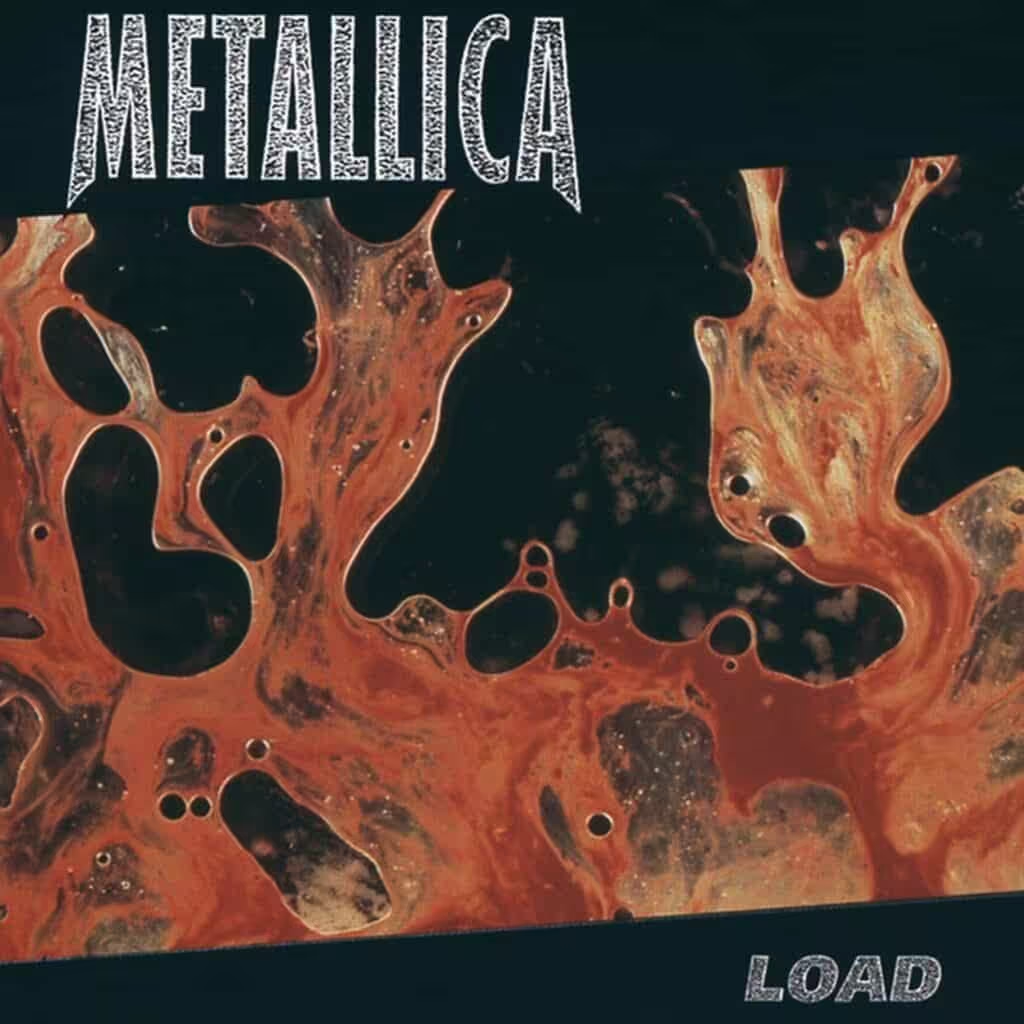
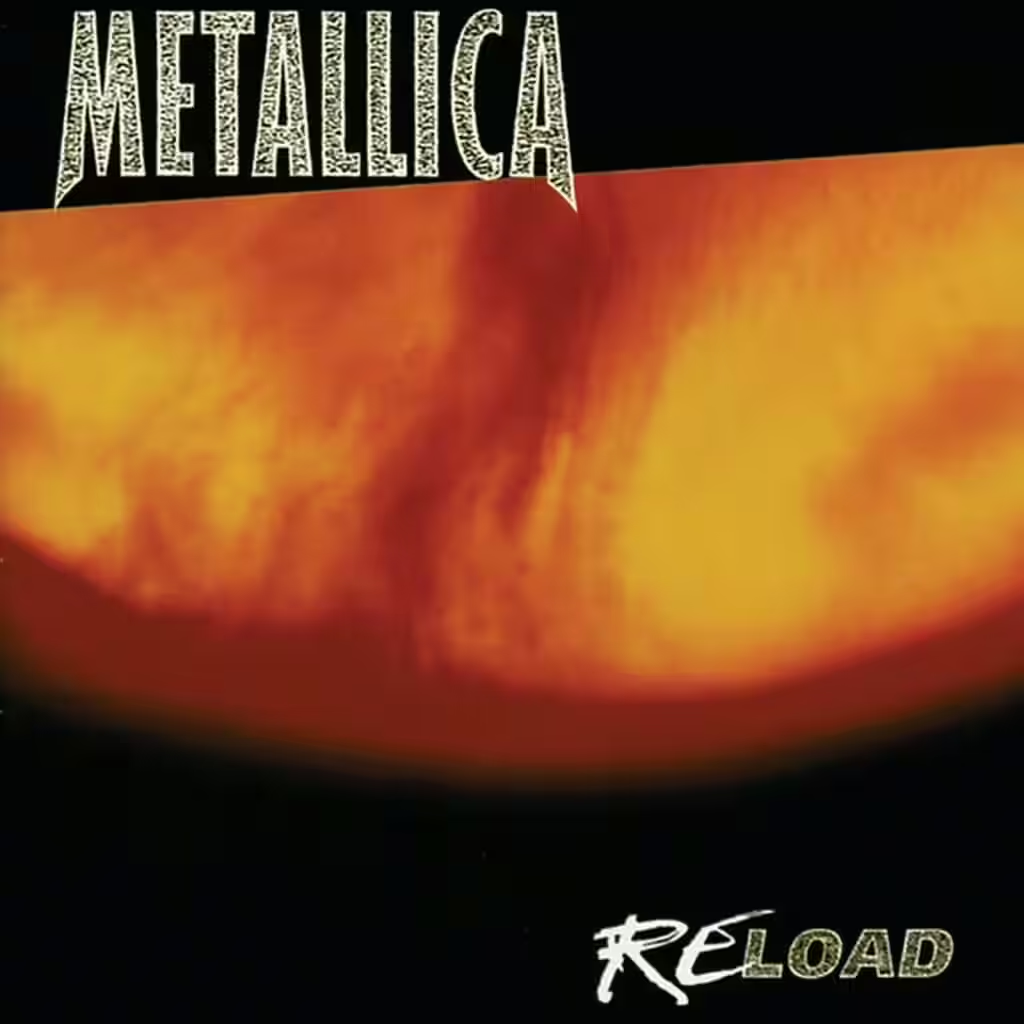
Success on that scale demanded a reinvention, and the version of Metallica that emerged in the mid-1990s was almost unrecognisable. The long hair was cut, the wardrobe and artwork drew on tattoo culture and modern art, and the music broadened into hard rock, blues and country textures. Load, released on 4 June 1996, and its companion Reload, released on 18 November 1997, were assembled from the same sprawling sessions. Both entered the chart at number one and both sold in their millions, but a section of the older fanbase felt betrayed by the new sound and the new image, and the "sell-out" accusation followed the band for years.
In between came two of the band's most ambitious side-projects. The 1998 double album Garage Inc. collected their many cover versions and a fresh batch of garage-rock and NWOBHM tributes, reaching number two. Then, in 1999, the band recorded two nights with the San Francisco Symphony and the late composer Michael Kamen, releasing the results as S&M, an orchestral live album that paired the riffs with strings and gave them an unlikely hit in the new song "No Leaf Clover".
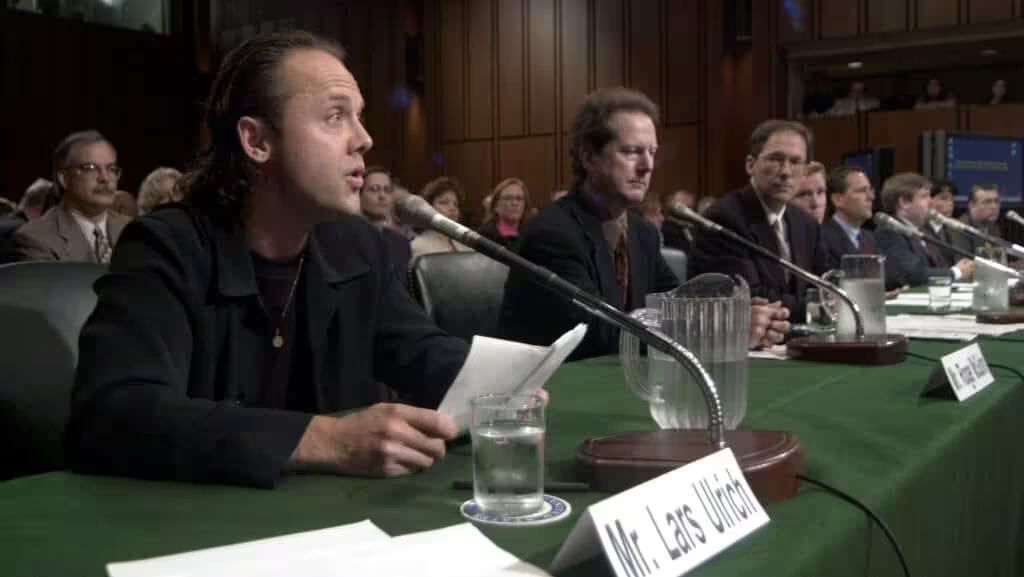
And then Metallica picked a fight that would define their public image for a generation. In early 2000 a demo of their song "I Disappear" leaked onto the file-sharing service Napster before it was officially released. The band sued. Ulrich became the very visible face of the lawsuit, personally delivering a list of more than 300,000 Napster usernames the band wanted banned, and testifying before the United States Senate. To much of the public, and to a swathe of their own younger fans, it looked like millionaires suing teenagers. The case was settled and Napster was eventually shut down, but the reputational damage lingered for years, even as the band's basic argument about artists being paid for their work was later vindicated by the entire streaming era.
The strain was now internal as well as external. On 17 January 2001 Jason Newsted left the band after 14 years, citing private and personal reasons and a clash with Hetfield over his side project Echobrain. Metallica had lost a second bassist, this time to the slow corrosion of life inside the group rather than to tragedy, and they were about to come closer to disintegrating than they ever had before.
Some Kind of Monster, St. Anger and Trujillo (2001 to 2006)
With Newsted gone and an album to make, the cracks finally split open. In July 2001 Hetfield checked into rehab for alcoholism and other addictions, halting the band's work entirely and leaving the others unsure whether Metallica still existed. He emerged that December a changed man, with strict new limits on how and when he would work, and the band rebuilt itself slowly and painfully in front of cameras. Producer Bob Rock played bass on the sessions, and a performance coach was brought in to referee what had become a deeply dysfunctional relationship between Hetfield and Ulrich.
All of it was captured for the documentary Some Kind of Monster, which premiered at the Sundance Film Festival in January 2004. It is one of the most unguarded films ever made about a major band, showing grown, wealthy rock stars bickering over song titles and questioning whether they even like one another. The album it documented, St. Anger, arrived on 5 June 2003. Raw, long and built on a deliberately jarring, clangy snare-drum sound, it divided listeners as sharply as anything the band had done, yet it still entered the chart at number one and its title track won the Grammy for Best Metal Performance in 2004.
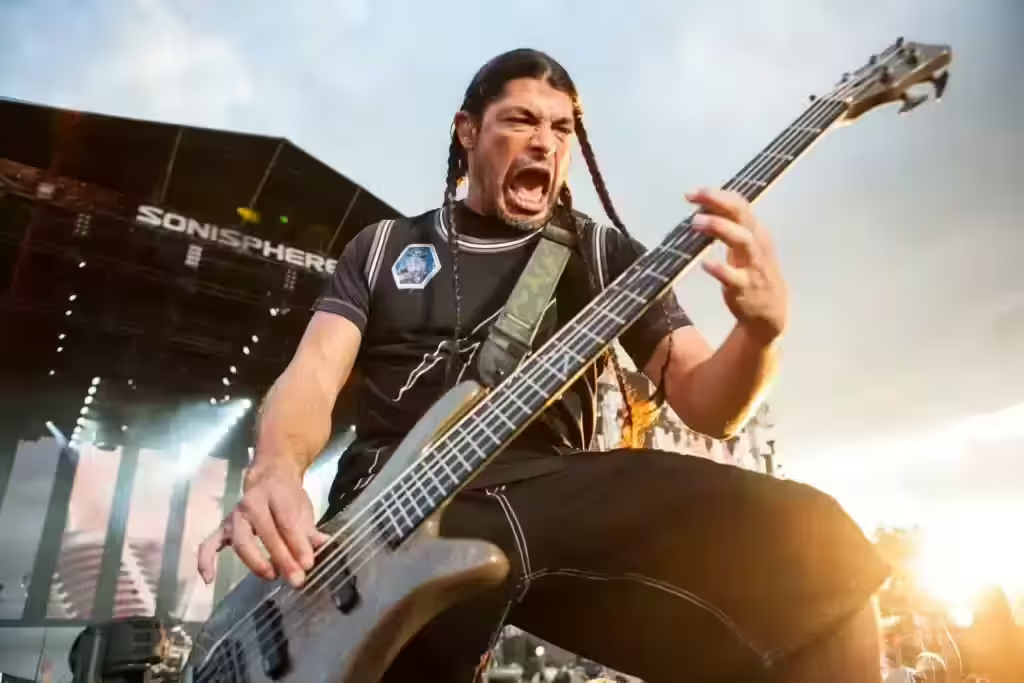
The band needed a permanent bassist, and they found one in Robert Trujillo, a powerful, low-slung player who had made his name with Suicidal Tendencies and in Ozzy Osbourne's band. He joined in 2003 and was handed a one million dollar advance to seal the deal, a moment of generosity captured in the documentary and a deliberate contrast to how Newsted had been treated. Trujillo gave the band a rhythm section it could finally settle behind, and he remains its bassist to this day.
Death Magnetic and the Hall of Fame (2006 to 2013)
Steadied at last, the band set out to reconnect with the speed and complexity of its early records. They parted with Bob Rock after more than 15 years and hired the renowned producer Rick Rubin, who pushed them back towards long, intricate, thrash-rooted songs. Rock took the change with grace when fans circulated a petition to remove him, framing it as a sportsman might.
"Sometimes, even with a great coach, a team keeps losing. You have to get new blood in there."
Bob Rock, on the fan campaign to replace him as producer
The result, Death Magnetic, was released on 12 September 2008 and hailed as a genuine return to form. It debuted at number one, the band's fifth consecutive studio album to do so, a feat no act had managed before. Its release also produced one of the more relaxed reactions to a leak in music history, after the album appeared online days early and Ulrich simply shrugged it off, a striking change of tune from the Napster years.
"We're ten days from release. If this thing leaks all over the world today or tomorrow, happy days."
Lars Ulrich, on the early online leak of Death Magnetic in 2008
Recognition followed quickly. On 4 April 2009, in their first year of eligibility, Metallica were inducted into the Rock and Roll Hall of Fame. Jason Newsted returned to perform with the band, Trujillo joined him on stage, and Cliff Burton's father Ray accepted the honour on behalf of his late son. Dave Mustaine was invited but did not attend. The band then spent 2010 and 2011 reuniting the so-called Big Four of thrash, sharing stages with Megadeth, Slayer and Anthrax for the first time, before taking a sharp creative left turn with Lulu, a 2011 collaboration with the Velvet Underground's Lou Reed that bewildered almost everyone who heard it.
The early 2010s were also when Metallica seized control of their own business. In 2012 they left Warner Bros. and launched their own label, Blackened Recordings, buying back the rights to their entire back catalogue. They released the 3D concert film Through the Never in 2013, and that December they flew to a research station in Antarctica to play a short set called Freeze 'Em All, becoming the first band in history to perform on all seven continents.
Hardwired, 72 Seasons and the M72 Tour (2016 to 2026)
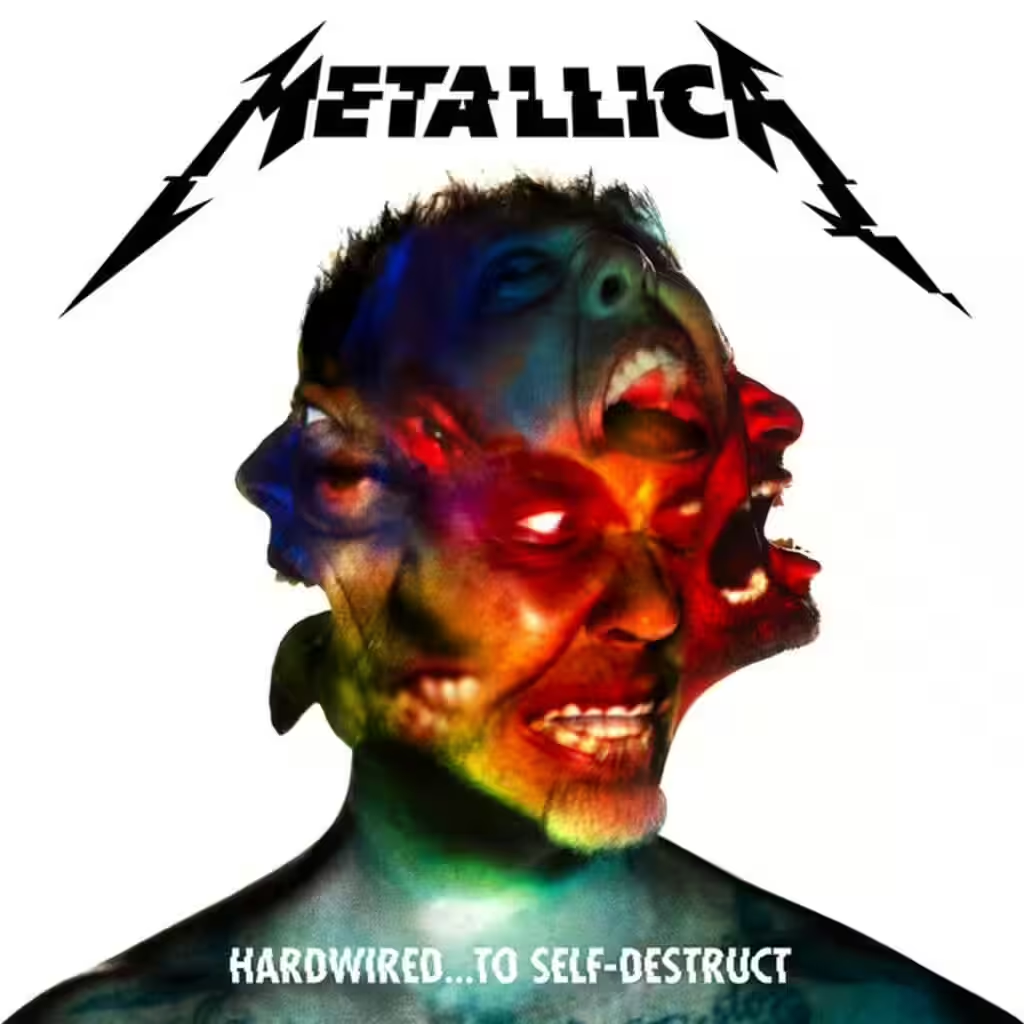
Eight years passed between Death Magnetic and the next album, the longest gap of the band's career, but the wait produced one of their most assured late records. Hardwired... to Self-Destruct, a double album produced by Greg Fidelman with Hetfield and Ulrich, was released on 18 November 2016. It topped the charts in 57 countries, debuted at number one in the United States, and proved the band could still write fast, focused metal in its fourth decade. The single "Moth Into Flame" became a live staple almost immediately.
Hetfield re-entered rehab in September 2019, forcing the band to postpone a run of shows, a candid reminder that the recovery first documented in 2004 is an ongoing battle rather than a finished story. The band weathered the pandemic, released a second orchestral collaboration as S&M2 in 2020, and then set to work on the album that would anchor the biggest tour of their lives. 72 Seasons, released on 14 April 2023, takes its title from the idea that the first 18 years of a person's life, 72 seasons, shape everything that follows. It reached number one in the United Kingdom and number two in the United States, the band's first studio album since ...And Justice for All not to debut at the American top spot, and its title track won the Grammy for Best Metal Performance in 2024.
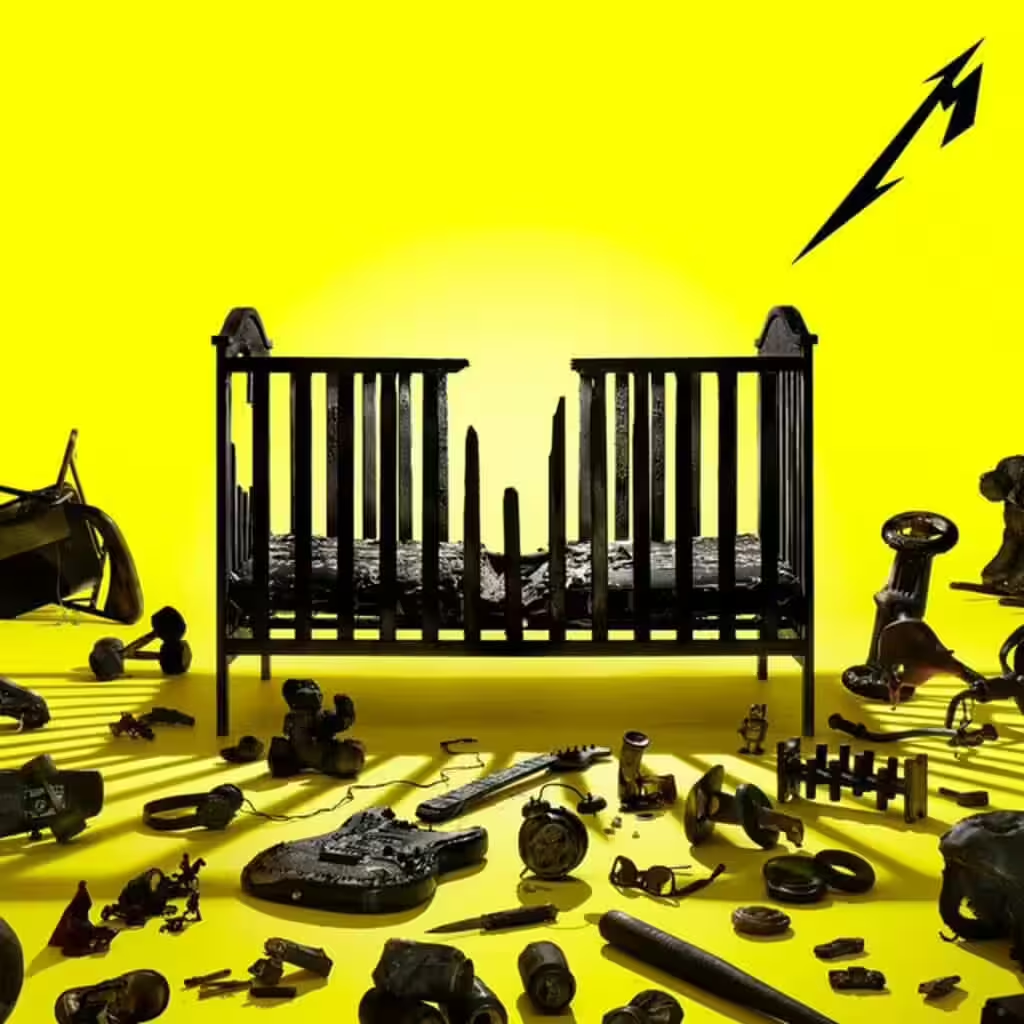
The M72 World Tour, announced in late 2022 and launched on 27 April 2023 in Amsterdam, is the band's masterstroke of stadium showmanship. Each city gets two nights, a "No Repeat Weekend" in which not a single song is duplicated across the two shows, with the band performing in the round on a circular stage ringed by the audience. Critics who had spent decades watching the band were won over all over again.
"Metallica just threw the world's biggest heavy metal party."
Eleanor Goodman, Metal Hammer, on the opening night of the M72 tour, 2023
By the close of 2025 the tour had grossed more than 517 million dollars from around 70 shows and drawn well over four million people, ranking it among the highest-grossing tours of the decade and earning Pollstar's Rock Tour of the Year award twice. The figures kept climbing into 2026. The final European leg, with support from Gojira, Pantera, Knocked Loose and Avatar, opened in Athens in May 2026 in front of 90,000 people, broke a stadium attendance record at Berlin's Olympiastadion later that month, and rolled on through Bologna in early June. As this history is written, on 8 June 2026, Metallica are in the middle of that run, between the Italian shows and a two-night stand in Budapest, with the whole enormous tour set to conclude in London on 5 July 2026.
What happens after that is, for once, genuinely open. A twelfth studio album exists only as a vast pile of unfinished ideas, with Kirk Hammett cheerfully admitting the band has barely begun.
"I have 767 new ones for the next album. I don't foresee us starting the next album for at least another year because we're still finishing the tour."
Kirk Hammett, Rolling Stone, 2025
Studio Albums
| # | Album | Year | Label | Bassist | US peak | Certification |
|---|---|---|---|---|---|---|
| 1 | Kill 'Em All | 1983 | Megaforce | Cliff Burton | 155 | 4x Platinum |
| 2 | Ride the Lightning | 1984 | Megaforce / Elektra | Cliff Burton | 100 | 6x Platinum |
| 3 | Master of Puppets | 1986 | Elektra | Cliff Burton | 29 | 8x Platinum |
| 4 | ...And Justice for All | 1988 | Elektra | Jason Newsted | 6 | 8x Platinum |
| 5 | Metallica (the Black Album) | 1991 | Elektra | Jason Newsted | 1 | 16x Platinum |
| 6 | Load | 1996 | Elektra | Jason Newsted | 1 | 5x Platinum |
| 7 | Reload | 1997 | Elektra | Jason Newsted | 1 | 4x Platinum |
| 8 | St. Anger | 2003 | Elektra | Bob Rock (session) | 1 | 2x Platinum |
| 9 | Death Magnetic | 2008 | Warner Bros. | Robert Trujillo | 1 | 2x Platinum |
| 10 | Hardwired... to Self-Destruct | 2016 | Blackened | Robert Trujillo | 1 | Platinum |
| 11 | 72 Seasons | 2023 | Blackened | Robert Trujillo | 2 | Silver (UK) |
The covers double album Garage Inc., released in 1998, sits outside this list but reached number two in the United States and went five times platinum, a reminder of how central the band's love of its NWOBHM and punk roots has always been.
Members Across the Decades
| Member | Instrument | Years | Notes |
|---|---|---|---|
| James Hetfield | Lead vocals, rhythm guitar | 1981 to present | Co-founder and chief lyricist |
| Lars Ulrich | Drums | 1981 to present | Co-founder, placed the original advert |
| Kirk Hammett | Lead guitar | 1983 to present | Joined from Exodus, replaced Mustaine |
| Robert Trujillo | Bass | 2003 to present | Formerly Suicidal Tendencies and Ozzy Osbourne |
| Cliff Burton | Bass | 1982 to 1986 | Died 27 September 1986 |
| Jason Newsted | Bass | 1986 to 2001 | Played on four studio albums |
| Dave Mustaine | Lead guitar | 1981 to 1983 | Fired in 1983, later founded Megadeth |
| Ron McGovney | Bass | 1981 to 1982 | The original bassist |
| Bob Rock | Bass (session) | 2001 to 2003 | The producer who played bass on St. Anger |
Side Projects, Philanthropy and Controversy
Few bands have spun off as many parallel careers and feuds. The sacking of Dave Mustaine in 1983 gave the world Megadeth, and the rivalry between him and his former bandmates simmered for decades before mellowing into a wary mutual respect. Jason Newsted's Echobrain helped end his time in the band, and after leaving he played with Voivod, Ozzy Osbourne and his own group Newsted. Robert Trujillo arrived trailing a long history with Suicidal Tendencies and Infectious Grooves, and later produced a documentary on the jazz bassist Jaco Pastorius. Kirk Hammett, an obsessive collector of horror memorabilia, has released solo material between tours, while both Hetfield and Ulrich have pursued interests in cars, film and art.
The band has also poured a great deal of its later energy into charity. In 2017 the members founded the All Within My Hands foundation, which funds workforce education through its Metallica Scholars programme at American community colleges and supports food banks and disaster relief. It is a deliberately practical kind of giving, rooted in the working-class roots the band never quite shed.
Controversy has rarely been far away, from the buried bass of ...And Justice for All and the "sell-out" backlash of the Load years to the Napster lawsuit and the baffled reception of Lulu. Yet the band has shown a knack for turning even its lowest moments, the addictions, the in-fighting, the public-relations disasters, into material that deepens rather than diminishes its story.
Riffology Podcast Episodes on Metallica
Several of the albums in this history have a full Riffology podcast episode that pulls them apart track by track. Follow the album to listen.
| Album | Year | On the Riffology podcast |
|---|---|---|
| Master of Puppets | 1986 | The thrash landmark recorded just months before Cliff Burton's death, examined in full. |
| Metallica (the Black Album) | 1991 | The Bob Rock-produced juggernaut that sold the band to the world, song by song. |
Legacy and Influence
Metallica's place in music is no longer up for debate. They took an underground style invented by a scattering of British and American kids and made it one of the dominant sounds of the past 40 years, selling more than 150 million records along the way and standing as the most commercially successful metal band in history. Master of Puppets is taught as a template, the Black Album sits in record collections that own no other metal at all, and the band's reach has crossed into the mainstream in ways no one could have predicted, from "Master of Puppets" soundtracking a pivotal scene in the fourth season of Stranger Things in 2022 to the band headlining a season of the Fortnite music game.
Their influence runs through almost every heavy band that followed, the thrash and groove acts of the 1990s, the metalcore generation of the 2000s, and the stadium-filling metal bands of today. They have headlined their own travelling festival, played to crowds in the hundreds of thousands across the world, and outlasted nearly every peer who started alongside them. Two voices from the band's recent renaissance sum up the standing they have reached.
"Still the greatest heavy metal band around."
Ali Shutler, NME, reviewing the M72 tour, 2023
Things You Might Not Know
| Fact | Detail |
|---|---|
| The name | It came from Ron Quintana, who was naming a fanzine; Lars Ulrich suggested he use "MetalMania" and quietly kept "Metallica" for himself. |
| It began with an advert | Metallica exists because Ulrich placed a classified ad in The Recycler seeking musicians who liked Tygers of Pan Tang, Diamond Head and Iron Maiden. |
| Misspelled debut | Their first appearance on record, the 1982 Metal Massacre compilation, printed the band's name as "Mettallica". |
| Renamed at the last minute | The debut album was going to be called Metal Up Your Ass before the distributor objected and it became Kill 'Em All. |
| Burton's price | Cliff Burton only agreed to join if the band relocated from Los Angeles to the San Francisco Bay Area, which they did. |
| The deck of cards | On the night he died, Burton won the pick of the tour-bus bunks in a card game and chose the one he was later thrown through. |
| Wasabi welcome | New bassist Jason Newsted was hazed by his bandmates, including being tricked into eating a large ball of wasabi. |
| The Grammy upset | Metallica lost the first ever hard rock and metal Grammy in 1989 to Jethro Tull, still cited as one of the award's worst decisions. |
| Walked into the fire | At a 1992 Montreal show Hetfield suffered serious burns after stepping into a pyrotechnic flare during "Fade to Black". |
| Seven continents | A December 2013 show in Antarctica made Metallica the first band to have played on all seven continents. |
| They own everything | After leaving Warner in 2012 they launched Blackened Recordings and bought back the rights to their entire catalogue. |
| The million-dollar welcome | Robert Trujillo was handed a one million dollar advance when he joined in 2003, a deliberate contrast to Newsted's treatment. |
| No Repeat Weekend | On the M72 tour the band plays two nights per city without repeating a single song across the weekend. |
Metallica's catalogue is a gift to anyone who loves pulling a record apart and asking how on earth it got made, and that is exactly what the Riffology podcast does week after week. If this history has sent you back to Master of Puppets or the Black Album, the show has full episodes waiting on both, and plenty more besides across the worlds of metal, rock and everything in between. You can find Riffology on Spotify, Apple Podcasts, YouTube and every other major platform, so subscribe, dig in, and we would love to hear which era of Metallica is your favourite.
Comments