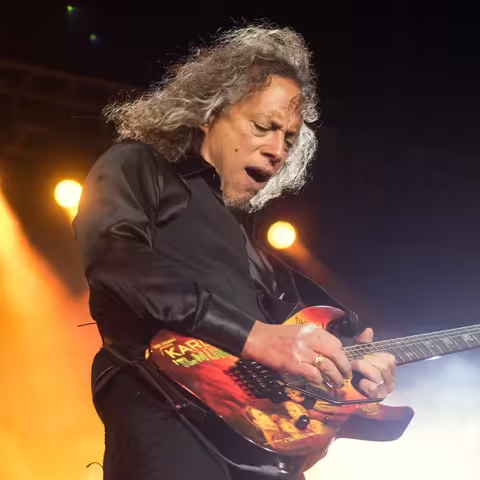
Kirk Hammett gave Exodus its name and brought the band its singer, then quit in April 1983 to fly to New York and join a Los Angeles group that had just fired its guitarist. That group was Metallica, and within weeks they had done something stranger still. They packed up and moved to the San Francisco Bay Area, because their new bassist, Cliff Burton, had agreed to join on one condition: that the band relocate to his home turf. Two swaps, one guitarist out of the Bay and one whole band into it, and the most important scene in the history of American heavy metal had its founding act. Bay Area thrash metal was faster, meaner and more technical than anything in the Los Angeles clubs ninety minutes south, and for most of a decade it rewired what metal could be.
For roughly ten years a cluster of teenagers in Berkeley, Oakland, El Cerrito, El Sobrante, Daly City and San Francisco played heavy metal at hardcore-punk speed, hunted "posers" out of the pit, traded demos on cassette across oceans, and turned a handful of grimy clubs into the launch pad for Metallica, Exodus, Testament, Death Angel, Possessed and a dozen more. The scene produced one of the best-selling albums in American history and a whole new genre, death metal, that crawled out of its fringes. Then grunge arrived, the bands splintered, and the entire movement was written off. This is the complete story, from Ruthie's Inn to a number-one thrash record in 2025, of where it came from, who built it, what it sounded like, why it faded, and how it came roaring back.
Bay Area Thrash: Scene Facts
| Field | Detail |
|---|---|
| Scene | Bay Area thrash metal (also "the Bay Area scene") |
| Origins | San Francisco and the East Bay (Berkeley, Oakland, El Cerrito, El Sobrante, Daly City), California |
| Peak years | 1983 to 1991 |
| Roots and forebears | New Wave of British Heavy Metal (Diamond Head, Motorhead, Venom, Angel Witch) plus hardcore punk (Discharge, GBH, Misfits) |
| Defining bands | Metallica, Exodus, Testament, Death Angel, Possessed, Vio-lence, Forbidden, Heathen, Laaz Rockit |
| Defining albums | Kill 'Em All (1983), Bonded by Blood (1985), Master of Puppets (1986), The Legacy (1987) |
| Key labels | Megaforce, Metal Blade, Combat, Elektra |
| Key venues | Ruthie's Inn (Berkeley), The Stone (San Francisco), Old Waldorf, Mabuhay Gardens, The Keystone |
| Key media | Ron Quintana's Metal Mania fanzine, KUSF and KALX radio, MTV's Headbangers Ball, the international tape-trading network |
| Sound in a line | Fast downpicked palm-muted riffs at punk speed, gang-shouted vocals, long multi-part songs, lyrics about war, death and social decay |
| Subgenres and offshoots | Death metal (Possessed, Sadus), groove metal (Machine Head), crossover thrash |
| Decline | Early-to-mid 1990s: grunge, band break-ups, Metallica's stylistic turn, Headbangers Ball cancelled 1995 |
| Revival | 2000s onward: the original bands reunited plus a worldwide "new wave of thrash" |
The Roots: British Metal Meets American Punk
Bay Area thrash did not appear out of nowhere. It was the collision of two records collections. From across the Atlantic came the New Wave of British Heavy Metal, the early-1980s surge of bands like Diamond Head, Saxon, Angel Witch, Venom and, above all, Motorhead, who married galloping rhythms and twin-guitar intricacy to a new sense of speed. A teenage Danish drummer named Lars Ulrich was obsessed with all of it, and when he eventually started a band the template was obvious. Metallica's first demo, recorded in July 1982, was called No Life 'til Leather, a direct nod to Motorhead's live album No Sleep 'til Hammersmith, and their early sets were stuffed with Diamond Head covers.
The other half of the equation was much closer to home. The Bay Area had one of the most ferocious hardcore-punk scenes in the country, and metal kids and punk kids ended up in the same sweaty rooms watching Discharge, GBH and the Misfits play at impossible velocity. The crossover was the spark. Lääz Rockit guitarist Phil Kettner remembered his first sight of Metallica in exactly those terms.
"My first reaction was, 'Oh wow, it's punk rock with long hair.' That's where the thrash thing came from, it crossed over from the punk element."
Phil Kettner, Lääz Rockit, Louder
There was a local advantage, too. The guitarist Joe Satriani had settled in Berkeley in 1978 and taught a startling roll-call of future Bay Area players, among them Kirk Hammett of Exodus and Metallica, Alex Skolnick of Testament, Larry LaLonde of Possessed and Rick Hunolt of Exodus. That grounding in technique helped give the Bay Area sound its reputation for precision. Even the word "thrash" took a while to settle. Ron Quintana, who edited the Metal Mania fanzine and spun extreme metal on the college station KUSF, recalled that the label arrived late.
"'Thrash' wasn't used that much as a term in 1982. I think it was more in 1984, with speedsters like Exodus, Slayer, Possessed, and Suicidal Tendencies, that we called them thrash and not just metal or punk."
Ron Quintana, Metal Mania, Louder
The Move North and the Clubs That Built a Scene
Geography matters in this story. Los Angeles in 1982 belonged to glam metal, all hairspray, spandex and Sunset Strip posing, and a band as ugly and fast as Metallica had nowhere to fit. The Bay Area was the opposite, a place where the music came first and the look came a distant last. So when Cliff Burton, a classically-minded bassist from the East Bay band Trauma, agreed to join Metallica, he set a condition: the band had to come to him. In February 1983 Metallica moved into a house at 3132 Carlson Boulevard in El Cerrito, managed by Exodus manager Mark Whitaker and quickly nicknamed the Metallimansion, and they wrote much of Kill 'Em All, Ride the Lightning and Master of Puppets in its garage.
They were not the first. Exodus had been knocking around the East Bay since 1979, which makes them the scene's true founding band, and the two acts were intertwined from the start. Kirk Hammett, who had named Exodus and recruited its wild-eyed singer Paul Baloff, left in April 1983 to replace Dave Mustaine in Metallica before Exodus had even made a record. Mustaine, fired for his drinking, took the next bus back to Los Angeles and started Megadeth, carrying a grudge and a clutch of riffs with him. Hammett later admitted the swap weighed on him for years.
"There was a lot of guilt there for a while. I really felt that Metallica was my calling. I feel more comfortable playing in Metallica than I ever did in Exodus, so go figure."
Kirk Hammett, Metallica, Guitar.com
The scene had a physical home, and its name was Ruthie's Inn, a small club on San Pablo Avenue in Berkeley run by a former jazz promoter called Wes Robinson. Between roughly 1982 and 1988 Ruthie's hosted Metallica, Exodus, Possessed, Death Angel, Testament, Slayer, Megadeth, Suicidal Tendencies, Vio-lence, Forbidden and D.R.I., and it is routinely described as the epicentre of the whole movement. It was not alone. The Stone in San Francisco, where Metallica played their first city show in September 1982, the Old Waldorf, Mabuhay Gardens, the Kabuki Theatre and the Keystone in Berkeley and Palo Alto all gave the bands stages. Wes Robinson even staged an outdoor festival, the Eastern Front, at Berkeley's Aquatic Park, the 1984 edition of which has been called the Woodstock of Bay Area thrash.
- Ruthie's Inn, Berkeley: the scene's beating heart, run by Wes Robinson
- The Stone, San Francisco: Metallica's first San Francisco show, September 1982
- The Old Waldorf and Mabuhay Gardens: early all-ages metal and punk crossover bills
- The Record Exchange and the Record Vault: where every metalhead went for new imports
- KUSF and KALX: college radio playing extreme metal as early as 1982
Two more things made the scene possible: tape trading and a tiny network of independent labels. Before any of these bands had a record deal, their demos circulated the planet on copied cassettes, a system Lars Ulrich had learned as a NWOBHM-obsessed pen pal and that No Life 'til Leather rode into the underground worldwide. The records, when they came, came from outside the majors. Brian Slagel's Metal Blade label put Metallica's "Hit the Lights" on the first Metal Massacre compilation in 1982, their first appearance on vinyl. East Coast record-shop owners Jon and Marsha Zazula, "Jonny Z", founded Megaforce Records specifically to release Kill 'Em All in 1983 when no major would touch it. Combat Records handled Exodus and Possessed. None of it needed radio. It needed a tape deck and a stamp.
And it had an attitude. The Bay Area defined itself against Los Angeles glam with a near-religious hatred of "posers", and the enforcement was not always metaphorical. Paul Baloff turned poser-baiting into stage theatre, and Death Angel guitarist Rob Cavestany did not sugar-coat what that meant in practice.
"Poseurs did get their asses kicked. Don't let Baloff catch one of them around. It was reality, though."
Rob Cavestany, Death Angel, Louder
What Bay Area Thrash Actually Sounds Like
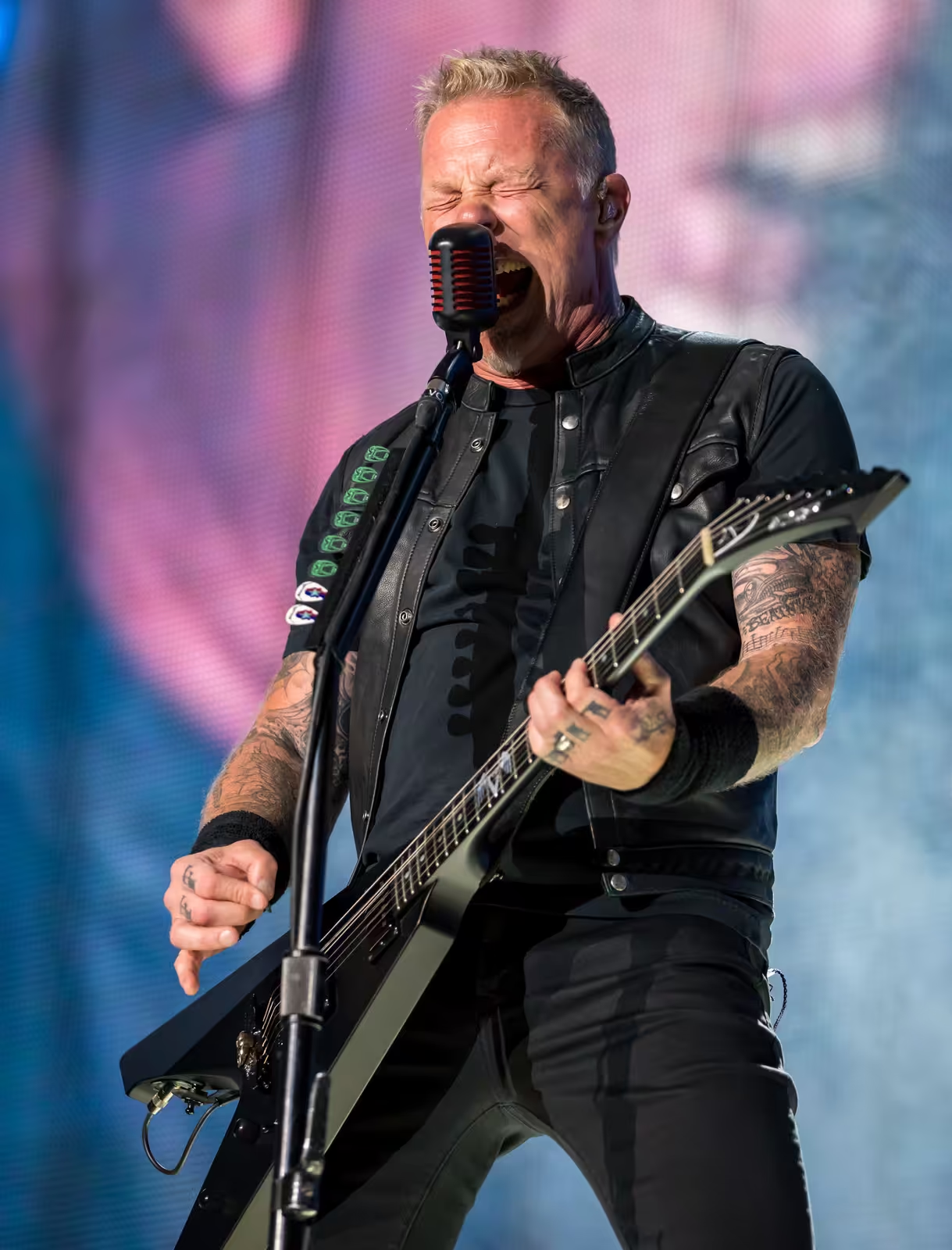
Strip the scene back to the music and a few defining features do the heavy lifting. The first is the right hand. Bay Area thrash is built on fast, palm-muted downpicking, the guitarist striking every note with a downward stroke rather than alternating up and down. It is harder to play and it sounds tighter and heavier, a percussive chug that became the genre's signature, and James Hetfield is its most revered practitioner. He has always insisted the difficulty is all in the timing, and that it started as a competition.
"It was always a kind of contest, who could down-pick the fastest, and mostly it was a battle between me and Lars, actually."
James Hetfield, Metallica, MusicRadar
The second feature is speed. Bay Area thrash runs hard and fast, frequently in the region of 160 to 200 beats per minute, propelled by double-kick drumming and the relentless eighth-note riffing that the downpicking technique exists to deliver. The third is structure. These were not three-minute pop songs. Bands wrote long, multi-part compositions with shifting tempos, extended instrumental passages and the odd full instrumental, like Metallica's "Orion", which showcased Cliff Burton's classically-informed bass. The vocals were barked or shouted rather than crooned, often answered by a gang-shout from the whole band, and the lyrics turned away from glam's parties and girls toward war, death, the occult, addiction and social collapse. Master of Puppets, the genre's masterpiece, is partly about the crack epidemic then ravaging American cities.
What it was not was uniform. Critics often flatten thrash into one wall of noise, but the players insist the opposite was true, and Death Angel's Mark Osegueda is adamant that the Bay Area bands sounded nothing like one another.
"Even though everyone was a thrash band, everyone had their own unique sound. No one sounded like each other."
Mark Osegueda, Death Angel, Blabbermouth, 2025
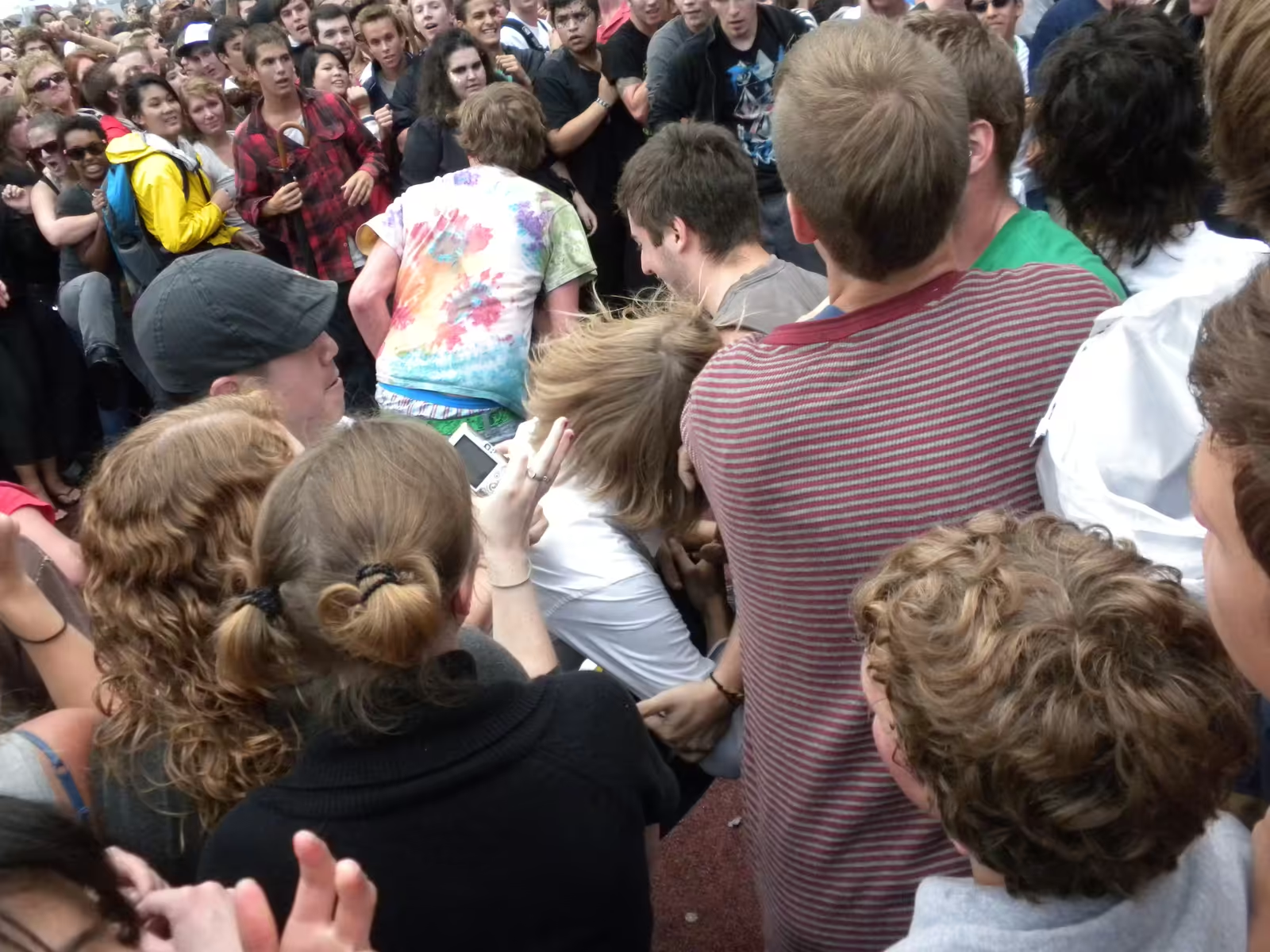
Then there was the live culture, which was as much a part of the sound as anything on the records. The Bay Area is where the modern metal pit took shape, a chaotic, communal violence that Robb Flynn, who came up through Vio-lence and Forbidden before forming Machine Head, still remembers vividly.
"It was the first time I'd seen circle-pits, my first time seeing crowdsurfers."
Robb Flynn, Machine Head, Louder, 2023
The First Wave: Metallica and Exodus Break Out
Everything starts with two bands and three records. Metallica released Kill 'Em All on Megaforce on 25 July 1983, a raw, breakneck debut that did not chart on release but lit up the underground. They followed it on 27 July 1984 with Ride the Lightning, a huge leap in ambition that reached into balladry, instrumental composition and political fury without losing an ounce of speed, and which Elektra liked enough to sign the band and reissue. The riffs were getting smarter, the arrangements longer, and the audience was multiplying with every traded cassette.
Exodus, meanwhile, finally made the record their reputation demanded. Bonded by Blood was recorded in the summer of 1984 but, thanks to label and band turmoil, did not see release until 25 April 1985, by which point Metallica had already lapped them commercially. It hardly mattered to the faithful. Bonded by Blood is one of the most violent and beloved thrash records ever made, the only full Exodus album to feature Paul Baloff's unhinged howl, and a blueprint for everything the second wave would do. Gary Holt, the band's guitarist and the one constant across its entire history, wrote the riffs, and his admiration for Hetfield's technique came with an expert's eye for the cheats every player relies on.
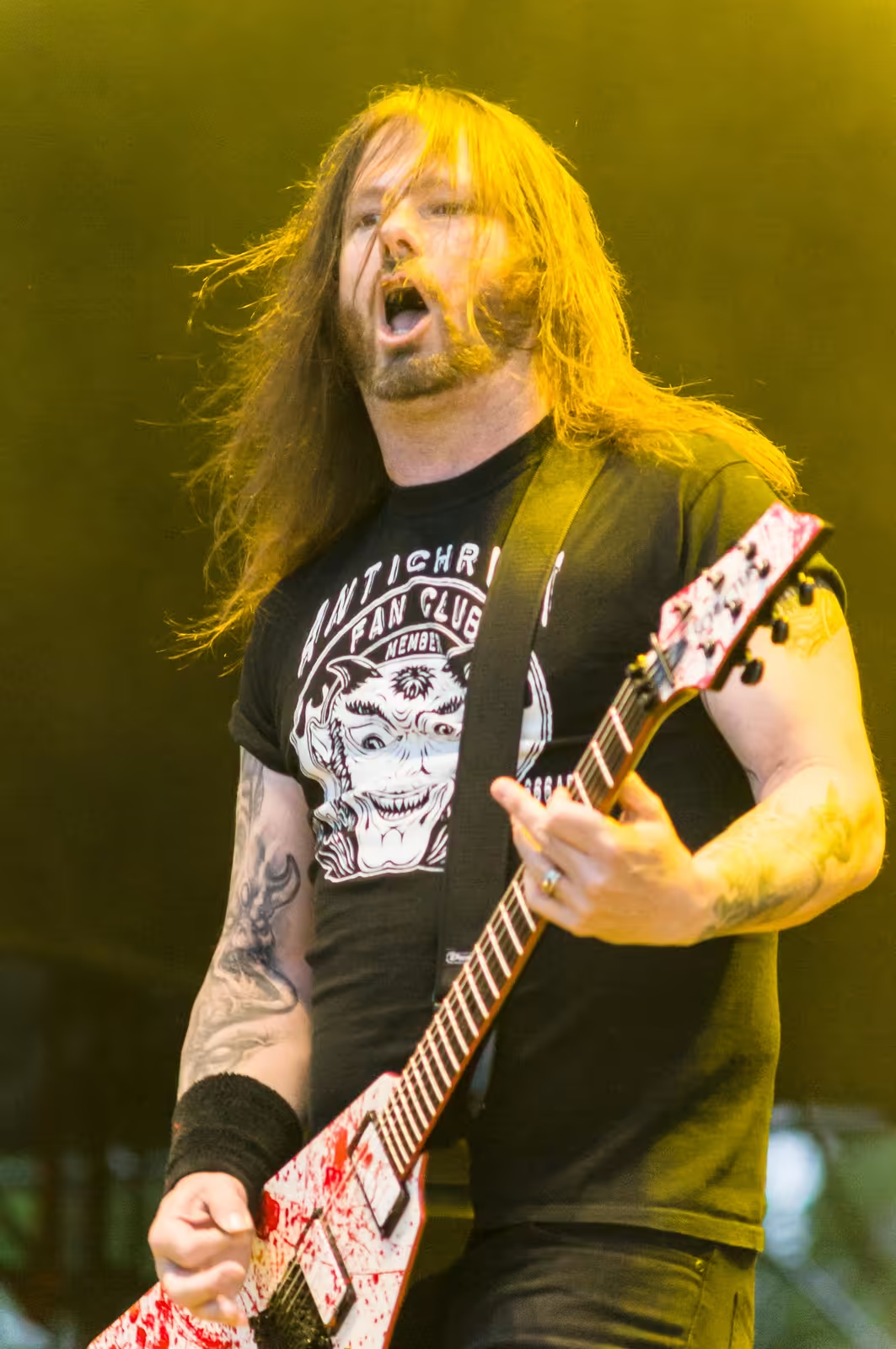
"Everybody cheats, even Hetfield cheats, and he's the best out there. When you see a guy in the middle of a down pick, baddest riff ever, and he throws in one of these. That's the reset, that's all you need."
Gary Holt, Exodus, Guitar.com
Baloff was fired after the Bonded by Blood touring cycle and replaced by Steve "Zetro" Souza, poached from a Bay Area band called Legacy who would soon rename themselves Testament. That single personnel move tells you how tightly woven the scene was. Every band fed every other band, members swapped constantly, and the rivalries were friendly more often than not. The first wave had proved the sound could sell. Now a whole generation of teenagers who had watched it happen from the pit were about to pick up guitars.
Master of Puppets and the Crossover
On 3 March 1986 Metallica released the record that changed the maths. Master of Puppets was longer, darker and more complex than anything thrash had produced, and it did something nobody expected from an underground metal album with no hit single, no radio play and no music video: it reached number 29 on the Billboard 200, selling 300,000 copies in three weeks and becoming the first thrash metal album ever certified platinum. The genre had proved it could cross over without compromising a thing. Critics and musicians alike still regard it as thrash's high-water mark, and decades of later certifications, eventually eight times platinum, only confirmed what the underground knew immediately.
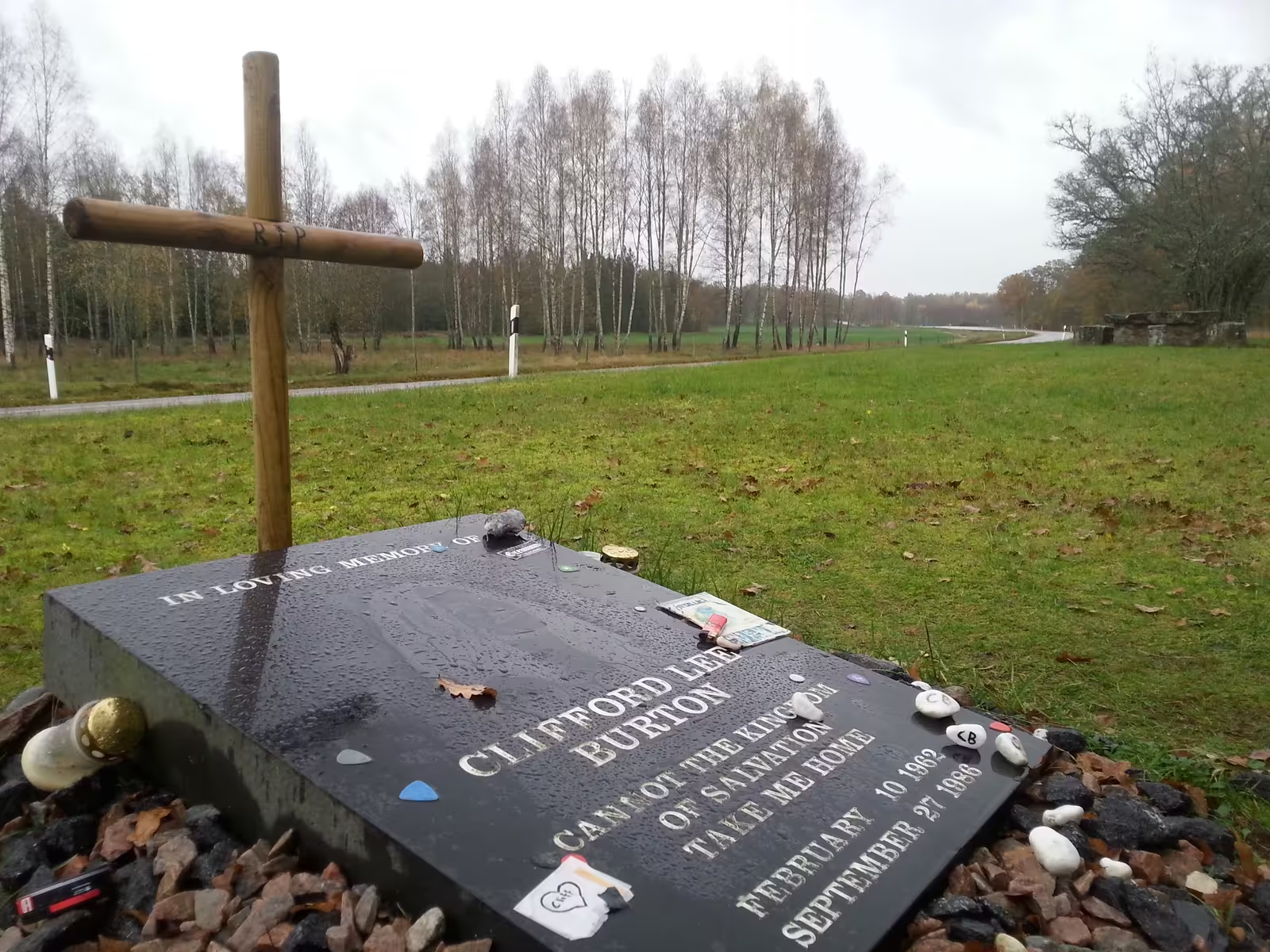
Triumph turned to tragedy almost immediately. On 27 September 1986, on the Damage, Inc. tour in Sweden, Metallica's tour bus skidded off the road near Dorarp and overturned. Cliff Burton, who had won the bunk he was sleeping in on a hand of cards the night before, drawing the ace of spades against Kirk Hammett, was thrown through a window and killed. He was 24. The band considered quitting, then chose to continue, hiring Jason Newsted of Flotsam and Jetsam. Burton's death is one of the defining wounds of the scene, the loss of a player whose harmonic imagination had pushed Metallica far beyond their peers.
Newsted's first studio album with the band was ...And Justice for All in 1988, a dense, dry, sprawling record that pushed thrash's complexity to its limit and reached number six on the Billboard 200. It produced "One", an anti-war epic that in January 1989 became Metallica's first ever music video and broke them on MTV, winning the band their first Grammy. Thrash was no longer underground. The biggest band in it was an arena act, and the Bay Area had built it.
The Second Wave: Testament, Death Angel and the Class of '88
While Metallica conquered the world, the bands they had inspired came of age, and 1987 and 1988 saw an extraordinary run of debut albums. Testament, the Legacy renamed, led the charge. With Chuck Billy's commanding roar out front and the teenage virtuoso Alex Skolnick on lead guitar, they released The Legacy in 1987 and The New Order in 1988, the latter reaching number 136 on the Billboard 200, before Practice What You Preach in 1989 became their first record to crack the Top 100. Testament were the clear leaders of the second wave, technical and tuneful in equal measure. Skolnick, the youngest man in the band, watched the chaos around him from a slightly bemused distance.
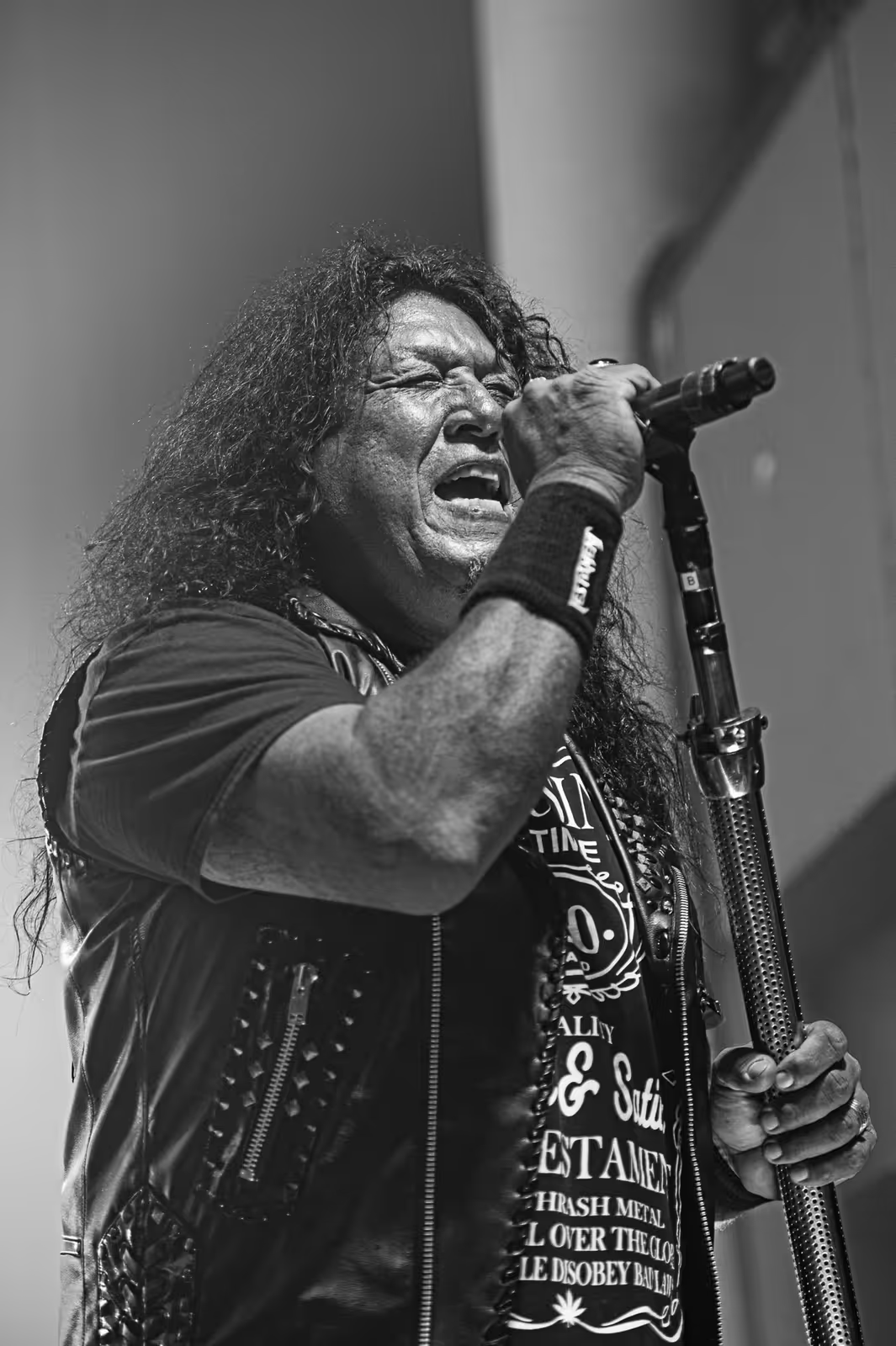
"That Bay Area scene could be chaos, but because I was so shy, and also because I was the youngest member of Testament, I'd sit in the corner practising scales and trying to learn."
Alex Skolnick, Testament, Metal Hammer, 2025
Death Angel were younger still. Four Filipino-American cousins from Daly City, they had been gigging since 1982 when their drummer Andy Galeon was barely into his teens, and they released a savage debut, The Ultra-Violence, in 1987, followed by Frolic Through the Park in 1988 and the more adventurous Act III on Geffen in 1990. Their story is one of the scene's most poignant, and we will come back to it. Mark Osegueda, their singer, has always stressed how much the bands looked out for one another in those years.
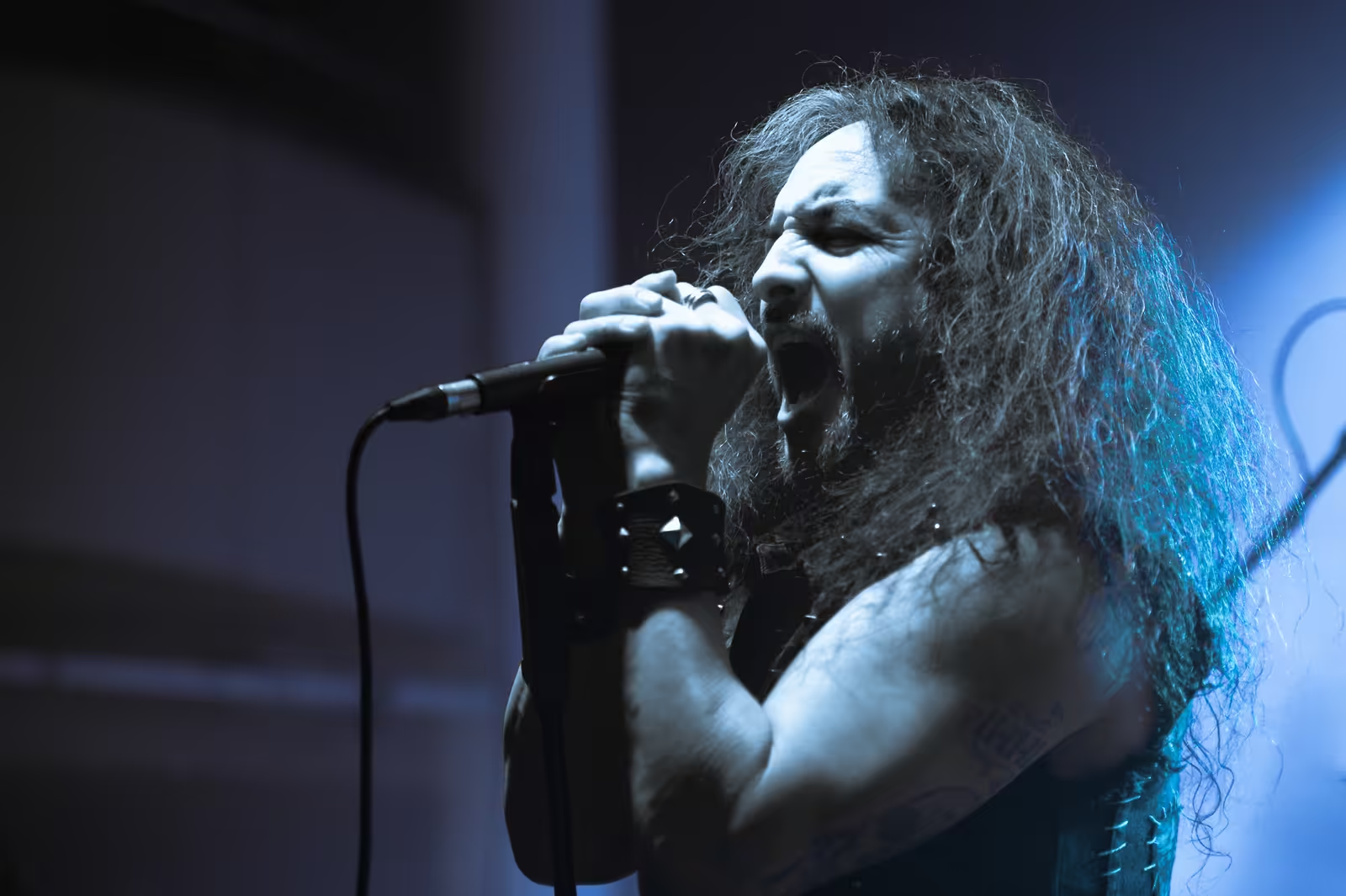
"If Metallica was in town, they'd be at your shows. If Exodus was in town, they'd be at your shows."
Mark Osegueda, Death Angel, Blabbermouth, 2025
The depth of the scene is what astonishes in hindsight. Vio-lence, from Oakland, released the ferocious Eternal Nightmare in 1988, with future Machine Head founders Robb Flynn and Phil Demmel on guitars and Sean Killian shrieking out front. Forbidden, originally Forbidden Evil, turned in the classic Forbidden Evil in 1988 and the tech-thrash landmark Twisted Into Form in 1990. Heathen made the cultured, melodic Breaking the Silence in 1987 and the progressive Victims of Deception in 1991. Lääz Rockit had been at it since City's Gonna Burn in 1984, hitting their stride with Know Your Enemy in 1987 and Annihilation Principle in 1989. Sadus, from Antioch, fused thrash with the emerging death-metal sound, and bassist Steve DiGiorgio went on to play with half the scene.
And then there was Possessed, from El Sobrante, who pushed the music somewhere genuinely new. Their 1985 debut Seven Churches, recorded when bassist-vocalist Jeff Becerra was just 16, is very widely cited as the first death metal album, its growled vocals and morbid speed predating the genre's official founders by two years. Its closing track was even titled "Death Metal". The Bay Area did not just build thrash. It built the bridge to what came next.
The Peak: The Big Four and the Black Album
By the end of the 1980s thrash had its own mythology. The press coined the "Big Four" to describe the genre's commercial leaders, Metallica, Slayer, Megadeth and Anthrax, and it is worth noting how the Bay Area sits in that frame: only Metallica is truly a Bay Area band. Slayer and Megadeth formed in Southern California, Anthrax in New York, though every one of them earned early stripes playing Bay Area venues. In 1990 and 1991 the Clash of the Titans tour put Megadeth, Slayer, Anthrax and Testament in arenas together, a victory lap for a genre that had clawed its way up from cassette tapes. Alex Skolnick, whose Testament supported the European leg, is wry about its later legend.
"People look at the Clash Of The Titans tour now and say it was pretty legendary. At the time it just seemed logical to put these bands together who were all on the faster side of the equation."
Alex Skolnick, Testament, Metal Hammer, 2025
The absolute summit belonged to Metallica, and it did not sound like thrash at all. Released on 12 August 1991 and produced by Bob Rock, the self-titled record everyone calls the Black Album traded breakneck complexity for slow, heavy, radio-ready songcraft. It debuted at number one, sold 598,000 copies in its first week, spent four weeks at the top and went on to become one of the best-selling albums in American history. Its lead single "Enter Sandman" turned Metallica into a household name. In May 2025 the Recording Industry Association of America certified it 20 times platinum, double diamond, making it the best-selling album of the modern sales-tracking era. It was the genre's commercial peak and, for the purists, the beginning of the end.
Key Bands of the Scene
| Band | Years | Base | Signature album | Status |
|---|---|---|---|---|
| Exodus | 1979 onward | East Bay | Bonded by Blood (1985) | Active |
| Metallica | 1981 onward | Los Angeles, then El Cerrito | Master of Puppets (1986) | Active |
| Testament | 1983 onward | Bay Area | The New Order (1988) | Active |
| Death Angel | 1982 onward | Daly City | The Ultra-Violence (1987) | Active |
| Possessed | 1983 onward | El Sobrante | Seven Churches (1985) | Active |
| Vio-lence | 1985 to 1993 | Oakland | Eternal Nightmare (1988) | Reunited 2019 |
| Forbidden | 1985 onward | Bay Area | Forbidden Evil (1988) | Reunited |
| Heathen | 1984 onward | San Francisco | Victims of Deception (1991) | Active |
| Lääz Rockit | 1982 onward | Bay Area | Know Your Enemy (1987) | Active, intermittently |
| Sadus | 1984 onward | Antioch | Illusions (1988) | Active |
| Mordred | 1984 onward | San Francisco | Fool's Game (1989) | Active, intermittently |
| Defiance | 1985 to 1994 | Bay Area | Product of Society (1989) | Reunited |
| Machine Head | 1991 onward | Oakland | Burn My Eyes (1994) | Active |
Key Albums of the Scene
| Album | Band | Year | Why it mattered |
|---|---|---|---|
| Kill 'Em All | Metallica | 1983 | The debut that codified American thrash |
| Ride the Lightning | Metallica | 1984 | Ambition, dynamics and the leap to a major label |
| Bonded by Blood | Exodus | 1985 | The scene's most violent, beloved cult classic |
| Seven Churches | Possessed | 1985 | Widely cited as the first death metal album |
| Master of Puppets | Metallica | 1986 | Thrash's masterpiece and first platinum record |
| The Legacy | Testament | 1987 | Announced the technical, melodic second wave |
| The Ultra-Violence | Death Angel | 1987 | Teenage prodigies raise the speed bar |
| Eternal Nightmare | Vio-lence | 1988 | Pit-starting brutality and a Machine Head in waiting |
| ...And Justice for All | Metallica | 1988 | "One" broke thrash onto MTV |
| Practice What You Preach | Testament | 1989 | Testament's commercial breakthrough |
| The Black Album | Metallica | 1991 | The genre's commercial peak and turning point |
| Para Bellum | Testament | 2025 | Proof the scene's veterans still top metal charts |
The Decline: When and Why Bay Area Thrash Faded
No single blow killed Bay Area thrash. It was worn down over a few short years by bad luck, changing tastes and the bands' own choices. The biggest external force was a sound coming out of the Pacific Northwest. Nirvana's Nevermind arrived in September 1991 and topped the Billboard 200 in early 1992, and the grunge wave behind it, Pearl Jam, Soundgarden, Alice in Chains, swept thrash off MTV and rock radio almost overnight. Exodus singer Steve "Zetro" Souza watched the tide go out in real time.
"I remember when we were all riding the major label wave and around 1993, grunge came along and just killed it. MTV killed the Headbanger's Ball, and that show was the medium for us at that time, you know?"
Steve "Zetro" Souza, Exodus, V13, 2015
The bands themselves were hit by a brutal run of misfortune. Death Angel's tour bus crashed in the Arizona desert in 1990 on the Act III tour, critically injuring drummer Andy Galeon, who needed more than a year to recover. When Geffen pressed the band to hire a stand-in and keep touring, they refused, the label dropped them, and Death Angel broke up in 1991. Rob Cavestany has never minced words about it.
"It ended our band right there."
Rob Cavestany, Death Angel, Blabbermouth, 2018
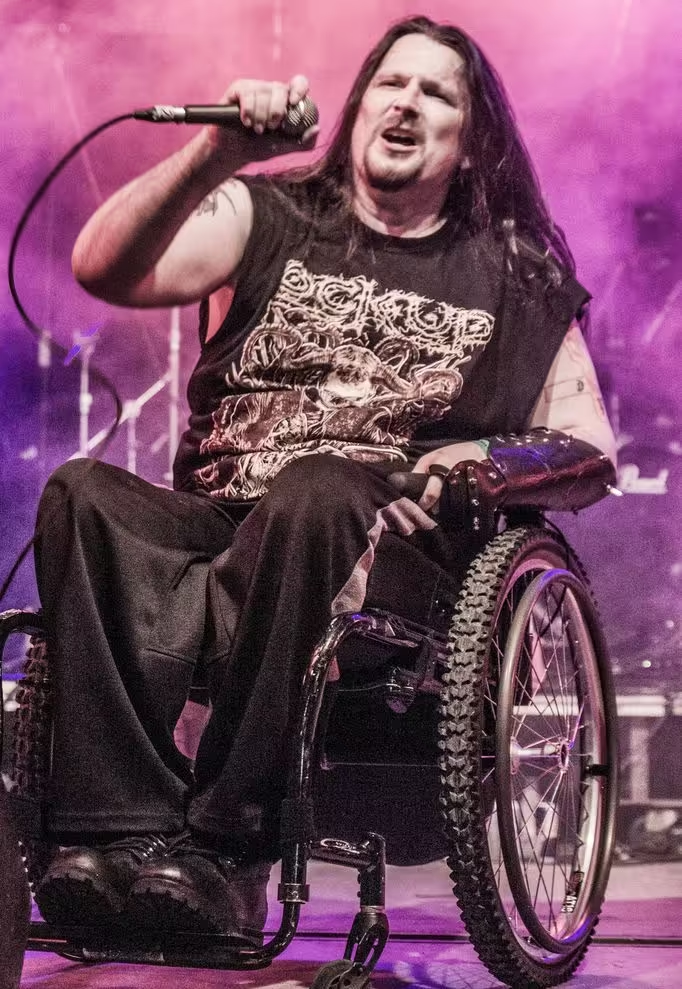
Others fell for their own reasons. Possessed had effectively ended in 1989 after Jeff Becerra was shot during an armed robbery and left paralysed from the chest down. Vio-lence dissolved when Robb Flynn left in 1992 to form Machine Head, whose 1994 debut Burn My Eyes helped invent groove metal and pointed the way out of thrash entirely. Exodus were dropped by Capitol and went on hiatus in 1993. Laaz Rockit split in 1992, Heathen in 1993, Forbidden in 1997. The genre was also fragmenting from within, splintering toward the death metal that Possessed and Sadus had pioneered and the groove metal that Flynn now championed.
And then there was Metallica. The Black Album had already smoothed the band's edges, but it was Load in 1996 and Reload in 1997, with their blues and country and alternative-rock leanings, the short hair and the eyeliner, that drew open accusations of selling out. When Metallica headlined Lollapalooza in 1996, a festival built on anti-mainstream credibility, the backlash was loud. Frontman James Hetfield, never one to apologise, leaned into it.
"The idea that we weren't supposed to be here is why I agreed to do Lollapalooza in the first place."
James Hetfield, Metallica, Rolling Stone
The scene's own veterans felt the pressure to change with the times, and some resented it bitterly. Gary Holt wrote an Exodus song called "Thrash Under Pressure" precisely because, in his words, "every thrash band we knew were no longer thrash bands in interviews." Mark Osegueda is blunt about how far the bottom fell out.
"The scene basically died throughout the '90s. Thrash metal, or metal in general, at least in the States, thrash metal especially, for my particular genre that I played in, it nosedived."
Mark Osegueda, Death Angel, Blabbermouth, 2025
Legacy and Influence
For something declared dead, Bay Area thrash left fingerprints on almost everything that came after it. It is, as the genre's historians put it, directly responsible for the development of death metal, black metal and groove metal, the three pillars of underground extreme music. Possessed and Sadus pushed it toward death metal; Robb Flynn and Machine Head dragged it toward groove metal; and the metalcore and deathcore of the 2000s were built on its riffing vocabulary. The Bay Area, alongside central Florida, is credited as a birthplace of American thrash, crossover thrash and death metal all at once.
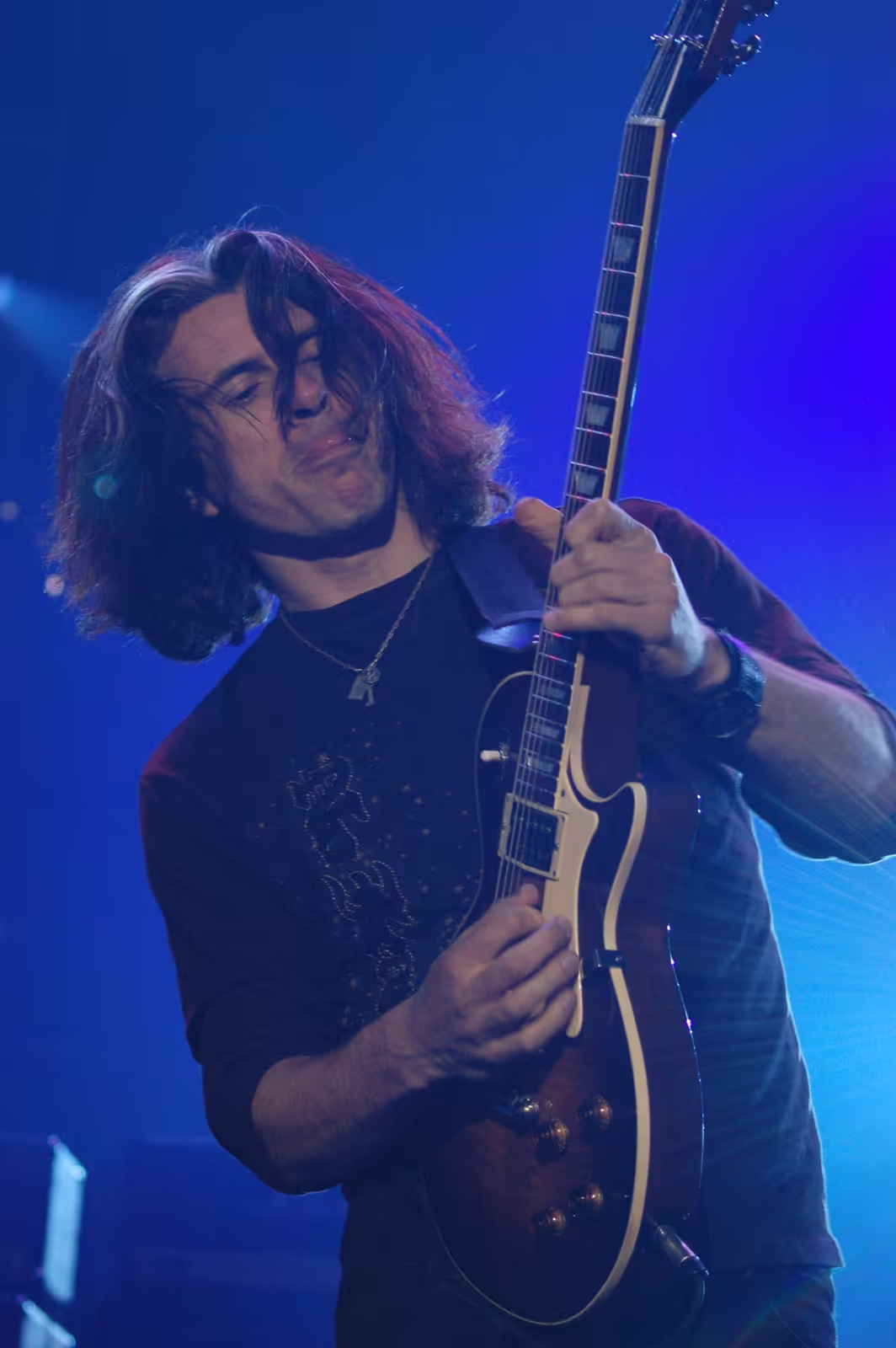
The individual stories ran in every direction. Metallica became the best-selling metal band of all time, with more than 160 million albums sold, a shelf of Grammys, and induction into the Rock and Roll Hall of Fame in 2009, the only one of the Big Four so honoured. Alex Skolnick reinvented himself as a serious jazz guitarist, leading the Alex Skolnick Trio while still playing in Testament, a swerve he describes with a grin.
"Going from metal to jazz is like going from tackle football to figure skating."
Alex Skolnick, Testament, Guitar.com, 2020
Machine Head's 2007 album The Blackening earned a Grammy nomination and topped end-of-year lists, proving Flynn's gamble had paid off. And when the surviving Big Four finally shared a stage in Warsaw in 2010 in front of around 81,000 people, then again across Europe and America in 2011, the moment felt like a coronation for a sound that had spent the 1990s in the wilderness. Kirk Hammett caught the strangeness of it perfectly.
"In 1988 this show never would have happened. In 1998 no one gave a fuck. Now in 2010 it's big fuckin' news."
Kirk Hammett, Metallica, Metal Hammer
The Resurgence: Is Bay Area Thrash Back?
Yes, on two fronts at once, and the comeback has been running for two decades now. The first front is the original bands, almost all of whom reunited and, remarkably, made some of the strongest music of their careers. The turning point was a grim one: a 2001 benefit concert called Thrash of the Titans, organised to support Testament's Chuck Billy and Death's Chuck Schuldiner, both then fighting cancer. It put the classic Bay Area bands back on a stage together, Billy beat his illness, and the scene slowly came back to life.
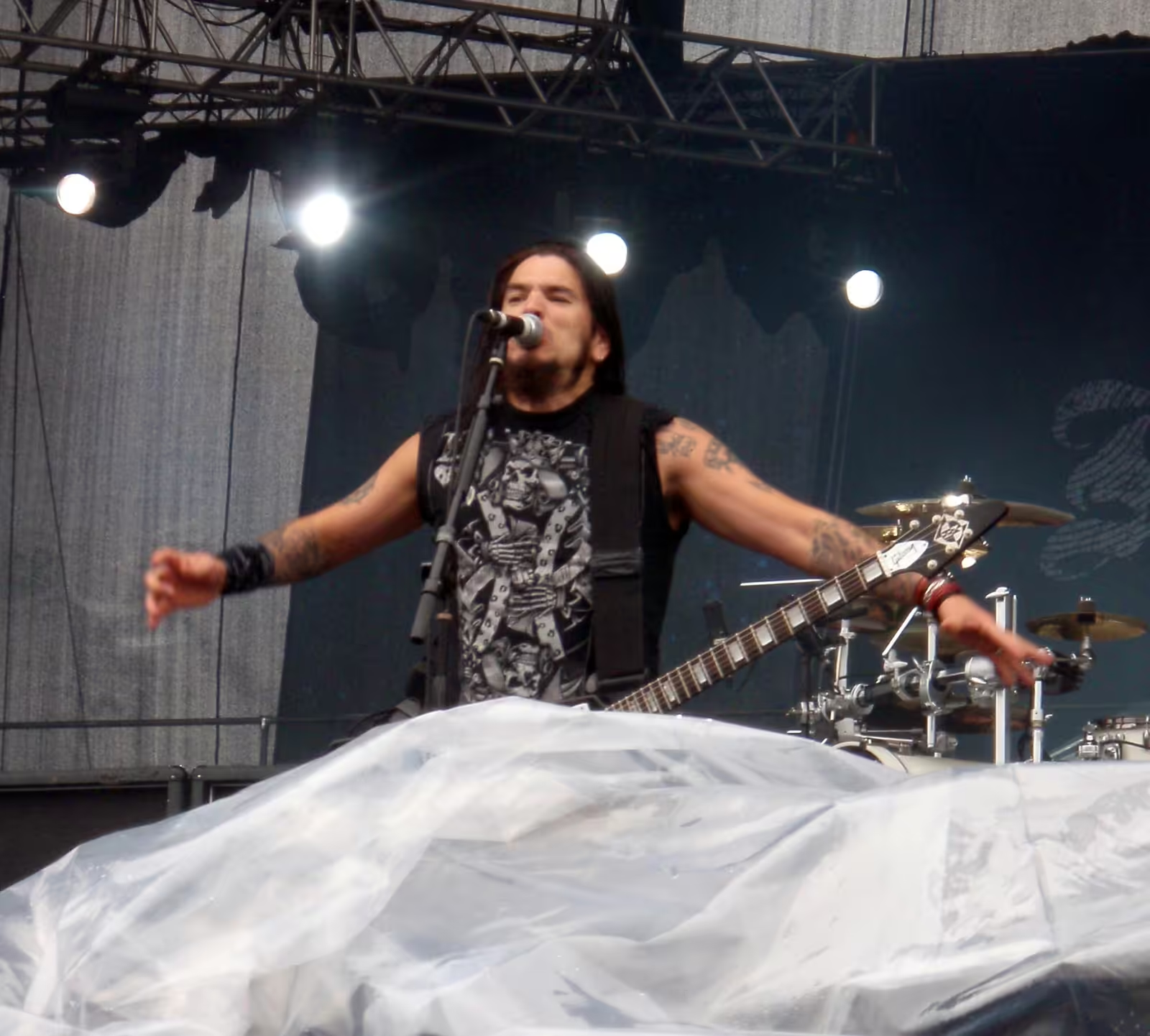
Testament have led the revival emphatically. After reuniting the classic line-up, they released a run of acclaimed albums, The Formation of Damnation in 2008, Dark Roots of Earth in 2012, Brotherhood of the Snake in 2016 and Titans of Creation in 2020, each charting higher than the band ever managed in its 1980s heyday. In October 2025 they released their fourteenth album, Para Bellum, which topped the UK rock and metal chart and was named the best metal album of the year by Loudwire. Chuck Billy, now an elder statesman of the genre, sounds energised rather than nostalgic.
"Each song has its own personality. It's not like it fits a record theme. They all stand alone."
Chuck Billy, Testament, Blabbermouth, 2026
Exodus came back too, releasing Tempo of the Damned in 2004, weathering line-up upheaval, welcoming Steve Souza back in 2014 for Blood In, Blood Out, and delivering the ferocious Persona Non Grata in 2021 after drummer Tom Hunting's recovery from cancer. Gary Holt, who has also spent years moonlighting in Slayer, summed up the latter record with characteristic relish.
"When the beat kicks in on the album-opening track, it's like a punch in the face!"
Gary Holt, Exodus, Guitar.com, 2021
Death Angel rebuilt themselves into one of modern thrash's most consistent bands, and their 2019 album Humanicide earned the title track a Grammy nomination for Best Metal Performance, the band's first ever. Mark Osegueda could hardly believe it.
"It blew my mind. It absolutely blew my mind."
Mark Osegueda, Death Angel, CBS San Francisco, 2020
Heathen returned in 2020 with their first album in a decade, Forbidden reunited more than once, and even Vio-lence came back in 2019, releasing the EP Let the World Burn in 2022, their first new music in nearly three decades. Singer Sean Killian set the bar simply.
"It's got to be heavy, it's got to be thrash. It's got to be Vio-Lence."
Sean Killian, Vio-lence, Echoes and Dust, 2022
The reunions reached their grandest expression in the Bay Strikes Back tour, which put Testament, Exodus and Death Angel on the same bill for five legs and more than 120 shows between 2020 and 2023, a rolling celebration of the scene that built them. And the activity has not slowed: a 2026 North American tour pairs Testament with Overkill and Destruction and ends, fittingly, in Berkeley, while Exodus tour Canada with Megadeth and Anthrax.
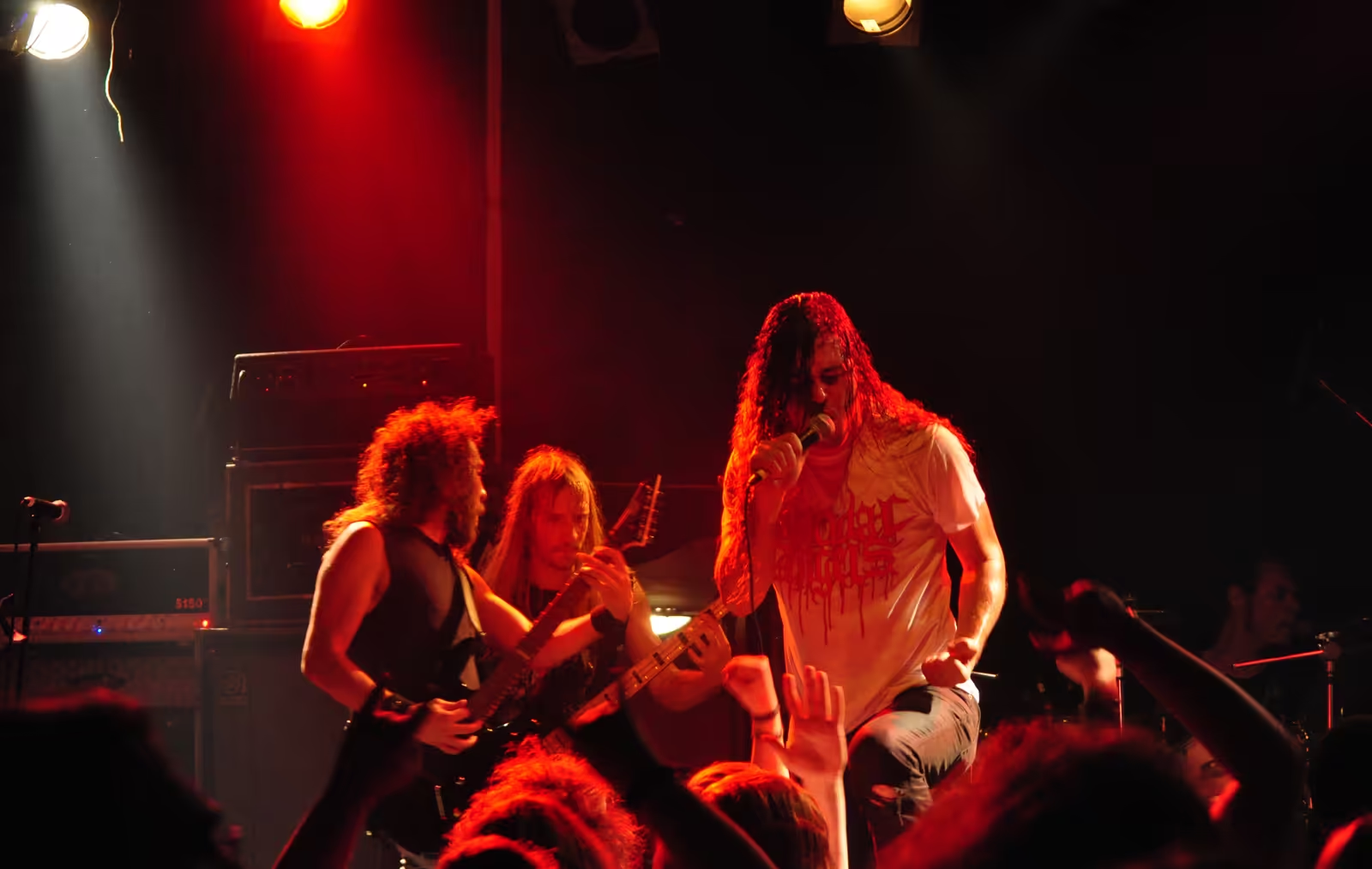
The second front is a whole new generation. A documented "thrash revival" took off around 2007 and 2008, a wave of younger bands who grew up on the Bay Area classics and set out to play them faster. Warbringer, from Southern California, Havok from Denver, Evile from England, Toxic Holocaust from Portland, the crossover-thrash party machine Municipal Waste from Virginia and Texas's fearsome Power Trip all carried the torch, and the Bay Area produced its own torch-bearer in Hatchet, the San Francisco band founded by Julz Ramos in 2005 in explicit homage to the city's 1980s heroes. Warbringer's John Kevill measures the revival's success in a way the original scene would recognise.
"The biggest achievement of all is that you can go and see a thrash metal concert in your town today pretty much."
John Kevill, Warbringer, Loudwire, 2025
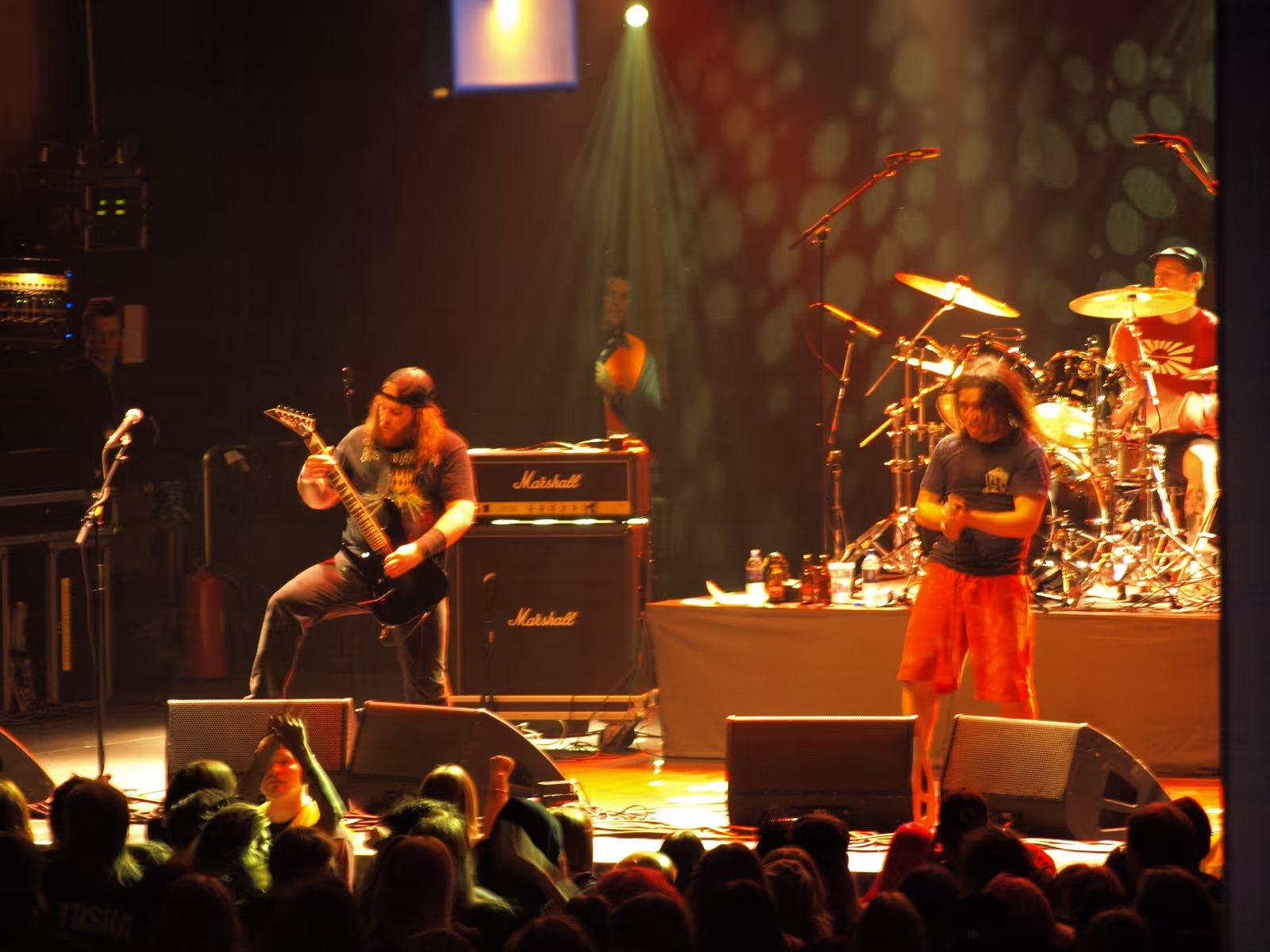
The new wave has its founding mission and its own scars. Havok's David Sanchez has described his band as a deliberate act of preservation, built "as a nod to the old-school greats" to fill the void when the originators retire. And the movement lost one of its brightest lights in 2020, when Power Trip's charismatic frontman Riley Gale died of an accidental overdose at 34, a death mourned across the entire metal world. The surviving members have since returned to the stage. If a new-generation Bay Area cohort beyond Hatchet is still thin, and the region's freshest extreme-metal energy now leans toward death metal, the broader truth is undeniable. The sound the Bay Area invented is healthier, more global and more loved than it has been since 1991.
Riffology Podcast Episodes from the Scene
Several of the albums in this story have a full Riffology podcast episode that pulls them apart track by track. Follow the album to listen.
| Album | Band | On the Riffology podcast |
|---|---|---|
| Ride the Lightning | Metallica | The 1984 leap that took thrash beyond the demo tapes. |
| Master of Puppets | Metallica | Thrash's masterpiece and first platinum album, in full. |
| The Black Album | Metallica | The genre's commercial peak and its great turning point. |
| The New Order | Testament | The record that crowned the Bay Area's second wave. |
Things You Might Not Know
| Fact | Detail |
|---|---|
| A borrowed name | Metallica got their name from Bay Area fanzine editor Ron Quintana, who had "Metallica" and "Metal Mania" on a shortlist; Lars Ulrich told him to take Metal Mania and kept Metallica for the band. |
| Hammett named Exodus | Kirk Hammett came up with the name Exodus and recruited singer Paul Baloff before he ever left to join Metallica. |
| A condition to join | Cliff Burton agreed to join Metallica only if they left Los Angeles and moved to the Bay Area, which they did in February 1983. |
| The ace of spades | Cliff Burton won the tour-bus bunk he died in on a hand of cards, drawing the ace of spades against Kirk Hammett the night before the 1986 crash. |
| Primus almost happened | Les Claypool, later of Primus and a school friend of Kirk Hammett, auditioned to replace Burton in 1986 but was reportedly told he was too good and too distinctive. |
| The first death metal album | Possessed's Seven Churches (1985) is widely credited as the first death metal record, and its closing track is literally called "Death Metal". |
| Teenage cousins | Death Angel formed as four Filipino-American cousins from Daly City, with drummer Andy Galeon only around 14 when the band recorded its debut. |
| No radio, no video, still platinum | Master of Puppets reached number 29 in 1986 with no single, no radio play and no music video, the first thrash album ever certified platinum. |
| A guitar teacher to the scene | Joe Satriani, based in Berkeley, taught Kirk Hammett, Alex Skolnick, Possessed's Larry LaLonde and Exodus's Rick Hunolt. |
| Double diamond | Metallica's Black Album was certified 20 times platinum in May 2025, the best-selling album of the modern sales-tracking era. |
| From thrash to jazz | Testament's Alex Skolnick left the band in 1993 to study jazz and now leads his own jazz trio alongside his metal day job. |
| Two bands before Machine Head | Robb Flynn played in both Forbidden Evil and Vio-lence before founding Machine Head and helping invent groove metal. |
| The Woodstock of thrash | Promoter Wes Robinson's 1984 Eastern Front festival at Berkeley's Aquatic Park has been called the Woodstock of Bay Area thrash. |
| A number-one in 2025 | Testament's Para Bellum topped the UK rock and metal chart in 2025 and was named Loudwire's number-one metal album of the year. |
The Riffology Podcast
Bay Area thrash was built for arguing about, which makes it perfect podcast fuel. On the Riffology podcast, Neil and Chris dig into the records that defined the scene, from the El Cerrito garage to the arena peak, pulling apart how they were made and why they still hit so hard. If this story sent you back to your old tapes, the episodes are where the deep dives live, and we'd love to hear which Bay Area record you would put at the very top. You can find Riffology on all the major podcast platforms.
Comments