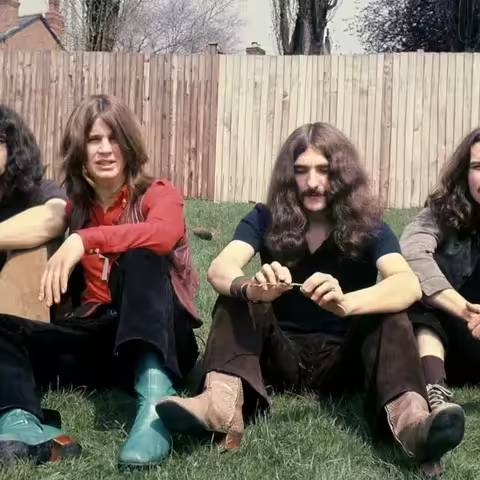
Tony Iommi was seventeen, working his last day at a Birmingham sheet-metal factory in 1965, when a press came down on his right hand and took the tips of the middle and ring fingers with it. The factory manager sat him down, slid a record across the table and told him to listen to a Belgian gypsy guitarist called Django Reinhardt who had played with two fingers after a caravan fire. Within three years Iommi had melted plastic from a Fairy Liquid bottle into a pair of homemade thimbles, started using lighter-gauge banjo strings, dropped the tuning of his Gibson SG to compensate for the slack in his prosthetics, and joined a four-piece in Aston with a singer who had advertised himself in a local music shop window as "OZZY ZIG Needs Gig - has own PA".
Across fifty-seven years, twenty studio albums, eleven different vocalists on record, three formal disbandments and one farewell at Villa Park watched live by 42,000 people and another five and a half million on pay-per-view, Black Sabbath did not just invent heavy metal, they spent the rest of the band's life arguing about whose riffs, whose lyrics, whose voice and whose volume defined it. On 22 July 2025, three weeks after Ozzy Osbourne walked off the Villa Park stage on a black throne, the original singer of the band that had soundtracked everyone from Metallica to Nirvana to Korn to Slayer was dead. By then Sabbath had already made the case that heavy metal was a genre with a single point of origin: a road called Park Lane in Aston, four working-class kids, and the wrong number of fingers on the wrong hand of the wrong man.
Band Facts
| Field | Detail |
|---|---|
| Origin | Aston, Birmingham, England |
| Formed | 1968 (named Black Sabbath, August 1969) |
| Years active | 1968-2006, 2011-2017, 2025 (one-off) |
| Original lineup | Tony Iommi (guitar), Ozzy Osbourne (vocals), Geezer Butler (bass), Bill Ward (drums) |
| Vocalists on record | Ozzy Osbourne, Ronnie James Dio, Ian Gillan, Glenn Hughes, Tony Martin (Ray Gillen recorded vocals later replaced) |
| Labels | Vertigo, Warner Bros., I.R.S., Sanctuary, Vertigo/Universal |
| Genres | Heavy metal, doom metal, hard rock, occult rock |
| Studio albums | 20 (8 with Ozzy, 3 with Dio, 5 with Tony Martin, 1 each with Gillan and Hughes, 1 reunion album, 1 demoted Iommi solo) |
| Producers | Rodger Bain, Patrick Meehan, Mike Butcher, Tom Allom, Martin Birch, Jeff Glixman, Vic Coppersmith-Heaven, Chris Tsangarides, Tony Iommi, Reinhold Mack, Ernie C, Bob Marlette, Rick Rubin |
| Certifications | Over 70 million records sold worldwide; 15 million RIAA-certified in the US |
| UK Music Hall of Fame | Inducted 2005 |
| Rock and Roll Hall of Fame | Inducted 13 March 2006 by Metallica |
| Grammy Awards | Two wins (Iron Man 2000, God Is Dead? 2014); Lifetime Achievement Award 2019 |
| Final show | Back to the Beginning, Villa Park, Birmingham, 5 July 2025 |
Birmingham, 1968: Mythology, Rare Breed and the Pivot to Black Sabbath
Aston in the late 1960s was a district of foundries, brick terraces and the constant low concussion of metal-stamping plant. Tony Iommi and Bill Ward had just come out of a blues-rock band called Mythology, broken up after a drug bust in Carlisle. Geezer Butler and Ozzy Osbourne had just come out of a band called Rare Breed. The four of them found each other through an advert Osbourne had placed in Ringway Music in Birmingham city centre, the sign that read "OZZY ZIG Needs Gig - has own PA". Geezer recognised him from a previous brief encounter; he and Iommi went round to Osbourne's parents' house in Lodge Road and the four of them agreed to start something new.
The first incarnation, in summer 1968, was a six-piece called the Polka Tulk Blues Band, named either after a brand of talcum powder or after an Indian and Pakistani clothing shop in Aston, depending on which member is asked. They cut down to a four-piece called Earth, gigged the Birmingham blueshouse circuit, and earned themselves a manager, Jim Simpson, the trumpet player from Locomotive who ran a small club called Henry's Blueshouse at the Crown Hotel. In December 1968 Iommi briefly defected to Jethro Tull, played The Rolling Stones Rock and Roll Circus with Ian Anderson and decided being a hired guitarist in someone else's band was not for him. He came back to Earth with what he later called "a new attitude altogether".
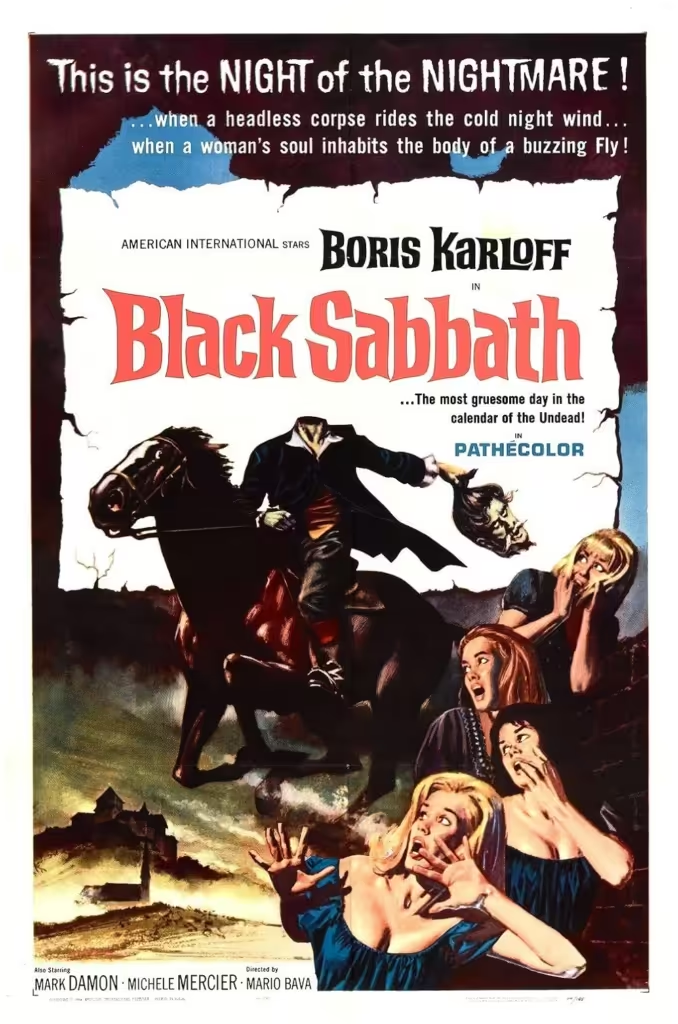
The pivot is one of the most-told stories in heavy metal, and worth telling again because it really did happen this quickly. Earth kept being booked at gigs that had been intended for a different, MOR-soft band of the same name; the band wanted out of the confusion. A cinema opposite their rehearsal room in Birmingham was showing the 1963 Mario Bava horror picture Black Sabbath, starring Boris Karloff. Geezer Butler watched the queue from the rehearsal-room window and remarked that it was strange people would pay good money to be frightened. He and Ozzy then wrote a song called Black Sabbath, built on the tritone, the medieval "diabolus in musica" interval that mediaeval composers had been told to avoid. By August 1969 the song had become the band, the band had a new name, and on 30 August 1969 they played their first show as Black Sabbath at the County Hall in Workington, Cumbria.
"Inspired by the new sound, the band changed their name to Black Sabbath in August 1969, and made the decision to focus on writing similar material in an attempt to create the musical equivalent of horror films."
Garry Sharpe-Young, MusicMight Black Sabbath biography, 2006
The Original-Ozzy Era: 1970 to 1978
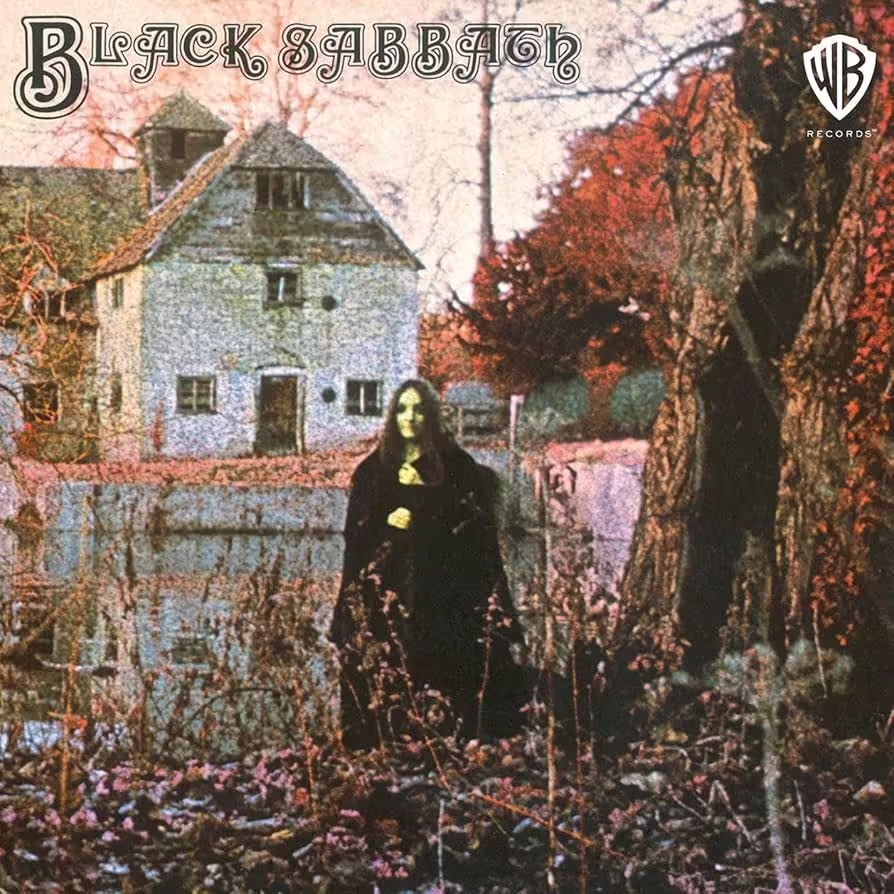
The debut album was recorded in two days at Regent Sound Studios in London with producer Rodger Bain in November 1969. Most of it was tracked live, vocals and all. Iommi later said the maths were simple: two days of studio time, one day for mixing, so they played the songs the way they played them on stage, no second takes. Vertigo Records released Black Sabbath on Friday 13 February 1970 with the front cover photograph of a hooded figure in front of Mapledurham Watermill in Oxfordshire. It went to number 8 in the UK and 23 on the Billboard 200, and Lester Bangs famously dismissed it in Rolling Stone as a record of "discordant jams with bass and guitar reeling like velocitised speedfreaks all over each other's musical perimeters". Six months later, Bangs wrote a positive review of the follow-up.
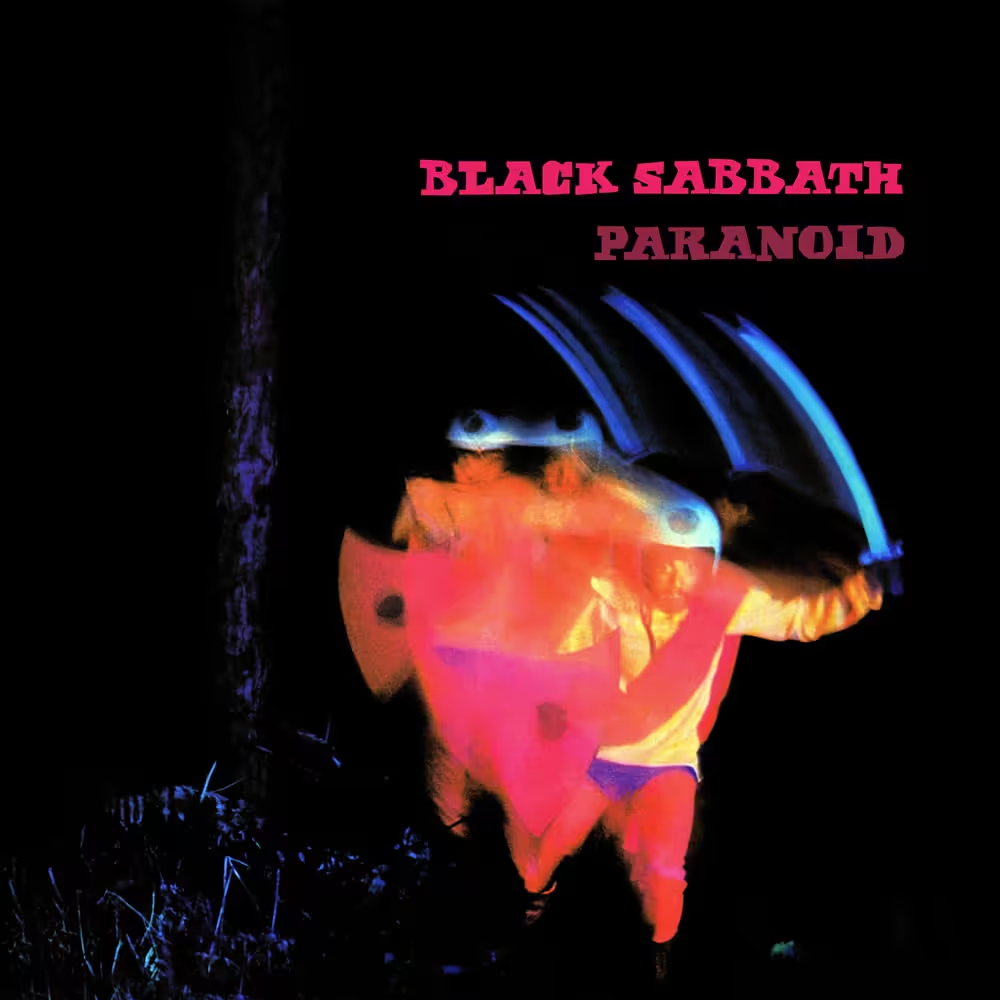
The follow-up was Paranoid, recorded in June 1970 and originally to be titled War Pigs after its anti-Vietnam opening track. Warners renamed it after the late-addition single. The title song was, by Bill Ward's own count, written in twenty-five minutes at the end of the sessions because the album was three minutes short. It went to number four on the UK singles chart, the only Sabbath single ever to crack the British top ten; the album displaced Simon and Garfunkel's Bridge Over Troubled Water at number one in the UK in October 1970. War Pigs, Iron Man, Hand of Doom and Fairies Wear Boots became the architecture of the genre.
Master of Reality followed in July 1971 and was the album that committed Iommi's tuning innovations to record: down-tuned three semitones in places, structurally heavier than anything else in shops that year. Sweet Leaf, Children of the Grave and Into the Void are now stoner-rock and doom-metal foundation stones. Critics were still hostile. Lester Bangs, again in Rolling Stone, called Children of the Grave "naive, simplistic, repetitive, absolute doggerel, but in the tradition of rock and roll. The only criterion is excitement, and Black Sabbath's got it." Vol. 4 came in September 1972, written and recorded at the Record Plant in Los Angeles with the help of what Bill Ward called a "briefcase full of cash" reserved for cocaine; the album they wanted to call Snowblind became the album the label called Vol. 4. Sabbath Bloody Sabbath in November 1973, written in the dungeon of the rented Clearwell Castle in the Forest of Dean, was the first Sabbath album to get serious mainstream press respect. Yes keyboardist Rick Wakeman played piano on Sabbra Cadabra in exchange, the story goes, for two pints of bitter.
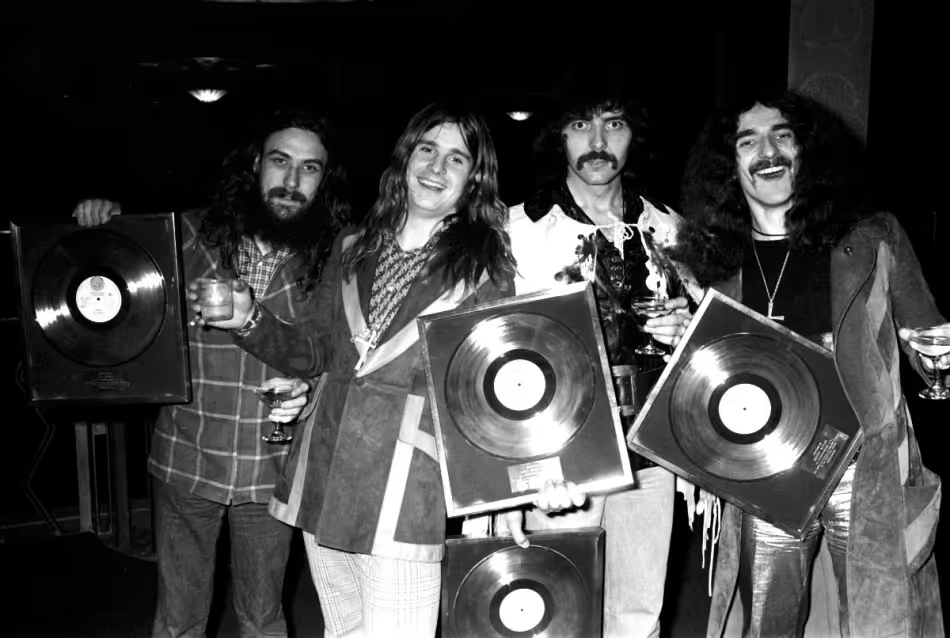
The mid-1970s ran on momentum. Sabotage in July 1975 contained Symptom of the Universe, the song most often credited with the first thrash-metal riff. The 1974 California Jam at the Ontario Motor Speedway in front of more than 200,000 people put them in front of a wider American audience than they had ever played to, and the broadcast on ABC got them into living rooms that would never have bought the records.
The wheels then came off in stages. Technical Ecstasy, released on 22 October 1976, was the first Sabbath record that critics judged on its own terms and found wanting; Ozzy was admitted to a Stafford psychiatric hospital before sessions ended. He briefly quit before Never Say Die!, then briefly came back. Vocalist Dave Walker, late of Fleetwood Mac and Savoy Brown, was hired and rehearsed material with the band, even appearing on the BBC West Midlands programme Look! Hear! on 8 January 1978 performing an early version of Junior's Eyes. Three days before sessions, Ozzy returned and refused to sing any of Walker's lyrics, so the album was effectively rewritten in five months at Sounds Interchange Studios in Toronto under what Iommi later described as round-the-clock cocaine. Never Say Die! came out in September 1978. The opening act on the supporting tour was a Californian band called Van Halen, on their first world tour, and reviewers regularly called Black Sabbath's headline set "tired and uninspired" by comparison. The original lineup played its last gig of the era on 11 December 1978 in Albuquerque. Five months later, on 27 April 1979, Iommi instructed Bill Ward to fire Ozzy.
- Black Sabbath: debut, Friday 13 February 1970, with Rodger Bain, two days to track.
- Paranoid: September 1970, the title song written in twenty-five minutes, the only UK top-ten single Sabbath ever had.
- Master of Reality: July 1971, dropped tuning, doom-metal genesis, Sweet Leaf and Children of the Grave.
- Vol. 4: September 1972, dedicated to "the great COKE-Cola company of Los Angeles".
- Sabbath Bloody Sabbath: November 1973, written in the dungeon of Clearwell Castle, Rick Wakeman on piano.
- Sabotage: July 1975, contains Symptom of the Universe and a string ensemble argument with their then management.
- Technical Ecstasy: October 1976, with Bill Ward singing lead on It's Alright.
- Never Say Die!: September 1978, opened on tour by Van Halen, ended on a sacking.
Studio Albums
| Album | Year | Lead vocals | UK / US peak | Notable tracks |
|---|---|---|---|---|
| Black Sabbath | 1970 | Ozzy Osbourne | UK 8 / US 23 | Black Sabbath, N.I.B., The Wizard |
| Paranoid | 1970 | Ozzy Osbourne | UK 1 / US 12 | War Pigs, Paranoid, Iron Man |
| Master of Reality | 1971 | Ozzy Osbourne | UK 5 / US 8 | Sweet Leaf, Children of the Grave, Into the Void |
| Vol. 4 | 1972 | Ozzy Osbourne | UK 8 / US 13 | Supernaut, Snowblind, Changes |
| Sabbath Bloody Sabbath | 1973 | Ozzy Osbourne | UK 4 / US 11 | Sabbath Bloody Sabbath, Killing Yourself to Live |
| Sabotage | 1975 | Ozzy Osbourne | UK 7 / US 28 | Hole in the Sky, Symptom of the Universe |
| Technical Ecstasy | 1976 | Ozzy Osbourne | UK 13 / US 51 | Dirty Women, It's Alright |
| Never Say Die! | 1978 | Ozzy Osbourne | UK 12 / US 69 | Never Say Die, Hard Road, Junior's Eyes |
| Heaven and Hell | 1980 | Ronnie James Dio | UK 9 / US 28 | Neon Knights, Heaven and Hell, Children of the Sea |
| Mob Rules | 1981 | Ronnie James Dio | UK 12 / US 29 | Turn Up the Night, The Sign of the Southern Cross, The Mob Rules |
| Born Again | 1983 | Ian Gillan | UK 4 / US 39 | Trashed, Zero the Hero, Disturbing the Priest |
| Seventh Star | 1986 | Glenn Hughes | UK 27 / US 78 | In for the Kill, No Stranger to Love, Seventh Star |
| The Eternal Idol | 1987 | Tony Martin | UK 66 / US 168 | The Shining, Ancient Warrior, The Eternal Idol |
| Headless Cross | 1989 | Tony Martin | UK 31 / US 115 | Headless Cross, When Death Calls, Devil and Daughter |
| Tyr | 1990 | Tony Martin | UK 24 / US - | Anno Mundi, The Sabbath Stones, Heaven in Black |
| Dehumanizer | 1992 | Ronnie James Dio | UK 28 / US 44 | Computer God, TV Crimes, I |
| Cross Purposes | 1994 | Tony Martin | UK 41 / US 122 | I Witness, Virtual Death, Cross of Thorns |
| Forbidden | 1995 | Tony Martin | UK 71 / US - | The Illusion of Power, Get a Grip, Kiss of Death |
| 13 | 2013 | Ozzy Osbourne | UK 1 / US 1 | End of the Beginning, God Is Dead?, Loner |
Ozzy Out, Dio In: Heaven and Hell, Mob Rules and Live Evil
The hire of Ronnie James Dio in summer 1979 was, in retrospect, the most aesthetically successful course-correction in metal. Dio had just left Ritchie Blackmore's Rainbow; his voice was an operatic, narrative instrument utterly unlike Ozzy's nasal, follow-the-riff style. Iommi later put the difference plainly: "Dio would sing across the riff, whereas Ozzy would follow the riff, like in Iron Man." Heaven and Hell, recorded with producer Martin Birch and released on 25 April 1980, opens with Neon Knights and contains the title track that would become Sabbath's second canonical anthem. It went to nine in the UK and eventually platinum in the US, and convinced an entire wave of fans that Sabbath was a creative entity larger than its founding singer.
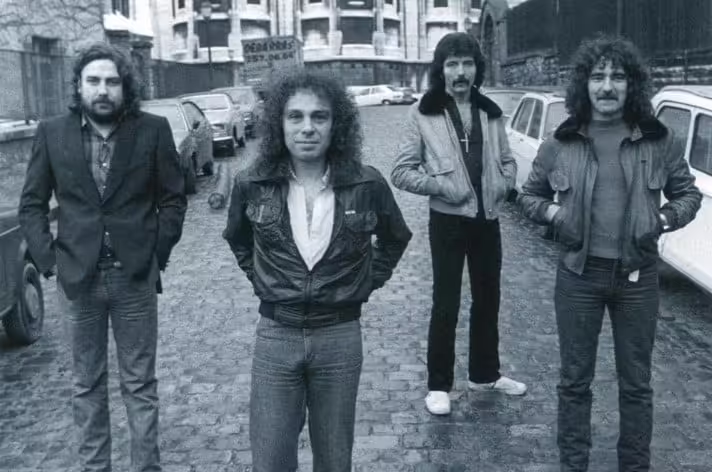
Bill Ward did not last. On 18 August 1980, halfway through the Heaven and Hell tour, he packed his case, walked out of a Bloomington, Minnesota hotel and got on a bus. His own account, given years later, was that he could not stand on stage without Ozzy and was drinking twenty-four hours a day. He was replaced by Vinny Appice, brother of Vanilla Fudge's Carmine Appice. Mob Rules, the second Dio-era studio album, was released in October 1981. Its title track was recorded at John Lennon's old house in England and turned up on the soundtrack of the animated film Heavy Metal. Live Evil followed in January 1983, recorded across Dallas, San Antonio and Seattle on the Mob Rules tour, and the mix sessions destroyed the lineup. Iommi and Butler accused Dio, on bad information from the engineer, of sneaking into the studio at night to push his vocal up in the mix. Dio accused Iommi and Butler of working too many photographs of themselves into the artwork. He and Appice walked.
"When it comes time for the vocal, nobody tells me what to do. Nobody. Because they're not as good as me, so I do what I want to do. I refuse to listen to Live Evil, because there are too many problems."
Ronnie James Dio, in Steven Rosen, The Story of Black Sabbath: Wheels of Confusion, 1996
The Wilderness Years: Gillan, Hughes, Martin and Forbidden
What followed was thirteen years of a band that nobody, including Iommi, was always entirely sure was Black Sabbath. The first replacement was Ian Gillan, who joined in December 1982 in what was originally meant to be a separate project but became, under label pressure, a Sabbath album. Born Again was released on 9 September 1983 and, despite reaching number four in the UK, was panned. Bill Ward, briefly returned and newly sober, played on it but quit again before the tour because he could not face the road. Bev Bevan of ELO replaced him. The supporting tour featured a Stonehenge stage set, ordered in metres but specified by Don Arden in feet, the prop arrived 45 feet tall when it was meant to be 15, would not fit any venue, and inspired the corresponding scene in This Is Spinal Tap.
"He wrote it down in metres but he meant to write it down in feet. The people who made it saw fifteen metres instead of fifteen feet. It was 45 feet high and it wouldn't fit on any stage anywhere so we just had to leave it in the storage area. It cost a fortune to make but there was not a building on earth that you could fit it into."
Geezer Butler, ClassicRockRevisited.com, 2006
Gillan returned to the reformed Deep Purple in 1984. Bevan and Butler left at the same time. The original lineup briefly reassembled on 13 July 1985 for a Live Aid set at JFK Stadium in Philadelphia, the first time Iommi, Osbourne, Butler and Ward had stood on a stage together since 1978. Geezer Butler later told Kerrang! that they had all turned up drunk, "but we'd all got drunk separately". Iommi then drafted a Tony Iommi solo album with bassist Dave Spitz, drummer Eric Singer, and a rotating series of guest vocalists that quickly contracted to one: Glenn Hughes, late of Deep Purple Mk III and Trapeze. Warner Bros. refused to release the resulting record under any name other than Black Sabbath. The compromise was the credit "Black Sabbath featuring Tony Iommi" and the album was Seventh Star, released in January 1986. Hughes, who suffered a fractured orbital bone in a bar fight with the production manager four days before the tour, was replaced mid-tour by an unknown New Jersey vocalist called Ray Gillen.
Gillen sang the original sessions for the next album, The Eternal Idol, before quitting to form Blue Murder with John Sykes. Iommi rerecorded the vocals with Birmingham journeyman Tony Martin, whose tenure across the next eight years would prove to be the longest of any non-Ozzy frontman in the band's history. Vertigo and Warner Bros. dropped Sabbath after The Eternal Idol failed to chart. Headless Cross followed on the smaller I.R.S. Records in April 1989, with Cozy Powell on drums and a guest solo from Iommi's old friend Brian May on the song When Death Calls. Tyr, in August 1990, leaned on Norse mythology and was the first Sabbath album not to chart on the Billboard 200. Black Sabbath were one of the first Western bands to play Russia after Gorbachev opened the country in 1989, completing a 23-date tour with Girlschool that would have read, on paper, as a rebound success. The American shows that year were cancelled.
In 1991 Iommi dissolved the Tony Martin lineup to bring back Dio and reunite the Mob Rules four-piece for Dehumanizer. The recording took a year, cost a million dollars, and was punctuated by Cozy Powell breaking his hip when his horse fell on him during pre-production rehearsals. The album came out on 22 June 1992 and was the band's biggest commercial success of the decade, until Dio refused to support Ozzy at his "retirement" show in Costa Mesa, California, called Ozzy a clown in print, and walked out of a 13 November 1992 show in Oakland. Rob Halford filled in on two days' notice, and at the second show Iommi, Butler and Bill Ward joined Ozzy on stage for a four-song reunion that was understood, that night, to be the end of the line for Dio-era Sabbath.
Tony Martin returned, in his second tenure, for two more albums. Cross Purposes in February 1994 contained the song Evil Eye, co-written but uncredited by Eddie Van Halen because of label restrictions. Forbidden in June 1995 was produced by Body Count guitarist Ernie C and featured a guest vocal from Ice-T on The Illusion of Power. The album was savaged. Tony Martin himself later described it as a contractual filler that had got the band out of the I.R.S. deal "and into the reunion. However I wasn't privy to that information at the time". Iommi spent 2024 quietly remixing Forbidden for the Anno Domini 1989-1995 box set as a partial atonement.
- Born Again (1983): Ian Gillan; the Stonehenge prop, the Spinal Tap parallel, the only Black Sabbath album with a baby on the cover.
- Seventh Star (1986): Glenn Hughes; intended as Tony Iommi solo, released by Warner under the band name with the awkward "featuring" credit.
- The Eternal Idol (1987): Tony Martin; the first record where Tony Martin's vocals replaced someone else's mid-process.
- Headless Cross (1989): Tony Martin, Cozy Powell, I.R.S.; the album AllMusic called the finest non-Ozzy or Dio Sabbath record.
- Tyr (1990): Tony Martin; Norse mythology, no US tour, first Sabbath album to miss the Billboard 200.
- Dehumanizer (1992): Dio; one year, one million dollars, one collapsed horse and one walkout in Oakland.
- Cross Purposes (1994): Tony Martin; uncredited Eddie Van Halen co-write on Evil Eye.
- Forbidden (1995): Tony Martin; produced by Body Count's Ernie C, with Ice-T on The Illusion of Power, remixed by Iommi for the 2024 box set.
Vocalists Across the Decades
| Vocalist | Years | Studio albums | Notes |
|---|---|---|---|
| Ozzy Osbourne | 1968-1977, 1978-1979, 1997-2006, 2011-2017, 2025 | 9 (eight 1970s, one in 2013) | Founding vocalist; fired by Iommi in April 1979; reunited at Live Aid 1985, on tour from 1997, on 13 in 2013, and at Back to the Beginning in 2025. |
| Dave Walker | 1977-1978 | 0 | Ex-Fleetwood Mac, ex-Savoy Brown; rehearsed Junior's Eyes; played one televised performance on BBC's Look! Hear! before Ozzy returned. |
| Ronnie James Dio | 1979-1982, 1991-1992, then as Heaven & Hell 2006-2010 | 3 (Heaven and Hell, Mob Rules, Dehumanizer) | Ex-Rainbow; brought operatic, narrative phrasing; left after Live Evil mix dispute and again after refusing to support Ozzy in 1992. |
| Ian Gillan | 1982-1984 | 1 (Born Again) | Ex-Deep Purple; one tour, one Stonehenge debacle, one return to Purple. |
| David Donato | 1984 | 0 | Cut a Bob Ezrin-produced demo with the band; never officially released. |
| Glenn Hughes | 1984-1986 | 1 (Seventh Star) | Ex-Deep Purple, ex-Trapeze; album credited "Black Sabbath featuring Tony Iommi"; pulled off the supporting tour after a fractured orbital bone. |
| Ray Gillen | 1986-1987 | 0 | Recorded the original Eternal Idol vocals; quit to form Blue Murder; tracks rerecorded by Tony Martin. |
| Tony Martin | 1987-1991, 1993-1996 | 5 (The Eternal Idol, Headless Cross, Tyr, Cross Purposes, Forbidden) | Birmingham vocalist; longest-serving non-Ozzy frontman; remixed Forbidden re-released 2024 in the Anno Domini 1989-1995 box. |
Reunion, Heaven & Hell and 13
The first formal reunion happened in summer 1997, when Iommi, Butler and Ozzy co-headlined Ozzfest with Ozzy's drummer Mike Bordin on Bill Ward's stool. By December that year Ward was back, and the Birmingham NEC shows that month were taped for the live album Reunion, released on 20 October 1998. The single Iron Man, recorded thirty years earlier, won the band their first Grammy, for Best Metal Performance, in 2000. In November 2005 Black Sabbath were inducted into the UK Music Hall of Fame. Four months later, on 13 March 2006, after Ozzy had famously rejected the initial 1999 nomination as "meaningless", they were inducted into the US Rock and Roll Hall of Fame by Lars Ulrich and James Hetfield, who then performed Hole in the Sky and Iron Man as the induction tribute.
"Sabbath got me started on all that evil-sounding shit, and it's stuck with me. Tony Iommi is the king of the heavy riff."
James Hetfield of Metallica, Rock and Roll Hall of Fame induction, 13 March 2006
Between 2006 and 2010, the Mob Rules lineup of Iommi, Butler, Dio and Vinny Appice toured and recorded under the name Heaven & Hell, partly to avoid confusion with the still-extant Ozzy lineup and partly because Iommi was being sued by Ozzy over the Black Sabbath name. The Devil You Know, released in April 2009, was the band's first new studio material in seventeen years and arguably the strongest record any of those four had made since Mob Rules. Ronnie James Dio died of stomach cancer on 16 May 2010 at the age of 67. The legal action between Ozzy and Iommi was settled the following month.
The original lineup announced its second reunion on 11 November 2011 with the intention of recording a new studio album with Rick Rubin. On 9 January 2012 Iommi was diagnosed with lymphoma, derailing the European tour to two festival dates. In February 2012 Bill Ward announced that he would not record until he was offered a "signable contract"; he never was, and the album was made without him.
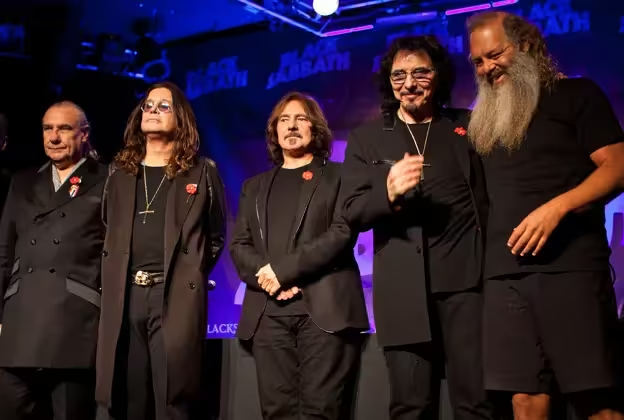
The drummer chosen, by Rubin's recommendation, was Brad Wilk of Rage Against the Machine and Audioslave. 13 was released on 11 June 2013, debuted at number one on both the UK Albums Chart and the Billboard 200, the band's first US number one, forty-three years after the debut, and the lead track God Is Dead? won the band's second Grammy for Best Metal Performance in 2014. The End Tour ran from January 2016 to 4 February 2017, when the original-but-Brad-not-Bill lineup played its final show at the Genting Arena in Birmingham. On 7 March 2017 the band announced its disbandment.
Back to the Beginning and the Death of Ozzy Osbourne
In February 2023 Ozzy Osbourne announced he was retiring from touring after a 2019 fall and a series of surgeries had not produced sufficient recovery. He had been diagnosed with Parkinson's disease in 2020. Iommi, Butler and Ward all spent the next two years saying, in print, that they would play one last show with Bill if Ozzy could get healthy enough to do it. On 5 February 2025 the announcement came: Back to the Beginning, Villa Park, Aston, Birmingham, on 5 July 2025. The original lineup of Iommi, Osbourne, Butler and Ward, together for the first time in twenty years, with proceeds going to Cure Parkinson's, Birmingham Children's Hospital and Acorns Children's Hospice. Tom Morello of Rage Against the Machine was musical director.
The bill that grew over the next five months read like a Loudwire poll's idea of a guest list. Metallica, Guns N' Roses, Tool, Slayer, Pantera, Gojira, Alice in Chains, Halestorm, Lamb of God, Anthrax, Mastodon and Rival Sons all played sets. Steven Tyler, members of Soundgarden, Slash, Billy Corgan, Sammy Hagar, Jake E. Lee and a rotating cast of supergroup configurations filled the gaps. One week before the gig, the four original band members were made Freemen of the City of Birmingham. Ozzy played a five-song solo set seated on a black throne built around a vampire-bat motif. Sabbath played four songs to close: War Pigs, N.I.B., Iron Man and Paranoid. Forty-two thousand people were inside the stadium and another 5.8 million watched on pay-per-view.
"I'm not going to get up there and do a half-hearted Ozzy looking for sympathy. What's the fucking point in that? I'm not going up there in a fucking wheelchair."
Ozzy Osbourne, Rolling Stone, 5 February 2025
Ozzy Osbourne died of a heart attack at his home in Buckinghamshire on 22 July 2025, seventeen days after the Villa Park show. He was 76. On 30 July his funeral cortege passed through Broad Street and stopped at Black Sabbath Bridge, where Sharon Osbourne and the family read tributes left by mourners on the railings; an estimated 100,000 people lined the route. A 100-minute concert film of the Villa Park show, titled Back to the Beginning: Ozzy's Final Bow, will receive a theatrical release in early 2026.
Legacy and Influence
The bald commercial figure, over 70 million records sold, 15 million RIAA-certified in the US, does not really capture Black Sabbath's leverage on the rest of metal. Almost every subgenre that exists in 2026 traces back to a specific Sabbath choice. Doom metal is Master of Reality. Stoner rock is Sweet Leaf and Sleep's career. Thrash metal cites Symptom of the Universe as its first riff. Sludge runs from Eyehategod back through Vol. 4. Grunge, by Kim Thayil's own admission, was Soundgarden trying not to sound like Sabbath until it gave up and embraced it. The list of bands who would not exist without the first six Sabbath albums is, depending on who is doing the listing, a roll-call somewhere between Metallica and Slipknot.
"The heaviest, scariest, coolest riffs and the apocalyptic Ozzy wail are without peer. You can hear the despair and menace of the working-class Birmingham streets they came from in every kick-ass, evil groove."
Tom Morello of Rage Against the Machine, MTV's Greatest Metal Bands of All Time, 2006
Tony Iommi's contribution to electric guitar is partly compositional and partly metallurgical. The lighter-gauge strings he commissioned because his prosthetic finger-tips could not bend standard ones became, over time, the gauges that the Picato and Ernie Ball companies began offering as standard. The down-tuning he used to slacken the strings further, born of the same prosthetic constraint, is now the default of every metal guitarist who came after him. Geezer Butler's bass-as-co-lead phrasing rewrote the role; Bill Ward's jazz-derived swing is the reason Sabbath songs feel like they breathe rather than march. Ozzy's voice, often dismissed at the time as flat, turned out to be the only one that could survive sitting on top of those particular riffs without competing with them.
"A band that didn't apologise for coming to town. It just stepped on buildings when it came to town."
Ronnie James Dio, BBC Radio 1 Friday Rock Show, 21 August 1987
The corporate honours kept arriving. UK Music Hall of Fame in 2005, US Rock and Roll Hall of Fame in 2006, a Grammy Lifetime Achievement Award in 2019, and a 2023 Birmingham Royal Ballet production called Black Sabbath: The Ballet at the Birmingham Hippodrome. There is a Black Sabbath Bridge on Broad Street with a permanent metalwork bench installed in 2019 that has, since 22 July 2025, become a continuous shrine. Bill Ward, the only original Sabbath who is still living and playing, has spent the months since Villa Park in Birmingham. Iommi has continued to insist he has no plans to tour again under any name. Tony Martin's Anno Domini 1989-1995 box set, released on 31 May 2024, is the closest thing the wilderness-years catalogue has ever had to a corrective remaster. Geezer Butler's 2023 autobiography Into the Void is the third member-written history of the band on a shelf that already contains Iommi's Iron Man and Ozzy's I Am Ozzy.
Things You Might Not Know
| Fact | Detail |
|---|---|
| Iommi's prosthetics | Iommi's homemade fingertip thimbles were originally cut from a melted-down Fairy Liquid washing-up bottle, then covered in leather sliced from an old jacket. |
| Two days, then a year on the chart | The debut album was tracked live in two days at Regent Sound and stayed on the Billboard 200 for over a year despite a hostile review from Lester Bangs in Rolling Stone. |
| The 25-minute hit | Bill Ward put it on record that the title song Paranoid was written "in twenty, twenty-five minutes from top to bottom" because the album was three minutes short. It became the only Sabbath single ever to reach the UK top ten. |
| Rick Wakeman's piano fee | Yes keyboardist Rick Wakeman's piano part on Sabbra Cadabra was reportedly paid for in two pints of bitter at the pub next door to Morgan Studios. |
| The Stonehenge that was too big | Don Arden specified the Born Again tour's Stonehenge stage prop in metres, not feet; it arrived 45 feet high, fitted no venue on earth, and inspired the corresponding scene in This Is Spinal Tap. |
| Drunk separately at Live Aid | The original four reunited at Live Aid in Philadelphia on 13 July 1985 for the first time since 1978. Geezer Butler later told Kerrang!, "we were all drunk when we did Live Aid, but we'd all got drunk separately." |
| An uncredited Eddie Van Halen | The song Evil Eye on Cross Purposes (1994) was co-written by Eddie Van Halen, who could not be credited because of his contract with Warner Bros. |
| Ice-T on a Sabbath record | The opening track of 1995's Forbidden, The Illusion of Power, features a guest vocal from Ice-T, an artefact of producer Ernie C's day job in Body Count. |
| Brian May plays a solo | Queen's Brian May, a long-time friend of Iommi, played the lead guitar solo on the song When Death Calls from Headless Cross (1989). |
| The first US number one | 2013's 13 was the band's first US number one album, forty-three years after the self-titled debut. It was also the longest gap between an act's debut and first US chart-topper at the time. |
| Ward's signable contract | Bill Ward did not play on 13 because, by his own statement in February 2012, he was never offered "a signable contract". The drummer on the record is Brad Wilk of Rage Against the Machine and Audioslave. |
| Forbidden, remixed by Iommi | The Anno Domini 1989-1995 box set, released on 31 May 2024, includes Iommi's own remix of Forbidden, a partial atonement for the album he, Tony Martin and most reviewers had previously called the band's worst. |
| Freedom of the City | One week before the Back to the Beginning show, on 26 June 2025, all four original members were made Freemen of the City of Birmingham by Birmingham City Council. It was the first time the honour had been given to a band. |
| The seventeen-day farewell | Ozzy Osbourne died on 22 July 2025, exactly seventeen days after walking off the Villa Park stage. The 100-minute concert film of the show, titled Back to the Beginning: Ozzy's Final Bow, gets a theatrical release in early 2026. |
Comments