Nirvana's Nevermind knocked Michael Jackson off the top of the American album chart in the second week of January 1992, and almost nobody, least of all the band's own record label, had seen it coming. The genre that did it had a name that had been meant as an insult: grunge, a word a Seattle singer once used to mock his own group, that a record label then stamped on its catalogue as a boast. Within four months a scene that had spent years playing to a few hundred people in a rainy, isolated corner of the Pacific Northwest was selling records at three hundred thousand copies a week and rewriting what the mainstream sounded like.
The story of grunge is stranger than the flannel-and-feedback cliche suggests. It is the story of a regional sound that a tiny independent label deliberately mythologised, flying a British journalist across the Atlantic to invent a scene. It is the story of four Seattle bands, Nirvana, Pearl Jam, Soundgarden and Alice in Chains, who conquered the world and then paid a terrible price for it, with heroin and suicide claiming Andrew Wood, Kurt Cobain, Layne Staley, Chris Cornell and Scott Weiland. And it is the story of a movement that was pronounced dead in the mid-1990s and yet, three decades on, headlines festivals, tops the album chart and gets rediscovered by teenagers who were not born when it started. This is the whole thing, from the Melvins' garage in Montesano to Pearl Jam's Dark Matter.
Grunge: Scene Facts
| Field | Detail |
|---|---|
| Scene | Grunge (also the "Seattle sound," Seattle grunge) |
| Origin | Seattle and the wider Pacific Northwest (Aberdeen, Olympia, Ellensburg, Washington state) |
| Peak years | 1991 to 1994 |
| Roots and forebears | Black Sabbath, Neil Young, the Stooges, punk and hardcore (Black Flag), the Melvins, the U-Men, Sonic Youth, Pixies |
| Defining bands | Nirvana, Pearl Jam, Soundgarden, Alice in Chains, Mudhoney, Screaming Trees |
| Defining albums | Nevermind (1991), Ten (1991), Dirt (1992), Superunknown (1994) |
| Key labels | Sub Pop, plus majors A&M, DGC/Geffen, Epic and Columbia |
| Key venues | The Off Ramp, the Vogue and the Central Tavern in Seattle; Reciprocal Recording in Ballard |
| Key media | Sub Pop and its Singles Club, The Rocket, Melody Maker, MTV, Lollapalooza, the film Singles |
| Sound in a line | Detuned, fuzz-heavy guitars and sludgy mid-tempos welded to punk attitude, with lyrics about alienation and apathy |
| Subgenres and offshoots | Post-grunge, sludge metal, the later grungegaze revival |
| Decline | 1994 to 1997: Kurt Cobain's death, heroin, burnout and a wave of watered-down imitators |
| Revival | Pearl Jam's Dark Matter (2024), Soundgarden's 2025 Rock Hall induction and a Gen Z grungegaze wave |
The Roots: Black Sabbath, Neil Young and the Slowest Punk in America
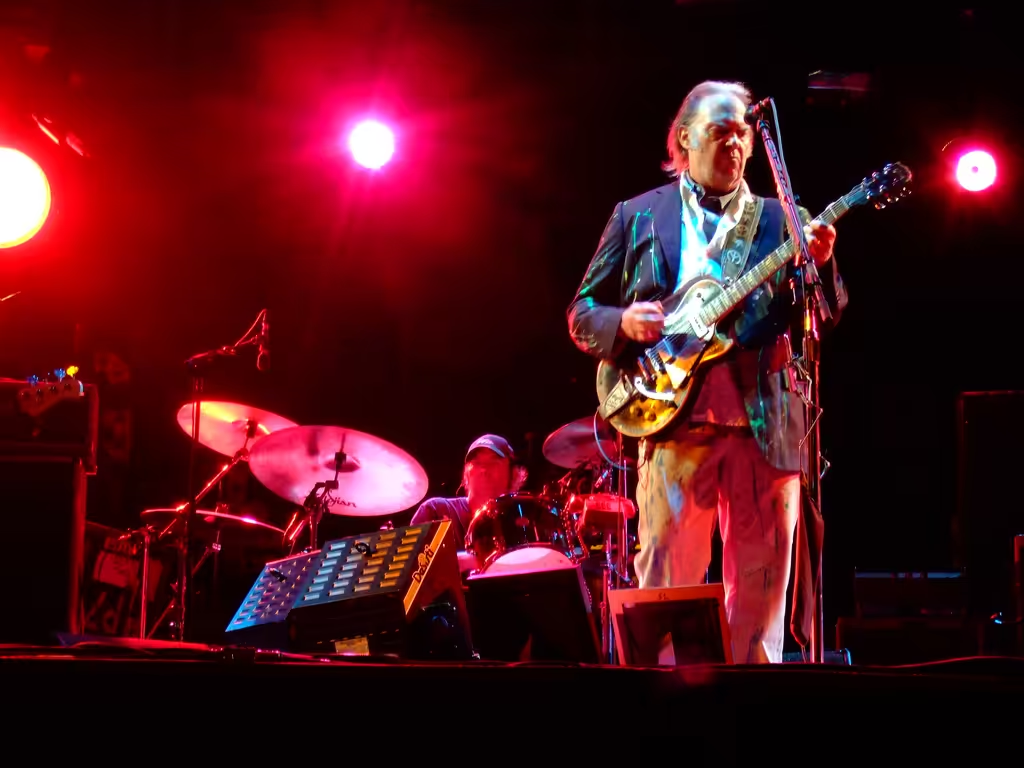
Grunge did not fall out of the sky. It was assembled slowly, out of a very particular set of ingredients that could only have come together where they did. Take the heaviness of Black Sabbath and the detuned, feedback-drenched guitar of Neil Young, whose 1979 album Rust Never Sleeps prefigured the sound so completely that a Tower Records magazine crowned him "the Godfather of Grunge" as early as December 1991. Add the speed and the do-it-yourself defiance of punk rock. Then, crucially, slow the whole thing back down again.
The band that did the slowing were the Melvins, formed in 1983 in the tiny logging town of Montesano, Washington, and named after a disliked supervisor at the Thriftway where guitarist Buzz Osborne worked. When drummer Dale Crover joined in 1984, the group, in the words of their own history, "started to play songs slower and heavier than nearly anyone else at the time." The trigger was a hardcore record. Black Flag's My War, released in March 1984, devoted its entire second side to plodding, Sabbath-heavy dirges that ran past six minutes each, and it detonated across the Northwest underground. Steve Turner, who would go on to play in Green River and Mudhoney, remembered exactly what it did.
"I swear, that record instantly made the Melvins slow down to a crawl. And I know it was a huge influence on us as well. Even in the Green River days."
Steve Turner, Green River and Mudhoney, Wikipedia
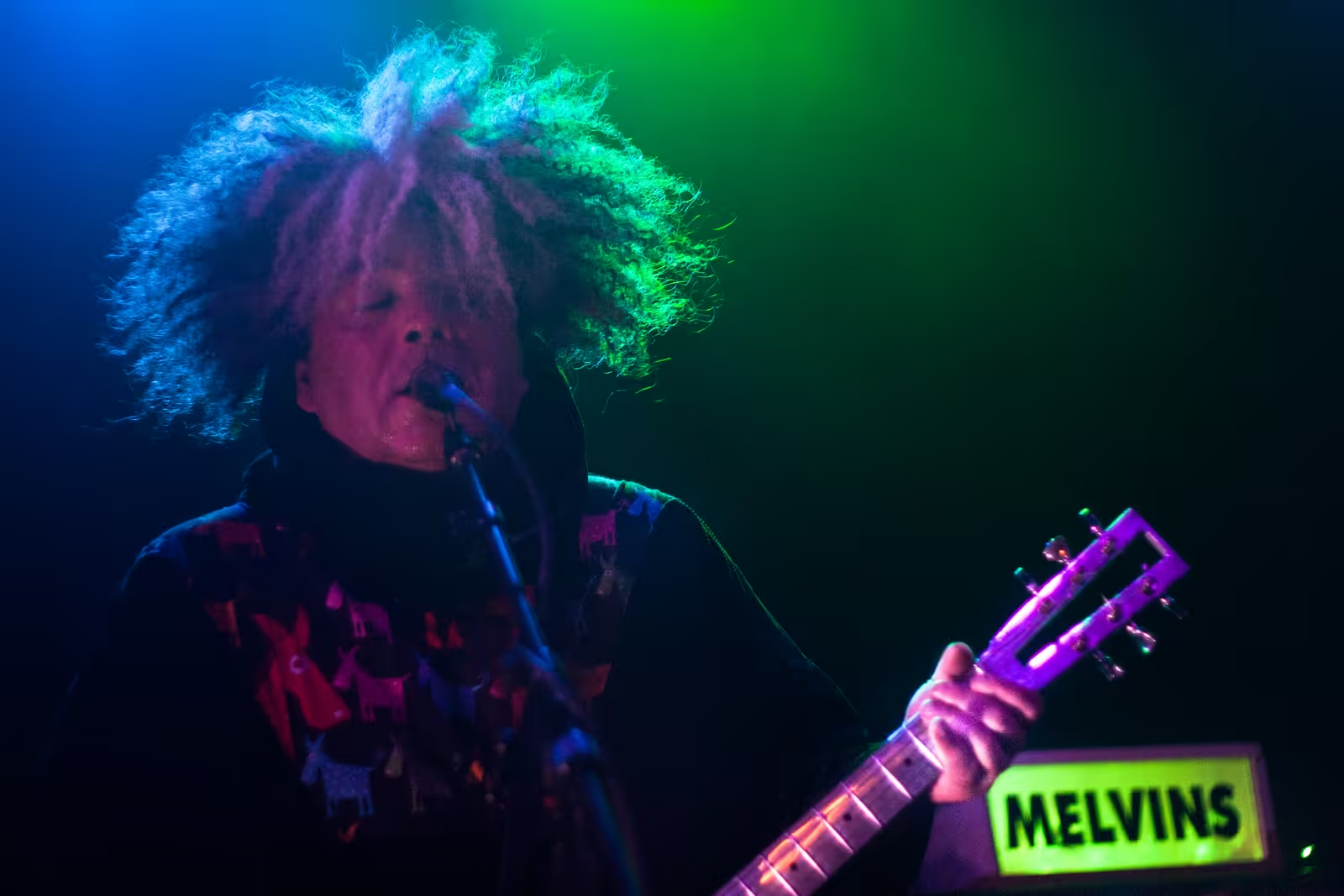
The Melvins mattered for more than their tempo. Osborne grew up in Aberdeen, a depressed timber port about an hour and a half from Seattle, and it was through him that a shy local kid called Kurt Cobain first heard punk rock, got his early education in gigging life as a Melvins roadie, and later met the drummer Dave Grohl. The other essential precursor was the U-Men, a Seattle art-punk band formed in 1980 whose dirty, off-kilter noise is credited by AllMusic with helping to inspire the whole Seattle grunge sound, and who in 1983 became the first band managed by Susan Silver, later the manager of both Soundgarden and Alice in Chains.
The rest was geography and economics. Seattle in the 1980s was, as one account puts it, "a perfect example of a secondary city with an active music scene that was completely ignored by an American media fixated on Los Angeles and New York." That isolation was liberating. So was the poverty. Getting a clean, expensive studio sound was out of reach for most Northwest bands, so the cheaper alternative was to leave the recordings dirty and simply turn up the volume. Even the uniform came from the wallet. The plaid flannel that became grunge's global costume was practical, warm workwear for a rainy logging region, and it was cheap in the thrift stores near Seattle, where a broke musician could afford it. The look was not a statement so much as the absence of money to make one, which was precisely the opposite of the spandex and hairspray coming out of Los Angeles.
As for the word itself, the Seattle claim traces to a piece of self-mockery. In a letter to the fanzine Desperate Times in July 1981, a young Mark Arm, then fronting a band called Mr Epp, wrote fake hate mail about his own group: "I hate Mr Epp and the Calculations! Pure grunge! Pure noise! Pure shit!" Arm has always waved away the credit, noting the word was floating around before he used it. Its lasting attachment to a Seattle band's sound came from a record label's mail-order copy, and that label is where the story turns from a scattering of bands into an actual movement.
The Sub Pop Engine: Selling Seattle to the World
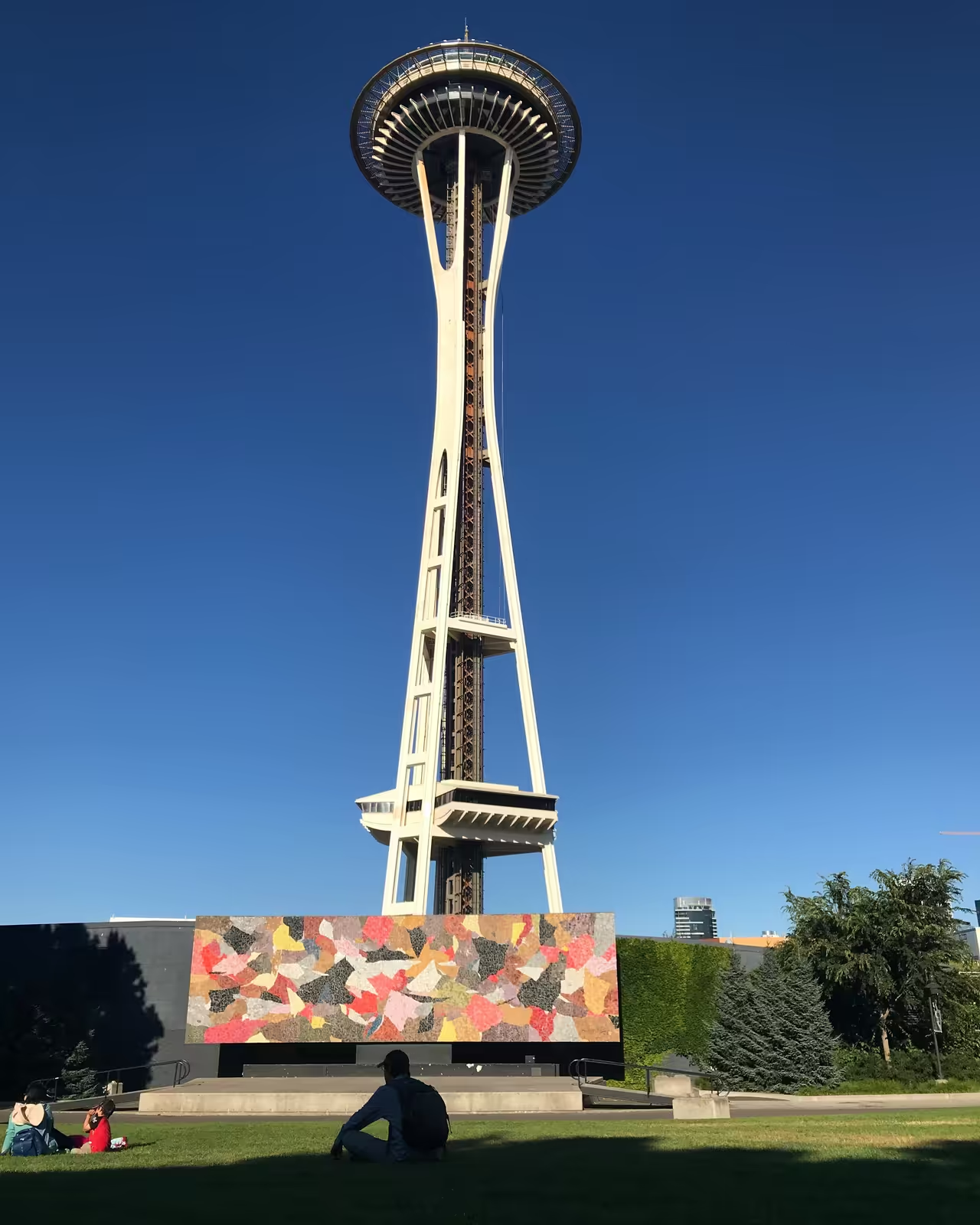
Every scene needs infrastructure, and grunge's was largely the work of two men and a shared genius for hype. Bruce Pavitt started a fanzine called Subterranean Pop in 1980 while a student at Evergreen State College in Olympia, shortened its name to Sub Pop by the third issue, and began alternating printed issues with compilation cassettes of Northwest bands. He carried the "Sub Pop U.S.A." column in the Seattle monthly The Rocket from 1983, and in 1986 turned the name into a record label with the compilation Sub Pop 100. In 1988 the promoter Jonathan Poneman invested twenty thousand dollars for a half-share, the pair quit their day jobs at Muzak, and Sub Pop Records was formally incorporated, fittingly, on April Fool's Day. They ran it out of the eleventh floor of the Terminal Sales Building in downtown Seattle, where the lift only went to the tenth.
Pavitt understood something few American independents did: that a scene is as much a media construction as a sound. He looked enviously at Britain, where John Peel's radio show and the weekly music papers could turn a local band into a national story overnight, and set out to build the same machinery for the Pacific Northwest.
"I was literally visualising Washington state as an island. Why did England have this robust indie culture? Because you had the BBC with John Peel playing DIY singles, and you had NME and Melody Maker distributed throughout England. So it was all about the media infrastructure, and that's what the Pacific Northwest started to develop."
Bruce Pavitt, Huck, 2015
The tools were brilliant. The Sub Pop Singles Club, launched in 1988, was a subscription service: pay around thirty-five dollars up front and receive a limited, often hand-numbered seven-inch single every month. Its very first release, in November 1988, was a cover of "Love Buzz" by a little-known band from Aberdeen called Nirvana, pressed in just one thousand numbered copies. The label's aesthetic was equally deliberate. Nearly every important early photograph was taken by Charles Peterson, whose blurred, high-contrast, wide-angle live shots became, in effect, the visual definition of grunge. His aim was immersion, not documentation.
"Amidst the chaos of a live show, I wanted to find that sense of grace. I wanted people to experience what it was like being there; the sweat, the noise, being pushed against each other."
Charles Peterson, PetaPixel, 2015
The masterstroke was the British press. In March 1989 the Melody Maker journalist Everett True travelled to Seattle and wrote a feature headlined "Sub Pop: Seattle: Rock City," casting the label's bands as authentic working-class heroes from a mysterious northern outpost. Poneman later insisted the trip was not Sub Pop's own idea but an opportunity handed to them by a distributor's publicist, yet the label leaned into the myth with relish, casting itself, tongue firmly in cheek, as a corporation bent on "world domination" while selling "LOSER" T-shirts and printing the motto "Going Out of Business Since 1988." The sound underneath the hype was shaped by one engineer above all. Jack Endino, working at the eight-track Reciprocal Recording in Ballard, produced the early records by Nirvana, Soundgarden, Mudhoney, Green River and TAD, and gave them the dry, crunchy, seventies-rock crunch that came to be called the Sub Pop sound. He recorded Nirvana's debut album, Bleach, in around thirty hours for a total, the sleeve boasted, of six hundred and six dollars and seventeen cents.
The First Wave: Green River, Mudhoney and the Underground
Before there was a big four, there was Green River, and almost everything that followed can be traced back to that one band splitting in two. Formed in Seattle in 1984, Green River paired the singer Mark Arm and guitarist Steve Turner with the future Pearl Jam pair of guitarist Stone Gossard and bassist Jeff Ament. Their 1987 EP Dry as a Bone is often called the first proper grunge record, and it earned the tag directly: the Sub Pop mail-order catalogue described it as "ultra-loose grunge that destroyed the morals of a generation," which Wikipedia identifies as the first time the word was pinned to the sound of a Seattle band.
The band did not survive their own ambitions. Arm and Turner were purists suspicious of the music industry; Gossard and Ament wanted to make it. Green River split on Halloween in 1987, and the fault line ran clean through the whole scene. Gossard and Ament went off to chase stardom in Mother Love Bone. Arm and Turner recruited the ex-Melvins bassist Matt Lukin and drummer Dan Peters and, on New Year's Day 1988, formed Mudhoney, the band that would become the beating heart of Sub Pop. Their debut single, "Touch Me I'm Sick," released in August 1988, is one of the definitive grunge records: a snarling, fuzz-drenched two minutes and a half that sounds like a garage collapsing. The follow-up EP took its name, Superfuzz Bigmuff, straight from the two distortion pedals that made the racket.
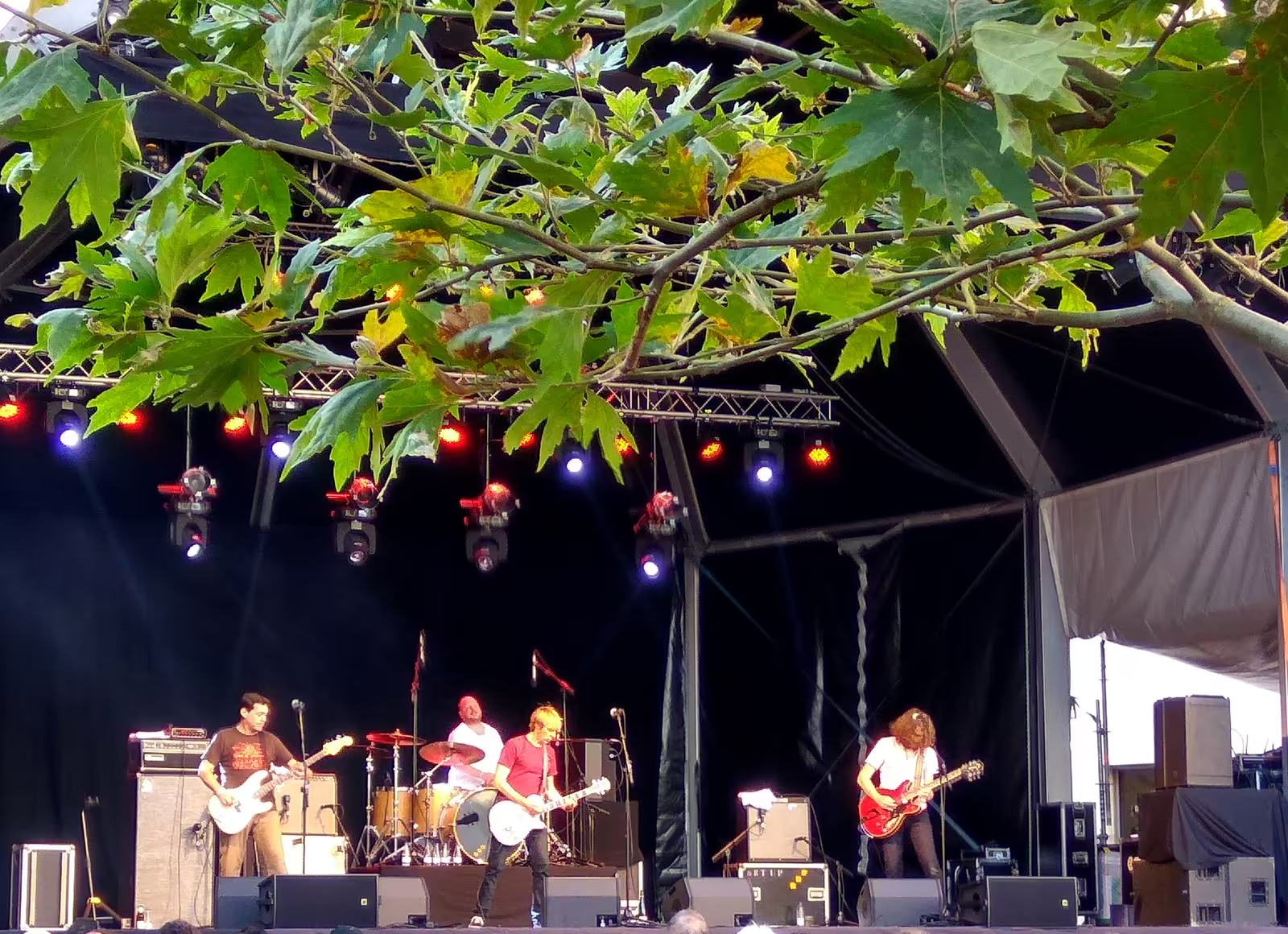
Around Mudhoney a whole first wave took shape. TAD, led by the former butcher Tad Doyle, brought a genuinely menacing bulk to the roster with 1989's God's Balls. Soundgarden, formed in 1984 by the singer Chris Cornell, guitarist Kim Thayil and bassist Hiro Yamamoto, released the EPs Screaming Life and Fopp on Sub Pop before making history as the first grunge band to sign to a major label, joining A&M in 1988. Out in the small town of Ellensburg, well east of Seattle, the Screaming Trees built a psychedelic-tinged variant fronted by the extraordinary baritone of Mark Lanegan. And in Aberdeen, Kurt Cobain and the bassist Krist Novoselic had formed Nirvana in 1987 and put out Bleach in 1989, still a raw, Sabbath-slow document of a band yet to find its second gear. The underground was crowded, cheap and self-sufficient. What none of them yet knew was how quickly the rest of the world was about to arrive.
What Grunge Actually Sounds Like
Strip grunge back to its parts and it is a collision of two things the 1980s kept separate: the heaviness of metal and the honesty of punk. The guitars are the giveaway. Players tuned down, often to drop D, borrowing the darker, heavier power-chord shapes that Tony Iommi had pioneered in Black Sabbath, and drowned them in fuzz. The Electro-Harmonix Big Muff and the ProCo Rat were the pedals of choice, giving the thick, crumbling tone that runs through everything from Mudhoney to Soundgarden. Tempos were sludgy and mid-paced far more often than they were fast, the Black Flag lesson never forgotten.
The other structural trick came from outside Seattle entirely. Nirvana in particular built songs on the loud-quiet-loud dynamic that the Boston band Pixies had perfected, a mumbled, restrained verse exploding into a wall of distortion at the chorus. Cobain cited the Pixies as a direct inspiration, and "Smells Like Teen Spirit" is essentially that formula turned up to stadium size. The vocals, though, were where the bands separated. Chris Cornell had a multi-octave wail that owed as much to Robert Plant and Black Sabbath as to punk; Eddie Vedder buried a brooding baritone deep in the mix; Layne Staley and Jerry Cantrell of Alice in Chains sang in the eerie, close harmonies that became their signature; and Cobain simply shredded his throat, sliding between a weary murmur and a raw scream.
Lyrically the territory was bleak and interior: alienation, depression, apathy, addiction, social disgust, the general weight of what the press quickly labelled teen angst. It was, above all, a reaction. Where 1980s glam metal sold spandex, guitar-hero solos, bright colours and a party that never ended, grunge offered thrift-store clothes, a deliberate anti-showmanship and an almost total ban on the flashy solo. The single most important word in the whole aesthetic was authenticity. Kurt Cobain was so allergic to slickness that he came to resent the very thing that made Nirvana huge, the polished mix of their breakthrough album.
"Looking back on the production of Nevermind, I'm embarrassed by it now. It's closer to a Mötley Crüe record than it is a punk rock record."
Kurt Cobain, Come As You Are: The Story of Nirvana, 1993
Mother Love Bone and the Birth of Pearl Jam
The most influential band of the whole scene may be one that never released a proper album in its lifetime. When Gossard and Ament left Green River, they formed Mother Love Bone with the charismatic singer Andrew Wood, a glam-loving frontman who was everything the grunge stereotype was not. Signed to a PolyGram imprint, the band recorded a debut album, Apple, and looked set to be Seattle's first major success. Then, on 19 March 1990, days before the record was due out, Wood died of a heroin overdose at the age of twenty-four. Apple was released posthumously that August. It was the scene's first great loss, and it would not be the last.
What grew from that grief reshaped rock history. Wood's flatmate had been Chris Cornell of Soundgarden, who wrote two songs in tribute and expanded them into a full project called Temple of the Dog, recorded in late 1990. He recruited Gossard, Ament and a fluid young guitarist named Mike McCready, Soundgarden's own drummer Matt Cameron, and, on backing vocals, a surfer from San Diego named Eddie Vedder who had just been sent the band's instrumental demos. The duet Cornell and Vedder sang together, "Hunger Strike," was Vedder's first appearance on a record. Cornell never forgot the moment the newcomer stepped up to the microphone.
"He sang half of that song not even knowing that I'd wanted the part to be there, and he sang it exactly the way I was thinking about doing it, just instinctively."
Chris Cornell, Wikipedia, 1991
Gossard, Ament, McCready and Vedder liked what they heard so much that they kept going. With the drummer Dave Krusen they took the name Mookie Blaylock, after the basketball player, and played their first show at Seattle's Off Ramp Cafe on 22 October 1990, opening for Alice in Chains. Renamed Pearl Jam, they signed to Epic and released their debut, Ten, on 27 August 1991. It was a slow burn. The album did not crack the Billboard top ten until May 1992, nearly a year later, but once it caught it became one of the defining records of the decade, eventually certified thirteen times platinum in the United States. The Temple of the Dog album, meanwhile, was quietly re-promoted in 1992 once its participants were famous, and "Hunger Strike" finally became a hit, a tribute to a dead friend that had accidentally birthed a stadium band.
1991 and 1992: The Years Grunge Broke
Everything the underground had built came due across fifteen extraordinary months. The detonator was Nevermind, Nirvana's second album, released on 24 September 1991 on Geffen's DGC label. Produced by Butch Vig and mixed for maximum radio impact by Andy Wallace, and recorded partly at the famous Sound City studio in Van Nuys, it married Cobain's punk instincts to choruses you could not shake. The label had cautiously hoped to sell around two hundred and fifty thousand copies. Vig knew it was something else the first time he heard the lead single in rehearsal.
"They started playing it, and the hair on the back of my neck stood up. I was pacing around the room saying, 'Oh my God, this sounds incredible.' And the band stopped, and they said, 'What do you think?' I just said, 'Play it again.'"
Butch Vig, Guitar.com, 2021
The song was "Smells Like Teen Spirit," and MTV put it in heavy rotation until it became inescapable. Nevermind sold at a staggering rate, moving three hundred and seventy-four thousand copies in the last week of 1991 alone, and on the chart dated 11 January 1992 it reached number one on the Billboard 200, displacing Michael Jackson's Dangerous. It has since sold more than thirty million copies worldwide. The Geffen executive Ed Rosenblatt summed up the label's role in a line that became famous.
"We didn't do anything. It was just one of those 'Get out of the way and duck' records."
Ed Rosenblatt, Geffen Records, Wikipedia
Nirvana had kicked the door in, and a whole scene walked through. Ten climbed to number two and would not stop selling. Soundgarden's Badmotorfinger, released two weeks after Nevermind, brought their Sabbath-sized riffs to a national audience. Alice in Chains had already gone first, in truth: their debut Facelift, out in 1990 on Columbia, spawned the single "Man in the Box," won them a support slot with Van Halen, and in September 1991 became the first grunge album to be certified gold. Their masterpiece arrived in September 1992. Dirt, a harrowing, semi-conceptual record shadowed by Layne Staley's heroin use, reached number six and became the band's best-seller at five times platinum.
By 1992 grunge was not a scene any more, it was a marketing category, and the culture at large scrambled to cash in. Cameron Crowe's film Singles, a romantic comedy set among young Seattleites and stuffed with cameos and scene music, arrived in September 1992, its soundtrack pulling together Pearl Jam, Alice in Chains, Soundgarden and Screaming Trees. Pearl Jam and Soundgarden both played the touring Lollapalooza festival that summer, sharing a bill topped by the Red Hot Chili Peppers. And high fashion came sniffing. In November 1992 the designer Marc Jacobs sent a grunge-inspired collection down the runway for Perry Ellis, reimagining thrift-store flannel in silk and printed plaid to the sound of a punk band. He won a major design award for it in January 1993 and was promptly fired, the collection killed before it reached the shops. The Vogue editor Suzy Menkes handed out badges reading "Grunge is Ghastly." The scene had gone from Aberdeen basements to the front row of Milan in about eighteen months.
The absurdity peaked that same November, when The New York Times ran a piece on the grunge phenomenon complete with a sidebar, "Lexicon of Grunge," decoding the scene's supposed secret slang. Terms like "swingin' on the flippity-flop" and "lamestain" were printed as authentic. They had all been invented on the spot by a twenty-five-year-old former Sub Pop employee named Megan Jasper, who had been fed the reporter's questions and simply made up increasingly ludicrous answers. The paper of record had been comprehensively pranked, and the hoax became a treasured monument to how badly the mainstream had misread what was happening.
The Peak and the Strain: 1993 to 1994
At the top of the mountain the air got thin. Nirvana, uneasy with their own success, hired the abrasive engineer Steve Albini and made In Utero, released in September 1993, a rawer and more difficult record by design. Cobain expected it to sell a fraction of Nevermind; instead it entered the chart at number one, shifting a hundred and eighty thousand copies in its first week, even as press stories about the label's alleged unhappiness with Albini's mix swirled around it. Two singles were remixed by Scott Litt to smooth their path to radio, but the album's stark heart was left intact. That November the band taped a hushed, funereal set for MTV, later released as MTV Unplugged in New York, which would post the highest first-week sales of Nirvana's career and win the band their only Grammy. Recorded five months before Cobain's death, it now sounds unbearably like a goodbye.
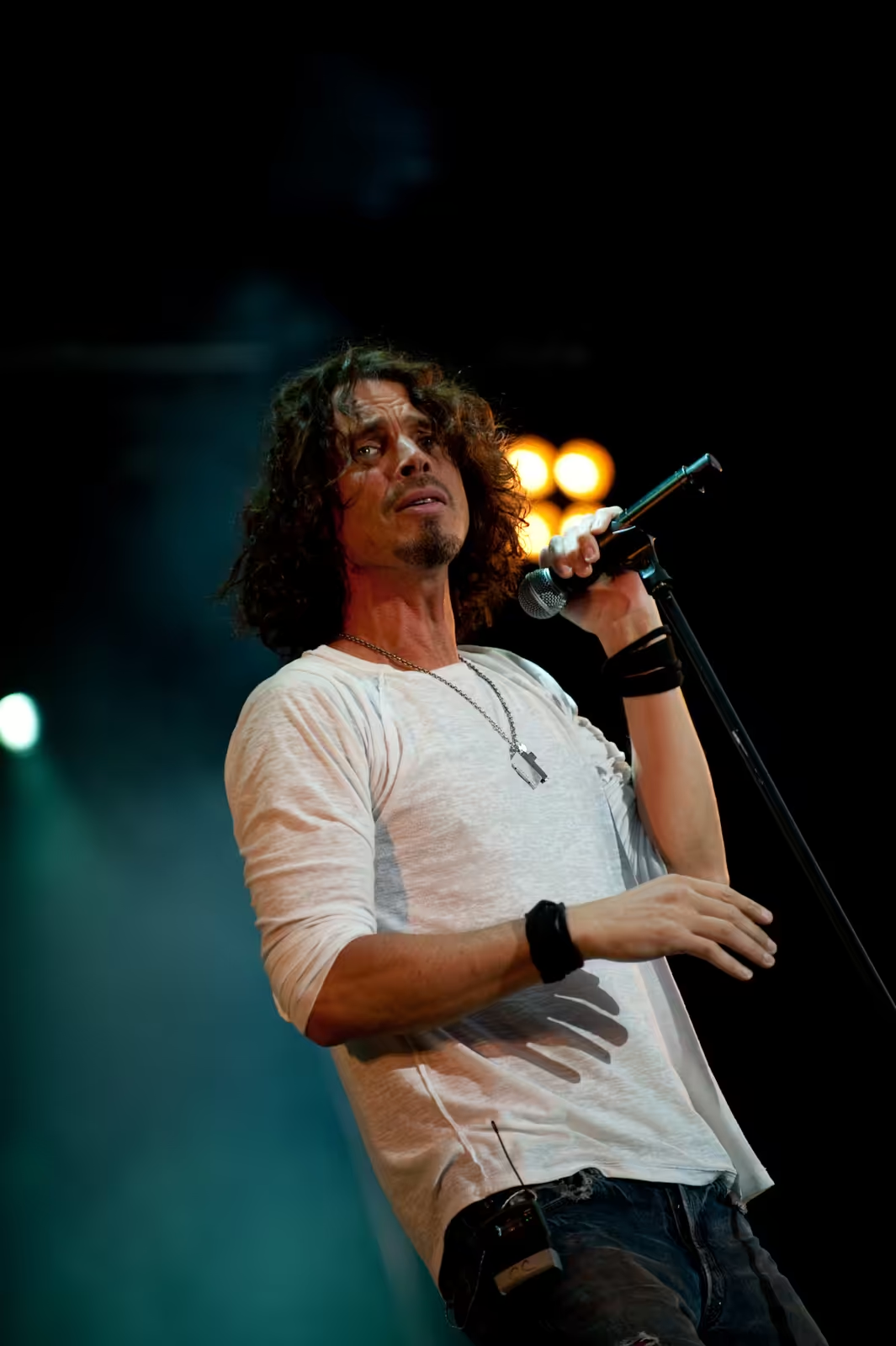
Pearl Jam, by now the biggest band in the country, spent their peak at war with the machinery of fame. Their second album, Vs., released in October 1993, sold nine hundred and fifty thousand copies in its first five days, a first-week record that would stand for five years, and outsold the rest of the top ten combined. Rather than tour on it in the usual way, the band picked a fight with Ticketmaster, refusing to accept the company's service charges, filing a memo with the Justice Department accusing it of running a monopoly, and sending Gossard and Ament to testify before a congressional subcommittee on 30 June 1994. Their position was simple.
"We simply have a different philosophy than Ticketmaster does about how and at what price tickets to our concerts should be sold."
Pearl Jam testimony, US House subcommittee, 1994
The government eventually closed its investigation without acting, and the fight cost Pearl Jam dearly, forcing them into obscure venues and hobbling their touring for years, but it became the defining example of a grunge band putting its money where its anti-corporate mouth was. Their third album, Vitalogy, arrived in late 1994 and made number one all the same. Soundgarden reached their own summit in March 1994 with Superunknown, which debuted at number one, sold six times platinum, and produced two of the era's signature singles in the woozy, psychedelic "Black Hole Sun" and the odd-metred "Spoonman," winning two Grammys in the process.
Alice in Chains, too, hit an extraordinary commercial high while quietly falling apart. In January 1994 they released Jar of Flies, a largely acoustic EP written and recorded in a single week, which became the first EP ever to debut at number one on the Billboard 200. Around the same period they cut the video for "Would?," a song written for the Singles soundtrack in memory of Andrew Wood, and it remains one of the most haunting things the scene produced. But Staley's addiction was worsening, and the band that made it would barely tour again.
Key Bands of the Grunge Scene
| Band | Years | Scene / city | Signature record | Status |
|---|---|---|---|---|
| Nirvana | 1987 to 1994 | Aberdeen / Seattle | Nevermind (1991) | Ended by Kurt Cobain's death, 1994 |
| Pearl Jam | 1990 to present | Seattle | Ten (1991) | Active; Dark Matter, 2024 |
| Soundgarden | 1984 to 1997, 2010 to 2017 | Seattle | Superunknown (1994) | Ended by Chris Cornell's death, 2017 |
| Alice in Chains | 1987 to present | Seattle | Dirt (1992) | Active with William DuVall |
| Mudhoney | 1988 to present | Seattle | Superfuzz Bigmuff (1988) | Active on Sub Pop |
| Screaming Trees | 1984 to 2000 | Ellensburg | Sweet Oblivion (1992) | Disbanded; Mark Lanegan died 2022 |
| The Melvins | 1983 to present | Montesano / Seattle | Bullhead (1991) | Active; grunge forebears |
| Green River | 1984 to 1987 | Seattle | Dry as a Bone (1987) | Split into Mudhoney and Mother Love Bone |
| Mother Love Bone | 1987 to 1990 | Seattle | Apple (1990) | Ended by Andrew Wood's death, 1990 |
| Temple of the Dog | 1990 to 1991 | Seattle | Temple of the Dog (1991) | Tribute project; reunited briefly, 2016 |
| TAD | 1988 to 1999 | Seattle | God's Balls (1989) | Disbanded |
| Stone Temple Pilots | 1989 to present | San Diego / Los Angeles | Core (1992) | Active; Scott Weiland died 2015 |
| Bush | 1992 to present | London (post-grunge) | Sixteen Stone (1994) | Active |
Key Albums of the Grunge Scene
| Album | Band | Year | Why it mattered |
|---|---|---|---|
| Superfuzz Bigmuff | Mudhoney | 1988 | The definitive early Sub Pop statement, named after its two fuzz pedals |
| Bleach | Nirvana | 1989 | Nirvana's raw debut, cut for around 600 dollars by Jack Endino |
| Facelift | Alice in Chains | 1990 | The first grunge album certified gold; "Man in the Box" |
| Badmotorfinger | Soundgarden | 1991 | Sabbath-heavy riffs that carried grunge into alternative metal |
| Ten | Pearl Jam | 1991 | A slow-burn debut that grew to 13 times platinum |
| Nevermind | Nirvana | 1991 | The album that made grunge a global phenomenon |
| Temple of the Dog | Temple of the Dog | 1991 | The Andrew Wood tribute that introduced Eddie Vedder |
| Dirt | Alice in Chains | 1992 | Grunge's darkest masterpiece, shadowed by heroin |
| Core | Stone Temple Pilots | 1992 | A huge seller that reignited the "authenticity" wars |
| Vs. | Pearl Jam | 1993 | Set a first-week sales record and launched the Ticketmaster fight |
| In Utero | Nirvana | 1993 | Nirvana's deliberate, abrasive retreat from pop |
| Superunknown | Soundgarden | 1994 | A number-one, six-times-platinum peak with "Black Hole Sun" |
| Jar of Flies | Alice in Chains | 1994 | The first EP ever to debut at number one |
| Sixteen Stone | Bush | 1994 | The post-grunge boom in a single multi-platinum album |
The Decline: Why and When Grunge Died Off
Grunge did not fade so much as it was gutted, and the wound was dated precisely. On 8 April 1994 an electrician found Kurt Cobain dead at his Seattle home, from a self-inflicted shotgun wound; he had died around 5 April, aged twenty-seven. His suicide note ended by quoting the Neil Young line that had haunted the whole scene, and closed with three words to his daughter and wife.
"It's better to burn out than to fade away. Peace, love, empathy."
Kurt Cobain, suicide note, via Wikipedia, 1994
Some seven thousand mourners gathered for a candlelight vigil at Seattle Center. The night the death was announced, Eddie Vedder, playing a show in Washington DC, spoke for a devastated generation of musicians who owed Cobain their careers, telling the crowd he did not think any of them would be in the room if it were not for Kurt Cobain, and adding, "Don't die. Swear to God." Nirvana was over, and the scene's centre of gravity was gone.
Heroin took the rest at a grinding, remorseless pace. Andrew Wood had gone first, in 1990. Two months after Cobain, in June 1994, the Hole bassist Kristen Pfaff died of an overdose in Seattle, also aged twenty-seven. The longest and most public decline was Layne Staley's. Alice in Chains stopped touring in 1996, and Staley, increasingly reclusive, was found dead in his Seattle apartment on 19 April 2002. He is estimated to have died on 5 April, the same calendar date as Cobain, eight years later almost to the day. His former bandmate Jerry Cantrell was asked, years on, whether anyone could have saved him.
"I don't think so. I think we all cared about each other a lot and dealt with each other pretty realistically, but we were grown men at that time and you live your life the way you're going to live it. So I don't think there was anything anybody could have done."
Jerry Cantrell, The Quietus
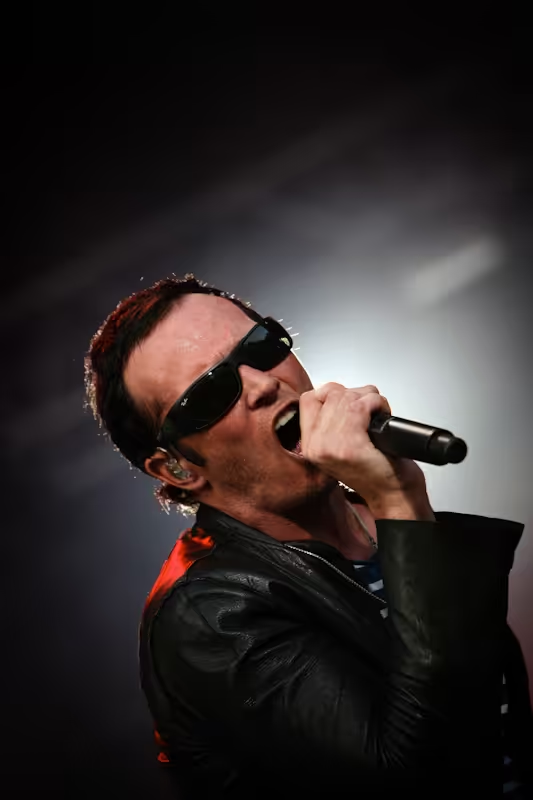
The other death was commercial. As grunge conquered radio, the majors signed anything that resembled it, and the market flooded with what became known, at first as an insult, as post-grunge. The English band Bush arrived with Sixteen Stone in 1994, went multi-platinum in America and were skewered by the Rolling Stone critic Matt Diehl as "the most successful and shameless mimics of Nirvana's music." Candlebox, Collective Soul and the teenage Australians Silverchair followed, and a heavier second wave built around Creed, whose 1999 album Human Clay went diamond and who were later voted the worst band of the 1990s by Rolling Stone readers, leading eventually to the radio-rock lineage of Nickelback. Stone Temple Pilots had been accused of the same bandwagon-jumping from the start, dismissed as Pearl Jam copyists on the strength of their 1992 hit album Core, though critics would later admit they had misjudged a genuinely great singles band in Scott Weiland. Jack Endino, the man who had recorded the originals, watched it all with weary amusement.
"After the grunge thing I was besieged with grunge wannabees. I was besieged with Soundgarden and Melvins and Nirvana clones."
Jack Endino, Tape Op, 1999
By 1997 the sound was no longer fresh, having become part of the furniture. Soundgarden, often called the last true grunge band to command mass radio play, broke up that April, announcing they had amicably disbanded after twelve years. The charts were turning towards Britpop, teen-pop and the coming wave of nu-metal. Pop punk was breaking out of California at the very same moment, and the LA-versus-Seattle war that grunge had won, over the spandex bands and the crossover thrash of Suicidal Tendencies alike, was already ancient history. There was no single moment of death after Cobain's, only a slow settling. The word had become a marketing term, the market had moved on, and the bands that survived did so by outrunning the label as fast as they could.
Legacy and Influence
Grunge's first and most obvious achievement was destruction. It is routinely credited as the movement that killed off 1980s hair metal, sweeping away the spandex, the power ballads and the party in a single cultural season and, in the process, lighting the fuse for the whole 1990s alternative-rock explosion. Almost overnight, major-label A&R departments stopped hunting for the next glam-metal act and started signing anything with a distorted guitar and a flannel shirt. The definition of what a rock star could look like, and be, was rewritten. Mark Arm, whose band had been there before any of it, has always been sceptical of the loftier claims made for the scene, but he put its social effect memorably.
"Ugly people weren't allowed to rock before us."
Mark Arm, Mudhoney, Rolling Stone
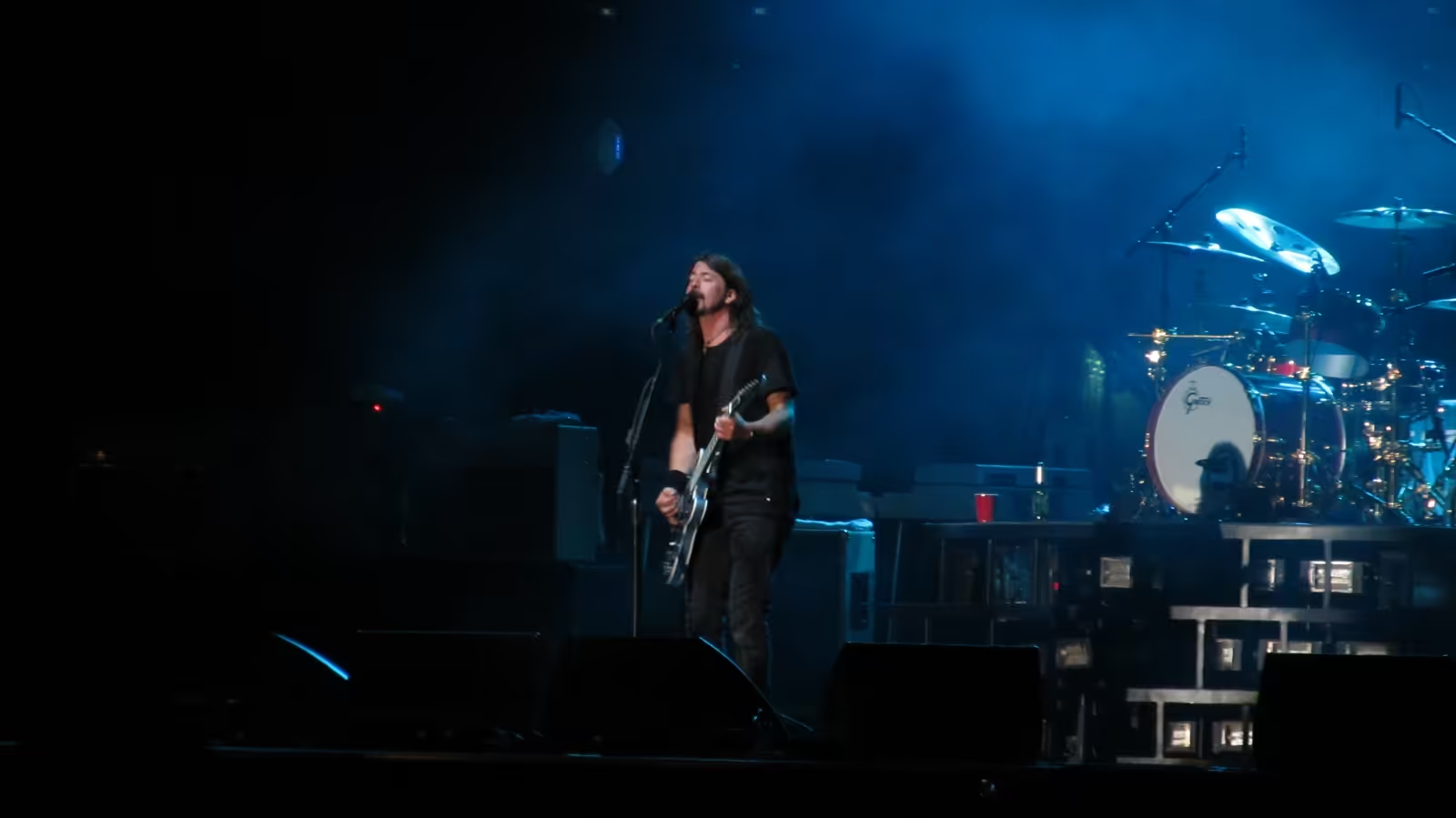
The deeper legacy was the value it placed on honesty over spectacle, a stance that outlived the flannel by decades. The idea that a rock band should look like its audience, sing about real pain and treat showmanship with suspicion became the default setting for guitar music for a generation. Dave Grohl carried that ethos into three decades of stadium-filling with the Foo Fighters, arguably becoming the most beloved rock figure of the post-grunge era. And the aesthetic simply never left: plaid flannel, thrifted knitwear and faded band tees became a permanent fixture of youth fashion, cycling back into style again and again long after the bands that inspired them had broken up or died.
Grunge Today: Is the Scene Back?
In one sense grunge never went anywhere, because its biggest survivors never stopped. Pearl Jam remain one of the largest touring bands on earth, and in April 2024 they released Dark Matter, a punchy album produced by Andrew Watt that debuted at number five in the United States, reached number two in the United Kingdom, topped every Billboard rock chart at once, and earned the band three Grammy nominations, their first as a group in fourteen years. Three decades after the Ticketmaster fight, the men who made Ten were headlining arenas around the world.
Alice in Chains reformed in 2006 around Jerry Cantrell and the singer William DuVall, releasing three well-received albums between 2009 and 2018, while Cantrell has built a busy solo career, putting out Brighten in 2021 and I Want Blood in 2024. Mudhoney simply carried on, still signed to Sub Pop and still recording, with Plastic Eternity arriving in 2023, thirty-five years after "Touch Me I'm Sick." Not everyone made it. Chris Cornell, who had reunited Soundgarden in 2010, took his own life in Detroit in May 2017, hours after a show, and was honoured by an all-star tribute concert in Los Angeles in 2019. Mark Lanegan of Screaming Trees, whose late solo career and unsparing 2020 memoir Sing Backwards and Weep had made him a cult hero all over again, died in Ireland in February 2022. In November 2025 Soundgarden were inducted into the Rock and Roll Hall of Fame, with Cornell's daughter Toni singing in his place, a bittersweet coronation for a scene now firmly in the canon.
The more surprising revival is the one happening among people too young to remember any of it. On streaming platforms the classics have been reborn: "Smells Like Teen Spirit" passed a billion Spotify streams in 2021 and its official video has since sailed past two billion views on YouTube, feeding a Gen Z rediscovery that runs through TikTok, where thrifted flannel and 1990s band tees have become a fashion staple all over again. Out of that soil a genuine new scene has grown, loosely tagged "grungegaze" or "nu gaze," which fuses grunge's fuzz and detuned heaviness with the blurred textures of shoegaze. Bands like Superheaven, whose back catalogue caught fire through word of mouth around 2022, sit at its centre, and anniversary reissues of Nevermind in 2021 and In Utero in 2023 have kept the originals in front of new ears. Dave Grohl thinks the pull is generational and self-renewing.
"Kids these days, there's like a window between the ages of 10 and 13 where almost every kid goes through a Nirvana phase. It means the same thing today to those kids that it meant when we released it."
Dave Grohl, Loudwire
Riffology Podcast Episodes from the Grunge Scene
Many of the records in this story have a full Riffology podcast episode that pulls them apart track by track. Follow the album to listen.
| Album | Band | On the Riffology podcast |
|---|---|---|
| Nevermind | Nirvana | The album that took grunge overground in 1991. |
| In Utero | Nirvana | The deliberate, abrasive retreat from pop. |
| MTV Unplugged in New York | Nirvana | The hushed 1993 set that plays like a goodbye. |
| Ten | Pearl Jam | The slow-burn debut that grew to 13 times platinum. |
| Vitalogy | Pearl Jam | The restless number one made during the Ticketmaster war. |
| Temple of the Dog | Temple of the Dog | The Andrew Wood tribute that introduced Eddie Vedder. |
| Dirt | Alice in Chains | Grunge's darkest masterpiece, dissected in full. |
| Superunknown | Soundgarden | The number-one peak with "Black Hole Sun." |
| Sixteen Stone | Bush | The post-grunge boom in a single album. |
Things You Might Not Know
| Fact | Detail |
|---|---|
| An insult first | Mark Arm used "grunge" to mock his own band Mr Epp in a 1981 letter, calling it "pure grunge, pure noise, pure shit." |
| Six hundred dollar debut | Nirvana's Bleach was recorded by Jack Endino for a total of 606 dollars and 17 cents. |
| The 600 to a No.1 | Nevermind knocked Michael Jackson's Dangerous off the top of the Billboard 200 on the chart dated 11 January 1992. |
| A tribute band that stuck | Pearl Jam grew directly out of Temple of the Dog, a project Chris Cornell started to mourn Andrew Wood. |
| The Melvins matchmaker | Buzz Osborne of the Melvins introduced Kurt Cobain to Dave Grohl, giving Nirvana its final drummer. |
| The great hoax | The New York Times printed a "Lexicon of Grunge" in 1992 full of slang invented on the spot by ex-Sub Pop worker Megan Jasper. |
| Fired for flannel | Marc Jacobs won an award for his 1992 grunge collection for Perry Ellis and was then dropped, the collection never made. |
| An EP at number one | Alice in Chains' Jar of Flies was the first EP ever to debut at number one on the Billboard 200, in 1994. |
| The five-day record | Pearl Jam's Vs. sold 950,378 copies in its first five days, a first-week record that stood for five years. |
| Same date, eight years apart | Layne Staley is thought to have died on 5 April 2002, the same calendar date as Kurt Cobain in 1994. |
| The Godfather in the note | Cobain's suicide note quoted Neil Young: "It's better to burn out than to fade away." |
| Two billion views | The "Smells Like Teen Spirit" video has passed two billion views on YouTube, feeding a whole new Gen Z audience. |
| Late to the Hall | Soundgarden were finally inducted into the Rock and Roll Hall of Fame in 2025, with Chris Cornell's daughter singing in his place. |
The Riffology Podcast
Grunge is a scene built for arguing about, from who really coined the word to whether Bush ever deserved a fraction of Nirvana's sales, which makes it ideal podcast fuel. On the Riffology podcast, Neil and Chris dig into the records that defined the Seattle sound, pulling apart how they were made and why they still land three decades later. If this story sent you back to your old copy of Dirt or Superunknown, the episodes are where the deep dives live, and we'd love to hear which grunge album you would put at the very top of the pile. You can find Riffology on all the major podcast platforms.
Comments