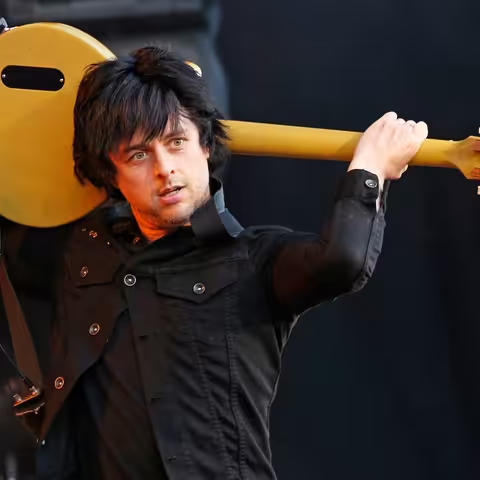
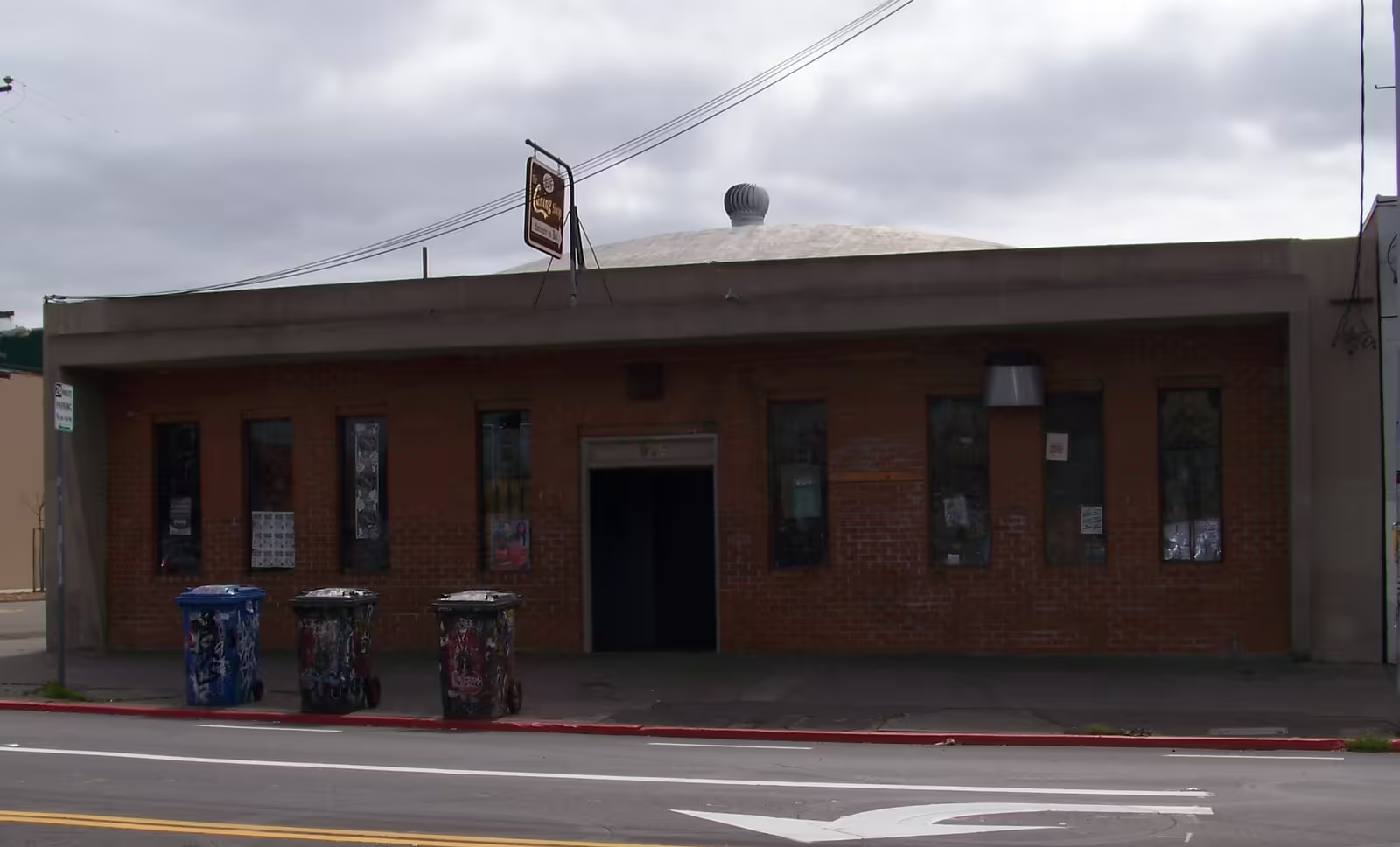
Gilman Street had a rule, and everyone who walked through the door knew it: no major labels. The all-ages club at 924 Gilman in Berkeley was built in 1986 by a volunteer collective as a deliberate fortress against the music industry, a place where a teenage Billie Joe Armstrong could play to a few dozen people and answer to no one. Eight years later his band, Green Day, released Dookie, sold it by the tens of millions, and got themselves banned from the very club that raised them for the crime of signing to a major. Pop punk is the sound of that contradiction: an underground that armoured itself against selling out, then sold out so completely it redrew the mainstream.
For roughly three decades the genre has run the same loop. Fast songs about being young and bored and heartbroken, three chords and a chorus you can shout across a car park, and a recurring argument about whether any of it counts as punk at all. It came out of suburban California garages and Northern English bedrooms, broke wide open in 1994, ruled MTV at the turn of the millennium, was declared dead more times than anyone can count, and is, right now, in the middle of its loudest comeback yet. This is the whole story, from the Ramones to Olivia Rodrigo.
Pop Punk: Scene Facts
| Field | Detail |
|---|---|
| Scene | Pop punk (also pop-punk, punk-pop) |
| Origins | Suburban California (Berkeley, Los Angeles, Orange County), with forebears in New York and Northern England |
| Peak years | 1994 to roughly 2006 |
| Roots and forebears | The Ramones, Buzzcocks, The Undertones, Descendents, Bad Religion |
| Defining bands | Green Day, The Offspring, Rancid, Blink-182, Sum 41, Fall Out Boy, Paramore |
| Defining albums | Dookie (1994), Smash (1994), Enema of the State (1999), American Idiot (2004) |
| Key labels | Lookout!, Epitaph, Fat Wreck Chords, Drive-Thru, Fueled by Ramen |
| Key venues | 924 Gilman Street, Berkeley; the Vans Warped Tour circuit |
| Key media | Maximumrocknroll, MTV's Total Request Live, the Warped Tour, later TikTok |
| Sound in a line | Fast power chords, palm-muted verses into big shout-along choruses, nasal Californian vocals, songs about being young |
| Subgenres and offshoots | Skate punk, easycore, emo-pop, the 2010s "feels" revival |
| Decline | Mid-to-late 2000s into the 2010s: saturation, the rise of hip-hop and streaming, the winding down of Warped Tour |
| Revival | 2020 onward, led by Machine Gun Kelly, Travis Barker, Olivia Rodrigo and a reunited blink-182 |
The Roots: From the Ramones to the Descendents
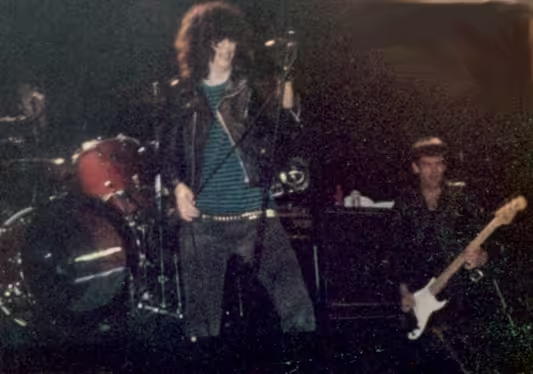
Pop punk did not arrive fully formed. It was assembled, piece by piece, out of bands who each grasped a different part of the formula. The Ramones got there first. Forming in Forest Hills, Queens, in 1974, they welded the bubblegum melodies of 1960s girl groups and acts like the 1910 Fruitgum Company to a barrage of downstroked guitar and two-minute songs. "We missed music like it used to be," Joey Ramone said of the band's beginnings, complaining that by 1974 everything was "tenth-generation Elton John, or overproduced, or just junk." Wikipedia's own history notes that the Ramones' recordings "helped the subgenre pop-punk to develop." Every band in this article owes them something.
Across the Atlantic, the melodic half of the equation was being refined. Manchester's Buzzcocks turned anxiety and heartbreak into perfect two-minute singles, and their 1979 compilation Singles Going Steady is still cited as the pop-punk template. In Derry, the Undertones sang about adolescence rather than the Troubles on "Teenage Kicks," a song recorded in 1978 on a budget of around two hundred pounds that the BBC DJ John Peel loved so much he reportedly said there was nothing you could add to it or take away that would improve it. The blueprint existed. It just needed someone to play it faster and louder.
That happened in Southern California in the 1980s. The Descendents, a band of self-described suburban losers from Manhattan Beach, released Milo Goes to College in 1982, fifteen tracks in twenty-two minutes, hardcore speed bolted to Beach Boys harmony and lovesick lyrics. Rolling Stone later called it the blueprint for pop punk as we know it. Drummer Bill Stevenson described the balance the band struck.
"By the time we recorded Milo Goes to College the pendulum swung somewhere maybe in the middle. There's a lot of melodic and pop elements to it, but it also has that sense of bitter resentment."
Bill Stevenson, Descendents
The critic Andrew Beaujon put the band's influence more bluntly, calling the record "super clean, super tight, super poppy hardcore" and adding that "Blink-182 owe this bunch of proud California losers everything." Alongside the Descendents stood Bad Religion, formed by Los Angeles high-schoolers in 1980, whose dense three-part harmonies and college-level vocabulary proved punk could be both fast and clever. Bad Religion guitarist Brett Gurewitz founded a label to put the records out. It was called Epitaph, and it would change everything.
The Underground That Built Itself
What separates pop punk from most scenes is that it built its own infrastructure before the mainstream ever noticed, and it built that infrastructure specifically to keep the mainstream out. The physical heart of it was 924 Gilman Street, a non-profit, all-ages, volunteer-run club that opened in West Berkeley on New Year's Eve 1986, spearheaded by Tim Yohannan of the fanzine Maximumrocknroll. Gilman had no single owner, split the takings with the bands, and operated a strict no-major-labels policy. It incubated Operation Ivy, Rancid, AFI and a band of East Bay teenagers originally called Sweet Children who soon renamed themselves Green Day.
The records came out on a cluster of fiercely independent labels. Lookout! Records, founded in 1987 by Larry Livermore and David Hayes, documented the East Bay and released Green Day's first two albums, 39/Smooth and Kerplunk. Epitaph, run out of Los Angeles by Gurewitz, became home to NOFX, Rancid, Pennywise and The Offspring. Fat Wreck Chords, started in San Francisco in 1990 by NOFX frontman Fat Mike and Erin Burkett, ran on a punk-only, fanatically independent ethos. None of these labels needed radio or MTV. They had a touring circuit, a fanzine network and word of mouth, and for a while that was enough to sell hundreds of thousands of records.
It was a closed economy with strong opinions about loyalty, which is why what happened in 1994 caused such a rupture. When Green Day signed to Reprise in 1993 and played their last Gilman show, they were banned from the club under the no-major-labels rule. Larry Livermore, writing his final column for Maximumrocknroll in April 1994 as his own band's biggest act prepared to leave, tried to talk the scene down from its anger.
"If you don't like a record company, don't buy their records. If you're mad at a band for signing to a record company you don't like, don't buy their records either."
Larry Livermore, Maximumrocknroll, April 1994
What Pop Punk Actually Sounds Like
Strip pop punk back and the machinery is simple, which is the point. Punk's focus on speed, concision and three-chord simplicity, as one survey of the genre puts it, is a natural fit with pop's core values. The tempos are fast. "All the Small Things," to take one canonical example, runs at a driving 150 beats per minute and clocks in at two minutes and forty-eight seconds. The guitar writing leans on a single reliable trick, described almost universally as palm-muted eighth-note rhythms in the verses that open into louder, sustained power chords in the chorus. Quiet and tight, then loud and wide. It works every time.
The vocals are the genre's signature and its punchline. Where the British punks sang in exaggerated London accents, the Californians did the opposite. As one widely shared piece of pop-punk linguistics observed, bands like Blink-182 and The Offspring "totally abandoned any pretences of Britishness," took "their own accent, the California accent, and ramped it up, pushed it to new extremes." Nasal, bratty and unmistakably suburban, it became so identifiable that it is now shorthand for the whole genre. Add the gang vocals, the "whoa-oh" refrain that one writer rightly called "both a pop-punk staple and a songwriting trick," and you have a sound engineered for a crowd to shout back.
Then there is the joke about the chords. The four-chord I-V-vi-IV progression, which in the key of C runs C, G, A minor, F, turns up so relentlessly in the genre that musicians nicknamed it the pop-punk progression. The Australian comedy act The Axis of Awesome built a whole 2008 medley around how many hits share it. The genuinely funny part is that "All the Small Things," the song most people would name as definitively pop-punk, does not actually use it, running on the older I-IV-V instead. The progression is a stylistic flag, not a law. Lyrically the territory is narrow and deeply felt: lust, relationships, heartbreak, drugs, suburbia and rebellion, leavened, as the genre's chroniclers note, with a lot of jokes.
1994: The Year Pop Punk Went Overground
Everything the underground had built came due in a single year. On 1 February 1994, Green Day released Dookie, their major-label debut, produced by Rob Cavallo at Fantasy Studios in Berkeley. It was bratty, tuneful and impossibly catchy, a record about boredom, anxiety and masturbation that happened to contain four of the decade's most durable singles in "Longview," "Basket Case," "Welcome to Paradise" and "When I Come Around." It reached number two on the Billboard 200 and won the Grammy for Best Alternative Music Album in early 1995. The critic Jon Pareles, reviewing it for The New York Times, caught exactly why it landed.
"Punk turns into pop in fast, funny, catchy, high-powered songs about whining and channel-surfing; apathy has rarely sounded so passionate."
Jon Pareles, The New York Times, 1995
The sales figures around Dookie need a little care, because they are quoted carelessly all the time. The RIAA certified the album double diamond, or twenty times platinum, in September 2024, but that modern figure folds in streaming-equivalent units. In straight sales the record shifted somewhere in the region of fifteen to twenty million copies worldwide, an astonishing number for a band that, a year earlier, had been playing a volunteer-run club in Berkeley. Green Day did not slow down. Insomniac followed in 1995, harder and darker, and Nimrod in 1997 produced the acoustic curveball "Good Riddance (Time of Your Life)," which colonised graduation ceremonies and television finales for a decade.
Ten weeks after Dookie, on 8 April 1994, came the other half of the year's one-two punch. The Offspring, from Garden Grove in Orange County, released Smash on Epitaph. Recorded in around twenty days for roughly twenty thousand dollars, it became a genuine phenomenon, powered by the warped surf-punk of "Come Out and Play" and the self-loathing singalong "Self Esteem." It reached number four on the Billboard 200 and is widely cited as the best-selling album ever released on an independent label, certified six times platinum in the United States and credited with somewhere between ten and eleven million sales worldwide. Guitarist Kevin "Noodles" Wasserman never forgot how sudden the change was.
"Up until Smash I was a janitor. Head custodian at Earl Warren Elementary School."
Kevin "Noodles" Wasserman, The Offspring, Rolling Stone, 2014
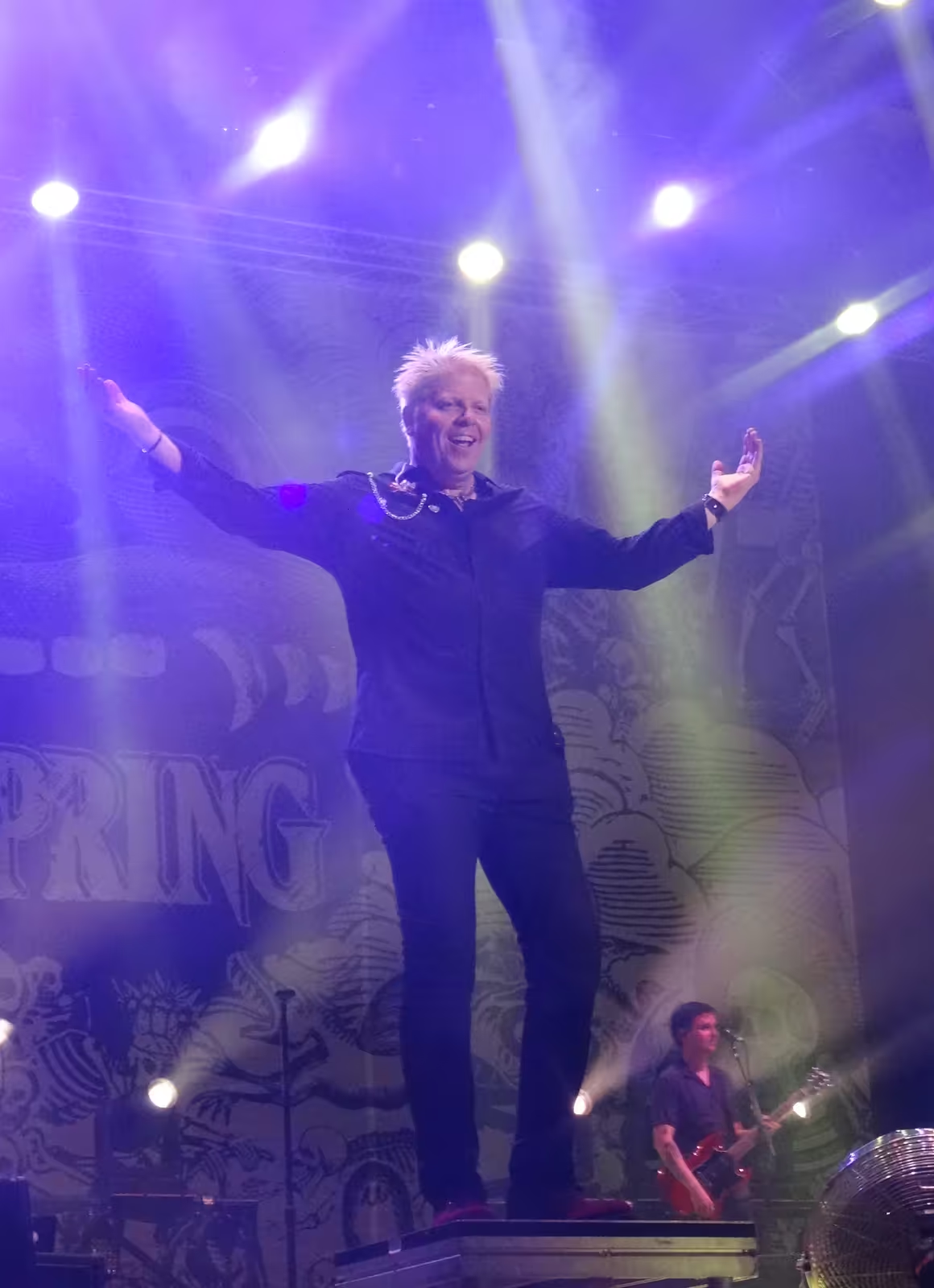
The Offspring's success transformed Epitaph's finances overnight. Gurewitz reportedly had to take a second mortgage on his house simply to press enough copies to meet demand, and the windfall let the label bankroll a roster of peers. Rancid, the Berkeley band formed by Operation Ivy veterans Tim Armstrong and Matt Freeman, were the great holdouts of the moment. Their self-titled 1993 debut and 1994's Let's Go built a following, and 1995's ...And Out Come the Wolves, with its ska-tinged singles "Time Bomb" and "Ruby Soho," went platinum. When the majors came calling, including Madonna's Maverick label, Rancid stayed put.
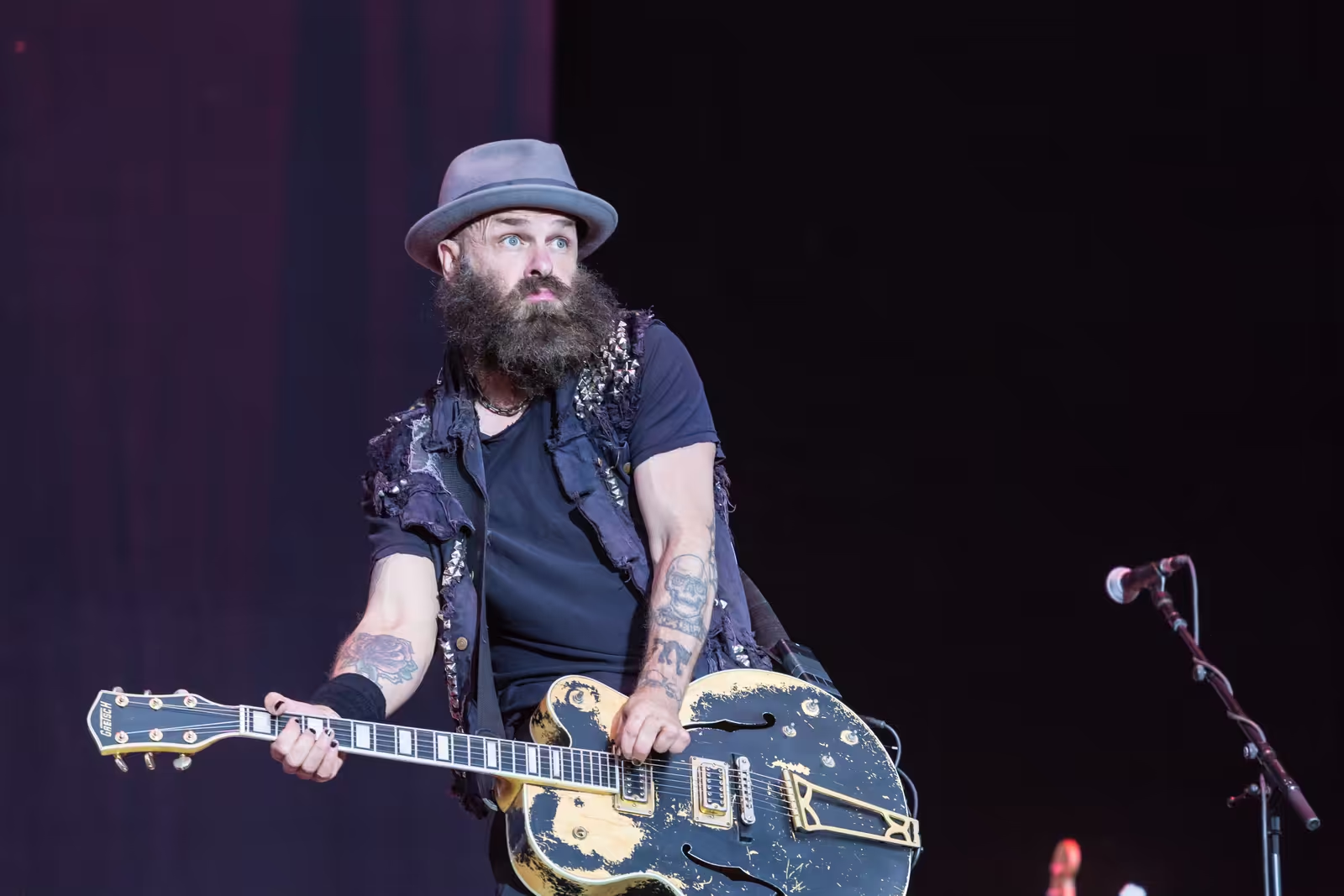
"Ultimately, we decided it would be dumb not to stay with Brett Gurewitz, a real record guy, a punk rock record guy. Madonna's cool, but she's an international superstar. She's not a punk rock record guy. That's what we needed."
Tim Armstrong, Rancid, 2009
NOFX, meanwhile, proved a band could go gold with no radio, no MTV and no major at all. Punk in Drublic, released in July 1994 on Epitaph, sold over a million copies worldwide on the strength of touring and reputation alone. By the end of 1994 the secret was out: this stuff sold, and it sold enormous.
The SoCal Explosion and the Blink-182 Era
If Green Day and The Offspring kicked the door open, Blink-182 walked through it and made themselves at home. Formed in Poway, outside San Diego, in 1992, the trio of Mark Hoppus, Tom DeLonge and, from 1998, drummer Travis Barker turned pop punk into something glossier, ruder and irresistibly commercial. The 1997 album Dude Ranch and its single "Dammit" built the base. Then, in June 1999, came Enema of the State, produced by Jerry Finn, the record that defined the genre's mainstream phase.
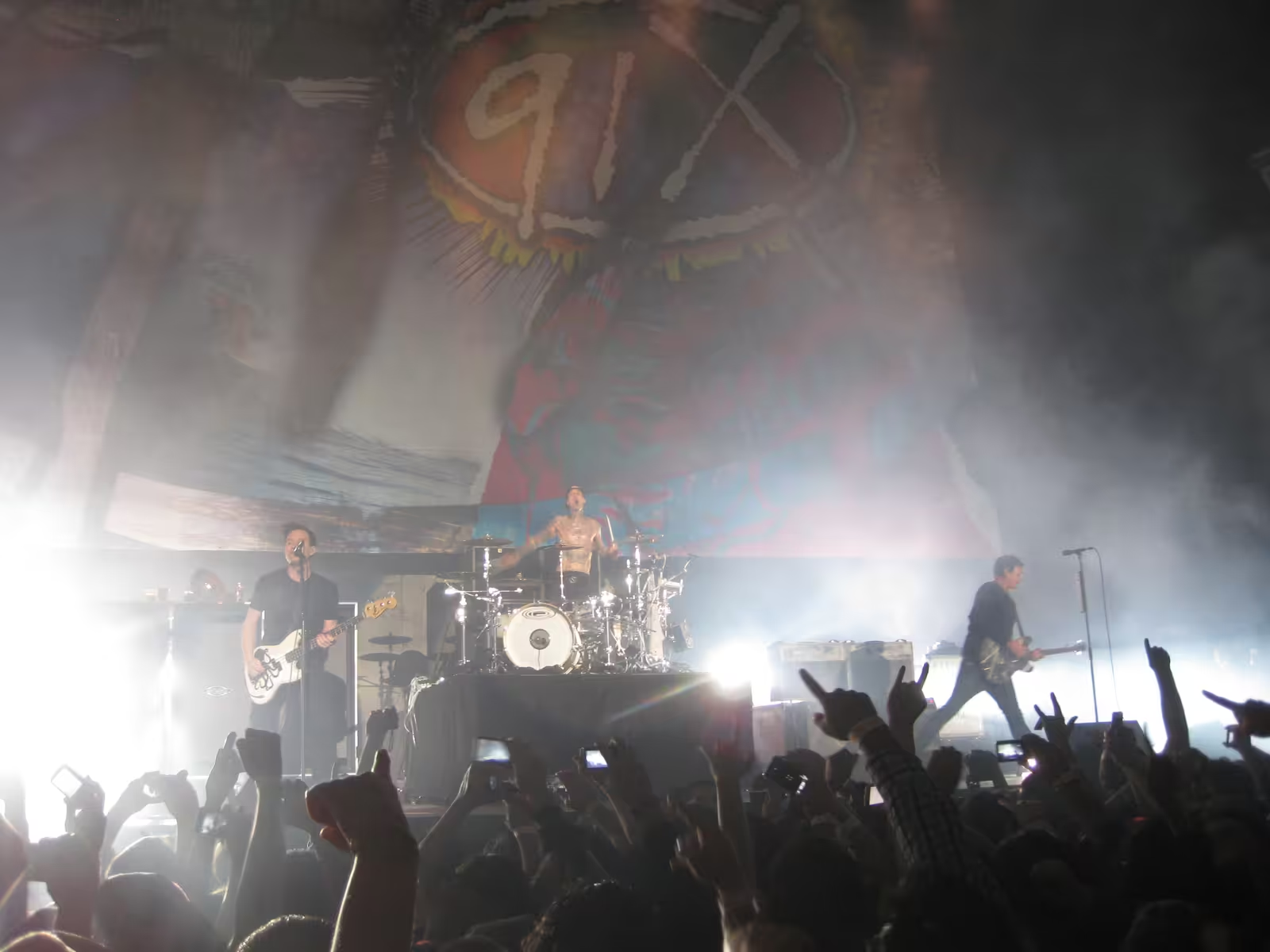
Enema of the State sold over four and a half million copies in the United States and many millions more worldwide, carried by "What's My Age Again?" and the unavoidable "All the Small Things," whose video gleefully parodied the boy bands then ruling MTV. It was a Trojan horse, a pop-punk band sneaking into the teen mainstream by dressing up as Backstreet Boys. Producer Jerry Finn understood the band's particular charm, and why it set them apart from the louder, leering rock acts of the era.
"It's kind of funny that they've been lumped in with Kid Rock and Limp Bizkit, who play up that kind of pimp lifestyle, because Blink is so not that."
Jerry Finn, producer, on Blink-182
In June 2001 Blink-182 pulled off something no punk band had managed before. Take Off Your Pants and Jacket debuted at number one on the Billboard 200, the first punk-rock album ever to enter the chart at the top. The 2003 self-titled album that followed was a deliberate left turn, darker and more atmospheric, with the Robert Smith collaboration "I Miss You" showing how far the band's ambitions had grown. AllMusic called it "an unexpected and welcome maturation from a band that just an album ago seemed permanently stuck in juvenilia." Then, in February 2005, it all stopped: Blink announced an indefinite hiatus and DeLonge walked away. The biggest band in pop punk had broken up at its peak.
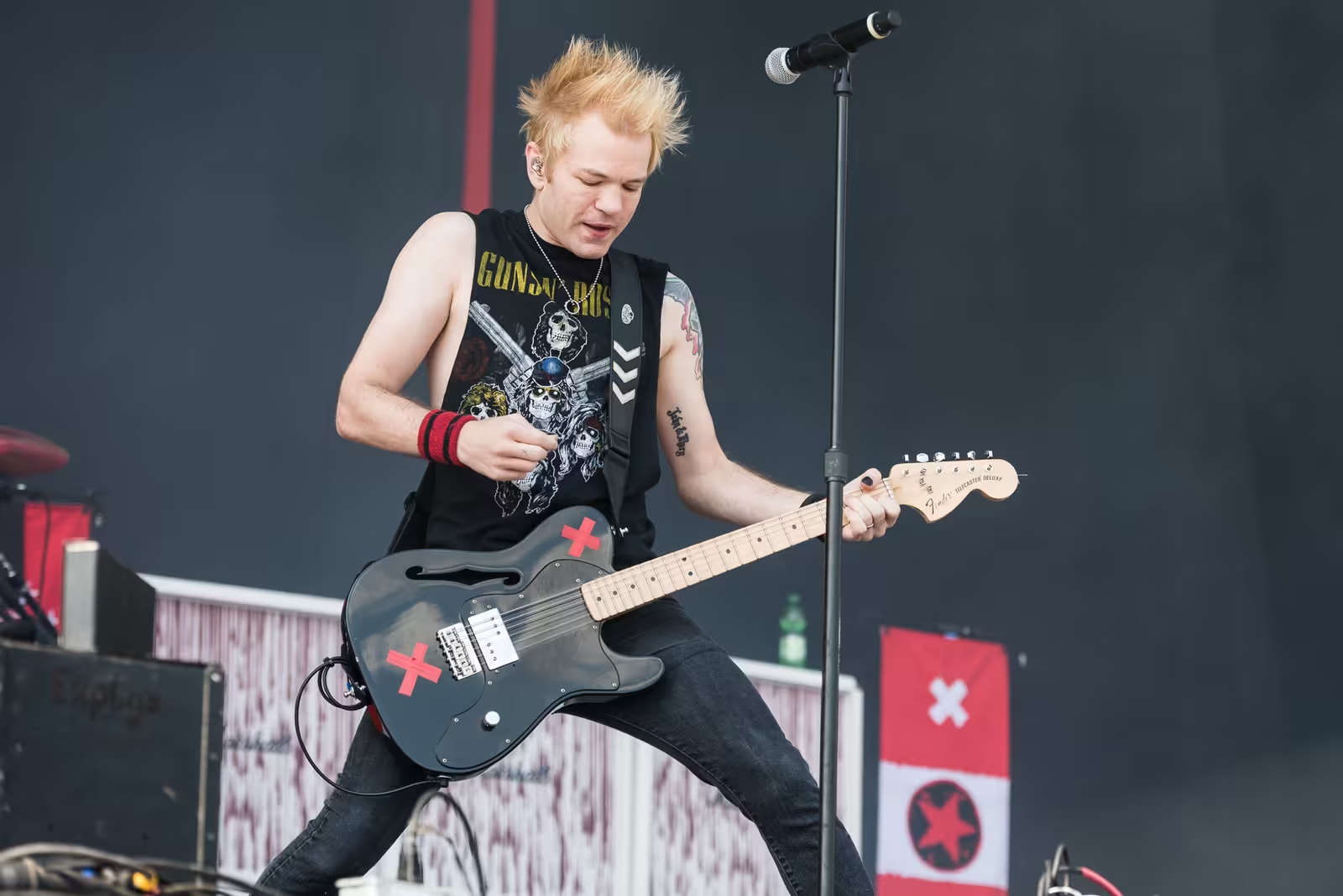
They had not been alone at the top. A whole wave rose alongside them. Sum 41 came out of Ajax, Ontario, with the snotty, riff-happy All Killer No Filler and its breakout "Fat Lip" in 2001. Good Charlotte turned suburban resentment into chart gold with "Lifestyles of the Rich and Famous." Simple Plan, New Found Glory, Yellowcard and Bowling for Soup each found their lane. The sound was everywhere, and for a few years it owned teenage culture outright.
The Warped Tour Years
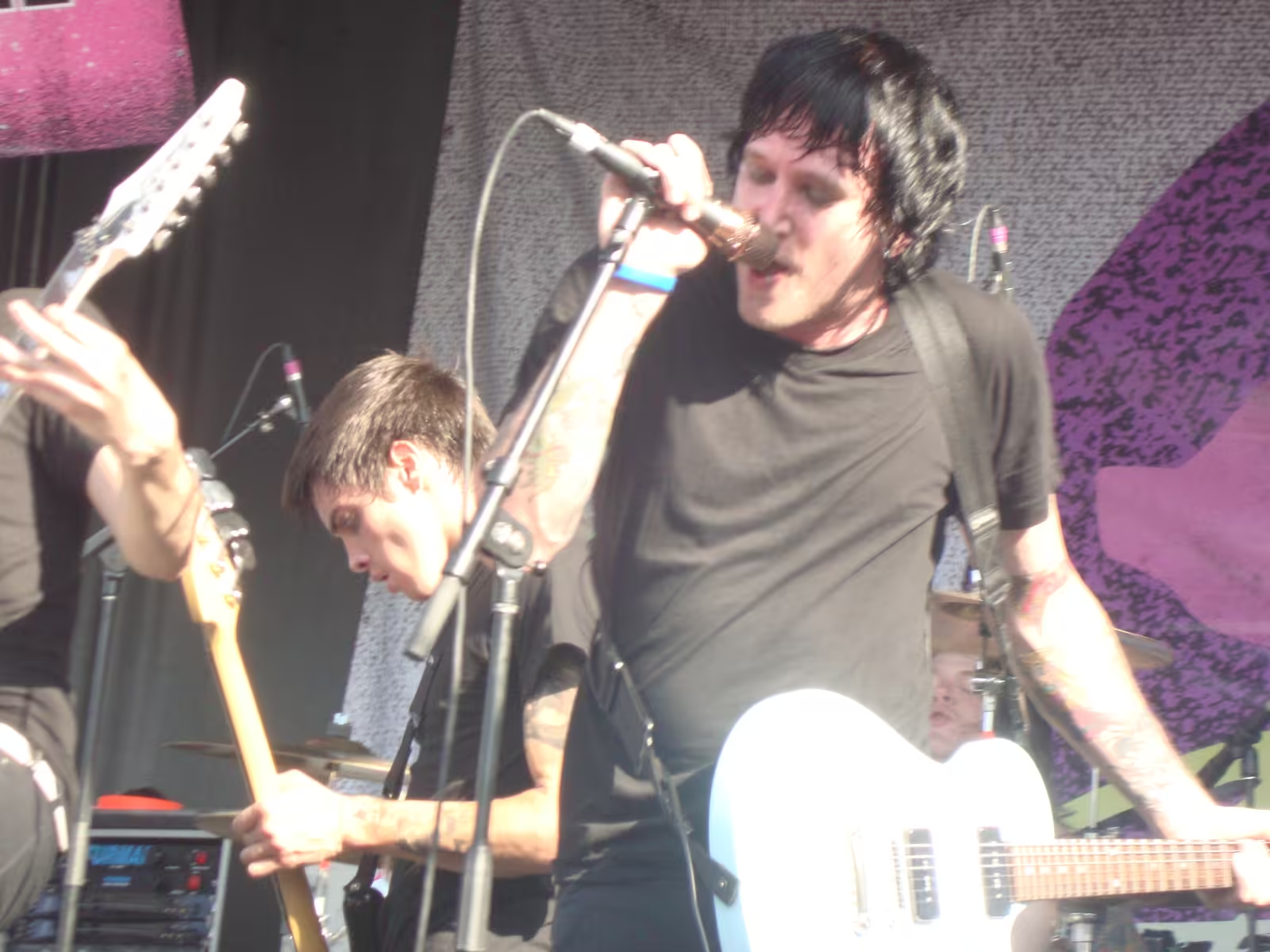
The peak had its own ecosystem, and at the centre of it was a travelling festival. The Warped Tour, founded by Kevin Lyman in 1995 and sponsored by Vans from 1996, was a touring punk and pop-punk circus that drew around three quarters of a million people a summer and functioned as the genre's farm system. Bands broke there, careers launched there, and a generation of fans got sunburnt in car parks watching twelve bands a day. Lyman always insisted on its modest spirit.
"It still feels like a backyard party. That's what I wanted it to be, an accessible backyard party."
Kevin Lyman, Warped Tour founder
On screen, MTV's Total Request Live, which premiered in 1998, turned music videos into a daily popularity contest, and pop-punk clips thrived on it. "All the Small Things" stayed on the countdown for sixty-five days. Behind the scenes, a handful of independent labels became star-makers. Drive-Thru Records, founded by siblings Richard and Stefanie Reines, signed New Found Glory, The Starting Line and Something Corporate. In Gainesville, Florida, Fueled by Ramen, run by John Janick and Less Than Jake's Vinnie Fiorello, was about to become the most important label of the next decade. Janick has been candid about how unglamorous the early years were.
"We didn't get paid anything for probably the first five or six years."
John Janick, co-founder, Fueled by Ramen
American Idiot and Pop Punk's Second Wind
By 2003 Green Day looked like a band running out of road. The 2000 album Warning had underperformed, and the master tapes for a planned record called Cigarettes and Valentines were stolen, forcing them to start again. What they made instead was the most ambitious thing the genre ever attempted. American Idiot, released in September 2004, was a punk-rock opera built around a character called the Jesus of Suburbia, complete with a nine-minute, five-part suite at its centre. It was a furious, theatrical response to the Bush-era United States, and it gave the band their first ever number one album in America.
American Idiot sold around seven million copies in the United States and many millions more worldwide, with estimates of its global total ranging widely from roughly fourteen to over twenty million depending on whether streaming is counted. It won Best Rock Album at the Grammys in early 2005, and its biggest single, the brooding "Boulevard of Broken Dreams," won Record of the Year the following year. It was later adapted into a Broadway musical. Drummer Tré Cool summed up the difference between the band's two career-defining albums with a single line that doubles as a thesis on the whole genre.
"The difference between Dookie and American Idiot is pretty simple. The first time, the success was an accident; the second time it was on purpose."
Tré Cool, Green Day
Emo, Eyeliner and the Crossover Years
As the original wave matured, a younger, more emotional strain took over the mainstream. The line between pop punk and emo blurred almost completely. Fall Out Boy, from the Chicago suburbs, broke through in 2005 with From Under the Cork Tree and the inescapable "Sugar, We're Goin Down," all hyper-literate lyrics and enormous hooks. Fueled by Ramen, which had signed them, became a hit factory. Its offshoot Decaydance, run with Fall Out Boy's Pete Wentz, launched Panic! at the Disco, whose "I Write Sins Not Tragedies" turned baroque theatricality into a teen anthem.
The defining new star of the era was Hayley Williams. Paramore, from Franklin, Tennessee, released their debut All We Know Is Falling in 2005, but it was 2007's Riot! and its single "Misery Business" that made Williams the face of a generation of fans. The song became one of the biggest of its kind, though Williams herself grew uneasy with its lyrics about another girl and, years later, would publicly reckon with them.
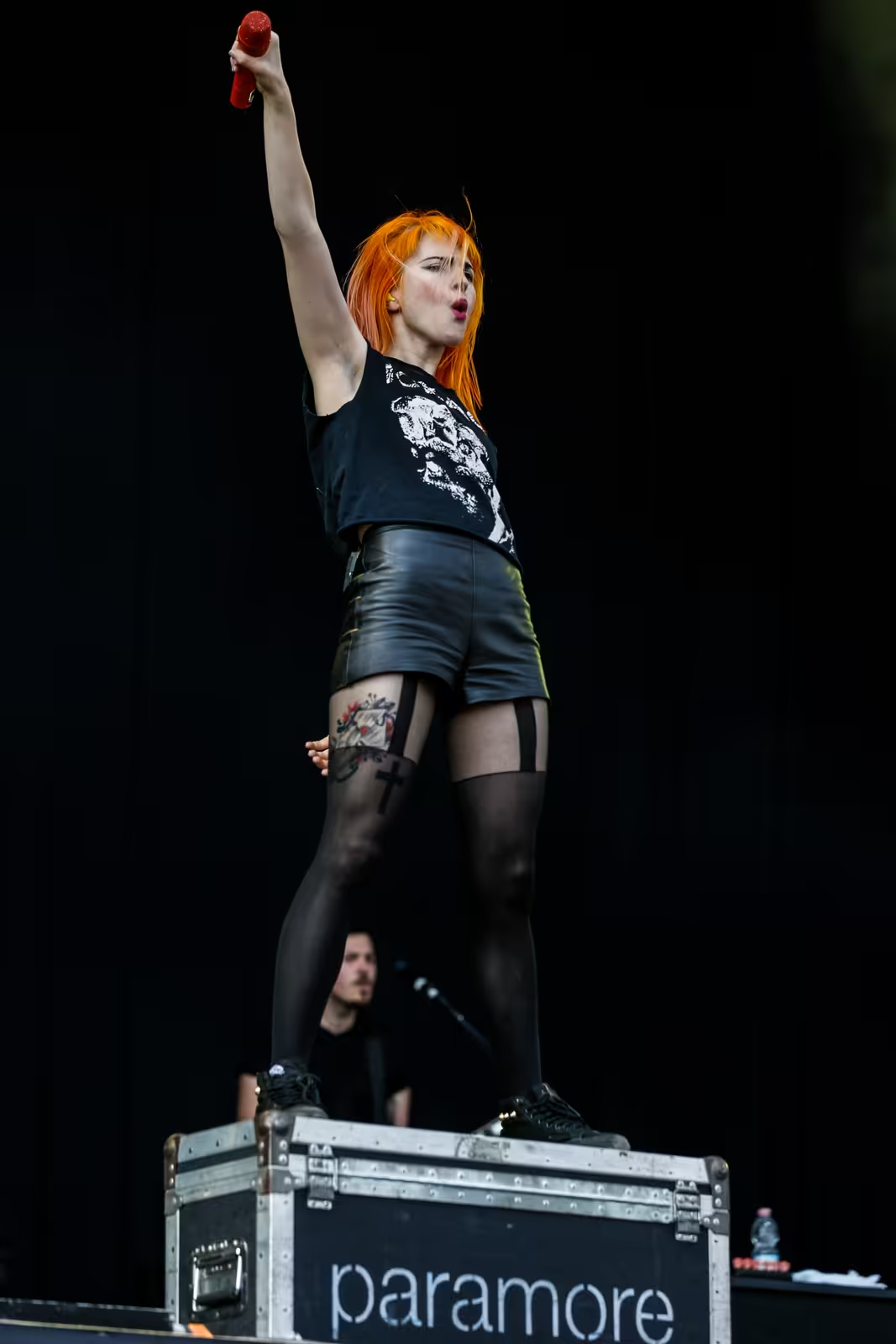
Around them swirled a whole scene-culture of swept fringes, studded belts and eyeliner. All Time Low arrived from Maryland in 2007, idolising Blink-182 so openly that frontman Alex Gaskarth would later admit, "I don't think we'd be a band without blink-182." My Chemical Romance, more theatrical and post-hardcore than strictly pop-punk, released the era-defining The Black Parade in 2006 while loudly rejecting the emo label that fans pinned on them. The genre had splintered into a dozen overlapping subcultures, and for a moment it seemed unstoppable. It was not.
Key Bands of the Scene
| Band | Years | Base | Signature album | Status |
|---|---|---|---|---|
| The Descendents | 1977 onward | Manhattan Beach, CA | Milo Goes to College (1982) | Active, intermittently |
| Bad Religion | 1980 onward | Los Angeles, CA | Suffer (1988) | Active |
| Green Day | 1987 onward | East Bay, CA | Dookie (1994) | Active |
| The Offspring | 1984 onward | Garden Grove, CA | Smash (1994) | Active |
| Rancid | 1991 onward | Berkeley, CA | ...And Out Come the Wolves (1995) | Active |
| NOFX | 1983 to 2024 | Los Angeles, CA | Punk in Drublic (1994) | Retired from touring |
| Blink-182 | 1992 onward | Poway, CA | Enema of the State (1999) | Active, reunited |
| Sum 41 | 1996 to 2025 | Ajax, Ontario | All Killer No Filler (2001) | Disbanded |
| Good Charlotte | 1996 onward | Waldorf, MD | The Young and the Hopeless (2002) | Active |
| New Found Glory | 1997 onward | Coral Springs, FL | Sticks and Stones (2002) | Active |
| Fall Out Boy | 2001 onward | Chicago, IL | From Under the Cork Tree (2005) | Active |
| Paramore | 2004 onward | Franklin, TN | Riot! (2007) | Active |
| All Time Low | 2003 onward | Towson, MD | So Wrong, It's Right (2007) | Active |
| The Wonder Years | 2005 onward | Lansdale, PA | The Greatest Generation (2013) | Active |
| Neck Deep | 2012 onward | Wrexham, Wales | Life's Not Out to Get You (2015) | Active |
Key Albums of the Scene
| Album | Band | Year | Why it mattered |
|---|---|---|---|
| Milo Goes to College | Descendents | 1982 | The melodic-hardcore blueprint pop punk was built on |
| Suffer | Bad Religion | 1988 | Revived melodic punk and seeded the 1990s wave |
| Dookie | Green Day | 1994 | Took the underground overground and won a Grammy |
| Smash | The Offspring | 1994 | The best-selling independent-label album of its time |
| ...And Out Come the Wolves | Rancid | 1995 | Proved a band could go platinum and stay indie |
| Enema of the State | Blink-182 | 1999 | The glossy peak that conquered MTV |
| All Killer No Filler | Sum 41 | 2001 | Carried the sound north and onto the charts |
| American Idiot | Green Day | 2004 | Pop punk as ambitious, chart-topping rock opera |
| From Under the Cork Tree | Fall Out Boy | 2005 | Launched the emo-pop-punk crossover era |
| Riot! | Paramore | 2007 | Made Hayley Williams the face of the scene |
| Tickets to My Downfall | Machine Gun Kelly | 2020 | The number-one album that lit the 2020s revival |
The Decline: When and Why Pop Punk Faded
No single event killed mainstream pop punk. It was worn down across a decade by a combination of its own success and forces it could not control. The first problem was saturation. By the mid-2000s the sound had been copied so widely that it curdled into formula. As one Loudwire retrospective put it, by the time the scene reached 2016 the once vibrant and exuberant sounds of pop punk had become regurgitated noise. There were only so many palm-muted verses and big choruses the audience could take before the trick stopped feeling like a surprise.
The infrastructure that had broken the bands fell apart too. MySpace, which in the mid-2000s had been the single most important discovery engine for young guitar bands, collapsed as Facebook and then Twitter overtook it, and nothing replaced it on the same terms. The 2008 recession battered the labels and the touring economy. And the broader tide of popular music simply turned. In a finding that landed like a tombstone for a certain kind of rock fan, Nielsen reported that in 2017, for the first time in a calendar year, R&B and hip-hop had overtaken rock as the most-consumed genre in the United States, helped by a surge in streaming. Guitars were no longer the default sound of young America.
The symbolic end came on the road. In November 2017 Kevin Lyman announced that 2018 would be the final full cross-country run of the Vans Warped Tour, after twenty-six summers. His reasons shifted over time, from simple exhaustion to something sadder about the scene itself.
"That's one of the big reasons that I'm leaving is it makes me fuckin' sick. Now we use social media to pass judgment on each other, and that's wrong."
Kevin Lyman, 2018
When the last full Warped date wrapped in West Palm Beach in August 2018, with only a scattering of anniversary shows to follow in 2019, it felt to many like the official close of an era. The genre that had built its own summer home no longer had one.
The Underground Never Died: The 2010s Wave
Mainstream attention is not the same as life, and underneath the obituaries the scene kept going. Through the 2010s a generation of bands raised on the 2000s peak built a thriving, if smaller, ecosystem on labels like Hopeless, Pure Noise and Fearless. They traded the chart ambitions of their heroes for a more confessional, heart-on-sleeve sound that fans affectionately called "feels" pop punk. The critic Steven Hyden caught the genre's stubborn, uncool durability perfectly.
"It's a style that's never been considered cool and yet never seems to go away either."
Steven Hyden, Grantland, 2014
The Wonder Years, from Pennsylvania, became the standard-bearers, their 2013 album The Greatest Generation reaching number twenty on the Billboard 200 on the back of densely emotional songs about anxiety and growing up. From Wrexham in North Wales, Neck Deep proved the sound had gone fully global, with 2015's Life's Not Out to Get You and 2017's The Peace and the Panic, which reached number four in both the United States and the United Kingdom. The Story So Far, State Champs, Knuckle Puck, Real Friends and Modern Baseball filled out a deep American bench, while a parallel British wave of Trash Boat, Boston Manor, ROAM and WSTR earned the affectionate nickname the "Tr00nited Kingdom" from one fan site.
This was never stadium music. It was vans, basements and mid-sized venues, a circuit that sustained bands and bound a community together without ever troubling daytime radio. But it kept the craft alive and raised the audience that would, a few years later, power the genre's return to the spotlight.
Pop Punk Today: Is the Scene Back?
Yes, emphatically, although the version that came back does not look quite like the one that left. The spark was an unlikely one. Machine Gun Kelly, a Cleveland rapper, reinvented himself as a pop-punk star with the 2020 album Tickets to My Downfall, produced by Blink-182's Travis Barker. It debuted at number one on the Billboard 200, the first chart-topper of his career, and proved there was an enormous, underserved appetite for the sound. Barker, who survived a 2008 plane crash that killed four people, became the producer and patron of the entire revival, drumming on and producing records for a new generation. He was clear about the mission.
"Rock music is on its way back. I couldn't be more proud."
Travis Barker, Rolling Stone, 2021
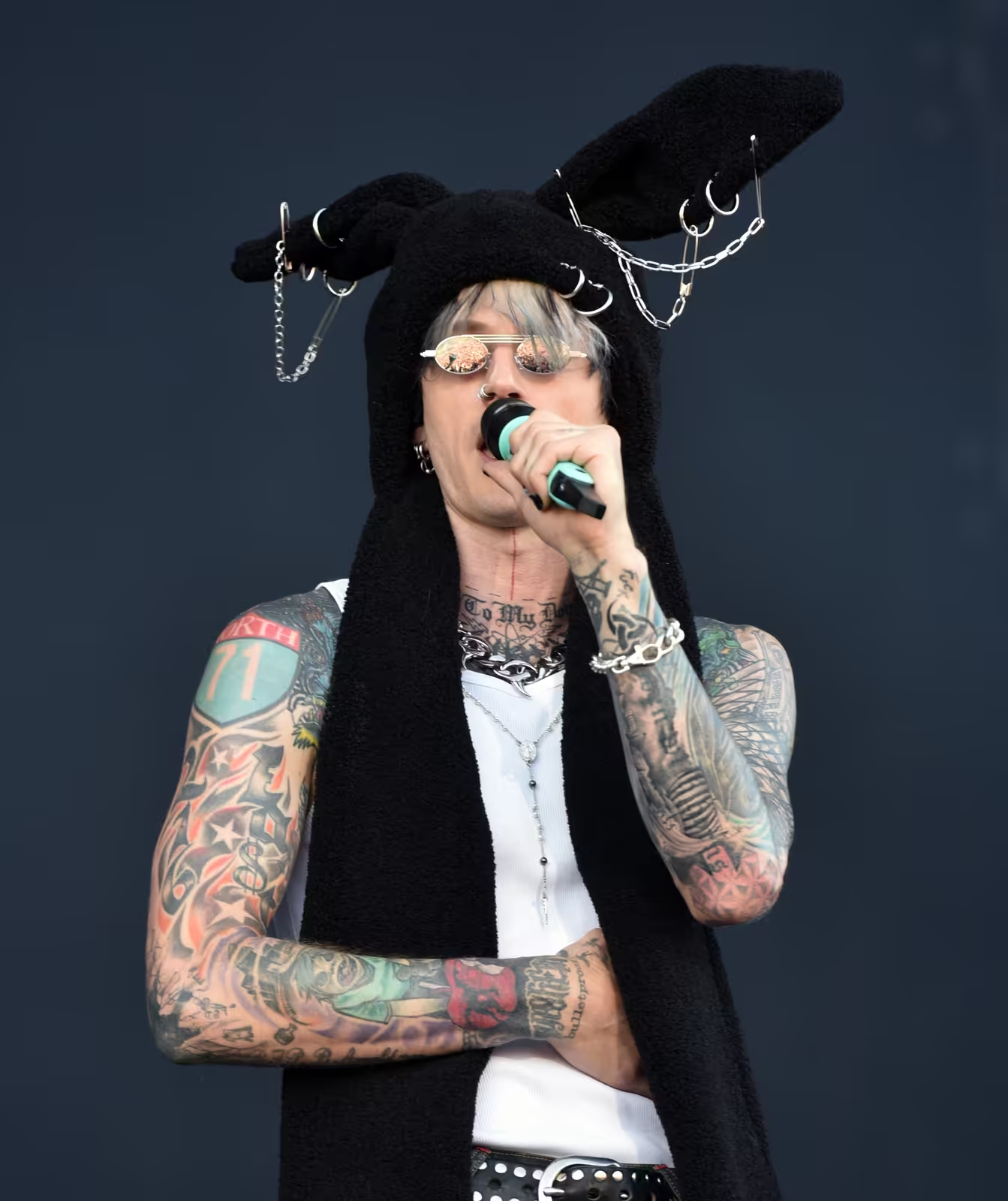
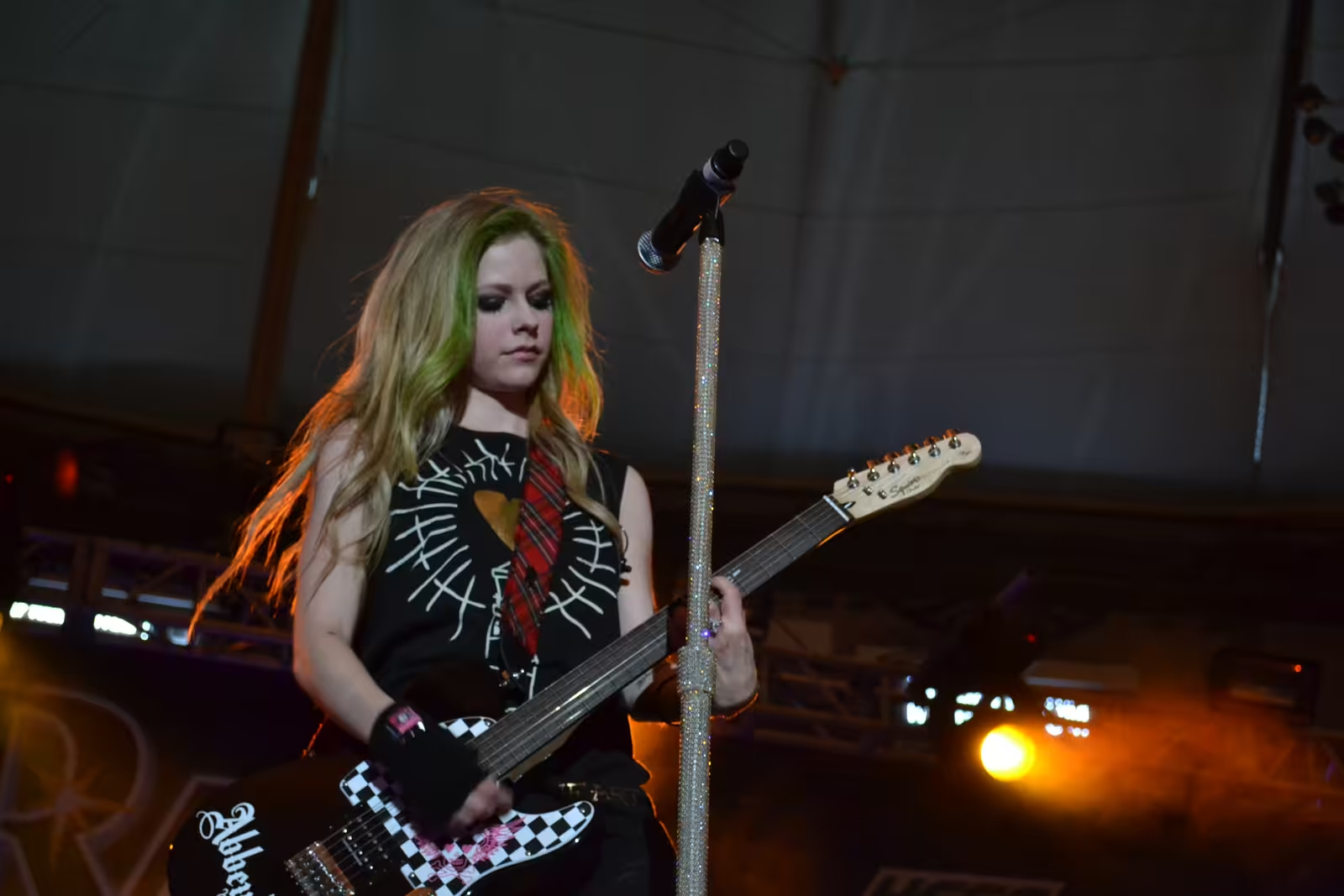
The bigger story was that pop punk seeped into the pop mainstream itself. In 2021 Olivia Rodrigo's "good 4 u," a snarling, Paramore-indebted breakup anthem, hit number one, and her album Sour shot through with the genre's DNA. So strong was the resemblance to "Misery Business" that Hayley Williams and Josh Farro were added to the song's writing credits. Willow Smith scored a hit with the Barker-featuring "Transparent Soul," and Avril Lavigne, a foundational figure from the original era, returned in 2022 with Love Sux on Barker's label. Rodrigo aside, no one summarised the moment better than the Rolling Stone critic Rob Sheffield.
"Pop punk is back from the dead, more popular and influential than ever. Suddenly, it's the Teenager of the Year."
Rob Sheffield, Rolling Stone, 2022
The veterans came home too. In October 2022 Blink-182 announced that Tom DeLonge had rejoined, their first reunion of the classic line-up since his 2015 departure. The comeback album One More Time arrived in 2023 and debuted at number one, the band's first chart-topper with the DeLonge line-up since 2001. Green Day returned in 2024 with Saviors, which reached number four in the United States and gave them their first United Kingdom number one in fifteen years. Behind the headliners, a far more diverse new guard reshaped who the music was for. Meet Me @ The Altar, a band of young women of colour, signed to Fueled by Ramen, while Pinkshift and Destroy Boys, fronted by non-binary and POC musicians, pushed the sound somewhere the suburban California originators never imagined. Téa Campbell of Meet Me @ The Altar described the point.
"The end goal is to inspire a whole new wave of bands that wouldn't necessarily have had the confidence to assert themselves in a predominantly white, male scene."
Téa Campbell, Meet Me @ The Altar, Kerrang!, 2021
The engine driving much of it was TikTok, which turned out to be perfectly built for the genre's revival. As one Consequence writer observed, "TikTok is good at two things that are helping bring pop-punk back: nostalgia and promoting subcultures." Old songs found new teenage audiences overnight, and "Misery Business" charted all over again. The nostalgia economy did the rest. The When We Were Young festival launched in Las Vegas in 2022, packing a single day with dozens of acts from the genre's golden age, and the Vans Warped Tour itself returned for a run of dates in 2025. By 2025 and 2026 there were cooling signals too, with Machine Gun Kelly pivoting away from the sound and the When We Were Young festival announcing a 2026 pause, framed by its organisers with a promise: "This isn't goodbye. It's just a pause. We'll see you in 2027." Either way, the loop continues.
Legacy and Influence
For a genre that spent its whole life being told it was not serious, pop punk has proved remarkably hard to kill. Its DNA is everywhere: in the way modern pop stars reach for a distorted guitar and a shouted chorus when they want to signal honesty, in the festival economy it helped invent, and in the simple fact that being earnest about heartbreak and boredom is no longer something a young band has to apologise for. Machine Gun Kelly, defending his place in a scene that did not always want him, made the case for the whole enterprise.
"Rock needed a defibrillator. Who cares who gives it, just as long as that motherfucker doesn't die?"
Machine Gun Kelly, Billboard, 2022
That is, in the end, the pop-punk story in miniature. A scene that armoured itself against the mainstream, conquered it anyway, was buried with full honours, and then climbed out of the grave with a new and more diverse cast to do it all again. It was never cool, and it never went away. The two facts turn out to be related.
Riffology Podcast Episodes from the Scene
Several of the albums in this story have a full Riffology podcast episode that pulls them apart track by track. Follow the album to listen.
| Album | Band | On the Riffology podcast |
|---|---|---|
| Dookie | Green Day | The album that took the underground overground in 1994. |
| Ixnay on the Hombre | The Offspring | The major-label follow-up to Smash, dissected in full. |
Things You Might Not Know
| Fact | Detail |
|---|---|
| Banned from home | Green Day were barred from 924 Gilman Street, the club that raised them, after signing to a major label in 1993. |
| A janitor's day job | The Offspring's Noodles was a head custodian at an elementary school right up until Smash made the band millionaires. |
| Second mortgage | Epitaph boss Brett Gurewitz reportedly remortgaged his house just to press enough copies of Smash to meet demand. |
| A pop-punk first | Blink-182's Take Off Your Pants and Jacket was the first punk-rock album to debut at number one on the Billboard 200, in 2001. |
| Two Grammys, two years | American Idiot won Best Rock Album in early 2005, then "Boulevard of Broken Dreams" won Record of the Year a year later. |
| The four chords | The I-V-vi-IV "pop-punk progression" is so common that a comedy band built a viral medley out of it, yet "All the Small Things" does not use it. |
| Gold with no radio | NOFX's Punk in Drublic went gold with no radio play, no MTV and no major label, on touring and reputation alone. |
| The Madonna offer | Rancid turned down a major-label bidding war that reportedly included Madonna's Maverick label to stay with Epitaph. |
| From rap to pop punk | Machine Gun Kelly began as a Cleveland rapper before reinventing himself and scoring a pop-punk number one in 2020. |
| Misery royalties | Hayley Williams and Josh Farro were added to the credits of Olivia Rodrigo's "good 4 u" because it echoed "Misery Business." |
| A Welsh export | One of the biggest bands of the 2010s revival, Neck Deep, came not from California but from Wrexham in North Wales. |
| The accent is a choice | The nasal "pop-punk voice" was a deliberate exaggeration of a Californian accent, pushed to extremes by Blink-182 and The Offspring. |
The Riffology Podcast
Pop punk was built for arguing about, which makes it perfect podcast fuel. On the Riffology podcast, Neil and Chris dig into the records that defined the scene, from the Berkeley underground to the glossy MTV peak, pulling apart how they were made and why they still matter. If this story sent you back to your old playlists, the episodes are where the deep dives live, and we'd love to hear which album you would have put top of the pile. You can find Riffology on all the major podcast platforms.
Comments