Tom Morello had a politics degree from Harvard, a side job as scheduler in Senator Alan Cranston's office, and a growing suspicion that nothing he could legally put on a memo would ever say what he actually wanted to say about American power. In 1991, after his band Lock Up imploded, he started looking for musicians who would let him say it on a guitar instead. Within twelve months he was in a four-piece called Rage Against the Machine, recording a debut album whose cover was a photograph of a Buddhist monk burning himself to death, and whose biggest single was eight lines of lyrics, the last four of which were the same word repeated seventeen times.
Across thirty-three years, three disbandments, two formal reunions and one accidental UK Christmas number one, Rage Against the Machine never released a studio album of new material after 1999. They didn't need to. By the time Brad Wilk confirmed in January 2024 that they would not tour again, the four songs from the back of side one of their debut were soundtracking protest marches in countries where most of the band could no longer get a visa.
Band Facts
| Field | Detail |
|---|---|
| Origin | Los Angeles, California |
| Formed | 1991 |
| Years active | 1991-2000, 2007-2011, 2019-2024 |
| Members | Zack de la Rocha (vocals), Tom Morello (guitar), Tim Commerford (bass, backing vocals), Brad Wilk (drums) |
| Labels | Epic, Revelation |
| Genres | Rap metal, rap rock, funk metal, alternative metal |
| Studio albums | 4 (1 covers album) |
| Producers | Garth Richardson (debut), Brendan O'Brien (Evil Empire, Battle of Los Angeles, Renegades) |
| RIAA certifications | Debut and Evil Empire 3x Platinum; Battle of Los Angeles 2x Platinum |
| Spinoffs | Audioslave, Prophets of Rage, The Nightwatchman, One Day as a Lion, Street Sweeper Social Club, Wakrat |
| Rock & Roll Hall of Fame | Inducted 3 November 2023, Brooklyn |
| Grammy Awards | 2 wins, 6 nominations |
Formation in Los Angeles
The four parts of Rage Against the Machine arrived in the same room by a route that nobody, in any other decade, would have predicted. Tom Morello had grown up in Libertyville, Illinois, the son of a Kenyan Mau Mau veteran (Ngethe Njoroge, later Kenya's first UN ambassador) and an Irish-Italian high-school teacher who would become a co-founder of the Parents for Rock and Rap anti-censorship group. He went east to Harvard, graduated in 1986 with a degree in social studies, moved to Los Angeles intending to break into the music business, and ended up scheduling appointments for the Democratic Senator from California while writing songs at night with a heavy-metal band called Lock Up. Lock Up released one album for Geffen in 1989. It didn't sell.
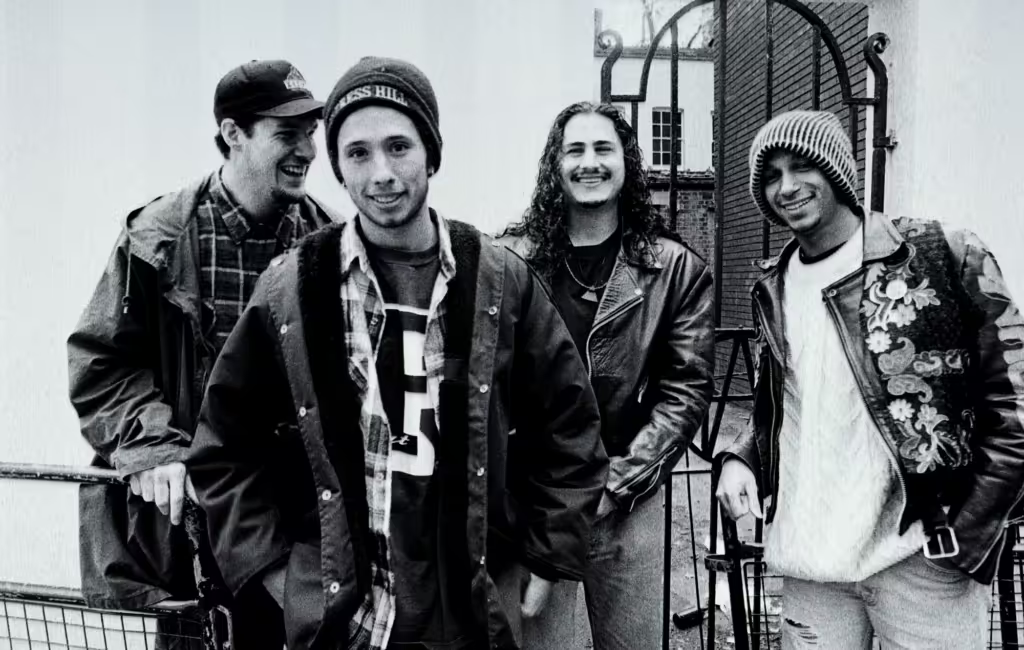
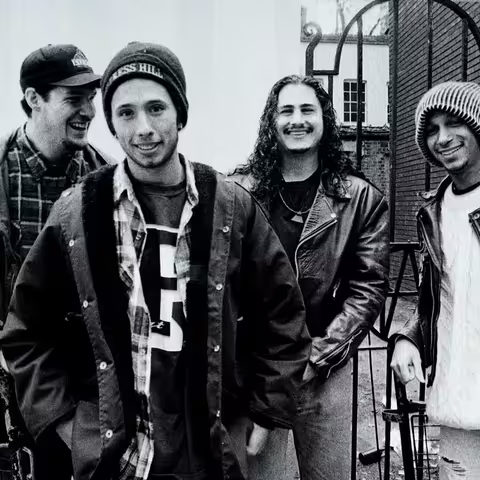
When Lock Up dissolved, Lock Up's former drummer Jon Knox suggested Morello jam with two musicians he knew: vocalist Zack de la Rocha and bassist Tim Commerford. De la Rocha, the son of a Chicano artist father and a German-Irish anthropologist mother, was the singer of a Southern California hardcore punk band called Inside Out. Commerford had been his closest friend since childhood. For drums, Morello called Brad Wilk, who had recently been turned down by Lock Up and, more famously, had auditioned unsuccessfully for the band that would soon become Pearl Jam.
The first time the four of them played together in a Hollywood rehearsal room in 1991, the song they jammed on was something Zack had written for Inside Out and never released. It was called "Rage Against the Machine". The phrase itself had first appeared in a 1989 issue of the punk zine No Answers, edited by Inside Out's label boss Kent McClard. Within weeks the new band had taken the title as its name and started writing the material that would become their debut.
- Zack de la Rocha - ex-Inside Out (hardcore punk); brought the rap delivery and the political vocabulary.
- Tom Morello - ex-Lock Up (heavy metal); brought the Harvard library, the DigiTech Whammy pedal and the conviction that a guitar could do the work of a turntable.
- Tim Commerford - childhood friend of de la Rocha; brought the elastic, hip-hop-shaped low end that nobody else in 1991 American rock was playing.
- Brad Wilk - had failed two auditions in eighteen months; brought the swing that made everything land like a Public Enemy beat instead of a Metallica one.
The Demo Tape and the Label War
The first thing they did with the name was self-release a twelve-song cassette in 1991, the cover of which was a clipping from the stock-market section of a newspaper with a single match taped to it. Two of the twelve songs ("Darkness", "Clear the Lane") would never make a studio album in their original form; the rest were the blueprint for what was coming. The cassette was sold for five dollars at gigs and word travelled fast in a Los Angeles scene that was still trying to decide whether the next thing after Guns N' Roses was going to be grunge, gangsta rap or something nobody had heard yet.
Several labels expressed interest. The band signed to Epic Records, a Sony subsidiary, which would later become the cudgel critics used to call them hypocrites for the rest of their career. Morello's defence at the time, and ever after, was unsentimental:
"Epic agreed to everything we asked - and they've followed through. We never saw an ideological conflict as long as we maintained creative control over our music and our image."
Tom Morello, on signing to a Sony subsidiary in 1992
The contract specified that the band, never the label, had final say on artwork, lyrics, marketing and tour routing. They would test that clause repeatedly.
Rage Against the Machine (1992)
The debut album was recorded in April and May 1992 across three Los Angeles studios - Sound City in Van Nuys, Industrial Recording in North Hollywood and Scream in Studio City - with Canadian producer Garth Richardson (who credited himself on the sleeve as "GGGarth"). Andy Wallace, fresh from mixing Nevermind, mixed. Bob Ludwig mastered. The sleeve notes carried a single statement that became a small genre-defining gesture: "no samples, keyboards or synthesizers used in the making of this record". Every freight-train screech, helicopter rotor and turntable scratch on the album was Tom Morello with a guitar.
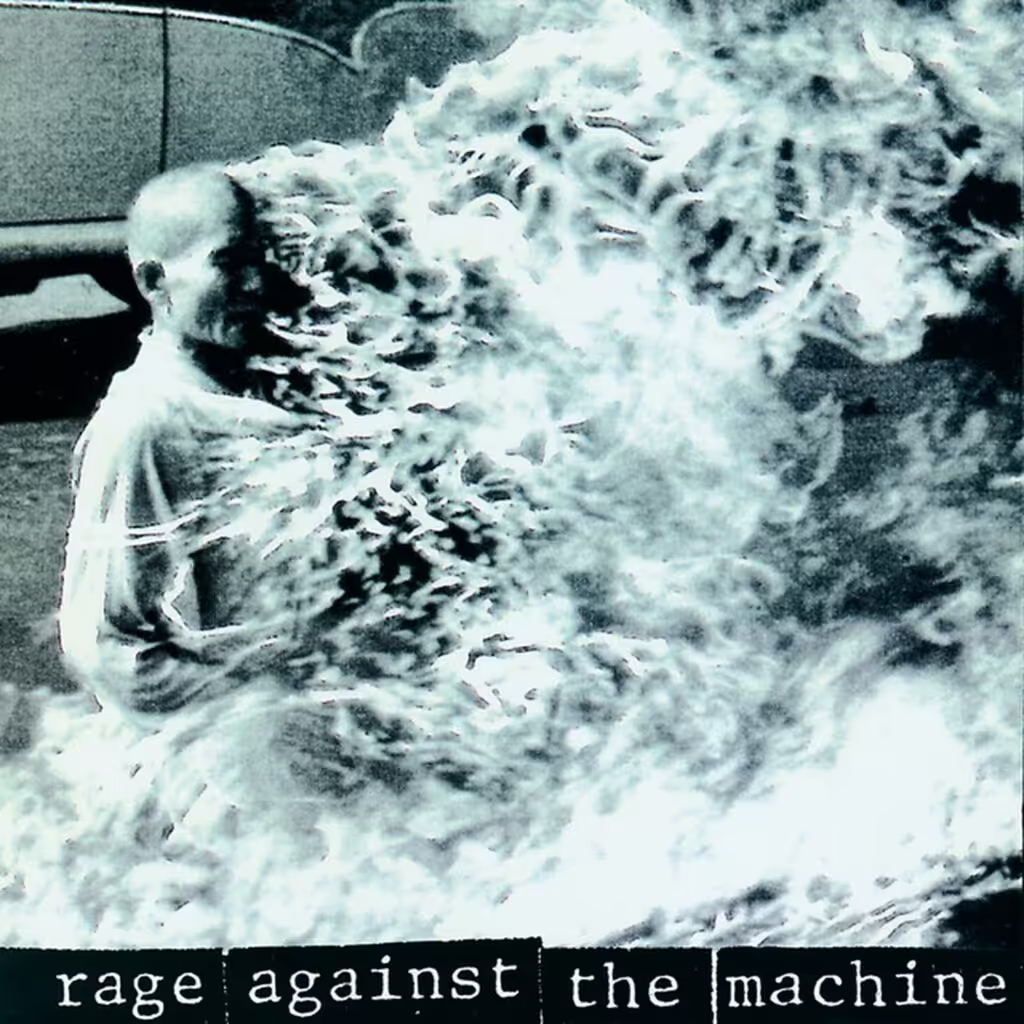
The cover used Malcolm Browne's 1963 Pulitzer-winning photograph of Vietnamese Buddhist monk Thich Quang \u0110uc setting himself on fire in Saigon in protest at the U.S.-backed Diem regime. It was an image that no major US label had ever wrapped a debut album in. Inside, alongside the lyrics, the band thanked a roster of activists ranging from Provisional IRA hunger striker Bobby Sands to Black Panther co-founder Huey P. Newton. Released on 6 November 1992 - four days after the lead single "Killing in the Name" - the album peaked at number forty-five on the Billboard 200, number seventeen on the UK chart, and was certified triple platinum in the US by May 2000.
The full story of how that album came together - the demo lineage, the Maynard James Keenan guest spot, the eight-line lyric to "Killing in the Name", the Lollapalooza ascent and the Andy Wallace mix - is the subject of its own Riffology deep dive on the making of Rage Against the Machine by Rage Against the Machine.
Lollapalooza and the BBC Incident
Sales of the debut were initially slow: 75,000 copies by mid-1993. Then came Lollapalooza. The band's set on the 1993 second-stage and main-stage rotation lifted US sales of the album to 400,000 by the end of the year, and made them one of the few non-grunge bands to come out of the touring festival with a meaningfully bigger audience than they had walked into it with. By April 1996 the debut had passed a million US copies.
The other 1993 event that put the band into folklore happened on the morning of 21 February, when BBC Radio 1's Top 40 singles show accidentally played the uncensored version of "Killing in the Name" on a Sunday afternoon. The single's now-famous closing section contains the phrase "fuck you I won't do what you tell me" seventeen times. The presenter, Bruno Brookes, was already several minutes into the next song before anyone in the studio realised what had just gone out over the British airwaves. Sixteen years later, the same song would return to British radio in even more unlikely circumstances.
Evil Empire (1996)
Between late 1994 and mid-1995 the band briefly broke up. There were 23 tracks recorded in Atlanta with producer Brendan O'Brien starting that November, but the sessions stalled in arguments over musical direction. According to MTV News at the time, an anonymous source described the breakdown as "violent infighting". The band regrouped to headline the KROQ Weenie Roast in June 1995, finished the album with O'Brien that November and December, and released it as Evil Empire on 16 April 1996.
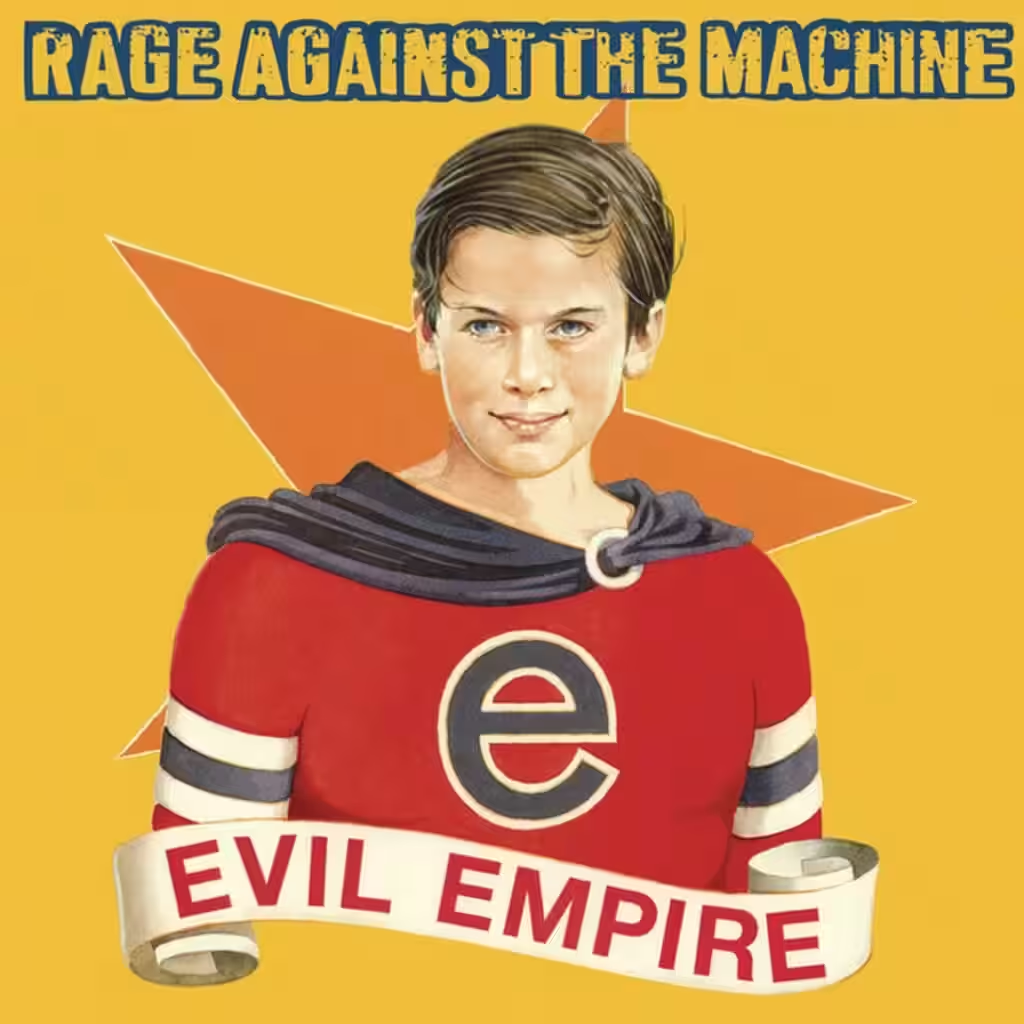
The cover was an altered version of a Mel Ramos painting of the 1940s comic-book hero Crimebuster, the emblem on the boy's chest changed from a "c" to a lower-case "e" and the caption rewritten as the album's title. The 11-year-old model in the original Ramos painting was a New York boy named Ari Meisel, who would later confirm in Kerrang! that the painting had originally been a birthday present from Ramos to his family. Inside the CD booklet, the band photographed a pile of books they wanted their audience to read: Howard Zinn, Marx, Eldridge Cleaver, Noam Chomsky, Mumia Abu-Jamal, Frantz Fanon, Thoreau, Steinbeck, Saul Alinsky and James Baldwin among them.
Evil Empire entered the Billboard 200 at number one with 249,000 first-week US sales and was certified triple platinum within four years. "Tire Me" won the 1997 Grammy for Best Metal Performance; "Bulls on Parade" and "People of the Sun" were Grammy-nominated. The full Evil Empire story - producer changes, the Atlanta walkout, the Bulls on Parade riff, Down Rodeo's Melbourne vocal session, the iron-fist Barbara Kruger artwork that bled into the video for Bulls on Parade - has its own Riffology deep dive on the making of Evil Empire.
"The cold embers of Rage Against The Machine are now the burning fire of Prophets of Rage."
Tom Morello, May 2016, on the formation of the Public Enemy / Cypress Hill supergroup
The SNL Walkout, U2 and the Wu-Tang Tour
On 13 April 1996, three days before Evil Empire's release, the band appeared on Saturday Night Live. The episode was hosted by Republican presidential candidate Steve Forbes. Their planned two-song performance was cut to one when, ahead of the broadcast, the band attempted to hang inverted American flags ("a sign of distress or great danger") from their amplifiers in protest. The flags were ripped down by stagehands as the band walked off after "Bulls on Parade". The band's second song, originally scheduled to be "Bullet in the Head", never happened.
The rest of the 1996-98 cycle saw the band open for U2 on the 1997 PopMart Tour, donate the tour's profits to organisations including the Zapatista Front for National Liberation, attempt a co-headlining North American tour with Wu-Tang Clan that collapsed when Wu-Tang failed to appear at Riverport (they were replaced by The Roots), and release a compilation, Live & Rare, in 1998. The same year, "No Shelter" appeared on the Godzilla soundtrack and the band played Woodstock '99.
The Battle of Los Angeles (1999)
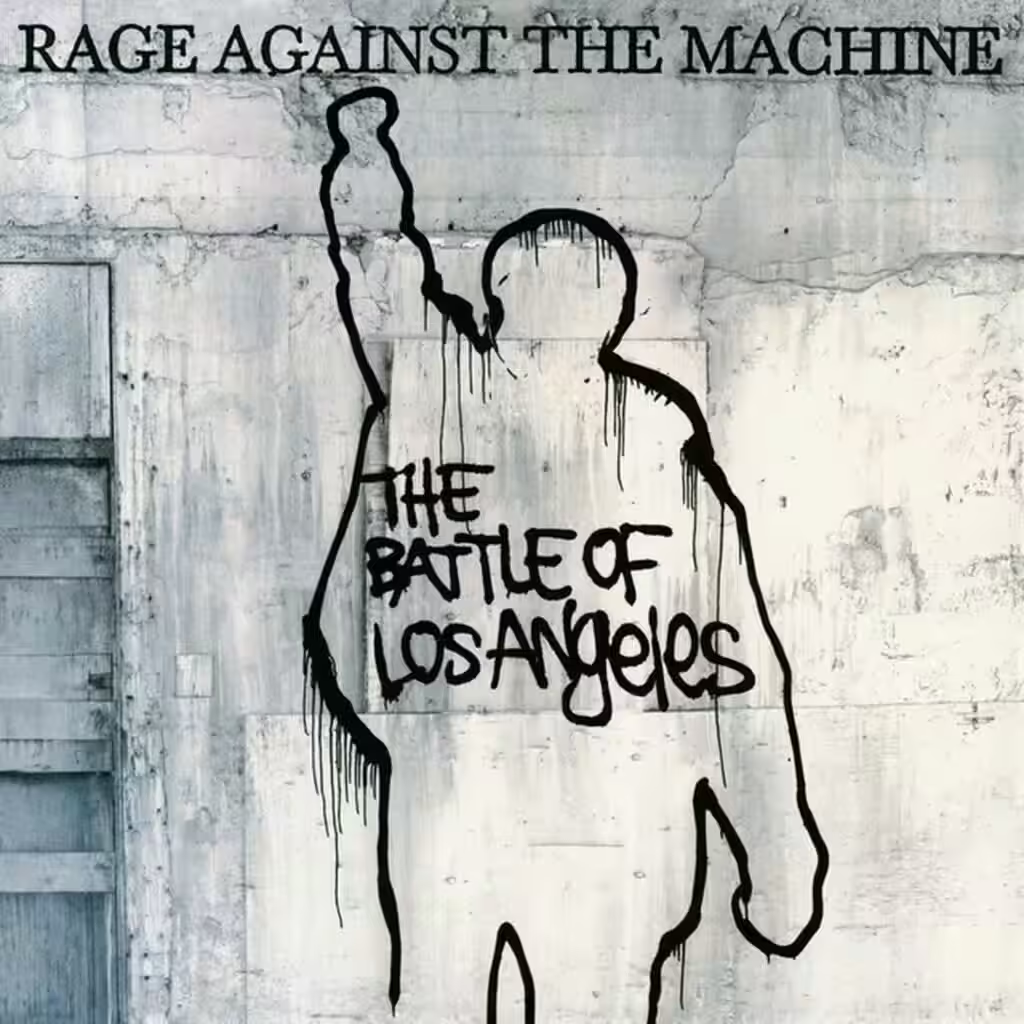
Recorded between 1 September and 1 October 1998 across six studios in Hollywood and Atlanta with Brendan O'Brien producing again, The Battle of Los Angeles was released on 2 November 1999. The cover was an original spray-stencil by Los Angeles graffiti artist Joey Krebs, known as The Phantom Street Artist. The album debuted at number one on the Billboard 200 with first-week sales of around 420,000, famously keeping Mariah Carey's Rainbow off the top spot. It earned a 2x platinum US certification and ended the year as both Time and Rolling Stone's pick for the best album of 1999.
"Guerrilla Radio" won the 2001 Grammy for Best Hard Rock Performance; the album was Grammy-nominated for Best Rock Album. "Wake Up" closed The Matrix; "Calm Like a Bomb" turned up four years later in The Matrix Reloaded. The full story of the album - the Henson-to-Southern-Tracks studio circuit, the "Sleep Now in the Fire" video shoot with Michael Moore, the Mumia Abu-Jamal references on "Voice of the Voiceless" and the band's growing in-studio rifts - lives in the Riffology deep dive on the making of The Battle of Los Angeles.
Wall Street, the VMAs and Zack's Departure
The "Sleep Now in the Fire" video shoot on 26 January 2000 went down in band lore as the day Rage Against the Machine got the doors of the New York Stock Exchange shut. Directed by Michael Moore on the steps of Federal Hall, the shoot quickly outgrew the permits Moore had filed for. When the band attempted to enter the Exchange itself, the building's titanium riot doors came down. As Morello later recalled, Moore's only on-set instruction had been: "No matter what happens, don't stop playing." Moore was led away by police as the band finished the song; he was issued one ticket, for filming without a permit.
Eight months later, on 7 September 2000, came the MTV Video Music Awards incident. The band performed "Testify", lost the Best Rock Video Grammy-equivalent to Limp Bizkit, and watched Tim Commerford climb the scaffolding of the awards stage in protest. Commerford and his bodyguard spent a night in jail; de la Rocha reportedly left the venue without speaking to anyone. Morello later said Commerford had told the band his plan before the show and that both de la Rocha and Morello had advised him against it the moment Bizkit's name was read out.
On 18 October 2000, de la Rocha announced he had left the band. His statement was civil, and damning:
"I feel that it is now necessary to leave Rage because our decision-making process has completely failed. It is no longer meeting the aspirations of all four of us collectively as a band, and from my perspective, has undermined our artistic and political ideal."
Zack de la Rocha, statement to MTV News, 18 October 2000
Morello's later explanation was earthier:
"There was so much squabbling over everything, and I mean everything. We would even have fist fights over whether our T-shirts should be mauve or camouflaged. It was ridiculous. We were patently political, internally combustible. It was ugly for a long time."
Tom Morello, looking back on the band's first breakup
Renegades and the First Disbandment
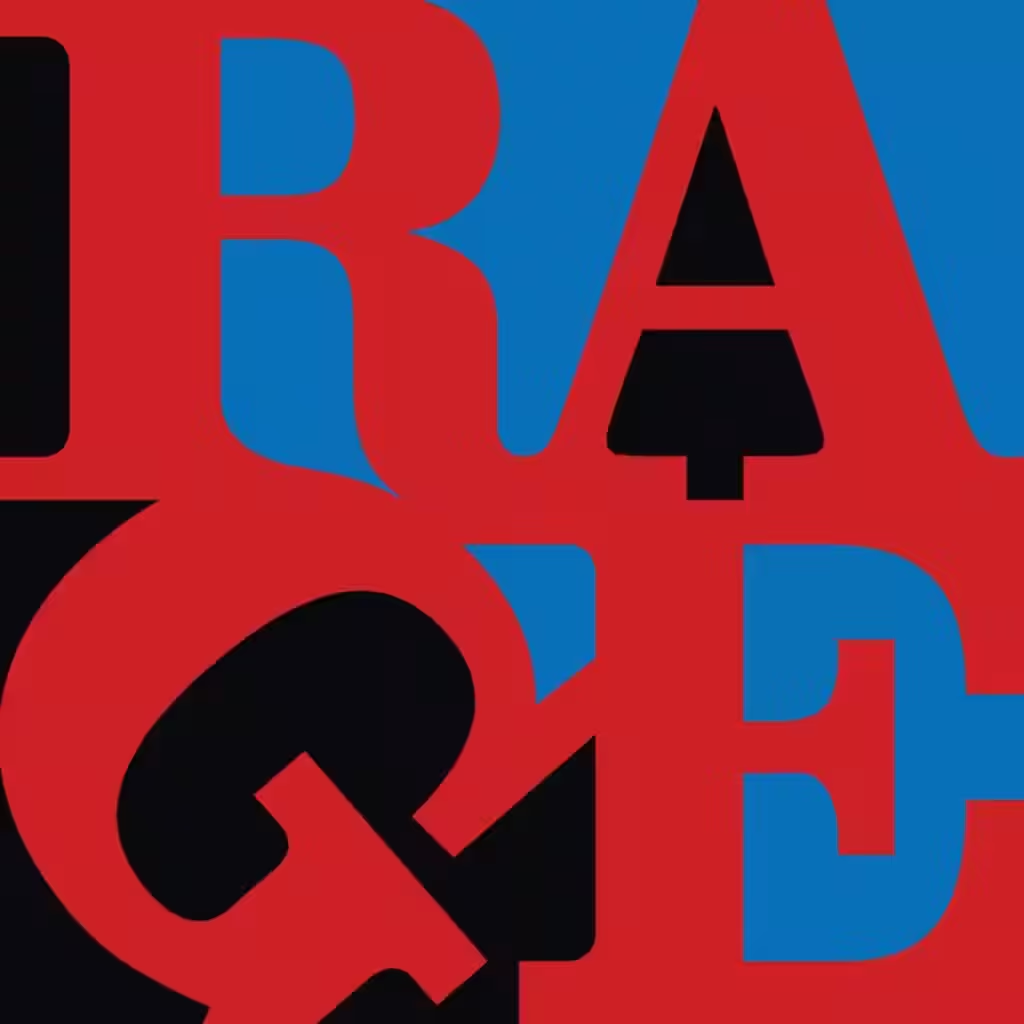
The album that came out posthumously was Renegades, a covers record finished without de la Rocha actively in the band, released in December 2000. The covers ranged across Devo ("Beautiful World"), EPMD ("I'm Housin'"), Minor Threat ("In My Eyes"), Cypress Hill ("How I Could Just Kill a Man"), the MC5 ("Kick Out the Jams"), Bruce Springsteen ("The Ghost of Tom Joad"), The Rolling Stones ("Street Fighting Man"), Bob Dylan ("Maggie's Farm"), Afrika Bambaataa ("Renegades of Funk"), Eric B. & Rakim ("Microphone Fiend") and Erik B. & Rakim again ("Without a Face" was a Volume 10 original re-imagined by de la Rocha). Brendan O'Brien produced.
The final original-lineup show took place at the Grand Olympic Auditorium in Los Angeles in September 2000, and was later released as Live at the Grand Olympic Auditorium. De la Rocha's departure was voted "shittiest thing" of 2000 in the Kerrang! readers' poll. In September 2001, every Rage Against the Machine song appeared on the so-called Clear Channel "lyrically questionable" list circulated to American radio stations in the wake of 9/11. They were the only band whose entire catalogue made it onto the document.
The Audioslave Years
Morello, Commerford and Wilk did not want to break up the rhythm section. They informed Epic, in Morello's words, that "losing our singer was actually a blessing in disguise, and that we had bigger ambitions than being somebody's hired musicians." Brief talks about becoming Ozzy Osbourne's backing band (and, more strangely, Macy Gray's) went nowhere. It was Rick Rubin, an old friend, who suggested they play with Chris Cornell of Soundgarden, who had also recently lost a band.
The four became Audioslave. Their first single, "Cochise", arrived in November 2002; the self-titled debut followed. Out of Exile (2005) entered the Billboard 200 at number one. Revelations followed in 2006. The project ended on 15 February 2007 when Cornell announced he was leaving "due to irresolvable personality conflicts as well as musical differences". Cornell's death in May 2017 closed the door on any reunion permanently.
Beyond Audioslave, the side projects multiplied. Morello began performing acoustic protest songs in 2003 as The Nightwatchman, releasing four studio albums under that name and forming the rap-rock duo Street Sweeper Social Club with Boots Riley in 2007. De la Rocha worked through projects with DJ Shadow, Trent Reznor of Nine Inch Nails, Company Flow and Questlove, most of which never officially came out. The DJ Shadow collaboration "March of Death" was released free online in 2003 in protest at the invasion of Iraq. In July 2008 de la Rocha released an EP with Mars Volta drummer Jon Theodore as One Day as a Lion.
First Reunion (2007-2011)
On 14 April 2007, Morello and de la Rocha performed a brief acoustic set together at a Coalition of Immokalee Workers rally in Chicago. Two weeks later, on 29 April, the full original lineup headlined the closing night of Coachella, playing in front of a giant EZLN (Zapatista) backdrop to what organisers reported as the largest crowd of the festival's weekend. Morello framed the reunion as a response to "the right-wing purgatory the United States had slid into" under the George W. Bush administration.
The Coachella set ran for 75 minutes. Pro-shot footage of the show went on to become one of the most-watched festival webcasts of the decade. Over the following four years the band toured selectively rather than constantly - Rock am Ring 2008, Lollapalooza 2008, the Reading and Leeds Festivals, the Denver Tent State Music Festival during the 2008 Democratic National Convention (where the band led 8,000 attendees on a six-mile march to Invesco Field), and the Target Center in Minneapolis during the Republican National Convention a few weeks later. They did not record new material.
The Killing in the Name Christmas Number One
In December 2009 a married couple from Essex - Jon and Tracy Morter - launched a Facebook group with a single objective: stop The X Factor winner's single from becoming the UK Christmas number one for a fifth consecutive year. Their chosen vehicle was a seventeen-year-old American song about police violence. By Christmas Eve, group membership stood at over 950,000. The campaign drew public support from Dave Grohl, Paul McCartney, Muse, NME, John Lydon and BBC Radio 1 itself.
On 20 December 2009, "Killing in the Name" reached number one on the UK Singles Chart with 502,672 first-week downloads, beating X Factor winner Joe McElderry's "The Climb" by 50,000 copies. It set a new UK record for the biggest first-week download sales total in chart history. The band kept their word and played a free thank-you concert at Finsbury Park in London on 5 June 2010 (named, with characteristic understatement, "The Rage Factor"), supported by Gogol Bordello, Gallows and Roots Manuva, with the show later released as Live at Finsbury Park. In 2021, an Official Charts Company poll named "Killing in the Name" the UK's favourite Christmas number one of all time. It was the first time most of the band had ever played a free show in the United Kingdom, and the first time any of them had ever been on a Christmas chart, anywhere.
Prophets of Rage (2016-2019)
By 2011, the live activity had wound down. The L.A. Rising festival in July of that year, at the LA Coliseum, was the last show the original lineup would play for over a decade. Tim Commerford gave conflicting interviews about a possible new album; Tom Morello variously confirmed and denied that any writing was happening. In April 2014, Brad Wilk told The Pulse of Radio that, as far as he knew, L.A. Rising had been their final show.
In May 2016, Morello, Commerford and Wilk announced a new supergroup, Prophets of Rage, with Chuck D of Public Enemy and B-Real of Cypress Hill on shared vocal duties. The band toured throughout 2016 and 2017 playing songs from all three members' catalogues, released a self-titled studio album in 2017, and disbanded in November 2019 when Chuck D and B-Real publicly acknowledged that the original RATM lineup was reuniting. Throughout the Prophets of Rage period, Morello was scrupulous in public about Zack: "We have nothing but the greatest love and honour and respect for Zack de la Rocha, who is working on his own music. But where you're going to hear Rage Against the Machine is in Prophets of Rage."
The 2022 Reunion and the Rock Hall
The full reunion was confirmed on 1 November 2019, originally as two Coachella headline slots in spring 2020 and a world tour, eventually re-titled the Public Service Announcement Tour. COVID-19 pushed the tour first to 2021, then to 2022. By the time it finally launched on 9 July 2022 at the Alpine Valley Music Theatre in Wisconsin, with Run the Jewels as support, it had been twenty-three years since the band's last full studio album and eleven years since their last show.
The reunion lasted three shows. During the third performance, in Chicago, Zack de la Rocha ruptured his Achilles tendon mid-set. He finished the show seated. The remaining North American dates were cancelled in October 2022. The European leg, which would have been the band's first UK shows in over a decade, never happened. During the brief tour the band donated $475,000 to reproductive rights organisations in Wisconsin and Illinois in response to the Supreme Court's overturning of Roe v. Wade.
On 3 November 2023, Rage Against the Machine were inducted into the Rock and Roll Hall of Fame at Barclays Center in Brooklyn, by Ice-T. They had been nominated four times previously (2018, 2019, 2021, 2022) before finally being voted in at their fifth attempt. Only Tom Morello attended the ceremony. Zack de la Rocha skipped the induction to take part in a Free Palestine march; Commerford and Wilk did not publicly explain their absence. It was, perhaps fittingly, the most Rage Against the Machine way conceivable to enter a Hall of Fame.
The Third Disbandment
On 3 January 2024, Brad Wilk gave a brief interview to Pitchfork in which he confirmed that the band would not tour again. Rolling Stone ran the headline "Rage Against the Machine Break Up... Again" the same day. Morello has subsequently continued to work as The Nightwatchman and as a high-profile guest player and producer. De la Rocha has remained, as he has been for most of the past twenty years, near-silent in public. Commerford has continued with side projects including Wakrat and 7D7D.
There has been no formal goodbye statement from the four of them collectively. There has also been no follow-up tour. For practical purposes - Wikipedia logs the band's third disestablishment as 2024 - Rage Against the Machine ended quietly, on the same news cycle as the rest of the music industry's January 2024 announcements, with no farewell show and no album. Their three studio records of original material remain their entire creative output, recorded inside a seven-year window between 1992 and 1999.
Activism, Politics and Controversy
The thread that runs through everything is the politics, and the criticism it has always attracted. The band was openly Marxist-influenced, openly anti-corporate, openly in support of indigenous and anti-prison causes - and openly signed to a Sony subsidiary, with millionaire members. Critics, including Infectious Grooves on the parody single "Do What I Tell Ya!", accused them of hypocrisy. Morello's answer, recycled many times in many interviews, was that the contradiction was the point: Sony's international network was, in his framing, the most effective platform on earth to amplify exactly the messages Sony's parent company would otherwise prefer not to hear.
- 1996 SNL walkout - inverted American flags stripped from amps ahead of Steve Forbes-hosted episode.
- 1997 U2 PopMart Tour - the band's share of the takings donated to the Union of Needletrades, Industrial and Textile Employees, Women Alive and the Zapatista Front for National Liberation.
- 2000 NYSE shoot - doors of the New York Stock Exchange closed mid-shoot for Michael Moore's "Sleep Now in the Fire" video.
- 2008 Denver DNC - band led an 8,000-strong march of Iraq Veterans Against the War to Invesco Field; the Obama campaign agreed to meet IVAW representatives after a four-hour standoff with police.
- 2010 Arizona SB1070 - first US show in two years raised $300,000 for organisations fighting the state's immigration law.
- 2021 Israel boycott - all four members signed the open letter calling for a cultural boycott of Israel until the end of the occupation of the Palestinian territories.
- 2022 Roe v. Wade - $475,000 donated to reproductive rights groups during the abbreviated reunion tour.
- 2023 - de la Rocha skipped the Rock Hall induction to attend a Free Palestine march in Manhattan.
Reunions and Notable Tours
| Year | Tour or Event | Lineup | Notes |
|---|---|---|---|
| 1993 | Lollapalooza second + main stage | Original | Lifted US debut sales from 75,000 to 400,000 inside one festival cycle. |
| 1997 | U2 PopMart Tour (support) | Original | Tour profits donated to UNITE, Women Alive and the Zapatista FLN. |
| 2000 | Final original-lineup show, Grand Olympic Auditorium | Original | Released later as Live at the Grand Olympic Auditorium; band split weeks afterwards. |
| 2007 | Coachella headline reunion | Original | First show in seven years; EZLN backdrop; 75-minute set. |
| 2008 | Denver DNC / Minneapolis RNC | Original | Led 8,000-strong Iraq Veterans Against the War march to Invesco Field. |
| 2010 | Rage Factor free show, Finsbury Park | Original | Thank-you gig to Christmas number one campaigners; later released as Live at Finsbury Park. |
| 2011 | L.A. Rising, Los Angeles Coliseum | Original | Final show of the first reunion period; eleven-year hiatus followed. |
| 2016-2019 | Make America Rage Again (Prophets of Rage) | Morello / Commerford / Wilk + Chuck D + B-Real | One studio album; disbanded when RATM reunion was confirmed. |
| 2022 | Public Service Announcement Tour | Original | Ended after three shows when Zack ruptured his Achilles in Chicago. |
| 2023 | Rock & Roll Hall of Fame induction | Tom Morello only | Inducted by Ice-T at Barclays Center, Brooklyn; the other three did not attend. |
Discography
| Year | Title | Producer | Label | US Billboard 200 | RIAA |
|---|---|---|---|---|---|
| 1992 | Rage Against the Machine | Garth Richardson | Epic | 45 | 3x Platinum |
| 1996 | Evil Empire | Brendan O'Brien | Epic | 1 | 3x Platinum |
| 1999 | The Battle of Los Angeles | Brendan O'Brien | Epic | 1 | 2x Platinum |
| 2000 | Renegades (covers) | Brendan O'Brien | Epic | 4 | Platinum |
| Selected live and compilation releases | |||||
| 1998 | Live & Rare (Japan; Sony) | Various | Epic/Sony | - | - |
| 2003 | Live at the Grand Olympic Auditorium | - | Epic | 89 | - |
| 2012 | XX (20th anniversary debut reissue, incl. original demo) | Vlado Meller (remaster) | Epic/Legacy | 50 | - |
| 2015 | Live at Finsbury Park | - | Epic | - | - |
Things You Might Not Know
| Fact | Detail |
|---|---|
| The Senator's diary keeper | Before forming RATM, Tom Morello worked in Washington D.C. and Los Angeles as scheduler for Democratic U.S. Senator Alan Cranston of California. |
| The Harvard degree | Morello graduated from Harvard in 1986 with a degree in social studies, having previously been a high-school student in Libertyville, Illinois, where his classmates included Adam Jones of Tool. |
| The Pearl Jam audition | Brad Wilk auditioned for the band that became Pearl Jam in 1990. He did not get it. He did not get into Lock Up either, on a separate audition the same year. RATM was his third attempt. |
| The band's name | The phrase "rage against the machine" first appeared in a 1989 essay by Kent McClard in the hardcore zine No Answers. Zack de la Rocha named one of his Inside Out songs after it; the new band took the song title. |
| No samples | Every freight-train screech, helicopter rotor and turntable scratch on the first three albums is Tom Morello with a guitar. The sleeves explicitly state "no samples, keyboards or synthesizers". |
| The £1m bookies bill | The 2009 UK Christmas number one campaign reportedly cost British bookmakers around £1 million in payouts to punters who had bet on "Killing in the Name" reaching the top. |
| The Clear Channel list | In September 2001, Clear Channel's post-9/11 memo of "lyrically questionable" songs listed every single song by Rage Against the Machine. They were the only artist whose entire catalogue appeared. |
| The Crimebuster kid | The boy on the Evil Empire sleeve was 11-year-old Ari Meisel, a New York child whose family had been given the Mel Ramos original as a birthday present. |
| The Saigon photograph | The 1992 debut sleeve's self-immolation image is a 1963 Pulitzer-winning Associated Press photograph by Malcolm Browne, used with permission via Browne's syndicate. |
| The accidental BBC broadcast | On 21 February 1993, BBC Radio 1 accidentally played the uncensored "Killing in the Name" on a Sunday-afternoon Top 40 broadcast, complete with 17 instances of the word "fuck". |
| The Macy Gray plan | Briefly, in 2001, Morello, Commerford and Wilk considered becoming Macy Gray's permanent backing band. They also considered becoming Ozzy Osbourne's. Both ideas were dropped within weeks. |
| The Achilles | Zack de la Rocha completed the third night of the 2022 reunion in Chicago seated on a road case after rupturing his Achilles tendon during the second song. The European tour was cancelled the following month. |
Join the Conversation
If you've enjoyed this history of Rage Against the Machine, the band's three original studio albums each have their own full Riffology episode and accompanying deep-dive article: the 1992 self-titled debut, 1996's Evil Empire and 1999's The Battle of Los Angeles. The Riffology podcast is available wherever you get your podcasts - Apple, Spotify, Pocket Casts, Overcast and the rest - and we'd love to hear which RATM record means the most to you, and which of the band's many almost-reunions you secretly still hope is going to happen.
Comments