Mick Ronson recorded the third guitar solo on "My Baby Is a Headfuck" in early 1993 at Wessex Studios. He nailed the take first time. Ginger asked him to do another anyway, because nobody in the room wanted to be the person who told Mick Ronson to stop playing. Ronson died of liver cancer on 29 April 1993, four months before the album was released. The solo on "My Baby Is a Headfuck" is the last guitar he played onto a master tape. The Wildhearts had been a Newcastle-formed pop-metal band with two ramshackle EPs and a habit of getting fired from their own line-up; ten weeks after the session in Highbury they had also become the keepers of the final Mick Ronson solo, and a record that was about to be voted Album of the Year by Kerrang! magazine.
Earth vs the Wildhearts is the kind of debut album that should not work on paper. It was made by a four-piece who had been together as a stable line-up for less than two years, with a label, East West, who never quite knew how to sell them. It was self-produced in the main, with three different production teams credited across the eleven original tracks. It was recorded against a backdrop of band-versus-label fights, addiction, internal feuds, the eventual sacking of guitarist CJ midway through the follow-up sessions, and the death of one of the album's headline guests. It is also, by common consent across thirty years of British rock criticism, one of the best British rock debuts ever recorded. This is the full story.
Album Facts
| Field | Detail |
|---|---|
| Artist | The Wildhearts |
| Album | Earth vs the Wildhearts |
| Release Date | 30 August 1993 (UK) |
| Label | East West (with rock imprint Bronze) |
| Producer | The Wildhearts; Mike "Spike" Drake (mix and co-production); Mark Dodson ("Suckerpunch"); Simon Efemey ("Caffeine Bomb", 1994 reissue) |
| Studios | Wessex Studios, Highbury, London (recording); Mayfair Studios, Primrose Hill, London (additional recording); Sterling Sound, New York (mastering) |
| Genre / Subgenre | Hard rock, alternative rock, glam punk, power pop |
| Track Count | 11 (original 1993); 12 (1994 reissue with "Caffeine Bomb"); 24 (2010 extended edition) |
| Total Runtime | 49:21 (original) |
| UK Albums Chart Peak | Number 32 on first release; rose higher on the 1994 reissue chart run |
| Other Notable Chart Peaks | Did not chart in the United States; Japanese pressing through East West Japan |
| Certifications | None on the original release; long-tail sales sat below the BPI Silver threshold of 60,000 |
| Estimated Sales | Reports vary; widely credited with around 100,000 UK sales across all editions |
| Key Singles | "Greetings from Shitsville", "TV Tan", "Caffeine Bomb" (UK No. 31, 1994) |
Cultural Context: British Rock in 1993
Earth vs the Wildhearts arrived at exactly the moment when British rock was deciding what it was going to be for the rest of the decade. The album came out on 30 August 1993, six weeks after Therapy?'s Hats Off to the Insane EP, three weeks before the third Suede single, and ten weeks before Manic Street Preachers released Gold Against the Soul. Britpop as a marketed concept was eight months from being named. Grunge had crested with Pearl Jam's first album in late 1991, was being challenged by Nirvana's In Utero in September 1993, and was already being declared dead by parts of the British press.
What made The Wildhearts unusual was that they sat at the precise intersection of three things the British music press refused to combine. They wrote pop songs in the manner of Cheap Trick or The Beatles. They played them with the speed and aggression of Metallica's Bay Area thrash, complete with palm-muted gallop and double-tracked rhythm guitars. And they framed both with the gallows humour of late-period UK punk, the kind of thing that looked at the worst week of your life and made it the chorus of a single. Kerrang! got it. The NME and Melody Maker, in mid-Britpop pivot, did not.
- Suede's debut album was already in shops; Modern Life Is Rubbish by Blur was three months old.
- Nirvana's In Utero was being recorded with Steve Albini and would land four weeks after Earth vs.
- Therapy?'s Troublegum was about to follow on the same kind of British alternative-meets-metal trajectory.
- Iron Maiden had announced Bruce Dickinson's departure that May; the British rock establishment was visibly in flux.
The Band's Story Up to This Point
The Wildhearts were formed in late 1989 by David "Ginger" Walls, a guitarist and songwriter from South Shields who had been fired by The Quireboys earlier that year. The original line-up was a series of revolving doors. Vocalist Snake from Tobruk passed through. Vocalist Dunken Mullett of Mournblade lasted weeks. By 1991 the line-up had settled around Ginger on guitar and lead vocals, CJ (Christopher Jagdhar) on second guitar and vocals, Danny McCormack on bass and vocals, and Bam from Dogs D'Amour on drums. Ginger, almost from the start, wrote the songs and ran the band.
The band signed to East West, the major-label rock imprint that had also picked up The Almighty and Skid Row's UK distribution. Two EPs followed in 1992 and made small but devoted noise. Mondo Akimbo a-Go-Go arrived in early 1992 and bounced around the British rock press at the indie end of Kerrang!. Don't Be Happy... Just Worry followed later in the year. By then Bam had returned to Dogs D'Amour and been replaced by Andrew "Stidi" Stidolph on drums. The Ginger / CJ / McCormack / Stidi line-up, in place from late 1992, is the line-up that would record almost all of Earth vs the Wildhearts.
The relationship with East West was already strained. Ginger has consistently said in interviews that the label had pushed for the band to come up sounding like other things; in retaliation the band would name songs "Greetings from Shitsville" or "My Baby Is a Headfuck" and dare them to put them on the radio. Earth vs the Wildhearts was conceived in part as a response: a record that would cram so many singles, ideas and stylistic dares onto twelve sides of a debut album that the label could not pretend they were not getting their money's worth.
"We had the song 'My Baby Is a Headfuck' and it wasn't that great, but we thought, if we can get Ronson to play a solo on it, then it'll work. And Ronson wasn't around for very long, but I take solace in that it was the last of his recordings you got to hear."
Ginger Wildheart, Classic Rock magazine, March 2011
Pre-production and the Demos
The album's history has one detail that separates it from almost every other major-label debut of its era. Several of the tracks that ended up on the LP were not re-recorded for the album release. They were lifted directly from demo sessions Ginger had banked the previous year. Wikipedia, drawing on long-standing fan-club newsletters and Ginger's own subsequent commentary, describes the sequence plainly: the band recorded demos for their first full-length album, and the demos were released as Earth vs the Wildhearts without re-recording.
This is not a complete description of the record (there was substantial new tracking in 1993 with Mike "Spike" Drake and Mark Dodson on board) but it is true of important parts of the album. The result is a record that sounds rougher around the edges than its 1993 contemporaries on the same label, but also one that holds onto the strangeness of original takes that a full studio re-record would have buffed off. Songs that should have been hit singles ("Greetings from Shitsville", "TV Tan") sit next to demo-stage ideas ("Drinking About Life" at two minutes and three seconds) in a way that gives the album its uneven, joyous feel.
Ginger wrote everything. The songwriting credits on the original eleven-track album list a single name in every parenthetical: Ginger Wildheart. CJ contributed parts and arrangements; McCormack and Stidi shaped the rhythm-section arrangements. But the songs themselves all came from Ginger, written by hand, often in his flat in north London, on a guitar borrowed from a session musician.
Creating the Album
Recording happened across two London studios in the first half of 1993. Wessex Studios, in Highbury, was the famous converted church hall where The Sex Pistols had cut Never Mind the Bollocks and The Clash had recorded the bulk of London Calling. Mayfair Studios, in Primrose Hill, was the late-1970s studio used by everyone from Queen to The Cure. The Wildhearts split sessions between them depending on availability and whichever production team was in the room that week.
The production credit list is one of the more unusual on a major-label British rock debut of the era. The bulk of the album was self-produced by The Wildhearts with Mike "Spike" Drake handling the mix and a co-production credit. "Suckerpunch" was produced, engineered and mixed by Mark Dodson, the same Mark Dodson whose work on Judas Priest's Painkiller had become a touchstone for the era's heavy rhythm-guitar sound, with Ian Huffam co-engineering. Simon Efemey produced "Caffeine Bomb" later in 1993, after Stidi had left the band and been replaced by Ritch Battersby. KK is credited with engineering across the bulk of the album, and Ted Jensen mastered at Sterling Sound, New York.
The signature production decisions are visible on first listen. The two guitars are tracked tight and panned wide, with CJ's harmony work consistently doubling Ginger's lines a third up. Stidi's drums are dry and front-of-mix in the British alternative manner of the period rather than the cavernous Nashville sound of contemporaneous American grunge. The vocals are layered, often three-deep, with Ginger, CJ and McCormack stacking harmonies on choruses that owe more to Cheap Trick than to Soundgarden. The result is a record that sounds simultaneously heavier than anything else on East West and more melodically ambitious than the rest of the British rock scene.
"He nailed it the first time. We got him to do one more take of the song because we didn't want him to stop playing. We just wanted to listen to him."
Ginger Wildheart on Mick Ronson, Classic Rock magazine, March 2011
The Mick Ronson session is the album's most-told story for good reason. Ronson, Bowie's right-hand man on The Rise and Fall of Ziggy Stardust and the Spiders from Mars, Mott the Hoople's producer and Lou Reed's Transformer arranger, was already terminally ill by early 1993. His diagnosis of liver cancer dated to mid-1991. The Wildhearts asked through their then-management whether Ronson would consider playing a solo on a song called "My Baby Is a Headfuck" and were astonished when he said yes. Ronson came in, played the third of three solos on the song, and was finished within an afternoon. He died on 29 April 1993, less than four months before Earth vs the Wildhearts was released. His solo on "My Baby Is a Headfuck", at the song's bridge, is now widely cited as his final studio recording.
Personnel and Credits
| Role | Player | Notes |
|---|---|---|
| The Wildhearts | ||
| Lead vocals, rhythm guitar | Ginger Wildheart | Wrote every song on the album. |
| Guitar, backing vocals | CJ Wildheart | Founding member; fired during the follow-up sessions in 1994. |
| Bass, backing vocals | Danny McCormack | Founding bassist. |
| Drums | Stidi (Andrew Stidolph) | Played on every track except "Caffeine Bomb"; left the band in late 1993. |
| Guest and session musicians | ||
| Drums on "Caffeine Bomb" | Ritch Battersby | Joined as Stidi's replacement before the "Caffeine Bomb" session in late 1993. |
| Lead guitar solo on "My Baby Is a Headfuck" | Mick Ronson | Believed to be Ronson's last studio recording before his death on 29 April 1993. |
| Piano, keyboards | Willie Dowling | Honeycrack and Grand Theft Audio main man; long-time Ginger collaborator. |
| Backing vocals on "Loveshit" | Stevie Lange | Session vocalist best known for the 1990s Bodyform advert jingle. |
| Saxophone on "Greetings from Shitsville" | Sarah Smith | Of Cardiacs. |
| Backing vocals | Sarah Cutts | Cardiacs woodwind player. |
| Production and engineering | ||
| Production (most of album) | The Wildhearts | Self-produced. |
| Mixing, co-production | Mike "Spike" Drake | Long-time British rock engineer and mixer. |
| Production, engineering, mixing on "Suckerpunch" | Mark Dodson | Engineer of Judas Priest's Painkiller; producer of Suicidal Tendencies' Lights, Camera, Revolution. |
| Production on "Caffeine Bomb" | Simon Efemey | Producer credit on the 1994 reissue bonus track. |
| Engineering | KK | Lead engineer on the bulk of the album. |
| Engineering on "Suckerpunch" | Ian Huffam | Co-credit with Dodson. |
| Mastering | Ted Jensen | At Sterling Sound, New York. |
| Artwork | ||
| Front cover photography | Marcel Leilenhof | |
| Band photography | Steve Double | |
| Illustration | Hunt Emerson | Veteran British underground comics artist. |
| Sleeve design | Blue Source (Jonathon Cooke and Borkur Arnarson) | |
| Art direction | Shoal | |
The Songs
| # | Title | Writer(s) | Length | Single? | Notes |
|---|---|---|---|---|---|
| 1 | Greetings from Shitsville | Ginger | 4:32 | Yes (April 1993) | Lead single. Sax solo by Sarah Smith of Cardiacs. |
| 2 | TV Tan | Ginger | 4:30 | Yes (July 1993) | Second single; the EP version of the song carried four B-sides. |
| 3 | Everlone | Ginger | 6:30 | The album's longest track. Slow build, four-part vocal stack on the chorus. | |
| 4 | Shame on Me | Ginger | 3:58 | Pure power-pop two-and-a-half minute structure stretched to four. | |
| 5 | Loveshit | Ginger | 3:57 | Backing vocals by Stevie Lange of the Bodyform advert. | |
| 6 | The Miles Away Girl | Ginger | 5:37 | Slow burn; the album's most considered arrangement. | |
| 7 | My Baby Is a Headfuck | Ginger | 4:27 | Three solos including Mick Ronson's. Bridge quotes The Beatles' "Day Tripper". | |
| 8 | Suckerpunch | Ginger | 2:59 | Only Mark Dodson production credit. Painkiller-style rhythm guitars. | |
| 9 | News of the World | Ginger | 5:49 | Title borrowed from the British tabloid; structurally the most ambitious song on the record. | |
| 10 | Drinking About Life | Ginger | 2:03 | Shortest track. Acoustic intro, full-band chorus, gone in two minutes. | |
| 11 | Love U Til I Don't | Ginger | 5:04 | Album closer. Power-ballad-tempo with the loudest chorus of the back half. | |
| 12* | Caffeine Bomb | Ginger | 2:39 | Yes (Feb 1994, UK No. 31) | 1994 reissue only. Produced by Simon Efemey. Battersby on drums. |
Greetings from Shitsville
The opener is Ginger's mission statement, sung at top of voice with a Sarah Smith saxophone break in the middle eight that nobody else in 1993 British rock was using. The lyric is a flat, deadpan list of complaints (wages, weather, work) that becomes a hook by the time the band hit the chorus. Released as a single in April 1993, it crawled into the lower half of the UK Top 75 and became the first song most British rock fans heard from the band.
TV Tan
The second single is a four-and-a-half minute pop song about the strange ambient glow that comes off late-night television viewing, set to a chorus that punches like an arena anthem. It was the song the band trusted to do most of the heavy lifting on radio, and the format strategy around its EP release (multiple formats with multiple B-sides) became the template for the band's singles campaigns through the rest of the 1990s.
My Baby Is a Headfuck
This is the song that holds the Mick Ronson solo and is the song that holds the album's most direct Beatles steal. The breakdown at the bridge uses the riff from "Day Tripper" almost note-for-note, played at a different tempo and dropped into the song with no apology. It is a four-and-a-half-minute pop-rock track with three guitar solos (one each from Ginger, CJ, and Ronson) and a vocal melody that would not have been out of place on a Cheap Trick single. Ronson's solo, the third in the sequence, is short, melodic and unmistakable. He is gone by the next verse.
Suckerpunch
The shortest of the album's heavy tracks at 2:59 and the only one produced by Mark Dodson. The Dodson sound (dry drums, layered rhythm guitars, the whole song hammering at the same tempo for three minutes) sets it apart from everything else on the record. Ian Huffam co-engineered. It was issued later as a single in its own right in early 1994 and reached the UK Top 50.
News of the World
The most structurally ambitious song on the record at nearly six minutes, with a key change two-thirds in and a bridge that drops to acoustic guitar and voice before the band re-enter at full tilt. The title is borrowed from the British tabloid; the lyric is a glance at the speed and viciousness of the early-1990s British media cycle, written from inside it.
Caffeine Bomb (1994 reissue)
Recorded after the rest of the album was finished, "Caffeine Bomb" is the song that broke the band into the wider British public consciousness. Produced by Simon Efemey, with Ritch Battersby replacing Stidi on drums, it reached UK Number 31 in February 1994 and earned the band a Top of the Pops appearance during which Ginger wore green welding goggles. The video, which features Ginger appearing to vomit into CJ's face, was widely banned from daytime rotation. The song was tacked onto the 1994 reissue of the album as track five and reset the entire commercial trajectory of the record.
B-sides, Outtakes and the Luckies
The Wildhearts treated B-sides as half of the album. The original 1993 singles ("Greetings from Shitsville", "TV Tan") and the post-album "Caffeine Bomb" between them carried more than a dozen non-album recordings, many of which appeared on the 2010 extended edition. Beyond the album-era B-sides, two pre-album mini-LPs supplied the catalogue context for everything Earth vs the Wildhearts was reacting against. The 2010 extended edition pulled all of them onto a single double-disc set.
- Mondo Akimbo a-Go-Go (1992): the band's debut EP, with "Nothing Ever Changes but the Shoes", "Crying Over Nothing", "Turning American" and "Liberty Cap".
- Don't Be Happy... Just Worry (1992): the second EP, with "Splattermania", "Something Weird Is Going on in My Head", "Weekend (5 Long Days)" and "Dreaming in A".
- Earth vs B-sides: "And the Bullshit Goes On", "Show a Little Emotion", "Dangerlust", "Down on London".
- Show a Little Emotion and Down on London were also added to the 1994 album reissue alongside "Caffeine Bomb" on some pressings.
The follow-up double album that the band wanted to make as the natural sequel was vetoed by East West during the recording sessions. What survived ended up partly on the December 1994 fan-club mini-album Fishing for Luckies and partly on the band's own subsequent albums. The veto, and the later sacking of CJ midway through those same sessions, are the reasons Earth vs the Wildhearts sits in the band's catalogue as a one-off statement rather than the first half of a pair.
Album Artwork and the B-Movie Title
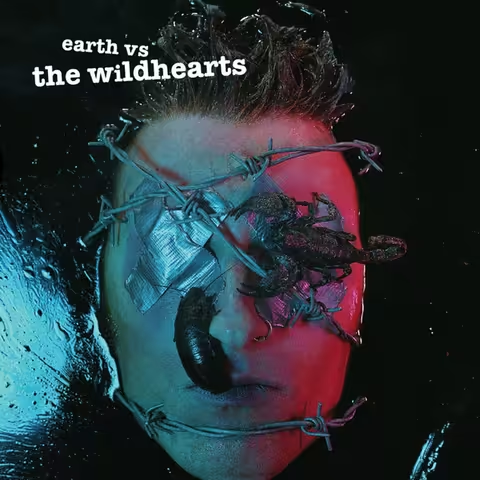
The album's title borrows the construction of late-1950s American B-movie titles: Earth vs. the Flying Saucers (1956), Earth vs. the Spider (1958). The cover image, by Marcel Leilenhof, is paired with an illustration by the British underground comics artist Hunt Emerson, whose long association with Beano-adjacent UK comics culture gave the artwork its half-cartoon, half-photo collage feel. Steve Double provided the band photography for the inner sleeve. The whole sleeve was designed by Blue Source, a then-newly-formed London design studio of Jonathon Cooke and Borkur Arnarson, under art direction credited to Shoal.
The result is a sleeve that looks like the comic-book version of a hard-rock album cover, instead of the more straightforward leather-and-band-photo treatments that bands like Skid Row or The Almighty got from the same label in the same year. The visual identity it created stuck. The Wildhearts' subsequent EP and single sleeves through 1994 and 1995 retained the Blue Source / Hunt Emerson aesthetic, and the look was eventually used for the 25th-anniversary tour merchandise in 2018.
Release and Reception
East West released Earth vs the Wildhearts on 30 August 1993 in CD and cassette formats; vinyl pressings appeared on the band's rock-imprint partner Bronze around the same time. The album crawled into the UK Albums Chart at Number 32, well below the chart positions Polydor and EMI's hard-rock acts were achieving that year, but it built up an unusually loyal fanbase across the autumn touring schedule. The 1994 reissue, with "Caffeine Bomb" attached as a bonus track in the wake of the song's UK Number 31 single, lifted the album back into the chart for a second run.
The British rock press recognised the record almost immediately. Kerrang! awarded it five Ks on first review. At the end of the year, it won the magazine's annual Album of the Year poll. Allmusic's later retrospective, by Tom Demalon, awarded four stars. The Collector's Guide to Heavy Metal scored it 9 out of 10. Record Collector went further: a five-star retrospective review concluded that "The Wildhearts delivered British hard rock's best album of the 90s with their Earth vs... debut in 1993".
"The Wildhearts delivered British hard rock's best album of the 90s with their Earth vs... debut in 1993."
Record Collector retrospective review
Not everyone was on side. Select magazine's February 1994 review by Clark Collis ran 2 out of 5, the closest thing to a hostile reception the album received from a major UK monthly. The dismissal was characteristic of the music-press divide The Wildhearts always sat across: Kerrang! loved them; the indie monthlies treated them as a leftover from the previous decade.
Singles and Music Videos
| Single | Released | UK Peak | Formats | B-sides / Notes |
|---|---|---|---|---|
| Greetings from Shitsville | April 1993 | Top 75 | CD, 7" vinyl, 12" vinyl | Saxophone by Sarah Smith of Cardiacs; performance video. |
| TV Tan | July 1993 | Top 50 | EP across multiple formats | Carried four B-sides across formats; expanded into a multi-format singles strategy that became the band's hallmark. |
| Caffeine Bomb | February 1994 | 31 | CD, 7" vinyl, 12" vinyl, cassette | Top of the Pops appearance with Ginger in green welding goggles; video famously features Ginger appearing to vomit into CJ's face. |
| Suckerpunch | March 1994 | Top 50 | CD, vinyl | Mark Dodson production; pulled from the 1994 reissue. |
The "Caffeine Bomb" video earned a daytime ban in several international markets and a request from the BBC to cut the vomit shot for the Top of the Pops broadcast; the band responded with a lighting and choreography setup that disguised it. Top of the Pops, MTV Europe and a string of late-night UK rock TV slots gave the band their first sustained mainstream presence.
Touring and Live
The Wildhearts toured Earth vs the Wildhearts hard. The autumn 1993 UK tour was the band's first run of headline dates and ran through small theatres and clubs in cities the East West marketing department had not bothered with. By the spring of 1994 they were on the road behind "Caffeine Bomb" and were playing to bigger rooms. The Top of the Pops appearance and the daytime-radio support for "Caffeine Bomb" pushed them into festival slots that summer, including a memorable Reading Festival appearance and a string of European dates. Devin Townsend, then a 22-year-old guitarist who had been on a Steve Vai support tour, joined the band for parts of the 1994 European leg as a second guitarist and harmony singer.
By autumn 1994, internal tensions had pushed CJ out of the line-up midway through the recording sessions for what was meant to be the follow-up double album. The Earth vs the Wildhearts touring line-up therefore did not last long enough to repeat itself in the studio. Stidi had already left in late 1993 to be replaced by Ritch Battersby. By the time of the second album, P.H.U.Q., in May 1995, Earth vs's line-up was already a memory.
- Autumn 1993: first UK headline tour through clubs and small theatres.
- Spring 1994: UK tour behind "Caffeine Bomb", bigger venues, stronger media presence.
- Summer 1994: festival appearances including Reading; European dates with Devin Townsend on second guitar.
- Top of the Pops: "Caffeine Bomb" with Ginger in green welding goggles; "Geordie in Wonderland" later with Wolfsbane's Jeff Hateley on mandolin.
In TV, Film and Media
Earth vs the Wildhearts' tracks have had a quiet but persistent afterlife in British television and film. The Wildhearts songs "Geordie in Wonderland" and "Dreaming in A" appeared in the 2012 UK feature film Life Just Is. "Caffeine Bomb" has been used in advertising and as a stadium walk-on track. Beyond that, the album's wider influence on British rock television (the cult-band-on-Top-of-the-Pops moment with the welding goggles, the daytime-banned video for "Caffeine Bomb") is itself a piece of media history, frequently re-used in nostalgia documentaries about 1990s British rock.
Covers, Samples and Tributes
The most direct musical reference on the album is internal: "My Baby Is a Headfuck" lifts the riff to The Beatles' "Day Tripper" almost wholesale at the bridge, played at a different tempo and dropped in without comment. It is the kind of unapologetic quotation that the band have always traded in. Beyond that, the album's songs have been covered intermittently across the British rock underground; tribute albums to the band's pre-2000 catalogue have surfaced and disappeared without major-label backing. The album's more lasting tribute is the band's own anniversary tours: the 15th-, 20th- and 25th-anniversary runs all played the album in full, and the 2014 live album Rock City vs the Wildhearts is effectively a live re-recording of the entire record.
Reissues, Remasters and Anniversaries
The album has been reissued twice in major editions. The 1994 reissue added "Caffeine Bomb" as track five (and on some pressings "Show a Little Emotion" and "Down on London" as tracks twelve and thirteen). The 2010 extended edition, on the band's then-distributor, expanded the running order to twenty-four tracks across two discs, gathering both pre-album EPs (Mondo Akimbo a-Go-Go and Don't Be Happy... Just Worry) and the original-era B-sides. Beyond that, the band have toured the album in full at the 15th, 20th and 25th anniversaries; the 2013 Nottingham Rock City show on the 20th-anniversary run was recorded for the 2014 live album Rock City vs the Wildhearts. No formal half-speed master vinyl or Atmos-spatial-audio reissue has been announced.
Legacy and Influence
Earth vs the Wildhearts sits at a strange and important corner of British rock. It is not the album that defined Britpop. Modern Life Is Rubbish, Definitely Maybe and Different Class took that role. It is not the British grunge-aligned album of 1993. Therapy?'s Troublegum, released six months later, is the more consensus pick. But it is the British rock debut of the 1990s that combined hardcore-thrash velocity with Beatles-grade pop melody more successfully than anything else of its era, and it did so for an audience the indie press had long given up on.
Its direct influence shows up in a generation of British rock bands that came up in its wake: early Reuben, Biffy Clyro's first record, the Welsh wave around Future of the Left, and the more melodic end of the late-1990s Britrock scene. Frank Turner has cited the album in interviews; the Foo Fighters' Dave Grohl has been photographed wearing a Wildhearts T-shirt. Ginger's later career (solo records, side projects with Hey! Hello!, Michael Monroe collaborations, Silver Ginger 5) was built on the songwriting voice he found on Earth vs.
"There's an honesty to that record that's never been faked. We were broke, we were ill, we were arguing, and the songs got better the worse it got. That doesn't happen often."
Ginger Wildheart, Loudersound interview, October 2024
The band's reformations have all been built around this record. The 2018 25th-anniversary tour featured the original four-piece (Ginger, CJ, McCormack, Battersby) playing the album in full. The 2024 line-up reformation that produced 2025's Satanic Rites of the Wildhearts still framed itself in interviews as a continuation of the Earth vs project, more than thirty years on. Ginger's March 2026 announcement of a mantle cell lymphoma diagnosis, with a public commitment to keep writing the next album, has only added weight to the album's place in the band's lore.
Things You Might Not Know
| Fact | Detail |
|---|---|
| Mick Ronson's last solo | The third guitar solo on "My Baby Is a Headfuck" is widely believed to be Ronson's last studio recording before his death from liver cancer on 29 April 1993, four months before the album was released. |
| The Day Tripper steal | The bridge of "My Baby Is a Headfuck" lifts the riff from The Beatles' "Day Tripper" almost note-for-note, played at a different tempo with no apology. |
| The B-movie title | The album title borrows the construction of 1950s American B-movie titles like Earth vs. the Flying Saucers (1956) and Earth vs. the Spider (1958). |
| Songs from old demos | Several of the tracks on the album were not re-recorded for the 1993 LP; they were lifted directly from the band's 1992 demo sessions. |
| Three production teams | Most of the album is self-produced, with Mike "Spike" Drake mixing; "Suckerpunch" was produced by Mark Dodson and "Caffeine Bomb" by Simon Efemey. |
| The Bodyform vocalist | The backing vocals on "Loveshit" are by Stevie Lange, the woman who sang the jingle for the 1990s British Bodyform sanitary products advert. |
| The Cardiacs connection | Sarah Smith of Cardiacs plays the saxophone on "Greetings from Shitsville"; her sister Sarah Cutts also contributed to the album. |
| Welding goggles on TOTP | For "Caffeine Bomb"'s Top of the Pops appearance Ginger wore green welding goggles; the song's video had Ginger appearing to vomit into CJ's face and was banned from daytime rotation. |
| Devin Townsend on tour | The 22-year-old future Strapping Young Lad and solo artist Devin Townsend joined the 1994 European tour as second guitarist and harmony vocalist. |
| Mastered in New York | Ted Jensen mastered the album at Sterling Sound in New York; Jensen had previously mastered records for Bruce Springsteen, Talking Heads and AC/DC. |
| Wessex's pedigree | The bulk of the album was tracked at Wessex Studios in Highbury, the converted Victorian church hall where the Sex Pistols had cut Never Mind the Bollocks and the Clash had recorded London Calling. |
| Hunt Emerson on the sleeve | The cover artwork pairs Marcel Leilenhof's photography with illustrations by Hunt Emerson, the British underground comics artist whose work had appeared in Knockabout Comics and the Comic Cuts revival. |
| The double album that wasn't | The Wildhearts wanted the follow-up to be a double album; East West vetoed the plan during the sessions, and CJ was sacked midway through. |
| Kerrang! Album of the Year | Earth vs the Wildhearts won the Kerrang! Album of the Year poll in 1993; in 2006 the magazine listed it at Number 20 in a special on the greatest rock albums. |
| Two pre-album EPs | The 1992 EPs Mondo Akimbo a-Go-Go and Don't Be Happy... Just Worry are part of the album's pre-history; both were eventually folded into the 2010 extended edition's bonus disc. |
The Riffology Podcast
The Riffology podcast covers Earth vs the Wildhearts in episode 51, with the full story of the recording sessions, the Mick Ronson session, the relationship with East West, the Caffeine Bomb media circus and the band's reformations. The full episode is embedded above. New episodes drop weekly on Apple Podcasts, Spotify, Amazon Music and every other major platform, plus directly through this site.
Comments