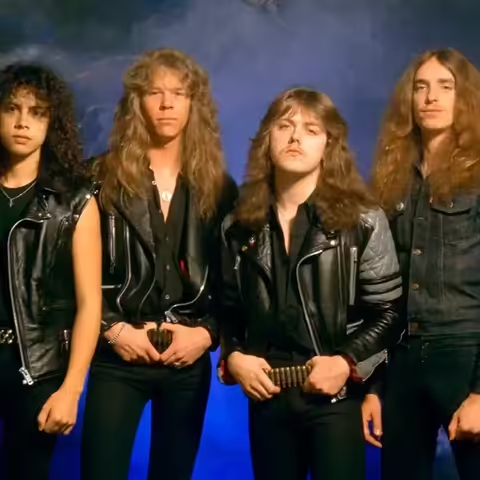
Metallica began with a Danish teenager who could not get into a high school tennis team. Lars Ulrich, son of the tennis player Torben Ulrich, moved to Newport Beach, California in the summer of 1980 ranked in the top ten of his age group back home, then failed to make the seven-man Corona del Mar High School squad. He turned to music instead, and in 1981 he put an advert in the Los Angeles paper The Recycler: "Drummer looking for other metal musicians to jam with Tygers of Pan Tang, Diamond Head and Iron Maiden."
James Hetfield, a guitarist from Downey, answered it. Between them they built the band that turned thrash from an underground racket into stadium music, lost a bassist on a Swedish road, made the best-selling album of the SoundScan era, took Napster to court, nearly fell apart on camera and then kept going for another two decades. This is the whole story, from the Recycler ad to the M72 World Tour.
Metallica Band Facts
| Field | Detail |
|---|---|
| Origin | Los Angeles, California; based in the San Francisco Bay Area for most of their career |
| Formed | 1981 (officially 28 October 1981) |
| Years active | 1981 to present, with no break-ups |
| Original line-up | James Hetfield (vocals, guitar), Lars Ulrich (drums), Dave Mustaine (lead guitar), Ron McGovney (bass) |
| Current line-up | James Hetfield, Lars Ulrich, Kirk Hammett (lead guitar), Robert Trujillo (bass) |
| Notable past members | Cliff Burton (bass, died 1986), Jason Newsted (bass, 1986 to 2001), Dave Mustaine (fired 1983, formed Megadeth) |
| Labels | Megaforce, Music for Nations (Europe), Elektra, Vertigo, Warner Bros., Blackened Recordings |
| Genres | Thrash metal, heavy metal, hard rock |
| Studio albums | 11, plus the covers album Garage Inc. and Lulu with Lou Reed |
| Key producers | Paul Curcio, Flemming Rasmussen, Bob Rock, Rick Rubin, Greg Fidelman |
| Records sold | Estimates range from more than 125 million to more than 163 million worldwide; the Black Album is certified 2x Diamond in the US |
| Hall of Fame | Rock and Roll Hall of Fame, 2009 |
| Major awards | 10 Grammy Awards from 26 nominations; Polar Music Prize, 2018 |
| Defining moment | The death of Cliff Burton near Dörarp, Sweden, on 27 September 1986 |
Formation: A Recycler Ad and a Borrowed Name (1981 to 1983)
Ulrich had been hooked since the age of nine, when a spare ticket from his father's friends got him into a Deep Purple concert in Copenhagen in February 1973; he bought Fireball the next day. In 1981 he was so taken with Diamond Head's Lightning to the Nations that he travelled to London to see them at the Woolwich Odeon. Hetfield's background was harder. His parents were strict Christian Scientists who disapproved of medical treatment and stayed loyal to their faith even as his mother Cynthia was dying of cancer. She died in February 1980, when James was 16, and that upbringing later fed songs such as "Dyers Eve" and "The God That Failed".
Hetfield had been playing in local bands including Leather Charm, and he and Leather Charm guitarist Hugh Tanner both answered the Recycler advert. Ulrich then did something brazen: with no actual band, he asked Metal Blade Records founder Brian Slagel for a slot on the label's upcoming compilation, Metal Massacre. Slagel said yes. Metallica was officially formed on 28 October 1981, five months after Ulrich and Hetfield first met.

Even the name was a loan. Ulrich's friend Ron Quintana was choosing a title for a metal fanzine and was torn between MetalMania and Metallica. Ulrich talked him into MetalMania and kept Metallica for himself. Dave Mustaine answered a later ad for a lead guitarist, and the founders took him on partly because of his expensive gear. Ron McGovney, Hetfield's childhood friend from Leather Charm, came in on bass.
The first gig came in March 1982 at Radio City in Anaheim, with Hetfield on vocals. Soon afterwards they were opening for Saxon. Their first demo, Power Metal, took its name from McGovney's business cards, and at one show in Costa Mesa they briefly played as a five-piece with Brad Parker on lead guitar, before Hetfield settled in as singer and rhythm guitarist. When Metal Massacre came out on 14 June 1982, early pressings spelt the band "Mettallica", which went down about as well as you would expect.
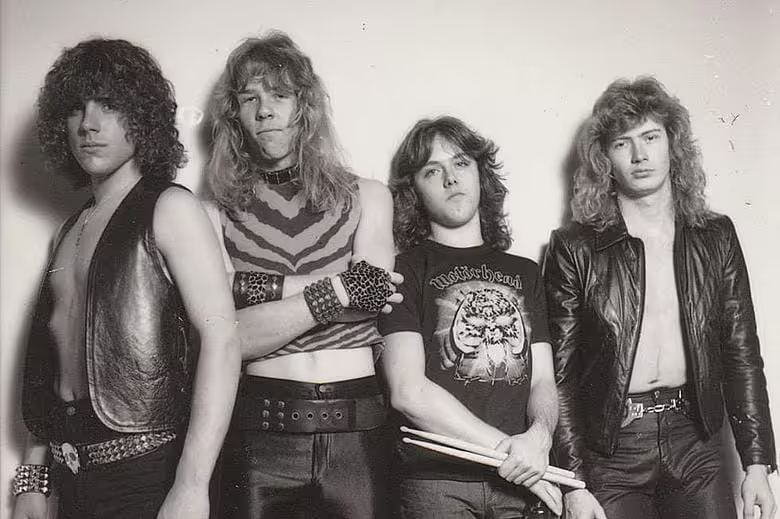
Nobody was calling it thrash yet. Hetfield called it "power metal"; the term "thrash metal" was only coined in February 1984, when Kerrang! writer Malcolm Dome used it about Anthrax's "Metal Thrashing Mad". By then the line-up had changed twice.
Enter Cliff Burton
In late 1982 Ulrich and Hetfield went to the Whisky a Go Go in West Hollywood to see a band called Trauma, and came out talking about the bassist. Cliff Burton, from Castro Valley in the Bay Area, was running his bass through a wah-wah pedal and playing what Hetfield called "this amazing shredding", parts of which later became "(Anesthesia) Pulling Teeth". Burton had taken up the instrument at 13, after his older brother Scott died, telling his parents: "I'm going to be the best bassist for my brother."
Hetfield and Mustaine already felt McGovney "didn't contribute anything, he just followed." Burton initially said no, then agreed by the end of the year on one condition: the band had to move to El Cerrito in the San Francisco Bay Area. They went. Burton's first show with Metallica was at The Stone in March 1983, which is how a band formed in Los Angeles came to be based in the Bay Area.
Mustaine Out, Hammett In, Kill 'Em All
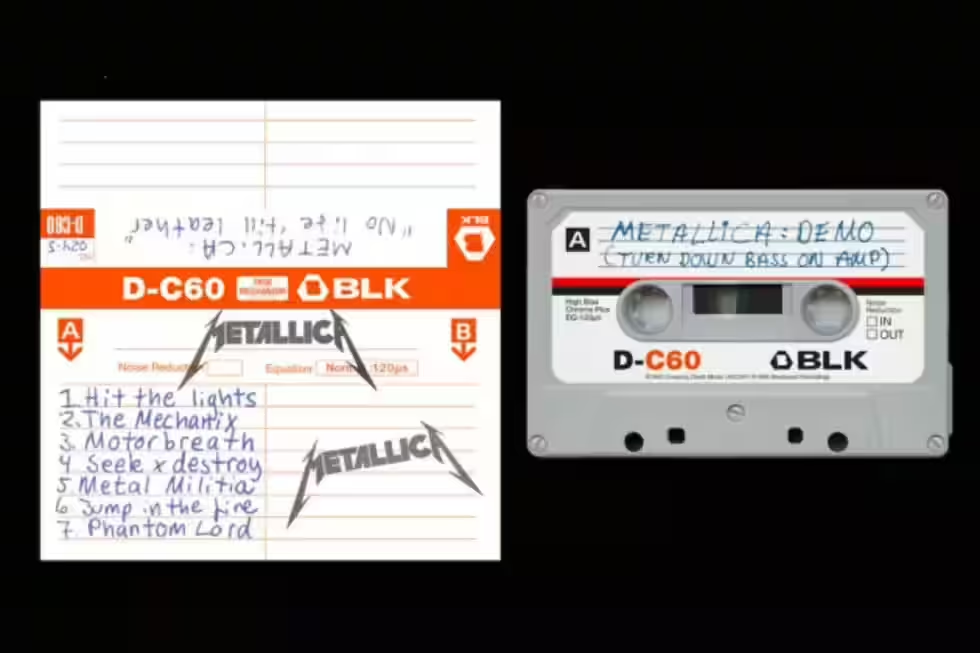
Metal Blade could not afford to fund a full album, so a concert promoter stepped in. Jonathan "Jonny Z" Zazula had heard the No Life 'til Leather demo, tried and failed to interest New York labels, then borrowed the money himself and signed Metallica to his own label, Megaforce Records.
The band went east, and that is where Dave Mustaine's time ran out. On 11 April 1983, just before the album sessions, the others ejected him over his drug and alcohol abuse and violent behaviour, and sent him home on a four-day bus ride from New York to Los Angeles. His replacement was Kirk Hammett, a San Francisco guitarist who had co-founded Exodus at 16 and had been taking lessons from Joe Satriani. Sources disagree on the exact timing: Wikipedia's Metallica entry says Hammett replaced Mustaine the same afternoon, while its James Hetfield entry says Hammett was recruited on 1 April, ten days before the firing. Either way, Hammett played his first show with the band on 16 April 1983 at The Showplace in Dover, New Jersey, with Anthrax in support. Mustaine went on to form Megadeth, and later said Hammett "stole" his job.
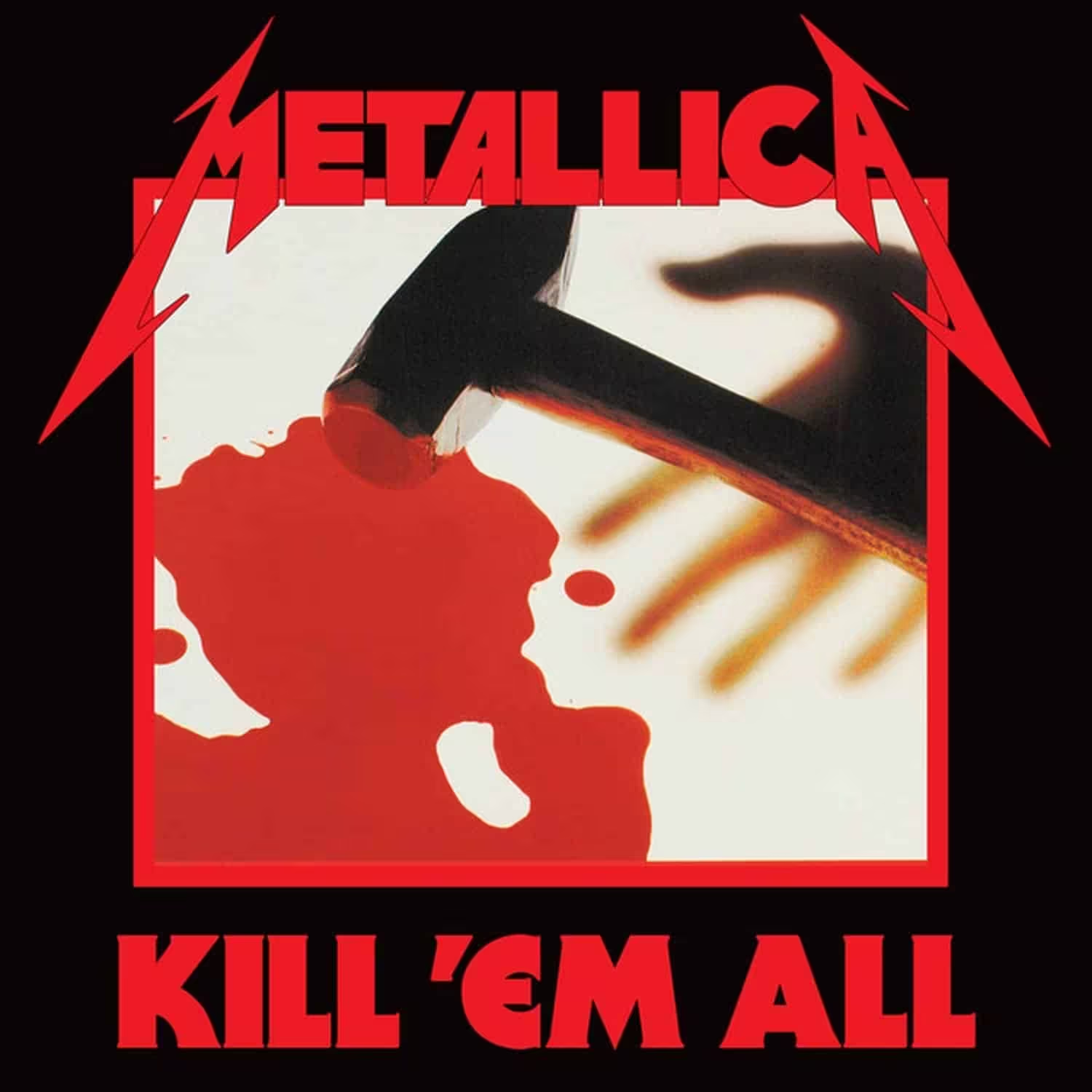
Metallica recorded the debut at Music America in Rochester, New York, in May 1983 with producer Paul Curcio. They wanted to call it Metal Up Your Ass; distributors refused, and it came out on 25 July 1983 as Kill 'Em All, on Megaforce in the US and Music for Nations in Europe. It was not an instant earner. It did not reach the Billboard 200 until 1986, peaking at 155, but it built an underground following that the band toured hard, first on the Kill 'Em All for One tour with Raven and then supporting Venom, including a 7,000-strong crowd at the Aardschok Festival in Zwolle in February 1984. In March 2023 Metal Hammer put its US sales at 4.5 million.
The Cliff Burton Era: Ride the Lightning and Master of Puppets (1984 to 1986)
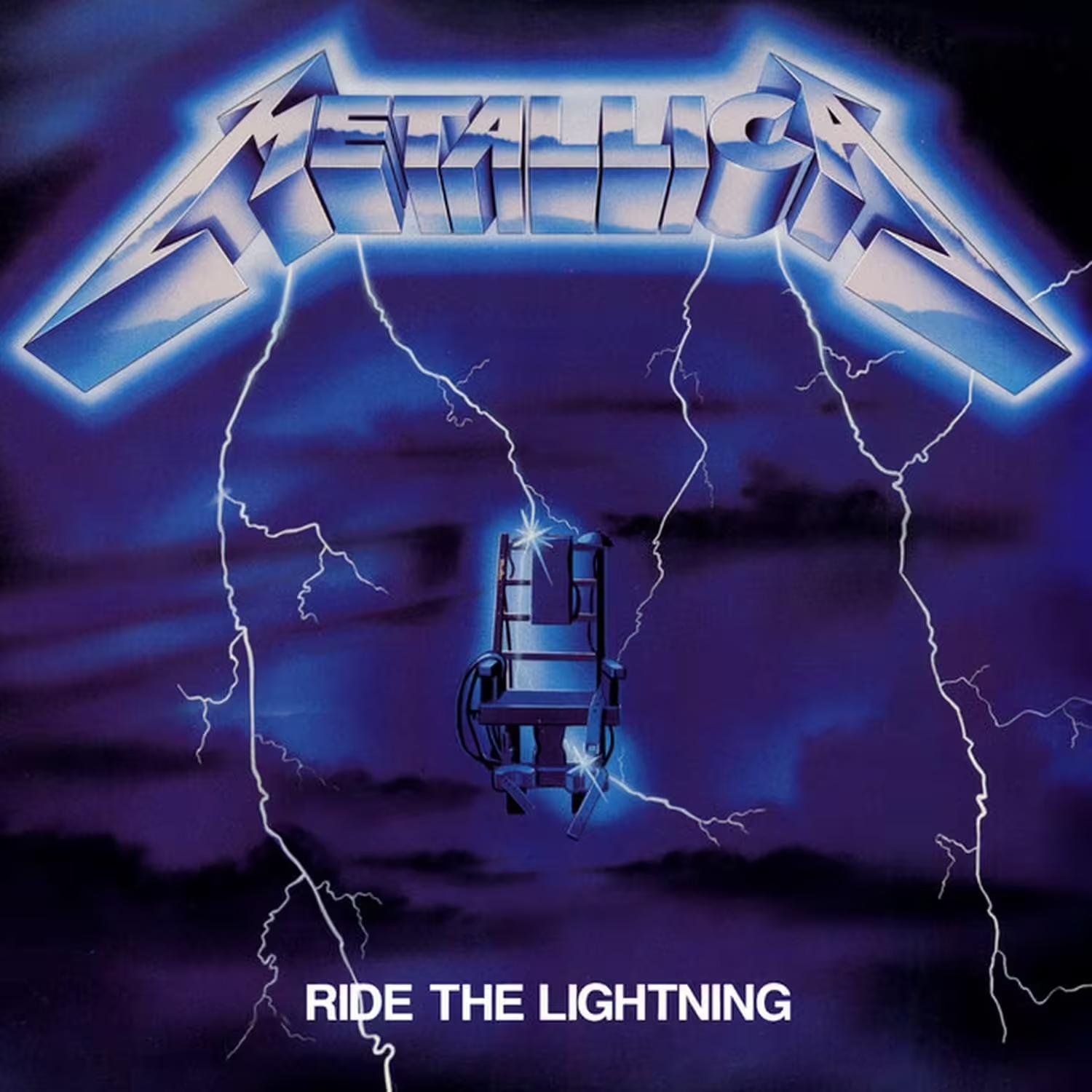
Metallica made their next two albums in Copenhagen. The band recorded Ride the Lightning at Sweet Silence Studios between February and March 1984, co-producing with Flemming Rasmussen and Mark Whitaker. It was released on 27 July 1984 and reached number 100 on the Billboard 200. A French printing press mistakenly made a batch of green covers, which are now collector's items, and Mustaine kept co-writing credits on the title track and "The Call of Ktulu". Hammett had brought something of his own too: the bridge of "Creeping Death" was originally an Exodus riff.
In September 1984 Elektra's A&R director Michael Alago and Cliff Burnstein of Q Prime management saw the band live. Metallica came away with an Elektra deal and Q Prime as managers. Their British label, Music for Nations, put out "Creeping Death" as a limited single that sold 40,000 copies on import in the US. On 17 August 1985 they played the Monsters of Rock festival at Donington Park to 70,000 people.
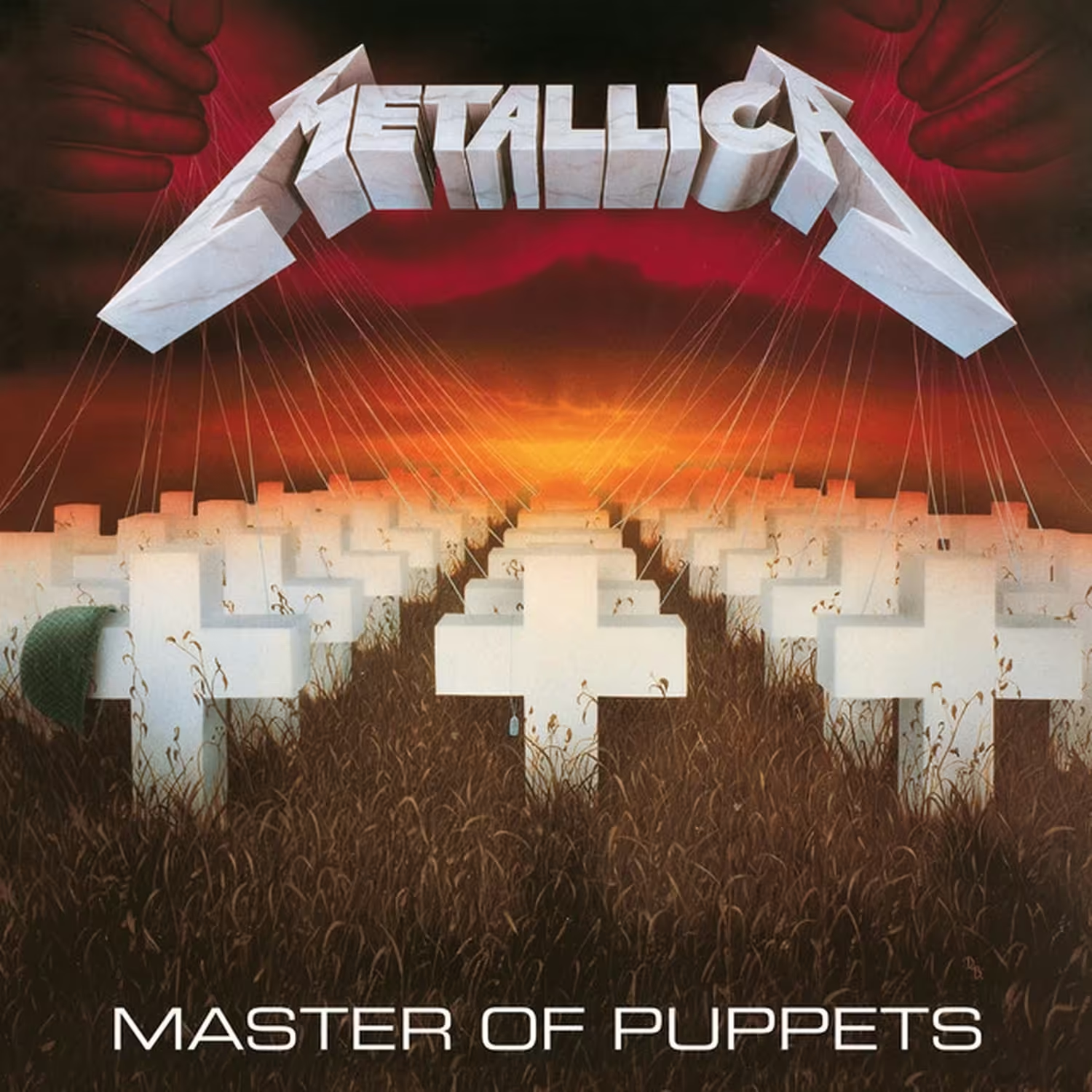
Then came Master of Puppets, recorded back at Sweet Silence with Rasmussen from September to December 1985 and released on 3 March 1986. It reached number 29 in the US, spent 72 weeks on the chart, went Gold on 4 November 1986 and was certified eight times Platinum in 2025. AllMusic's Steve Huey called it "the band's greatest achievement". The title track was Burton's favourite Metallica song, and the instrumental "Orion" gave his bass a lead role. To promote it, Metallica supported Ozzy Osbourne across the US, with guitar tech John Marshall covering rhythm guitar after Hetfield broke his wrist skateboarding.
Dörarp, 27 September 1986
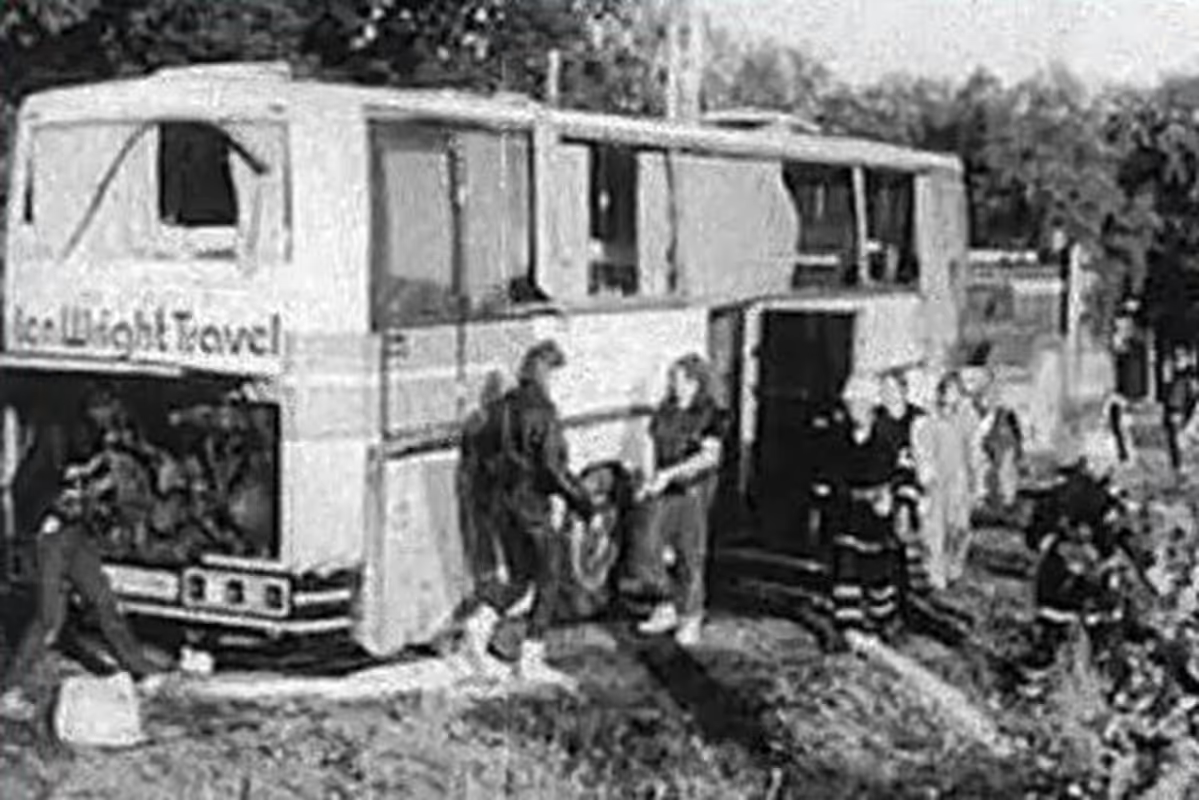
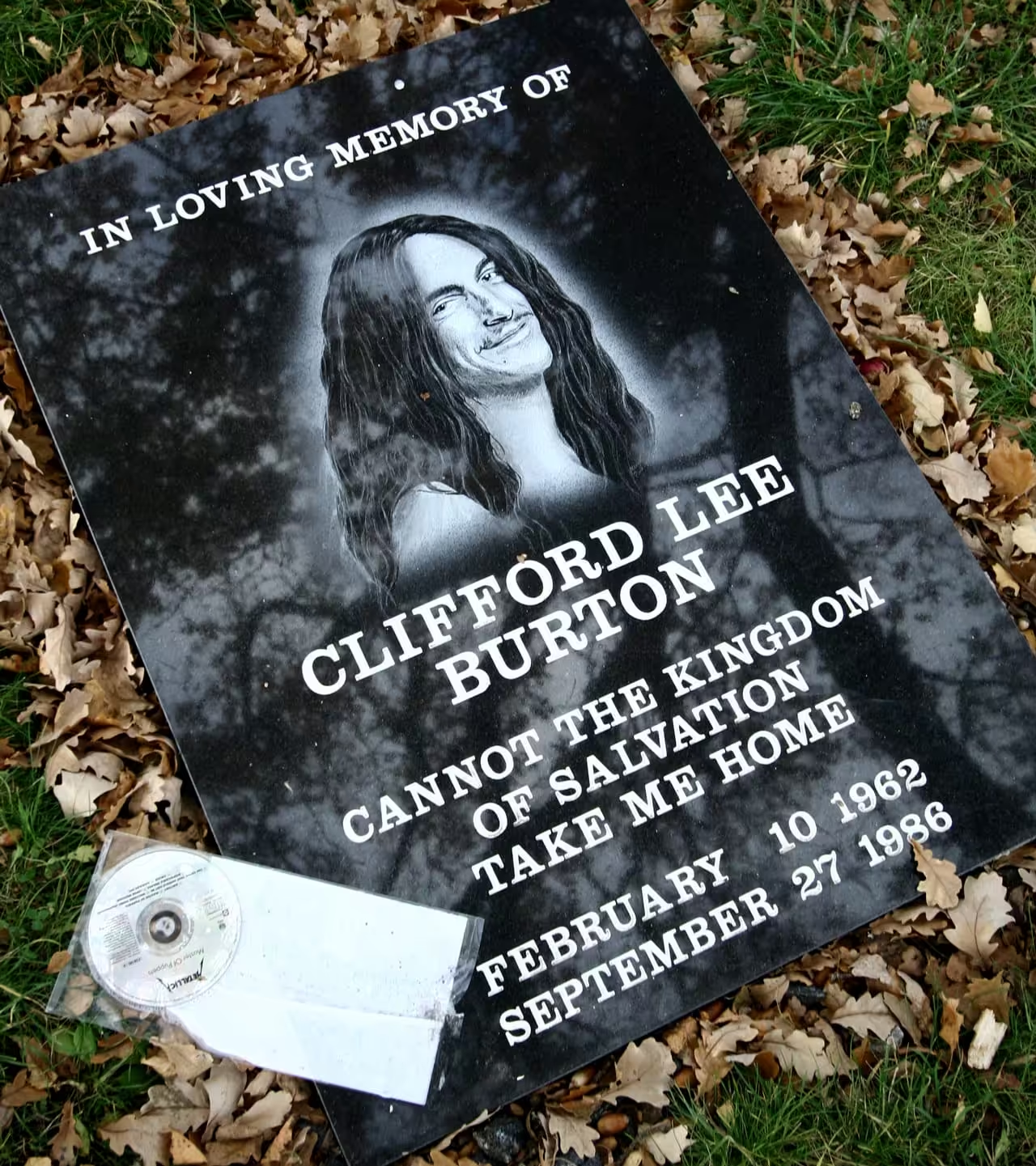
On the European leg of the Damage, Inc. Tour, the band drew cards to decide who slept in which bunk on the tour bus. Burton won and chose Hammett's. Near Dörarp in Sweden, around sunrise on 27 September 1986, the driver lost control and the bus overturned several times. Ulrich, Hammett and Hetfield escaped without serious injury. Burton was pinned under the bus and killed. He was 24.
"I heard everyone screaming except for Cliff, and I thought: 'Oh my God, something's wrong'"
Kirk Hammett, VH1 Behind the Music, quoted in Classic Rock, 2023
Hammett has said he was in such shock that he could not remember the next three or four hours. Hetfield, recalling the scene, said he did not know whether the driver was drunk or had hit ice. Burton was cremated and his ashes scattered at the Maxwell Ranch, with "Orion" played at the ceremony. He received a posthumous writing credit on "To Live Is to Die" from the next album, and in 2009 he was inducted into the Rock and Roll Hall of Fame with the band.
Speaking to Kerrang! Radio in 2023, Hammett said his one real regret was "not documenting Cliff enough", and remembered a man who "lived for beer and he lived for breakfast."
"He was unapologetically Cliff."
James Hetfield, Kerrang! Radio, via Blabbermouth, 2023
Hetfield added in the same interview: "And yeah, we miss him to this day."
The Newsted Years: Justice and the Black Album (1986 to 1994)
Ulrich's view, as quoted by Classic Rock, was simple: "It's what Cliff would have wanted." With the Burton family's blessing, the band auditioned replacements. Wikipedia's Metallica entry puts the number at roughly 40 and its Jason Newsted entry at more than 50, including Les Claypool of Primus and Troy Gregory. Newsted, from Battle Creek, Michigan, and Flotsam and Jetsam, had learned the entire setlist. He was hired on 28 October 1986. At his second audition, Cliff's mother Jan embraced him and told him: "You are the one, Please be safe." His first show was at the Country Club in Reseda on 8 November 1986, and his new bandmates initiated him by tricking him into eating a ball of wasabi.
The band moved on from El Cerrito, eventually settling in San Rafael, and in August 1987 released The $5.98 E.P. – Garage Days Re-Revisited, an all-covers record made partly to break in their new studio and partly to work through their grief. Newsted is credited in the liner notes as "Master J Newkid". A tribute video, Cliff 'Em All, followed the same year.
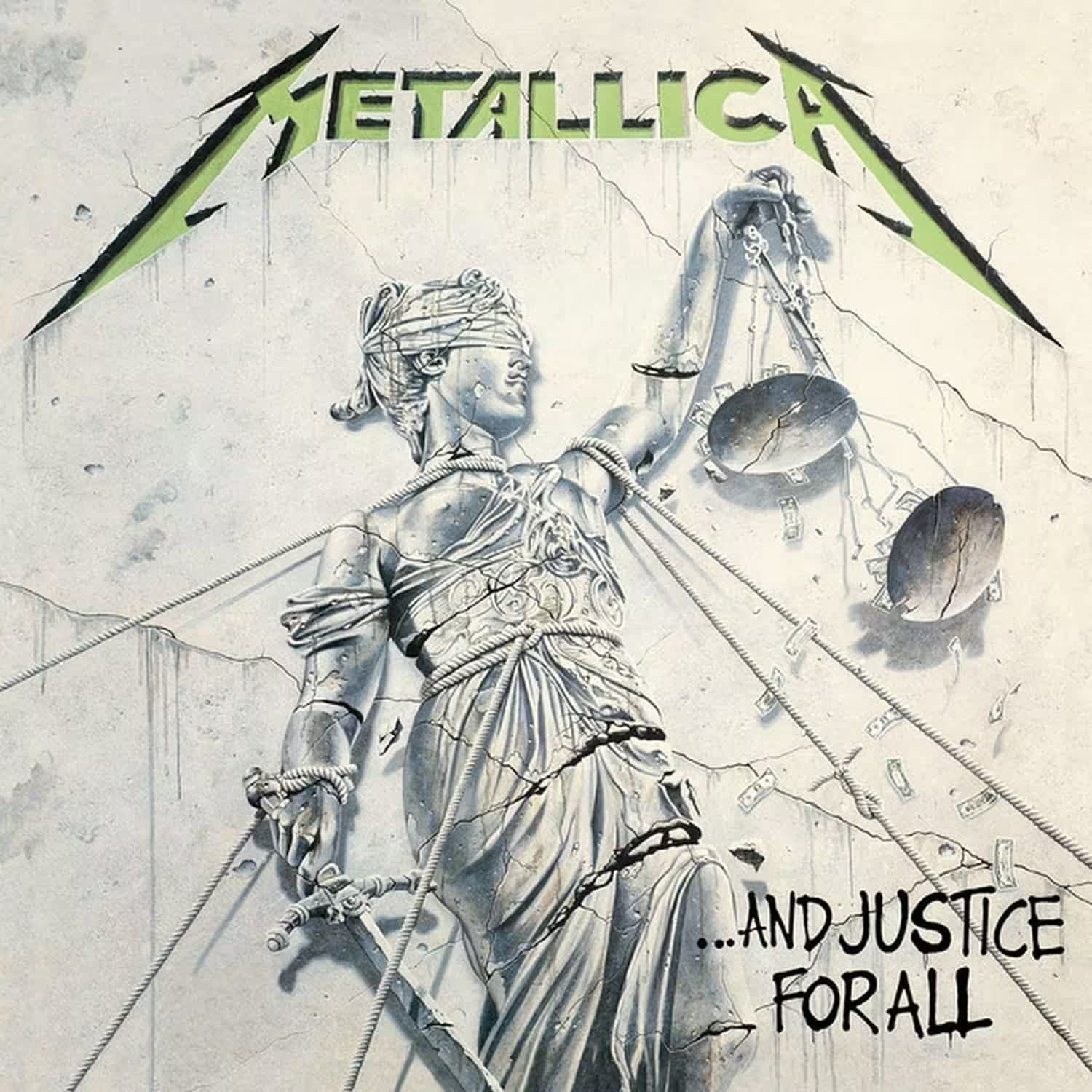
...And Justice for All, recorded at One on One in Los Angeles from January to May 1988, was the band's first top ten album, peaking at number 6 and going Platinum nine weeks after release. (The release date itself is disputed: the RIAA lists 25 August 1988, while other sources give 7 September.) It also became famous for what you cannot hear. The bass is buried so deep in the mix that it drew widespread criticism, and AllMusic's Huey wrote that the guitars "buzz thinly". Newsted got songwriting credits on just three songs in fourteen years with the band.
Justice brought Metallica their first Grammy nomination, in 1989, in the new Best Hard Rock/Metal Performance Vocal or Instrument category. They were favourites. They performed "One" and waited offstage, and the award went to Jethro Tull's Crest of a Knave, which Entertainment Weekly later named one of the Grammys' ten biggest upsets. The album also gave them their first music video, for "One". They shot it in an abandoned warehouse and cut in footage from the film Johnny Got His Gun. Rather than license the film, they bought it outright. A year later "One" won them their first Grammy, for Best Metal Performance in 1990.
The Black Album
For the next record the band turned to an unlikely producer. Hetfield and Ulrich had spent the early 1980s sneering at the Los Angeles hair-metal scene, Mötley Crüe included, but they were impressed by the production on Dr. Feelgood. So they hired its producer, Bob Rock, who had also worked with Aerosmith, the Cult and Bon Jovi. Sessions began at One on One in October 1990. The album was remixed three times, cost $1 million and, according to Wikipedia, ended both Hammett's and Ulrich's marriages.
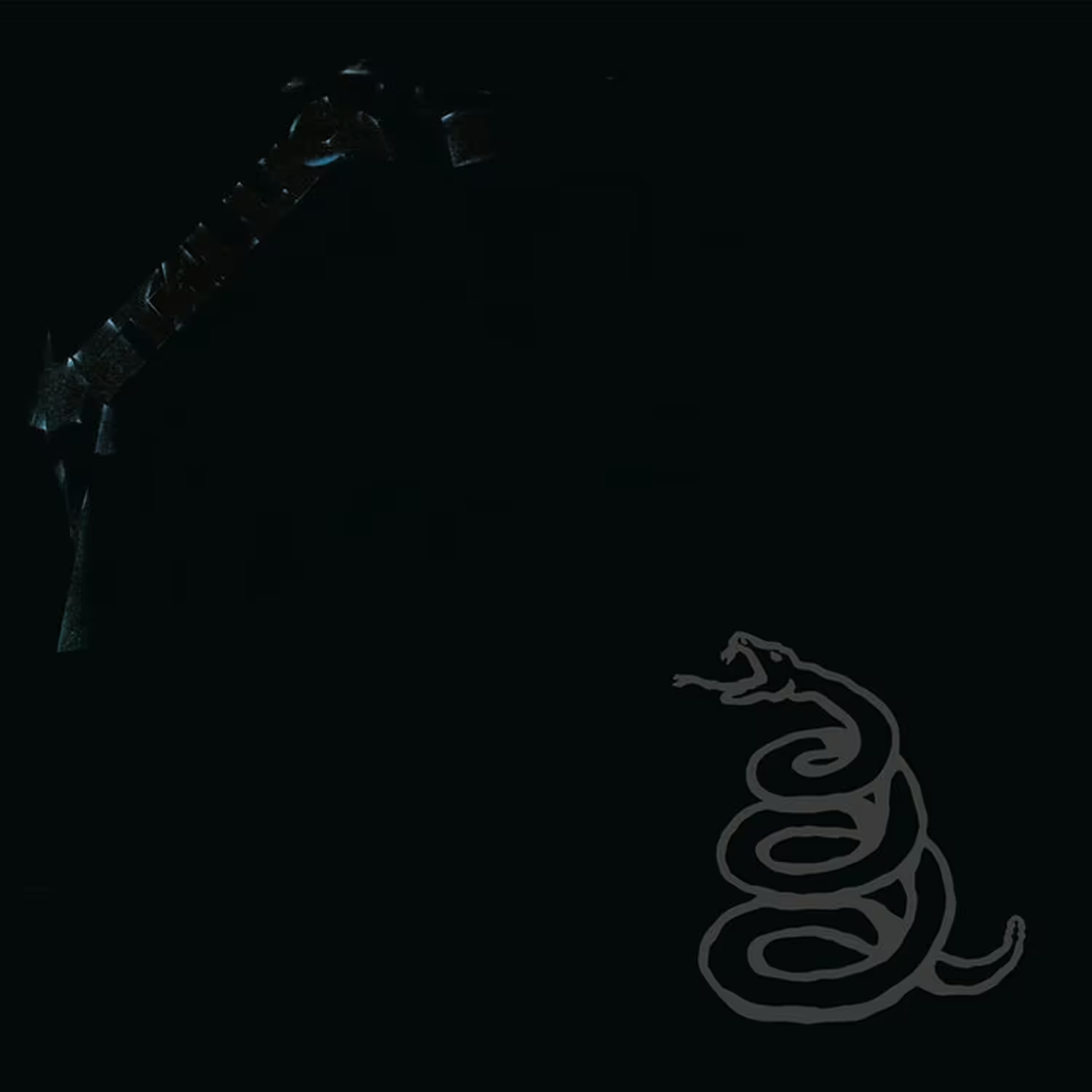
Metallica, the Black Album, came out on 12 August 1991. It debuted at number one in ten countries and sold 650,000 copies in its first week in the US. It is now certified 2x Diamond by the RIAA. In May 2014 it became the first album to sell 16 million copies since Nielsen SoundScan began tracking sales in 1991, and Billboard put its US total at 17.3 million in 2021. Hammett wrote the riff for "Enter Sandman", which Rolling Stone later ranked 399th on its list of the 500 greatest songs of all time.
The Wherever We May Roam Tour ran for 14 months. In September 1991, as part of the Monsters of Rock series, Metallica played the first open-air rock concert held in the Soviet Union, to a Moscow crowd estimated at up to 1.6 million. In April 1992 they played the Freddie Mercury Tribute Concert, where Hetfield sang "Stone Cold Crazy" with the surviving members of Queen and Tony Iommi.
The co-headlining stadium tour with Guns N' Roses left Hetfield badly burned. At Montreal's Olympic Stadium on 8 August 1992, confusion over new pyrotechnics sent Hetfield walking into a 12-foot flame during "Fade to Black". He suffered second and third-degree burns, and Newsted said his skin was "bubbling like on The Toxic Avenger". Seventeen days later the band was back on stage, with John Marshall on guitar while Hetfield sang. The cycle ended with five shows in Mexico City on the 1993 Nowhere Else to Roam Tour and the Live Shit: Binge & Purge box set that November.
Load, Reload, Napster and Newsted's Exit (1994 to 2001)
Metallica headlined Woodstock '94 and then spent about a year writing and recording, breaking off in 1995 only for a short Escape from the Studio run that included a Donington headline slot with Slayer and Skid Row in support. What came out the other side was a different-looking band. Load, released on 4 June 1996, came with short haircuts, a revamped logo and a cover by Andres Serrano, Blood and Semen III, made by pressing a mixture of his own semen and blood between sheets of plexiglass. Hammett had been through a blues and jazz phase between tours, studying film and Asian arts at San Francisco State University, and that fed into the music. Metallica headlined Lollapalooza that summer.
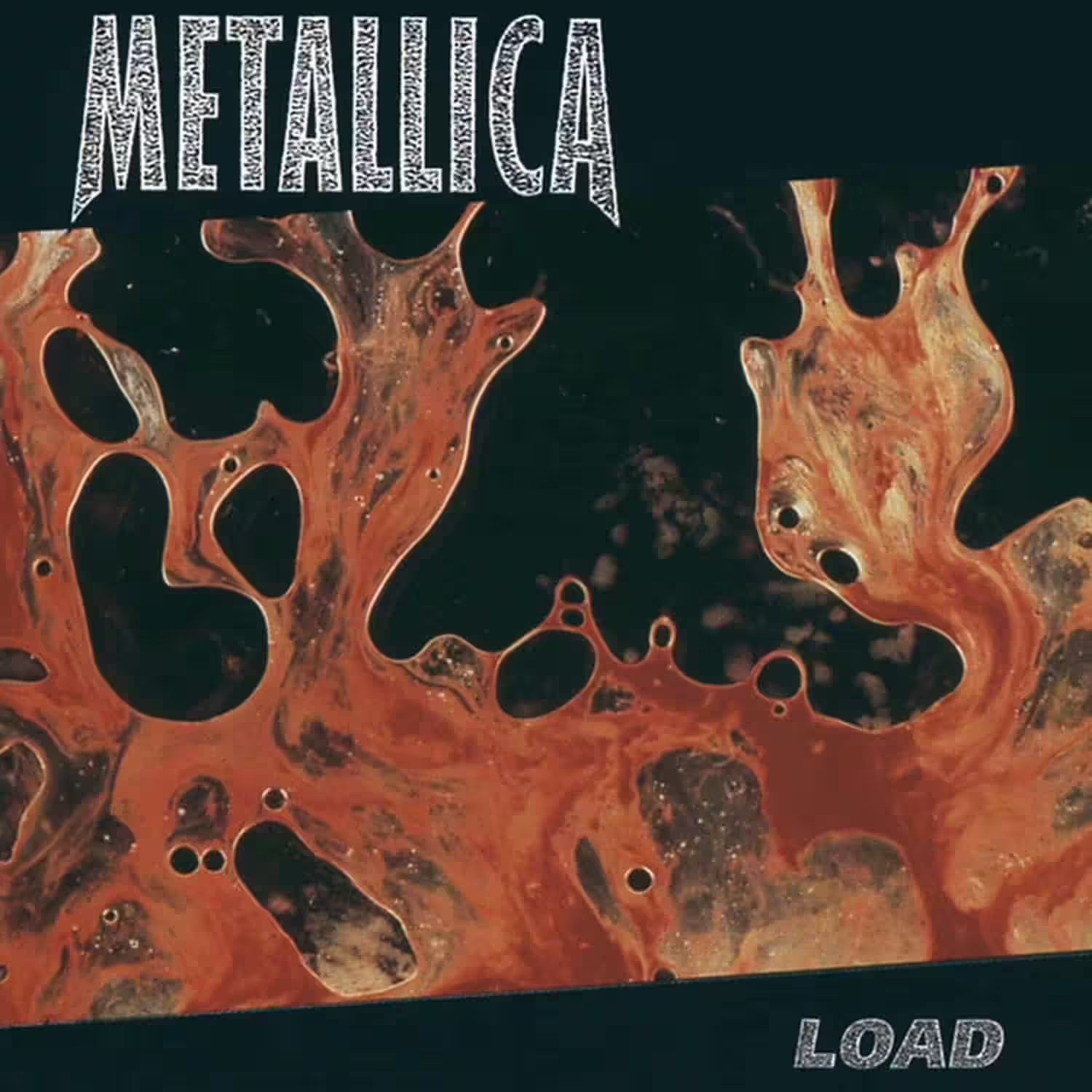
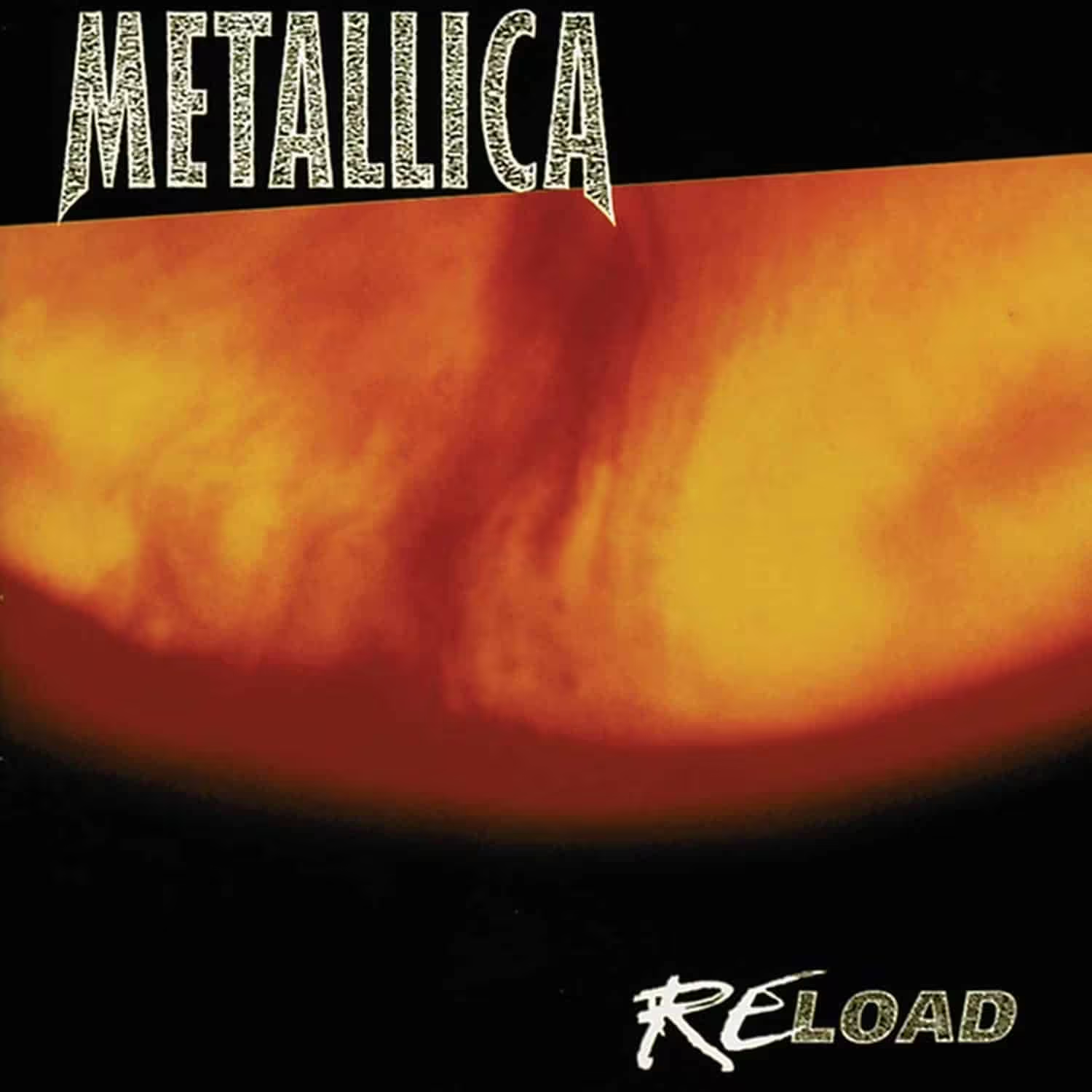
Load debuted at number one in the US and Australia, and it split the fanbase. Some fans and critics were not pleased; Rolling Stone's David Fricke heard it as "goodbye to the moldy stricture and dead-end Puritanism of no-frills thrash". The sessions had produced enough for a double album, so the rest became Reload, released on 18 November 1997 with another Serrano cover, this time made with blood and urine. It too went to number one in the US. The band played "Fuel" and "The Memory Remains" with Marianne Faithfull on Saturday Night Live that December.
Garage Inc. (1998) collected new covers of Diamond Head, Killing Joke, the Misfits, Thin Lizzy, Mercyful Fate and Black Sabbath alongside the by-then scarce $5.98 E.P., and reached number two. In April 1999 the band played two nights with the San Francisco Symphony under Michael Kamen, who had first pitched the idea in 1991. The resulting S&M album, with two new songs, "No Leaf Clover" and "-Human", also reached number two.
Metallica v Napster
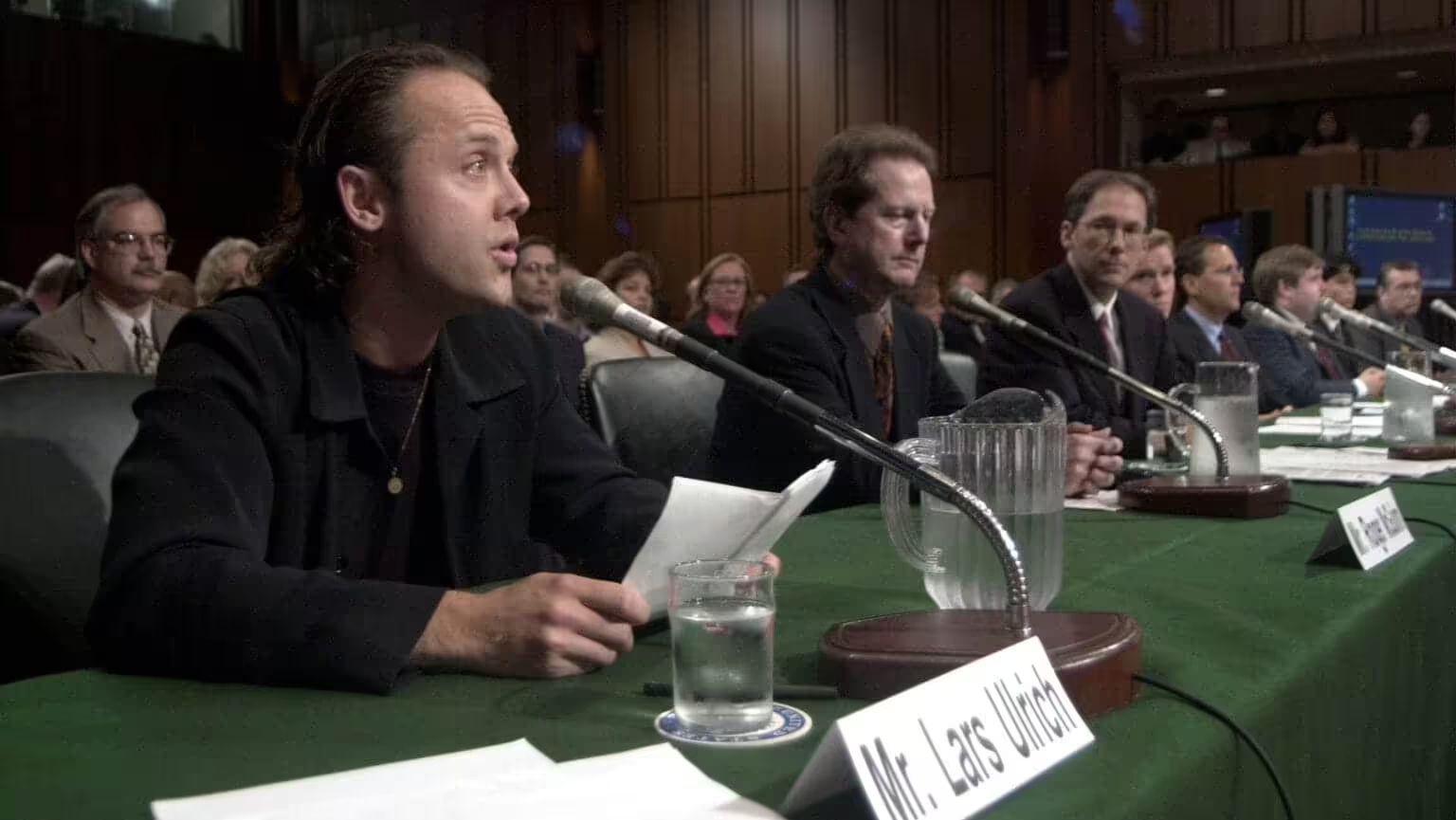
In 2000 a demo of "I Disappear", meant for the Mission: Impossible II soundtrack, started getting radio play before release. The band traced the leak to Napster and found their whole catalogue being swapped for free. The lawsuit, filed on 13 April 2000, alleged copyright infringement, unlawful use of a digital audio interface device and racketeering. Metallica's team tracked down more than 335,000 usernames for Napster to block. On 11 July 2000 Ulrich gave a statement to the Senate Judiciary Committee.
The legal fight ended in a settlement. Napster agreed to block users sharing the music of artists who objected, and the company filed for bankruptcy in 2002. The lawsuit also caused a fan backlash. At the 2000 MTV Video Music Awards, Napster founder Shawn Fanning presented an award in a Metallica T-shirt, and Ulrich was booed when he introduced Blink-182. Ulrich later admitted the band had been caught out.
"I wish we had been better prepared for the shit storm that we found ourselves in,"
Lars Ulrich, quoted in Ultimate Classic Rock, 2015
Then the bass chair emptied again. Newsted left on 17 January 2001, citing "private and personal reasons, and the physical damage I have done to myself over the years while playing the music that I love." The underlying fight was over his side project, Echobrain. In a Playboy interview, Hetfield argued that "When someone does a side project, it takes away from the strength of Metallica", and called it "like cheating on your wife in a way."
Some Kind of Monster: St. Anger and Robert Trujillo (2001 to 2006)
In April 2001, filmmakers Joe Berlinger and Bruce Sinofsky started following the band to document the recording of the next album. Over two years they shot more than 1,000 hours of footage. Metallica set up in an empty barracks at the Presidio in San Francisco, with Bob Rock playing bass, and brought in a "performance enhancement coach", Phil Towle, to manage the tensions. On 19 July 2001 Hetfield entered rehab for "alcoholism and other addictions", and everything stopped.
He came out on 4 December 2001, and the band returned to the studio on 12 April 2002 under new rules: Hetfield worked from noon to 4pm and spent the rest of his time with his family. The film, Metallica: Some Kind of Monster, premiered at Sundance in January 2004. It shows Ulrich meeting Dave Mustaine on 13 September 2001 as part of the therapy process, and Ulrich and Hetfield clashing over control of the band.
St. Anger came out in June 2003 and debuted at number one, but critics were divided. Its lack of guitar solos and Ulrich's steely-sounding snare drew particular criticism, and Pitchfork's Brent DiCrescenzo called it "an utter mess". Even so, the title track won the 2004 Grammy for Best Metal Performance, and the album is certified 2x Platinum in the US.
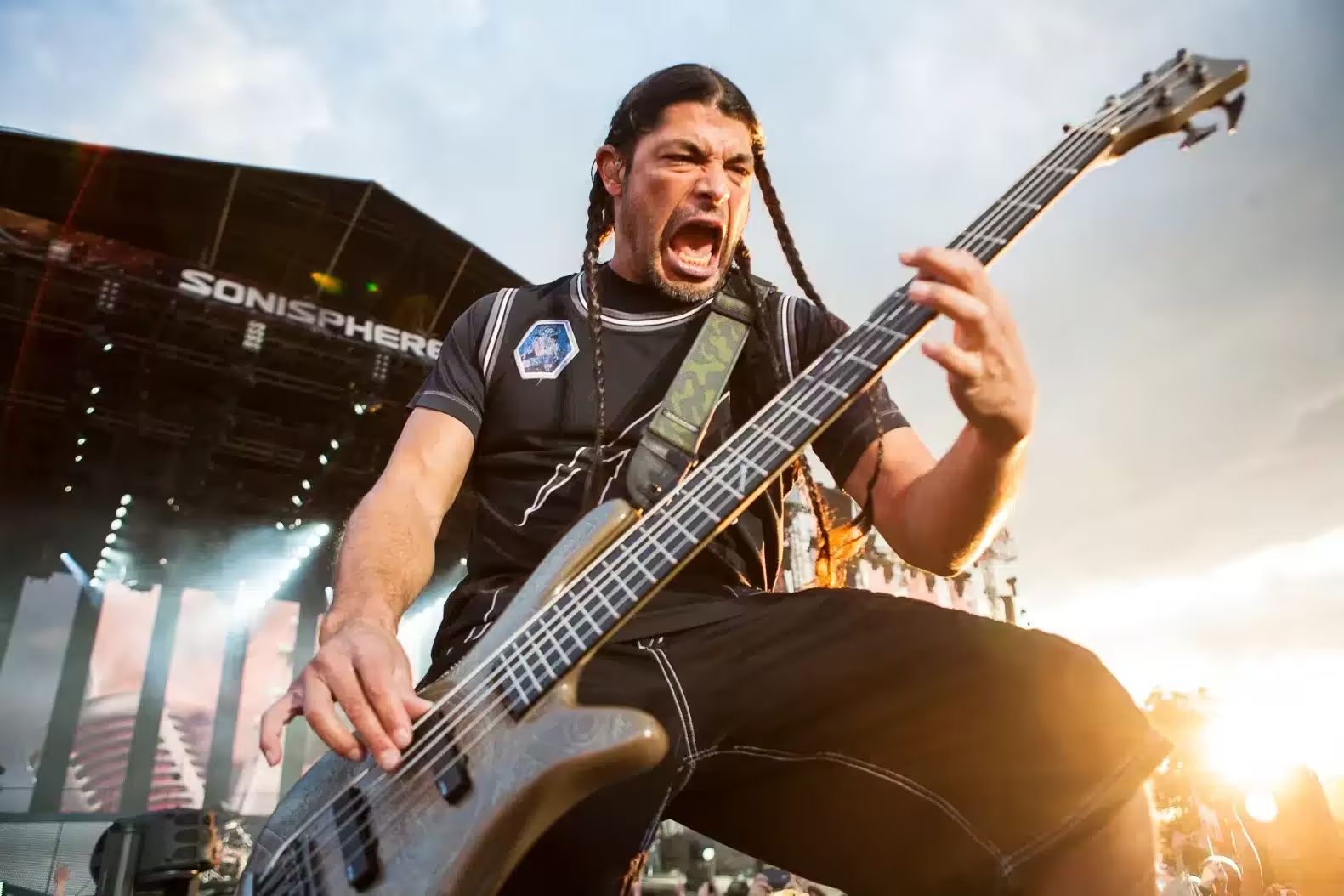
By then Metallica had a new bassist. After three months of auditions that included Pepper Keenan, Jeordie White, Scott Reeder, Eric Avery, Danny Lohner and Chris Wyse, they chose Robert Trujillo, who joined on 24 February 2003. Born in Santa Monica, Trujillo had played with Suicidal Tendencies and Infectious Grooves and in Ozzy Osbourne's band, and the band already knew him because Suicidal Tendencies had supported Metallica in 1993 and 1994. He received a $1 million advance on joining, and the offer is in the documentary. In a neat bit of symmetry, Newsted replaced Trujillo in Ozzy's band for Ozzfest 2003.
The touring years held one more scare. Before Metallica's set at the 2004 Download Festival, Ulrich was taken to hospital after an anxiety seizure. Slayer's Dave Lombardo, Slipknot's Joey Jordison and Ulrich's drum tech Flemming Larsen covered the set between them. After two years on the road, Metallica spent most of 2005 at home, apart from opening for the Rolling Stones in San Francisco that November.
Death Magnetic, the Hall of Fame and the Big Four (2006 to 2013)
In February 2006 Metallica announced that Bob Rock, their producer for 15 years, would not be making the next record. A petition from 1,500 fans had asked them to drop him, and Rock said it had hurt his children's feelings. He took it in sporting terms:
"sometimes, even with a great coach, a team keeps losing. You have to get new blood in there."
Bob Rock, responding to the fan petition against him
Rick Rubin took over, and he steered them back to standard tuning and guitar solos. Death Magnetic, released on Warner Bros. on 12 September 2008, was a riff-heavy return to thrash. A French shop broke the street date and the album leaked, and Ulrich shrugged it off: "By 2008 standards, that's a victory." It debuted at number one with 490,000 US sales, making Metallica the first band to have five consecutive studio albums debut at number one on the Billboard 200. It stayed at the top for three weeks and reached number one in 32 other countries. "My Apocalypse" won a Grammy, and so did the album's packaging.
On 4 April 2009 Metallica were inducted into the Rock and Roll Hall of Fame, in their second year of eligibility and the first year they were nominated. Flea of the Red Hot Chili Peppers inducted them. The inductees were Hetfield, Ulrich, Hammett and Trujillo plus Newsted and, posthumously, Burton, whose father Ray accepted on his behalf. Newsted and Trujillo were both on stage for "Master of Puppets" and "Enter Sandman". Mustaine was invited but declined because of touring commitments.
"This is outsider music. It is anything but mainstream."
Flea, quoted on the Rock and Roll Hall of Fame Metallica page
On 16 June 2010, at Warsaw's Babice Airport as part of the Sonisphere series, Metallica, Slayer, Megadeth and Anthrax shared a bill for the first time. The Big Four shows ran into 2011, with the first all-four UK show at Knebworth on 8 July, the first US one in Indio in April, and a final date at Yankee Stadium on 14 September 2011. The World Magnetic Tour finally ended in Melbourne on 21 November 2010.
Then came a left turn. Lulu, a collaboration with Lou Reed released on 31 October 2011, set Reed's spoken word over Metallica's music in a concept album based on Frank Wedekind's Lulu plays. Reviews were polarised, the sessions were tense enough that Reed once challenged Ulrich to a "street fight", and as of May 2025 it had sold 280,000 copies worldwide. That December the band marked their 30th anniversary with four Fillmore shows for fan-club members, with tickets at $6 a night or $19.81 for all four, and guest appearances from Mustaine, Newsted, Lloyd Grant, Ozzy Osbourne and King Diamond.
In November 2012 Metallica left Warner Bros., launched their own label, Blackened Recordings, and took ownership of the rights to all their studio albums. The following year brought the 3D concert film Metallica: Through the Never, an Orion festival set billed as "Dehaan" after the film's star Dane DeHaan, and, on 8 December 2013, a show in Antarctica that made them the first band to play on all seven continents.
Metallica on Their Own Label: Hardwired, 72 Seasons and the M72 Tour
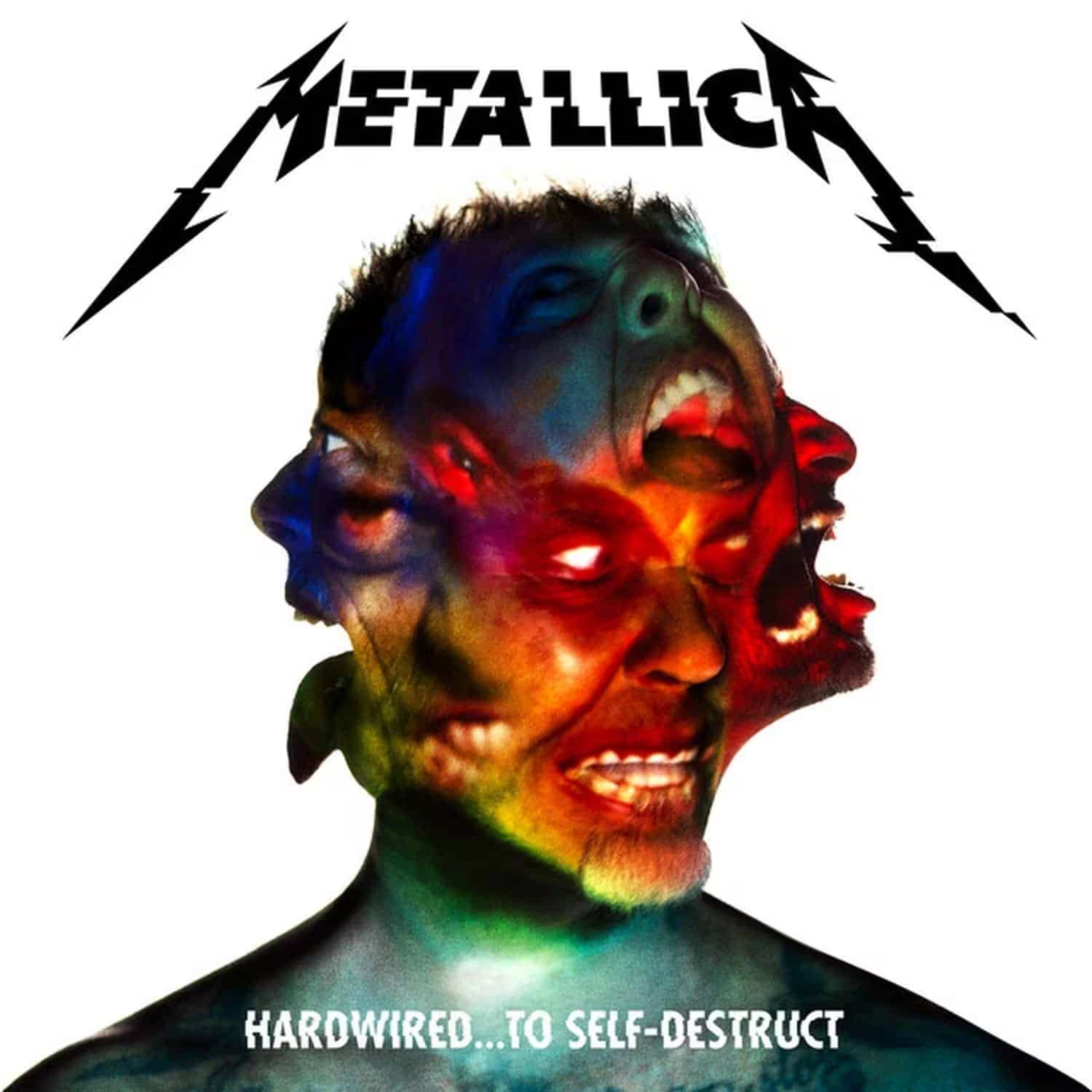
The first new album on Blackened, Hardwired... to Self-Destruct, came out on 18 November 2016 with Rick Rubin's engineer Greg Fidelman co-producing alongside Hetfield and Ulrich. It debuted at number one, giving Metallica six consecutive number one studio albums from the Black Album onwards. Hammett had no writing credits on it. The WorldWired Tour followed, with Avenged Sevenfold, Volbeat and Gojira supporting in 2017.
In 2017 the band set up the All Within My Hands Foundation, named after a song on St. Anger. It funds workforce education through its Metallica Scholars programme, supports food banks and gave $200,000 to relief efforts after the 2023 Hawaii wildfires. In 2018 Metallica won Sweden's Polar Music Prize, presented at Stockholm's Grand Hotel on 14 June. Ulrich put it this way: "Receiving the Polar Music Prize is an incredible thing, it puts us in very distinguished company."
In September 2019 the band reunited with the San Francisco Symphony to open the Chase Center for S&M2, whose cinema screenings took $5.5 million. Later that month Metallica announced that Hetfield had re-entered rehab, and the Australia and New Zealand tour was postponed. The pandemic kept them off the road after that, and they streamed archive shows as #MetallicaMondays.
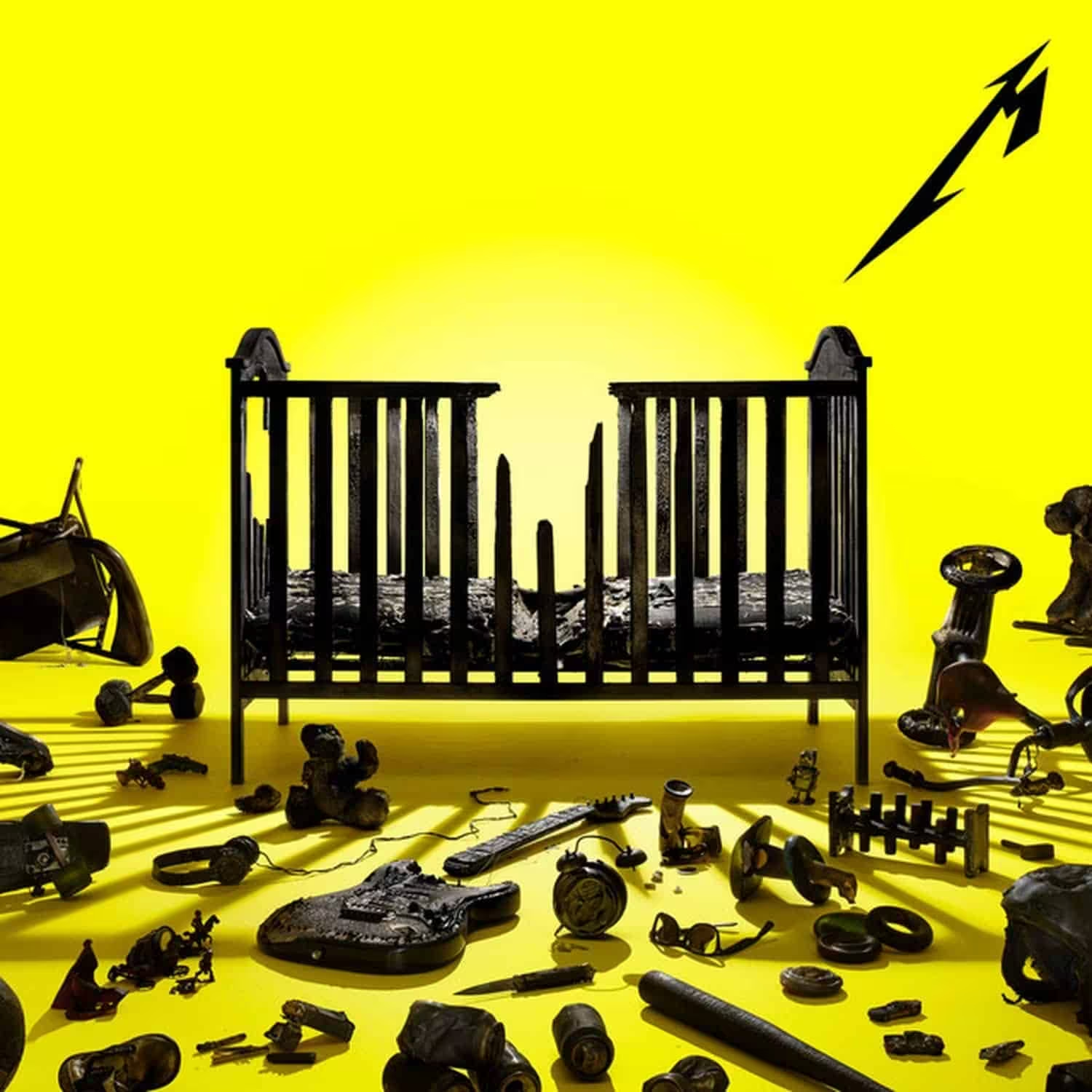
72 Seasons was released on 14 April 2023 and topped the UK chart, while it peaked at number two in the US. Hetfield explained the title in 2022:
"'72 Seasons' came out of a book I was reading about childhood, basically, and sorting out childhood as an adult."
James Hetfield, via Blabbermouth, 2022
The title track won the 2024 Grammy for Best Metal Performance, the band's tenth. The M72 World Tour opened in Amsterdam on 27 April 2023 with the Snake Pit moved to the centre of the stage and a "No Repeat Weekend" format, with most cities getting two nights and a different setlist each night. Wikipedia's tally puts it at $668.4 million from 86 shows, with 5.32 million attending, and the tour is scheduled to end in Salt Lake City on 19 June 2027. The two Arlington, Texas shows in August 2023 were filmed for cinemas.
2025 had its own highlights. On 7 May the band played Virginia Tech's Lane Stadium, where "Enter Sandman" has been the football team's entrance music for 25 years, and the crowd jumping to it registered as a small earthquake at the university's seismological observatory. On 5 July they played Black Sabbath's farewell, Back to the Beginning, at Villa Park in Birmingham. Their set opened with Sabbath's "Hole in the Sky", included the first live performance of the Never Say Die! deep cut "Johnny Blade", and closed with "Master of Puppets". As for new music, Hammett told Rolling Stone in March 2025 that he had "767 new ones for the next album", but added: "I don't foresee us starting the next album for at least another year because we're still finishing the 72 Seasons tour."
Metallica Studio Albums
| # | Album | Year | Label | Line-up / producer note | Peak chart (US / UK) | US certification |
|---|---|---|---|---|---|---|
| 1 | Kill 'Em All | 1983 | Megaforce | Hammett's debut; produced by Paul Curcio | 155 on first chart run (66 for the 2016 reissue) / 142 | 4x Platinum |
| 2 | Ride the Lightning | 1984 | Megaforce | With Flemming Rasmussen and Mark Whitaker, Copenhagen | 100 on first chart run (48 for the 2016 reissue) / 87 | 6x Platinum |
| 3 | Master of Puppets | 1986 | Elektra | Burton's last album; with Rasmussen | 29 / 41 | 8x Platinum |
| 4 | ...And Justice for All | 1988 | Elektra | Newsted's first album | 6 / 4 | 8x Platinum |
| 5 | Metallica (the Black Album) | 1991 | Elektra | First with Bob Rock | 1 / 1 | 2x Diamond |
| 6 | Load | 1996 | Elektra | Bob Rock | 1 / 1 | 5x Platinum |
| 7 | Reload | 1997 | Elektra | Songs from the Load sessions | 1 / 4 | 4x Platinum |
| 8 | St. Anger | 2003 | Elektra | Bob Rock on bass | 1 / 3 | 2x Platinum |
| 9 | Death Magnetic | 2008 | Warner Bros. | Trujillo's first playing; produced by Rick Rubin | 1 / 1 | 2x Platinum |
| 10 | Hardwired... to Self-Destruct | 2016 | Blackened | Greg Fidelman, Hetfield, Ulrich | 1 / 2 | Platinum |
| 11 | 72 Seasons | 2023 | Blackened | Greg Fidelman, Hetfield, Ulrich | 2 / 1 |
Chart peaks and certifications are taken from Wikipedia's Metallica discography. Kill 'Em All did not reach the US chart until 1986, and both of the first two albums peaked higher as 2016 remasters than on first release.
Metallica Line-up Through the Years
| Member | Instrument | Years | Notes |
|---|---|---|---|
| James Hetfield | Vocals, rhythm guitar | 1981 to present | Co-founder; answered Ulrich's Recycler advert |
| Lars Ulrich | Drums | 1981 to present | Co-founder; born in Gentofte, Denmark |
| Ron McGovney | Bass | 1981 to 1982 | Played on the early demos; left before Kill 'Em All |
| Dave Mustaine | Lead guitar | 1981 to 1983 | Fired April 1983; formed Megadeth |
| Cliff Burton | Bass | 1982 to 1986 | Killed in the Dörarp bus crash, 27 September 1986 |
| Kirk Hammett | Lead guitar | 1983 to present | Co-founder of Exodus |
| Jason Newsted | Bass | 1986 to 2001 | Ex-Flotsam and Jetsam; later Echobrain, Voivod and Newsted |
| Robert Trujillo | Bass | 2003 to present | Ex-Suicidal Tendencies and Ozzy Osbourne |
Sources give McGovney's tenure as October 1981 to December 1982, while Burton's own Wikipedia entry dates his time in the band from 1982, even though his first show was in March 1983. Lloyd Grant played a guitar solo on the band's Metal Massacre track.
Feuds, Side Projects and Reunions
Metallica have never broken up, so their reunions have been with former members. The longest-running story is Dave Mustaine's. After his firing he made inflammatory comments about his old band for years, partly over songwriting credits on the first three albums. Relations had improved enough by 1993 for Megadeth to open for Metallica in Europe, but he aired his anger at Metallica in Some Kind of Monster, in a scene he later said misrepresented him. The Big Four shows and his guest spot at the 2011 anniversary concerts brought them closer again. A remaster of the No Life 'til Leather demo planned in 2022 was cancelled after a dispute over credits, which reopened the feud.
The Mötley Crüe rivalry dates back to fights for space in the Los Angeles scene of the early 1980s. It returned in 1997, when Ulrich accused Crüe of playing to a backing track, and again in 2015, when Tommy Lee tweeted a picture of Ulrich captioned "Straight Outta Tempo". Things had reportedly calmed down by 2017.
Jason Newsted has kept busy since leaving:
- Echobrain, the side project whose album triggered his exit
- Voivod, the Canadian thrash band he joined under the name Jasonic
- Ozzy Osbourne's band, for Ozzfest 2003, taking over from Robert Trujillo
- Newsted, the heavy metal band he has fronted since 2012
He returned for the 2009 Hall of Fame induction and the 2011 anniversary shows. Megadeth, meanwhile, became one of the Big Four alongside the band that fired its founder.
Riffology Podcast Episodes on Metallica
Several of these albums have a full Riffology podcast episode. Follow the album to listen.
| Album | Year | On the Riffology podcast |
|---|---|---|
| Ride the Lightning | 1984 | The Copenhagen record that still carried Mustaine co-writes alongside Burton and Hammett. |
| Master of Puppets | 1986 | The last album Cliff Burton played on, and the band's commercial breakthrough. |
| Metallica (The Black Album) | 1991 | Bob Rock, three remixes and the best-selling album of the SoundScan era. |
Legacy and Influence
The numbers are hard to pin down. Wikipedia's Metallica entry gives more than 125 million records worldwide in one section and more than 163 million albums as of 2023 in another. Loudwire, using ChartMasters' method of counting streams and sales, put the total at 163.6 million in 2023, ranking them fifth among hard rock and metal artists and calling them "the metal band that has sold the most albums." In the US they are the third-best-selling act since SoundScan began in 1991, with 58 million albums as of 2017. Metallica have won ten Grammys from 26 nominations, and Rolling Stone ranked them 61st on its list of the 100 greatest artists of all time.
The critical consensus is just as clear. The Rolling Stone Encyclopedia of Rock & Roll said they gave heavy metal "a much-needed charge". AllMusic's Stephen Thomas Erlewine and Greg Prato called them "easily the best, most influential heavy metal band of the '80s, responsible for bringing the music back to Earth". The Rock Hall's own summary is that they "transformed heavy metal, imbuing it with both punk energy and prog rock sophistication." Ulrich has named Iron Maiden as probably their biggest influence, and the band also drew on punk and hardcore acts from the Misfits to Discharge.
Their own influence runs through the following generations of metal. Sepultura, Testament, Slipknot, Machine Head, Trivium, Avenged Sevenfold, Lamb of God, Gojira, System of a Down and Korn have all cited Metallica. Godsmack's Shannon Larkin said "they really changed my life when I was 16 years old". The tributes have gone well beyond metal too: Apocalyptica's Plays Metallica by Four Cellos in 1996, an MTV Icon special in 2003 featuring Snoop Dogg and Avril Lavigne, and Miley Cyrus's "Nothing Else Matters" with Elton John, Chad Smith and Yo-Yo Ma for The Metallica Blacklist. San Francisco named 7 March 1999 "Official Metallica Day".
Things You Might Not Know About Metallica
| Fact | Detail |
|---|---|
| A borrowed name | Ron Quintana was choosing between MetalMania and Metallica for a fanzine; Ulrich talked him into MetalMania and kept Metallica. |
| Green Lightning | A French printing press mistakenly printed green covers for Ride the Lightning, now collector's items. |
| Stolen riff | The bridge of "Creeping Death" started life as an Exodus riff Hammett brought with him. |
| The bunk | Burton won a card draw for Hammett's bunk before the fatal 1986 crash. |
| Wasabi welcome | The band initiated Jason Newsted by tricking him into eating a ball of wasabi. |
| Master J Newkid | Newsted's credit on the 1987 Garage Days Re-Revisited EP. |
| They bought the film | Rather than license Johnny Got His Gun for the "One" video, Metallica bought the rights outright. |
| Beaten by Tull | Metallica's first Grammy nomination, in 1989, lost to Jethro Tull's Crest of a Knave. |
| Moscow, 1991 | Up to 1.6 million people turned out for the first open-air rock concert in the Soviet Union. |
| Million-dollar bassist | Robert Trujillo received a $1 million advance when he joined in 2003. |
| Six-dollar tickets | Tickets for the 30th anniversary Fillmore shows in 2011 cost $6 a night, or $19.81 for all four. |
| All seven continents | A show in Antarctica on 8 December 2013 made Metallica the first band to play on every continent. |
| No ride cymbal | Ulrich plays without a ride cymbal, preferring the louder China cymbal. |
| Sandman earthquake | Fans jumping to "Enter Sandman" at Virginia Tech in May 2025 registered as a small earthquake. |
There is a lot more to say about the individual records, and the Riffology podcast goes album by album through some of the biggest, from Ride the Lightning to the Black Album. Search for Riffology on your usual podcast app. If you have a Metallica era you think gets overlooked, whether it is the Load years, St. Anger or Lulu, we would love to hear your case for it.
Comments