
Introduction
Every so often, an album comes along that doesn’t just push boundaries but rips them apart. Reign In Blood by Slayer is one of those rare records. Released in 1986, it did more than redefine thrash metal—it changed the direction of heavy music forever. The album’s relentless pace, graphic lyrics, and unflinching subject matter still spark debate nearly forty years later. Yet, its influence can be heard in countless bands across metal, punk, and beyond.
In this comprehensive guide, I will take you through every aspect of Reign In Blood. You’ll discover the story behind its creation, the musicians and producers who made it possible, and the controversies that nearly derailed its release. We’ll explore the recording process, its commercial performance, and its reception—both at the time and in the years since. Each track will be analysed in detail, from the infamous opener to the iconic closer. I’ll also look at the album’s legacy, how it shaped other artists, and why it remains essential listening today.
Whether you’re a lifelong Slayer fan or new to the album, this article is designed to be the ultimate resource on Reign In Blood. Prepare for a deep dive into the making of a true metal milestone.
| Attribute | Details |
|---|---|
| Album Title | Reign In Blood |
| Artist | Slayer |
| Release Date | 20 October 1986 |
| Genre | Thrash metal |
| Total Runtime | 28:55 |
| Number of Tracks | 10 (12 on expanded editions) |
| Record Label | Def Jam Recordings, Geffen Records |
| Recording Studio | Hit City West, Los Angeles, California |
| Producer(s) | Rick Rubin, Slayer |
Reign In Blood was a game-changer. Its raw sound, short running time, and unfiltered aggression set a new standard for heaviness. Kerrang! described it as “the heaviest album of all time.” Jeff Hanneman, Slayer’s guitarist, once said, “It’s my favourite album because it’s just so short and fast. There’s no fat.” Rick Rubin, the album’s producer, told Decibel, “I wanted it to be as direct as possible. No wasted time, no wasted notes.” Many bands have tried to match its intensity, but few have succeeded.
To this day, critics and fans alike hail Reign In Blood as one of the most important metal albums ever recorded. It continues to inspire musicians, provoke debate, and excite listeners. In the sections below, I’ll show you exactly how and why this album remains such a powerful force in music history.
The Genesis of “Reign In Blood”
Before Reign In Blood, Slayer were already making waves in the underground. Their earlier records, Hell Awaits and Show No Mercy, had set the stage with a mix of speed, aggression, and dark themes. The mid-1980s metal scene was fiercely competitive. Metallica had just released Master of Puppets, and Megadeth were making their mark with Peace Sells… But Who’s Buying?. Yet, Slayer wanted to go further—faster, heavier, and more direct.
The creative drive came from within the band. Guitarists Jeff Hanneman and Kerry King wrote most of the music, drawing on their love of hardcore punk and classic metal. Drummer Dave Lombardo was known for his rapid double bass drumming, which became a key feature of the album. Tom Araya, Slayer’s bassist and vocalist, brought a menacing edge to the lyrics and delivery. Together, they formed a unit that was ready to take risks and challenge expectations.
Slayer’s path to Reign In Blood was not easy. They had to leave their previous label, Metal Blade Records, and sign with Def Jam—a label best known for hip hop. This move was orchestrated by Rick Rubin, who saw the band perform and believed they could reach a much wider audience. The band was initially hesitant but soon realised Rubin’s vision matched their own ambition. Financing came from Def Jam, and the budget was larger than anything Slayer had seen before. Even so, the band faced challenges, including controversy over their lyrics and artwork, which threatened to derail the release.
Here’s a detailed breakdown of the band members and their roles during the making of the album:
| Band Member | Instrument/Role |
|---|---|
| Tom Araya | Bass, Vocals |
| Kerry King | Guitar, Songwriting |
| Jeff Hanneman | Guitar, Songwriting |
| Dave Lombardo | Drums, Percussion |
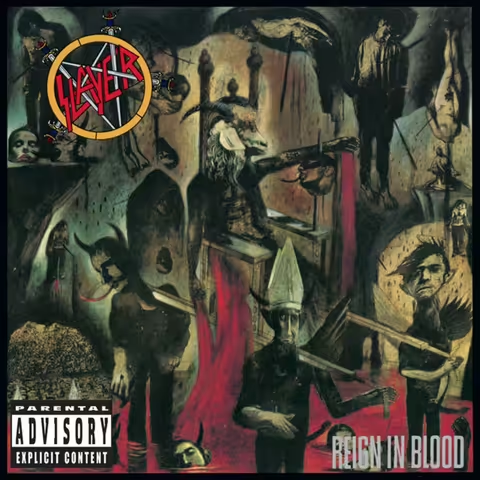
The album title, Reign In Blood, was a last-minute change. Early reports suggested the record might be called “Raining Blood” after the final track, but the label and the band settled on the more ambiguous title. The concept behind the album was simple: create the most intense, uncompromising music possible. The cover art, designed by Larry Carroll, reflected this vision. Carroll was known for his disturbing, political illustrations. He combined three different concepts—hell, war, and chaos—into a single image. Not all band members liked it at first, but Tom Araya was an immediate fan, calling it “perfect for what we were doing.”
Financing for the album came from Def Jam, which meant a bigger budget than Slayer’s previous releases. Even so, the band kept things lean, focusing every penny on the music and production. Controversy soon followed, as the lyrics—especially those of “Angel of Death”—sparked outrage. Columbia Records, Def Jam’s distributor, refused to release the album. Eventually, Geffen Records stepped in, though they left their logo off the release. This only added to the album’s reputation as something dangerous and forbidden.
Recording Process
The recording sessions for Reign In Blood were held at Hit City West in Los Angeles between January and March 1986. The studio was known for its state-of-the-art equipment and had hosted a range of artists across genres. Rick Rubin, making his debut as a metal producer, brought a fresh approach. He wanted the album to sound as clear and direct as possible. Unlike earlier Slayer albums, which were drenched in reverb, Rubin insisted on a dry, punchy mix. Andy Wallace engineered the sessions, ensuring every note was sharp and precise.
The gear used was just as important as the people. Jeff Hanneman played a BC Rich Bich guitar with DiMarzio Super Distortion pickups and a Kahler Pro Bridge. Kerry King used a BC Rich Mockingbird, also with DiMarzio pickups. Both guitarists ran their instruments through Marshall 2203 amplifiers—these amps were not modified, despite rumours to the contrary. Tom Araya used a BC Rich Wave bass with P-Bass style pickups. Dave Lombardo’s drumming was captured with a range of microphones and compressors typical of high-end studios at the time. Rick Rubin’s philosophy was to use effects sparingly, only adding reverb to certain screams and intros.
The studio’s hardware was likely to include Neumann and Shure microphones, a large-format mixing desk (such as a Neve or SSL), UREI or dbx compressors, and outboard gear for EQ and gating. The recording process was fast and efficient. Rubin kept the band focused, insisting on tight takes and minimal overdubs. The album’s short length—just under 29 minutes—was deliberate. Rubin told the band, “If it feels done, it’s done.” The result was an album with no filler, just pure intensity from start to finish.
Here’s a table of the likely hardware and gear used in the studio during the sessions:
| Equipment/Hardware | Details/Usage |
|---|---|
| Guitars | BC Rich Bich (Hanneman), BC Rich Mockingbird (King) |
| Pickups | DiMarzio Super Distortion |
| Bass | BC Rich Wave with P-Bass pickups (Araya) |
| Amplifiers | Marshall 2203 (stock, not modified) |
| Drums | Standard acoustic kit, likely Tama or Pearl, with double bass pedals |
| Microphones | Neumann, Shure (SM57, SM58), Sennheiser (for drums) |
| Mixing Desk | Likely Neve or SSL (not specified, but typical for Hit City West in 1986) |
| Outboard Gear | UREI, dbx compressors; minimal use of reverb and effects |
| Producer | Rick Rubin |
| Engineer | Andy Wallace |
Rick Rubin’s influence cannot be overstated. He was producing the Beastie Boys’ License To Ill at the same time and encouraged Kerry King to play guitar on “No Sleep Till Brooklyn.” Rubin’s approach was to strip away anything unnecessary, resulting in a sound that was both brutal and crystal clear. Andy Wallace’s engineering skills helped bring out the detail in every instrument. The sessions were intense but productive, with the band recording most tracks live in the studio. Rubin later said, “I wanted to capture the energy of Slayer as they were, not how the studio could make them sound.”
Here’s a list of other albums produced by Rick Rubin around this era:
| Producer | Artist | Album | Year |
|---|---|---|---|
| Rick Rubin | Beastie Boys | Licensed To Ill | 1986 |
| Rick Rubin | Run-D.M.C. | Raising Hell | 1986 |
| Rick Rubin | LL Cool J | Radio | 1985 |
| Rick Rubin | Public Enemy | Yo! Bum Rush the Show | 1987 |
Commercial Performance and Reception
When Reign In Blood hit the shelves in October 1986, it made an immediate impact. The album debuted at #127 on the Billboard 200 and eventually peaked at #94. In the UK, it reached #47. These numbers were impressive for a thrash metal album with little radio airplay and no mainstream promotion. Over time, the album achieved gold certification in the United States (over 500,000 copies sold) and silver in the UK (over 60,000 units). According to SoundScan, it has sold more than 500,000 copies in the US alone, with worldwide estimates reaching well into the millions.
To put this into context, here’s a table of Slayer’s studio albums, including release year and US sales data where available:
| Album | Year | Sales Data (US) |
|---|---|---|
| Show No Mercy | 1983 | 158,000 |
| Hell Awaits | 1985 | 148,000 |
| Reign In Blood | 1986 | 509,000 (Gold certified) |
| South Of Heaven | 1988 | 485,000 (Gold certified) |
| Seasons In The Abyss | 1990 | 659,000 (Gold certified) |
| Divine Intervention | 1994 | 493,000 (Gold certified) |
| Undisputed Attitude | 1996 | 238,000 |
| Diabolus In Musica | 1998 | 290,000 |
| God Hates Us All | 2001 | 304,000 |
| Christ Illusion | 2006 | 101,918 |
| World Painted Blood | 2009 | 88,110 |
| Repentless | 2015 | Data not available |
Reign In Blood received numerous awards and accolades. Kerrang! called it “the heaviest album of all time.” Metal Hammer named it “the best metal album of the last 20 years” in 2006. Rolling Stone ranked it #6 in their “100 Greatest Metal Albums of All Time” (2017). Decibel inducted it into their Hall of Fame, the first album to receive this honour. The album was also certified gold in the US and silver in the UK. These achievements reflect not only its commercial success but its cultural importance.
Many other legendary albums were released in 1986 by Slayer’s peers and rivals. Here are some of the most notable:
- Master of Puppets by Metallica
- Peace Sells… But Who’s Buying? by Megadeth
- Somewhere in Time by Iron Maiden
- Orgasmatron by Motörhead
- Turbo by Judas Priest
- Rage for Order by Queensrÿche
- Look What the Cat Dragged In by Poison
- Epicus Doomicus Metallicus by Candlemass
- Night Songs by Cinderella
- Morbid Visions by Sepultura
Reign In Blood received gold certification in the United States (over 500,000 copies) and silver certification in the United Kingdom (over 60,000 units). These numbers are even more impressive given the album’s lack of radio support and mainstream exposure.
1986 was a pivotal year for heavy music. It saw the release of genre-defining albums and the rise of many new bands. Metallica lost bassist Cliff Burton in a tragic bus accident. Megadeth and Anthrax both made major strides. The first issue of Metal Hammer magazine was published. Living Colour formed their classic lineup. These events, combined with the success of Reign In Blood, helped make 1986 one of the most important years in metal history.
Track Analysis
Reign In Blood is famous for its unbroken wall of sound. The album’s ten main tracks run together, creating a sense of unstoppable momentum. Only two singles were officially released: “Postmortem” in 1986 and “Criminally Insane (Remix)” in 1987. Both singles featured writing credits from Jeff Hanneman and Kerry King. Neither charted in the mainstream, but they became staples of Slayer’s live shows and underground radio.
Below is a detailed table of every song from the album, including length and writing credits. Singles are marked with a *.
| Track Name | Length (seconds) | Writing Credit |
|---|---|---|
| Angel Of Death | 61 | Jeff Hanneman |
| Piece By Piece | 45 | Kerry King |
| Necrophobic | 43 | Hanneman, King |
| Altar Of Sacrifice | 43 | King, Hanneman |
| Jesus Saves | 41 | King, Hanneman |
| Criminally Insane* | 42 | Hanneman, King |
| Reborn | 38 | King, Hanneman |
| Epidemic | 39 | King, Hanneman |
| Postmortem* | 49 | Hanneman |
| Raining Blood | 66 | Hanneman, King |
| Aggressive Perfector | 37 | Hanneman, King |
| Criminally Insane (Remix)* | 34 | Hanneman, King |
Note: The singles from this album are “Postmortem” and “Criminally Insane (Remix)”. Exact chart positions are not known, as neither entered the main US or UK charts. Both tracks became fan favourites and were regularly played live.
Song Meaning and Lyrics
Few albums have lyrics as provocative as Reign In Blood. The singles “Angel of Death” and “Criminally Insane” stand out for their controversial themes and unflinching detail. “Angel of Death,” written by Jeff Hanneman, is a graphic account of the atrocities committed by Josef Mengele at Auschwitz. The lyrics describe “surgery with no anesthesia” and “sadistic surgeon of demise.” These lines were intended to shock and confront, not to glorify the subject. Hanneman said he was inspired by history books, not ideology. The song’s full lyrics can be found on Boomplay Music.
“Criminally Insane” explores the mind of a violent, disturbed individual. The lyrics paint a picture of confinement, rage, and impending violence. Lines such as “Branded in pain, marked criminally insane, locked away and kept restrained” reflect the song’s dark subject matter. Like many tracks on the album, it blurs the line between horror and reality, forcing the listener to confront uncomfortable truths.
Songwriting was a collaborative effort, with Hanneman and King responsible for most of the music and lyrics. Tom Araya’s vocal delivery brought the words to life, adding an extra layer of menace. There were no guest artists on the album—every note and word came from within the band. The result was a set of songs that felt both personal and universal, tapping into fears and anxieties that were all too real.
Touring and Promotion of Reign In Blood
Promoting Reign In Blood was a challenge. The album’s controversial content meant little mainstream radio play or television coverage. Slayer relied on relentless touring to get the word out. In 1986, they played 32 shows across the United States and Canada. Venues included Adam’s Avenue Theater in San Diego, Aragon Ballroom in Chicago, Moore Theatre in Seattle, and The Ritz in New York City. The band also performed in Toronto and Montreal, making sure to reach fans across North America.
The tour featured intense live performances, with setlists drawn heavily from the new album. Notable shows included back-to-back nights at The Ritz in New York and a sold-out performance at the Olympic Auditorium in Santa Monica. Slayer’s stage show was stripped-down but powerful, focusing on the music rather than theatrics. The band often shared the bill with other rising metal acts, such as Overkill and Malice. In 1987, they opened for W.A.S.P. in Europe, further expanding their reach.
On the road, Slayer built a reputation for intensity and reliability. Despite financial challenges and lineup changes—drummer Dave Lombardo briefly left the band after the tour—they maintained a punishing schedule. This dedication helped solidify their place in the growing thrash metal movement.
Influences and Legacy
Reign In Blood was shaped by a range of musical influences. Slayer drew inspiration from the New Wave of British Heavy Metal (NWOBHM), especially bands like Judas Priest, Iron Maiden, and Motörhead. Hardcore punk bands such as GBH and Discharge also played a crucial role, pushing Slayer to adopt faster tempos and more aggressive rhythms. The result was a sound that bridged the gap between metal and punk, creating something entirely new.
The album’s influence on other artists is impossible to overstate. Bands like Death, Obituary, Morbid Angel, and Napalm Death have all cited Reign In Blood as a key inspiration. Even outside metal, its impact can be felt in punk, hardcore, and alternative music. The album’s concise structure, relentless pace, and unfiltered lyrics set a template for extreme music that is still followed today.
Here’s a table of influences and artists who were themselves influenced by Reign In Blood:
| Influences on “Reign In Blood” | Artists Influenced by “Reign In Blood” |
|---|---|
| Judas Priest | Death |
| Iron Maiden | Obituary |
| Motörhead | Morbid Angel |
| GBH | Napalm Death |
| Discharge | Slipknot |
| Venom | Lamb of God |
| Black Sabbath | Machine Head |
1986 was a year of major change, both in music and the wider world. The Chernobyl disaster shocked the globe, while the Space Shuttle Challenger explosion stunned the United States. “Top Gun” dominated the box office, and “The Queen Is Dead” by The Smiths became an indie classic. In metal, Master of Puppets by Metallica and Peace Sells… But Who’s Buying? by Megadeth set new standards. Slayer’s contribution was to make music that was faster, heavier, and more uncompromising than anything before.
Five Things About Reign In Blood
Here are five verified and fascinating facts about Reign In Blood:
| Fact | Details |
|---|---|
| Shortest major thrash album | The original album runs just 28:55—unusually short for a full-length LP in 1986. |
| Controversial lyrics delayed release | Columbia Records refused to distribute the album due to the lyrics of “Angel of Death.” Geffen Records stepped in, but their logo was omitted from the release. |
| Produced by Rick Rubin | This was Rick Rubin’s first heavy metal production. He went on to work with artists as diverse as Johnny Cash and the Red Hot Chili Peppers. |
| Influenced video games and TV | Songs like “Raining Blood” have appeared in Guitar Hero III, South Park, and Grand Theft Auto: Vice City. |
| Performed live in full | Slayer played the entire album live during their “Still Reigning” tour in 2004, ending with a fake blood shower during “Raining Blood.” |
Media and Television Usage
Songs from Reign In Blood have been featured in several films, TV shows, and games. Here’s a table of known media uses for tracks from the album:
| Song Title | Media (Movie, TV, Game, etc.) | Year |
|---|---|---|
| Angel of Death | Gremlins 2: The New Batch, Skins (UK), The Leftovers, Billions | 1990, 2011, 2014, 2023 |
| Piece By Piece | Skins (UK) | 2011 |
| Raining Blood | South Park, Guitar Hero III, Grand Theft Auto: Vice City, Californication, 30 Minutes or Less | 2005, 2007, 2002, 2008, 2011 |
Critical Reviews and Retrospectives
Reign In Blood has been reviewed by every major music publication. Kerrang! gave it top marks, calling it “the heaviest album of all time.” Metal Hammer called it “the best metal album of the last 20 years.” Stylus Magazine gave it an A+ and named it a “genre-definer.” Rolling Stone placed it at #6 in their “100 Greatest Metal Albums of All Time.” Decibel magazine inducted it into their Hall of Fame. Even NME included it in their “500 Greatest Albums of All Time.”
Here’s a table of notable reviews, including publication names, scores, and direct quotes:
| Publication | Score | Notable Quote | Link |
|---|---|---|---|
| Kerrang! | N/A | “The heaviest album of all time.” | Wikipedia: Reign In Blood |
| Metal Hammer | N/A | “The best metal album of the last 20 years.” | Wikipedia: Reign In Blood |
| Stylus Magazine | A+ | “A genre-definer and the greatest metal album of all time.” | Wikipedia: Reign In Blood |
| Rolling Stone | #6/100 | “A landmark of speed, aggression, and precision.” | Wikipedia: Reign In Blood |
| NME | #287/500 | “One of the 500 greatest albums of all time.” | Wikipedia: Reign In Blood |
After Reign In Blood
The success of Reign In Blood propelled Slayer to new heights. Their next album, South of Heaven, slowed the tempo but kept the intensity. Seasons in the Abyss followed, cementing their status as thrash legends. The band went through lineup changes—most notably, Dave Lombardo left and returned several times. Guitarist Jeff Hanneman’s death in 2013 was a huge blow, but Slayer continued with Gary Holt (Exodus) and Paul Bostaph (drums).
In 2019, Slayer played their final show in Los Angeles. Yet, the story wasn’t quite over. In 2024, they announced a handful of reunion shows, including a major UK appearance at Villa Park, Birmingham, supporting Black Sabbath’s “Back to the Beginning” concert. More shows are planned for the US and Canada in 2025. As of April 2025, Slayer remain one of the most influential bands in metal history, their legacy assured by albums like Reign In Blood.
Remasters and Reissues
No verified data is available for remasters or reissues of Reign In Blood in the provided sources. The original release and its expanded editions remain the primary sources for fans and collectors.
Conclusion
Reign In Blood is more than just an album—it’s a landmark in music history. Its relentless speed, uncompromising lyrics, and raw power continue to influence musicians and thrill fans. Slayer’s dedication to their craft, their willingness to court controversy, and their refusal to compromise made this record what it is. Even today, the album sounds as fierce and vital as it did in 1986.
With new shows scheduled for 2025, Slayer’s legacy is far from over. The band’s reunion with Black Sabbath and headline dates in the UK, US, and Canada will give a new generation of fans the chance to experience their music live. Reign In Blood remains a touchstone for anyone who values intensity, honesty, and the power of heavy music.
Further Reading
If you want to explore more about Slayer and the world of thrash metal, check out these resources:
- Slayer artist page on Riffology
- The Making of Hell Awaits by Slayer (blog article)
- The Making of Show No Mercy by Slayer (blog article)
- Unveiling Slayer’s South of Heaven (blog article)
- Seasons In The Abyss: Slayer’s Defining Thrash Evolution (blog article)
- Wikipedia: Reign In Blood
- Official Slayer website
- Def Jam Recordings website
Let us know in the comments what your thoughts are on Reign In Blood by Slayer. Did we miss anything? Share your experiences and join the conversation!

Comments