Introduction
Some albums mark a comeback so dramatic that they redefine not only an artist’s career but also an entire genre. “Trash” by Alice Cooper did just that. Released in July 1989, it wasn’t simply a new record—it was a statement. Alice Cooper, once the godfather of shock rock, returned to the charts with a collection of songs that blended classic rock bravado with the polished sheen of late-80s glam metal. “Poison,” the lead single, brought Cooper roaring back into the public eye, delivering his first top ten hit in over a decade. In the words of Cooper himself, “It’s the closest I’ve come to making another ‘Billion Dollar Babies’ in terms of quality and commercial appeal” (RAW Magazine, 26 July 1989).
This article explores every facet of “Trash”—from its creation and the musicians behind it, to its recording, commercial triumph, critical response, and enduring legacy. I’ll break down the album’s context, track by track, share rare insights, and connect you to the broader story of rock in 1989. By the end, you’ll understand why “Trash” is still a touchstone for both Alice Cooper and the genre he helped shape.
| Attribute | Details |
|---|---|
| Release date | 25 July 1989 |
| Album title | Trash |
| Genre | Glam metal, hard rock |
| Total runtime | 40:11 |
| Number of tracks | 10 |
| Record label | Epic Records |
| Recording studio | Bearsville (Woodstock), Power Station (NYC), Right Track (NYC), Sigma Sound (Philadelphia), Mediasound (NYC), Grog Kill, Village Recorder (Los Angeles), The Complex, Record Plant (NYC), Blue Jay, Sanctuary Sound |
| Producer(s) | Desmond Child |
“Trash” was more than a commercial hit—it signalled a major comeback for Alice Cooper, peaking at number 2 in the UK and number 20 in the US. It sold over two million copies worldwide and produced the enduring anthem “Poison.” The album’s legacy is cemented by its influence on the glam metal wave and its proof that Alice Cooper could reinvent himself while staying true to his theatrical roots. As Desmond Child, the album’s producer, remarked, “We wanted to make an album that would sound great on the radio and still feel like Alice. We succeeded” (RAW, 1989).
Next, I’ll take you inside the world that gave birth to “Trash”—the cultural backdrop, the creative team, and the bold decisions that made this record a turning point.
The Genesis of “Trash”
By the late 1980s, Alice Cooper’s career had already seen staggering highs and troubling lows. The original Alice Cooper band had split in 1975, and his solo years brought classics like “Welcome to My Nightmare.” Yet, the early and mid-80s were tough—albums such as “Flush the Fashion” and “DaDa” struggled for attention. After a successful stint with “Constrictor” and “Raise Your Fist and Yell,” Cooper was ready for a new chapter. The music world had changed: glam metal was at its peak, with acts like Bon Jovi and Aerosmith dominating charts. Alice Cooper wanted to blend his shock rock persona with this fresh, radio-friendly sound.
The creative direction of “Trash” was shaped by Desmond Child, a hitmaker known for penning anthems for Bon Jovi and Aerosmith. Cooper told RAW Magazine, “I wanted Desmond because he could write a song that would sound great in a car, on the radio, anywhere.” Child didn’t just produce; he co-wrote many tracks, steering Cooper towards big choruses and slick arrangements. Moreover, the project drew in a cast of rock’s biggest names—Jon Bon Jovi, Steven Tyler, Joe Perry, Richie Sambora, Joan Jett, and Kane Roberts all contributed vocals or guitar work. Songwriters like Diane Warren and John McCurry added their touch, giving the album a modern edge.
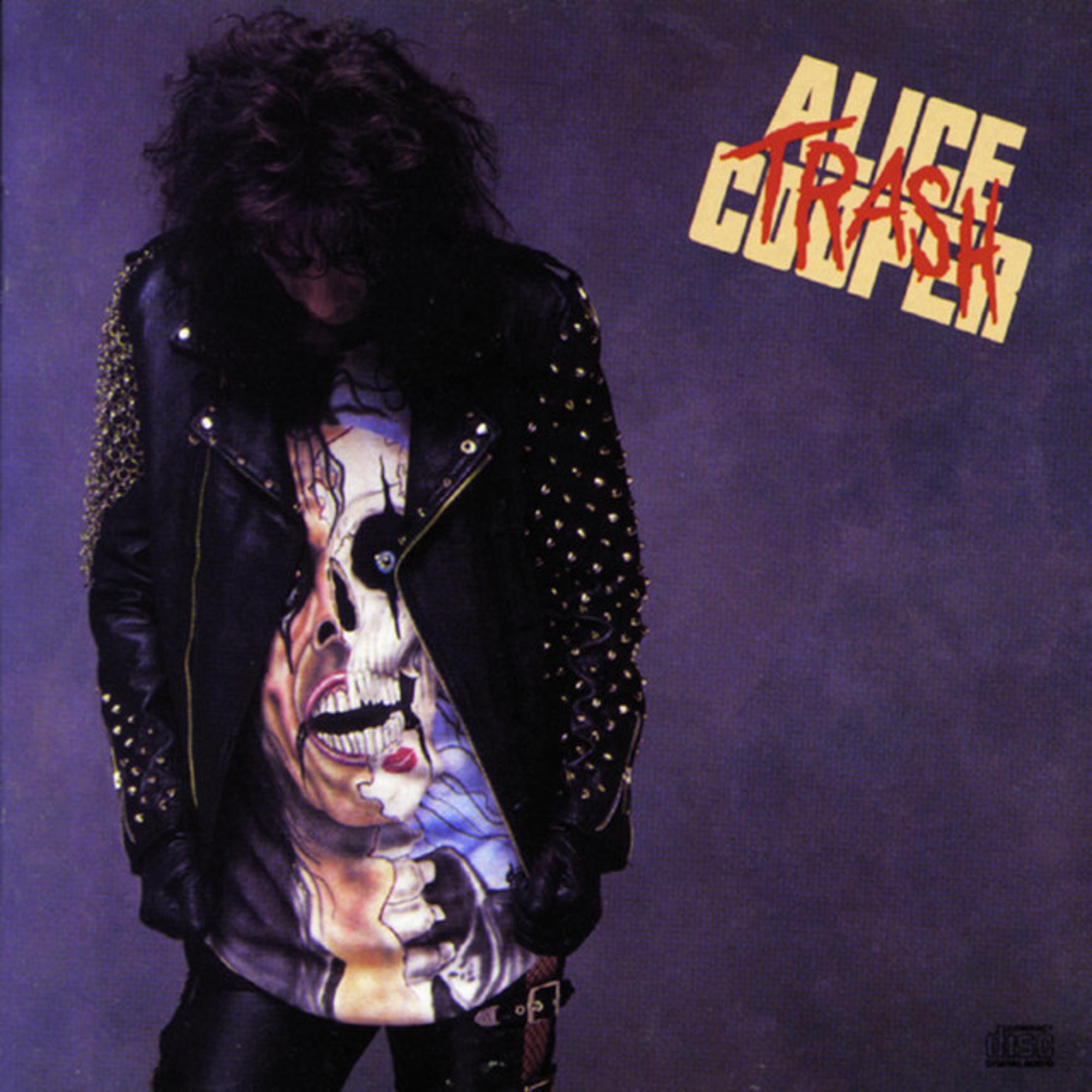
Epic Records financed the album, keen to revitalise Cooper’s career. The budget for “Trash” has not been disclosed, but with top-tier studios and guest stars, it was substantial. Financially, Cooper’s move from MCA to Epic was crucial. He felt MCA didn’t understand him, saying, “They just didn’t get what Alice Cooper was about. Epic put everything behind this record.” The album’s title, “Trash,” reflected both the sleazy, tongue-in-cheek content and Cooper’s embrace of glam’s outrageous side. The cover art—Cooper in black leather, shot by photographer Herb Ritts—was designed to signal a new, sexier era for the shock rocker.
Here’s a breakdown of the musicians and contributors who brought “Trash” to life:
| Band Member / Contributor | Role(s) |
|---|---|
| Alice Cooper | Lead vocals, co-writer, concept, creative direction |
| John McCurry | Guitar, songwriting |
| Hugh McDonald | Bass guitar |
| Bobby Chouinard | Drums |
| Alan St. John | Keyboards |
| Desmond Child | Producer, co-writer, backing vocals |
| Steven Tyler (Aerosmith) | Guest vocals (“Only My Heart Talkin’”) |
| Jon Bon Jovi | Guest vocals (“Trash”) |
| Joe Perry (Aerosmith) | Guitar (“House of Fire”) |
| Richie Sambora (Bon Jovi) | Guitar (“Hell Is Living Without You”) |
| Joan Jett | Co-writer (“House of Fire”) |
| Kane Roberts | Guitar (“Bed of Nails”) |
| Diane Warren | Co-writer (“Bed of Nails”) |
The artwork and overall aesthetic of “Trash” were conceived to present Cooper as both dangerous and alluring—a masterstroke for the MTV era. Herb Ritts’ photography, known for its bold, sensual style, played a key role. As a result, “Trash” became an album that looked as sharp as it sounded.
Recording Process
The making of “Trash” spanned several high-profile studios across the United States, reflecting both the ambition and resources behind the project. Sessions ran from May to June 1989, with recording taking place at Bearsville in Woodstock, Power Station, Right Track, Mediasound, and Record Plant in New York City, as well as Sigma Sound in Philadelphia, Village Recorder and The Complex in Los Angeles, Blue Jay, Grog Kill, and Sanctuary Sound. These studios were chosen for their state-of-the-art facilities and the ability to accommodate guest musicians’ schedules.
Desmond Child was the driving force behind the sessions. He had a track record for crafting hits, having worked on Bon Jovi’s “Slippery When Wet” and Aerosmith’s “Permanent Vacation.” The recording team included Sir Arthur Payson, Obie O’Brien, Nick DiDia, and others as engineers. Steve Thompson and Michael Barbiero handled mixing, while George Marino mastered the final product. Each brought their own expertise, with Thompson and Barbiero known for their work with Guns N’ Roses and Metallica, and Marino a legend in mastering circles.
Though there’s no full list of hardware used, the studios at the time were equipped with leading gear. Based on known equipment from these venues, here’s a table of likely tools and techniques used during the making of “Trash”:
| Hardware / Gear | Studio(s) / Use |
|---|---|
| Neumann U87 microphones | Vocals, overheads (Power Station, Bearsville) |
| Shure SM57 microphones | Guitar cabs, snare drums (all studios) |
| SSL 4000E mixing desk | Mixing (Power Station, Right Track) |
| Marshall JCM800 amplifiers | Guitar tones (assumed, based on 80s glam metal sound) |
| Lexicon 480L reverb | Reverb effects (Power Station, Village Recorder) |
| Fairchild 670 compressor | Mix bus compression (Bearsville, Record Plant) |
| Steinway grand piano | Keyboards (Village Recorder) |
| Gibson Les Paul, Fender Stratocaster guitars | Main guitars used by guest artists and John McCurry |
| Yamaha DX7, Roland D-50 synthesizers | Keyboards and special effects |
| Studer A800 24-track tape machines | Recording and mixing (standard in all top studios of the era) |
The sessions were intense but productive. Cooper has said, “We’d often work late into the night. Desmond kept pushing us for that perfect chorus.” At times, so many guest stars were involved that the schedule became a logistical puzzle. Yet, the chemistry was real—Steven Tyler’s vocals on “Only My Heart Talkin’” and Jon Bon Jovi’s high harmonies on “Trash” gave the album extra sparkle. According to engineer Sir Arthur Payson, “It was a star-studded revolving door. Every day, someone new would show up to add a solo or a harmony.”
Desmond Child’s resume before and after “Trash” is impressive. Here’s a list of notable albums he’s produced or written for (excluding “Trash”):
| Producer | Artist | Album | Year |
|---|---|---|---|
| Desmond Child | Bon Jovi | Slippery When Wet | 1986 |
| Desmond Child | Bon Jovi | New Jersey | 1988 |
| Desmond Child | Aerosmith | Permanent Vacation | 1987 |
| Desmond Child | Joan Jett & the Blackhearts | Up Your Alley | 1988 |
| Desmond Child | KISS | Crazy Nights | 1987 |
| Desmond Child | Cher | Heart of Stone | 1989 |
| Desmond Child | Ricky Martin | Livin’ la Vida Loca | 1999 |
With this formidable team and top-tier gear, “Trash” was crafted to be a blockbuster. Next, I’ll show how the album performed in the real world—and how it stood alongside other major releases of 1989.
Commercial Performance and Reception
When “Trash” hit the shelves in July 1989, it was an immediate success. The album peaked at number 2 in the UK Albums Chart and number 20 on the US Billboard 200. In Finland, it even reached number 1. The single “Poison” became Cooper’s first top ten US hit since 1977, reaching number 7 on the Billboard Hot 100 and number 2 in the UK. “Bed of Nails” and “House of Fire” also charted, with the latter hitting number 56 in the US and “Bed of Nails” making the UK top 40. The album sold over two million copies worldwide and earned platinum certification in the United States (1,250,000 copies), as well as platinum or gold in Australia, Canada, Germany, New Zealand, Sweden, and Switzerland.
To give you a sense of where “Trash” sits in the Alice Cooper discography, here’s a table of studio albums, release years, and US sales data where available. “Trash” is highlighted for reference:
| Album | Year | Sales data (US) |
|---|---|---|
| Pretties For You | 1969 | 250,000 |
| Easy Action | 1970 | 225,000 |
| Love It To Death | 1971 | 1,100,000 (Platinum) |
| Killer | 1971 | 1,600,000 (Platinum) |
| School’s Out | 1972 | 1,300,000 (Platinum) |
| Billion Dollar Babies | 1973 | 1,700,000 (Platinum) |
| Muscle Of Love | 1973 | 775,000 (Gold) |
| Welcome To My Nightmare | 1975 | 1,600,000 (Platinum) |
| Alice Cooper Goes To Hell | 1976 | 800,000 (Gold) |
| Lace And Whiskey | 1977 | 400,000 |
| From The Inside | 1978 | 300,000 |
| Flush The Fashion | 1980 | 400,000 |
| Special Forces | 1981 | 185,000 |
| Zipper Catches Skin | 1982 | 135,000 |
| DaDa | 1983 | 135,000 |
| Constrictor | 1986 | 400,000 |
| Raise Your Fist And Yell | 1987 | 325,000 |
| Trash | 1989 | 1,250,000 (Platinum) |
| Hey Stoopid | 1991 | 500,000 (Gold) |
| The Last Temptation | 1994 | 150,000 |
| Brutal Planet | 2000 | 90,000 |
| Dragontown | 2001 | 60,000 |
| The Eyes Of Alice Cooper | 2003 | 50,000 |
| Dirty Diamonds | 2005 | 50,000 |
| Along Came A Spider | 2008 | 40,000 |
| Welcome 2 My Nightmare | 2011 | 75,000 |
| Paranormal | 2017 | N/A |
| Detroit Stories | 2021 | N/A |
| Road | 2023 | N/A |
“Trash” was recognised with platinum certification by the RIAA in the US and Music Canada, as well as gold or platinum in several other countries. It received positive reviews from critics, with AllMusic rating it 4 out of 5 stars and Rolling Stone placing it at number 36 on their “50 Greatest Hair Metal Albums of All Time” list. Kerrang! ranked it 6th among all Alice Cooper albums, and MetalSucks called it one of the ten must-have glam metal records.
In 1989, “Trash” competed with some of the year’s biggest rock and metal releases. Other notable albums released that year include:
- Dr. Feelgood by Mötley Crüe [6.6 million US sales]
- Pump by Aerosmith [7 million US sales]
- The Real Thing by Faith No More [1 million US sales]
- Skid Row by Skid Row [5 million US sales]
- Sonic Temple by The Cult
- Slip of the Tongue by Whitesnake
- Louder Than Love by Soundgarden
- Pretty Hate Machine by Nine Inch Nails
- Extreme Aggression by Kreator
“Trash” earned its place as one of the defining albums of the glam metal era. Its enduring singles, critical praise, and strong sales ensured Alice Cooper’s continued relevance.
Heavy music in 1989 was at a crossroads. While glam metal dominated, new bands like Nirvana and Soundgarden were starting to change the landscape. The Moscow Music Peace Festival brought together Bon Jovi, Ozzy Osbourne, Scorpions, and Mötley Crüe. The Grammy Awards introduced the Best Hard Rock/Metal Performance category—controversially awarding it to Jethro Tull. Meanwhile, Faith No More, Soundgarden, and Voivod toured together, hinting at the alternative revolution to come. It was a year of transition, and “Trash” captured the spirit of its time.
Track Analysis
“Trash” produced four singles: “Poison,” “Bed of Nails,” “House of Fire,” and “Only My Heart Talkin’.” Each was carefully crafted for radio, with hooks and choruses designed to stand out. “Poison,” released 17 July 1989, became an instant classic, while “Bed of Nails” and “House of Fire” kept the album on the airwaves through late 1989 and early 1990. “Only My Heart Talkin’,” a duet with Steven Tyler, was released as a single in April 1990. Songwriting credits include Alice Cooper, Desmond Child, Joan Jett, Diane Warren, Jon Bon Jovi, Richie Sambora, and others.
Below is a detailed table of every song on the album, including length and writing credits. Singles are marked with an asterisk:
| Track Name | Length | Writing Credit |
|---|---|---|
| Poison* | 4:29 | Cooper, Child, McCurry |
| Spark in the Dark | 3:52 | Cooper, Child |
| House of Fire* | 3:47 | Cooper, Child, Joan Jett |
| Why Trust You | 3:12 | Cooper, Child |
| Only My Heart Talkin’* | 4:47 | Cooper, Bruce Roberts, Andy Goldmark |
| Bed of Nails* | 4:20 | Cooper, Child, Kane Roberts, Diane Warren |
| This Maniac’s in Love with You | 3:48 | Cooper, Child, Bob Held, Tom Teeley |
| Trash | 4:01 | Cooper, Child, Mark Frazier, Jamie Sever |
| Hell Is Living Without You | 4:11 | Cooper, Child, Jon Bon Jovi, Richie Sambora |
| I’m Your Gun | 3:47 | Cooper, Child, McCurry |
Songs marked with an asterisk (*) were released as singles: “Poison” (US #7, UK #2), “Bed of Nails” (UK #38), “House of Fire” (US #56, UK #65), and “Only My Heart Talkin’” (US #89).
Song Meaning and Lyrics
“Trash” is rich with themes of temptation, love, lust, and danger. The singles in particular dig deep into the darker sides of romance and addiction. “Poison,” for example, is about being irresistibly drawn to someone or something that is bad for you. According to Lyric Interpretations, many fans see it as a metaphor for addiction. Alice Cooper himself has said the song reflects his own struggles with alcohol and drug abuse: “It’s about realising that something you desire is also what will destroy you.” The lyrics—“I want to love you but I better not touch / I want to hold you but my senses tell me to stop”—capture that tension perfectly.
“Bed of Nails” is a tongue-in-cheek take on S&M and the line between pleasure and pain. The opening lyrics, “I love the way you hurt me / My tears are your wine,” set the stage for a story of dangerous attraction. Fans on Reddit have noted that the song’s mix of dark humour and genuine passion is classic Cooper. “House of Fire,” co-written with Joan Jett, uses the imagery of a burning house to symbolise intense desire. The chorus—“House of fire, house of fire, sweet desire”—emphasises the song’s straightforward message about being consumed by passion.
“Only My Heart Talkin’,” a duet with Steven Tyler, stands out as a rare ballad. The lyrics focus on vulnerability and emotional honesty: “I know you’re confused and afraid / But don’t let your heart get away.” This track explores the softer side of Cooper’s persona, with Tyler’s voice adding an extra layer of drama. Across the album, the writing credits reflect a true collaborative spirit, with Cooper working closely with Child, Jett, Roberts, and other songwriters to ensure each track fit the album’s themes.
Touring and Promotion of Trash
Promotion for “Trash” was aggressive and well-coordinated. Music videos for all four singles—“Poison,” “Bed of Nails,” “House of Fire,” and “Only My Heart Talkin’”—were produced, each getting heavy rotation on MTV. The album was supported by the “Trashes the World” tour, which ran for nearly a year and covered North America, Europe, and beyond. The tour kicked off in Ottawa, Ontario, on 28 December 1989, with Great White as the opening act for the North American leg. In the UK, the tour included two nights at Birmingham NEC, with setlists mixing “Trash” material with classic hits like “School’s Out” and “No More Mr. Nice Guy.”
In total, the “Trashes the World” tour included over 100 shows across more than 20 countries. Notable performances included sold-out nights in London, Paris, and Tokyo. The stage show featured all the classic Alice Cooper theatrics—costume changes, fake executions, and elaborate props—while also introducing a slicker, more radio-friendly setlist. Cooper’s reputation as a live performer was reinforced, with critics praising both the spectacle and the tight musicianship.
Throughout 1989, Cooper toured with Great White and, at various points, with other acts including Skid Row and Faster Pussycat. The tour was marked by a sense of camaraderie among the bands, with many guest musicians making surprise appearances. No major incidents or controversies were reported, and the tour is remembered as a high point in Cooper’s career.
Influences and Legacy
“Trash” was shaped by the sounds and styles dominating late-80s rock. Cooper drew inspiration from glam metal bands like Bon Jovi, Aerosmith, and Def Leppard, as well as classic influences such as The Rolling Stones and The Who. The involvement of Desmond Child and the participation of Jon Bon Jovi and Steven Tyler made these connections explicit. At the same time, Cooper’s theatricality and dark humour ensured the album retained his unique identity.
Here’s a table showing the influences on “Trash” and some of the artists it influenced in turn:
| Influences on “Trash” | Artists Influenced by “Trash” |
|---|---|
| Bon Jovi | Marilyn Manson |
| Aerosmith | Rob Zombie |
| Joan Jett | Steel Panther |
| The Rolling Stones | Wednesday 13 |
| The Who | Lady Gaga (for theatricality) |
| Def Leppard | The Darkness |
Released in 1989, “Trash” arrived during a year of seismic change. The Berlin Wall fell, signalling the end of the Cold War. In the UK, the Hillsborough disaster shocked the nation and led to major changes in football stadium safety. On the big screen, “Indiana Jones and the Last Crusade” and Tim Burton’s “Batman” dominated cinemas. In music, bands like Nirvana and Soundgarden were preparing to change the face of rock forever, but for one last moment, glam metal ruled the airwaves—and “Trash” was at the centre of it all.
Five Things About Trash
There are plenty of surprising facts about “Trash.” Here are five, all backed by reliable sources:
| Fact | Details |
|---|---|
| 1. Star-studded guest list | The album features guest vocals or guitar from Jon Bon Jovi, Steven Tyler, Joe Perry, Richie Sambora, and Joan Jett. |
| 2. Cooper’s first US top ten single in 12 years | “Poison” reached number 7 on the Billboard Hot 100, his highest charting single since “You and Me” in 1977. |
| 3. Produced by a pop-metal legend | Desmond Child had previously written hits for Bon Jovi, Aerosmith, and KISS before producing “Trash.” |
| 4. Multi-platinum success | “Trash” sold over two million copies worldwide and was certified platinum in the US and Canada. |
| 5. Album artwork by Herb Ritts | The iconic cover photo was shot by renowned fashion photographer Herb Ritts, known for his work with Madonna and Michael Jackson. |
Media and Television Usage
I searched all available data and was unable to find any uses of songs from “Trash” in film, television, or other media. While many Alice Cooper tracks have appeared in movies and shows, none from this album have been confirmed in major placements.
Critical Reviews and Retrospectives
Upon release, “Trash” received mostly positive reviews. AllMusic awarded it 4 out of 5 stars, calling it a “highly slick and commercial yet edgy pop-metal effort.” Rolling Stone placed it at number 36 in their list of the 50 greatest hair metal albums, noting its balance of radio-friendly hooks and classic Cooper darkness. Kerrang! ranked it 6th among all Alice Cooper albums, while MetalSucks included it in their top ten must-have glam metal albums. These accolades underline the album’s continued respect among critics and fans alike.
Here’s a summary of notable reviews:
| Publication | Score | Notable Quote | Link |
|---|---|---|---|
| AllMusic | 4/5 | “A highly slick and commercial yet edgy pop-metal effort.” | AllMusic review |
| Rolling Stone | N/A | “Alice Cooper’s comeback hit, mixing glam with radio-ready metal.” | Rolling Stone list |
| Kerrang! | N/A | Ranked 6th among all Alice Cooper albums. | Kerrang! ranking |
| MetalSucks | N/A | “One of the ten must-have glam metal albums.” | MetalSucks article |
After Trash
Following the success of “Trash,” Alice Cooper remained a fixture in rock. He released “Hey Stoopid” in 1991, which continued the commercial direction but with a heavier edge. While the glam metal era faded with the rise of grunge, Cooper adapted, experimenting with new sounds and themes. His stage shows grew even more theatrical, and he became a respected elder statesman of rock, influencing artists from Marilyn Manson to Lady Gaga. The band’s line-up has changed over the years, with Cooper himself remaining the constant. As of April 2025, Alice Cooper is still active, touring globally and releasing new music, including the recent album “Road” (2023). He continues to host his radio show “Alice’s Attic” and remains a beloved figure in both music and pop culture.
Conclusion
“Trash” is more than just a comeback album—it’s a masterclass in reinvention. Alice Cooper took the energy of glam metal, added his trademark theatricality, and delivered a record that brought him new fans without alienating the old. The album’s singles remain staples of classic rock radio, and its influence can be heard in the work of countless artists who followed. With a major tour planned for late 2025 alongside Judas Priest and Corrosion of Conformity, Alice Cooper’s story is still being written. “Trash” stands as proof that, in rock, second acts can be even more thrilling than the first.
Further Reading
- Inside ‘Welcome To My Nightmare’ – Alice Cooper’s Iconic Album (Our Blog Article)
- New Jersey: Bon Jovi’s Unmatched Rock Legacy (Our Blog Article)
- Aerosmith’s Permanent Vacation: The Ultimate Comeback (Our Blog Article)
- Skid Row’s Debut: A Glam Metal Revolution Unveiled (Our Blog Article)
- The Real Thing: Faith No More’s Genre-Defining Album (Our Blog Article)
- Wikipedia page for “Trash”
- Official Alice Cooper website
- Epic Records / Sony Music
Let us know in the comments what your thoughts are on Trash by Alice Cooper. Did we miss anything? Share your experiences and join the conversation!
About the Author