Rage Against the Machine's first tape came with a match. The twelve-song cassette they made in 1991 had newspaper clippings from the stock market pages on its cover and a single match taped to the inlay card, and the band recorded it before they had played a single gig. Fire followed them for the rest of their career: a Buddhist monk burning in Saigon on the cover of their debut, an American flag set alight at Woodstock '99, a video for Sleep Now in the Fire shot outside the New York Stock Exchange until the doors came down.
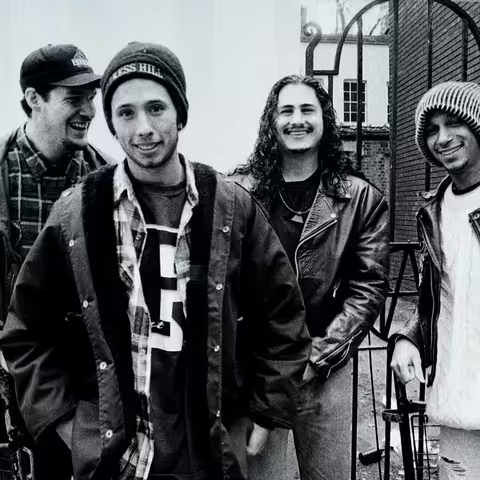
That is the Rage story in miniature. Four musicians from very different backgrounds put out three albums of original material and one record of covers, topped the Billboard 200 twice and sold more than 16 million records, all while arguing over almost everything. They broke up in 2000, reunited in 2007, got a 17-year-old song to Christmas number one in Britain, reunited again for a tour that a torn Achilles tendon cut short, and were inducted into the Rock and Roll Hall of Fame with only one of the four in the room.
Rage Against the Machine Band Facts
| Field | Detail |
|---|---|
| Origin | Los Angeles, California, USA |
| Formed | 1991 |
| Years active | 1991 to 2000, 2007 to 2011, 2019 to 2024 |
| Original lineup | Zack de la Rocha (vocals), Tom Morello (guitar), Tim Commerford (bass, backing vocals), Brad Wilk (drums) |
| Final lineup | The same four. The band never changed a member. |
| Notable past members | None beyond the founding four |
| Labels | Epic; Revelation (People of the Sun 10-inch, 1997) |
| Genres | Rap metal, rap rock, funk metal, alternative metal |
| Studio albums | 4 (three of original material, plus the covers album Renegades) |
| Key producers | Garth "GGGarth" Richardson, Brendan O'Brien, Rick Rubin |
| Records sold | More than 16 million worldwide as of 2010 |
| Hall of Fame | Rock and Roll Hall of Fame, inducted 2023; Kerrang! Hall of Fame, 2008 |
| Major awards | Two Grammys from seven nominations; NME Heroes of the Year, 2010 |
| Final show | 14 August 2022, Madison Square Garden, New York |
Formation: Lock Up, Inside Out and a Match Taped to a Cassette
Harlem was where Tom Morello was born, on 30 May 1964. He grew up in Libertyville, Illinois, and graduated from Harvard in 1986 with a degree in social studies.
Morello joined the rock band Lock Up in early 1988, replacing founding guitarist Mike Livingston. Lock Up made one album for Geffen, Something Bitchin' This Way Comes, released in 1989, and then fell apart. Their last drummer was Jon Knox, and in one version of what happened next he is the man who brought Rage together.
Zack de la Rocha came from a different world. Born in Long Beach on 12 January 1970, he was the son of Robert "Beto" de la Rocha, a muralist in the Chicano art collective Los Four. After his parents divorced when he was six, he moved with his mother to Irvine. He met Tim Commerford in elementary school, and in junior high the two of them played guitar in a band called Juvenile Expression. In 1987 de la Rocha joined the straight edge band Hard Stance, which became Inside Out, an Orange County hardcore band from the youth crew scene. Inside Out lasted from August 1988 to roughly the autumn of 1991 and released one EP, No Spiritual Surrender, on Revelation Records in 1990.
Inside Out had written material for a second record to be called Rage Against the Machine. It never happened. Guitarist Vic DiCara left to become a Hare Krishna monk, and the band split. By then their newest songs were leaning hard towards hip hop, Run-DMC in particular. One of those unreleased Inside Out songs, Undertone, carried the "wake up" refrain that would turn up again a few years later.
Two versions of how they met
Accounts differ. One says that after Lock Up broke up in 1991, Jon Knox encouraged Commerford and de la Rocha to jam with Morello, who was looking to start a new group. In another, de la Rocha started freestyling at local clubs after Inside Out folded, and at one of them Morello approached him, impressed by his lyrics, and talked him into forming a band. Both accounts agree on the rest. Morello brought in Brad Wilk, who was drumming for a band called Greta and had once auditioned unsuccessfully for Lock Up. De la Rocha brought in his old Juvenile Expression bandmate Commerford on bass.
They named the band after the Inside Out song de la Rocha had written, and before playing a single show they recorded a twelve-song demo. Morello later told Kevin EG Perry, in an interview first published in NME, that they wrote those songs "with complete surety", without expecting to get a club booking, let alone a record deal.
"At a rock club nobody wanted to hear anybody rap and at rap clubs they certainly didn't want to hear Zach. Then the band's politics as well: there was nothing like that ever on the radio."
Tom Morello, interview with Kevin EG Perry (first published in NME), 2012
That self-released cassette, with its stock market clippings and the match on the inlay card, came out in December 1991. By then Rage had already played live: their first public show was on 23 October 1991, on The Quad at California State University, Northridge. They opened with an instrumental version of a song that did not yet have words, Killing in the Name. Morello later said: "We were offered a record deal after our second show." Several labels were interested, and the band signed with Epic. Morello said Epic "agreed to everything we asked", adding that the band saw no ideological conflict as long as they kept creative control.
Killing in the Name and the Debut Album: 1992 to 1994
Killing in the Name started as a guitar lesson. Morello was teaching a student drop-D tuning, came up with the riff, and stopped the lesson to tape it. He told Rolling Stone's Brian Hiatt in 2020 who had taught him the tuning in the first place.
"I was teaching guitar lesson to an accomplished local scenester musician and was showing them how to play drop-D [tuning]. Maynard Keenan of Tool had taught me how to do drop-D."
Tom Morello, Rolling Stone, 2020
In the same interview he remembered that the band's A&R man, Michael Goldstone, wanted them to cut the stop-start section before de la Rocha's "and now you do what they told ya". Morello called that part "a bit of a lift from Zeppelin's 'Good times, Bad Times'", and the band kept it. The finished song has only eight lines of lyrics and 17 uses of the word "fuck". Its line "some of those that work forces are the same that burn crosses" ties the Los Angeles Police Department to the Ku Klux Klan, and critics have connected it to the police beating of Rodney King and the 1992 Los Angeles riots. The band left its lyrics out of the album booklet altogether.
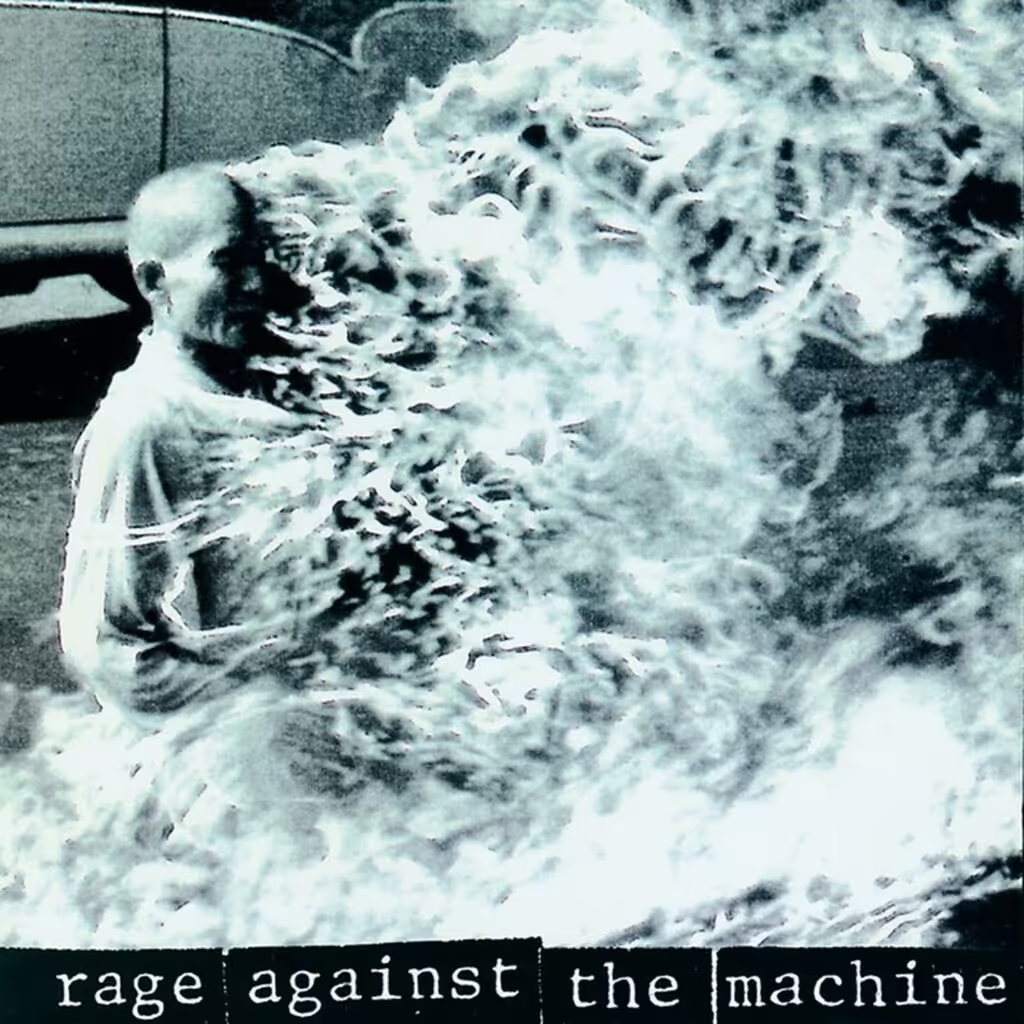
Epic sent Killing in the Name to US radio on 20 October 1992 as the first single, and the album Rage Against the Machine followed on 6 November 1992. It was recorded in April and May 1992 at Sound City in Van Nuys, Industrial Recording in North Hollywood and Scream in Studio City, and produced by the Canadian Garth Richardson, credited as GGGarth, with the band. Seven of its ten songs had first appeared on the demo, and the sleeve notes declared "no samples, keyboards or synthesizers used in the making of this record". The monk on the cover had burned himself to death in protest at the shooting of Buddhists by the regime of the US-backed prime minister Ngo Dinh Diem, and the "Thanks For Inspiration" list named the IRA hunger striker Bobby Sands and the Black Panther Party founder Huey P. Newton.
Sales were slow at first. The album got to number 45 on the Billboard 200 and number one on the Heatseekers chart. Robert Hilburn of the Los Angeles Times called it "a striking, politically conscious debut", and AllMusic's Eduardo Rivadavia later described it as "the first album to successfully merge the seemingly disparate sounds of rap and heavy metal". It reached number 17 in the UK and number 12 in Australia, and it eventually went triple platinum in both the US and the UK and five times platinum in Australia. In 2020 Rolling Stone ranked it number 221 on its list of the 500 greatest albums of all time.
Britain first
Britain caught on before America did. European MTV played the uncensored Killing in the Name video, shot by Morello's guitar student Peter Gideon, while American MTV banned it. On 21 February 1993 the Radio 1 DJ Bruno Brookes played the uncensored version on his Top 40 countdown by mistake, while he was busy recording an advertisement for the following week's countdown. The BBC received 138 complaints. Morello remembered that "'Killing In The Name' exploded in the UK shortly after it was released" and that "We were thrust straight onto the cover of the NME!"
The tour for the debut began in Chicago on 15 January 1993 and finished in Detroit on 31 December, with House of Pain and Cypress Hill among the support acts. Morello said the moment the band realised how big they had become came at Reading in 1993, where they were "somewhere middle of the bill": "Clearly every one of the 65,000 people knew every lyric and were just going ape shit."
"The success of the band outpaced the emotional maturity of all four of us. We were swept up in it. We were offered a record deal after our second show."
Tom Morello, interview with Kevin EG Perry (first published in NME), 2012
Lollapalooza, naked
In America, the turning point was Lollapalooza 1993. US sales of the debut rose from 75,000 before the tour to 400,000 by the end of the year. The defining show was Philadelphia on 18 July 1993, and they did not play a note. De la Rocha's voice was shot after a month on the road, and the band wanted to protest against Tipper Gore's Parents Music Resource Center, the group behind the Parental Advisory sticker. The four walked on stage naked with tape over their mouths and the letters P-M-R-C painted on their chests, let their instruments feed back, and stood there for more than 15 minutes. Morello remembered "an outpouring of excitement among the crowd for the first five minutes" and then, by the end, "outright hostility". Police escorted them off, and no indecent exposure charges were filed.
"Hopefully in some way, we made the point that controversial music is not something you can take for granted, you have to fight for it. Although people just remember us standing there naked."
Tom Morello, quoted by Ultimate Classic Rock
By April 1996 the debut had sold more than a million copies in the US and three million worldwide.
Evil Empire: Nearly Falling Apart at the Top, 1995 to 1998
Exhaustion came first. "The first record came out, and we went on the road for three years straight, living together on a bus," Wilk told the Los Angeles Times in 1996. Rage stopped touring in late 1994, and the break-up rumours started. According to an anonymous source who spoke to MTV News, they recorded 23 tracks with producer Brendan O'Brien in Atlanta from November 1994 and briefly split over violent arguments before getting back together to play the KROQ Weenie Roast in June 1995. "I felt like the band could have fallen apart then," Wilk admitted.
The second attempt happened at home in Los Angeles, in November and December 1995, again with O'Brien, but this time at Cole Rehearsal instead of a commercial studio. Morello explained the reasoning to MTV, asking why anyone would "spend $2,000 a day in some fancy recording studio trying to recreate the great vibe that we have right here". De la Rocha said that walking into some of those studios was "like you're walking into a dentist's office."
"We literally knocked a hole in the wall, rented the room across the hall and ran the wires over the hallway."
Tom Morello to MTV, quoted by Ultimate Classic Rock
Morello said the arguments had pushed the band further towards hip hop and described the result as a "middle ground between Public Enemy and the Clash". The title came from Ronald Reagan's name for the Soviet Union, which, according to de la Rocha, "the band feels could just as easily apply to the United States".
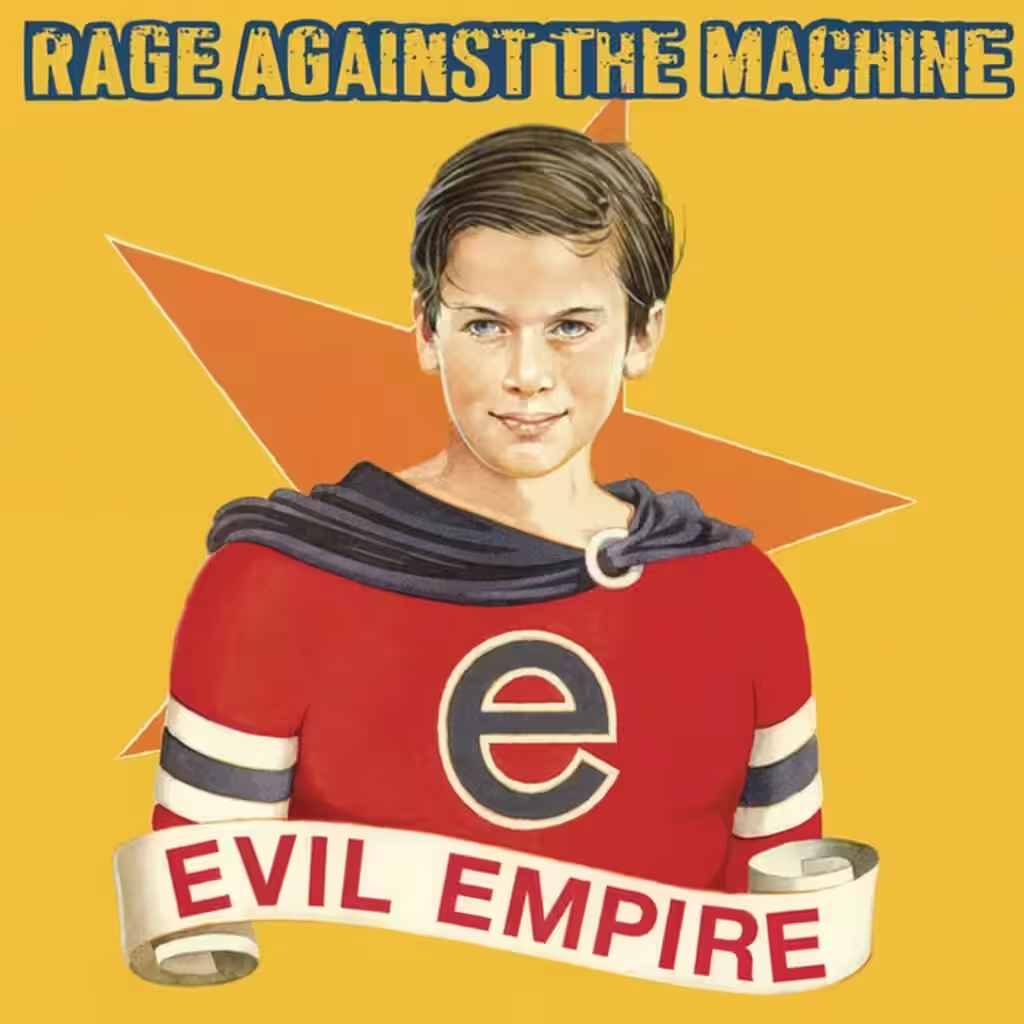
Evil Empire came out on 16 April 1996 and entered the Billboard 200 at number one with first-week sales of 249,000. It reached number two in Australia and number four in the UK, sold more than a million copies in under four months, and was certified triple platinum in the US on 24 May 2000. Rolling Stone called it a "declaration of war". The boy on the cover, a reworked Mel Ramos painting of the comic-book hero Crimebuster, was Ari Meisel at 11 years old, and he later told Kerrang! that the original painting had been a birthday present from Ramos.
Bulls on Parade, an attack on the US arms industry, was released as the lead single on 1 April 1996. It became the band's first US chart entry, reaching number 11 on the Alternative Songs chart. Its solo uses Morello's best-known trick, flicking the pickup selector switch while rubbing the strings to mimic a DJ scratching a record, aiming for what he called a "sort of 'Geto Boys' sound, menacing". The song made its international debut on Saturday Night Live on 13 April 1996, and that night was cut short. Republican presidential candidate Steve Forbes was hosting, the band hung upside-down American flags from their amplifiers, and their planned two songs became one.
The second single, People of the Sun, was about the Zapatista uprising, and de la Rocha wrote it after a trip to Chiapas. At the 1997 Grammys, Tire Me won Best Metal Performance. Morello admitted the success had caught him off guard.
"I never thought that we would sell a record. I thought the politics would be too alienating, too extreme."
Tom Morello, quoted by Ultimate Classic Rock
In 1997 Rage opened for U2 on the PopMart tour and gave their profits to causes including the Zapatista Front for National Liberation. Next came a US tour with Wu-Tang Clan. Police in several areas tried and failed to have the shows cancelled, citing, among other reasons, the band's "violent and anti-law enforcement philosophies". "The combination of a rap group and our politics terrified the authorities," Morello recalled. "They tried to file injunctions, but none of them were successful thanks to the First Amendment." Wu-Tang Clan were removed from the tour after failing to appear at a show at Riverport, and the Roots replaced them.
Then everyone drifted off. Morello worked with The Prodigy and Henry Rollins, while de la Rocha went to Chiapas to support the Zapatistas and then did a spoken-word tour of US college campuses. Apart from a cover of Bruce Springsteen's The Ghost of Tom Joad and No Shelter, recorded for the 1998 Godzilla soundtrack, there was no new Rage music.
The Battle of Los Angeles, Renegades and the Split: 1998 to 2000
The band reconvened with Brendan O'Brien in September 1998 and recorded between 1 September and 1 October at studios including Henson and Sunset Sound in Hollywood. This time they worked differently. According to Louder, de la Rocha felt undervalued as a songwriter and stepped back, leaving the music to his three bandmates while he concentrated on the lyrics.
The record was finished by late 1998 but did not come out for another year. In the meantime came Woodstock '99, where Rage set fire to an American flag on stage at the end of their Saturday night set during Killing in the Name, with de la Rocha changing a line to "some of those that work forces are the same that burn churches". In September 1999 they played their first UK headline show in more than three years at the London Astoria. Two days before that, a little over a hundred people saw them play a secret set at the tiny Zodiac club in Oxford, including new songs Sleep Now in the Fire and Guerrilla Radio.
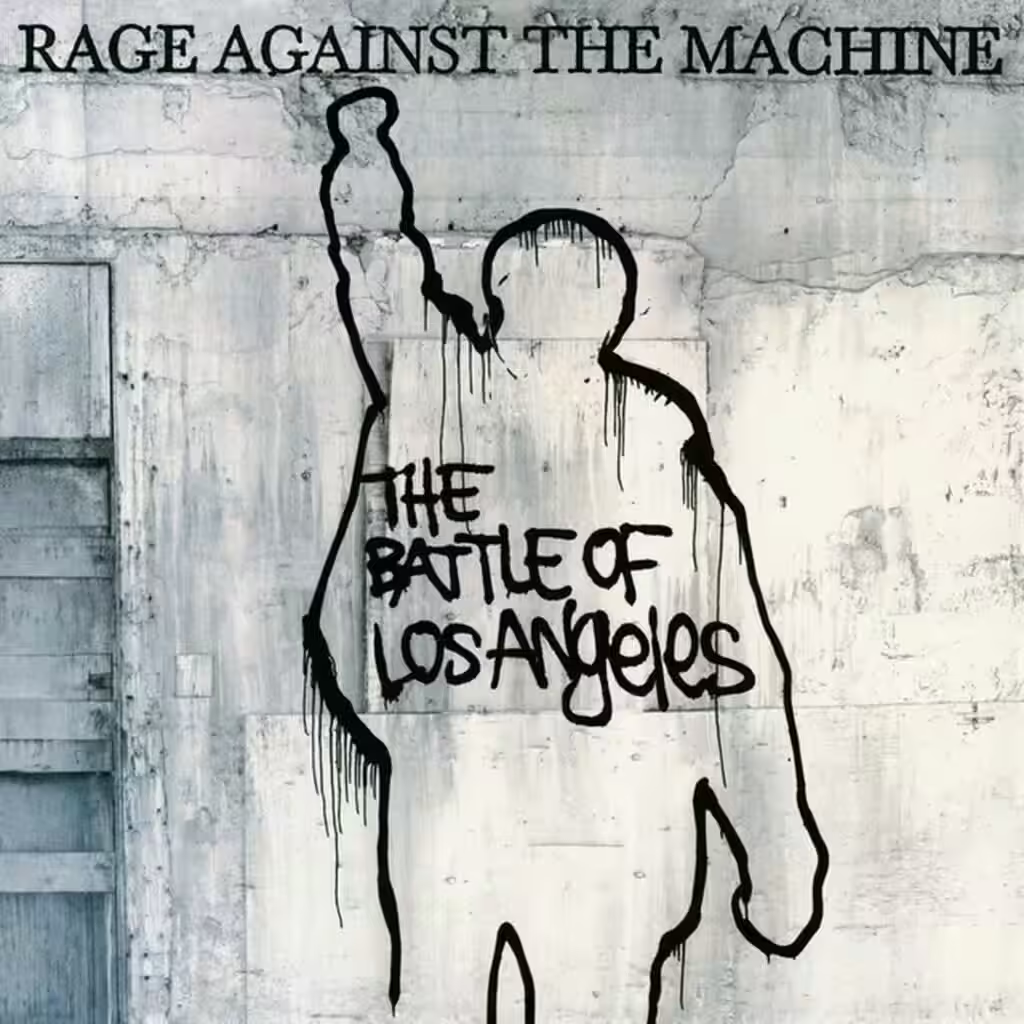
The Battle of Los Angeles was released on 2 November 1999 and went straight to number one on the Billboard 200, keeping Mariah Carey's Rainbow off the top. The first-week figure depends on the source: the album's Wikipedia page says around 420,000 copies, while the band's page says 450,000. Rolling Stone's review said it was "to rap metal what Public Enemy's It Takes a Nation of Millions... was to hip-hop". Guerrilla Radio became the band's only Billboard Hot 100 hit, peaking at number 69, and won the Grammy for Best Hard Rock Performance in 2001. The album was nominated for Best Rock Album and went double platinum in the US. When the band played Guerrilla Radio on the Late Show with David Letterman on 3 November 1999, de la Rocha wore a Mumia Abu-Jamal T-shirt and gave the camera the middle finger.
Wall Street and the VMAs
On 26 January 2000, Michael Moore directed the Sleep Now in the Fire video outside the New York Stock Exchange. He had permission to use the steps of Federal Hall National Memorial but no permit to film on the street. "Michael basically gave us one directorial instruction, 'No matter what happens, don't stop playing'," Morello recalled. Police led Moore away, the exchange closed its doors, and security escorted the band off the site. Moore claimed that for a few minutes Rage "was able to shut down American capitalism". Spin's Mark Shone said trading inside was unaffected and that Moore's only penalty was a ticket for filming without a permit. Look closely at the video and you will see a man holding a "Donald Trump for President" placard from Trump's first run, in 2000.
Summer 2000 went badly. A planned tour with the Beastie Boys was called off after Mike D injured his shoulder. In August, police shut down their free concert outside the Democratic National Convention in Los Angeles, firing rubber bullets and pepper spray after some of the crowd threw rocks. On 7 September, at the MTV Video Music Awards, they played Testify. When Limp Bizkit won Best Rock Video, Commerford climbed the set scaffolding, despite Morello and de la Rocha telling him not to. He and his bodyguard spent the night in jail. On 12 and 13 September the band played two shows at the Grand Olympic Auditorium in Los Angeles. Nobody knew it then, but they were the last Rage shows for almost seven years.
"I feel that it is now necessary to leave Rage because our decision-making process has completely failed. It is no longer meeting the aspirations of all four of us collectively as a band, and from my perspective, has undermined our artistic and political ideal."
Zack de la Rocha, statement, 18 October 2000
De la Rocha's statement, released on 18 October 2000, ended nine years in the band. One account ties it to a disagreement over the release of Renegades, after which the other three sought separate management and secured the album's immediate release. "I have no hard feelings, and we wish Zack well with his [solo] project," Morello told MTV News. Morello also described the band's inner life more bluntly: "We would even have fist fights over whether our T-shirts should be mauve or camouflaged!" Kerrang! readers voted the split the "shittiest thing" of 2000.
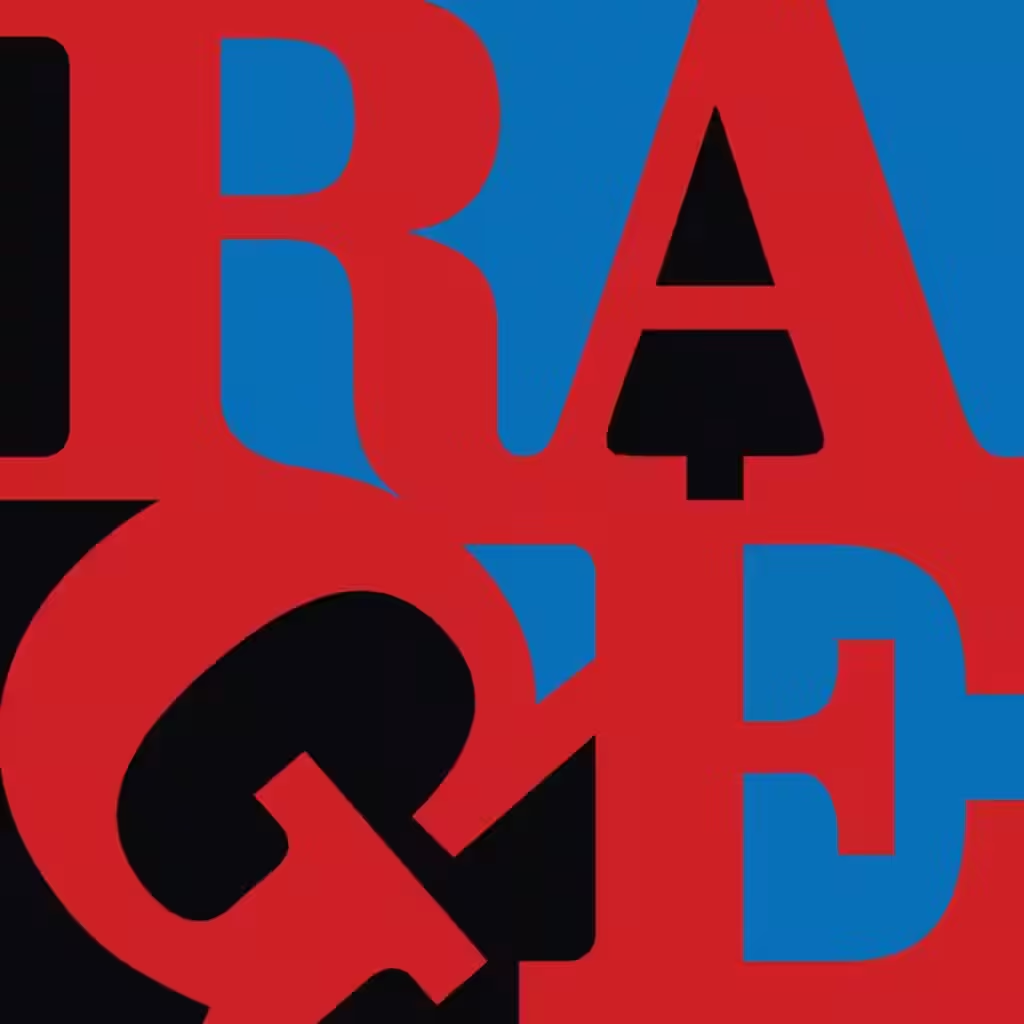
Renegades came out on 5 December 2000, almost two months after the band had split, so there was no tour. Produced by Rick Rubin, Brendan O'Brien and the band, it covered everyone from Bruce Springsteen, Bob Dylan and the Rolling Stones to Minor Threat, Afrika Bambaataa and Cypress Hill. It reached number 14 in the US and went platinum a little over a month after release. Mojo wrote: "This crisp, Rick Rubin-produced outing packs away a machine that was well-oiled to the last." The Battle of Mexico City video followed in 2001, and in 2003 Live at the Grand Olympic Auditorium collected those final two Los Angeles shows. It had been held back first by the split and then by the formation of Audioslave.
Studio Albums
| # | Album | Year | Label | Lineup note | Peak chart | Certification |
|---|---|---|---|---|---|---|
| 1 | Rage Against the Machine | 1992 | Epic | Founding four; produced by GGGarth and the band | US 45, UK 17, AUS 12 | RIAA 3x Platinum, BPI 3x Platinum, ARIA 5x Platinum |
| 2 | Evil Empire | 1996 | Epic | Founding four; produced by Brendan O'Brien | US 1, AUS 2, UK 4 | RIAA 3x Platinum, BPI Gold |
| 3 | The Battle of Los Angeles | 1999 | Epic | Founding four; produced by Brendan O'Brien | US 1, AUS 2, UK 23 | RIAA 2x Platinum, BPI Gold |
| 4 | Renegades | 2000 | Epic | Covers album, released after de la Rocha left; produced by Rick Rubin, Brendan O'Brien and the band | US 14, AUS 10, UK 71 | RIAA Platinum, BPI Gold |
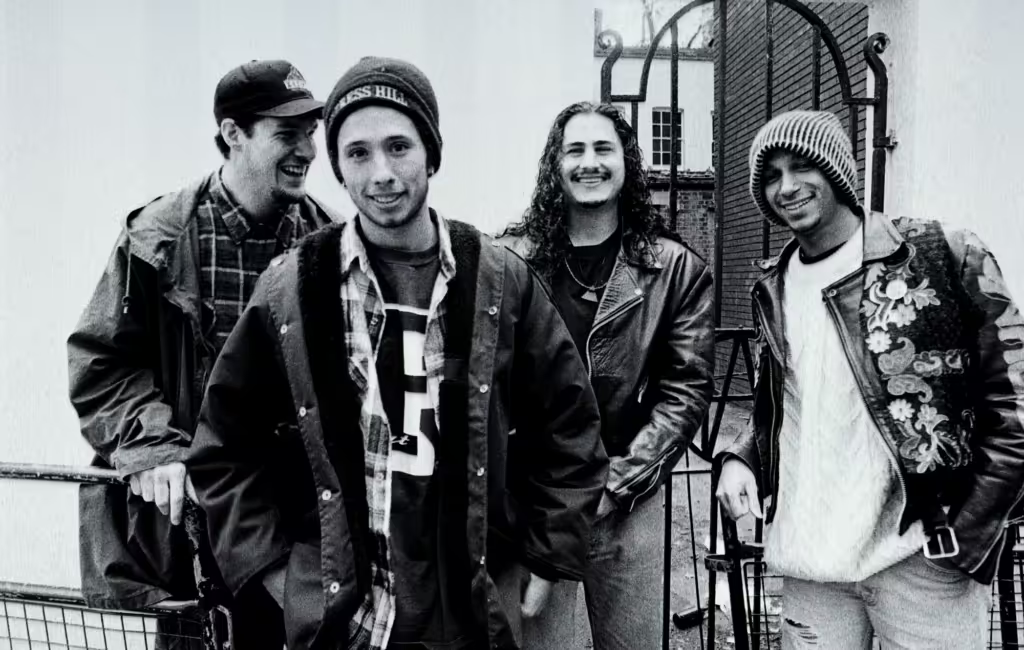
The Rage Against the Machine Lineup
Across 33 years and three break-ups, nobody was ever replaced. When the singer left in 2000, the other three started a new band instead.
| Member | Instrument | Years | Notes |
|---|---|---|---|
| Zack de la Rocha | Lead vocals | 1991 to 2000, 2007 to 2011, 2019 to 2024 | Formerly of Juvenile Expression, Hard Stance and Inside Out. Later One Day as a Lion with Jon Theodore. |
| Tom Morello | Guitar | 1991 to 2000, 2007 to 2011, 2019 to 2024 | Formerly of Lock Up. Later Audioslave, the Nightwatchman, Street Sweeper Social Club, Prophets of Rage. |
| Tim Commerford | Bass, backing vocals | 1991 to 2000, 2007 to 2011, 2019 to 2024 | De la Rocha's childhood friend and Juvenile Expression bandmate. Later Audioslave, Future User, Wakrat, Prophets of Rage. |
| Brad Wilk | Drums | 1991 to 2000, 2007 to 2011, 2019 to 2024 | Formerly of Greta. Later Audioslave and Prophets of Rage; drummed on Black Sabbath's 13. |
Audioslave, the Nightwatchman and the Wilderness Years: 2001 to 2006
Morello, Commerford and Wilk decided to stay together and look for a new singer. "There was talk for a while of us becoming Ozzy Osbourne's backing band, and even Macy Gray's," Morello said. Their friend Rick Rubin suggested they try Chris Cornell of Soundgarden, and the four of them formed Audioslave in Glendale, California, in 2001. In six years Audioslave released three albums, starting with a triple-platinum debut in November 2002, and sold more than eight million records. Out of Exile went to number one in 2005, and on 6 May that year they played a free show in Havana to around 50,000 people, becoming the first American rock band to play an open-air concert in Cuba. Most of their music had nothing to do with politics. Cornell left in February 2007.
The rest of the side projects from this period:
- Tom Morello began playing acoustic folk as the Nightwatchman in 2003, an outlet for the politics Audioslave left out, and released One Man Revolution in April 2007.
- Morello and the rapper Boots Riley formed Street Sweeper Social Club, whose debut album came out on 16 June 2009.
- Zack de la Rocha worked on a solo album with DJ Shadow and others, then abandoned it for sessions with Trent Reznor that produced around 20 tracks. The album was never released. What did surface was March of Death with DJ Shadow, released free online in 2003 in protest at the coming invasion of Iraq, and We Want It All with Reznor, on a 2004 soundtrack album.
- In late 2005 de la Rocha played with the son jarocho group Son de Madera, singing and playing the jarana.
Rage turned down large sums of money to reunite, and rumours of tension between de la Rocha and the others circulated. In fact Commerford and de la Rocha went surfing together, and Morello and de la Rocha met at a 2005 protest supporting the South Central Farm in Los Angeles.
The First Reunion: Coachella, Christmas Number One and L.A. Rising, 2007 to 2011
The Coachella booking was announced in early 2007, and Morello made the band's reason clear: "Is it a coincidence that in the seven years that Rage Against the Machine has been away that the country has slid into right-wing purgatory?" On 14 April 2007, Morello and de la Rocha played a short acoustic set at a Coalition of Immokalee Workers rally in Chicago. On 29 April the full band headlined the last day of Coachella in front of a Zapatista backdrop and drew the biggest crowds of the festival. During Wake Up, de la Rocha gave a speech calling numerous American presidents war criminals.
"If the same laws were applied to U.S. Presidents as were applied to the Nazis after World War II, every single one of them, every last rich white one of them from Truman on, would've been hung to death and shot."
Zack de la Rocha at Coachella, 2007, quoted by Rolling Stone
What was supposed to be a single show became seven more US dates in 2007, followed by the Big Day Out in Australia and New Zealand in January 2008 and a summer of European festivals that included Reading and Leeds. The politics came along too. During the Democratic National Convention in Denver in August 2008, Rage headlined a free anti-war festival and then led its 8,000-strong crowd on a six-mile march behind Iraq Veterans Against the War. At the Republican convention in St Paul a month later, police prevented a surprise set, so de la Rocha and Morello performed through a megaphone. As Rolling Stone later put it, though, "not a single new song ever came out" from Rage. Morello insisted the old songs still held up: "none of it feels dated to me".
Rage against the X Factor
In December 2009, Jon and Tracy Morter started a Facebook campaign to stop The X Factor winner taking the UK Christmas number one, which the show's winners had done for four years running since 2005. Their choice of song was Killing in the Name. On 17 December the band played the song live on BBC Radio 5 Live, and four uncensored "fuck you"s were broadcast before it was pulled. Killing in the Name beat Joe McElderry's The Climb by more than 50,000 sales. It was the first download-only Christmas number one in the UK, set a record for the biggest one-week download total in British chart history, and gave the band their first UK number one. Martin Talbot of the Official Charts Company pointed out that "in almost any other year, 450,000 copies would have given him the Christmas Number One." Guinness recorded first-week downloads of 502,672.
De la Rocha had promised a free UK show, and on 6 June 2010 Rage played Finsbury Park to 40,000 people. On stage the Morters received a cheque for £162,713.03 from donations and royalties. In 2021, an Official Charts Company poll named Killing in the Name the UK's favourite Christmas number one of all time.
In July 2010 Rage played their first hometown show in ten years, a Los Angeles benefit against Arizona's SB1070 immigration law that raised $300,000. Their only show of 2011 was at L.A. Rising, a festival they organised themselves, on 30 July. In 2014 Wilk said that, as far as he knew, it had been their final show. Morello told Rolling Stone: "If it were up to me, I would've made two records a year."
Prophets of Rage and the Final Reunion: 2016 to 2024
In 2016 Morello, Commerford and Wilk formed Prophets of Rage with Chuck D and DJ Lord of Public Enemy and B-Real of Cypress Hill, taking the name from a 1988 Public Enemy song. They toured as the Make America Rage Again tour and released a self-titled album on 15 September 2017. Morello was clear about what it meant: "where you're going to hear Rage Against the Machine is in Prophets of Rage." Audioslave also played one last show, at the Prophets' Anti-Inaugural Ball on 20 January 2017. Chris Cornell died later that year.
On 1 November 2019 news broke that Rage were reuniting, and Prophets of Rage ended. B-Real and Chuck D said they had only been "keeping the seat warm". The Public Service Announcement tour, with Run the Jewels as support, was announced on 10 February 2020. COVID-19 pushed the tour back to 2021 and then to 2022. In June 2020, during the protests after George Floyd's murder, the debut album re-entered the Billboard 200 at number 174.
The tour finally began on 9 July 2022 at Alpine Valley in East Troy, Wisconsin, the band's first show in 11 years. Shortly before, the band announced $475,000 in donations to reproductive rights groups in Wisconsin and Illinois after the US Supreme Court overturned Roe v. Wade. Two nights later in Chicago, during the fourth song, de la Rocha injured his leg. He finished the show sitting on a speaker and performed the rest of the North American dates seated. Commerford later revealed that he had been diagnosed with prostate cancer earlier that year and had surgery before the tour. Morello had ruptured his own Achilles before it started and rehearsed on crutches. The European leg was cancelled on 11 August, the tour ended at Madison Square Garden on 14 August, and on 4 October de la Rocha cancelled the remaining dates.
"Then one and a half shows into it and my tendon tears. Felt like a sick joke the universe played on me."
Zack de la Rocha, statement, October 2022, quoted by Ultimate Classic Rock
He said only 8% of the tendon had been left intact. On 3 January 2024 Wilk posted on Instagram: "I don't want to string people or myself along any further," followed by "RATM (Tim, Zack, Tom and I) will not be touring or playing live again." It was the band's third disbandment. Looking back in 2025, Morello was philosophical about it: "We finished with five sold-out nights at Madison Square Garden. So if there's never another show, then that's quite a way to go out."
Politics, Protest and Controversy
Almost every Rage song is about the band's left-wing, anti-authoritarian politics, and their run-ins with authority are scattered through this story, from the naked protest in Philadelphia to the shuttered Stock Exchange. After 9/11, Clear Channel's 2001 memo of "lyrically questionable" songs was unique in listing every Rage Against the Machine song.
The obvious criticism was hypocrisy: millionaires selling revolution through Epic, a subsidiary of Sony Music. Infectious Grooves recorded a song, Do What I Tell Ya!, that mocked the lyrics of Killing in the Name. Morello's answer was practical: "Would Noam Chomsky object to his works being sold at Barnes & Noble? No, because that's where people buy their books." Others have tried to borrow the songs. In 2012 Morello told UKIP to stop playing Killing in the Name at its rallies. When a video of pro-Trump protesters dancing to the same song went viral after the 2020 US elections, the band tweeted: "They just don't GET IT do they?"
Riffology Podcast Episodes on Rage Against the Machine
The Riffology podcast has a full episode on Rage's debut, and another on the first album the three instrumentalists made with Chris Cornell. Follow the album to listen.
| Album | Year | On the Riffology podcast |
|---|---|---|
| Rage Against the Machine | 1992 | Rage's 1992 debut album. |
| Audioslave | 2002 | The first Audioslave album: Morello, Commerford and Wilk with Chris Cornell. |
Legacy and Influence
Rage's mix of hip hop and metal was copied widely, and the band knew it. "Rage predate the explosion of nu-metal," Annie Zaleski wrote in Spin, "but there's no denying that the L.A. band's sound was co-opted by plenty of nu-metalheads." Morello has said much the same himself.
"For better or worse, Rage Against the Machine seemed to have planted the seeds for the genre that sprung up known as nu metal. My apologies."
Tom Morello to Loudwire, 2021, quoted by Louder
De la Rocha's comment to Kerrang! was less polite: "For every Nirvana there were 10 or 15 Bushes or whoever, and with Rage there's been some not-so-great bands." VH1 ranked Rage 33rd among the greatest hard rock artists, Rolling Stone listed Morello 18th on its list of the greatest guitarists, and Killing in the Name came second in Triple J's Hottest 100 of All Time in 2009. In January 2025 it became the band's first song to pass one billion streams on Spotify.
Morello puts it simply: "We planted a flag on the political rock Mount Everest."
The Rock and Roll Hall of Fame first nominated Rage in 2017, their first year of eligibility, and nominated them again several times before inducting them in 2023. Sources disagree on the exact number of earlier nominations: Loudwire says three, while Wikipedia lists more. Back in 2015 Commerford had joked to Rolling Stone that if they got in, "it'll be interesting to see who shows up". At Barclays Center on 3 November 2023, Ice-T, who remembered Rage opening for him early on, inducted them with the words "Right out of the gate, RAGE AGAINST THE MACHINE was not a game". Morello was the only one of the four there. "Like most bands, we have differing perspectives on a lot of things, including about being inducted into the Rock Hall," he said, before telling the audience: "Rage is not here, but you are."
"The whole fucking aim is to change the world. Or, at a bare minimum, to stir up a shitload of trouble."
Tom Morello, Rock and Roll Hall of Fame induction speech, 2023, quoted by Loudwire
Things You Might Not Know About Rage Against the Machine
| Fact | Detail |
|---|---|
| A Nobel on keys | Tom Morello's Harvard band Bored of Education won the 1986 Ivy League Battle of the Bands with Carolyn Bertozzi, who won the 2022 Nobel Prize in Chemistry, on keyboards. |
| Matchmaker for Tool | Morello introduced his high school classmate Adam Jones and Maynard James Keenan to Danny Carey, and they went on to form Tool. |
| Diplomatic family | Morello's father was Kenya's first ambassador to the United Nations, and his great-uncle Jomo Kenyatta was Kenya's first elected president. |
| Vedder connection | Before Rage, Brad Wilk played in a band called Indian Style with Eddie Vedder. |
| The boy on the cover | The boy on the Evil Empire cover was 11-year-old Ari Meisel, who says the original Mel Ramos painting was a birthday present from the artist. |
| Radio interference | Sleep Now in the Fire ends with a snippet of a Korean pop radio station that one of Morello's pedals picked up. |
That is the whole of Rage Against the Machine, from a match taped to a demo cassette to a Hall of Fame speech given by one man on behalf of four. If you want more on the record that started it all, the Riffology podcast has a full episode on the debut, and you can find it on all the major podcast platforms. We'd love to hear which Rage record you would save from the fire.
Comments