Introduction
In 1987, thrash metal was shifting. The underground was bubbling with energy, and bands were pushing boundaries. Yet few albums captured that era’s chaos and ambition quite like Among the Living by Anthrax. This record didn’t just put Anthrax on the map; it set the standard for a generation of heavy music fans. With its razor-sharp riffs, biting lyrics, and relentless pace, it’s still spoken of in awed tones nearly four decades later.
In this article, I’ll take you deep into the story of Among the Living. We’ll explore how it was made, the people behind it, its artwork, and its cultural impact. You’ll see how the songs were written, what the lyrics mean, and how the band promoted the album worldwide. We’ll look at its commercial success, critical reception, and the legacy it left for future generations. You’ll also find detailed tables, verified facts, and direct quotes from those who lived it. By the end, you’ll know why this album remains so important in music history.
| Attribute | Details |
|---|---|
| Album title | Among the Living |
| Release date | 16 March 1987 (US), 22 March 1987 (worldwide) |
| Genre | Thrash metal |
| Total runtime | 50:23 |
| Number of tracks | 9 |
| Record label | Megaforce (US), Island Records (worldwide) |
| Recording studio | Quadradial Studios (Miami, FL), Compass Point Studios (Nassau, Bahamas) |
| Producer(s) | Eddie Kramer, Anthrax |
Among the Living stands as a landmark in heavy music. It broke Anthrax into the mainstream, peaking at number 62 on the US Billboard 200 and earning gold certification in the US and silver in the UK. Songs like “Caught in a Mosh,” “I Am the Law,” and “Indians” became anthems for fans everywhere. As Scott Ian once put it, “This is the album that gave us our career.” Drummer Charlie Benante later said, “We wanted to capture the energy we had in rehearsal and put it on tape. That’s what Among the Living is—pure, unfiltered Anthrax.”
Critics and peers alike have praised the album’s influence. Don Kaye of Kerrang! wrote in 1988 that it placed Anthrax among the “Big Four” of thrash, alongside Metallica, Megadeth, and Slayer. The album’s enduring significance is clear: it’s featured in 1001 Albums You Must Hear Before You Die, ranked 20th in Rolling Stone’s “100 Greatest Metal Albums of All Time,” and continues to inspire musicians today.
The Genesis of “Among the Living”
Before Among the Living, Anthrax were already gaining traction in the metal underground. Their previous album, Spreading the Disease, showed a leap in songwriting and introduced Joey Belladonna’s soaring vocals. Touring was relentless—they opened for Black Sabbath, W.A.S.P., and even joined Metallica in Europe as they promoted Master of Puppets. These experiences shaped their sound and confidence. In 1986, tragedy struck when Metallica’s Cliff Burton died in a bus accident. Anthrax dedicated Among the Living to his memory, and Scott Ian has said the anger and sadness from that loss coloured the new songs.
The creative force behind the album was a tight unit. Scott Ian (rhythm guitar), Charlie Benante (drums), Frank Bello (bass), Dan Spitz (lead guitar), and Joey Belladonna (vocals) each brought unique strengths. Benante and Ian led the songwriting, with Belladonna adding melodic ideas and Spitz delivering searing solos. The group’s love for comic books, horror films, and social issues gave the lyrics a distinctive edge. They wrote about everything from Judge Dredd (“I Am the Law”) to Native American history (“Indians”) and the dangers of nuclear war (“One World”).
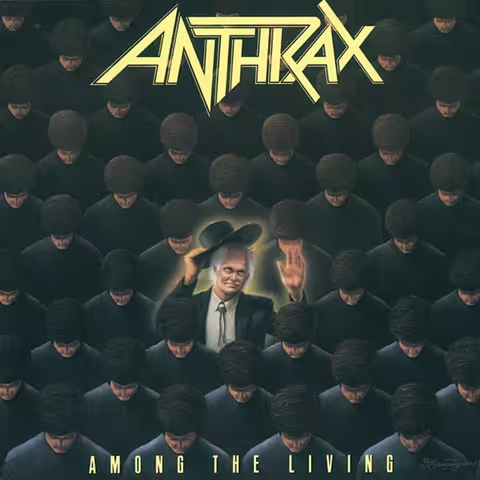
The album’s title was inspired by Stephen King’s novel The Stand. The title track and the artwork—painted by Don Brautigam, who also created Metallica’s Master of Puppets cover—show a sinister figure among a faceless crowd. Charlie Benante came up with the concept, and the figure has often been mistaken for King’s villain Randall Flagg. The band wanted the cover to reflect the album’s themes: evil lurking within society, and the fight for justice and identity.
Below is a table listing the band members and their roles during the making of the album:
| Member | Instrument/Role |
|---|---|
| Joey Belladonna | Lead vocals |
| Dan Spitz | Lead guitar, backing vocals, acoustic guitar (“A.D.I.”) |
| Scott Ian | Rhythm guitar, backing vocals |
| Frank Bello | Bass, backing vocals |
| Charlie Benante | Drums |
The recording was financed by Megaforce and Island Records, with a budget typical for a rising metal band—tight, but enough to bring in a big-name producer. There were financial pressures, especially as the band insisted on a lengthy tour to support the record. Yet the investment paid off, as the album’s success propelled Anthrax to a new level. The collaboration with Eddie Kramer, famed for his work with Jimi Hendrix and Led Zeppelin, was key. Kramer’s reputation and the band’s determination created a potent mix of experience and raw energy.
Recording Process
The making of Among the Living began in October 1986 at Quadradial Studios in Miami, Florida. The sessions lasted about six weeks, with final mixing at Compass Point Studios in Nassau, Bahamas. Eddie Kramer’s presence was felt from the start. Known for capturing live energy, Kramer worked closely with the band to keep the sound aggressive and unpolished. He was joined by engineers Chris Rutherford, Francis McSweeney, and Chip Schane, with George Marino mastering at Sterling Sound in New York.
Kramer’s initial mixes were heavy on reverb, similar to Def Leppard’s Pyromania. The band pushed back, demanding a dry, punchy sound. Kramer later recalled, “It was a challenge, but the band knew what they wanted, and that’s what matters.” The sessions were intense, with Anthrax recording multiple takes to get the tight, machine-gun rhythms just right. There were technical challenges too—down-tuned guitars sometimes blurred with the bass and drums, so Kramer used careful mic placement and EQ to separate the sounds.
The studio setup was typical for the era, but with some unique touches. Based on available sources and typical gear from Quadradial and Compass Point at the time, here’s a likely list of hardware and techniques used:
| Equipment/Technique | Details/Assumptions |
|---|---|
| Mixing desk | Likely SSL 4000 series or Neve console (common at both studios) |
| Microphones | Shure SM57s on guitars, Neumann U87s for vocals, AKG D112 on kick drum |
| Compressors | Urei 1176, LA-2A, dbx 160 (industry standards) |
| Guitars | ESP and Jackson guitars, with Scott Ian using a Marshall JCM800 and TC Electronic Booster; Dan Spitz possibly using Mesa Mark II+/III or Ian’s Marshall (per interviews and forum posts) |
| Cabinets | Marshall 4×12 cabs with Celestion 80-watt speakers, camo grill cloths |
| Recording method | Live takes, minimal overdubs, multi-tracked guitars (four amps per side, per Dan Spitz) |
| Other | Some use of enhancer blocks and Marshall IRs for tone (as discussed by Dan Spitz in gear forums) |
The studio environment was focused but never clinical. The band were determined to avoid over-polishing, and that rawness is still evident in the finished product. Kramer, who had never produced a thrash metal band before, admitted he was “blown away by the energy and the message.” In the end, the band and producer found common ground, delivering a mix that felt immediate and urgent.
Eddie Kramer’s production credits stretch across rock history. Here’s a table of albums he produced, excluding Among the Living:
| Producer | Artist | Album | Year |
|---|---|---|---|
| Eddie Kramer | Jimi Hendrix | Are You Experienced | 1967 |
| Eddie Kramer | Led Zeppelin | Led Zeppelin II (engineer) | 1969 |
| Eddie Kramer | Kiss | Alive! | 1975 |
| Eddie Kramer | Kiss | Rock and Roll Over | 1976 |
| Eddie Kramer | Peter Frampton | Frampton Comes Alive! (engineer) | 1976 |
| Eddie Kramer | Ace Frehley | Ace Frehley | 1978 |
Commercial Performance and Reception
When Among the Living hit the shelves, it quickly became Anthrax’s breakthrough. The album peaked at number 62 on the US Billboard 200 and climbed to number 18 in the UK. It also charted in Finland (8), Sweden (43), Germany (46), and the Netherlands (46). By July 1990, it was certified gold in the US for sales over 500,000, and silver in the UK for 60,000 units. In terms of sales, it’s one of Anthrax’s most successful records, helping the band move from clubs to arenas.
Below is a table of Anthrax studio albums, showing where Among the Living sits in their discography:
| Album Title | Year | Producer |
|---|---|---|
| Fistful of Metal | 1984 | Carl Canedy |
| Spreading the Disease | 1985 | Anthrax, Carl Canedy |
| Among the Living | 1987 | Eddie Kramer, Anthrax |
| State of Euphoria | 1988 | Mark Dodson, Anthrax |
| Persistence of Time | 1990 | Mark Dodson, Anthrax |
| Sound of White Noise | 1993 | Dave Jerden, Anthrax |
| Stomp 442 | 1995 | Anthrax |
| Volume 8: The Threat Is Real | 1998 | Anthrax |
| We’ve Come for You All | 2003 | Anthrax |
| Worship Music | 2011 | Anthrax, Rob Caggiano, Jay Ruston |
| For All Kings | 2016 | Jay Ruston, Anthrax |
Among the Living received a host of awards and recognitions. It was certified gold by the RIAA in 1990 and silver by the BPI in the UK. It was inducted into the Decibel Hall of Fame in July 2005 and featured in Revolver’s “14 Thrash Albums You Need to Own.” Its track “Caught in a Mosh” ranked 29th in VH1’s “40 Greatest Metal Songs.”
In 1987, other heavy albums making waves included:
- Appetite for Destruction by Guns N’ Roses
- Hysteria by Def Leppard
- Girls, Girls, Girls by Mötley Crüe
- Keeper of the Seven Keys: Part I by Helloween
- Permanent Vacation by Aerosmith
- Document by R.E.M.
- Electric by The Cult
- Scream Bloody Gore by Death
- Pleasures of the Flesh by Exodus
- Whitesnake by Whitesnake
Among the Living won lasting recognition, featuring in 1001 Albums You Must Hear Before You Die, ranking 20th in Rolling Stone’s metal albums list, and holding a spot in Martin Popoff’s The Top 500 Heavy Metal Albums of All Time. Kerrang! named it sixth in their “25 Greatest Thrash Metal Albums Ever.”
1987 was a busy year for heavy music. MTV’s Headbangers Ball debuted, giving metal bands a bigger platform. Bon Jovi headlined Monsters of Rock, joined by Dio, Metallica, Anthrax, W.A.S.P., and Cinderella. Slayer, Death Angel, and Testament all released defining albums. It was a year of both commercial breakthrough and creative innovation across the genre.
Track Analysis
The album spawned two major singles: “I Am the Law” (released February 1987) and “Indians” (released June 1987). Both tracks were written by the core band members, with “I Am the Law” co-credited to former bassist Danny Lilker. “Caught in a Mosh” became a fan favourite and a live staple, though it was not released as a single. The singles performed well, with “Indians” getting regular play on MTV and both songs becoming essential parts of the Anthrax live set.
Below is a table of all songs on the album, with writing credits and singles marked:
| Track Name | Length (seconds) | Writing Credit |
|---|---|---|
| Among The Living | 41 | Anthrax |
| Caught In A Mosh* | 36 | Anthrax |
| I Am The Law* | 35 | Anthrax, Danny Lilker |
| Efilnikufesin | 37 | Anthrax |
| A Skeleton In The Closet | 34 | Anthrax |
| Indians* | 49 | Anthrax |
| One World | 31 | Anthrax |
| Medley: A.D.I. / Horror Of It All | 29 | Anthrax |
| Imitation Of Life | 28 | Anthrax, Danny Lilker |
Note: Tracks marked with * were singles. “Indians” and “I Am the Law” were released as singles, with “Indians” achieving regular MTV airplay and “I Am the Law” issued in both 7-inch and 12-inch formats. “Caught in a Mosh” was not a single but is often treated as one due to its popularity.
Song Meaning and Lyrics
Every track on Among the Living has a story. The singles—“Indians,” “I Am the Law,” and “Caught in a Mosh”—each explore different themes and inspirations. “Indians” tackles the historical mistreatment of Native Americans. Joey Belladonna, himself part Native American, delivers lines like “We all see black and white / When it comes to someone else’s fight” and “Respect is something that you earn.” The song’s famous “WAAAAARRRRDANCE!” section is a call to action and a highlight of their live shows (Reddit discussion).
“I Am the Law” is based on the comic book character Judge Dredd. The lyrics tell of a futuristic enforcer, cold and relentless: “Fifteen years in the academy / He was like no cadet they’d ever seen.” The chorus, “I am the law, and you won’t fuck around no more,” captures the character’s uncompromising nature (Genius lyrics).
“Caught in a Mosh” was inspired by a real incident—Scott Ian saw a roadie get pulled into a mosh pit and the phrase stuck. The lyrics are about frustration and communication breakdowns: “Why don’t you listen to me when I try to talk to you?” The phrase “caught in a mosh” became part of metal vocabulary (Genius lyrics).
Other songs explore pop culture and real-world issues. “Efilnikufesin (N.F.L.)” is a backwards spelling of “nice fuckin’ life,” a protest against drug abuse inspired by John Belushi’s death. “A Skeleton in the Closet” and “Among the Living” are both inspired by Stephen King’s works (Apt Pupil and The Stand respectively). “One World” looks at the risk of nuclear war, and “Imitation of Life” takes aim at false personas in the music industry.
Touring and Promotion of Among the Living
Promotion for Among the Living was extensive. The band shot music videos, especially for “Indians,” which saw regular MTV play. The album’s singles were issued in multiple formats, with bonus tracks like “Bud E. Luvbomb and Satan’s Lounge Band” and early versions of “I’m the Man.” Anthrax’s label invested in a proper push, recognising the band’s growing appeal.
The Among the Living tour began in May 1987 and ran through December, covering North America, Europe, and Japan. According to tour archives and setlist data, Anthrax played at least 117 shows that year, including major festivals like Monsters of Rock at Castle Donington, where they performed for 80,000 people. In Europe, they sold out venues of up to 7,000 seats. The US tour saw them headline mid-sized venues, before supporting Kiss on the Crazy Nights World Tour in early 1988.
On tour, Anthrax shared the stage with bands such as Metal Church, Celtic Frost, and Kiss. The Monsters of Rock festival featured Bon Jovi, Dio, Metallica, W.A.S.P., and Cinderella. These tours were vital in building Anthrax’s reputation and allowed them to connect directly with fans. Their high-energy shows, especially the infamous “WAR DANCE!” moment during “Indians,” became legendary.
Influences and Legacy
Among the Living was shaped by a mix of influences. The band grew up on AC/DC, Iron Maiden, Judas Priest, and Motörhead. They blended classic metal with hardcore punk energy, taking cues from their own Stormtroopers of Death side project. The album’s crossover appeal helped shape the thrash genre, while its humour and pop culture references set Anthrax apart from their peers.
Here’s a table of influences and those who followed:
| Influences on “Among the Living” | Artists Influenced by “Among the Living” |
|---|---|
| Iron Maiden | Pantera |
| Judas Priest | Sepultura |
| Motörhead | Slipknot |
| AC/DC | Limp Bizkit |
| Hardcore punk (e.g. D.R.I., Bad Brains) | 311 |
| Stormtroopers of Death | Papa Roach |
| Comics and horror (Stephen King, Judge Dredd) | Avenged Sevenfold |
Released in 1987, the album arrived during a year of global change. Margaret Thatcher won a third term as UK Prime Minister. Black Monday crashed stock markets. The Simpsons debuted as TV shorts. Dirty Dancing and The Lost Boys hit cinemas. In music, U2 released The Joshua Tree, Guns N’ Roses broke out with Appetite for Destruction, and MTV’s Headbangers Ball gave metal a bigger stage. Thrash was growing, and Among the Living was at its heart.
Five Things About Among the Living
Even seasoned fans might not know these verified facts about the album:
| Fact | Details |
|---|---|
| Dedicated to Cliff Burton | The album is dedicated to Metallica’s bassist, who died during their joint European tour in 1986. |
| Cover art by Don Brautigam | Brautigam also painted Metallica’s Master of Puppets and Anthrax’s next album, State of Euphoria. |
| “Imitation of Life” origin | It’s a reworked version of the S.O.D. song “Aren’t You Hungry?” co-written by Danny Lilker. |
| “I’m the Man” debut | The B-side “I’m the Man” was one of the first rap-metal songs, released as an EP later in 1987. |
| Live staple | Since 1987, most songs from the album have been played live on nearly every Anthrax tour. |
Media and Television Usage
Several tracks from Among the Living have appeared in popular video games and media. Here’s a summary:
| Song Title | Media | Year |
|---|---|---|
| Caught in a Mosh | Rock Band 3, Guitar Hero Smash Hits, Guitar Hero Encore: Rocks the 80s | 2007–2010 |
| Indians | Guitar Hero: Warriors of Rock, Rock Band 3 | 2010 |
| Among the Living | Clerks II (film teaser), Rock Band 3 (DLC) | 2006–2010 |
Critical Reviews and Retrospectives
Critical reception for Among the Living has been overwhelmingly positive. Contemporary and modern critics have praised its energy, musicianship, and social commentary. Classic Rock magazine rated it 8/10, with Rolling Stone highlighting its technical skill and accessibility. BBC Music called it “a masterclass in balancing speed and melody.” The album’s place in metal history is secure, with frequent inclusion in best-of lists and retrospective articles. As Scott Ian said, “It’s the album that gave us our career.”
After Among the Living
Following the success of Among the Living, Anthrax released State of Euphoria in 1988, then Persistence of Time in 1990. The band’s sound matured, and they continued to experiment, including their famous collaboration with Public Enemy on “Bring the Noise.” The 1990s brought lineup changes, with Joey Belladonna leaving and John Bush joining as vocalist. Anthrax weathered industry shifts, label changes, and personal struggles but remained a force in metal. In the 2000s, the “classic” lineup reunited for tours, and in 2011, Belladonna returned for Worship Music, a critically acclaimed comeback. As of April 2025, Anthrax remain active, touring and working on new material, with recent shows in the UK, Europe, and the US. Dan Lilker has even rejoined for select tour dates.
Remasters and Reissues
No official information is available regarding remasters or reissues of Among the Living beyond the 2009 deluxe edition, which included a bonus concert DVD, alternate takes, and B-sides. The deluxe edition remains the definitive reissue, offering remastered audio and extensive bonus content.
Conclusion
Among the Living remains as vital now as it was in 1987. Its blend of aggression, intelligence, and humour set a new standard for thrash metal. The album’s songs are still live staples, and its themes of justice, respect, and resistance continue to resonate. Anthrax’s willingness to experiment, coupled with their tight musicianship, ensured their place among the “Big Four” of thrash. Today, the band is as busy as ever, with recent tours, festival appearances, and ongoing studio work pointing to a future as bold as their past.
Further Reading
For more on Anthrax and related topics, check out these articles and resources:
Let us know in the comments what your thoughts are on Among the Living by Anthrax. Did we miss anything? Share your experiences and join the conversation!
Comments