In 1992 a federal lawsuit landed in California claiming that a one-chord boogie cut in Memphis by three Texans in matching denim was, in fact, a thinly disguised lift of a 1948 John Lee Hooker single, and that the publishers were owed two decades of royalties on every classic-rock spin of "La Grange". The judge dismissed the case in 1995 by ruling that the song the suit relied on, "Boogie Chillen", had already fallen into the public domain. By then the song under attack was the most-played track from the album that had made ZZ Top a household name, and the band had spent twenty years insisting, with their usual Texas understatement, that they had never claimed to have invented the riff in the first place.
That album was Tres Hombres, released on 26 July 1973 by London Records, the record that turned a struggling Houston trio with two underperforming LPs behind them into a Billboard top-ten act with an 81-week chart run and a permanent slot on American FM radio. It was their first session at Ardent Studios in Memphis, their first collaboration with engineer Terry Manning, and the first to bear the gatefold photograph of a Tex-Mex feast from Leo's Mexican Restaurant that has since become as recognisable as any cover the band ever shot. Everything that ZZ Top would become over the next half-century, beards, boogie, MTV stardom, the rattlesnakes on stage, the Cadillacs in music videos, traces back to the ten songs and 33 minutes pressed into the grooves of this record.
Album Facts
| Field | Detail |
|---|---|
| Artist | ZZ Top |
| Album | Tres Hombres |
| Release Date | 26 July 1973 |
| Label | London Records |
| Producer | Bill Ham |
| Studios | Robin Hood Studio, Tyler, Texas; Ardent Studios, Memphis, Tennessee |
| Engineers | Robin Brians (Robin Hood); Terry Manning (Ardent, mixing and editing) |
| Genre | Blues rock, Southern rock, boogie rock, Texas blues |
| Track Count | 10 |
| Total Runtime | 33:26 |
| Billboard 200 Peak | No. 8 (1974) |
| UK Albums Chart Peak | Did not chart on first release |
| Other Notable Chart Peaks | Canada (RPM) No. 13; Australia (Kent Music Report) No. 36 |
| Weeks on Billboard 200 | Around 81 |
| Certifications | US RIAA Gold; Canada (Music Canada) Gold |
| Estimated Sales | 500,000-plus in the US alone (RIAA Gold shipments) |
| Key Singles | "La Grange" (January 1974); "Beer Drinkers & Hell Raisers" (UK only, 1974) |
Cultural Context: July 1973
The summer that Tres Hombres arrived was the summer of the Watergate hearings on daytime television, of the last American combat units leaving Vietnam, and of FM rock radio reaching maturity. Album-oriented stations had begun programming entire album sides rather than singles, and that format would, within months, prove fatal to any boogie-rock band that lacked an actual single but mortal-magic for one that did. The Allman Brothers Band had just released Brothers and Sisters; Lynyrd Skynyrd would deliver their debut (Pronounced 'Leh-'nerd 'Skin-'nerd) in mid-August; the Eagles were six months on from Desperado. Pink Floyd's The Dark Side of the Moon was four months old and seemingly permanent on the Billboard 200, alongside the Stones' Goats Head Soup and Stevie Wonder's Innervisions.
What ZZ Top brought into that crowded summer was something none of those records were trying to do. The Allmans were jazz-blues collectivists from Macon; Skynyrd were three guitars and Florida-via-Alabama country boogie; the Eagles were Laurel Canyon in disguise. The band Bill Ham was driving from Houston to Memphis in July 1973 were a stripped-down power trio with a singer who played slide on a 1959 Les Paul, a bass player who could sing tenor leads, and a drummer who, by his own later admission, was already managing a heroin habit. Texas was their entire mythology, and they leaned into it harder than any band before them had.
The cultural context that mattered most, though, was technological. American auto-makers had finally given up on the 8-track tape format two years short of its commercial death, but quadraphonic sound, an early attempt at four-channel home audio, was the year's consumer-electronics craze. London Records issued Tres Hombres in stereo, Quad 8 and Q4 reel-to-reel formats simultaneously, the only one of the band's 1970s records to receive that treatment.
The Band Up to This Point
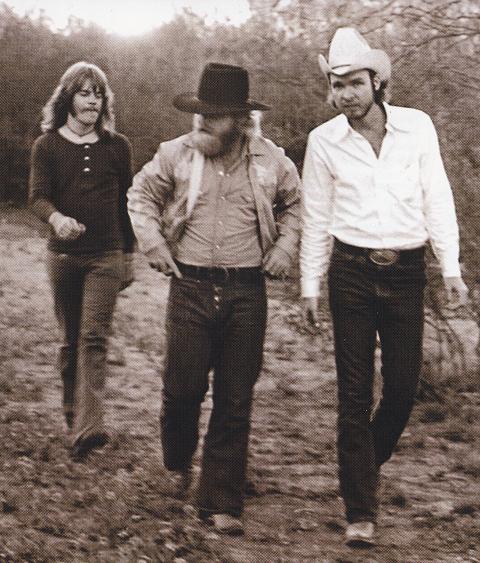
ZZ Top had formed in Houston in 1969 out of the wreckage of Billy Gibbons' psychedelic outfit the Moving Sidewalks, whose 1968 single "99th Floor" had got the young guitarist on the bill opening for Jimi Hendrix on his American tour. When the Sidewalks' rhythm section was drafted into the Vietnam War, Gibbons recruited drummer Frank Beard and, when the original bass player walked over a contract dispute, Beard's American Blues bandmate Dusty Hill. The classic three-piece played their first show together at a Knights of Columbus hall in Beaumont, Texas, on 10 February 1970, in front of a reported audience of one. All three musicians were 20 years old.
Their manager from that first show forward was Bill Ham, a former singer from Waxahachie who became, in practice, the fourth member of the band. Ham produced every ZZ Top album from the 1971 debut through 1990's Recycler, controlled the band's touring economics with a famously paranoid grip, and spent the early 1970s booking the trio onto bills with King Crimson, Uriah Heep, Earth Wind and Fire, Cheech and Chong and, decisively, the Allman Brothers Band.
ZZ Top's First Album (1971) and Rio Grande Mud (1972) had drawn polite local notices and one minor hit single, "Francine", but had also exposed a structural weakness. Both records were cut entirely at engineer Robin Brians' studio in Tyler, Texas, a converted space behind his parents' house on 10th Street, and both sounded like it. By 1973 the band had been on the road for three solid years, were sharper than their records suggested, and were, in Bill Ham's view, ready to graduate from a backyard studio to a major commercial facility.
Pre-production and Demos
There was no formal pre-production for Tres Hombres in the modern sense. Gibbons wrote most of the music on the road and in hotel rooms during the back-end of the Rio Grande Mud tour. Hill contributed lyrics and the lead vocal on "Beer Drinkers & Hell Raisers"; Beard, in a rare three-way credit, co-wrote "Jesus Just Left Chicago", "Beer Drinkers & Hell Raisers", "Precious and Grace" and "La Grange" with the other two. Several songs, "Master of Sparks" and the closing "Have You Heard?" among them, were already part of the live set by the time the band reached the studio.
The writing approach was, as Gibbons has often described it, an exercise in stripping back. The first two albums had tried to fit Cream, Hendrix and Lightnin' Hopkins into a single song; the Tres Hombres material was deliberately leaner. Three chords, a riff, a Hill backing harmony, a Beard shuffle, a Gibbons solo, end. The Allman Brothers Band tour-buddy effect was real. As the band's long-serving stage manager David Blayney later put it, Duane Allman's playing taught Gibbons to slow down and pick fewer but tastier notes, and the change is audible the moment "Waitin' for the Bus" lifts off.
Creating the Album
Basic tracking happened, as on the first two records, at Robin Hood Studio in Tyler, in the small converted room behind Robin Brians' parents' house. The breakthrough was what came next. Halfway through the sessions the band played the Overton Park Shell in Memphis, and afterwards a group of local musicians persuaded Gibbons to take a tour of Ardent Studios, the John Fry-built facility on National Street where Isaac Hayes had cut Hot Buttered Soul, Led Zeppelin had mixed Led Zeppelin III, and Big Star were in residence recording the records that history would belatedly canonise. Gibbons recalled the moment in 2023:
"So the Texas tracks were completed in Tennessee, which led to four decades of connection to that city."
Billy Gibbons, Houston Chronicle, July 2023
The engineer who took over the sessions at Ardent was 25-year-old Terry Manning, already a veteran of the Hayes and Big Star sessions and a Memphis-bred multi-instrumentalist in his own right. Manning would go on to engineer or mix every ZZ Top album through Recycler in 1990. His role on Tres Hombres was specifically credited as "engineering, mixing, editing", and it is the third of those that supplied the album's defining moment.
"Waitin' for the Bus", the opening track, segues into "Jesus Just Left Chicago" without a beat of silence between them. The two songs were written separately at different sessions, in different time signatures, in different keys. The band have, over the years, offered conflicting accounts of how they ended up welded together. Andrew Dansby of the Houston Chronicle reported the version Gibbons has repeated most often: an engineer was splicing out blank tape, cut too much, and the songs collided. Manning, in a 2017 forum post, set the record straight:
"I was always looking very carefully at the timings between songs, counting time, feeling how different time sigs go together, different keys, different feels. I tried several things to see how those two songs would go together when it dawned on me that they could come together as one song, exactly as if played that way. Billy loved it. Bill Ham was confused and wary of it. After several plays it was obvious to everyone that there was no other way they could ever exist again."
Terry Manning, PRW Forums, 2017
The Ardent sessions also captured the tone that has been Gibbons' trademark ever since. The producer's gear list for the record reads as a Memphis-blues fan's daydream: a sunburst 1959 Gibson Les Paul that Gibbons had named "Mistress Pearly Gates" (after the green Packard he had bought from a young actress who had given the car her own nickname), a Marshall stack borrowed from the Ardent live room, and either a quarter or, depending on which version of the story Gibbons is telling, a Mexican peso as a flatpick.
Frank Beard was credited on the original 1973 jacket as "Rube Beard", a Bill Ham gag aimed at the press's tendency to assume his surname was a description of his face. The credit was quietly corrected on later pressings.
Personnel and Credits
| Role | Player | Notes |
|---|---|---|
| Core band | ||
| Lead vocals, guitar | Billy Gibbons | Harmonica on "Waitin' for the Bus"; played 1959 sunburst Les Paul "Pearly Gates" |
| Bass, vocals | Dusty Hill | Co-lead vocal on "Beer Drinkers & Hell Raisers" |
| Drums, percussion | Frank Beard | Credited on original sleeve as "Rube Beard" |
| Production and engineering | ||
| Producer | Bill Ham | Long-time manager; produced every ZZ Top album from 1971 to 1990 |
| Engineer (Tyler) | Robin Brians | Owner of Robin Hood Studio, Tyler, Texas; engineered first three ZZ Top albums |
| Engineer, mixing, editing (Memphis) | Terry Manning | First Ardent collaboration; would work on every subsequent ZZ Top album through Recycler (1990) |
| Artwork and photography | ||
| Album cover design | Bill Narum | Houston artist who designed early ZZ Top covers; died 2009 |
| Photography | Galen Scott | Shot the now-legendary gatefold Tex-Mex spread at his own studio |
There are no credited guest musicians, no string section, no backing-vocal choir and no uncredited ghost players on Tres Hombres. The whole record is the trio, plus Bill Ham's tape running. That self-contained quality is part of the legend. Every later ZZ Top studio album would feature uncredited keyboard programming, drum-machine layering or guest vocals; the 1973 record is the last to be unambiguously the work of three musicians in a room.
The Songs
| # | Title | Writer(s) | Length | Single? | Notes |
|---|---|---|---|---|---|
| 1 | Waitin' for the Bus | Gibbons, Hill | 2:59 | No | Segues into track 2 |
| 2 | Jesus Just Left Chicago | Gibbons, Hill, Beard | 3:29 | No | Segued in via Manning's edit |
| 3 | Beer Drinkers & Hell Raisers | Gibbons, Hill, Beard | 3:23 | UK only, 1974 | Hill co-lead vocal |
| 4 | Master of Sparks | Gibbons | 3:33 | No | Based on the steel-ball cage stunt of Gibbons' youth |
| 5 | Hot, Blue and Righteous | Gibbons | 3:14 | No | Slow blues; closes side one |
| 6 | Move Me on Down the Line | Gibbons, Hill | 2:30 | No | Opens side two; shortest cut |
| 7 | Precious and Grace | Gibbons, Hill, Beard | 3:09 | No | Boogie shuffle, fan-favourite encore |
| 8 | La Grange | Gibbons, Hill, Beard | 3:51 | January 1974 | B-side "Just Got Paid" from Rio Grande Mud; Billboard Hot 100 No. 41 |
| 9 | Shiek | Gibbons, Hill | 4:04 | No | Spelt without an "h" on the sleeve |
| 10 | Have You Heard? | Gibbons, Hill | 3:14 | No | Closes the album on a blues-gospel exit |
Waitin' for the Bus into Jesus Just Left Chicago
The two-song side-one overture remains the single most-played sequence in the ZZ Top live catalogue. Hill once told Spin that "Waitin'" was the rare ZZ Top song that came directly from his own life, recalling a journey he made by Greyhound from Houston to Austin a couple of years before the recording. The harmonica that punctuates the verses is Gibbons; the spring-tight three-chord riff is built around the same boogie figure that powers "La Grange" two songs later.
"Jesus Just Left Chicago" is the slower, deeper second half of the pair. It moves the listener from a small-town Texas bus station into a 12-bar gospel-blues taking the title figure on a southward journey from Chicago through the Mississippi Delta to California. The opening guitar tone, clean, chiming, with a slight tremolo, is the first time Pearly Gates is unmistakably present on a ZZ Top record. Gibbons has said the song uses "the same chords as La Grange with the Robert Johnson lick, but weirder", a self-deprecating description of one of the band's most quoted moments. The 2006 Remaster cleaned up Manning's original mix beautifully; the embed below is the official ZZ Top - Topic upload of that version.
Master of Sparks
If the Waitin' / Jesus pair is the record's great spiritual moment, "Master of Sparks" is its great Texas tall tale. The song narrates, with Gibbons' trademark unreliable-narrator wink, an actual stunt undertaken by the teenage Gibbons and a friend known as R.K. Bullock outside Houston. A local welder fabricated a steel-cage sphere with a salvaged pilot's seat bolted inside. The cage was loaded onto the back of a pickup truck, driven at sixty miles per hour down Texas State Highway 6 at night, and rolled off the tailgate with a passenger strapped in. Sparks shot out behind the cage as it tumbled, hence the title. In the song's coda, the narrator is revealed, in a sly key change, to have died during the stunt.
Beer Drinkers and Hell Raisers
Dusty Hill takes a rare co-lead vocal on the rowdiest cut on the record, a 12-bar Hill chant that has become, over the decades, the band's most-covered song. Motorhead released a four-song Beer Drinkers & Hell Raisers EP in 1980; Van Halen turned it loose in their early club years; Coheed and Cambria revived it on a tribute album decades later. London Records issued it as a UK-only single in 1974, where it served as a domestic introduction to a band that had not yet broken Europe.
La Grange
The eighth track on side two has, by some distance, become the most-played and most-licensed song in the ZZ Top catalogue. Issued as a US single in January 1974, "La Grange" climbed to No. 41 on the Billboard Hot 100 in June, No. 24 on the Cash Box Top 100, and to 21 on the Australian Kent Music Report and 34 in Canada. It is also the song that put a small Texas town on the global pop-cultural map: the lyric's "shack outside La Grange" was the Chicken Ranch, a brothel that had operated near La Grange in Fayette County since 1905 and was finally shuttered, by a Houston television investigation led by reporter Marvin Zindler, in August 1973, a matter of weeks after the album's release. The same brothel would later inspire the Broadway musical and Burt Reynolds film The Best Little Whorehouse in Texas.
Musically the song is an unapologetic reworking of John Lee Hooker's "Boogie Chillen", with a generous nod to Slim Harpo's "Shake Your Hips" in the verse phrasing. Gibbons has never pretended otherwise; in 2013 he told MusicRadar:
"We could tell that we had something special. The record became quite the turning point for us. The success was handwriting on the wall, because from that point we became honorary citizens of Memphis."
Billy Gibbons, MusicRadar, June 2013
Deep cuts and side closers
Among the rest, "Hot, Blue and Righteous" is the album's emotional outlier, a slow, organ-less gospel that ends side one in a near-whisper and prefigures the wide-screen Gibbons ballads of Tejas and Degüello. "Precious and Grace" has remained a live encore staple for half a century. "Shiek" (so spelt on the sleeve, with no debate as to whether it was a deliberate gag or a printing error) is the longest cut on the record and the closest the band ever came to a straight Texas-Mexican border ballad. The closing "Have You Heard?" exits the record on a blues-gospel question to the listener that, in retrospect, reads like a thesis statement for the band's next decade.
Album Artwork and the Mexican Feast Gatefold
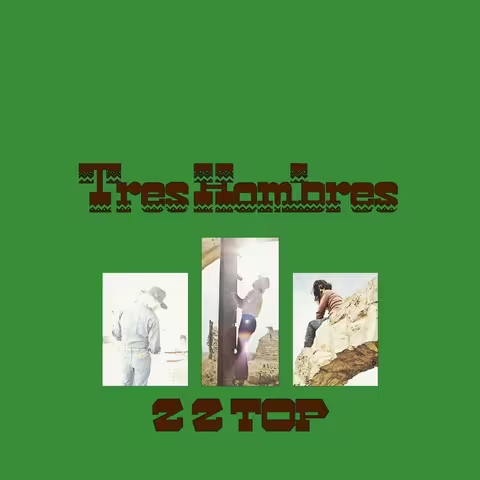
The outer sleeve, designed by Houston artist Bill Narum, places the album title and band name in stencilled Old-West block lettering above a sepia-toned border. It is a deliberately understated cover, designed by a man who would later cover the inside of his Houston studio with hand-drawn ZZ Top imagery and who would design or contribute to every band sleeve through to the 1980s. Narum died in 2009.
What goes on inside the gatefold is the real story. Open the original LP and the centre spread reveals a vast, garlanded Tex-Mex meal: enchiladas, tacos, tortillas, nachos, sour cream, peppers, limes, cheese on cheese, a frothy mug of Howard Hughes' Houston-brewed Southern Select beer, and an antique cathedral radio tuned to 1570 on the AM dial, the frequency of XERF, the Mexican border-blaster that ZZ Top would later memorialise on "Heard It on the X". The photograph was taken by Houston photographer Galen Scott, not at the restaurant the food came from but in Scott's own studio.
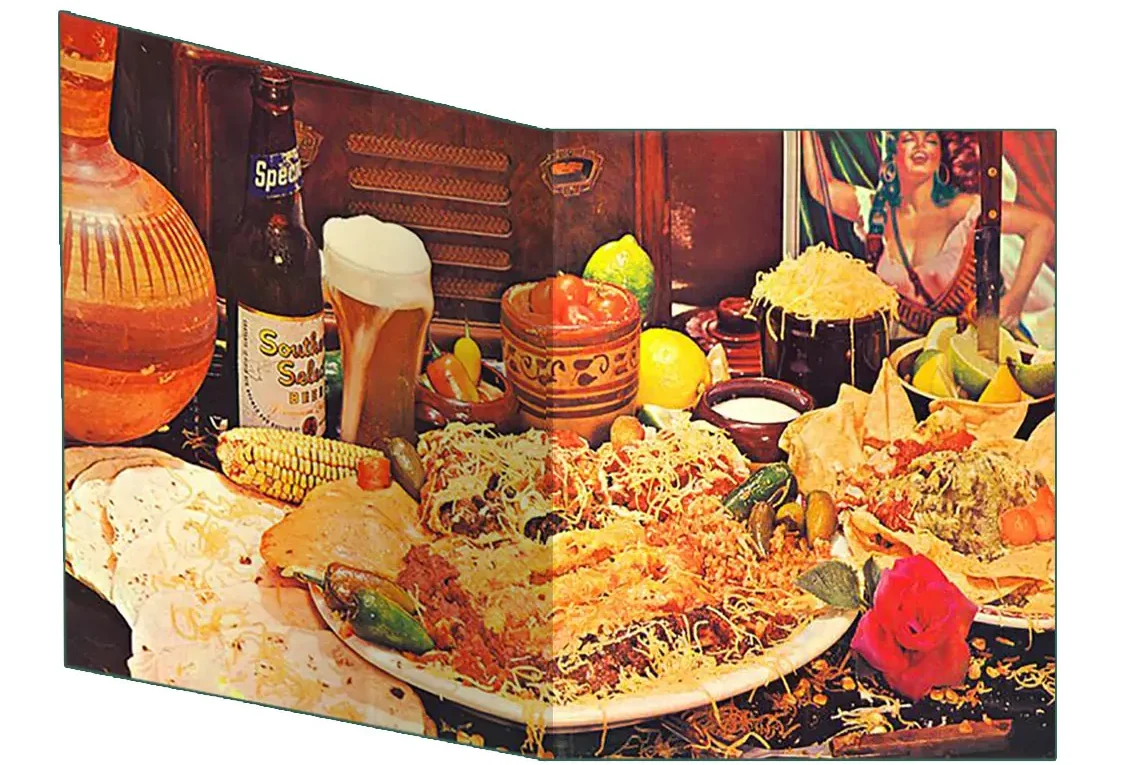
The food itself was carried in from Leo's Mexican Restaurant on South Shepherd near Westheimer in Houston, a long-running family operation owned by restaurateur Leo Reynosa. Leo's outlasted the band's 1970s commercial peak and finally closed in 2001. Gibbons told the Houston Chronicle on the album's fortieth anniversary that the original brainstorm had been Narum's. Looking for a way to communicate the band's Texas-border identity visually, Narum left the room and returned with a hot meal from Leo's.
The shoot nearly didn't happen. During a break, Galen Scott's German Shepherd jumped onto the table and ate the entire platter. A second order had to be sent for from South Shepherd before photography could resume.
The cropping of that image then became its own long-running drama. London Records issued the original 1973 vinyl with the photograph severely trimmed at the edges, which gave the gatefold the look of a magazine ad rather than the panoramic table-shot Narum and Scott had set up. The band always considered the crop a botched job. When Warner Bros. issued the Expanded and Remastered edition on 28 February 2006, the original uncropped Galen Scott photograph was finally restored for the first time on a commercial CD release, alongside Manning's original 1973 mix.
Release and Reception
Released on 26 July 1973, Tres Hombres entered the Billboard 200 quietly and built slowly. Helped along by the January 1974 release of the "La Grange" single, the album climbed all the way to No. 8 in early 1974 and stayed on the chart for around 81 weeks, the longest residence of any ZZ Top record until Eliminator nine years later. Canada lifted it to No. 13 on the RPM chart; Australia reached No. 36 on the Kent Music Report.
Contemporary reviews were less effusive than the chart performance suggested. Steve Apple's September 1973 Rolling Stone review damned the band with faint praise as "only one of several competent Southern rocking bands" and worried about how long audiences would tolerate Gibbons' "Poot yawl hans together" stage patter, while conceding the trio had "the dynamic rhythms that only the finest of the three-piece bands can cook up". NME dismissed the songs as "virtually indistinguishable". The Encyclopedia of Popular Music later awarded four stars, AllMusic 4.5, and Andy Beta's 2017 Pitchfork retrospective awarded a 9.0 with a now widely-quoted assessment:
"ZZ Top's 1973 breakthrough was a masterful melding of complementary styles, cramming Southern rock and blues boogie through the band's own idiosyncratic filter. Tres Hombres is a top sirloin steak of an album, lean yet beefy, not a trace of gristle to be had on 10 songs that clock in just over 33 minutes."
Andy Beta, Pitchfork, 25 June 2017
The retrospective view has been uniformly kind. Rolling Stone placed Tres Hombres at No. 498 on its 500 Greatest Albums list in 2003 and at No. 490 on the 2012 revision. Colin Larkin's All Time Top 1000 Albums (2000) had ranked it No. 501. Houston Press in 2011 named it the best boogie rock album ever recorded. Paste's 2018 list of the 50 Best Southern Rock Albums included it.
Singles, B-sides and Promo
Music videos as marketing tools were a decade away in 1973; "La Grange" never received a contemporary promotional film. The single itself was simple and brutally effective.
| Single | Released | B-side | Chart peaks |
|---|---|---|---|
| "La Grange" | January 1974 (US, international) | "Just Got Paid" (from Rio Grande Mud) | US Billboard Hot 100 No. 41; Cash Box No. 24; Record World No. 33; Canada (RPM) No. 34; Australia (Kent Music Report) No. 21; France (IFOP) No. 58 |
| "Beer Drinkers & Hell Raisers" | 1974 (UK only) | Variant by pressing | Did not chart |
"La Grange" was the band's first appearance on the US Hot 100 to break out of the southern markets, and the song re-entered the Billboard charts in March 2020 in the wake of the Netflix documentary That Little Ol' Band from Texas, peaking at No. 12 on Hot Rock and Alternative Songs. It has since been certified Silver in the UK (BPI), Gold in Italy (FIMI), Platinum in Spain and France, and 2x Platinum in New Zealand on the back of streaming.
Touring and Live
ZZ Top toured Tres Hombres hard through late 1973 and the whole of 1974, mostly as a headliner on the secondary college and theatre circuit and as a support act on the major arena bills. Highlights included:
- A series of August and September 1973 club and college dates that proved the album's songs could carry an entire set, not just spike the encore.
- The 10 October 1973 Georgia Southern College show in Statesboro, photographed for press by Tom Hill (Getty Images), at which Gibbons was still using a borrowed Marshall stack.
- Larger autumn 1973 and spring 1974 dates supporting Mott the Hoople and other British acts crossing the US, where ZZ Top frequently went down better than the headliner.
- The shift, by late 1974, to actual ZZ Top headline arena dates, which would feed directly into the live recordings used for one side of 1975's Fandango!.
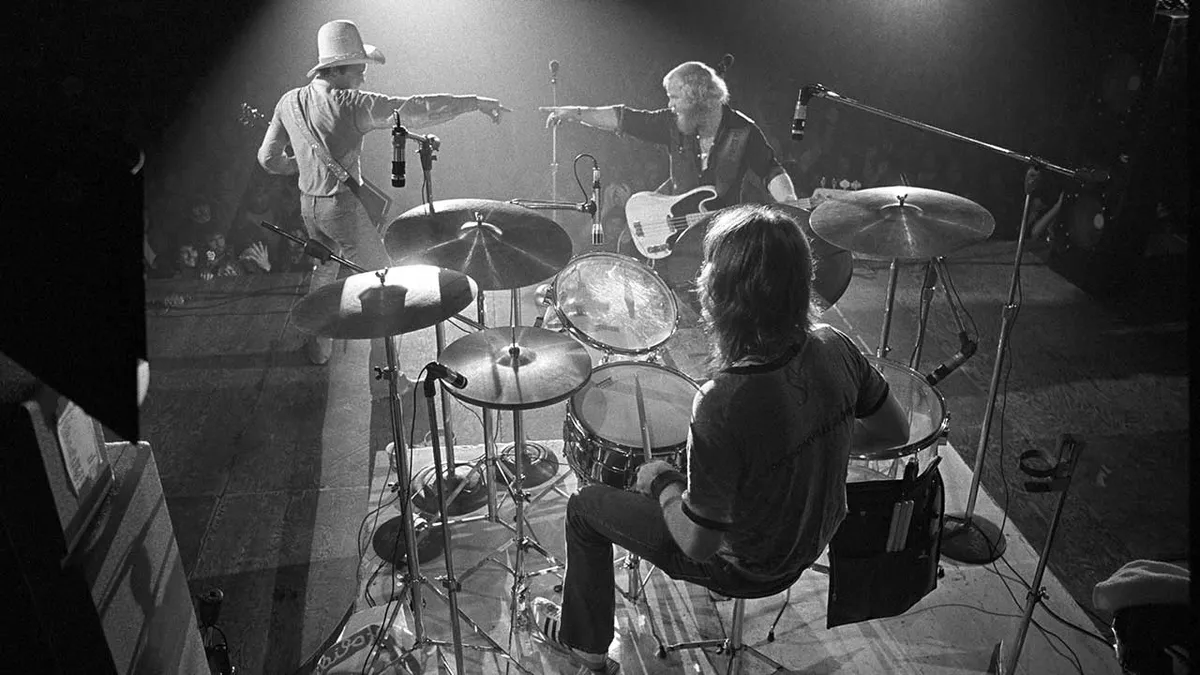
The success of the Tres Hombres run directly enabled the Worldwide Texas Tour of 1976 and 1977: 98 shows over eighteen months, with a Texas-shaped stage, live longhorns, live buffalo, a vulture and (briefly) live rattlesnakes. The Worldwide Texas Tour broke attendance records in markets that had never had a ZZ Top show before, and it could only have been booked on the back of an album that had already proven the band could draw at scale. Tres Hombres was that proof.
In TV, Film and Media
"La Grange" is the song from Tres Hombres that has done the most work on screen. Its placements over the decades read as a partial map of mainstream American pop culture:
- The 1996 Demi Moore vehicle Striptease, the 1998 Michael Bay film Armageddon and the 2001 documentary Dogtown and Z-Boys.
- The 2005 Dukes of Hazzard remake and the 2004 Dwayne Johnson Walking Tall.
- Decades of motorcycle insurance, Wrangler jeans and NASCAR advertising.
- The entrance music for the Von Erich wrestling family in Texas territories.
- Heavy rotation in the soundtracks of Grand Theft Auto and other video games set in 1970s and 1980s America.
"Beer Drinkers & Hell Raisers" has had a smaller but more interesting screen life, mostly as a needle-drop signifier of working-class American excess; "Jesus Just Left Chicago" gets its share of late-night blues-bar scene use; "Master of Sparks" and "Hot, Blue and Righteous" have stayed comparatively unbothered by Hollywood.
Controversy and the Boogie Chillen Lawsuit
The single significant legal dispute attached to Tres Hombres is the 1992 copyright case over "La Grange". The plaintiff was Bernard Besman, the Detroit music publisher and producer who had recorded John Lee Hooker's "Boogie Chillen" in 1948 and had taken a co-writing credit on the song. Besman's suit, filed against ZZ Top, alleged that "La Grange" infringed the older boogie. The case turned not on whether the songs were similar (the influence is plain on the record) but on whether "Boogie Chillen" was still in copyright at the time "La Grange" was written. A federal judge dismissed the suit in October 1995, ruling that the older song had passed into the public domain before the 1973 album was made. The dismissal effectively closed the question, and the case has since become a regularly-cited precedent in pop-music copyright suits.
Beyond the lawsuit, Tres Hombres has been largely free of controversy. The "Shiek" misspelling on the sleeve raised eyebrows; the gatefold's cheerful Tex-Mex maximalism prompted a small amount of grumbling about cultural appropriation in later decades; the Chicken Ranch connection in "La Grange" was treated, in 1973, as a fond joke about an institution everyone knew about and few had ever felt the need to publicly object to.
Awards and Accolades
RIAA Gold certification, granted on US shipments passing 500,000, followed the album's commercial run. Music Canada certified it Gold (50,000 Canadian shipments). The album's long retrospective canonisation has come on year-end and all-time critics' lists rather than at the time:
- Rolling Stone 500 Greatest Albums of All Time: No. 498 (2003); No. 490 (2012).
- Colin Larkin, All Time Top 1000 Albums (2000): No. 501.
- Houston Press Five Essential Boogie-Rock Albums (2011): No. 1.
- Paste, 50 Best Southern Rock Albums of All Time (2018).
- Rolling Stone, 100 Greatest Guitar Songs of All Time: "La Grange" at No. 74.
- Q, 100 Greatest Guitar Tracks (March 2005): "La Grange" at No. 92.
Covers, Samples and Tributes
"Beer Drinkers & Hell Raisers" is the most-covered song from the album. Motorhead released a four-track EP of the same name in 1980; Van Halen worked it up as a club-set staple; Coheed and Cambria, Hayseed Dixie and dozens of bar bands have all taken a turn. The 2011 tribute collection ZZ Top: A Tribute from Friends brought in Mastodon (on "Just Got Paid", from Rio Grande Mud), Wyclef Jean and others to refit ZZ Top's catalogue, with several Tres Hombres cuts included. The longer 2024 release Sharp Dressed Men: A Tribute to ZZ Top picked up the same thread.
"La Grange" has been covered by, among many others, ZZ Top's touring opening act Blackberry Smoke; by the Allman Brothers Band as a one-off encore in the 2000s; and by countless tribute and bar bands as the default ZZ Top set-closer. The riff has also been sampled and interpolated extensively in hip-hop and electronic production, though, owing to the Boogie Chillen lineage, sample-clearance lawyers tend to treat it with some caution.
Reissues, Remasters and Anniversaries
| Year | Edition | What's notable |
|---|---|---|
| 1973 | Original LP, stereo | London Records; first pressing with cropped gatefold |
| 1973 | Quad 8 and Q4 reel-to-reel | Four-channel quadraphonic mix, London Records |
| 1987 | The Six Pack box | Digitally remixed version with added drum-machine and guitar effects; original 1973 mix withdrawn from issue |
| 2006 | Expanded and Remastered (Warner Bros.) | Released 28 February 2006; first CD edition to restore Manning's original 1973 mix; three bonus live tracks ("Waitin' for the Bus", "Jesus Just Left Chicago", "La Grange") and the uncropped Galen Scott gatefold photograph |
| 2010s onwards | Digital reissues | iTunes, Apple Music, Spotify, Tidal: original 1973 Manning mix throughout |
| 2023 | 50th anniversary observance | No new physical box, but extensive retrospective press in the Houston Chronicle, Loudersound and others; Sharp Dressed Simple Man Tour with Lynyrd Skynyrd ran through the year |
The 1987 Six Pack remix has, with hindsight, become the most-debated chapter in the album's afterlife. Wanting their first five albums plus El Loco to sound contemporary with the Eliminator-era Top 40, the band and Bill Ham approved digital remixes that added drum-machine elements, modern reverbs and recut guitars over the original 1973 performances. The original 1973 tape mixes were quietly withdrawn from issue and for almost two decades the only commercial CD of Tres Hombres available was the remix. The 2006 Expanded and Remastered edition put that right; the booklet for that release contains a brief, unsentimental acknowledgement from Manning that the 1987 mix was a creature of its time. Long-time fans regard the 2006 restoration as one of the more important corrective remasters of the CD era.
Legacy and Influence
Within ZZ Top's own arc, Tres Hombres is the hinge. Everything before it is apprenticeship; everything after it benefits from its commercial momentum. Fandango! (1975) added a live side and gave the band their first US top-ten single in "Tush". Tejas (1976) leaned harder into the country-Mexican border atmosphere first set out on the Tres Hombres sleeve. Degüello (1979) brought the beards. Eliminator (1983) made them MTV royalty. None of those records would have got the budgets or the touring infrastructure they did without the 81-week chart run that Tres Hombres turned in.
Outside the band's own catalogue, the album is the foundational document of what would later be called Texas blues rock. Stevie Ray Vaughan grew up in Dallas listening to it; Joe Bonamassa cites it in interviews as the album that pulled him away from imitating British blues guitarists; Black Crowes, Drive-By Truckers, Blackberry Smoke and a long line of Southern boogie revivalists carry obvious Tres Hombres DNA. Its influence runs sideways into hardcore punk, too: Andy Beta's Pitchfork retrospective makes a strong case that the album's appeal to Steve Albini, Black Flag and the wider US underground was precisely its refusal to over-produce.
The band also crystallised, on this record, an approach to songwriting that they would never substantively alter: three-chord boogie, dry slide tone, double-tracked Gibbons-Hill harmony chorus, the rhythm section dropping out for a Gibbons solo break, the riff coming back in for the exit. From 1973 to Hill's death in July 2021, ZZ Top played that template hundreds of nights a year. Hill's last show with the band before he died was, fittingly, in his home state of Texas; ZZ Top continued, at his request, with guitar tech Elwood Francis on bass.
Things You Might Not Know
| Fact | Detail |
|---|---|
| The pickup pickup | Billy Gibbons has, for fifty years, played live with either a US quarter or a Mexican peso as a flatpick. Which one is on a particular night reportedly depends on what he found in his pocket that morning. |
| Pearly Gates's name | Gibbons's 1959 sunburst Les Paul is named for the green Packard he had bought from an aspiring actress; she had nicknamed the car Pearly Gates first. |
| Rube Beard | The original 1973 jacket credits Frank Beard as "Rube Beard", a Bill Ham gag at the expense of press writers who assumed the surname described the face. Beard, in 1973, was the only clean-shaven member of the band. |
| The Chicken Ranch's closing | The Fayette County brothel celebrated in "La Grange" was closed by a Houston television exposé in August 1973, weeks after the album reached record shops. Gibbons has always denied taking credit. |
| The food got eaten | During a break in the gatefold-photograph shoot, Galen Scott's German Shepherd jumped onto the table and ate the entire Tex-Mex spread. A second order had to be sent for from Leo's. |
| The meal's price | The going rate at Leo's for the platter depicted on the gatefold was reportedly $2.99 in 1973. |
| The radio in the photo | The cathedral radio on the gatefold table is tuned to 1570 on the AM dial, a Mexican border-blaster frequency the band would commemorate two years later on "Heard It on the X". |
| The segue was an edit | The seamless "Waitin' for the Bus" into "Jesus Just Left Chicago" transition is a Terry Manning tape splice, not a band performance. The two songs were written separately, in different time signatures and keys. |
| The Master of Sparks was real | Gibbons and his friend R.K. Bullock actually had a Houston welder build a steel-cage sphere with a pilot's seat inside, and actually rolled it off the back of a moving truck. Both survived. |
| Boogie Chillen was already free | The 1995 dismissal of Bernard Besman's "La Grange" infringement suit turned on the fact that "Boogie Chillen" had quietly fallen into the public domain before ZZ Top wrote the song. |
| The Six Pack rewrite | For 19 years, between 1987 and 2006, the only commercial CD edition of Tres Hombres available was a digitally remixed version with added drum machine and recut guitars. Terry Manning's original 1973 mix was withdrawn and presumed lost by many fans. |
| The audience of one | ZZ Top's first show in 1970 was played to a single paying customer at a National Guard armoury in Alvin, Texas. Gibbons bought the man a Coke at intermission to make sure he stayed for the second set. |
| The Frank Beard Frank Beard joke | Frank Beard is the only member of ZZ Top, for most of the band's career, who did not have a long beard. |
| The album never charted in the UK | Despite the band's later popularity in Britain, Tres Hombres did not chart on the UK Albums Chart on its 1973 release. London Records issued "Beer Drinkers & Hell Raisers" as a UK-only single in 1974 in an attempt to break the British market; it did not chart either. |
| Bill Narum's quiet exit | Tres Hombres cover designer Bill Narum, a Houston commercial artist who shaped the band's visual identity from the first album onward, died in 2009 with relatively little national obituary coverage. |
For the Podcast
The Riffology podcast returns regularly to the records that drew lines under one era of rock and started another, and few American albums of the 1970s draw a sharper line than this one. Tres Hombres is the album the hosts can play in full, in track order, and find a story behind every cut: a tape edit in Memphis, a brothel in Fayette County, a steel-cage stunt on Highway 6, a plate of enchiladas eaten by a photographer's dog. Subscribe wherever you get your podcasts, and we will see you for the next deep dive.
Comments