For nine months in 1971 the Rolling Stones lived in a yellow villa overlooking the Mediterranean because they were not allowed to live anywhere else. Exile on Main St. by The Rolling Stones (officially Exile on Main Street, though the abbreviated spelling has always been the band's preferred form on labels and sleeves) was recorded mostly in the basement of that villa, on a mobile studio parked in the driveway, with Keith Richards holding court and Charlie Watts driving the four hundred miles down from London whenever he could face the routine. Eighteen songs eventually came out of it, then disappeared back to Los Angeles to be finished by Mick Jagger while the rest of the band tried to come down. By the time it was released, on 12 May 1972, every Stone had a different memory of who had played on what.
The album that resulted sounded then like a mess and sounds now like the most complete document of what rock and roll can be when a great band stops trying to please anyone and starts trying to survive. This is the full story of how Exile on Main St. came to exist, who actually played on it, what is on the record, what was left off, and why it has come to outlast every other record the band ever made.
Album Facts
| Field | Detail |
|---|---|
| Artist | The Rolling Stones |
| Album | Exile on Main St. |
| Release Date | 12 May 1972 |
| Label | Rolling Stones Records (distributed by Atlantic in most territories) |
| Producer(s) | Jimmy Miller |
| Studio(s) | Olympic Studios, London; Stargroves, East Woodhay (with the Rolling Stones Mobile Studio); Villa Nellcôte, Villefranche-sur-Mer (Rolling Stones Mobile); Sunset Sound Recorders, Los Angeles |
| Genre / Subgenre | Rock and roll, blues, country rock, gospel, soul, with detours into swing and Delta blues |
| Track Count | 18 (original double LP) |
| Total Runtime | 67:07 |
| Billboard 200 Peak | Number 1 (returned to Number 2 on the 2010 reissue) |
| UK Albums Chart Peak | Number 1 (also Number 1 on the 2010 reissue, almost 38 years to the week later) |
| Other Notable Chart Peaks | Number 1 in Canada, the Netherlands, Norway, Spain; Number 2 in Australia and Sweden; Number 2 in Germany; Top 10 in Japan and Finland |
| Certifications | RIAA Platinum (United States), BPI Platinum (United Kingdom, 2010 reissue), ARIA Platinum (Australia, 2010), Gold (Italy, New Zealand) |
| Estimated Sales | Reports vary; around 1 million in the United States alone (based on RIAA certification), with several million more worldwide; a perennial catalogue seller since the late 1970s |
| Key Singles | "Tumbling Dice" (released 14 April 1972, UK Number 5, US Number 7); "Happy" (US-only single, June 1972, US Number 22); "Plundered My Soul" (Record Store Day 2010 reissue single) |
Cultural Context: Where Rock Stood in May 1972
Rock and roll was a different creature in 1972 from what it had been three years earlier. The optimistic communalism of the late 1960s had curdled. Altamont, where eighteen year old Meredith Hunter had been stabbed to death by Hells Angels security at a free Rolling Stones concert in December 1969, had become shorthand for the end of the dream. The Beatles had split in April 1970. Jimi Hendrix had died in September that year, Janis Joplin a month later, Jim Morrison in July 1971. The figureheads of the previous half decade were either dead, retired or, in the case of Bob Dylan, in self-imposed semi-retirement.
Into that vacuum stepped a generation of more professional, more bookish rock bands. Led Zeppelin had released the untitled fourth album five months before Exile on Main St., complete with Stairway to Heaven. Pink Floyd were touring the material that would become The Dark Side of the Moon. David Bowie released The Rise and Fall of Ziggy Stardust just over five weeks after Exile, on 16 June 1972. Glam was breaking on Top of the Pops while progressive rock was filling football stadiums. The albums chart in the week of Exile's release was being fought over by T. Rex's Electric Warrior, Neil Young's Harvest and Cat Stevens's Teaser and the Firecat.
The other story of 1972 was money. Britain's top rate of income tax under the Wilson and Heath governments had reached 83 per cent on earned income and 98 per cent on so-called unearned investment income, the so-called supertax that drove not just the Stones out of the country but a generation of British rock bands and tax advisors with them. The Rolling Stones, who had spent most of the 1960s being the dangerous opposite of The Beatles, were now the old guard. They had no makeup, no concept, no androgyny, no synthesisers. They had a tongue logo, two dead friends (Brian Jones and, indirectly, Meredith Hunter), an unpayable tax bill, and an instinct that the only honest response to the moment was to retreat to first principles. Blues, gospel, country, rock and roll. Records made by the people who invented those forms, played back through amplifiers and tape machines in a basement in France.
That instinct is the engine that drives Exile on Main St. Where the rest of the rock establishment was busy reaching forward into concept, costume and conservatoire, the Stones were reaching back. The album that resulted feels older than it is precisely because it sounds like 1957 and 1962 and 1972 happening at the same time.
The Rolling Stones Heading Into Exile
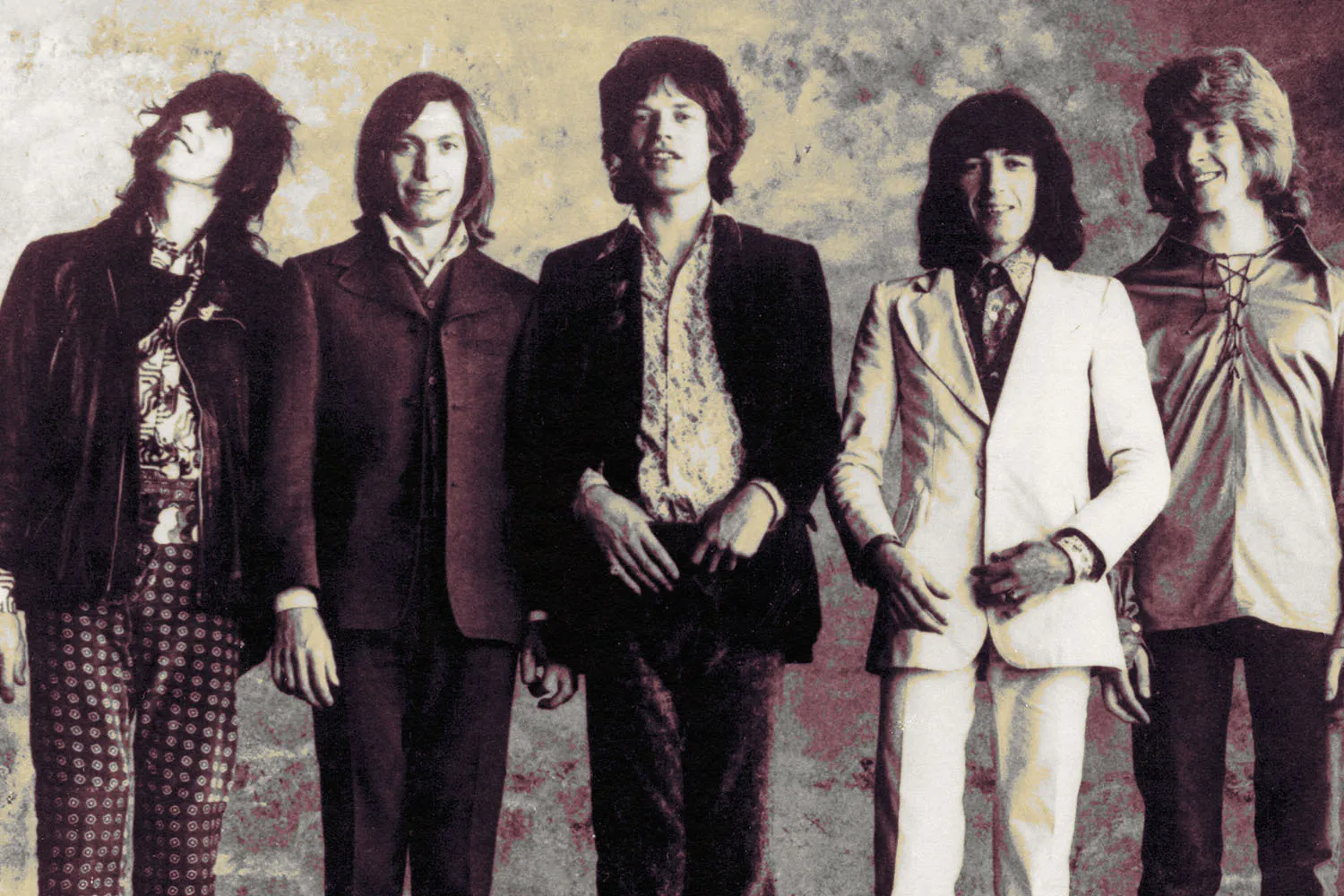
By the time the band sat down to think about what would become Exile on Main St., they had been a working unit for nearly a decade. Formed in London in 1962 around Brian Jones, Mick Jagger, Keith Richards, Ian Stewart, Bill Wyman and Charlie Watts, they had spent the second half of the 1960s competing directly with The Beatles for the top of every chart that mattered. By 1969 Jones, the founder, was out of the band and dead within a month, replaced on guitar by a precocious twenty year old from John Mayall's Bluesbreakers called Mick Taylor.
Taylor's arrival had transformed the Stones from a great singles band into a great album band. The four records they made with him in the lineup, namely Let It Bleed (1969), Sticky Fingers (1971), Exile on Main St. (1972) and Goats Head Soup (1973), are widely regarded as the band's golden run. Sticky Fingers, released in April 1971, had given them Brown Sugar, Wild Horses, Can't You Hear Me Knocking and Moonlight Mile. It had also been the first release on their own brand new vanity label, Rolling Stones Records, complete with the tongue and lips logo designed by John Pasche.
What looked, from the outside, like a perfectly stable empire was financially close to collapse. The Stones had finally extracted themselves from Allen Klein in 1970 after years of disputes over publishing and accounting, but the price of escaping him was steep. Klein retained the rights to their pre-1971 catalogue through his company ABKCO, including everything from Satisfaction to Honky Tonk Women, and would spend the next decade compiling it for profit. Worse, the band discovered they owed the British government more in back taxes than they had in liquid assets. Their new financial adviser, the aristocratic Prince Rupert Loewenstein, recommended an immediate move out of the country before the Inland Revenue could move first.
In April 1971 the band became tax exiles. Jagger relocated to Paris with his new bride Bianca De Macias. Watts and Wyman settled in different parts of Provence. Richards rented a vast nineteenth century villa called Nellcôte, perched in the hills above Villefranche-sur-Mer between Nice and Monaco. It had a sweeping view of the Mediterranean, sixteen bedrooms, formal gardens and, as it turned out, exactly the cellar acoustics the Stones would need.
Pre-production, Demos and the Sticky Fingers Vault
Almost a third of Exile on Main St. was already on tape before the Stones ever set foot in France. Tracks like Shine a Light, Loving Cup, Sweet Virginia, Stop Breaking Down and All Down the Line had been started during the long Sticky Fingers sessions at Olympic Studios in London and at Jagger's Hampshire country house Stargroves between 1969 and 1971. The decision to hold them back, rather than feed them to Klein's ABKCO by including them on the records they were contractually obliged to deliver, meant that by 1971 the band were sitting on a stockpile of half finished material that could not be released until they were free of him.
The clearest example is Tumbling Dice. The song that would become the lead single from Exile began life at Stargroves as a piano-led, Ian Stewart-dominated shuffle called Good Time Women, recorded with the Rolling Stones Mobile Studio sometime between March and May 1970. The lyrics were different, the structure was longer, and only the boogie-woogie shape really survives. The eventual Exile version, retitled and entirely re-cut at Nellcôte in summer 1971, took an extraordinary number of takes. Engineer Andy Johns later said:
"It was like pulling teeth. I think there were between thirty and a hundred reels of tape of that base track. Some say it may have taken as many as a hundred and fifty takes."
Andy Johns, recording engineer, quoted in Bill Janovitz, Rocks Off, 2013
Other songs were even older. Shine a Light was being demoed under the working title "Get a Line on You" as early as 1968-69, with Leon Russell at one of the keyboards. Loving Cup had been played live at the band's free Hyde Park concert on 5 July 1969, the show that doubled as Mick Taylor's official debut as a Stone and as a memorial for Brian Jones, who had drowned in his swimming pool two days earlier. By the time the band reached France, most of the bones of the album were already in place. What Nellcôte added was the muscle, the sweat and the haze.
Creating Exile on Main St.: A Villa, a Truck and a Basement
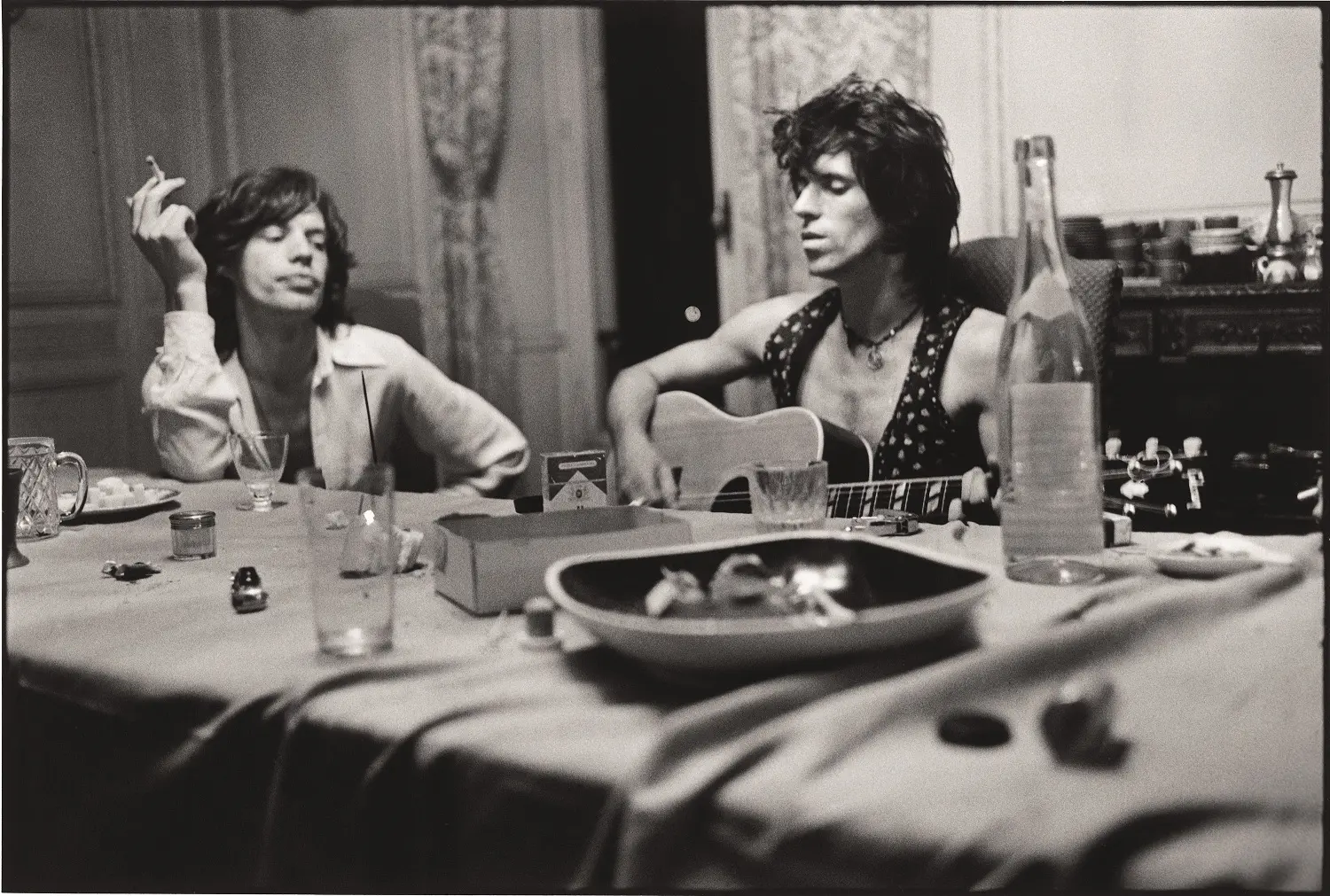
The plan in the south of France was to find a proper studio nearby and finish the new record there. They could not. The local options were inadequate, the band were spread out across the coast and Richards, by his own later admission, was sliding ever deeper into a daily heroin habit that made it hard for him to leave his own house, let alone drive to a studio. The pragmatic answer was to bring the studio to him. The Rolling Stones Mobile Studio, the converted lorry that had been used the previous year to record Led Zeppelin's IV at Headley Grange, was driven across the Channel and parked in the gravel courtyard at Nellcôte. Cables were run through the kitchen and down into the cellar.
The Nellcôte basement was nobody's idea of a recording studio. It was hot, airless, smelled of damp, and was lit by a single bare bulb. Charlie Watts later remembered the band setting up in separate cellar rooms because there was not enough space for them all in one. Bill Wyman, in his memoir Stone Alone, recalled that there was a single fan in a corner window which barely worked, an aesthetic detail that later gave its name to the track Ventilator Blues. The villa above was a chaotic, drug saturated salon where William S. Burroughs, Gram Parsons, John Lennon, Terry Southern and the Chess Records heir Marshall Chess all came and went. Heroin moved through the building in industrial quantities. Parsons, the country rock pioneer with whom Richards had become close, was asked to leave the villa in early July 1971, in part because his own drug use had become a liability with the French police circling.
Sessions ran from 7 June through to late November 1971. Bill Wyman remembered them as nightly endurance tests, with the band working from around eight in the evening until three or four in the morning, when those who had bothered to turn up could no longer stand. Personnel varied wildly from night to night:
"Not everyone turned up every night. This was, for me, one of the major frustrations of this whole period. For our previous two albums we had worked well and listened to producer Jimmy Miller. At Nellcôte things were very different and it took me a while to understand why."
Bill Wyman, Stone Alone, 1990
The constants in the basement were Richards (when conscious), saxophonist Bobby Keys, guitarist Mick Taylor, pianist Nicky Hopkins and producer Jimmy Miller. Jagger, who had a new wife and a baby on the way, was often elsewhere. Wyman, who lived twenty minutes down the coast and disliked the atmosphere at Nellcôte, frequently sat sessions out.
Miller, who had produced every Stones album since Beggars Banquet in 1968, was crucial. He understood that you do not "produce" the Rolling Stones in any conventional sense. You catch them. When Richards or Wyman or Watts was missing, Miller would pick up a bass or sit behind the drum kit himself. He plays drums on the coda of Tumbling Dice (where Charlie Watts could not nail the breakdown groove), on Happy and on Shine a Light, and percussion on at least four other tracks. His own habit was deepening through the sessions, in ways that would end his career as Stones producer with the next album, but in 1971 he was still the steadiest hand in the building.
The engineer was Andy Johns, a young Englishman whose older brother Glyn had been a fixture of the British studio scene since the early 1960s. Andy had engineered Sticky Fingers and would go on to engineer huge swathes of 1970s hard rock. He spent the Nellcôte summer chasing power outages, fighting the temperature, and trying to get usable performances out of musicians who were sometimes asleep on their feet. Joe Zagarino (misspelled "Zaganno" on the original credits) and Jeremy Gee assisted. Glyn Johns had handled some of the earlier 1969 sessions back at Olympic.
Happy is the canonical Nellcôte story. Keith Richards arrived early one afternoon, found Bobby Keys and Jimmy Miller already in the basement, and the three of them cut the basic track inside an hour. Richards remembered it precisely:
"'Happy' was something I did because I was for one time early for a session. There was Bobby Keys and Jimmy Miller. We had nothing to do and had suddenly picked up the guitar and played this riff. So we cut it and it's the record, it's the same. We cut the original track with a baritone sax, a guitar and Jimmy Miller on drums. And the rest of it is built up over that track."
Keith Richards, 1982, quoted in Wikipedia from Margotin and Guesdon
By the time the rest of the band arrived, the song existed. By the time Richards remembered the rest of the band existed, four hours had gone by, and a future single was on tape.
By November 1971 the French authorities were openly investigating Richards for drug offences and the band were running out of time. Tapes were boxed up and flown to Los Angeles, where Jagger, finally engaged, took over the overdub and mixing sessions at Sunset Sound Recorders. Working through December 1971 and on into March 1972, Jagger brought in keyboard players Billy Preston and Dr. John, pedal steel player Al Perkins, double bassist Bill Plummer (who plays on at least four tracks where Wyman is absent), and a battery of Los Angeles backing vocalists led by Venetta Fields, Clydie King, Joe Greene, Shirley Goodman, Tami Lynn and Sherlie Matthews. He also took the band, Preston and Watts to a Los Angeles evangelical church where Aretha Franklin happened to be recording Amazing Grace, an experience that fed directly into the gospel-inflected arrangements of Tumbling Dice, Loving Cup, Let It Loose and Shine a Light.
The result is the sound that has been argued over for half a century. The Pitchfork critic Rob Mitchum, reviewing the 2010 reissue, described the album as "the hybrid product of two sessions, two bands really: the Keith Richards-led material from Nellcôte shotgun-wed to the Los Angeles gospel dabbling of Jagger and co-conspirator, keyboardist and former Beatles collaborator Billy Preston." It is precisely that tension, between Richards's basement and Jagger's church, that makes Exile on Main St. what it is.
Personnel and Credits
The credit list on the original 1972 sleeve is famously incomplete and in places wrong. Dr. John is uncredited. Joe Zagarino is misspelled. Bill Wyman has spent fifty years insisting the bass credits do not match what he remembers playing. The table below combines the original liner notes with the corrections from Margotin and Guesdon's All the Songs, Andy Babiuk's Rolling Stones Gear and the Wikipedia personnel page, which itself synthesises those sources.
| Role | Player | Notes |
|---|---|---|
| The Rolling Stones | ||
| Lead vocals | Mick Jagger | All tracks except Happy (Keith Richards lead) and I Just Want to See His Face (Jagger lead, Richards electric piano) |
| Harmonica | Mick Jagger | Shake Your Hips, Sweet Virginia, Sweet Black Angel, Turd on the Run, Stop Breaking Down |
| Electric guitar | Mick Jagger | Tumbling Dice, Stop Breaking Down (rare Jagger guitar credits) |
| Guitars, backing vocals | Keith Richards | All tracks; lead vocal on Happy; bass on Casino Boogie, Happy and Soul Survivor; electric piano on I Just Want to See His Face |
| Guitars, bass | Mick Taylor | Guitars on every track except Torn and Frayed and Happy; bass on Tumbling Dice, Torn and Frayed, I Just Want to See His Face and Shine a Light; backing vocal on Sweet Virginia; sole co-write credit on Ventilator Blues |
| Bass guitar | Bill Wyman | Credited on only eight tracks: Rocks Off, Shake Your Hips, Sweet Virginia, Sweet Black Angel, Loving Cup, Ventilator Blues, Let It Loose and Stop Breaking Down. Wyman maintains he played on more |
| Drums | Charlie Watts | All tracks except the Tumbling Dice coda, Happy and Shine a Light, where Jimmy Miller plays |
| Guest and session musicians | ||
| Piano | Nicky Hopkins | The album's de facto fourth keyboardist; especially prominent on Loving Cup, Rocks Off and Casino Boogie |
| Piano | Ian Stewart | Founding sixth Stone and lifelong road manager; piano on Shake Your Hips, Sweet Virginia and Stop Breaking Down |
| Piano, organ | Billy Preston | Shine a Light (the gospel build on side four); arrived via the Los Angeles overdubs |
| Piano (uncredited) | Dr. John (Mac Rebennack) | I Just Want to See His Face; also backing vocals on Let It Loose. Uncredited on the original 1972 LP |
| Tenor and baritone saxophone | Bobby Keys | Tenor across the record; baritone sax and tambourine on Happy; key part of the Nellcôte basic band |
| Trumpet, trombone, organ | Jim Price | Horns throughout; organ on Torn and Frayed |
| Pedal steel guitar | Al Perkins | Torn and Frayed (the Sunday-morning country lick that opens the song) |
| Marimba | Richard "Didymus" Washington | Sweet Black Angel; the lopping marimba figure under Jagger's vocal |
| Double bass | Bill Plummer | Rip This Joint, Turd on the Run, I Just Want to See His Face, All Down the Line, in Wyman's absence |
| Backing vocals | Venetta Fields, Clydie King | Tumbling Dice, I Just Want to See His Face, Let It Loose, Shine a Light |
| Backing vocals | Joe Greene | Let It Loose, Shine a Light |
| Backing vocals | Jerry Kirkland | I Just Want to See His Face, Shine a Light |
| Backing vocals | Shirley Goodman, Tami Lynn, Mac Rebennack | Let It Loose |
| Backing vocals | Sherlie Matthews | Tumbling Dice (per Margotin and Guesdon) |
| Backing vocals | Kathi McDonald | All Down the Line |
| Drums, percussion | Jimmy Miller | Producer; drums on the Tumbling Dice coda, Happy and Shine a Light; percussion on Sweet Black Angel, Loving Cup, I Just Want to See His Face and All Down the Line |
| Production and engineering | ||
| Producer | Jimmy Miller | His fifth and final Stones album as producer |
| Engineer | Andy Johns | Lead engineer at Nellcôte and Sunset Sound |
| Engineer | Glyn Johns | Engineered the earlier Olympic and Stargroves sessions in 1969-70 |
| Engineers | Joe Zagarino, Jeremy Gee | Assistant engineers at Nellcôte; Zagarino misspelled "Zaganno" on the original sleeve |
| Mastering | Doug Sax | Cut at The Mastering Lab, Los Angeles |
| Artwork | ||
| Cover photography and concept | Robert Frank | Cover image is an outtake from his 1958 photobook The Americans |
| Layout design | John Van Hamersveld, Norman Seeff | Van Hamersveld also did the Endless Summer poster and the Magical Mystery Tour sleeve; Seeff shot the postcard insert at the band's Bel Air mansion |
| Rumoured / uncredited / disputed | ||
| Vocals (rumoured) | Gram Parsons | Long-standing claim that Parsons sings on Sweet Virginia and possibly other side-two material. Margotin and Guesdon, citing Andy Johns and Anita Pallenberg, conclude that he attended sessions but is not on the final mixes. Hedge accordingly |
| Guitar (rumoured) | Gram Parsons | Similar rumour for Sweet Virginia / Torn and Frayed. No credible source places his guitar on the released album |
| Bass | Bill Wyman (additional) | Wyman has told Bass Player and others that the credits underplay his contribution. Several authors agree the credits are unreliable but no definitive accounting exists |
Album Artwork and Packaging
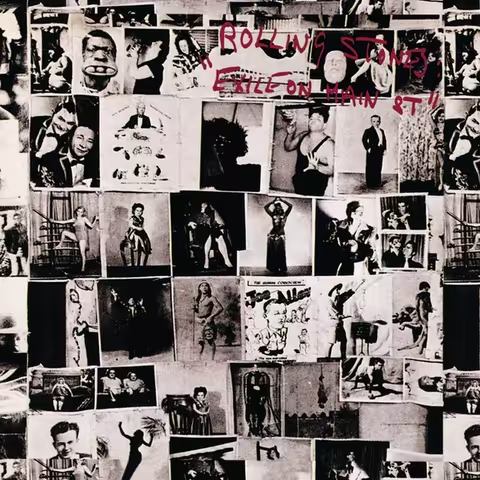
The packaging is a record in itself. Jagger wanted a sleeve that captured what he later described as a "feeling of joyful isolation, grinning in the face of a scary and unknown future". To get there, the band hired three of the most interesting visual artists in Los Angeles. The layout was handled by John Van Hamersveld, the Californian designer best known for The Endless Summer poster and the Magical Mystery Tour sleeve, working with the photographer Norman Seeff. The documentary photographer Robert Frank, whose 1958 photobook The Americans had reframed how the United States was seen by itself, was brought in for additional cover photography.
The famous front cover image is not, in fact, a new Stones photograph. It is "Tattoo Parlor", an outtake from Frank's work on The Americans, a collage of sideshow performers including:
- The contortionist Joe "The Human Corkscrew" Allen, photographed wriggling through a 13.5 inch hoop.
- Hezekiah Trambles, "The Congo Jungle Freak", in a portrait taken by the recently deceased Diane Arbus.
- "Three Ball Charlie", a 1930s sideshow performer from Humboldt, Nebraska, holding a tennis ball, a golf ball and a "5" billiard ball in his mouth.
- A tattooed man whose arms read like a map of the American interior.
It is a deliberately disorienting image, refusing to put the band's faces on the cover of their own album. The same day Seeff photographed the Stones at their rented Bel Air mansion, Frank drove Jagger down to the 500 block of Main Street in downtown Los Angeles, near the Leonide Hotel, and photographed him outside a pawnshop, a shoeshine business and a pornographic cinema called the Galway Theatre. The original gatefold sleeve unfolds into a Van Hamersveld collage of Frank's new Stones photographs and further Americans outtakes. Inside the sleeve, twelve perforated postcards lifted from Seeff's Bel Air shoot were included for fans to tear out. The whole package reads as a half-private scrapbook of being in the world's biggest rock band while in voluntary exile. There is no band shot on the front. There is no song listing on the front. There is just a wall of strange faces.
The Songs of Exile on Main St.
Across four sides of vinyl, Exile is structured almost as a journey from a smoky bar at midnight, through a heatwave country morning, to a Sunday gospel hangover. It does not have the obvious peaks of Sticky Fingers. It has, instead, a single sprawling mood that engulfs the listener. Below is the full tracklist as released on 12 May 1972, with songwriting credits, lengths and notes on which songs became singles. All tracks are credited to Mick Jagger and Keith Richards unless otherwise noted.
| # | Title | Writer(s) | Length | Single? | Notes |
|---|---|---|---|---|---|
| Side One | |||||
| 1 | Rocks Off | Jagger, Richards | 4:31 | No | Opening track; the dreamy bridge where Jagger's vocal is pulled into the middle distance was an Andy Johns mixing flourish |
| 2 | Rip This Joint | Jagger, Richards | 2:22 | No | Bill Plummer on upright bass; Bobby Keys on both tenor and baritone sax; one of the fastest songs the Stones ever recorded |
| 3 | Shake Your Hips | James "Slim Harpo" Moore | 2:59 | No | Cover of Slim Harpo's 1966 single; Ian Stewart on piano |
| 4 | Casino Boogie | Jagger, Richards | 3:33 | No | Lyrics reportedly assembled from random phrases on cut-up cards, a technique borrowed from William S. Burroughs; Nicky Hopkins on piano |
| 5 | Tumbling Dice | Jagger, Richards | 3:45 | Yes (lead single, 14 April 1972) | Begun at Stargroves in 1970 as "Good Time Women"; basic track at Nellcôte on 3 August 1971; up to 150 takes; Jimmy Miller plays the coda drums |
| Side Two | |||||
| 6 | Sweet Virginia | Jagger, Richards | 4:27 | No | Country waltz heavily influenced by Gram Parsons; Bobby Keys on tenor sax |
| 7 | Torn and Frayed | Jagger, Richards | 4:17 | No | Al Perkins on pedal steel; Jim Price on organ; lyrics about a "ballroom band" widely read as a Parsons / Richards self-portrait |
| 8 | Sweet Black Angel | Jagger, Richards | 2:54 | B-side of "Tumbling Dice" | Jagger's tribute to imprisoned activist Angela Davis (acquitted on 4 June 1972); Richard "Didymus" Washington on marimba; cut at Stargroves |
| 9 | Loving Cup | Jagger, Richards | 4:25 | No | Olympic Studios original from 1969; first played live at the band's Hyde Park concert on 5 July 1969, Mick Taylor's debut and Brian Jones's memorial |
| Side Three | |||||
| 10 | Happy | Jagger, Richards | 3:04 | Yes (US-only, June 1972) | Richards lead vocal; cut as an afternoon jam at Nellcôte by Richards on guitar and bass, Bobby Keys on baritone sax and Jimmy Miller on drums |
| 11 | Turd on the Run | Jagger, Richards | 2:36 | No | Bill Plummer on bass; Jagger on harmonica; a flat-out blues stomp |
| 12 | Ventilator Blues | Jagger, Richards, Mick Taylor | 3:24 | No | The only Exile track to give Taylor a songwriting credit; named after the single broken fan in the Nellcôte basement window |
| 13 | I Just Want to See His Face | Jagger, Richards | 2:52 | No | Dr. John uncredited on piano; Richards on electric piano; Taylor on electric bass; Jagger reportedly invented the lyrics in real time during the take |
| 14 | Let It Loose | Jagger, Richards | 5:16 | No | Olympic original; gospel choir of Joe Greene, Tami Lynn, Shirley Goodman, Mac Rebennack and others; one of Jagger's most undervalued vocals |
| Side Four | |||||
| 15 | All Down the Line | Jagger, Richards | 3:49 | B-side of "Happy" (US) | Jagger's first choice for a single; Kathi McDonald on backing vocals |
| 16 | Stop Breaking Down | Robert Johnson; arr. Jagger, Richards, Taylor, Wyman, Watts | 4:34 | No | Reworking of a 1937 Robert Johnson Delta blues; Ian Stewart on boogie woogie piano; Taylor on slide guitar |
| 17 | Shine a Light | Jagger, Richards | 4:14 | No | The oldest song on the record, roots back to 1968-69; Billy Preston on organ and piano; Mick Taylor on bass; Jimmy Miller on drums; lent its title to the 2008 Scorsese concert film |
| 18 | Soul Survivor | Jagger, Richards | 3:49 | No | Richards on bass; lyric reads like a love-hate confession about the Nellcôte sessions: "I wish I'd never brought you, it's gonna be the death of me" |
Rocks Off opens the record with what is essentially a mission statement. Keys's saxophone screams over the top of an off-kilter Richards riff, Jagger sings about feeling nothing at all, and Taylor's lead guitar curls around the back of the mix like cigarette smoke. The dreamy bridge, where Jagger's vocal is suddenly processed and pulled into the middle distance, was an Andy Johns mixing flourish that has been copied a thousand times since. Rip This Joint follows at sprinter pace, Charlie Watts's hi-hat clattering like dropped cutlery, with Bobby Keys playing what is essentially two saxophones at once. Shake Your Hips slows the heart rate, with Jagger singing the Slim Harpo blues in a sly imitation of the original.
Tumbling Dice is the centrepiece of side one and the album's best known song. As above, it had begun two years earlier in London under the title Good Time Women, before Jagger rewrote the words around a gambler's tossed-off shrug. He has said he finished the lyric after talking with a Los Angeles housekeeper about dice; Bill Janovitz reckons Jagger was "consciously turning over rocks, looking for something specific". The famous swing of the back half, where the song falls apart into a Venetta Fields and Clydie King backing chorus, was a Jagger-led Los Angeles overdub. Released on 14 April 1972, four weeks before the album, the single reached Number 5 in the UK and Number 7 in the US.
Side two heads for the country. Sweet Virginia is a barroom waltz that owes almost everything to Gram Parsons, who had spent that summer at Nellcôte teaching Richards how to play George Jones records. The line "got to scrape the shit right off your shoes" is the moment Jagger most openly nods to his Bakersfield homework. Torn and Frayed opens with Al Perkins's pedal steel like a Sunday morning headache. Sweet Black Angel, recorded earlier at Stargroves, is Jagger writing what he called "a love song" to the imprisoned communist academic Angela Davis, who had been arrested in 1970 in connection with a courthouse shooting in Marin County, California, and was acquitted on 4 June 1972, the day after the band's 1972 American Tour opened. Loving Cup closes the side with one of Nicky Hopkins's most beautiful piano performances and a Jagger vocal that is half drunk, half preacher.
Side three is where the album becomes itself. Happy is Keith Richards's signature lead vocal, recorded in the celebrated four-hour Nellcôte jam quoted above. Released as the second single in the United States in June 1972 to capitalise on the upcoming tour, it reached Number 22 on the Billboard Hot 100 and entered the Stones live set permanently. It has been the cue, every tour since, for Richards to step to the front of the stage.
Turd on the Run is a two and a half minute Delta blues that sounds genuinely panicked. Ventilator Blues is the only song on the album with a Mick Taylor co-writing credit; the band later admitted Taylor had been more involved in writing than he was credited with elsewhere on the record, which is one of the reasons he eventually walked out in late 1974. I Just Want to See His Face is a swampy, half-improvised gospel chant with Dr. John (uncredited) playing piano and Jagger reportedly making up the words at the microphone. Let It Loose closes the side with a five minute build that owes its existence to the gospel choir Jagger had assembled in Los Angeles. Bill Janovitz's 33⅓ monograph on Exile argues persuasively that Let It Loose is the album's true emotional climax.
Side four is Sunday morning. All Down the Line was Jagger's preferred lead single; Andy Johns could not hear it on radio and persuaded him to go with Tumbling Dice instead. Stop Breaking Down, a Robert Johnson cover from 1937, is the album's most direct nod to the source material. Shine a Light is the oldest song on the record, originally cut at Olympic Studios in the late 1960s with Billy Preston on organ and piano, and is the song that Martin Scorsese would borrow as the title of his 2008 Rolling Stones concert film. Soul Survivor closes the album with what reads, in retrospect, like a Jagger letter to Richards: "you ain't giving me no quarter, I'd rather drink seawater, I wish I'd never brought you, it's gonna be the death of me".
B-sides, Outtakes and Lost Songs
Exile on Main St. was a different commercial animal from the singles-era Stones records before it. There were only two contemporary singles, with only two contemporary B-sides, both of them album tracks rather than purpose-cut flips. The genuine vault material, the songs that did not make it onto the original 18-track album, sat unheard in tape boxes for almost four decades.
- "Sweet Black Angel" was the UK and worldwide B-side of Tumbling Dice. It was not a leftover but a finished album track, lifted to the flip almost certainly because of its lyrical kinship with Angela Davis's then-imminent verdict.
- "All Down the Line" was the US B-side of Happy. Like Sweet Black Angel, it is a fully-fledged album track rather than an out-and-out B-side, and several territories later flipped the pairing so that All Down the Line was the A-side.
- "Good Time Women", the Stargroves precursor to Tumbling Dice from 1970, was the album's most famous "lost" track for decades before being officially released on the 2010 bonus disc.
- "Plundered My Soul", a Nellcôte-era song with placeholder vocals from 1971, was finished in 2009 with new vocals from Jagger and new guitar parts from Richards and Mick Taylor (Taylor's first credited Stones session work in 35 years) and released as a Record Store Day single on 17 April 2010 ahead of the reissue.
- The other 2010 bonus disc tracks (Pass the Wine, I'm Not Signifying, Following the River, Dancing in the Light, So Divine, the alternate Loving Cup, the alternate Soul Survivor with Richards lead, and the 1967 outtake Title 5) are dealt with in the Reissues section below.
Persistent bootleg trade among Stones obsessives suggests there is much more in the tape vault than even the 2010 reissue exposed, including alternate basic tracks for Tumbling Dice in various states of completion, instrumental jams from Nellcôte that never developed into songs, and rehearsal sessions for the 1972 American Tour. None of those have ever been officially released.
Release, Reception and Reappraisal
Exile on Main St. was released on 12 May 1972 as a gatefold double LP on Rolling Stones Records, distributed in most territories by Atlantic. The Tumbling Dice single had already softened the ground a month earlier, and the record entered the charts at the top in the United Kingdom, the United States, Canada, the Netherlands, Norway and Spain. It made Number 2 in Germany and on the Australian Kent Music Report, Number 2 on Sweden's Sverigetopplistan, and the top ten in Japan and Finland. It was a commercial triumph from the moment it landed.
Critics were not so sure. The contemporary reviews divided sharply between those who heard a masterpiece and those who heard a mess. Lenny Kaye in Rolling Stone in July 1972 found the record uneven and ended his piece with one of the most famously hedged sentences in rock journalism:
"They've stuck close to home, doing the sort of things that come naturally, not stepping out of the realm in which they feel most comfortable. Undeniably it makes for some fine music, and it surely is a good sign to see them recording so prolifically again; but I still think that the great Stones album of their mature period is yet to come."
Lenny Kaye, Rolling Stone, July 1972
Other reviewers were considerably warmer. Richard Williams in Melody Maker called it the band's best album and said the music "utterly repulses the sneers and arrows of outraged put-down artists. Once and for all, it answers any questions about their ability as rock 'n' rollers." Geoffrey Cannon in The Guardian agreed, predicting that Exile on Main Street would "go down as their classic album, made at the height of their musical powers and self-confidence." Roy Carr in NME praised the band's playing and Jagger's lyrics in a long, enthusiastic review. Robert Christgau, writing his end-of-year list in Newsday, called Exile his record of 1972:
"A fagged-out masterpiece. The peak of rock music for the year. The Stones have explored new depths of record-studio murk, burying Mick's voice under layers of cynicism, angst and ennui."
Robert Christgau, Newsday, 31 December 1972
Within three or four years the consensus had shifted entirely. Richards later remembered:
"When Exile came out it didn't sell particularly well at the beginning, and it was also pretty much universally panned. But within a few years the people who had written the reviews saying it was a piece of crap were extolling it as the best frigging album in the world."
Keith Richards, According to the Rolling Stones, 2003
The retrospective tally is a litany. By the time Rolling Stone published its Best 100 Albums of the Last 20 Years feature in August 1987, Exile was at Number 3. Entertainment Weekly named it the greatest CD of all time in 1993. Q ranked it third on its 100 Greatest British Albums Ever list in 2000. Pitchfork put it at Number 11 in its Top 100 Albums of the 1970s in 2003 and gave the 2010 reissue a perfect 10 out of 10. VH1 placed it at Number 12 on its greatest-albums list in 2001. Rolling Stone's own 500 Greatest Albums of All Time has been the longest-running barometer:
- Number 7 on the 2003 edition.
- Number 7 again on the 2012 revision.
- Number 14 on the heavily revised 2020 and 2023 editions.
- In every edition, the highest-ranked Rolling Stones album.
The 2010 reissue, with its bonus disc of ten previously unreleased or reworked tracks, holds an aggregate score of 100 on Metacritic, a perfect score it shares with a tiny handful of other archival releases including the London Calling reissue. In 2012 the original album was inducted into the Grammy Hall of Fame, the Stones' fourth album to be inducted.
Jagger, characteristically, has never been entirely convinced:
"Exile is not one of my favourite albums, although I think the record does have a particular feeling. When I listen to Exile it has some of the worst mixes I've ever heard. I'd love to remix the record, not just because of the vocals, but because generally I think it sounds lousy. At the time Jimmy Miller was not functioning properly. I had to finish the whole record myself, because otherwise there were just these drunks and junkies."
Mick Jagger, According to the Rolling Stones, 2003
Richards, equally characteristically, has defended it as the truest snapshot of the band ever committed to tape. Both men, of course, are right. Exile on Main St. is murky, scrappy, sometimes incoherent, and it is exactly that quality that has aged so well.
Singles, B-sides and Music Videos
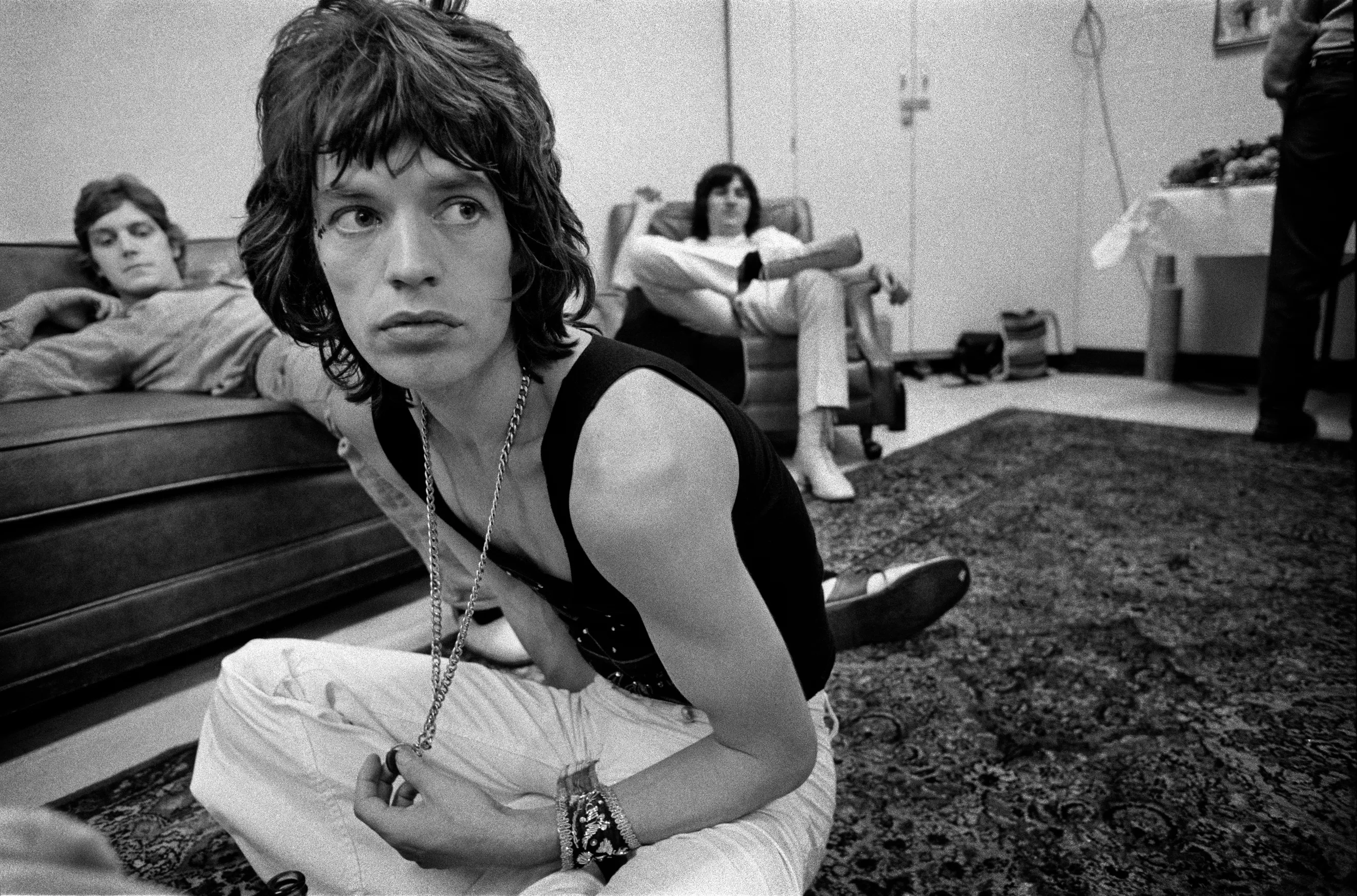
Only two songs were released as singles in 1972, both substantial hits in their own right. There are no proper music videos in the modern sense; what visual record there is comes from television performances and the band's 1972 tour film. The 2010 reissue cycle added a third single decades later.
| Single | Release | B-side | Peak chart positions | Notes |
|---|---|---|---|---|
| "Tumbling Dice" | 14 April 1972 (worldwide) | "Sweet Black Angel" | UK No. 5, US No. 7, Netherlands No. 5, Norway No. 6, Spain No. 7, Canada No. 7, US Cash Box No. 10, WCFL Chicago No. 1 | Sleeve illustration by Ruby Mazur; the band rehearsed the song on film in Montreux for use on Top of the Pops (broadcast 21 May 1972) and The Old Grey Whistle Test (27 May 1972) |
| "Happy" | June 1972 (US only) | "All Down the Line" | US Billboard Hot 100 No. 22 (entered at No. 69 on 15 July 1972, peaked 19 August 1972) | The first Rolling Stones single with Keith Richards on lead vocal to chart on the Hot 100; released to extend airplay during the 1972 American Tour |
| "Plundered My Soul" | 17 April 2010 (Record Store Day) | "All Down the Line" (alternate) | Limited release; did not chart | Vault track finished in 2009 with new Jagger vocals and new guitar by Richards and Mick Taylor (Taylor's first credited Stones session since 1974); released ahead of the deluxe reissue |
The Tumbling Dice rehearsal film from Montreux is the closest the album has to an official band-performed promo, broadcast in the UK on the two main rock television showcases of the era. The Stones did not make a Happy promo. The Ladies and Gentlemen: The Rolling Stones concert film, drawn from the Fort Worth and Houston shows of 24 and 25 June 1972 and released theatrically in 1974, is the cleanest official document of how these songs sounded on stage in 1972, with hot, fast, ragged versions of Tumbling Dice, Happy, Bitch and Rip This Joint.
Touring and Live: The Stones Touring Party of 1972
To support the album, the Rolling Stones embarked on their first tour of the United States since Altamont. The American Tour 1972, more widely known by its self-mocking nickname S.T.P. (the Stones Touring Party, after the laminated passes they handed out to crew and friends), opened at the Pacific Coliseum in Vancouver on 3 June 1972 and closed with a three-night stand at New York's Madison Square Garden on 24, 25 and 26 July 1972, the final show falling on Jagger's 29th birthday. Across the eight weeks the band played roughly 48 shows in cities including Seattle, San Francisco, Long Beach, Denver, Chicago, Houston, Mobile, Washington DC, Detroit, Toronto, Montreal, Boston, Philadelphia and Pittsburgh.
The opening act on every date was Stevie Wonder, then promoting his groundbreaking Music of My Mind. Wonder frequently joined the Stones on stage for an encore medley of his 1966 hit Uptight (Everything's Alright) and Satisfaction. The placement, in front of fifteen thousand mostly white rock fans every night, did much to widen Wonder's audience just ahead of Talking Book and Superstition that autumn.
The setlist relied heavily on the new album. Rocks Off, Happy, Tumbling Dice, Sweet Virginia, All Down the Line and Rip This Joint were played most nights, with occasional appearances by Loving Cup, Ventilator Blues, Torn and Frayed and Sweet Black Angel. Older material included Brown Sugar, Bitch, Gimme Shelter, Midnight Rambler, Jumpin' Jack Flash and Street Fighting Man. Notably absent was Sympathy for the Devil, which the band had effectively retired from US setlists after Altamont and would not perform there again for the rest of the decade.
The tour was as much a piece of theatre off the stage as on it:
- Truman Capote was commissioned to write a travelogue for Rolling Stone and famously failed to deliver, eventually being replaced with Andy Warhol's 1973 interview with him about it.
- Robert Frank, the photographer whose work decorated the album sleeve, shot the cinéma vérité tour film Cocksucker Blues, which captured so much drug use, backstage chaos and groupie behaviour that the band themselves later obtained a court order forbidding its general theatrical release.
- Robert Greenfield, covering the tour for Rolling Stone, expanded his reporting into the 1974 book S.T.P.: A Journey Through America with the Rolling Stones, which remains the definitive eyewitness account.
The trouble was constant. Thirty one Vancouver policemen were injured by ticketless fans on opening night. Sixty arrests and fifteen injuries followed at the 13 June San Diego show. Tucson police used tear gas on 14 June. On 17 July, a bomb went off in the band's equipment van outside the Montreal Forum, hours before showtime. On 18 July, Jagger and Richards were arrested in Rhode Island after an altercation with a photographer named Andy Dickerman; Boston Mayor Kevin White personally intervened to bail them out so that night's Boston Garden show could go ahead. The final show at Madison Square Garden on 26 July ended with balloons, cake and a pie fight, followed by an Ahmet Ertegun party at the St. Regis with Bob Dylan, Andy Warhol, Woody Allen and Zsa Zsa Gabor in attendance.
The concert film Ladies and Gentlemen: The Rolling Stones, drawn from the Fort Worth and Houston shows of 24 and 25 June 1972, was released theatrically in 1974 and remains the cleanest official document of the band on this tour, with definitive live versions of Tumbling Dice, Happy, Bitch and All Down the Line.
Exile on Main St. in TV, Film and Media
Sync placements have been one of the album's enduring afterlives. Martin Scorsese, a long term Stones obsessive, has reached repeatedly into Exile. His 2006 film The Departed uses Let It Loose during a key plot turn in which the Matt Damon and Leonardo DiCaprio characters' fates collide; the same film features an Exile jewel case being used to deliver an incriminating recording. Scorsese also borrowed the album's penultimate song, Shine a Light, as the title and de facto theme of his 2008 Stones concert documentary, shot at the Beacon Theatre in New York.
Showtime's Californication titled the opening episode of its fourth season "Exile on Main St." in 2011, and revisited Shine a Light in its sixth season, the song reappearing in the next episode performed by Tim Minchin's character. The CW's Supernatural opened its sixth season with an episode called "Exile on Main Street". Exile tracks have been used in countless trailers and prestige dramas, generally signalling either weary American masculinity or a Sunday morning hangover.
Controversy, Censorship and Lawsuits
Exile on Main St. never had the kind of front-page moral panic that surrounded Sticky Fingers (the working zipper sleeve) or Some Girls (the celebrity cover that had to be re-shot). Its controversies were mostly internal, contractual and reputational.
- The Allen Klein lawsuit. After the album's release, the band's former manager sued the Stones for breach of settlement on the grounds that five of the songs (Sweet Virginia, Loving Cup, All Down the Line, Shine a Light and the Robert Johnson reworking Stop Breaking Down) had been composed while Jagger and Richards were under contract with his company. ABKCO acquired publishing rights to the five and used them to compile the 1972 retrospective More Hot Rocks (Big Hits and Fazed Cookies). The Stones have shared the publishing royalties on those songs with ABKCO ever since.
- The Mick Taylor songwriting credit dispute. Taylor's only co-write credit on the record is Ventilator Blues. He has insisted in interviews stretching across five decades that he wrote substantial unacknowledged parts of several other songs, and his eventual departure from the band in December 1974 was partly about credit and royalties.
- The Wyman bass credits dispute. Bill Wyman has stated in print, including in Bass Player magazine, that the album's credits underplay his contribution and that he played on more than the eight songs he is credited on.
- "Sweet Black Angel" lyric. Jagger's pronunciation of the lyric, sung in pastiche Caribbean inflection about Angela Davis, has aged uncomfortably with some critics, though the song's solidarity with Davis was treated as straightforwardly progressive at the time.
- Cocksucker Blues. Robert Frank's tour film was suppressed by the band themselves, who obtained a court ruling that it could only be screened in the United States in Frank's physical presence and a handful of times a year. It has never had a normal commercial release.
Covers, Samples and Tributes
For an album with no obvious radio singles beyond Tumbling Dice and Happy, Exile's cultural footprint among other musicians is enormous. Some highlights:
- Linda Ronstadt cut Tumbling Dice for her 1977 album Simple Dreams, after Jagger personally suggested the song and wrote the lyrics out for her. Her version, sung from a female perspective, reached Number 32 on the Billboard Hot 100 in 1978 and remains the highest-charting cover of any Exile track.
- Pussy Galore, Jon Spencer's New York noise-rock band, released a complete cassette-only cover of the album, also called Exile on Main St., in 1986. Randall Roberts in the Los Angeles Times wrote that it sounded "as if it was recorded in the tank of a Lower East Side toilet"; he meant it as a compliment.
- Liz Phair conceived her 1993 debut Exile in Guyville as a song-by-song response to the original. The match-up is more thematic than musical, but Phair has discussed the parallels in many subsequent interviews.
- The British acid house group Alabama 3 nodded to the album with the title of their 1997 debut Exile on Coldharbour Lane.
- Matchbox Twenty titled their 2007 retrospective Exile on Mainstream.
- Phish covered the entire album as their "musical costume" Halloween set at the Indio, California, Festival 8 on 31 October 2009.
- Keith Urban performed Tumbling Dice on The Tonight Show with Jimmy Fallon in May 2010, with long-time Stones touring keyboardist Chuck Leavell drafted in for authenticity, and Mick Jagger in a cameo.
- The Black Crowes, Spirit, Nils Lofgren, The Pointer Sisters, The Replacements, Sheryl Crow (with Richards live in Central Park, 1999), Elvis Costello and Lucinda Williams have all covered Happy in live performance or on record.
- Custard Pie, the opening track of Led Zeppelin's Physical Graffiti, is essentially Zeppelin's own answer to the Exile riff vocabulary, recorded at Headley Grange just months after the Stones returned the Mobile Studio truck.
Tom Waits, asked by The Guardian in 2005 to name his favourite records, picked Exile:
"This is just a tree of life. This record is the watering hole. Keith Richards plays his ass off. This has the Checkerboard Lounge all over it."
Tom Waits, The Guardian, 20 March 2005
Reissues, Remasters and Anniversaries
Exile's reissue history has been almost as eventful as its original life. The headline events:
- 1994 Virgin remaster. When Virgin Records acquired the masters to the post-Get Yer Ya-Ya's Out Stones catalogue, Exile was remastered and reissued as a Collector's Edition CD that replicated in miniature many elements of the original gatefold packaging, including the perforated postcards insert.
- 2010 Universal deluxe reissue. Issued in Europe on 17 May 2010 and in the United States the following day. Supervised by Don Was and the Glimmer Twins (the Jagger / Richards joint production alias), mixed by Bob Clearmountain. The headline addition was a ten-track bonus disc. Of the ten, only two are undoctored outtakes from the original sessions ("Soul Survivor" with Richards lead vocal and dummy lyrics, and "Good Time Women" itself). The other eight received 2009 / 2010 overdubs, mostly new Jagger lead vocals, plus backing vocals by Cindy Mizelle and Lisa Fischer and new guitar parts by Richards and Mick Taylor.
- Plundered My Soul single. Released on Record Store Day, 17 April 2010, as a 7" vinyl. The most newsworthy thing about the track is Mick Taylor's appearance on a Rolling Stones session for the first time in 35 years.
- 2010 chart return. The reissue debuted at Number 1 on the UK Albums Chart in the week of 23 May 2010, almost exactly 38 years to the week after the original. It re-entered the US Billboard 200 at Number 2, selling 76,000 copies in its first week. The Rarities-only bonus disc, sold separately at Target in the US, debuted on the Billboard 200 at Number 27.
- 2010 documentary, Stones in Exile. A feature-length film directed by Stephen Kijak and produced by John Battsek for Passion Pictures, screened at Cannes in May 2010 and broadcast on the BBC. It includes new interviews with Jagger, Richards, Watts, Wyman and Taylor, and previously unseen Robert Frank footage from Nellcôte.
- 2011 SHM-SACD. A Japan-only Super High Material SACD edition.
- 2012 Grammy Hall of Fame induction.
- 2022 50th anniversary. The album turned 50 in May 2022. There was a noticeable amount of retrospective press coverage, but no major new official remaster or box set was released for the anniversary; the 2010 reissue remains the de facto deluxe edition.
The 2010 bonus disc tracklist in full:
| # | Title | Length | Notes |
|---|---|---|---|
| 1 | Pass the Wine (Sophia Loren) | 4:54 | Nellcôte-era backing track with new 2009 Jagger vocals |
| 2 | Plundered My Soul | 3:59 | 2009 Jagger vocals; new Richards and Mick Taylor guitars |
| 3 | I'm Not Signifying | 3:55 | The only bonus track not given new Jagger vocals |
| 4 | Following the River | 4:52 | Previously uncirculated Nicky Hopkins piano track; new Jagger vocals; David Campbell string arrangement |
| 5 | Dancing in the Light | 4:21 | Nellcôte-era backing track with new vocals |
| 6 | So Divine (Aladdin Story) | 4:32 | Includes a new 2010 Richards guitar lead |
| 7 | Loving Cup (alternate take) | 5:26 | An edit of the well-known "drunk" version (first 2 minutes 12 seconds) spliced with a second, previously unknown take |
| 8 | Soul Survivor (alternate take) | 3:59 | Richards lead vocal with placeholder lyrics; undoctored |
| 9 | Good Time Women | 3:21 | The 1970 Stargroves precursor to Tumbling Dice; undoctored |
| 10 | Title 5 | 1:47 | Not an Exile outtake at all; an instrumental from early 1967 sessions, featuring Richards on his Vox Conqueror or Supreme amp |
| 11 | All Down the Line (alternate) | 4:09 | Japanese-only bonus track |
Legacy and Influence
The story of the Rolling Stones after Exile on Main St. is the story of a band that never again had everything aligned in the same way. Goats Head Soup arrived in August 1973, sounding more polished and more uncertain. By the end of 1974 Mick Taylor was gone, citing both his lack of songwriting credits and Richards's drug use as factors. Ronnie Wood, formerly of the Faces, joined in 1975 and remains in the band today. The Rolling Stones would go on to release dozens more albums, including Some Girls (1978), Tattoo You (1981) and 2023's Grammy-winning Hackney Diamonds, but the four-album run of Let It Bleed, Sticky Fingers, Exile on Main St. and Goats Head Soup is universally regarded as their high water mark.
The album's influence is harder to quantify because almost every guitar band that came after it has, at some point, tried to make their own Exile. The Replacements built a career on the principle that smudged, half-drunk performances often beat clean ones. The Black Crowes' debut Shake Your Money Maker is essentially a homage. Primal Scream's Give Out But Don't Give Up was overtly modelled on Nellcôte. Ryan Adams's Heartbreaker, Kings of Leon's Aha Shake Heartbreak, and most of the British "Cool Britannia" generation owe Exile a direct debt. Even The Strokes and The Hold Steady, working in entirely different traditions, have cited it. Bill Janovitz puts the case at its most extreme:
"It is the greatest, most soulful, rock and roll record ever made, because it seamlessly distills perhaps all the essential elements of rock and roll up to 1971, if not beyond. It is the single greatest rock and roll record of all time."
Bill Janovitz, The Rolling Stones' Exile on Main St. (33⅓ series), 2005
For the Stones themselves, the legacy of Nellcôte has been more complicated. Keith Richards eventually beat his heroin habit at the turn of the 1980s and has spoken openly about how close Exile came to being his last record. Producer Jimmy Miller's own addictions worsened after the album, and his career as the Stones' producer ended with Goats Head Soup. Mick Taylor has spent the half century since talking publicly about feeling underpaid and uncredited for his contribution. Bill Wyman left the band in 1993 to pursue a quieter life. Charlie Watts kept playing the drums in his perfect, unshowy way until his death in August 2021. The Rolling Stones, with replacement drummer Steve Jordan, continued as if continuity itself was the point.
Things You Might Not Know About Exile on Main St.
| Fact | Detail |
|---|---|
| The Tattoo Parlor cover | The album cover photograph "Tattoo Parlor" is not a Stones image at all. It is an outtake from Robert Frank's 1958 photobook The Americans, a collage of sideshow circus performers including the contortionist Joe "The Human Corkscrew" Allen, the Diane Arbus portrait of Hezekiah Trambles "The Congo Jungle Freak", and the sword-balancing "Three Ball Charlie" from Humboldt, Nebraska. |
| Mick Taylor's missing credits | Mick Taylor is credited as a co-writer on only one Exile song, Ventilator Blues. Taylor has spent the last fifty years quietly insisting that he contributed substantial unacknowledged writing to many more, and his departure from the band in December 1974 was partly about credit and royalties. |
| Jimmy Miller on drums | Jimmy Miller, the album's producer, plays drums on three tracks: the coda of Tumbling Dice (when Charlie Watts struggled with the breakdown groove), Happy and Shine a Light. The Tumbling Dice coda is the only known Rolling Stones song on which Watts overdubbed a second drum track over the original. |
| Loving Cup at Hyde Park | Loving Cup, despite being entirely an Olympic Studios recording from 1969, was first played live at the Stones' free Hyde Park concert on 5 July 1969, the show that was Mick Taylor's official debut as a Stone and that opened with Jagger reading a Shelley poem in memory of Brian Jones, who had drowned in his swimming pool two days earlier. |
| Klein wins five songs | Allen Klein, the band's former manager whom they had spent years escaping, successfully sued the band after the album's release on the grounds that five songs on it (Sweet Virginia, Loving Cup, All Down the Line, Shine a Light and the Robert Johnson reworking Stop Breaking Down) had been composed during his tenure. His company ABKCO acquired publishing rights to all five. |
| The uncredited Dr. John | Dr. John plays piano on I Just Want to See His Face but is uncredited on the original LP sleeve. The same track features Keith Richards on electric piano, Mick Taylor on electric bass, Bill Plummer on string bass, and Jimmy Miller on percussion, with no Bill Wyman, no Charlie Watts and no Nicky Hopkins. |
| The Amazing Grace connection | The famous gospel-inflected backing vocal arrangements on Tumbling Dice, Loving Cup, Let It Loose and Shine a Light were inspired by Jagger, Watts and Billy Preston visiting a Los Angeles evangelical church where Aretha Franklin happened to be recording the live sessions that became her 1972 album Amazing Grace. |
| Sweet Black Angel for Angela Davis | Sweet Black Angel is Mick Jagger's tribute to Angela Davis, the Marxist academic then on trial in California for kidnapping and murder. Davis was acquitted on 4 June 1972, the day after the band opened the American Tour 1972 in Vancouver. |
| Casino Boogie's cut-up lyrics | The lyrics to Casino Boogie were reportedly assembled from random phrases written on cut-up cards, a technique Mick Jagger had picked up from William S. Burroughs, who was a guest at Nellcôte during the sessions. |
| Plundered My Soul reunites Taylor | The 2010 reissue's bonus track Plundered My Soul features new lead vocals by Mick Jagger and additional guitar parts recorded in 2009 by Keith Richards and Mick Taylor. The Taylor contribution is the former Stone's first credited Rolling Stones recording session work since 1974. |
| Wyman on only eight tracks | Bill Wyman is credited as the bass player on only eight of the album's eighteen tracks. The other bass parts were played by Mick Taylor, Keith Richards or session double bassist Bill Plummer. Wyman has insisted in subsequent interviews that the credits are wrong and that he played on more. |
| Tumbling Dice's 150 takes | Tumbling Dice took an estimated 30 to 150 takes to complete. Engineer Andy Johns later described it as "like pulling teeth". The song was begun at Stargroves in 1970 as an unrelated piano-led number called Good Time Women, with Ian Stewart's piano dominating the arrangement. |
| The highest-ranked Stones record | The album is widely regarded as the highest-ranked Rolling Stones record on every credible "greatest of all time" list, including Rolling Stone's 500 (Number 7 in 2003 and 2012, Number 14 in the 2020 and 2023 revisions). No other Stones album has ever placed higher than 14 on that list. |
| A perfect Metacritic 100 | The 2010 deluxe reissue carries an aggregate Metacritic score of 100 out of 100, a perfect score it shares with only a tiny handful of other archival releases. |
| The cover at Art Institute of Chicago | The cover image of Robert Frank's "Tattoo Parlor" is held in the permanent collection of the Art Institute of Chicago. The Stones licensed it; they did not commission it. |
Listen to the Riffology Podcast on Exile on Main St.
On the Riffology podcast, Neil and Chris put the needle back on the rock and roll records that mattered. The Exile on Main St. episode digs into the Nellcôte basement, the Allen Klein tax mess, the Mick Taylor songwriting argument, the gospel detour in Los Angeles, the 1972 American Tour with its bombings and pie fights, and the question of whether anyone who was actually there can be trusted to remember what really happened. If this article is the long read, the episode is the conversation. New episodes drop every week and are available on Apple Podcasts, Spotify, Pocket Casts, Overcast and wherever else you get your podcasts.
Comments