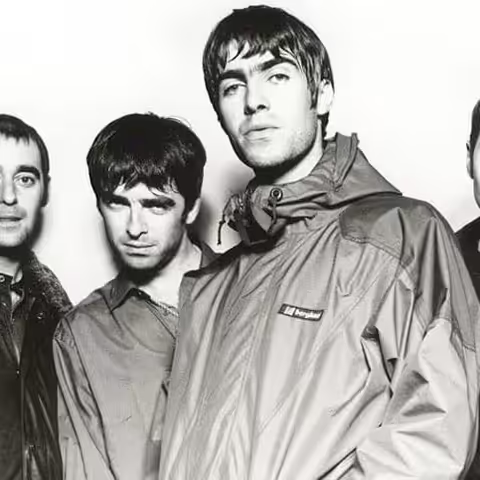
On the wall of the bedroom Liam Gallagher shared with his older brother Noel on Ashburn Avenue in Burnage there hung, in 1991, a tour poster for the Manchester indie band Inspiral Carpets, the band Noel was at that point earning a wage with as a roadie. The poster listed a date at the Oasis Leisure Centre in Swindon. When Liam, then 18, talked his way into the singer's job in Bonehead Arthurs's local four-piece The Rain, he renamed them after the venue on the wall above the bed. Within three years the band who took their name from a Wiltshire swimming pool would be the fastest-selling debut act in British chart history. Within twelve months of that, 2.6 million people would apply for tickets to see them play at Knebworth.
Across thirty-five years, seven studio albums, one fight in a Paris dressing room and the second-biggest-grossing concert tour of 2025, Oasis became the working-class voice of British rock. As of 2026 the band have sold over 100 million records, hold eight UK number-one albums and eight UK number-one singles, and are the headline act of the 2026 Rock and Roll Hall of Fame induction class. They were among the loudest cultural forces of the Britpop years, broke up acrimoniously enough in 2009 that the public split-up letter became part of the historical record, then reformed fifteen years later and sold roughly two and a quarter million tickets to people who had spent the gap waiting. This is the full story.
Band Facts
| Field | Detail |
|---|---|
| Origin | Burnage, Manchester, England |
| Formed | 1991 (originally as the Rain) |
| Years active | 1991 to 2009; 2024 to present |
| Original lineup | Liam Gallagher (vocals), Paul "Bonehead" Arthurs (guitar), Paul "Guigsy" McGuigan (bass), Tony McCarroll (drums); Noel Gallagher (lead guitar, songwriter) joined late 1991 |
| Current lineup | Liam Gallagher, Noel Gallagher, Bonehead, Gem Archer, Andy Bell |
| Notable past members | Paul "Guigsy" McGuigan, Tony McCarroll, Alan "Whitey" White; touring drummers Zak Starkey and Chris Sharrock |
| Labels | Creation, Big Brother, Sony, Columbia, Epic, Reprise |
| Genres | Britpop, rock, indie rock, neo-psychedelia |
| Studio albums | 7 (1994 to 2008) |
| Key producers | Owen Morris, Mark Coyle, Mark Stent, Dave Sardy |
| Records sold | Over 100 million worldwide (as of 2026) |
| UK number ones | 8 number-one albums and 8 number-one singles |
| Hall of Fame | Rock and Roll Hall of Fame, class of 2026 (ceremony 14 November 2026, Los Angeles) |
| Major awards | 7 Brit Awards (incl. Outstanding Contribution and Best Album of the Last 30 Years), 17 NME Awards, 9 Q Awards, 4 MTV Europe Music Awards, 2 Ivor Novellos, 3 Grammy nominations; Noel Gallagher Songwriter of the Year, 2026 Brits |
| Defining moment | The 250,000-strong Knebworth weekend, 10 and 11 August 1996 |
Manchester roots and the Creation deal
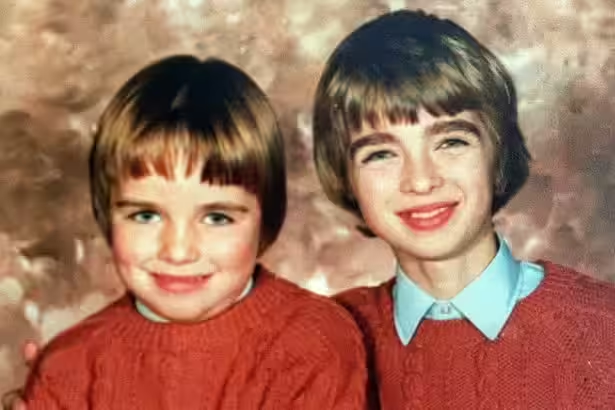
The Gallaghers grew up in Burnage, a working-class district on the southern edge of Manchester. Their parents Thomas and Peggy had emigrated separately from Ireland in the 1960s, met in Manchester and raised three boys: Paul, Noel (born 29 May 1967) and Liam (born 21 September 1972). Thomas was a violent drunk, and in 1976 Peggy took the three boys and left him, eventually setting up home on Ashburn Avenue. The shadow of that childhood, and the bond the boys had with their mother, would surface again and again in the way the Gallaghers later talked about themselves and each other.
Noel was the quieter brother, a Manchester City supporter who left school with no qualifications worth listing and drifted between building sites and the dole queue. Music gave him a way out. Through a friend he ended up roadying for the Manchester indie band Inspiral Carpets in the late 1980s, a job that took him around Europe and the United States and, just as crucially, taught him how a working band actually operated, how songs were arranged, how singles were chosen, how the machinery turned.
While Noel was on the road, Liam was at home, in and out of school, getting into fights and, by 1991, falling in with a band called The Rain that comprised Bonehead Arthurs on guitar, Guigsy McGuigan on bass and Tony McCarroll on drums, with a singer named Chris Hutton out front. Liam talked his way in as singer in Hutton's place, immediately demanded a new name, and lifted Oasis from the Inspiral Carpets poster on his bedroom wall. The first gig under that name was at the Boardwalk in Manchester on 14 August 1991, fourth from bottom on a four-band bill.
When Noel came home, heard Liam's band, and was politely unimpressed with the songs, he made an offer that would either remake the group or end it: he would join, but only if he became the sole songwriter and the band did exactly as he said. The other four agreed, and the version of Oasis that the world would come to know clicked into place around the end of 1991.
"He had loads of stuff written. When he walked in, we were a band making a racket with four tunes. All of a sudden, there were loads of ideas."
Bonehead Arthurs on Noel Gallagher joining the band, Mojo, 2014
For most of 1992 and into 1993 the band ground out the standard Manchester apprenticeship, playing the Boardwalk, recording rough demos at the band's own expense, and getting nowhere with the major labels they sent the tapes to. In May 1993 they hired a van, drove themselves up to Glasgow, and effectively bullied their way onto the bill of a small Saturday-night gig at King Tut's Wah Wah Hut, headlined by a band called Boyfriend. The exact mechanics differ depending on who is telling the story, but the version everyone agrees on is that Oasis turned up uninvited, made it clear they would not be leaving without playing, and were given a 30-minute opening slot on 31 May 1993.
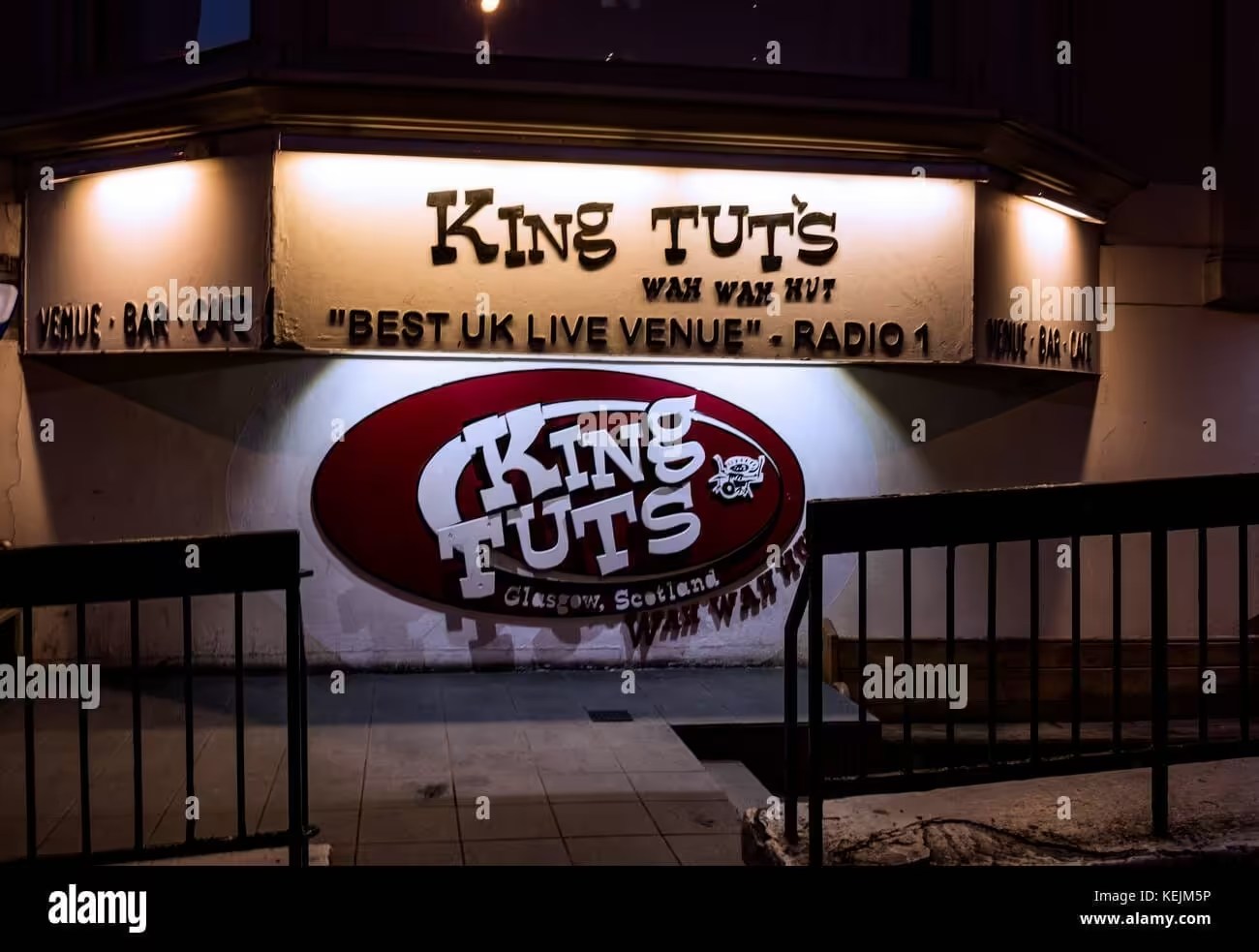
In the room that night was Alan McGee, the head of Creation Records, who had wandered in to see Boyfriend because his sister knew one of the band. McGee watched Oasis play four songs, including an early version of Bring It On Down and a song called Rock 'n' Roll Star, and offered them a deal there and then. Creation was at the time one of the most respected indie labels in Britain, home to Primal Scream, Teenage Fanclub, My Bloody Valentine and the Boo Radleys, and it had been hovering near bankruptcy for years on the back of Kevin Shields's Loveless sessions. Signing Oasis would, within eighteen months, save the label.
The deal was formalised in October 1993. The band began rehearsing and demoing for what would become their debut almost immediately, releasing a white-label run of a song called Columbia while they worked.
Definitely Maybe and the Britpop ascent
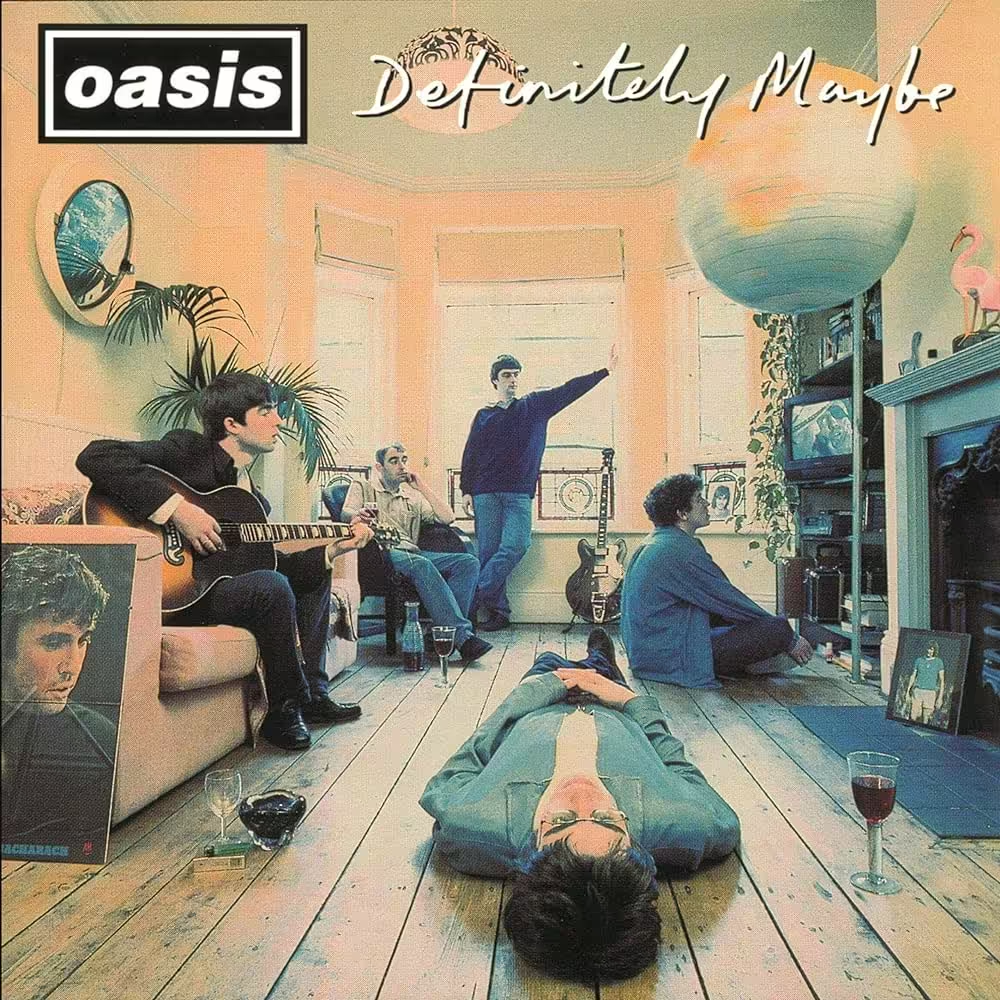
The recording of Definitely Maybe was not the smooth assault on the charts the finished record made it sound like. The first sessions, with the band's then sound engineer Dave Batchelor producing at Monnow Valley Studio in late 1993, were scrapped almost in full. A second attempt with Mark Coyle, again at Monnow Valley and at Sawmills in Cornwall, captured better performances but a thin, brittle sound. In the end Owen Morris, a young engineer who had been working with Johnny Marr's Electronic, was brought in to mix the tapes at Loco Studios near Newport, and it was Morris's saturated, deliberately over-compressed mix that turned the album into the wall of sound that hit shelves in August 1994. Creation paid for the sessions to be done two and a half times.
Definitely Maybe was released on 29 August 1994. It went straight in at number one on the UK Albums Chart, sold around 150,000 copies in its first week, and was certified gold inside four days. It became the fastest-selling debut album in British chart history at the time, a record that stood for twelve years until Arctic Monkeys' Whatever People Say I Am, That's What I'm Not surpassed it in January 2006. Four singles came off it: Supersonic in April 1994, Shakermaker in June, Live Forever in August and Cigarettes & Alcohol in October. Live Forever was the moment it became obvious that Noel was capable of writing a song that could outlast the moment, and it remains the most universally loved thing the band ever put on a record.
What Definitely Maybe sounded like, more than anything, was the noise of a band who knew exactly who they were. The lyrics on Rock 'n' Roll Star, Cigarettes & Alcohol and Supersonic were not metaphors for anything. They were a manifesto, set to a Marshall stack and a wagging tambourine.
The album arrived in the middle of a wider reclaiming of British pop identity. Grunge had owned the early years of the decade, but by 1994 a cluster of British guitar bands, most of them in their early twenties, had begun to sound like a movement. Suede had released their debut in 1993, Blur's Parklife landed in April 1994, Pulp's His 'n' Hers came the same month, and Elastica, Sleeper, Menswear, Gene and Echobelly were all within twelve months of their best work. The press, hungry for a scene to name, settled on Britpop.
Within that scene, Oasis and Blur were the two flagships, and they could not have been more different. Blur were Southern, art-school, mannered and ironic. Oasis were Northern, working-class, swaggering and entirely unironic. The rivalry between them, stoked enthusiastically by both bands and by the music press, came to a head in August 1995, when Blur and Oasis released competing singles on the same day. Blur's Country House and Oasis's Roll With It both came out on 14 August 1995, and the Battle of Britpop dominated the front pages of the broadsheets, not just the music weeklies, for days. Country House won the singles week, selling around 274,000 copies to Roll With It's 216,000.
The chart battle proved to be the only round Blur won. Across the next twelve months Oasis would outsell them, outdraw them and ultimately rewrite the terms of the argument.
Morning Glory and Knebworth
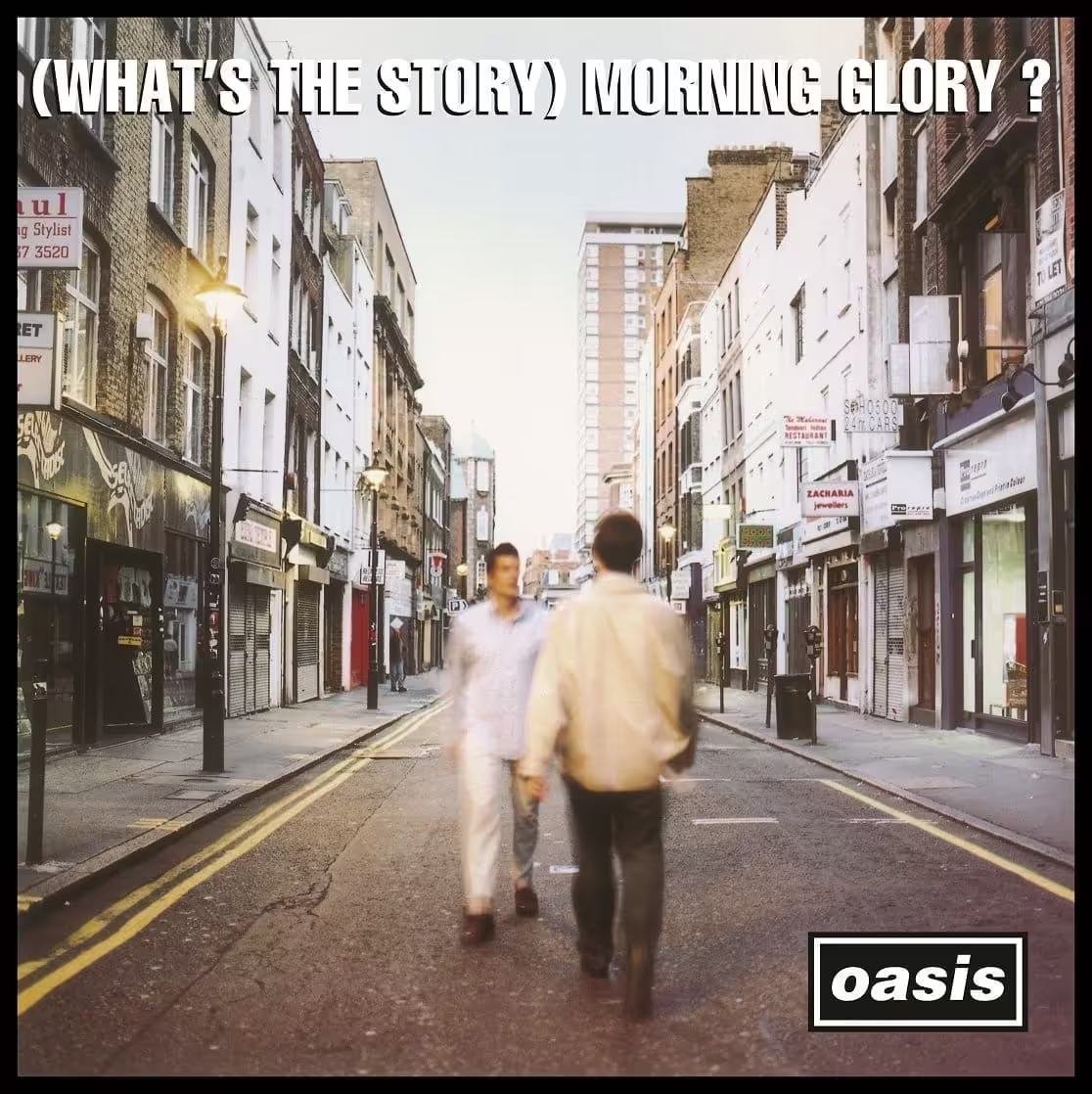
The follow-up was recorded at Rockfield Studios in Monmouthshire across May 1995, with Owen Morris again at the desk and Noel taking joint production credit. By the band's own later account the songs came quickly. Wonderwall was reportedly written in a single afternoon at a soundcheck. Don't Look Back in Anger was demoed on a hotel piano. Tony McCarroll had already gone by the time the album was finished, sacked in April 1995 after the Some Might Say sessions and replaced by Alan White, brother of Paul Weller's drummer Steve White.
(What's the Story) Morning Glory? was released on 2 October 1995. It entered the UK Albums Chart at number one and stayed there for ten weeks. Five singles followed: Some Might Say (the band's first UK number one, ahead of the album), Roll With It, Wonderwall, Don't Look Back in Anger and Champagne Supernova. Wonderwall and Don't Look Back in Anger between them turned a Britpop band into something closer to a national institution, the kind of songs that get sung in football grounds and at weddings, and the album itself eventually became the fifth-best-selling LP of all time in the UK and one of the best-selling albums in any market, with global sales of around 22 million by 2008.
The live shows kept pace. The band sold out Earl's Court in November 1995, then in April 1996 played two open-air nights at Maine Road, the home of their beloved Manchester City. At the 1996 BRIT Awards in February, Morning Glory won Best British Album, Oasis took Best British Group, and Noel collected the writer trophy.
And then on the weekend of 10 and 11 August 1996, Oasis played two outdoor concerts in the grounds of Knebworth House in Hertfordshire. The audience across the two nights totalled around 250,000 people, making them the largest outdoor concerts ever staged in the United Kingdom. Around 2.6 million people had applied for tickets, a figure equivalent to roughly four per cent of the entire UK population at the time. Had demand been met, Oasis could have played Knebworth for around a fortnight.
The bill across the two nights ran through the Manic Street Preachers, the Prodigy, the Chemical Brothers, Ocean Colour Scene, Cast and the Charlatans. Liam stood out front with a tambourine and his hands behind his back and sang to a quarter of a million people each night, and Noel introduced Champagne Supernova as a song about meeting Robbie Williams in a bar. The shows were filmed and broadcast in part at the time, and were collected as the 2021 Jake Scott concert documentary Knebworth 1996.
For a band who had released their first single only twenty-eight months earlier, Knebworth was an almost vertical achievement. It was also, in retrospect, the high-water mark. Almost everything that came next was measured against it.
Be Here Now and the post-peak slide
The recording of the third Oasis album, Be Here Now, took place across late 1996 and early 1997, with sessions split between Abbey Road, Air Studios and Ridge Farm in Surrey. Owen Morris and Noel produced again. The atmosphere in the studio, as the band themselves and the engineers later described it, was thick with cocaine, ambition and a complete absence of editorial discipline. Songs that should have been four minutes long stretched to seven or eight. Guitar parts were piled on top of guitar parts. The mixes were loud, dense and exhausting.
Released on 21 August 1997 into a wall of advance press unlike anything a British rock album had received before, Be Here Now sold around 424,000 copies in the United Kingdom on its first day and 696,000 in its first week, the fastest first-week sale by any album in British chart history at the time, a record it held until Adele's 25 in 2015. The reviews were rapturous for about a fortnight, then began to sour as the country actually sat down and listened to it. Within a year the critical consensus had quietly inverted, and Noel himself eventually conceded the album was, in his own phrase, the sound of a bunch of guys on coke in the studio, not knowing when to stop.
"In the studio it was great, and on the day it came out it was great. It was only when I got on tour that I started thinking, it doesn't stand up."
Noel Gallagher on Be Here Now, NME, 2016
The aftermath unspooled across 1998 and 1999. The B-sides and rarities collection The Masterplan came out in November 1998 to a warmer reception than the album that preceded it. Through the long sessions for the next album, both Bonehead and Guigsy walked. Bonehead left in August 1999, Guigsy a week later, both citing exhaustion and a desire to spend more time with their families. Noel and Liam, suddenly a duo, recruited Gem Archer from Heavy Stereo on guitar and Andy Bell from Ride and Hurricane #1 on bass. The replacements were excellent musicians and, importantly, songwriters in their own right, which would matter when the next album finally surfaced.
The long second half: 2000 to 2008
The second half of the Oasis discography is the half people argue about. Standing on the Shoulder of Giants was released on 28 February 2000, produced by Mark Stent with the band, and represented Noel's first serious move away from the early template, leaning on Beatles-via-psychedelia textures, drum loops and the title track's grumbling bass figure. It went straight to number one in the UK, sold well, and was received politely. Three of its four singles, Go Let It Out, Who Feels Love? and Sunday Morning Call, made the UK top five.
Heathen Chemistry followed on 1 July 2002, produced by the band themselves. For the first time since the debut, songwriting credits were shared, with Liam contributing Songbird (a UK number-three single) and both Gem and Andy chipping in. Don't Believe the Truth, recorded with Dave Sardy producing after a scrapped earlier attempt with Death in Vegas and released on 30 May 2005, was the warmest critical reception the band had received in a decade, propelled by Lyla and The Importance of Being Idle and helped along by Zak Starkey, son of Ringo Starr, on drums. The supporting tour visited 26 countries and 113 shows over almost a year.
Dig Out Your Soul, released on 6 October 2008 and again produced by Sardy, leaned harder into the psychedelic-tinged sound of the late period, with The Shock of the Lightning and I'm Outta Time as its calling cards and Chris Sharrock on the drum stool. It went to number one in the UK, debuted in the top five in the United States, and would, although nobody knew it at the time, be the last Oasis studio album for the foreseeable future.
Across that whole second-half stretch the personnel had shifted. Tony McCarroll was already gone by Some Might Say in April 1995, replaced by Alan White. White himself was quietly pushed out in early 2004 and replaced for the touring band first by Zak Starkey, who came aboard for the Don't Believe the Truth sessions and tour, and then by Chris Sharrock from the late stages onwards. Through it all the Gallagher brothers wrote, played, fought and refused to fall silent.
The Gallagher feud and the Rock en Seine split
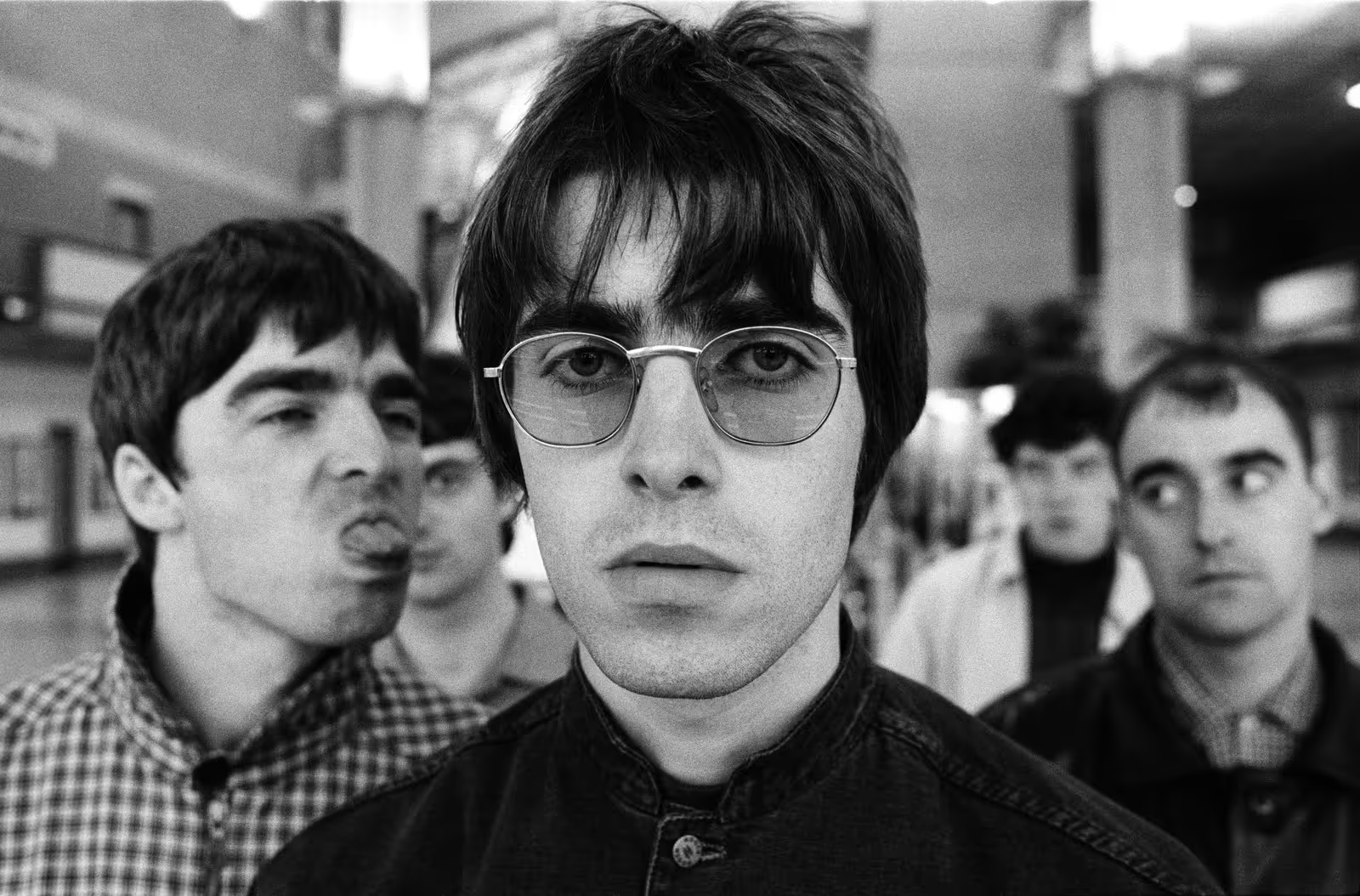
The feud between the Gallaghers was not a press invention. It was the central narrative engine of the band, and it had been audible from very early on. In 1994 the NME journalist John Harris recorded an interview with the brothers in a hotel room for the magazine, during which the conversation degenerated into a screaming match about touring schedules, money and which of the two of them was the bigger talent. The tape was so entertaining the NME released it as a spoken-word single in April 1995 under the title Wibbling Rivalry, credited to Oas*s, and it reached number 52 on the UK Singles Chart, which makes it, depending on how strictly one defines the categories, the highest-charting interview record in British chart history.
The next major eruption came in September 1995 at the Whisky a Go Go in Los Angeles, where a US tour collapsed mid-set after a fight on stage and Noel briefly walked out of the band. The Be Here Now sessions and the band's subsequent touring fortunes were punctuated by more rows. Standing on the Shoulder of Giants saw the original lineup come apart. Across the 2000s the brothers' interviews trended steadily towards open warfare, with Noel describing Liam, on various occasions, as a man with a fork in a world of soup, and Liam returning fire in language that does not survive intact onto a family-friendly page.
By the summer of 2009 the band were touring Dig Out Your Soul and finding it harder than ever to get through a working day together. On 22 August they were forced to cancel their scheduled headline slot at the V Festival at Weston Park, Noel citing Liam's laryngitis (Noel later disputed the diagnosis publicly). The cancellation was their last UK appearance as Oasis for sixteen years. Six days later, on 28 August 2009, they were scheduled to headline the Rock en Seine festival in Paris. In the dressing room before the show, an argument between Liam and Noel about, depending on which version is being told, the V cancellation, an exclusive Sun newspaper deal Liam had agreed without the band, and the band's general internal state, escalated into a physical confrontation. By most accounts Liam swung one of Noel's guitars at his brother and broke it. Noel walked out of the room, out of the venue and out of the band.
The Paris show was cancelled minutes before it was due to start. Later that evening Noel posted a statement on the band's website. It read, in its entirety:
"It is with some sadness and great relief to tell you that I quit Oasis tonight. People will write and say what they like, but I simply could not go on working with Liam a day longer."
Noel Gallagher, 28 August 2009
Oasis, as a working band, was over. They had been together for eighteen years, recorded seven studio albums, sold tens of millions of records globally and, in the United Kingdom alone, racked up eight number-one albums and eight number-one singles. The rest of the lineup, Liam, Gem, Andy and Chris Sharrock, would carry on together under a different name. Noel would carry on alone.
Beady Eye, the High Flying Birds and fifteen years apart
The first thing Liam, Gem, Andy and Chris did was carry on. They renamed themselves Beady Eye, brought in a few additional players, and released their debut album Different Gear, Still Speeding in February 2011. It went to number three in the UK on first-week sales of around 64,000. A second album, BE, produced by TV on the Radio's Dave Sitek, followed in June 2013. By October 2014 the band had quietly broken up, Liam announcing the split on Twitter.
Noel, meanwhile, took a year off, then announced his new project, Noel Gallagher's High Flying Birds, in 2011. The self-titled debut came out in October 2011, debuted at number one in the UK, and produced a run of singles, AKA What a Life!, If I Had a Gun and The Death of You and Me, that suggested a writer comfortable working without his brother's voice. Three more albums followed, each shifting the project a little further away from Oasis: Chasing Yesterday in 2015, Who Built the Moon? in 2017 (produced by David Holmes) and Council Skies in 2023. The High Flying Birds toured continuously through the 2010s and into the 2020s, headlining festivals on their own and supporting the Who, U2 and others on stadium runs.
Liam, after the end of Beady Eye, took a longer pause. His solo debut As You Were came out in October 2017, debuted at number one in the UK on first-week sales of around 103,000, and was the highest-selling vinyl release in a single week in twenty years. Why Me? Why Not. followed in September 2019, and C'mon You Know in May 2022. All three solo albums went to number one. By the early 2020s Liam was filling Knebworth on his own (two nights in June 2022, around 170,000 people), headlining Reading and Leeds, and selling out everywhere he played.
Throughout, the brothers refused to share a stage and refused, for the most part, to share a polite sentence. They sniped at each other in print, in podcast interviews and across Twitter, and every two or three years a journalist would float the reunion question and be told, by one or the other or both, in no uncertain terms, that it was never happening.
The 2024 reunion and Oasis Live '25
Through the summer of 2024, with the 30th anniversary of Definitely Maybe approaching at the end of August, the speculation began to gather pace. Liam was already touring Definitely Maybe in full as a solo show, with Bonehead in the band, and the brothers' public exchanges had quietly softened over the previous year. On 25 August 2024, after Liam closed out a headline set at Reading Festival, a 10-second teaser appeared on the band's social channels with the date 27.08.24 and the words "This is happening".
At eight o'clock on Tuesday 27 August 2024, two days before the 30th anniversary of Definitely Maybe, Oasis confirmed the reunion. Fourteen UK and Ireland stadium shows were announced for July and August 2025: four (later seven) at Heaton Park in Manchester, four (later seven) at Wembley Stadium, two at the Principality Stadium in Cardiff, two (later three) at Murrayfield in Edinburgh and two at Croke Park in Dublin. The press release contained the brothers' first joint statement in fifteen years.
"The guns have fallen silent. The stars have aligned. The great wait is over. Come see. It will not be televised."
Oasis press release, 27 August 2024
The response was immediate and historic. Six Oasis releases re-entered the UK charts inside the week. Live Forever climbed to number eight in the UK Singles Chart, comfortably higher than the number ten it had reached on its original 1994 release. Definitely Maybe re-entered the Albums Chart top five. The Prime Minister, Keir Starmer, weighed in to welcome the reunion as a good-news moment for the country. The ticket sale that followed, on 31 August 2024, was less of a good-news moment: roughly 14 million people are believed to have queued for the initial allocation of around 1.4 million tickets, Ticketmaster's use of dynamic pricing drew formal complaints to the Competition and Markets Authority, and in March 2025 the CMA concluded that Ticketmaster may have misled fans during the sale. The band, in turn, eventually announced multiple additional shows, including extra Heaton Park and Wembley dates and full North American, Australian, Japanese, South Korean, Mexican and South American legs.
The Oasis Live '25 Tour opened on the evening of Friday 4 July 2025 at the Principality Stadium in Cardiff. Liam walked out in a parka, Noel walked out a beat later with a guitar, and the band opened with Hello and Acquiesce. The set ran through a near-greatest-hits selection drawn almost entirely from the first three albums and The Masterplan, closed the main set with Live Forever and Rock 'n' Roll Star, and encored with The Masterplan, Don't Look Back in Anger, Wonderwall and Champagne Supernova. The reviews, almost without exception, were rapturous.
The touring band assembled for the reunion was Liam Gallagher on lead vocals, Noel Gallagher on guitar and vocals, Bonehead on guitar and piano, Gem Archer on guitar, Andy Bell on bass and the American session drummer Joey Waronker on drums. Behind them on the riser were Christian Madden on keyboards, Jess Greenfield on backing vocals and tambourine, and a three-piece brass section of Alastair White on trombone, Steve Hamilton on saxophone and Joe Auckland on trumpet. On 3 October 2025, Bonehead announced that he had been diagnosed with prostate cancer earlier in the year and would step away from the Asian and Australian legs to undergo treatment; Mike Moore, who had toured with Liam, filled in for those shows.
The UK and Ireland leg, supported by Cast and Richard Ashcroft, was the spine of the tour, and it was not without tragedy. On 2 August 2025, near the end of the band's third Wembley show, a fan died after falling from the upper tier; the band issued a statement of "shock and sadness" and offered condolences to the man's family. The London run, all seven nights eventually, drew its share of pop-cultural cameos in happier moments, including Dua Lipa and Jarvis Cocker doing the Poznan in the crowd, and finished as the biggest run by any artist in Wembley's history.
From late August the tour crossed the Atlantic, with Cage the Elephant supporting through North America: Toronto's Rogers Stadium, Chicago's Soldier Field, MetLife in New Jersey, the Rose Bowl in Pasadena and Estadio GNP Seguros in Mexico City. Paul McCartney, who attended one of the Rose Bowl nights, was reported to have called the show "fabulous". The Asian and Australian legs ran across late October and early November: Goyang Stadium in South Korea, two nights at the Tokyo Dome, three at Marvel Stadium in Melbourne and two at Accor Stadium in Sydney, with Ball Park Music supporting in Australia and Asian Kung-Fu Generation and Otoboke Beaver opening across Japan. The South American leg followed almost immediately: two nights at Estadio Mas Monumental in Buenos Aires, one at Estadio Nacional in Santiago, and a closing pair on 22 and 23 November 2025 at MorumBIS in Sao Paulo. The final show, on 23 November, included an emotional tribute to the late Stone Roses bassist Gary "Mani" Mounfield, with the band dedicating Live Forever and Rock 'n' Roll Star to "our dear friend, our hero, the one and only".
When Pollstar published its year-end figures on 12 December 2025, the headline numbers for Oasis Live '25 were these: 41 confirmed shows in 14 countries, 2.23 million ticket-holders across the 36 shows reported to it, $405.4 million in gross box-office takings (almost £398 million), the second-highest-grossing concert tour of 2025 and the third-most-attended. For a band who had not played a note together in nearly sixteen years, those numbers were not just a vindication. They were a complete reframing of the question of how big Oasis actually were.
What happens next is, as of mid-2026, open. Liam said in November 2025 that the band would need to "sit down and discuss" any future plans, and clarified that an earlier "see you next year" comment had only "raised a few eyebrows". The band's management has called the Live '25 run "the last time around"; Liam, on X, has called the manager "the accountant". A new album has been alternately teased and disowned, and no studio work has been confirmed. A 1,000-photograph official tour book by the photographer Simon Emmett was published in May 2026.
Studio discography
| Year | Album | Producer(s) | UK Peak | Notes |
|---|---|---|---|---|
| 1994 | Definitely Maybe | Owen Morris, Mark Coyle, Noel Gallagher | 1 | Fastest-selling UK debut at the time |
| 1995 | (What's the Story) Morning Glory? | Owen Morris, Noel Gallagher | 1 | UK number one for 10 weeks; ~22 million sold worldwide |
| 1997 | Be Here Now | Owen Morris, Noel Gallagher | 1 | 424,000 first-day, 696,000 first-week UK copies |
| 2000 | Standing on the Shoulder of Giants | Mark Stent, Noel Gallagher | 1 | Post-Bonehead lineup taking shape |
| 2002 | Heathen Chemistry | Oasis | 1 | First album with shared songwriting credits |
| 2005 | Don't Believe the Truth | Dave Sardy, Noel Gallagher | 1 | Warmest critical reception since the debut; Zak Starkey on drums |
| 2008 | Dig Out Your Soul | Dave Sardy | 1 | The last Oasis studio album to date |
Members across the decades
| Member | Role | Years | Notes |
|---|---|---|---|
| Liam Gallagher | Lead vocals, percussion | 1991 to 2009; 2024 to present | Joined the Rain in 1991 and renamed it Oasis |
| Noel Gallagher | Lead guitar, vocals, primary songwriter | late 1991 to 2009; 2024 to present | Sole writer of the first three albums |
| Paul "Bonehead" Arthurs | Rhythm guitar, piano | 1991 to 1999; 2024 to present | Founder; missed Asia and Australia legs of Live '25 |
| Paul "Guigsy" McGuigan | Bass | 1991 to 1999 | Founder; left a week after Bonehead |
| Tony McCarroll | Drums | 1991 to 1995 | Founder; sacked after the Some Might Say sessions |
| Alan "Whitey" White | Drums | 1995 to 2004 | Joined for Morning Glory; pushed out before Don't Believe the Truth |
| Gem Archer | Rhythm and lead guitar, keys | 1999 to 2009; 2024 to present | Ex-Heavy Stereo |
| Andy Bell | Bass | 1999 to 2009; 2024 to present | Ex-Ride and Hurricane #1; learned bass to join |
| Zak Starkey | Drums (touring and recording, not member) | 2004 to 2008 | Son of Ringo Starr; played on Don't Believe the Truth |
| Chris Sharrock | Drums (touring, not member) | 2008 to 2009 | Ex-Icicle Works and the La's |
| Joey Waronker | Drums (touring, not member) | 2024 to present | American session player; Live '25 tour |
Riffology Podcast Episodes on Oasis
Both of the Oasis records that defined the band have a full Riffology podcast episode of their own, paired in a single double-album deep dive that runs through Definitely Maybe and (What's the Story) Morning Glory? track by track. Follow either album for the embed.
| Album | Year | On the Riffology podcast |
|---|---|---|
| Definitely Maybe | 1994 | The fastest-selling UK debut, the King Tut's signing and the album that put Oasis on every front page in Britain |
| (What's the Story) Morning Glory? | 1995 | Wonderwall, Don't Look Back in Anger, Champagne Supernova and the ten-week UK number one |
Legacy and the Rock and Roll Hall of Fame
Three decades on, the Oasis catalogue still operates the way the band always intended it to: as common cultural property. Wonderwall, Don't Look Back in Anger, Live Forever, Champagne Supernova, Some Might Say, Roll With It and Rock 'n' Roll Star turn up in pubs, at weddings, on football terraces and on FM radio in every English-speaking country, often performed at volumes the original recordings never required. Definitely Maybe and Morning Glory re-enter the UK Albums Chart with such regularity that they barely count as catalogue. The cultural inheritance is just as clear: Arctic Monkeys, Kasabian, Catfish and the Bottlemen, the Courteeners, Sam Fender, the View, Jamie T and the louder end of the IDLES-era guitar-band revival all owe Oasis something, sometimes nothing more complicated than the permission to be from somewhere unglamorous and sing in their own accent. When Manchester gathered in St Ann's Square in May 2017, four days after the Manchester Arena bombing, the song the crowd spontaneously broke into was Don't Look Back in Anger, and that moment, more than any chart placing, said something about where Noel Gallagher's songs had ended up living in the British imagination.
The institutional recognition has caught up. Oasis hold seven Brit Awards (including Outstanding Contribution to Music in 2007 and Best Album of the Last 30 Years for Morning Glory in 2010), 17 NME Awards, nine Q Awards, four MTV Europe Music Awards, two Ivor Novellos and three Grammy nominations. At the 2026 Brit Awards, Noel Gallagher won Songwriter of the Year. As of 2026 the band have sold over 100 million records worldwide, placing them among the best-selling music artists of all time, and they hold three RIAA-certified platinum albums in the United States.
And after three nominations across 2024, 2025 and 2026, Oasis were on 13 April 2026 confirmed as part of the 2026 induction class of the Rock and Roll Hall of Fame, alongside Wu-Tang Clan, Phil Collins, Cyndi Lauper and others. All eight official members are inducted: Liam Gallagher, Noel Gallagher, Bonehead, Gem Archer, Andy Bell, Alan White, Tony McCarroll and Paul McGuigan. The ceremony is scheduled for 14 November 2026 in Los Angeles, and the day after the announcement Liam confirmed on X that he and Noel would both attend.
"Oasis are the greatest rock band of the modern age."
Neil McCormick, The Daily Telegraph, July 2025
The line is the kind of thing reviewers write to provoke arguments, but it captures something true about the band's claim on the British imagination: in a country where the standard against which any guitar group is held is still the Beatles, Oasis are the only act since the 1960s who consistently get measured against that standard.
Things You Might Not Know
| Fact | Detail |
|---|---|
| The name's origin | Liam took the band name from a poster on his bedroom wall for an Inspiral Carpets tour, which included a date at the Oasis Leisure Centre in Swindon. |
| Wibbling Rivalry | The 1994 NME interview tape of the brothers arguing was released as a spoken-word single in April 1995, credited to Oas*s, and reached number 52 on the UK Singles Chart, possibly the highest-charting interview record in British chart history. |
| The Shakermaker bill | Oasis paid the New Seekers around $500,000 in damages after Shakermaker was found to have lifted from "I'd Like to Teach the World to Sing"; Noel later joked, "Now we all drink Pepsi." |
| The drummer behind Some Might Say | Tony McCarroll was sacked in April 1995 after the Some Might Say sessions and replaced by Alan White, brother of Paul Weller's drummer Steve White. |
| Knebworth applications | Around 2.6 million people applied for tickets to the 250,000 places available across the two Knebworth nights in August 1996, roughly four per cent of the entire UK population at the time. |
| The Be Here Now record | Be Here Now's 696,000-copy first week made it the fastest-selling album in British chart history at the time, a record it held until Adele's 25 in 2015. |
| The Ticketmaster ballot question | The pre-sale ballot for the Live '25 tour asked entrants to name the band's original drummer (Tony McCarroll), a basic-knowledge filter designed to keep casual scalpers out. |
| Live Forever's new peak | When Live Forever re-entered the UK Singles Chart in September 2024 after the reunion announcement, it climbed to number eight, two places higher than its original 1994 peak of number ten. |
| Macca's verdict | Sir Paul McCartney, who attended one of the Rose Bowl shows in September 2025, was reported to have called the Oasis Live '25 performance "fabulous". |
| The Definitely Maybe sleeve | The photographer Michael Spencer Jones shot the Definitely Maybe cover in Bonehead's Didsbury living room. The frozen image on the television set in the foreground is a still of Tony Curtis from the 1971 ITC series The Persuaders!. |
| Wonderwall in an afternoon | By the band's own later accounts, Noel wrote Wonderwall at a soundcheck at Rockfield Studios in May 1995 and had a complete demo by the end of the afternoon. |
| Live '25 final tally | Pollstar's year-end figures for 2025 put the Live '25 gross at $405.4 million across 36 reported shows with 2.23 million ticket-holders, the second-highest-grossing tour of 2025. |
| An eight-member induction | The 2026 Rock and Roll Hall of Fame announcement listed eight members for induction: Liam, Noel, Bonehead, Archer, Bell, White, McCarroll and McGuigan. |
| The hundred-million club | By 2026, Oasis had sold more than 100 million records worldwide, placing them among the best-selling music artists in history and the only Britpop-era band on that list. |
Oasis Live '25 was billed as the last time around. The brothers, in November 2025, said it depended on a conversation they had not yet had. Whatever they decide, the catalogue has had its full reckoning, the band have been canonised in the Rock and Roll Hall of Fame, and the songs continue to operate, as they always did, with or without the Gallaghers in the same room. The Riffology podcast covers the two records that mattered most, Definitely Maybe and Morning Glory, in a single double-album episode. We'd love your thoughts. The podcast is available on all major platforms.
Comments