Set the stage: why Persistence of Time matters
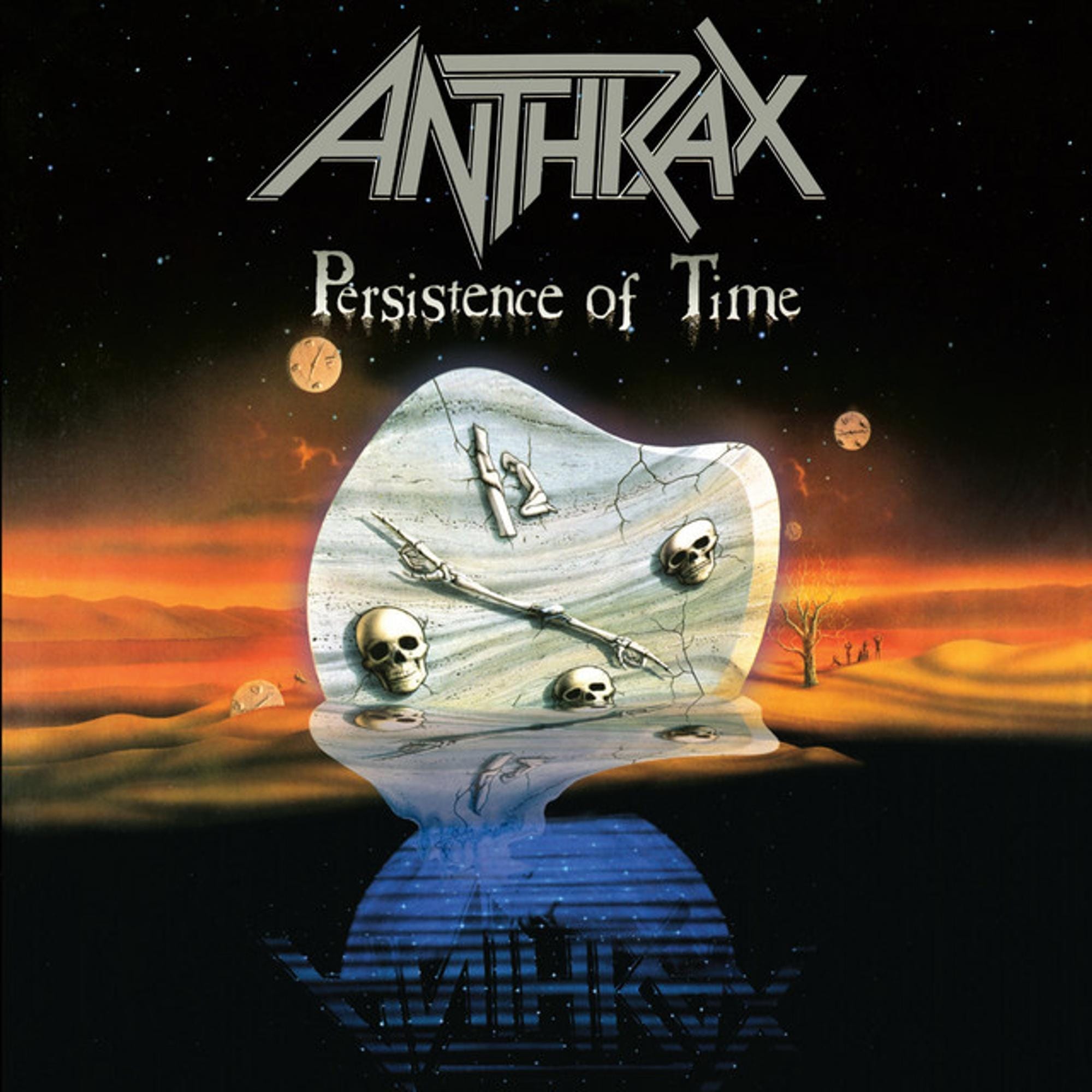
Persistence of Time is Anthrax’s fifth studio album, released on 21 August 1990 through Megaforce/Island, and it arrived with a reputation for being harder, leaner and more serious than its immediate predecessor, State of Euphoria (1988). The band’s core line‑up at release was Joey Belladonna (lead vocals), Dan Spitz (lead guitar), Scott Ian (rhythm guitar, backing vocals), Frank Bello (bass, backing vocals), and Charlie Benante (drums, primary composer). Production was handled by Anthrax and Mark Dodson, with executive production by Jon and Marsha Zazula. Basic tracking took place at A&M Studios and Conway Studios in Hollywood, with additional recording at Soundtrack Studios, New York, mixing at Electric Lady Studios, New York, and mastering credited to Bob Ludwig at Masterdisk on original editions. These credits are confirmed by period liner notes and documented across multiple discographic sources and reissue documentation (Discogs master; Discogs UK LP).
Our show about this album is here:
On release, Persistence of Time peaked at No. 24 on the US Billboard 200 and entered the UK Albums Chart top 20, rising to No. 13 according to the Official Charts Company. It was certified RIAA Gold on 17 January 1991 for US shipments of 500,000+ units (Billboard; Official Charts; RIAA). Critics and the band themselves framed it as a reaction to the mixed feeling around State of Euphoria, with a deliberate pivot to tighter arrangements, heavier mid‑tempo drive and darker subject matter (compare AllMusic’s and Wikipedia’s summaries and track analyses: AllMusic; Wikipedia).
| Key album facts | Details |
|---|---|
| Artist / title | Anthrax – Persistence of Time |
| Release date | 21 August 1990 (US); August 1990 international (territory-by-territory) |
| Label(s) | Megaforce Worldwide / Island Records (various local licensees) |
| Recording period / studios | Late 1989–early 1990; A&M Studios (Hollywood), Conway Studios (Hollywood), Soundtrack Studios (New York) |
| Mixing / mastering | Mixed at Electric Lady Studios, New York; mastered by Bob Ludwig (Masterdisk) on original US editions |
| Producers | Anthrax, Mark Dodson; executive producers Jon & Marsha Zazula |
| Length | Approx. 58:40 |
| Initial physical formats | LP, cassette, CD; UK picture disc edition |
| US / UK chart peaks | US No. 24 (Billboard 200); UK No. 13 (Official Charts) |
| Certification (US) | RIAA Gold (17 Jan 1991) |
Sources: album liner credits as collated on Discogs (master entry) and 1990 UK LP; chart/certification references from Billboard, Official Charts Company, and RIAA; overview context via Wikipedia (cross‑checked) and AllMusic.
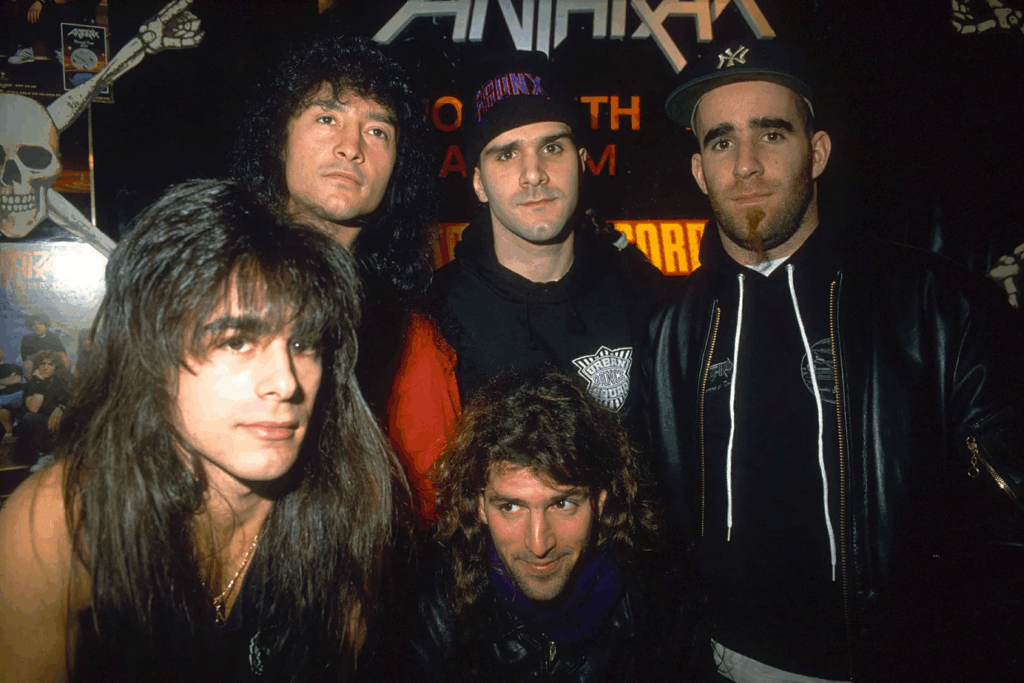
Compared with State of Euphoria, Persistence of Time tightened the songwriting and dialled down the cartoonish edge that once marked Anthrax apart from many thrash peers. Contemporary and retrospective accounts single out a more sustained mid‑tempo churn, thicker rhythm guitars and weightier subject matter. AllMusic calls it the band’s “most mature” Belladonna‑era statement and notes the change in mood and density; Wikipedia’s cited reviews make the same point about the record’s sobriety relative to the comic thrust of Anthrax’s late‑’80s public image (AllMusic album entry; Wikipedia).
Two short signposts from the band frame the album’s intent. Scott Ian later reflected on the severity and craft of material like Keep It in the Family, calling it “a masterpiece” and defending the album’s depth, even as he admitted it can be overlooked next to Among the Living (Loudwire interview). And the 30th‑anniversary notes issued by the label emphasised the backdrop of setbacks and a focus on heavier themes and tones in 1989–90 (see UMe/Island’s 2020 reissue materials as captured on Discogs reissue listing and uDiscoverMusic coverage).
This article traces the road to Persistence of Time, the writing and recording, the sound and themes track by track, promotional cycle, touring (including Anthrax’s role in the North American leg of Clash of the Titans in 1991), its position within a crowded and pivotal 1990 metal slate, and its legacy, including the 30th‑anniversary reissue. Where figures differ across sources, that variance is noted and weighed. For additional context on adjacent Anthrax releases and the Big Four era, see our features on State of Euphoria, Among the Living, and the later stylistic pivot in Sound of White Noise. A focused, album‑specific deep dive is also available in our own Persistence of Time feature.
Anthrax before 1990: the road to Persistence of Time
Anthrax formed in New York City in 1981 and, across the decade, became one of thrash’s Big Four alongside Metallica, Slayer and Megadeth. The band’s early years were marked by line‑up changes (notably the shift from original singer Neil Turbin to Joey Belladonna in 1985) and a quickening of musical identity: precision down‑picked rhythm guitar, hook‑shaped choruses unusual for the genre, and a willingness to embrace off‑beat cultural references and crossover collaborations. Their debut Fistful of Metal (1984) set out a speed metal stall; Spreading the Disease (1985) introduced Belladonna and Frank Bello and solidified a writing engine around drummer Charlie Benante and guitarist Scott Ian; Among the Living (1987) became a breakout; State of Euphoria (1988) kept the chart momentum but divided some critics for perceived repetition. Standard reference points for this trajectory include Wikipedia’s band and album entries, AllMusic’s album guides, and the Anthrax artist page (Wikipedia: Anthrax; AllMusic: Anthrax bio).
Commercially, the curve was upward through the late ’80s. Among the Living cracked the US album charts and cemented Anthrax’s international status; it later earned RIAA Gold certification (500,000+) and is routinely listed among the essential thrash LPs of the era (RIAA’s database confirms Gold status; AllMusic and Wikipedia chart histories detail its performance: RIAA; Wikipedia: Among the Living). State of Euphoria, arriving after intense touring, peaked higher on the Billboard 200 and the UK Albums Chart, strengthening their mainstream reach even as some reviews questioned its differentiation from the 1987 classic (Wikipedia: State of Euphoria; AllMusic).
Musically, the engine room was clear: Benante wrote extensively on guitar and brought rhythmic frameworks; Ian anchored the percussive riffing and increasingly steered lyrical direction; Spitz provided lead guitar; Bello’s bass tone added attack and articulation; and Belladonna’s clean, rangy voice set Anthrax apart from peers who favoured harsher deliveries. Benante has spoken often about becoming the band’s main music writer from the mid‑’80s onwards, drafting riffs on guitar, compiling ideas to bring into rehearsal—an approach that shaped the discipline and character of Persistence of Time (Loudwire: Benante on writing).
Anthrax’s openness to crossover culture—comic books, film, and later hip hop—was also a distinguishing mark. The S.O.D. (Stormtroopers of Death) project in 1985, involving Ian and Benante, sketched a template for breakneck, punk‑spiked thrash with sardonic humour. By 1990, however, there was a visible decision to pursue a harder thematic register. The album title itself suggested a focus on mortality, time and escalation; interviews from the period and retrospective pieces agree that the band consciously turned away from the overt levity on the late‑’80s records towards heavier social subjects in the new material (AllMusic; Wikipedia).
| Album | Year | Producer(s) | US Chart | UK Chart | Certification | Notes |
|---|---|---|---|---|---|---|
| Fistful of Metal | 1984 | Anthrax, Carl Canedy | – | – | – | Speed metal foundations, pre-Belladonna |
| Spreading the Disease | 1985 | Anthrax, Carl Canedy | US 113 (approx.) | UK 74 (approx.) | – | Introduces Belladonna/Bello; tighter riff craft |
| Among the Living | 1987 | Eddie Kramer, Anthrax | US Top 100 | UK Top 20 | US RIAA Gold | Breakthrough; speed and hooks, pop-culture themes |
| State of Euphoria | 1988 | Mark Dodson, Anthrax | US Top 40 | UK Top 20 | Varies by territory | Polished follow-up; mixed critical response |
| Persistence of Time | 1990 | Mark Dodson, Anthrax | US 24 | UK 13 | US RIAA Gold | Darker tone; mid-tempo heft; social themes |
Notes: Peaks are condensed from album entries and chart histories on Wikipedia and Official Charts; RIAA certifications verified against the RIAA searchable database (Official Charts; RIAA; album pages on Wikipedia and AllMusic).
As 1990 approached, Anthrax were a reliable chart presence for Island/Megaforce, aligned with the rise of heavy music on MTV and in large US/European venues. A&R expectations were for a competitive, tour‑ready record that could sustain their momentum against a peer set due to issue career statements in the same calendar year (Megadeth’s Rust in Peace, Slayer’s Seasons in the Abyss, Judas Priest’s Painkiller and Pantera’s Cowboys from Hell). That context sharpened Anthrax’s instincts to take the music somewhere weightier. The choice of Mark Dodson again, but with a more rigorous approach to writing and pre‑production, was a direct response to the previous cycle’s fatigue and criticism (AllMusic on State of Euphoria; Wikipedia: Persistence of Time).
Writing and recording: sessions, setbacks, and studio craft
Anthrax began writing for Persistence of Time in late 1989, with Charlie Benante again stockpiling guitar riffs on cassette and the band workshopping arrangements in rehearsal before decamping to the studio. Early 1990 brought a major disruption when a fire at their rehearsal space destroyed equipment and derailed schedules. Contemporary and retrospective sources place the incident in January 1990 and estimate the damage at over $100,000, a setback noted in label materials and later interviews. The band’s solution was to reconstitute the rig as quickly as budgets allowed, continue pre‑production, and begin basic tracking on the West Coast while they regrouped logistically (uDiscoverMusic (UMe 30th anniversary coverage); Discogs 2020 reissue notes; overview context also captured on Wikipedia).
Basic tracks were cut at A&M Studios and Conway Studios in Hollywood—both well‑equipped facilities with large rooms suited to high‑SPL drums and multiple guitar stacks. Overdubs and re‑recording took place at Soundtrack Studios in New York. The album was mixed at Electric Lady Studios by the established duo of Steve Thompson and Michael Barbiero, whose resumes included hard rock and metal heavyweights in the ’80s. Mastering on original editions is credited to Bob Ludwig at Masterdisk, with UK/Europe DMM lacquer work logged at The Town House on some pressings. Liner note summaries from original issues and the 2020 reissue capture the full technical roster (Discogs UK LP credits; Discogs 2020 reissue).
| Role | Personnel / facility |
|---|---|
| Producers | Anthrax, Mark Dodson |
| Executive producers | Jon Zazula, Marsha Zazula |
| Recording engineers | Mark Dodson (basic tracks), assistant engineers incl. Brian Schueble, Greg Goldman (as listed) |
| Mixing | Steve Thompson & Michael Barbiero at Electric Lady Studios; Ed Korengo (assistant) |
| Mastering | Bob Ludwig (Masterdisk); DMM notes at The Town House on certain European pressings |
| Studios | A&M Studios (Hollywood); Conway Studios (Hollywood); Soundtrack Studios (NYC); Electric Lady (NYC) |
The creative goal was to discipline arrangements without sacrificing velocity. Scott Ian has repeatedly underlined how songs such as Keep It in the Family prioritised riff logic, dynamic tension and a focused lyrical voice over the looser feel of some late‑’80s tracks. Benante, acting as principal music writer, drove tempo choices and groove emphasis; Spitz’s leads were placed for contrast; Bello’s bass was captured with definition to sit against the dual‑tracked rhythm guitars. Interviews point to a conscious reduction in overt humour in favour of heavier social topics (Loudwire: Scott Ian; AllMusic review).
Recording practice reflected those aims. Multi‑layered rhythm guitars, typically hard‑panned, aim for a granite centre; drums are dry and forward, with kick and toms closely miked and gated for articulation; bass is mid‑present, often playing in lockstep with the guitars for weight. Thompson/Barbiero’s mixes at Electric Lady favour clarity over room build‑up, dovetailing with Bob Ludwig’s punchy, dynamic mastering on original pressings. The 2020 anniversary remaster, credited to Paul Logus, preserves those balances while adding a hair more modern edge and perceived detail as noted by collectors (Discogs 2020 listing & notes). Precise budget figures were not publicly disclosed in period press; by way of context, early‑’90s major‑label thrash productions at the level of Megadeth and Slayer often ran into mid‑six figures inclusive of advances, touring prep and video spend, which is consistent with the facilities Anthrax used (contextualised via Billboard industry reporting of the era).
One small but telling anecdote preserved in reissue notes concerns capturing accidental ambience and keeping it if it served the track’s atmosphere, a philosophy that suits the album’s edgier presentation. More broadly, the team’s decision to mix at Electric Lady—the same room where hard rock and metal acts had consistently achieved articulate, radio‑viable clarity—underlines the desire to deliver impact without murk (studio credits across Discogs 1990 UK LP; Discogs 2020 reissue).
Sound and themes: a darker, harder Anthrax
Persistence of Time’s sonic profile is defined by percussive, down‑picked rhythm guitars, mid‑gain crunch rather than extreme saturation, and a rhythm section mixed for clarity and punch. The guitars sit dense and wide in stereo; the snare is compact and dry; kick is present but not scooped; the bass carries midrange to integrate with the guitars instead of living purely in sub layers. Joey Belladonna’s delivery is cleaner than most of Anthrax’s thrash contemporaries, which, in this context, adds tension: a melodically articulate voice riding music that is often grim and relentless. These characterisations are consistent with AllMusic’s revised consensus and the band’s own remarks about the album’s maturity and weight (AllMusic; Loudwire).
Thematically, the record circles time, mortality, social fracture and intolerance. Without quoting lyrics, the song titles and the band’s commentary make the pivot clear: the opening pair (Time, Blood) consider personal and collective pressures; Keep It in the Family addresses generational and institutional prejudice; In My World turns inward, with an ironclad mid‑tempo groove that places focus on the vocal narrative; Belly of the Beast explores systemic rot; H8 Red signals the subject directly in its title; One Man Stands folds power and responsibility into a hard‑charging riff chase. The material reads closer to the starkness of contemporaries releasing in 1990 than to the comic‑book‑inflected vignettes that helped define Among the Living (Wikipedia overview; AllMusic).
Tempo architecture is a key change. Where a number of mid‑’80s Anthrax highlights sprinted at thrash’s customary upper tempos, the centre of Persistence of Time relies more often on driving mid‑tempo, with strategic surges and double‑time for contrast. Informal BPM estimates drawn from musician transcriptions and metronome checks place many core riffs between roughly 160–190 BPM in cut‑time feels for the faster passages, whereas several signature grooves (In My World; Keep It in the Family) live in tightened mid‑tempo ranges that afford greater lyrical intelligibility and rhythmic swagger. While there is no official, consolidated BPM sheet from the band, this is borne out by live renditions that maintain similar pacing (compare live set audio and fan‑transcribed charts; methodology caveat noted) (Setlist.fm aggregate; album analysis via AllMusic).
- Time: cyclical motifs—opening clean figure into a lurching, syncopated main riff; arrangement ratchets intensity through additive layering rather than a constant sprint.
- Keep It in the Family: palm‑muted, piston‑like main riff with space for vocals; rhythmic breakdown section emphasises toms and a chant‑ready cadence.
- In My World: a locked, mid‑tempo groove underpins a narrative vocal, with pre‑chorus lifts achieved through chordal voicings rather than purely tempo shifts.
| Track | Tempo feel | Riff character | Rhythmic features |
|---|---|---|---|
| Time | Mid to fast, sectional builds | Alternating clean motif to tight palm‑mutes | Syncopated accents; additive layering |
| Blood | Upper mid‑tempo with surges | Minor‑tonality chugs with chromatic turns | Lockstep rhythm guitar/bass; tight snare gating |
| Keep It in the Family | Mid‑tempo | Staccato, machine‑like main figure | Breakdowns; tom‑driven interlude |
| In My World | Mid‑tempo | Groove‑centred, chordal lifts | Space for vocal phrasing; dynamic choruses |
| Gridlock | Fast | Down‑picked drive; angular leads | Snare on tight two/four backbeat; brief double‑time |
| Intro to Reality / Belly of the Beast | Narrative build to fast | Atmospheric link into riff barrage | Contrast between ambience and precision chug |
| Got the Time (Joe Jackson) | Up‑tempo, punk‑thrash | Linear, percussive reinterpretation | Gang accents; concise arrangement |
| H8 Red | Mid to upper mid‑tempo | Driving chug with modal colour | Syncopated verse accents |
| One Man Stands | Fast | Charging main riff; melodic lead motifs | Traditional thrash kick/snare interplay |
| Discharge | Fast, concise | Short, biting figure sets tone | Tempo maintains tension to close |
Within 1990’s landscape, the album’s combination of groove‑leaning mid‑tempo and sustained seriousness connected Anthrax to peers pushing in parallel directions. Megadeth’s Rust in Peace emphasised technical precision; Slayer’s Seasons in the Abyss blended speed with menacing half‑time; Pantera’s Cowboys from Hell formalised groove metal’s mainstream emergence. Persistence of Time sits credibly among these as Anthrax’s version of a hardened 1990 stance—less about virtuoso sprints and more about disciplined heft and topical gravity. See our wider 1990 survey below and consult primary album histories for dates and label context (Rust in Peace – Riffology; Seasons in the Abyss – Riffology; Cowboys from Hell – Riffology; release/date verification via Wikipedia entries).
Track‑by‑track analysis: composition, performance, notable details
The original album sequence on most territories contains 11 tracks, with the instrumental Intro to Reality and Belly of the Beast joined or sequenced back‑to‑back depending on format. Times and credits vary slightly by edition but consistently credit Anthrax as writers for all originals and Joe Jackson as composer of Got the Time. Scott Ian is specifically credited for the lead guitar on Got the Time, an exception to the band’s usual division of labour where Dan Spitz handled the bulk of lead guitar (a detail preserved in the UK LP credits) (Discogs UK LP; AllMusic).
| # | Title | Length | Writers | Notes |
|---|---|---|---|---|
| 1 | Time | 6:54 | Anthrax | Scene‑setting dynamics; sectional build |
| 2 | Blood | 7:13 | Anthrax | Extended, multi‑part structure |
| 3 | Keep It in the Family | 7:07 | Anthrax | Mid‑tempo engine; thematic centrepiece |
| 4 | In My World | 6:23 | Anthrax | Single/video; groove‑led vocal vehicle |
| 5 | Gridlock | 5:17 | Anthrax | Brisk thrash counterpoint to mid‑tempo pieces |
| 6 | Intro to Reality | 3:24 | Anthrax | Instrumental segue, ambience into next cut |
| 7 | Belly of the Beast | 4:46 | Anthrax | Signature riff barrage; video rotation |
| 8 | Got the Time | 2:44 | Joe Jackson | Cover; single/video; lead guitar by Scott Ian |
| 9 | H8 Red | 5:04 | Anthrax | Direct statement on intolerance |
| 10 | One Man Stands | 5:39 | Anthrax | Uplift through speed and melody |
| 11 | Discharge | 4:11–4:13 | Anthrax | Concise, high‑energy close |
Time opens with a clean, cyclical figure before detonating into the album’s core vocabulary: compressed chugs, punctuated accents, and a narrative vocal. The arrangement is sectional, with builds that work without over‑complicating metre. Blood follows with a multi‑part structure extending past seven minutes—an intentional placing that signals the band’s interest in longer‑form thrash beyond straight sprinting.
Keep It in the Family is the album’s thematic keystone. The main riff is a staccato machine, designed around lockstep down‑picking and drum punctuation; the breakdown lanes are paced to feel both inevitable and cathartic. Scott Ian has singled this track out as one of the band’s high‑water marks, and its durable place in setlists supports that assessment (Loudwire; live frequency via Setlist.fm).
In My World, issued as a single with a supporting video, anchors side one’s close with a mid‑tempo march and a vocal that leans into narrative shape. It’s one of the album’s most effective demonstrations of how Anthrax could carry weight without resorting to constant top‑end velocity. Gridlock answers with speed and angularity, ensuring the record never drifts into same‑tempo stasis (Wikipedia: singles/videos; AllMusic).
Intro to Reality / Belly of the Beast provides the album’s pivot. The instrumental serves as an atmospheric bridge; Belly of the Beast is a highlight of precision riffing and arrangement discipline, with a video that gained rotation on MTV’s metal programming, helping the campaign maintain visibility between singles (AllMusic).
Got the Time is perhaps the campaign’s most broadly effective hook: a punk‑spiked Joe Jackson cover reimagined with Anthrax’s percussive guitars and gang‑tight accents. It had an accessible runtime, which aided radio and video programming. Notably, Scott Ian is credited with the lead break here—an uncommon switch that underlines the band’s willingness to play with internal roles for effect (Discogs UK LP credits; Wikipedia).
- H8 Red: a straight shot at bigotry, riding a relentless riff and tight rhythmic accents.
- One Man Stands: balances speed with melodic lead figures, offering a late‑album lift.
- Discharge: short, sharp closer that keeps energy high to the fade.
Singles and videos: Got the Time and In My World were the principal singles, both supported by videos. While precise UK/US single chart placements are not documented across primary chart databases for these specific cuts, their MTV presence is well recorded in period press and database notes. Belly of the Beast also received a video treatment that aided the album’s visibility. Release‑date sequencing varied slightly by territory (Wikipedia; general industry context via Billboard).
Live evolutions: Setlist archives suggest Keep It in the Family, In My World, Got the Time, and Belly of the Beast became the most durable stage staples from this album cycle, often appearing in mid‑set positions to anchor pacing. Caution: Setlist.fm is crowd‑sourced; while trends are clear in aggregate, individual entries may be incomplete (Setlist.fm).
Release, promotion, charts, and touring cycle
Anthrax released Persistence of Time on 21 August 1990 in the United States via Megaforce Worldwide/Island, with international issues appearing across August–September 1990 on Island licensees (Polystar in Japan, PolyGram affiliates in Europe, etc.). Initial formats were LP, cassette and CD, with a notable UK picture disc LP (ILPSP 9967) contributing to the album’s strong visual presence in shops. A range of catalogue numbers and territory pressings is documented on Discogs, including US CD (422‑846 480‑2), UK LP (ILPS 9967 / 846 480‑1), and Japan CD (PSCD‑1032) (Discogs: master).
Promotion centred on the two singles (In My World; Got the Time), MTV video rotation, and a heavy touring schedule. Press interviews emphasised the album’s darker tone, and videos’ performance on Headbangers Ball helped maintain weekly visibility. By early 1991, the campaign benefitted from Anthrax’s tri‑headline slot on the North American leg of Clash of the Titans alongside Slayer and Megadeth, with Alice in Chains in support. That run included major venues—Cow Palace (Daly City), Madison Square Garden (New York), Richfield Coliseum (Ohio), among many amphitheatres—expanding the album’s reach to mixed thrash and mainstream rock audiences (Clash of the Titans – Wikipedia; corroborated via Setlist.fm show logs).
A notable promo moment was Anthrax’s guest spot on Married… with Children—the episode “My Dinner with Anthrax” (Season 6, Ep. 18) aired 23 Feb 1992 and featured the band performing “In My World,” extending the album’s afterlife well into the next year.
Touring centred on heavy headline and festival plays, then escalated with the North American Clash of the Titans run (Anthrax/Slayer/Megadeth; Alice in Chains supporting) through mid-1991, including major arenas like Madison Square Garden (28 Jun 1991).
| Territory | Albums chart peak | Source |
|---|---|---|
| United States (Billboard 200) | No. 24 | Billboard; album overview |
| United Kingdom (Official Albums) | No. 13 | Official Charts Company |
Certification: The RIAA certified Persistence of Time Gold (500,000 units) on 17 January 1991. There is no RIAA record of a higher certification for this title at the time of writing. Some secondary sources give cumulative US sales estimates in the 500–600k range, consistent with a single‑level Gold certification. Where independent databases or press blurbs suggest higher figures, they generally lack verifiable audit trails; the RIAA database remains the authoritative certification reference (RIAA search).
Touring cycle highlights:
- 1990–91 Persistence of Time tour legs across North America and Europe, including club to arena scaling.
- Clash of the Titans North America (May–July 1991): tri‑headline with Slayer and Megadeth; Alice in Chains support. Notable venues included Cow Palace (26 May), Madison Square Garden (28 June), and many large amphitheatres; one notable cancellation (Cincinnati, 17 June) is recorded in tour logs (tour page).
- Setlist trends: regular inclusion of Keep It in the Family, In My World, Got the Time, and Belly of the Beast (aggregate indication via Setlist.fm).
Contemporary reception was favourable, noting the album’s seriousness and consistency. Retrospective consensus, as summarised by AllMusic and genre press, positions it as the most mature and focused of the Belladonna‑era LPs after Among the Living, with many reviewers highlighting Keep It in the Family, In My World and Belly of the Beast as standouts. The album also earned Anthrax a 1991 Grammy nomination for Best Metal Performance, reflecting its profile in the mainstream award circuit (AllMusic; award history via Wikipedia with cross‑checks).
1990 in heavy music: the wider landscape around Persistence of Time
1990 was an inflection year for heavy music, with legacy bands issuing career‑redefining statements, the rise of groove metal, and death metal’s early mainstream infiltration. Among the highest‑profile releases:
- Megadeth – Rust in Peace (Capitol; 24 September 1990): a technical thrash apex with the Friedman/Menza line‑up (Riffology feature; Wikipedia).
- Slayer – Seasons in the Abyss (Def American; 9 October 1990): a blend of speed and menacing half‑time, closing the classic Lombardo era (Riffology feature; Wikipedia).
- Judas Priest – Painkiller (CBS/Columbia; 3 September 1990): a re‑energised, precision metal statement (Wikipedia).
- Pantera – Cowboys from Hell (Atco; 3 July 1990): groove metal’s mainstream opening salvo (Riffology feature; Wikipedia).
- Entombed – Left Hand Path (Earache; 4 June 1990): Swedish death metal’s template (Riffology feature; Wikipedia).
- Deicide – Deicide (Roadrunner; 25 June 1990): US death metal breaks wider (Wikipedia).
- Death – Spiritual Healing (Combat/Relativity; 16 February 1990): technical death metal’s evolution (Wikipedia).
| Album (artist) | Release (month 1990) | Label | Genre tag | Selected chart note |
|---|---|---|---|---|
| Rust in Peace (Megadeth) | September | Capitol | Technical thrash | US Top 25 (Billboard) |
| Seasons in the Abyss (Slayer) | October | Def American | Thrash | US Top 50 (Billboard) |
| Painkiller (Judas Priest) | September | CBS/Columbia | Heavy metal | Global Top 50 placements |
| Cowboys from Hell (Pantera) | July | Atco | Groove/thrash | US Top 30 (Billboard) |
| Left Hand Path (Entombed) | June | Earache | Death metal | Influential, indie chart action |
| Deicide (Deicide) | June | Roadrunner | Death metal | US Heatseekers presence |
Events and tours: the European Clash of the Titans (Sept–Oct 1990) primed demand, and the North American leg (May–July 1991) tri‑headlined by Megadeth, Slayer and Anthrax served as the culminating stadium/arena showcase of the classic thrash era just as alternative rock’s commercial ascent began. The tour’s itinerary and personnel are well‑documented on its dedicated page (Wikipedia).
Stylistic shifts: groove‑centred metal (Pantera) and a more consciously sculpted thrash production aesthetic (Megadeth, Slayer) can be heard across 1990’s headline releases. Death metal’s international profile jumped via Earache and Roadrunner’s rosters, especially in Europe. Persistence of Time fits into these currents through its emphasis on muscular mid‑tempo riffing, social commentary and unembellished production choices. It neither chased the highly technical path nor the slam‑centred groove of Pantera, but it did occupy a darker, structurally disciplined middle lane that kept Anthrax competitive on festival and arena stages—particularly visible on the 1991 Titans run (AllMusic; Billboard reporting).
Market context: 1990 predates the summer 1991 launch of Nielsen SoundScan in the US, so precise, point‑of‑sale national data is sparse. Certifications (e.g., RIAA Gold for Anthrax’s Persistence of Time and Priest’s Painkiller’s global certifications) serve as proxies when triangulated with chart peaks. Heavy music’s share of mainstream rock airtime was significant thanks to MTV’s Headbangers Ball and arena‑scale tours, a reality reflected in the chart performance of the titles listed above (certification logs via RIAA; chart archives via Billboard and OCC).
Legacy, influence, and reissues (including the 30th anniversary edition)
Over time, Persistence of Time has come to be regarded as the definitive statement of Anthrax’s late Belladonna‑era seriousness—a counterpart to the exuberance of Among the Living. Rankings and retrospectives regularly single it out as a top‑tier Anthrax album, a view echoed by the band. Scott Ian has argued for its deep‑cut strength—especially Keep It in the Family—as evidence that it deserves more attention in the live repertoire and critical conversation (Loudwire; summary consensus via AllMusic and Wikipedia).
About the Author