The Smashing Pumpkins’ Debut: A Closer Look at “Gish”
The early 1990s were a transformative time for alternative rock, with new sounds emerging from every corner of the globe. Among these was The Smashing Pumpkins, a band whose debut album, “Gish,” marked a significant moment in music history. Released on 28 May 1991, “Gish” not only introduced the world to the band’s unique blend of psychedelic rock and grunge but also set the stage for their future success. The album’s impact on the industry was profound, influencing countless artists and solidifying The Smashing Pumpkins as pioneers in their genre.
This article delves into the making of “Gish,” exploring its genesis, recording process, commercial performance, and lasting legacy. We will also examine the album’s track list, lyrical themes, and the promotional efforts that accompanied its release. Let’s embark on this journey to understand why “Gish” remains a pivotal work in alternative rock.
| Attribute | Details |
|---|---|
| Release date | 28 May 1991 |
| Album title | Gish |
| Genre | Alternative rock, psychedelic rock, grunge |
| Total runtime | 45:45 |
| Number of tracks | 10 |
| Record label | Caroline Records, Hut Records |
| Recording studio | Smart Studios, Madison, Wisconsin |
| Producer(s) | Butch Vig, Billy Corgan, The Smashing Pumpkins |
With “Gish,” The Smashing Pumpkins crafted an album that resonated with listeners, offering a fresh take on rock music. The album’s significance lies not only in its innovative sound but also in its ability to influence future generations of musicians. As Billy Corgan once stated, “Gish is a very spiritual album, focused on themes of pain and spiritual ascension.” This sentiment captures the essence of the album and its enduring legacy.
The Genesis of “Gish”
The late 1980s and early 1990s were a period of musical exploration and cultural change. In this vibrant atmosphere, The Smashing Pumpkins emerged from Chicago’s underground scene. Formed in 1988 by Billy Corgan, James Iha, D’arcy Wretzky, and Jimmy Chamberlin, the band quickly gained attention for their dynamic sound and emotive performances. Their early singles, “I Am One” and “Tristessa,” hinted at the potential that would soon be fully realized with “Gish.”
Before the release of “Gish,” The Smashing Pumpkins had already begun to carve out a niche for themselves. Their sound was a unique blend of heavy guitar riffs, intricate drumming, and ethereal melodies. As they prepared to record their debut album, the band was determined to create something that would stand out in the burgeoning alternative rock scene. The main creative force behind “Gish” was Billy Corgan, who not only wrote most of the songs but also played a significant role in the album’s production.
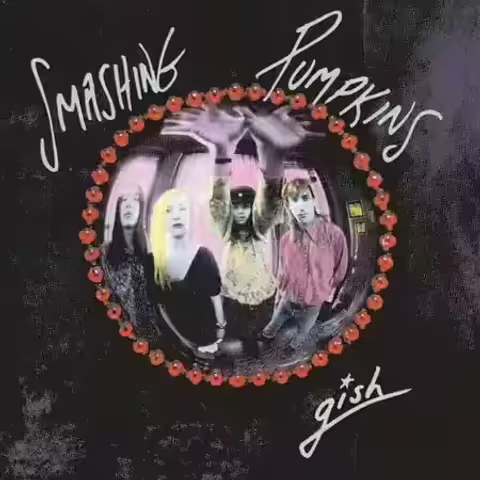
The album’s title, “Gish,” was inspired by silent film star Lillian Gish, a choice that reflects the band’s penchant for blending the past with the present. The album cover, designed by Billy Corgan and D’arcy Wretzky, features a photograph of a young girl surrounded by flowers, symbolizing the album’s themes of innocence and spirituality. Financially, the recording of “Gish” was a challenge, with a budget of $20,000 funded by Caroline Records. Despite these constraints, the band was able to create a groundbreaking album that would launch their career.
| Band Member | Instrument |
|---|---|
| Billy Corgan | Vocals, Guitar, Bass |
| James Iha | Guitar |
| D’arcy Wretzky | Bass, Vocals on “Daydream” |
| Jimmy Chamberlin | Drums |
Recording Process
The recording of “Gish” took place at Smart Studios in Madison, Wisconsin, between December 1990 and March 1991. This studio, co-owned by producer Butch Vig, was known for its relaxed atmosphere and state-of-the-art equipment. Vig, who would later gain fame for his work on Nirvana’s “Nevermind,” was instrumental in shaping the sound of “Gish.” His experience and technical expertise allowed The Smashing Pumpkins to experiment with various recording techniques, resulting in a rich and layered sound.
Butch Vig’s role as producer and engineer was crucial to the album’s success. His approach to recording was meticulous, with an emphasis on capturing the raw energy of the band’s live performances. Vig’s previous work with artists like Killdozer and Sonic Youth had honed his ability to create a powerful yet polished sound. During the sessions, Billy Corgan took on multiple roles, often recording both guitar and bass parts himself. This decision, while leading to tensions within the band, ultimately contributed to the album’s cohesive sound.
The studio sessions were marked by long hours and intense focus. The band and Vig worked tirelessly to achieve the desired sound, using a combination of analogue and digital recording techniques. Although specific equipment details are not explicitly known, it is assumed that they used a variety of guitars, amplifiers, and effects pedals to create the album’s distinctive sound. The result was an album that seamlessly blended elements of hard rock, psychedelic rock, and dream pop.
| Hardware | Likely Used |
|---|---|
| Microphones | AKG C 414 |
| Guitars | Fender Stratocaster |
| Amplifiers | Marshall JCM 800 |
| Effects | Big Muff, Electric Mistress |
Commercial Performance and Reception
Upon its release, “Gish” received critical acclaim for its innovative sound and emotional depth. However, its commercial success was initially modest. The album peaked at number 195 on the Billboard 200 but later gained traction, reaching number 146 upon its re-release in 2011. Despite its slow start, “Gish” became an underground success, topping the College Music Journal chart and earning a gold certification from the RIAA in 1994, followed by platinum in 1999.
The album’s impact on the music scene was significant, paving the way for The Smashing Pumpkins’ future success. It was awarded “Best Local Album” by the Chicago Musician Awards in 1992, highlighting its influence on the local music scene. “Gish” also received praise from fellow musicians and critics alike, with many acknowledging its role in shaping the sound of the 1990s alternative rock movement.
During 1991, several other notable albums were released, including Nevermind by Nirvana, Ten by Pearl Jam, and Blood Sugar Sex Magik by Red Hot Chili Peppers. These albums, alongside “Gish,” contributed to a cultural shift in music, moving away from the glam metal of the 1980s towards a more raw and authentic sound. This period marked a turning point in the music industry, with alternative rock gaining mainstream acceptance.
| Studio Album | Year | Producer |
|---|---|---|
| Gish | 1991 | Butch Vig, Billy Corgan |
| Siamese Dream | 1993 | Butch Vig |
| Mellon Collie and the Infinite Sadness | 1995 | Flood, Alan Moulder |
| Adore | 1998 | Billy Corgan |
| Machina/The Machines of God | 2000 | Flood, Billy Corgan |
Track Analysis
“Gish” is comprised of ten tracks, each showcasing the band’s unique sound and lyrical depth. The singles “Siva,” “Rhinoceros,” and “I Am One” were released to critical acclaim, with “Siva” and “I Am One” becoming staples of the band’s live performances. These singles helped to establish The Smashing Pumpkins as a formidable force in the alternative rock scene.
The album’s tracks explore themes of pain, spirituality, and self-discovery, reflecting Billy Corgan’s introspective songwriting style. The music is characterised by its heavy guitar riffs, intricate drumming, and ethereal melodies, creating a sound that is both powerful and haunting. Below is a detailed table of the album’s tracks and their respective details.
| Track Name | Length | Writing Credit |
|---|---|---|
| I Am One* | 4:07 | Billy Corgan, James Iha |
| Siva* | 4:20 | Billy Corgan |
| Rhinoceros* | 6:32 | Billy Corgan |
| Bury Me | 4:48 | Billy Corgan |
| Crush | 3:34 | Billy Corgan |
| Suffer | 5:10 | Billy Corgan |
| Snail | 5:10 | Billy Corgan |
| Tristessa | 3:33 | Billy Corgan |
| Window Paine | 5:51 | Billy Corgan |
| Daydream | 3:08 | Billy Corgan |
*”I Am One,” “Siva,” and “Rhinoceros” were released as singles.
Song Meaning and Lyrics
The lyrics of “Gish” delve into themes of spirituality, pain, and personal growth. Billy Corgan’s introspective writing style is evident throughout the album, with each song offering a glimpse into his inner world. The singles “Siva,” “Rhinoceros,” and “I Am One” are particularly noteworthy for their lyrical depth and emotional resonance.
“Siva,” the album’s lead single, explores themes of desire and spiritual awakening. The lyrics convey a sense of yearning and introspection, with Corgan’s vocals capturing the song’s emotional intensity. “Rhinoceros” delves into the complexities of human connection, highlighting the struggles for intimacy and understanding. Its melancholic undertones are balanced by a message of perseverance and open communication.
“I Am One” is a powerful anthem of individuality and identity, with lyrics that reflect a search for meaning amidst chaos. The song’s driving rhythm and dynamic instrumentation complement its existential themes, making it a standout track on the album. Each of these singles showcases Corgan’s ability to blend personal reflection with universal themes, creating music that resonates with listeners.
Touring and Promotion of Gish
The promotion of “Gish” was marked by a rigorous touring schedule, with The Smashing Pumpkins performing 124 shows across 76 cities in five countries throughout 1991. This extensive tour helped to build the band’s reputation and expand their fan base. Notable performances included appearances at iconic venues such as CBGB in New York and the Cabaret Metro in Chicago.
The band toured with several prominent artists during this period, further increasing their visibility in the alternative rock scene. Their live performances were characterised by high energy and emotional intensity, captivating audiences and solidifying their status as a must-see act. The promotional efforts for “Gish” were instrumental in establishing The Smashing Pumpkins as a major force in the music industry.
During the tour, the band faced numerous challenges, including the demands of a gruelling schedule and the pressures of promoting a debut album. Despite these obstacles, The Smashing Pumpkins persevered, delivering memorable performances that left a lasting impression on audiences worldwide.
Influences and Legacy
The creation of “Gish” was influenced by a diverse array of musical styles and artists. The Smashing Pumpkins drew inspiration from genres such as psychedelic rock, grunge, and dream pop, as well as bands like Black Sabbath, The Cure, and My Bloody Valentine. This eclectic mix of influences contributed to the album’s unique sound and innovative approach to rock music.
In turn, “Gish” has influenced countless artists across various genres, with its impact felt throughout the music industry. Bands such as Radiohead, Pearl Jam, and Nirvana have cited The Smashing Pumpkins as a significant influence on their own work, highlighting the album’s enduring legacy. The release of “Gish” in 1991 coincided with a pivotal year in music history, marked by the rise of alternative rock and the decline of glam metal.
1991 was a year of significant cultural and global events. The Gulf War came to an end, while the dissolution of the Soviet Union marked a turning point in world politics. In the music world, the release of albums like Nevermind by Nirvana and Ten by Pearl Jam signalled a shift towards alternative rock, reshaping the musical landscape for years to come.
| Influences on “Gish” | Artists Influenced by “Gish” |
|---|---|
| Black Sabbath | Radiohead |
| The Cure | Pearl Jam |
| My Bloody Valentine | Nirvana |
Five Things about Gish
“Gish” is a fascinating album with many intriguing aspects. Here are five verified facts that highlight its significance and impact:
| Fact | Details |
|---|---|
| Recording Budget | $20,000 funded by Caroline Records |
| Title Inspiration | Named after silent film star Lillian Gish |
| Chart Performance | Peaked at number 195 on Billboard 200 |
| RIAA Certification | Certified platinum in 1999 |
| Critical Acclaim | Awarded “Best Local Album” by Chicago Musician Awards in 1992 |
Media and Television Usage
The songs from “Gish” have not been widely used in media, but their influence can be felt across various platforms. Despite this, the album’s impact on music culture remains significant, with its tracks continuing to resonate with fans and musicians alike.
Critical Reviews and Retrospectives
“Gish” received positive reviews upon its release, with critics praising its innovative sound and emotional depth. The album’s eclectic style and powerful performances were highlighted as key strengths, contributing to its status as a seminal work in alternative rock.
Retrospectives have continued to celebrate “Gish” as a pivotal album in The Smashing Pumpkins’ discography, recognising its role in shaping the sound of the 1990s. The album’s influence on subsequent generations of musicians has been widely acknowledged, cementing its place in music history.
After Gish
Following the release of “Gish,” The Smashing Pumpkins continued to evolve and expand their sound. Their subsequent album, “Siamese Dream”, released in 1993, propelled the band to mainstream success, solidifying their place in the alternative rock scene. Despite internal conflicts and lineup changes, The Smashing Pumpkins persevered, releasing a string of successful albums throughout the 1990s.
As of 2025, The Smashing Pumpkins remain active, with plans for new music and tours. Their enduring popularity and influence are a testament to the lasting impact of “Gish” and the band’s continued relevance in the music industry.
Conclusion
“Gish” remains a vital and influential album, showcasing The Smashing Pumpkins’ unique sound and artistic vision. Its lasting impact on music and culture is a testament to the band’s creativity and innovation. As we look back on this seminal work, it is clear that “Gish” will continue to inspire and resonate with listeners for generations to come.
Further Reading
For those interested in exploring more about The Smashing Pumpkins and similar genres, check out our other articles and podcasts:
The Making of Adore by The Smashing Pumpkins (Blog Article)
The Making of Machina by The Smashing Pumpkins (Blog Article)
The Making of Siamese Dream by The Smashing Pumpkins (Blog Article)
Additionally, you can visit the Wikipedia page for “Gish”, the official The Smashing Pumpkins website, and the Caroline Records website for more information.
Let us know in the comments what your thoughts are on Gish by The Smashing Pumpkins. Did we miss anything? Share your experiences and join the conversation!
Comments