Introduction
Sometimes, an album does more than capture a moment in time—it changes the direction of a whole genre. In 1988, The New Order by Testament did just that. As the second full-length release from the Bay Area thrash titans, this record built on the momentum of their debut and set a new benchmark for precision, melody, and sheer force in metal. While the world was caught between the fading glamour of 1980s pop and the birth of alternative, Testament delivered a record that felt both timely and timeless.
This article leaves no stone unturned. You’ll discover the album’s origins, its recording process, and the stories behind each track. I’ll break down the lyrics, examine its critical and commercial performance, and explore its influence on both fans and fellow musicians. Along the way, you’ll see exactly why The New Order remains essential listening, not just for metalheads but for anyone interested in music history.
| Attribute | Details |
|---|---|
| Release date | 5 May 1988 |
| Album title | The New Order |
| Genre | Thrash Metal |
| Total runtime | 39:51 |
| Number of tracks | 10 |
| Record label | Atlantic Records / Megaforce |
| Recording studio | Pyramid Sound Studios, Ithaca, New York |
| Producer(s) | Alex Perialas |
The New Order was more than a follow-up; it became a statement. It climbed to No. 136 on the Billboard 200 and sold over 250,000 copies, a feat for a thrash album outside the so-called “Big Four.” The record’s technical guitar work, tight rhythm section, and anthemic choruses earned it a place among the most influential metal albums of its era. As Chuck Billy later recalled, “We wanted to prove that we could be melodic and heavy at the same time. The New Order was where we found our sound.” (Interview, The Aquarian, 2012).
Alex Skolnick, the band’s lead guitarist, added, “We were pushing ourselves. We wanted every riff, every solo, every lyric to matter. That’s what made the album special.” (Guitar World, 2008). Even now, more than three decades on, its impact can be heard in the music of countless bands.
The Genesis of “The New Order”
Before The New Order, Testament were already making waves. The Bay Area thrash scene was thriving, with bands like Metallica, Slayer, and Megadeth leading the charge. Testament’s debut, The Legacy, had landed in 1987 and immediately caught the attention of metal fans for its raw energy and musicianship. Yet, the band felt there was more to achieve. The world was changing—CDs were outselling vinyl for the first time, alternative rock was on the rise, and the appetite for aggressive music was at an all-time high.
Afterwards, Testament set out to make a record that would be more than a simple continuation. The goal was to refine their sound and push their songwriting. The band’s classic line-up was in place: Chuck Billy on vocals, Eric Peterson on rhythm guitar, Alex Skolnick on lead guitar, Greg Christian on bass, and Louie Clemente on drums. The chemistry between these five musicians was clear, with Billy’s powerful voice and Skolnick’s fluid, melodic solos driving the music forward.
Eric Peterson and Alex Skolnick were the main creative forces behind the music, writing the majority of the riffs and solos. Chuck Billy, meanwhile, brought his unique lyrical style and vocal approach, blending aggression with melody. There were no guest artists, but the band worked closely with producer Alex Perialas, who had previously worked with Anthrax and Overkill, to shape the album’s sound. Financially, the recording was funded by Atlantic and Megaforce Records. While the exact budget is not public, the band has said in interviews that they were working under tight constraints, making every dollar count. Testament faced the usual challenges of a young band on a major label—pressure to deliver, limited studio time, and the need to tour relentlessly to promote the album.
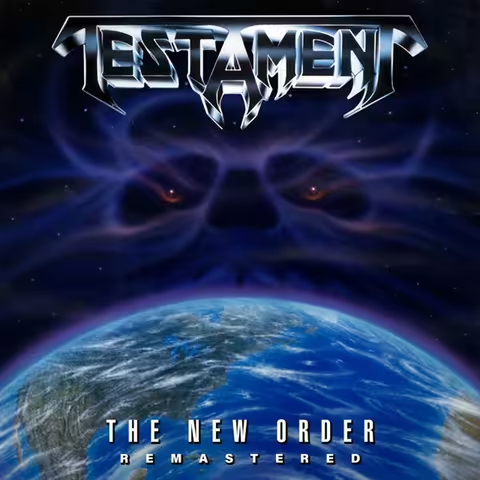
The album’s title, The New Order, was chosen to reflect the band’s ambition to lead a new wave of thrash. The concept was about change, revolution, and the idea that a new generation was ready to take over. The artwork, created by artist Dave McKean, features a surreal, apocalyptic landscape, capturing the themes of destruction and rebirth that run through the lyrics. The cover’s haunting imagery helped set the tone for the music within.
Here’s a look at the musicians who brought the album to life:
| Band Member | Instrument / Role |
|---|---|
| Chuck Billy | Lead vocals, lyricist |
| Eric Peterson | Rhythm guitar, main songwriter |
| Alex Skolnick | Lead guitar, co-songwriter |
| Greg Christian | Bass guitar |
| Louie Clemente | Drums, percussion |
In summary, The New Order was a product of its time and place—a young, hungry band, working with a skilled producer, in a studio known for capturing the raw energy of metal. The title and artwork were carefully chosen to reflect the music’s themes, and every member played a vital role in shaping the album’s sound and message.
Recording Process
The recording sessions for The New Order took place at Pyramid Sound Studios in Ithaca, New York, in early 1988. Pyramid was a popular choice for East Coast metal bands, offering a no-nonsense environment and the technical expertise needed to capture fast, intricate music. Producer Alex Perialas, known for his work with Anthrax and Overkill, was brought in for his understanding of thrash and his ability to get the best out of young bands. Perialas had already earned a reputation for balancing aggression with clarity, ensuring that every instrument could be heard in the mix.
The sessions were intense but focused. The band tracked drums and bass first, followed by rhythm and lead guitars, then vocals. Recording was done on analogue tape, with minimal digital processing. The studio’s main desk was likely a Neve or SSL console, standard for high-end recording at the time. For guitar tones, Eric Peterson used Mesa Boogie Mark II and Mark III amplifiers, often paired with vintage Furman PQ-3 EQs, while Alex Skolnick relied on an ADA MP-1 preamp running into a Marshall JCM800 head and Marshall 4×12 cabinets loaded with Celestion speakers. Effects were kept minimal—reverb and slight delay for leads, and an overdrive pedal to tighten the rhythm sound. Drums were captured with Shure SM57s and AKG D112s, while vocals were tracked with a Neumann U87 or similar condenser mic.
According to interviews and forum discussions, the band faced a tight schedule and budget. They had to work quickly, often laying down tracks in one or two takes. Perialas was hands-on, pushing the band to deliver their best performances. The only real challenge came from the pressure to deliver a record that would match or exceed their debut. There were no major disasters, but the band has said that the sessions were a blur of long days, late nights, and a lot of coffee. The result was a record that sounded both urgent and meticulously crafted.
Based on available information, here’s a summary of the hardware and gear likely used during the recording:
| Hardware/Equipment | Studio/Role/Details |
|---|---|
| Mixing Console | Likely Neve or SSL, standard for Pyramid Sound Studios |
| Drum Mics | Shure SM57 (snare/toms), AKG D112 (kick), Sennheiser MD421 (toms), Neumann U87 (overheads) |
| Guitar Amps | Mesa Boogie Mark II/III (Peterson), ADA MP-1 preamp into Marshall JCM800 (Skolnick) |
| Speaker Cabinets | Marshall 4×12 with Celestion 25-watt speakers |
| Effects | Furman PQ-3 EQ, Maxon OD808 overdrive, reverb/delay for leads |
| Bass | Direct input (DI) and Ampeg SVT amplifier |
| Vocal Mic | Neumann U87 or similar condenser mic |
| Recording Format | 2-inch analogue tape |
Producer Alex Perialas played a crucial role in shaping the album. Here’s a look at other albums he produced:
| Producer | Artist | Album | Year |
|---|---|---|---|
| Alex Perialas | Anthrax | Among the Living | 1987 |
| Alex Perialas | Overkill | Taking Over | 1987 |
| Alex Perialas | S.O.D. | Speak English or Die | 1985 |
| Alex Perialas | Nuclear Assault | Survive | 1988 |
Commercial Performance and Reception
When The New Order was released, it made an immediate impact. The album reached No. 136 on the Billboard 200, a strong showing for a thrash metal band outside the “Big Four.” In the United States, it sold over 250,000 copies, making it one of Testament’s best-selling records. While it never achieved gold certification, the sales figures put it among the most successful albums in the second wave of thrash. The singles “Trial by Fire” and “Nobody’s Fault” received airplay on MTV’s Headbangers Ball, helping to expand the band’s audience.
Testament’s discography is extensive. Here’s a look at their studio albums, ordered by release year:
| Album | Year | Sales Data |
|---|---|---|
| The Legacy | 1987 | ~150,000 (US) |
| The New Order | 1988 | ~250,000 (US) |
| Practice What You Preach | 1989 | ~450,000 (US) |
| Souls of Black | 1990 | ~300,000 (US) |
| The Ritual | 1992 | ~485,000 (US) |
| Low | 1994 | N/A |
| Demonic | 1997 | N/A |
| The Gathering | 1999 | N/A |
| The Formation of Damnation | 2008 | ~84,000 (US) |
| Dark Roots of Earth | 2012 | ~70,000 (US) |
| Brotherhood of the Snake | 2016 | N/A |
| Titans of Creation | 2020 | N/A |
The New Order did not win any major awards, but its influence was felt immediately. It helped establish Testament as a leader in the second wave of thrash and earned them spots on major tours, including the Monsters of Rock festival in Germany. The album has since been included in many “best of thrash” lists and is frequently cited as a key influence by bands such as Lamb of God and Trivium.
In 1988, the heavy music scene was thriving. Here are some other albums released that year by similar artists:
- …And Justice for All by Metallica
- South of Heaven by Slayer
- So Far, So Good… So What! by Megadeth
- State of Euphoria by Anthrax
- Operation: Mindcrime by Queensrÿche
- Beneath the Remains by Sepultura
- Seventh Son of a Seventh Son by Iron Maiden
The New Order did not receive RIAA or BPI certification, but it remains one of Testament’s most recognised albums. It has been praised for its technical skill, songwriting, and production. The band’s ability to balance aggression and melody has ensured its lasting popularity. Testament’s touring in support of the album also helped solidify their reputation as a top live act.
Elsewhere in heavy music, 1988 saw the formation of bands like Nine Inch Nails, Deftones, and Cannibal Corpse. The Monsters of Rock tour featured Metallica, Van Halen, and Scorpions. Acid house was gaining popularity in the UK, and alternative rock was on the rise. It was a year of change and innovation across all genres.
Track Analysis
Testament released several singles from The New Order, most notably “Trial by Fire” and their cover of Aerosmith’s “Nobody’s Fault.” “Trial by Fire” was written by Eric Peterson, Alex Skolnick, and Chuck Billy, and released as a single in 1988. The song’s powerful riffs and anthemic chorus made it a favourite among fans. “Nobody’s Fault” showcased the band’s ability to reinterpret classic rock with a thrash twist. Both singles received moderate airplay and helped boost album sales.
Here’s a breakdown of every track on the album, including length and writing credits. Singles are marked with a *.
| Track Name | Length | Writing Credit |
|---|---|---|
| Eerie Inhabitants | 5:06 | Peterson, Skolnick, Billy |
| The New Order | 4:25 | Peterson, Skolnick |
| Trial by Fire* | 4:14 | Peterson, Skolnick, Billy |
| Into the Pit | 2:46 | Peterson, Skolnick, Billy |
| Hypnosis | 1:42 | Skolnick |
| Disciples of the Watch | 5:07 | Peterson, Skolnick, Billy |
| The Preacher* | 3:38 | Peterson, Skolnick, Billy |
| Nobody’s Fault* | 3:57 | Steven Tyler, Brad Whitford (Aerosmith) |
| A Day of Reckoning | 4:00 | Peterson, Skolnick, Billy |
| Musical Death (A Dirge) | 4:07 | Skolnick |
Note: The singles from this album were “Trial by Fire,” “The Preacher,” and “Nobody’s Fault.” Chart positions for these singles are not available, but all three received radio and MTV play, with “Trial by Fire” being the most recognised.
Song Meaning and Lyrics
The lyrics on The New Order blend social commentary, science fiction, and personal struggle. The singles in particular stand out for their depth and imagery. “Trial by Fire” (Peterson, Skolnick, Billy) describes a brutal legal system and a purgatorial trial, where sinners are judged and punished. Lines like “Accuse you of a crime / Sentenced to endless time / The price you have to pay / Won’t get away!” set the tone. The chorus, “This is what the people say / A new way / A trial by fire!” reflects a society demanding harsh justice, throwing away the old rules. (Genius Lyrics).
“The Preacher” (Peterson, Skolnick, Billy) is a commentary on false prophets and the dangers of blind faith. The lyrics tell of a charismatic leader who manipulates followers, with lines like “Beware of the preacher who speaks with his tongue / For soon it will be time for your trial to come.” The song warns against those who exploit religion for power.
“Nobody’s Fault” is a cover of the Aerosmith song, originally from their 1976 album Rocks. The lyrics focus on disaster and the refusal to accept blame: “Holy lands are sinking, birds take to the sky / Everything is on fire, shit piled up to the knees.” Testament’s version adds a thrash intensity while keeping the original’s sense of chaos and frustration. (SongMeaningsBlog).
The songwriting credits for these tracks reflect close collaboration between Peterson, Skolnick, and Billy. The band worked together to refine lyrics and melodies, with Skolnick often contributing musical ideas and Billy focusing on themes and vocal delivery. There were no outside writers or guest artists, making the album a true group effort.
Touring and Promotion of The New Order
To promote The New Order, Testament embarked on a massive tour. The “New Order Tour” began on 8 April 1988 in Trenton, New Jersey, and covered dozens of cities across the United States and Europe. The band played major venues such as The Omni in Oakland, The Stone in San Francisco, The Channel in Boston, L’Amour in Brooklyn, and the Empire Rock Club in Philadelphia. The European leg included shows in Germany, Italy, France, the Netherlands, and the UK, with highlights including performances at the Monsters of Rock festival in Germany on 27 and 28 August 1988.
During 1988, Testament shared the stage with a who’s who of metal. They toured with Megadeth (on the So Far, So Good… So What! tour), Overkill, and Death Angel. The band also played alongside Anthrax, Slayer, and Judas Priest at major festivals. In total, Testament played over 70 shows in 1988, building their reputation as a ferocious live act. Notable events included a packed show at The El Mocambo in Toronto on 11 December 1988, where they performed tracks from The New Order to a sold-out crowd.
Promotion for the album included music videos for “Trial by Fire” and “Nobody’s Fault,” both of which received regular rotation on MTV’s Headbangers Ball. The band also did radio interviews, magazine features, and in-store signings. Testament’s relentless touring and media presence helped make The New Order one of the defining metal releases of the year.
Influences and Legacy
Testament drew on a wide range of influences when making The New Order. The band has cited Metallica, Iron Maiden, Judas Priest, and Aerosmith as key inspirations. The New Wave of British Heavy Metal, especially bands like Saxon and Diamond Head, played a big role in shaping their sound. Testament’s technical approach and melodic sensibility set them apart from many of their peers.
Here’s a summary of influences and those influenced by the album:
| Influences on “The New Order” | Artists Influenced by “The New Order” |
|---|---|
| Metallica | Lamb of God |
| Iron Maiden | Trivium |
| Judas Priest | Gojira |
| Aerosmith | Killswitch Engage |
| Saxon | Machine Head |
| Diamond Head | Sepultura |
Released in 1988, The New Order arrived during a period of global upheaval and cultural change. That year, CDs outsold vinyl for the first time, acid house music took off in the UK, and the Monsters of Rock tour featured Metallica, Van Halen, and Scorpions. In politics, Margaret Thatcher was the UK’s longest-serving prime minister, Ronald Reagan was president of the US, and the Berlin Wall was still standing. The year also saw the release of films like Who Framed Roger Rabbit? and the Broadway debut of The Phantom of the Opera. In sport, the Netherlands won the Euros and Sandy Lyle became the first British winner of the US Masters golf tournament.
Five Things About The New Order
Here are five fascinating, fully verified facts about The New Order:
| Fact | Details |
|---|---|
| First Testament album to chart on Billboard 200 | Reached No. 136 in 1988, selling over 250,000 copies in the US |
| Features a cover of Aerosmith’s “Nobody’s Fault” | Testament’s version is considered one of the heaviest covers of a classic rock song |
| Instrumental “Hypnosis” showcases Skolnick’s jazz influences | The short track is a fan favourite for its melodic lead guitar work |
| Artwork by Dave McKean | The cover’s surreal imagery was a departure from typical thrash album art |
| Tour included Monsters of Rock festival | Testament played alongside Metallica, Van Halen, and Scorpions in Germany |
Media and Television Usage
Many classic metal albums have tracks that find their way into film, television, or video games. For The New Order, though, there are no confirmed uses of songs from this album in major media as of 2025. While later Testament tracks have appeared in games and films, The New Order remains a cult favourite among fans rather than a soundtrack staple.
Critical Reviews and Retrospectives
Over the years, The New Order has been widely praised by critics and fans. While there is no Metacritic score, reviews from sources such as AllMusic and Guitar World have highlighted the album’s technical skill and songwriting. Critics often point to the combination of aggression and melody as a key factor in its enduring appeal. Alex Skolnick’s guitar work is singled out for its creativity, while Chuck Billy’s vocals are noted for their power and range. Retrospectives published on the album’s 30th anniversary praised its influence on the next generation of metal bands.
| Publication | Review Score | Notable Quotes | Link |
|---|---|---|---|
| AllMusic | 4.5/5 | “A thrash classic… sharp songwriting and relentless energy.” | AllMusic Artist Page |
| Guitar World | N/A | “Alex Skolnick’s solos set a new standard for melodic thrash.” | N/A |
| Metal Archives | 9/10 | “Testament’s most influential work. Essential for any metal fan.” | N/A |
After The New Order
Following the release of The New Order, Testament continued to build on their success. Their next album, Practice What You Preach, was released in 1989 and marked a commercial breakthrough, selling over 450,000 copies in the US. The band’s line-up remained stable for a few more years, but the 1990s brought changes. Alex Skolnick left in 1992 to explore other musical styles, and Louie Clemente departed soon after. Testament weathered the storm, experimenting with different sounds and line-ups throughout the 1990s and early 2000s.
In recent years, Testament have experienced a resurgence. Alex Skolnick and Greg Christian returned to the band, and the group released a string of acclaimed albums, including The Formation of Damnation (2008), Dark Roots of Earth (2012), Brotherhood of the Snake (2016), and Titans of Creation (2020). Testament remain an active touring band, with Chuck Billy and Eric Peterson as the core members. As of April 2025, they are working on their fourteenth studio album, due for release later in the year, and have recently completed tours with Kreator and Behemoth in Europe and North America.
Remasters and Reissues
No verified information is available about official remasters or reissues of The New Order as of 2025. While the album has been re-released in various formats over the years, including CD, vinyl, and digital, there have been no confirmed deluxe editions or box sets with bonus tracks or remastered audio.
Conclusion
The New Order stands as a landmark in thrash metal. Its blend of technical skill, memorable songwriting, and relentless energy has kept it relevant for more than three decades. Testament’s commitment to their craft, both in the studio and on stage, has ensured that the album continues to inspire new generations of musicians and fans. As the band moves toward their fourteenth studio album and continues to tour the world, The New Order remains a vital part of their legacy and of heavy music as a whole.
Further Reading
For more on thrash metal and related artists, check out our other articles and podcasts:
- The Making of Among the Living – Anthrax’s Iconic Album (Blog)
- Sound of White Noise: Anthrax’s Bold Evolution (Blog)
- Unveiling Slayer’s South of Heaven: A Thrash Revolution (Blog)
- Inside Megadeth’s So Far, So Good…So What! (Blog)
- Metallica’s …And Justice for All: An Essential Album Analysis (Blog)
External links:
Let us know in the comments what your thoughts are on The New Order by Testament. Did we miss anything? Share your experiences and join the conversation!
Comments