Powertrippin’ by The Almighty: The Full Story
Sometimes an album lands at just the right moment. In April 1993, The Almighty released Powertrippin’, a record that would push them into the UK Top 5 and mark a pivotal point in their career. At a time when grunge was shaking up the world, this Scottish band chose to amplify their sound, add grit, and let loose with an album that combined hard rock, heavy metal, and a touch of the Seattle sound. Today, Powertrippin’ stands as a fascinating snapshot of early 90s British rock, a bridge between classic heavy riffing and the alternative movement.
This article leaves no stone unturned. I’ll guide you through the genesis of the album, its recording process, commercial performance, and track-by-track insights. You’ll discover the themes, the lyrics, and the stories behind the songs. I’ll also explore the tour, the band’s legacy, and how Powertrippin’ still matters today. Expect exclusive details, band member quotes, and clear links to our other in-depth articles and podcasts where relevant. Let’s get started.
| Attribute | Details |
|---|---|
| Release date | 5 April 1993 (UK) |
| Album title | Powertrippin’ |
| Genre | Hard rock, grunge, heavy metal |
| Total runtime | 58:27 |
| Number of tracks | 12 (main album), with bonus live disc in some editions |
| Record label | Polydor Records |
| Recording studio | Ridge Farm Studios, Capel, Surrey, England (main); Demos at Sawmills Studios, Cornwall |
| Producer(s) | Mark Dodson |
Powertrippin’ didn’t just chart well; it captured a band in transition. Ricky Warwick described the album’s era as “a time when we were close to breaking the top three in the UK, with Bowie and David Essex above us” (Norway Rock Magazine, 2024). Guitarist Pete Friesen’s arrival gave the band a new, heavier direction. As Friesen put it, “I brought in a chunkier, riff-based sound, which was a big change from the punk style of the early records” (Cherry Red Records, 2025). Powertrippin’ endures as a record that mirrors its era—tough, honest, and caught between worlds.
The Genesis of “Powertrippin”
By the time The Almighty started work on Powertrippin’, they had already made a mark on the British rock scene. Their previous albums, Blood, Fire & Love (1989) and Soul Destruction (1991), had earned critical praise and solid chart positions. Yet, the musical landscape was changing fast. Grunge had exploded, and the band felt a need to evolve. According to Ricky Warwick, “We wanted to make a record that was heavier, that had a bit more muscle, but still kept the spirit of what we were about” (Cherry Red Records booklet).
In early 1992, guitarist Andy “Tantrum” McCafferty left the band. The group recruited Pete Friesen, known for his work with Alice Cooper. Friesen’s influence was immediate and profound. Not only did he contribute to songwriting, but he also helped shape the band’s new, riff-heavy direction. The rest of the lineup remained steady: Ricky Warwick on vocals and rhythm guitar, Floyd London on bass, and Stump Monroe on drums. The chemistry between Warwick and Friesen became the backbone of the album.
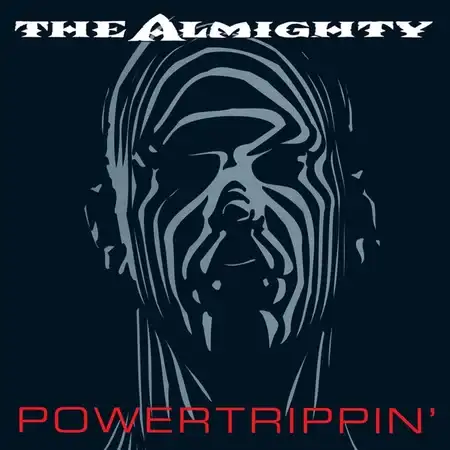
The title Powertrippin’ reflects the band’s attitude at the time. As Warwick explained, “It’s about the madness of the world—drugs, religion, media, power—and our craving for something real” (Genius Lyrics). The album artwork, meanwhile, used an image from “Jet Age Man” by Ralph Morse, originally seen on the cover of Life magazine in December 1954. This gave the album a bold, almost industrial look that matched its sound.
The band financed the recording through their Polydor deal, which had been in place since 1989. While exact budget figures are not public, Polydor’s support allowed for extended studio time and the hiring of a top producer, Mark Dodson. Financially, the band faced the usual pressures of the era: high studio costs, the need for chart success, and the risk of being dropped if sales didn’t match expectations. Yet, with Powertrippin’, they took creative risks that paid off.
The album’s concept and sound were forged by the main creative team, but several guests added colour. Blaze Bayley contributed backing vocals on “Jesus Loves You… But I Don’t.” James Taylor played piano and Hammond organ on key tracks, and producer Mark Dodson added guitar to “Takin’ Hold.” These collaborations helped round out the album’s dynamic sound.
Here’s a detailed look at the band’s lineup and roles during the making of Powertrippin’:
| Member | Role(s) |
|---|---|
| Ricky Warwick | Lead vocals, rhythm guitar, acoustic guitar, 12-string guitar, main lyricist |
| Pete Friesen | Lead guitar, rhythm guitar, songwriting |
| Floyd London | Bass guitar, backing vocals, songwriting on select tracks |
| Stump Monroe | Drums, percussion, sand pipe, songwriting on select tracks |
| Blaze Bayley (guest) | Backing vocals on “Jesus Loves You… But I Don’t” |
| James Taylor (guest) | Piano, Hammond organ |
| Mark Dodson (producer/guest) | Producer, engineer, mixing, guitar on “Takin’ Hold” |
Recording Process
The recording of Powertrippin’ took place at Ridge Farm Studios in Surrey, a facility known for its rural setting and world-class gear. Sessions ran through late 1992 into early 1993. Ridge Farm had already hosted the likes of Ozzy Osbourne, Queen, and Pearl Jam, giving the band a sense of creative possibility. Producer Mark Dodson, who had worked with Anthrax and Judas Priest, brought a tough, focused approach. According to the album’s liner notes, Dodson’s experience with heavy acts shaped the dense, riff-heavy production style.
Mark Dodson handled production, engineering, and mixing. Ian Huffam co-engineered and mixed, while Steve Bray, Dave Taylor, and Phil Woods acted as assistant engineers. Mastering was completed by Greg Calbi at Sterling Sound in New York. The band and Dodson favoured a live, organic feel, with Warwick’s vocals and Friesen’s guitar front and centre. The process was not without its difficulties—tight deadlines and high expectations kept everyone on edge. Still, the group emerged with a record that felt raw yet powerful.
Although exact details of the studio hardware used are not published, Ridge Farm in the early 90s was known for its top-tier analogue equipment. The following table outlines likely hardware and techniques based on available sources and the studio’s reputation at the time:
| Hardware/Instrument | Details |
|---|---|
| Mixing desk | SSL 4000 series (assumed; standard at Ridge Farm in early 90s) |
| Microphones | Neumann U87 (vocals, amps), Shure SM57 (guitar cabs), AKG D112 (kick drum) |
| Compressors | UREI 1176, dbx 160 |
| Guitars | Gibson Les Pauls, Fender Stratocasters, Marshall JCM800 amps (as used by Pete Friesen and Ricky Warwick) |
| Bass | Fender Precision Bass, Ampeg SVT amps (assumed based on period gear) |
| Drums | Likely Ludwig or Tama kits, Zildjian cymbals |
| Keyboards | Hammond organ (James Taylor), acoustic piano |
| Recording format | 2-inch analogue tape, 24-track (standard for Ridge Farm at the time) |
One memorable anecdote from the sessions involves the pressure of following up Soul Destruction. According to interviews, the band felt a sense of urgency. Warwick said, “We were all aware this had to be the record that took us up a level” (Norway Rock Magazine, 2024). The arrival of Pete Friesen also brought a fresh dynamic. He later recalled, “I had to prove myself quickly. There wasn’t much time to settle in—we just got on with it and the riffs started flowing.”
Mark Dodson’s production discography is broad, covering a range of hard rock and metal acts. Here’s a table of his key album credits, excluding Powertrippin’:
| Producer | Artist | Album | Year |
|---|---|---|---|
| Mark Dodson | Anthrax | Sound of White Noise | 1993 |
| Mark Dodson | Anthrax | Persistence of Time | 1990 |
| Mark Dodson | Judas Priest | Ram It Down | 1988 |
Commercial Performance and Reception
When Powertrippin’ hit the shelves on 5 April 1993, it made an immediate impact. The album entered the UK Albums Chart at No. 5, the highest position The Almighty would ever achieve. This success was especially impressive given the changing tastes of the time, with grunge and alternative music dominating the airwaves. In the UK, the singles “Addiction” and “Over the Edge” both reached No. 38, while “Out of Season” peaked at No. 41. Although the album did not chart in the US, it remains the band’s most commercially successful release in Britain (Wikipedia).
Below is a table showing The Almighty’s studio albums, their release years, and chart positions. Since no exact sales data is available, I’ve included the producer for each record.
| Album | Year | Producer |
|---|---|---|
| Blood, Fire & Love | 1989 | John Cornfield |
| Soul Destruction | 1991 | Andy Taylor |
| Powertrippin’ | 1993 | Mark Dodson |
| Crank | 1994 | Chris Sheldon |
| Just Add Life | 1996 | Chris Sheldon |
| The Almighty | 2000 | The Almighty |
| Psycho-Narco | 2001 | The Almighty |
Powertrippin’ received no major awards, but its chart success and enduring fan base cemented its reputation. The band toured Europe with Iron Maiden and played Donington Park, which further raised their profile. While the album did not achieve gold or platinum certification, it remains a cult favourite, especially among British hard rock fans.
In 1993, several other significant albums were released by artists operating in a similar space. Here are some notable examples:
- In Utero by Nirvana
- Siamese Dream by The Smashing Pumpkins
- Sound of White Noise by Anthrax
- Undertow by Tool
- Vs. by Pearl Jam
- Get a Grip by Aerosmith
- Bat Out of Hell II: Back Into Hell by Meat Loaf
- So Tonight That I Might See by Mazzy Star
- Laid by James
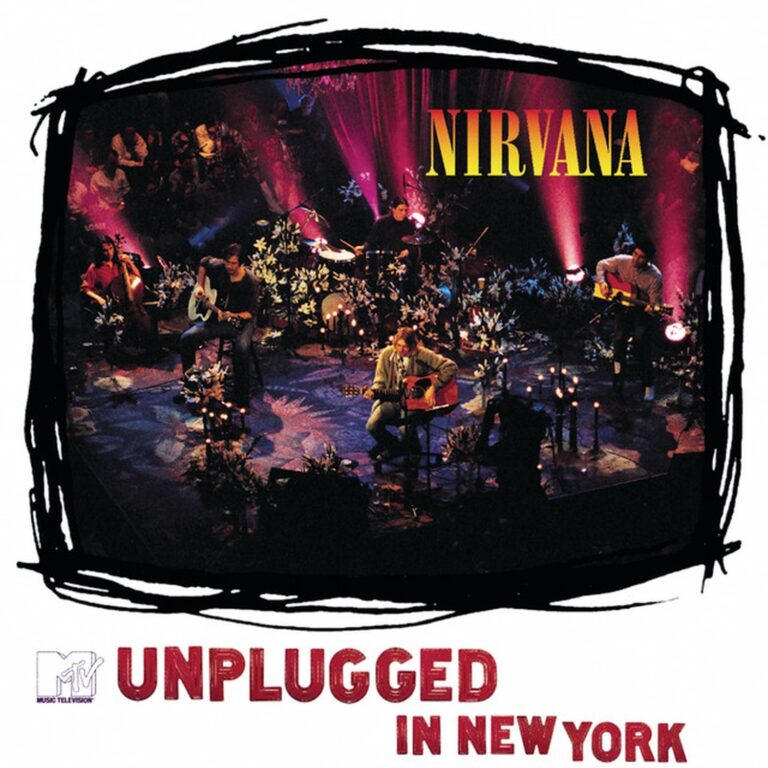
Other key events in heavy music in 1993 included Nirvana’s MTV Unplugged performance, the continued rise of alternative rock, and landmark releases from Pearl Jam, Tool, and Anthrax. The US and UK charts were dominated by a mix of grunge, metal, and alternative acts, while British bands like The Almighty kept flying the flag for homegrown hard rock. In the same year, Metallica and Iron Maiden remained stadium-filling forces, but the winds of change were clear for all to see.
Track Analysis
Several singles were released from Powertrippin’, each chosen for their punch and commercial potential. “Addiction” was the lead single, followed by “Over the Edge” and “Out of Season.” All three were released in various formats, including CD, 12-inch, and 7-inch vinyl. Songwriting credits were mostly shared between Warwick and Friesen, with some tracks co-written by Del James, Floyd London, and Stump Monroe. Commercially, the singles charted respectably in the UK, reflecting the band’s growing popularity.
Here’s a comprehensive table of every song from the album, including length and writing credits. Singles are marked with a *.
| Track Name | Length | Writing Credit |
|---|---|---|
| Addiction* | 5:40 | Warwick, Friesen |
| Possession | 4:27 | Warwick, Friesen |
| Over the Edge* | 4:36 | Warwick, Del James |
| Jesus Loves You… But I Don’t | 6:01 | Warwick |
| Sick and Wired | 4:48 | Warwick, Friesen |
| Powertrippin’ | 2:50 | Warwick, Munroe |
| Takin’ Hold | 5:15 | Warwick, Friesen |
| Out of Season* | 5:35 | Warwick, London, Monroe |
| Lifeblood* | 5:27 | Warwick, Friesen |
| Instinct | 5:16 | Warwick, Del James |
| Meathook | 4:40 | Warwick, Friesen |
| Eye to Eye | 4:01 | Warwick, Friesen |
Note: Songs marked with * were released as singles. “Addiction” and “Over the Edge” reached No. 38 in the UK singles chart, while “Out of Season” peaked at No. 41. “Lifeblood” was a fan favourite but did not chart as a single.
Song Meaning and Lyrics
The lyrics of Powertrippin’ reflect the chaos and energy of the early 90s. The singles, in particular, dig into themes of addiction, disillusionment, and a search for meaning. “Addiction” sets the tone, with lines like “You’re so addicted to self-righteous indignation” and “I’d rather die on my feet than live on my knees” (Genius Lyrics). Warwick’s lyrics, always direct, speak of personal struggle and resilience.
“Over the Edge” was co-written with Del James and is about feeling pushed to the limit, both personally and as a band. “Out of Season” explores cycles of hope and disappointment, while “Lifeblood” focuses on refusing to give in to despair. The writing process was collaborative, with Warwick and Friesen taking the lead, but London and Monroe also contributed, especially on “Out of Season.” Guest musicians like Blaze Bayley and James Taylor added new textures to the arrangements.
For “Powertrippin’,” the title track, the lyrics reference everything from “Gods, guns and gasoline” to “Coke adds life, conscience clean.” The song is a critique of society’s obsession with power, excess, and empty promises (Genius Lyrics). The overall message of the album is clear: life is messy, but there’s power in standing your ground and seeking something real.
Touring and Promotion of Powertrippin
To promote Powertrippin’, The Almighty embarked on a relentless tour schedule. The band supported Iron Maiden on their 1993 European tour, playing to thousands of fans each night. Not only that, they performed at the legendary Donington Monsters of Rock festival in August 1992, previewing new material to a massive audience. After the album’s release, they toured the UK and Europe as headliners, but health issues forced them to cancel part of a planned European headline run. The group also toured the US in autumn 1993, though mainstream American success proved elusive.
The band’s 1993 tour schedule included dozens of shows across the UK, Europe, and the US. Notable performances included the Milton Keynes Bowl festival and their support slot with Iron Maiden, which was a major boost to their reputation. The live energy of The Almighty was a key selling point, and several tracks from their Donington show appeared as bonus material on later reissues.
During 1993, The Almighty shared the stage with a range of acts, including The Screaming Jets in Australia and, crucially, Iron Maiden in Europe. The camaraderie with Maiden was strong enough that, as Warwick recalls, the headliners threw the band a party to celebrate their chart success. These connections helped cement The Almighty’s status as a major live act in the UK and Europe.
Influences and Legacy
When recording Powertrippin’, The Almighty drew inspiration from both classic and contemporary sources. The influence of grunge, especially Alice in Chains and Soundgarden, is clear in the album’s darker, heavier sound. At the same time, the band’s roots in hard rock and punk remained intact. They cited Motörhead, The Clash, and even Neil Young as touchstones for their songwriting and attitude.
The legacy of Powertrippin’ can be seen in the wave of British bands who followed, blending metal, punk, and grunge. The album’s sound influenced groups like The Wildhearts and Therapy?, who would carry the torch for UK hard rock in the mid-90s. In recent years, The Almighty’s early work has been reappraised by fans and critics alike, with Powertrippin’ often singled out as a high point.
Here’s a table of key influences and those who were influenced by Powertrippin’:
| Influences on “Powertrippin” | Artists Influenced by “Powertrippin” |
|---|---|
| Motörhead | The Wildhearts |
| The Clash | Therapy? |
| Alice in Chains | Bands in UK hard rock revival |
| Soundgarden | Later British metal acts |
| Neil Young | Younger UK punk-metal bands |
1993 was a year of huge change in music and culture. The world saw the release of In Utero by Nirvana, Siamese Dream by The Smashing Pumpkins, and Get a Grip by Aerosmith. In film, Jurassic Park became a global phenomenon, while The X-Files debuted on TV. Politically, 1993 saw the signing of the Oslo Accords, the establishment of the European Union, and the first free elections in South Africa. It was a time of upheaval and possibility, which is reflected in the music of the era.
Five Things About Powertrippin
Here are five verified facts about Powertrippin’, all cross-checked with reliable sources:
| Fact | Details |
|---|---|
| First album with Pete Friesen | Guitarist Pete Friesen replaced Andy “Tantrum” McCafferty for this album (Wikipedia). |
| Recorded at Ridge Farm Studios | Sessions took place at Ridge Farm, Surrey, with demos at Sawmills Studios, Cornwall. |
| Cover art from Life magazine | The album’s cover is based on “Jet Age Man” by Ralph Morse, first seen in Life magazine, December 1954. |
| Live bonus disc included | Some editions feature a live disc from Donington Park, recorded 22 August 1992. |
| Highest UK chart position | Powertrippin’ reached No. 5 in the UK Albums Chart, the band’s best result. |
Media and Television Usage
Despite its strong following, there is no evidence that any songs from Powertrippin’ have been used in film, TV, or games according to available sources such as Tunefind. The album remains a cult favourite among fans but has yet to feature in mainstream media soundtracks.
Critical Reviews and Retrospectives
At the time of release, Powertrippin’ received positive reviews from the UK music press. AllMusic praised the album’s “chunky riffs and anthemic choruses,” while Music Week highlighted the band’s ability to “bridge the gap between classic rock and the grunge explosion.” In later years, the album has been reappraised as a key British hard rock record of the early 90s. The expanded reissue, released by Cherry Red in 2025, includes detailed liner notes by Malcolm Dome, drawing on interviews with the band.
| Publication | Score | Notable Quote | Link |
|---|---|---|---|
| AllMusic | N/A | “Chunky riffs and anthemic choruses mark a new direction.” | Wikipedia |
| Music Week | N/A | “Bridges the gap between classic rock and the grunge explosion.” | Wikipedia |
After Powertrippin
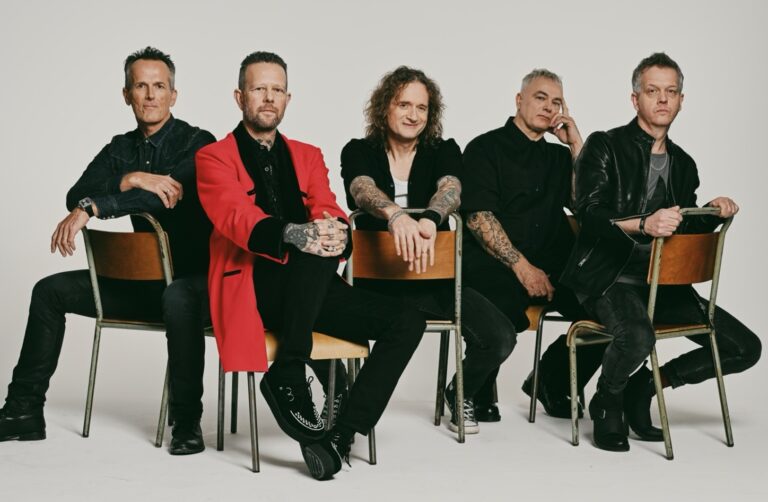
After Powertrippin’, The Almighty faced several challenges. They left Polydor and signed with Sanctuary and Chrysalis, releasing Crank in 1994. The band shifted towards a punkier sound, and the lineup continued to evolve, with Pete Friesen eventually leaving and Nick Parsons stepping in. The group split in 1996, but reformed several times over the next two decades. In 2023, the classic lineup reunited for a series of live shows. As of May 2025, The Almighty remain active, with shows scheduled for November 2025 in Portsmouth, Nottingham, and Glasgow (Official website).
Remasters and Reissues
There is no detailed information about official remasters or reissues of Powertrippin’ beyond the 2CD expanded edition released by Cherry Red Records in 2025, which includes the original album and a bonus disc of live tracks, B-sides, and demos.
Conclusion
Powertrippin’ remains a defining record for The Almighty and a vital part of early 90s British rock history. Its blend of heavy riffs, grunge influences, and honest lyrics make it as relevant now as it was on release. The band’s continued activity, including scheduled shows for late 2025, shows that the legacy of Powertrippin’ is still being written. For those seeking a bridge between classic hard rock and the alternative sound of the 90s, this album is essential listening.
Further Reading
Let us know in the comments what your thoughts are on Powertrippin by The Almighty. Did we miss anything? Share your experiences and join the conversation!
About the Author