Introduction
Siamese Dream is a landmark album in 1990s alternative rock – a genre-defining work that captured the tumult of its era while pushing the boundaries of the “grunge” sound. Released in 1993 as The Smashing Pumpkins’ second studio album, Siamese Dream melded the raw angst of grunge with lush, layered guitar soundscapes, creating a “technicolor take on grunge” that stood out amid the early ’90s rock landscape. Frontman Billy Corgan’s ambitious vision drove the project, resulting in music that could be at once ferociously heavy and surprisingly delicate. Despite serious tensions and personal struggles within the band during its making, Siamese Dream was a commercial and critical triumph, debuting at #10 on the U.S. Billboard 200 and eventually selling over 6 million copies worldwide. It cemented Smashing Pumpkins as major players in alternative rock and earned the group two Grammy nominations, all while influencing countless artists in the decades since. This deep dive will explore the story behind Siamese Dream – from the band’s journey leading up to it, through the fraught recording process and iconic artwork, to its reception, legacy, and the aftermath for the band.
Our podcast deep dive on Siamese Dream is here!
Siamese Dream at a Glance
| Attribute | Details |
|---|---|
| Album Title | Siamese Dream |
| Artist | The Smashing Pumpkins |
| Release Date | July 27, 1993 (U.S.) |
| Record Label | Virgin Records |
| Produced By | Butch Vig and Billy Corgan |
| Recording Period | December 1992 – March 1993 |
| Recording Studio | Triclops Sound Studios – Marietta, Georgia |
| Genre | Alternative Rock (with elements of grunge, metal, shoegaze) |
| Length | 62:08 |
| Tracks | 13 |
| Billboard Peak | #10 (Billboard 200 Albums) |
| U.S. Certification | 4× Platinum (4 million units) |
| Singles | “Cherub Rock” “Today” “Disarm” “Rocket” |
Siamese Dream is more than just a collection of songs – it’s often regarded as one of the finest alternative rock albums of the ’90s, blending “classic” rock ambitions with the era’s underground edge. The album’s enduring impact can be felt in the work of many bands that followed, and it continues to connect with rock fans old and new. Before diving into the album’s creation and legacy, let’s place Siamese Dream in context within the Smashing Pumpkins’ body of work.
Discography Context: Where Siamese Dream Fits In
Formed in Chicago in 1988, The Smashing Pumpkins had released only one album prior to Siamese Dream. Their debut Gish (1991) was an indie success that introduced the band’s blend of heavy riffs and dreamy textures, earning them a cult following. However, later in 1991, Nirvana’s Nevermind exploded into the mainstream, instantly redefining alternative rock’s commercial potential. In the wake of Nevermind’s success, Smashing Pumpkins were suddenly hyped by the media as “the next Nirvana” – a label that brought both opportunity and immense pressure. Billy Corgan later recalled that he felt “this great pressure to make the next album set the world on fire” after Gish.
Siamese Dream thus became the pivotal second act for the band. It was their major-label debut on Virgin Records (which had signed them after Gish’s acclaim), and all eyes were watching to see if the Pumpkins could deliver a genre-defining follow-up. We now know that they did: Siamese Dream firmly established the Pumpkins’ identity separate from their Seattle grunge peers. Its success set the stage for the band’s magnum opus, Mellon Collie and the Infinite Sadness (1995), a sprawling double album that would go on to even greater commercial heights. In hindsight, Siamese Dream is often seen as the bridge between the raw, psychedelic hard rock of Gish and the grand ambitions of Mellon Collie. It took the underground momentum of Gish and blasted it into the mainstream, without compromising the band’s distinctive mix of beauty and brutality.
After Siamese Dream, The Smashing Pumpkins’ discography would evolve through several eras: the baroque grandeur of Mellon Collie (which yielded hits like “1979” and “Tonight, Tonight”), the dark electronic textures of Adore (1998), and the concept-rock experiments of Machina/The Machines of God (2000). The original lineup would break apart by 2000, and while Billy Corgan later revived the band name with new members and even reunited most of the classic lineup years later, Siamese Dream remains a touchstone – a moment when the four original Pumpkins (Billy Corgan, James Iha, D’arcy Wretzky, and Jimmy Chamberlin) fired on all cylinders to create a timeless record.
What Led Up to the Creation of Siamese Dream
By late 1992, when the band set out to make Siamese Dream, the internal and external pressures on Smashing Pumpkins were at a peak. Externally, the alternative rock boom – led by Nirvana, Pearl Jam, and others – meant there were high expectations for the Pumpkins’ next move. Internally, the band was, in Billy Corgan’s own words, “one of the darkest chapters in the band’s history”. The group was coming apart at the seams even as their star was rising.
Billy Corgan had fallen into a deep depression and even experienced a nervous breakdown prior to the album’s creation. He was battling writer’s block, gaining weight, and, as he later admitted, became suicidal during this period – at one point giving away his possessions and planning his own eulogy before finding help in therapy. Corgan felt intense insecurity from the band’s sudden position in the shadow of Nirvana’s success: Gish had done well for an indie album, but now some were snidely asking why the Pumpkins hadn’t blown up like Nirvana if they were “so good”. This fed into Corgan’s anxiety and perfectionism.
Meanwhile, the other band members were mired in their own issues. Drummer Jimmy Chamberlin had developed a serious heroin addiction that made his behavior erratic and unreliable. On top of that, guitarist James Iha and bassist D’Arcy Wretzky – who had been dating since the band’s early days – went through a messy breakup in 1992 while on tour for Gish. They literally split up as a couple right before a major gig (the August 1992 Reading Festival in England). The personal fall-out from their breakup added considerable tension and awkwardness within the band. Smashing Pumpkins were essentially four young people barely holding it together: the guitarist and bassist not speaking due to heartbreak, the drummer disappearing on drug binges, and the singer-songwriter on the verge of collapse under emotional strain.
It was in this fragile state that the Pumpkins approached Siamese Dream. Remarkably, instead of imploding, they funneled all that angst and desperation into creating an album that would define their career. “We were on tour, selling out everywhere… Everything went cool, fine, dandy. Suddenly, boom: Nirvana,” Corgan recalled of that time, describing how rapidly their confidence was shaken. Sensing that the band’s very future was at stake, Corgan became fiercely determined to make the record of a lifetime – even if it meant stepping on some toes in the process.
The Recording Process: Isolation and Perfectionism
To give Siamese Dream the focus it required, the band made a key decision: they left their hometown of Chicago and isolated themselves for the recording sessions. In December 1992, The Smashing Pumpkins relocated to Triclops Sound Studios in Marietta, Georgia – essentially a residential studio in the Atlanta suburbs – to begin work on the album. There were a couple of reasons for this move. For one, they wanted to avoid local distractions and the hip Chicago music scene that Billy had grown wary of. (In fact, Corgan’s frustration with the snobby “indie elite” would later be channeled into the song “Cherub Rock” – a scathing commentary on indie cred and scenes.) More importantly, going to Georgia was partly an attempt to keep Jimmy Chamberlin away from his drug connections back in Chicago. The idea was that if they recorded far from home, their troubled drummer might have a better chance of staying clean and focused.
Unfortunately, geography alone couldn’t solve everything – Jimmy still managed to find trouble even in Georgia. Corgan later noted that, “like clockwork, a ‘friend’ will suddenly appear at the studio to take him into ‘Hot-lanta’ for a night on the town, and he’s gone”, disappearing on drug-fueled benders despite their efforts. These absences caused significant delays and tension. (In a grim foreshadowing, the band’s worries about Jimmy would come to a head a few years later: in 1996, after a touring keyboardist overdosed and died with Jimmy present, the Pumpkins fired Chamberlin and he entered rehab. He would rejoin years later, but the scars of this era lingered.)
Producer Butch Vig reprised his role from Gish, teaming with Billy Corgan to co-produce Siamese Dream. Vig was fresh off producing Nirvana’s Nevermind and was highly in demand, but he was keen to help the Pumpkins craft something special. Billy and Butch shared an “ambitious vision” for the sound of the album: they wanted it to be huge, richly textured, and sonically perfect This was the early ’90s, so recording was still done on analog tape – which meant endless takes, overdubs, and manual editing to achieve that perfection. Vig recalled working 12-hour days, six or seven days a week for months on end to meet Corgan’s exacting standards, to the point where the process “almost killed” him.
Corgan’s obsessive compulsiveness in the studio became the stuff of legend. He was a “mad scientist with the guitars,” according to Vig. The band layered dozens upon dozens of guitar tracks to create the album’s dense wall of sound. For the song “Soma,” for example, Vig literally had to draw a map of the guitar overdubs because there were so many parts coming in and out; the diagram even spilled onto the back of the recording sheet as he kept track of Corgan’s many layers. Remember, this was all done without Pro Tools or digital shortcuts – if Billy wanted a part to sound just right, they would record it again and again, or cut analog tape with razors to splice the best pieces together. It was an old-school, pain-staking approach to making an album, and it pushed everyone to their limits – especially Butch Vig, who had never worked on a record with such a “sonic scope” before.
One notorious aspect of the Siamese Dream sessions is that Billy Corgan ended up recording the majority of the guitar and even bass parts himself. Whether out of necessity or sheer perfectionism, Corgan often chose to overdub James Iha’s guitar parts and D’arcy Wretzky’s bass parts with his own playing, to get exactly the sound he envisioned. This was not a slight against his bandmates’ abilities so much as it was a reflection of Corgan’s singular vision. Engineer Jeff Tomei noted that Billy simply “knew pretty much what he wanted… there is no way to get inside someone else’s head and play exactly what they envision”, and he felt James and D’arcy perhaps weren’t as fully prepared for the recording as Billy was. From Corgan’s perspective, doing it himself was the fastest path to achieve the precision he desired.
Unsurprisingly, this didn’t go over well with James and D’arcy at the time. Feeling sidelined in the studio created resentment that would linger for years. Corgan later admitted that in his quest for perfection, he “crossed a line”, saying “no matter how good an album you’ve got, you’ve cut away the gut of your band” by not involving your bandmates. It’s a regret he has expressed when looking back on Siamese Dream. But in 1993, Billy was willing to risk hurt feelings if it meant capturing the sound in his head. And the result of that relentless drive is in the grooves of the album – Siamese Dream sounds huge, layered, and meticulously crafted in a way few rock albums of that era do.
In the end, the album’s recording blew past its budget and schedule. Originally budgeted around $250,000, the sessions went long due to re-recordings and delays (some reports say the budget more than doubled, though exact figures vary). The stress on the band was immense. But by March 1993, the Pumpkins emerged from Triclops Studio with an album that somehow took all of that internal chaos and channeled it into 62 minutes of cohesive, exhilarating music.
Album Artwork: Angels, Innocence, and Mystery
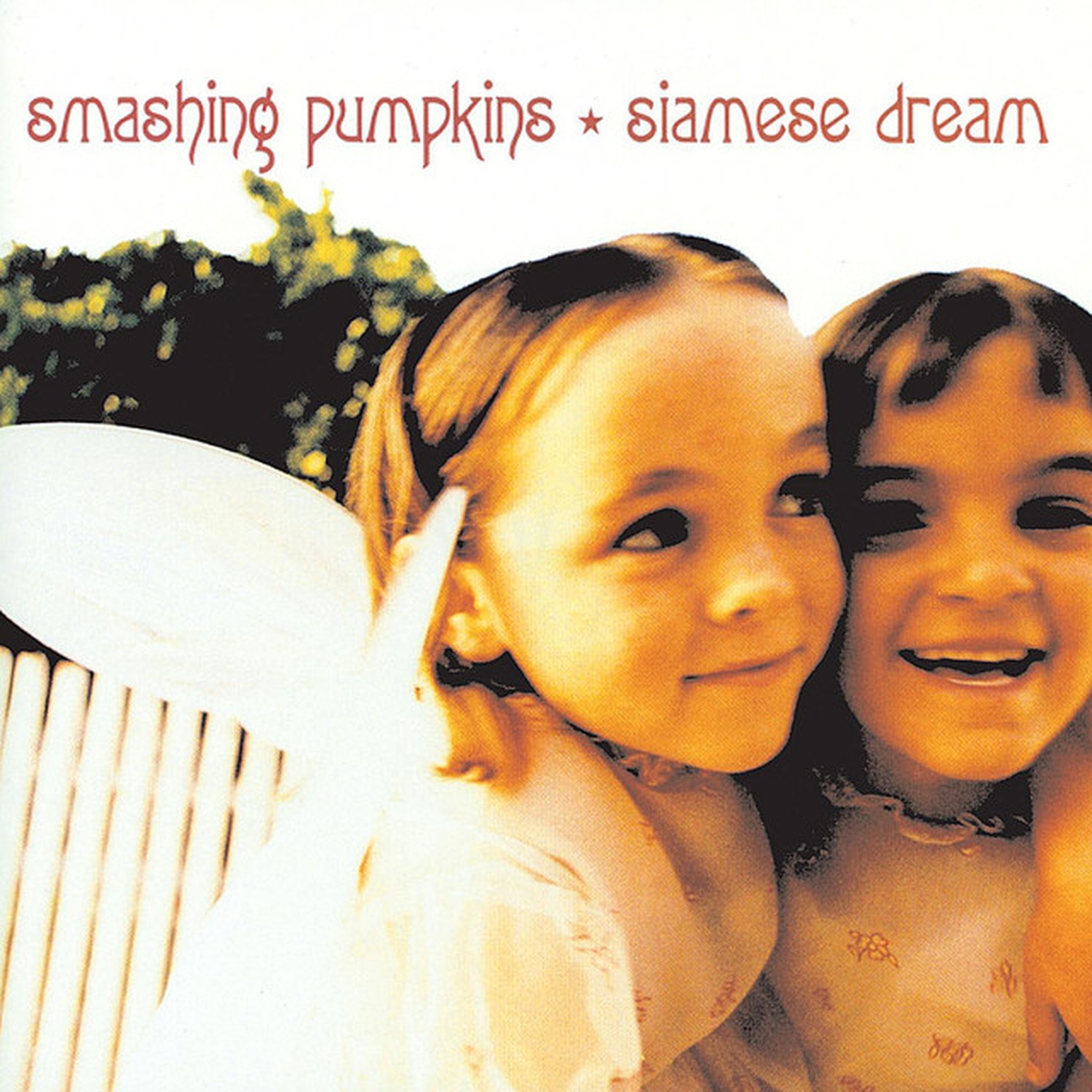
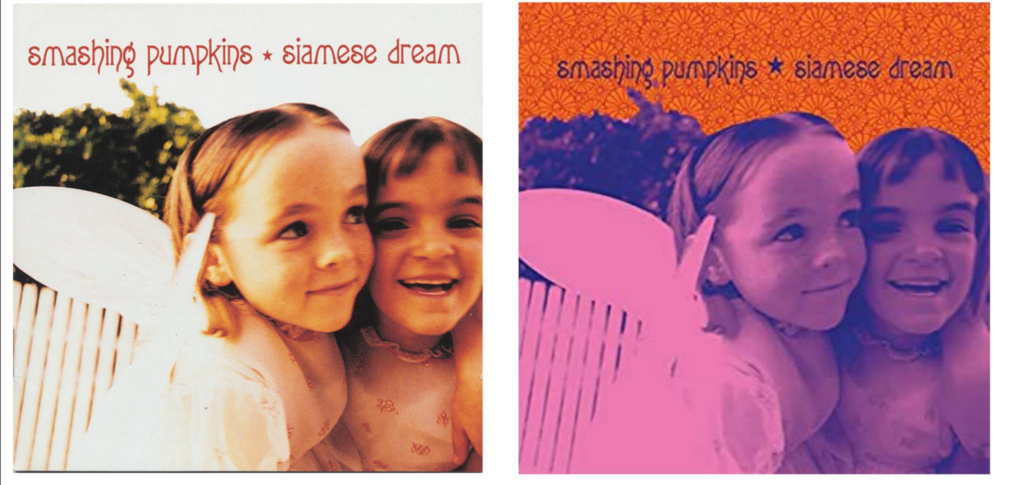
One of the most enduring images of the ’90s alt-rock scene is the album cover of Siamese Dream: the photo of two little girls, around age 7, with angelic faces covered in sparkles, one girl hugging the other from the side. The picture exudes a warm, nostalgic innocence that both contrasts with and complements the album’s sound. For many fans, that cover is instantly recognizable – yet for years, the identity of the girls and the story behind the photo were shrouded in mystery.
The cover photograph was shot by Melodie McDaniel, an independent photographer hired to capture the image that Billy Corgan had in mind. Interestingly, the original plan for the Siamese Dream artwork was quite different: the band had commissioned an outsider artist to create the cover, but disagreements with the label nixed that idea, and Corgan had to scramble for a new concept at the last minute. In the end, Corgan and McDaniel came up with the concept of two girls embodying the album’s themes of duality and innocence. Despite the album’s title, the girls on the cover are not actually twins or conjoined in any way – they’re simply two look-alike kids posed cheek-to-cheek. (The title Siamese Dream itself, according to Corgan, was more of a poetic notion and not literally about conjoined twins. He has said it reflects a “duality and interconnectedness” of experience.)
For the shoot, two child models from California were selected: Ali Laenger (the girl on the right, smiling broadly) and Lysandra Roberts (on the left). Notably, the two girls had never met before that day – their chemistry in the photo is pure happenstance of the shoot, yet it’s so natural that many assumed they must be sisters or best friends. The kids were dressed up with angel wings and given candy and popsicles during the session to keep the mood joyful; one of them later recalled that it was “the ultimate childhood dream day” – basically just playing dress-up and having fun while being photographed. The resulting image perfectly captured a sense of childhood wonder that belied the darker undercurrents of the album.
The album booklet and packaging also had Corgan’s personal touch. The first pressing of Siamese Dream on CD included a lavish 20-page booklet that Corgan and his then-wife assembled literally the day after their wedding. This booklet featured old-timey photos (some strangers, some from Corgan’s own family albums) with lyrics scrawled on top in Billy’s handwriting. It was an attempt to visually convey the nostalgia and emotional rawness of the songs. However, Virgin Records later trimmed costs by replacing it with a simpler fold-out insert in subsequent pressings, much to Corgan’s displeasure. (Fans will be happy to know that the original booklet was restored in a 1999 reissue.)
For years, the identity of the cover girls remained unknown to the public. The band didn’t credit the kids by name, adding to the mystique. It wasn’t until the Pumpkins’ reunion in the late 2000s that the topic resurfaced in a big (and bizarre) way. In 2007, Billy Corgan posted a tongue-in-cheek message on the band’s blog looking for the girls from the Siamese Dream cover, joking, “They are not conjoined anymore, as far as we know”. Then in 2011, Corgan stirred up fan frenzy by tweeting “our bass player Nicole just admitted she is one of the girls on the cover”. This was referring to bassist Nicole Fiorentino, who had joined the band in 2010. Fans were astonished – could it really be true that one of the Siamese Dream girls grew up to literally play in the Smashing Pumpkins? Unfortunately (or perhaps humorously), this turned out to be a prank or publicity stunt. Mathematical sleuths quickly realized Nicole was too old to have been the child in that 1993 photo, and indeed it was confirmed to be false shortly thereafter. Corgan never fully explained the joke, and Nicole later said she only mentioned to Billy in passing that she could have been one of the girls based on age, but wasn’t.
The real cover girls, Ali and Lysandra, were eventually located in 2008 by an old Pumpkins employee. In 2018, as part of promotional material for the band’s “Shiny and Oh So Bright” reunion tour, the two women (now in their 30s) were reunited and even appeared in a promotional video, sitting on a couch with Corgan to announce the tour. It was a sweet full-circle moment for fans to see the Siamese Dream kids all grown up and still radiating that same charming chemistry. Billy Corgan called the original album cover an “iconic image in rock history”, and seeing the two cover stars together decades later certainly affirmed that.
Today, the Siamese Dream album cover is celebrated not just for its nostalgia, but for how well it complements the music: innocence on the outside, turmoil within. It’s consistently ranked among the memorable album covers of the ’90s. And now that the mystery has been solved, we can appreciate the little trivia that the girls weren’t even friends – just two kids who met on a magical photoshoot that became rock ’n’ roll history.
Release and Initial Reception
Siamese Dream was released on July 27, 1993 in the United States (a week earlier in the UK) and immediately made a splash. As noted, it debuted at #10 on the Billboard 200 – an impressive showing for an alternative rock album at that time. The record-buying public, primed by months of buzz and the success of lead single “Cherub Rock,” pushed the album up the charts, and it eventually earned a 4× Platinum certification in the U.S. (meaning four million copies shipped domestically). Worldwide, Siamese Dream has sold around 6 million copies, making it one of the Smashing Pumpkins’ best-selling albums.
Critically, Siamese Dream was almost universally lauded upon release. Reviewers praised the Pumpkins for raising the bar and proving they were more than just another buzzy grunge act. Entertainment Weekly noted the band had successfully lived up to the “next Nirvana” hype and called the Pumpkins “slackers with a vision,” highlighting how the album aimed higher than the standard alt-rock fare of the time. The British press, who had been initially skeptical of Corgan’s angst, came around as well – NME gave it 8/10 and commended the record’s emotional depth beneath its heavy exterior. Rolling Stone’s reviewer Lorraine Ali famously wrote that Siamese Dream was “a strong, multidimensional extension of Gish that confirms Smashing Pumpkins are neither sellouts nor one-offs”. This line was a direct answer to detractors who thought the band might compromise their integrity for big-label success – clearly, in Rolling Stone’s view, they had not.
There were a few dissenting voices – for instance, critic Simon Reynolds in The New York Times wrote that while the album was good, it perhaps “lacked the zeitgeist-defining edge” that made Nirvana so impactful. Some critics back then also complained that Corgan’s lyrics were a bit obtuse or that his voice, with its nasal whine, was an acquired taste. But such quibbles were in the minority. Overall, the album’s blend of the harsh and the sweet – raging guitars and drums balanced by melodic hooks, string sections (on “Disarm”), and vulnerable lyrics – struck a chord with a wide audience.
Importantly, Siamese Dream also earned the Smashing Pumpkins their first Grammy Award nominations. In early 1994, the album was nominated for Best Alternative Music Performance (a big honor in the post-Nirvana era), and the band was nominated for Best Hard Rock Performance with Vocal at the 36th Annual Grammys. (They didn’t win that year – Nirvana actually took the alternative Grammy for In Utero – but the nominations signaled that the Pumpkins had truly arrived in the top tier of rock acts.)
The album’s success wasn’t just on paper. Songs like “Today” and “Disarm” became ubiquitous on radio and MTV, turning the Pumpkins into household names by early 1994. Yet, interestingly, some of the album’s notoriety also came from controversy: “Disarm,” a darkly orchestral ballad about Corgan’s troubled childhood, was banned by the BBC from daytime radio and the TV show Top of the Pops due to a misunderstanding of its lyrics (the BBC thought the line “cut that little child” might be about abortion or connected to a recent child crime in the UK). The ban only fueled intrigue, and despite limited UK airplay, “Disarm” still shot to #11 on the UK singles chart in 1994. In the US, where censorship wasn’t as much an issue for that song, “Disarm” became a staple on rock radio – it didn’t crack the pop Hot 100, but it reached #5 on Billboard’s Mainstream Rock chart and has endured as one of the band’s signature songs.
By the end of 1993, Siamese Dream was appearing on many critics’ year-end “Best Albums” lists and solidifying its place in 90s rock canon. Over the years, its stature has only grown. Retrospective reviews often give it perfect or near-perfect scores – for example, AllMusic’s later appraisal called it “one of the finest alt-rock albums” ever made. Siamese Dream has also landed on numerous “Greatest Albums of All Time” lists, including Rolling Stone’s 500 Greatest Albums (where it’s been ranked in various editions, most recently in the 300s) and Pitchfork’s Best 150 Albums of the 1990s. In short, the initial reception in 1993 was glowing, and the legacy assessment decades later remains that Siamese Dream is an undisputed classic of its era.
Supporting the Album: Tours and Promotion
To capitalize on the album’s momentum, The Smashing Pumpkins embarked on extensive touring and promotional efforts through late 1993 and 1994. The band that had nearly fallen apart while making Siamese Dream now found themselves riding a wave of success – and they hit the road with a vengeance.
In the second half of 1993, the Pumpkins played a string of club and theater shows in North America, some of which became legendary among fans. Notably, they performed an intense hometown gig at Chicago’s Metro in August 1993 to celebrate the album’s release – a show later partially documented on their 1994 home video Vieuphoria. That fall, they also toured Europe, where songs like “Cherub Rock” and “Today” were turning them into alt-rock darlings across the pond as well.
By mid-1994, Smashing Pumpkins graduated to the big leagues of rock touring: they were tapped as headliners for Lollapalooza 1994, the era’s premier alternative rock festival tour. This was a significant milestone. Originally, Nirvana had been expected to headline Lollapalooza ’94, but after Kurt Cobain’s tragic death in April, Smashing Pumpkins stepped in as a top bill alongside acts like The Beastie Boys and The Breeders. Throughout that summer, the Pumpkins closed out each night of Lolla with blistering sets heavily featuring Siamese Dream material. Fan reports from those shows often recall how powerful the new songs sounded live – for example, the band would open with the ferocious “Geek U.S.A.” or “Cherub Rock,” sending crowds into a frenzy, and later bring the mood down with a beautiful mid-set performance of “Disarm” illuminated by lighters. One fan who caught Lollapalooza ’94 noted that the Pumpkins “actually woke the crowd back up since everyone was pretty tired after the Beasties’ set” – a testament to the Pumpkins’ high-energy performances at the time.
The band’s visuals and stage presence were also evolving during this period. Billy Corgan famously shaved his long curly hair and adopted the now-iconic zero T-shirt look during the Siamese Dream-era tours, signaling a new persona of sorts. They also began using more elaborate light shows and backdrops in concerts, hinting at the grandiose stage productions they’d employ in the Mellon Collie era.
On the promotional front, Smashing Pumpkins made key television appearances that helped broaden their audience. In October 1993, they made their Saturday Night Live debut, performing “Today” and “Cherub Rock” to a national TV audience, which undoubtedly boosted album sales. They also appeared on UK’s Top of the Pops in early 1994 (though notably not playing “Disarm,” since it was banned – they did “Today” or a different song instead). Music videos were another huge part of supporting the album: the band released creative, memorable videos for the singles “Cherub Rock,” “Today,” “Disarm,” and later “Rocket,” all of which got heavy rotation on MTV. The “Today” video, featuring Corgan as an ice cream truck driver who abandons his route to paint the truck and pick up colorful passengers in the desert, became an MTV staple and helped make that song one of 1993’s defining alternative hits. The “Disarm” video, with its stark black-and-white imagery of floating objects and the band in an attic, showcased a more artistic side and got significant airplay (despite the BBC issues abroad).
In print media, Billy Corgan – never one to shy away from honest commentary – gave numerous interviews during the tour cycle that year, discussing the album’s tough birth and the band’s issues. This kept Siamese Dream in the press and further built the Pumpkins’ mystique as a brilliant but volatile young band. Interestingly, their newfound fame also put them on some unexpected platforms; for example, they performed on the American Music Awards in early 1994 (an unusual place for alt-rock bands at the time) and even at the Grammy Awards ceremony in March 1994, underscoring how quickly they’d moved from indie circles to mainstream recognition.
Through relentless touring and savvy media presence, Smashing Pumpkins turned Siamese Dream from just a hit album into a cultural moment. By the end of 1994, they were one of the biggest rock bands in the world – thanks in large part to the groundwork laid by the Siamese Dream tour cycle. The heavy road schedule did take a toll (Corgan has said that the band members were barely speaking by the tour’s end, and of course Jimmy’s addictions were an ongoing battle), but professionally, it established the Pumpkins as a headline act capable of delivering the goods live, not just in studio.
Singles and Songs: From “Cherub Rock” to “Rocket”
Four official singles were released from Siamese Dream, and each contributed to the album’s legacy in a different way. These songs not only found radio and chart success, but also provided a snapshot of the album’s range — from blistering rock to wistful balladry.
- “Cherub Rock” – Released as the lead single in June 1993, Cherub Rock is the album’s thunderous opening track and a statement of intent. Musically, it’s all about Jimmy Chamberlin’s rolling drum intro, the wall of fuzzed-out guitars, and that triumphant ascending riff. Lyrically, Billy Corgan bit the hand that fed by aiming the song at the elitism of the indie rock scene – essentially calling out those who obsess over underground credibility. He snarls, “Let me out!” and “Who wants honey, as long as there’s some money”, taking a jab at both the press and perhaps his own band’s critics. The irony of releasing “Cherub Rock” as a major-label single wasn’t lost on Corgan, but it set a defiant tone. On the charts, “Cherub Rock” did moderately well: it hit #7 on Billboard’s Modern Rock Tracks (alternative) chart and cracked the UK Top 40 (around #31). The music video, directed in a lo-fi style with the band performing in a forest setting, emphasized that the Pumpkins could be both authentic and ambitious. The song earned the band a Grammy nomination (for Best Hard Rock Performance) and remains a fan favorite, often used as a show opener in concerts.
- “Today” – The second single, Today, arrived in September 1993 and became Siamese Dream’s biggest hit in many ways. On the surface, “Today” is irresistibly catchy and upbeat – built on chiming, ice-cream-truck melody guitars and a quiet-loud dynamic. It sounds almost celebratory, which is why many casual listeners in ’93 might’ve thought it was simply a happy love song or an ode to seizing the day. In reality, “Today” was born from Corgan’s despair. He wrote it at his lowest point, when he literally had been contemplating suicide and then, upon deciding to live, penned the song almost as a sarcastic affirmation – “Today is the greatest day I’ve ever known”. Billy has described the moment as an almost binary fork in the road: either end it all, or embrace life’s next chapter, however corny that might seem. The creation of “Today” was cathartic; Corgan called it the song where he accepted himself as “a corny boy from fucking Chicago”, instead of trying to pose as eternally cool. The honesty paid off. “Today” reached #4 on the Billboard Modern Rock chart (one of the band’s highest alt-chart positions at that time) and gained heavy rotation on MTV thanks to its memorable video. The music video, directed by Stephane Sednaoui, reinforced the song’s theme by showing a drab situation (Corgan as a depressed ice cream man) blossom into a colorful adventure when he breaks free. With its uplifting melody and dark subtext, “Today” perfectly encapsulated the Pumpkins’ dual nature and became one of their signature songs.
- “Disarm” – If “Today” showcased the band’s alternative radio prowess, Disarm showed their range and emotional depth. Released as the third single in early 1994, “Disarm” is a stark, mostly acoustic track adorned with dramatic string arrangements and church bell chimes. It was a bold choice for a single – in the middle of the grunge era, here was a song with no distorted guitars or drums at all, just orchestral sweep and raw emotion. Corgan wrote “Disarm” about his troubled relationship with his parents, channeling childhood pain into lyrics like “the killer in me is the killer in you”, addressed to his mom and dad. That line and the famous opening “Disarm you with a smile / and cut you like you want me to” illustrate the mix of bitterness and yearning in the song. The track’s intensity made it controversial: as mentioned, the BBC interpreted some lyrics as too violent or potentially referring to real-life events, and banned it from certain programs. Nevertheless, “Disarm” connected hugely with listeners. It became the Pumpkins’ first major international hit – reaching the Top 20 in the UK, Canada, and Australia (peaking at #11 in Britain). In the U.S., it wasn’t a pop charter due to limited single release, but it got to #8 on the Modern Rock chart and remains one of the band’s most acclaimed songs. The black-and-white video, directed by Jake Scott, with its haunting images (flickering film reels, a floating fetus figurine, Corgan’s face half-painted black and white) only amplified the song’s mystique. Disarm proved that the Pumpkins could do heartfelt, tender ballads as effectively as full-throttle rockers – a versatility that set them apart from many peers.
- “Rocket” – The fourth and final single, Rocket, was released towards the end of 1994. By this time, the band was already moving on to writing the next album, so “Rocket” didn’t get as much of a promotional push. Still, it’s a gem of a track – a fuzzy, uplifting number that channels a bit of shoegaze swirl with power-pop optimism. The lyrics of “Rocket” – “Bleed in your own light… I shall be free” – reflect Corgan’s desire for liberation and transcendence, a recurring theme. Although not as commercially successful as the previous singles (it had modest chart showings, e.g. barely cracking the UK Top 100 at #96 and getting some alternative radio play), “Rocket” holds a place in fans’ hearts. Its music video is certainly worth noting: in a charming sci-fi storyline, a group of young kids, apparently obsessed with the Smashing Pumpkins, build a makeshift rocket ship in their barn and launch themselves into space to find the band. When they arrive on a distant planet, they discover the Pumpkins performing “Rocket” in a glittery glam-rock getup. It was a fun, cheeky video that hinted at the band’s changing image – with Corgan sporting the shaved head and silver pants that would define his Mellon Collie-era look.
Beyond the official singles, Siamese Dream is loaded with deep cuts that have achieved their own legendary status. Tracks like “Mayonaise” (an epic, gorgeous guitar song co-written by Iha and often cited by hardcore fans as the band’s best song) and “Soma” (the 6-minute slow-burn featuring that epic multiple-peaked guitar solo and quiet-loud dynamics) are considered classics too. In fact, “Mayonaise” wasn’t a single back in the ’90s, but it won a Rolling Stone reader’s poll for Best Smashing Pumpkins Song years later, underscoring how beloved it is. Fun fact: the title “Mayonaise” is deliberately misspelled and has no deep meaning – Corgan has joked that he literally looked in his refrigerator for a random word, and also that it’s a pun like “Maya – my own eyes” when said out loud, but in truth it was just a spontaneous naming with zero time spent on significance. Billy even quipped, “I spend more time explaining ‘Mayonaise’ than we actually spent writing it”
All the singles and songs together showcase Siamese Dream’s remarkable balance of intensity and intimacy. Whether it was the aggressive riffery of “Cherub Rock” and “Geek U.S.A.”, the dreamy melancholy of “Hummer” and “Luna”, or the radio-friendly anthems like “Today” and “Disarm,” the album managed to strike a chord on multiple levels. It’s no wonder that so many of these tracks found life beyond the album, on radio, MTV, and eventually as enduring staples of ’90s rock playlists.
Siamese Dream in Pop Culture (TV, Film, and More)
Given Siamese Dream’s iconic status, it’s not surprising that songs from the album have popped up in various films, TV shows, and other media over the years. The Smashing Pumpkins were a defining band of their era, and their music often evokes instant ’90s nostalgia or adds emotional punch to soundtracks. Here are a few notable uses of Siamese Dream tracks in media:
- Film Soundtracks: Perhaps the most prominent movie appearance of a Siamese Dream-era song is in the film Watchmen (2009). While the movie is set in an alternate 1980s, the soundtrack famously used contemporary songs for mood, and “Today” appears on the Watchmen soundtrack during a key scene. The song’s ironic mix of brightness and darkness fit well with the film’s tone. Additionally, an earlier Pumpkins track from the Singles movie soundtrack (“Drown”) is more known in film, but Siamese Dream songs have their share too. For instance, a Spanish film Salto al vacío (1995) featured “Disarm” on its soundtrack – an interesting choice that added pathos to that drama.
- Television: In recent years, Siamese Dream got a cool shout-out in the Netflix series Beef (2023), which used “Today” in one of its episodes to great effect. Hearing that distinctive opening riff instantly set a ’90s mood and had fans buzzing on social media about their Smashing Pumpkins feels. Back in the ’90s itself, Smashing Pumpkins music videos were featured on MTV’s shows like Beavis and Butt-Head (the animated duo gave their commentary on the “Today” video in one episode, which humorously further cemented the song’s place in pop culture). And as mentioned, while not exactly “uses in media,” their live performances on shows like Saturday Night Live and Top of the Pops essentially brought Siamese Dream songs into millions of living rooms worldwide.
- Video Games: The Pumpkins’ music has also appeared in popular video games, introducing the band to a new generation of listeners in the 2000s and 2010s. Notably, “Cherub Rock” was featured as a playable track in Guitar Hero III: Legends of Rock in 2007. Many gamers have fond (or frustrating!) memories of shredding that song’s zig-zag solo on plastic guitars. Playing “Cherub Rock” in Guitar Hero was practically a rite of passage for fans of that game and it underscored how the Pumpkins’ music – even the densely produced Siamese Dream material – could translate into fun, challenging gameplay. Additionally, Rock Band (the competitor game) also offered “Cherub Rock” as a downloadable song. Meanwhile, “Today” has been included in rhythm games and even cameos in the background of games or promos due to its enduring popularity.
- Commercials and Ads: It’s relatively rare to hear Smashing Pumpkins songs in commercials (perhaps because Corgan hasn’t heavily licensed them for ads historically), but there have been a few instances. One example: around the late 2000s, “Today” was used in a car commercial – which is ironic given the song’s lyrical content. The upbeat “Today is the greatest day” chorus made it superficially a good fit to sell cars or other products as a feel-good tune, even if the origins of the song were much darker. The juxtaposition of the song’s meaning vs. its commercial use wasn’t lost on fans, but it did happen and shows how that melody has a life of its own.
- Covers and Pop Culture References: Over the years, Siamese Dream songs have been covered or referenced by other artists in various media. For instance, the TV series Paradise City (2021) featured a cover of “Disarm” performed by a fictional band on the show – illustrating how that song’s haunting quality lends itself to dramatic moments. The influence of Siamese Dream is also often cited in documentaries or retrospectives about the ’90s; you’ll frequently hear “Today” or “Cherub Rock” snippets in any program recounting the alternative rock explosion. And let’s not forget, the cover art itself is a pop culture icon – it’s been parodied or homaged, and you still see people wearing Siamese Dream t-shirts with those two angelic girls on them, instantly recognizable even to those who weren’t around in ’93.
In summary, the music of Siamese Dream has transcended the album itself to become woven into the larger fabric of pop culture. Whether it’s blaring from a movie scene, being tackled by aspiring Guitar Hero players, or echoing in a dramatic TV moment, the album’s songs continue to find new life and new audiences. It’s a testament to the timeless quality of the songwriting that a track like “Today” can resonate just as strongly soundtracking a 21st-century story as it did back in the early ’90s.
Five Things You Might Not Know About Siamese Dream
Even for dedicated Smashing Pumpkins fans, Siamese Dream holds some surprises and lesser-known facts. Here are five interesting tidbits and behind-the-scenes facts you might not know about this classic album:
- **Billy Corgan was in a dark place – and “Today” literally saved his life.
We’ve touched on Billy’s depression before the album; in fact, it was so severe that he was contemplating suicide in 1992. Corgan has revealed that he had even started giving away his possessions and “planning [his] eulogy” at his lowest point. The song “Today” emerged from that despair. On the morning he decided not to jump out a window, Billy sat down and wrote “Today” as a sort of sarcastic celebration of surviving his darkest moment. The upbeat music and “greatest day” lyric were an irony masking real pain – yet creating the song was cathartic and marked a turning point. In writing “Today,” Corgan said he accepted himself for who he was (in his words, a “corny” awkward guy with big feelings) and that acceptance empowered him going forward. It’s fascinating (and chilling) to realize that one of the Pumpkins’ most joyful-sounding songs was born from such a life-or-death personal crisis. - **The band escaped to Georgia to record – but it didn’t fully cure their problems.
When it came time to make the album, the Pumpkins deliberately chose to record far from their Chicago home turf. They set up shop at Triclops Studios in Marietta, Georgia, in part to isolate Jimmy Chamberlin from his drug scene back home. The idea was to keep everyone focused in a quiet, unfamiliar environment. While the Georgia setting did provide solitude (and perhaps some Southern calm), it didn’t magically solve the band’s interpersonal issues. Jimmy still found ways to sneak off and indulge, disappearing from sessions on occasion. The rest of the band also struggled with being in close quarters under stress. In effect, the Georgia exile shows how desperate the situation was – management and the label were so concerned about the band’s stability that they agreed to ship them out to the middle of nowhere to make the record. It’s a notable piece of Siamese Dream lore that underscores the chaos surrounding the creation of this beautifully crafted album. - **Billy Corgan played almost every guitar and bass part on the album.
Yes, Smashing Pumpkins are a four-piece band – but when you listen to Siamese Dream, virtually all the guitars (rhythm and lead) and even the bass lines you hear are performed by Billy Corgan himself. During recording, Corgan became dissatisfied with how some parts were shaping up and, driven by his perfectionism, he opted to re-record James Iha’s guitar sections and D’arcy Wretzky’s bass lines with his own playing. According to those present, this wasn’t done out of ego so much as Billy having a very specific sound in his head that he knew how to execute, whereas trying to communicate it to the others was time-consuming. Engineer Jeff Tomei said, “Billy knew pretty much what he wanted” and that James and D’arcy (fine musicians in their own right) could not be expected to literally play exactly what was in Billy’s brain. So, Billy just did it. As a result, Jimmy Chamberlin’s drumming and Billy’s everything-else became the core of the record’s performance. James and D’arcy were reportedly very upset by this at the time (understandably feeling sidelined), and Billy later acknowledged that removing their contributions was “crossing a line” in terms of band chemistry. This detail wasn’t widely publicized in 1993 (to avoid stirring band drama in press), but it eventually came out and has become part of Pumpkins mythology – highlighting Corgan’s role as the auteur behind Siamese Dream’s sound. - “Spaceboy” is a heartfelt song written for Billy Corgan’s half-brother.
The dreamy acoustic track “Spaceboy” might sound like it’s about some imaginary friend or a metaphorical “spaceman,” but it’s actually one of Corgan’s most personal songs – dedicated to his younger half-brother, Jesse. Jesse was born with developmental disabilities (including mild cerebral palsy and Tourette’s syndrome), and growing up, Billy was very protective of him. In “Spaceboy,” Corgan lovingly addresses his brother as someone “from some other planet” who’s had to find his way in a world that sees him as different. The lyric “spaceboy they’ll kill me, before I’m dead and gone” reflects Billy’s feelings about how society treats those who don’t fit in, and his kinship with Jesse as fellow “aliens” in a sense. The title “Spaceboy” was Jesse’s childhood nickname. This insight adds a layer of poignancy when you listen to the track – those ethereal Mellotron strings and the fragile vocals now resonate as an expression of fraternal love and pain. Billy has spoken in interviews about Jesse being an inspiration, even involving him in some Smashing Pumpkins activities later on (Jesse once appeared in a pro-wrestling event that Billy organized, playing a fun role in the show). Knowing the story, “Spaceboy” stands out as a touching tribute amidst the more angst-ridden songs on Siamese Dream. - The two girls on the album cover weren’t famous – but they became part of Pumpkins lore.
We now know the wide-grinning girls on Siamese Dream’s cover are Ali Laenger and Lysandra Roberts, but for the longest time, fans speculated about who they were. Some even wondered if one might be a young Juliana Hatfield (’90s singer) or somehow related to the band – all kinds of goofy rumors floated around. The truth is they were just child models picked for a photoshoot, who then disappeared into anonymity… until Billy Corgan decided to stir the pot. In 2011, as a joke, Corgan hinted that then-bassist Nicole Fiorentino was one of the cover kids (which was mathematically implausible and ultimately debunked). This prank led to renewed interest in finding the real girls. It turned out that an indie sleuth had already tracked them down a few years prior, confirming their identities. The cover girls mystery finally got a grand resolution in 2018, when Ali and Lysandra – now adults – reunited to help promote the Pumpkins’ reunion tour. In an interview that year, Ali reminisced that during the original 1993 shoot they ate candy and popsicles and had a blast dressing up like little angels. One crazy coincidence: the girls had never met before the shoot, nor really stayed in touch after, yet in the 2018 reunion they acted like old friends – the chemistry you see on the album cover was evidently still there decades later. It’s a neat bit of trivia that adds to the lore of Siamese Dream. Two random kids became an enduring image of ’90s rock, and finally got their recognition moment 25 years later.
Those are just five nuggets – of course, Siamese Dream has many more stories and secrets (for instance, we could talk about how the song “Mayonaise” got its title – basically by accident – or how Pavement wrote a diss track about the Pumpkins post-Siamese Dream, which we’ll get into next!). But the above facts shed light on the album’s creation and legacy in a way casual listeners might not have been aware of.
Stories and Drama from the Siamese Dream Era
The time around Siamese Dream’s release was as dramatic as the songs on the album. Beyond the music itself, the Smashing Pumpkins generated a fair share of rock’n’roll stories, feuds, and controversies in 1993-94. Here are a couple of notable anecdotes that capture the band’s dynamic and their place in the early ’90s rock world:
- The Smashing Pumpkins vs. Indie Rock Royalty (a.k.a. the Pavement Feud):
In 1994, the Pumpkins unexpectedly found themselves the target of a diss from indie rock darlings Pavement. Pavement’s song “Range Life” includes the infamous lines: “Out on tour with the Smashing Pumpkins… / They don’t have no function / I don’t understand what they mean / and I could really give a f**.”* Stephen Malkmus, Pavement’s frontman, basically called the Pumpkins out as a lame, purposeless band riding the alternative nation wave. This jab did not sit well with Billy Corgan. Corgan saw it as sour grapes from the indie camp, “rooted in jealousy… It shows true pettiness. It’s like high school all over again”, he told Rolling Stone at the time. Billy retaliated in a way that only a headlining rock star could: he allegedly told organizers of Lollapalooza ’94 (which, as noted, Pumpkins were headlining) that the band would refuse to play if Pavement was on the bill. Pavement did end up getting dropped from that festival lineup, though whether it was solely due to Corgan’s ultimatum or other factors remains a bit of rock legend. Malkmus later downplayed the beef, saying he was mostly poking fun at the Pumpkins’ name and that he actually liked a lot of their songs. But Billy held a grudge for years – as late as 2010, he was still publicly sniping at Pavement, calling them the “death of the alternative dream” when the two bands wound up booked at the same festival. The whole spat was emblematic of the divide in the ’90s between the proudly underground indie scene and the alt-rock bands that achieved mainstream success. The Pumpkins, having “graduated” to multi-platinum status with Siamese Dream, became a bit of a punching bag for some indie purists, and Corgan’s sensitive response only fueled that narrative. In any case, it’s rock history now – and many fans enjoy both bands’ music, feud be damned. - Courtney Love’s Bold Claim:
Here’s a spicy one: Courtney Love (frontwoman of Hole and widow of Kurt Cobain) has long been associated with the Pumpkins’ orbit – she dated Billy Corgan briefly before she got involved with Cobain around 1991. In later interviews, Courtney has asserted that almost all the songs on Siamese Dream are about her. Yes, you read that right. In one interview, Love said aside from “Spaceboy” (which is about Billy’s brother), “the rest are all pretty much about me.” She specifically suggested that “Today” was inspired by her relationship with Billy – all the despair and emotional upheaval wrapped up in it. Now, Billy Corgan has generally refuted this notion. He’s said the songs were largely inspired by his then-girlfriend (and later wife) Chris Fabian, from whom he had broken up during the writing phase. Indeed, Billy and Chris broke up for a period in 1992, and a lot of those feelings likely fed into the album’s lyrics; the two reconciled and even married in late 1993 (only to separate and divorce a few years later). Courtney’s claims seem exaggerated (which, to be fair, she has a penchant for grand statements). That said, there’s little doubt she was an influential figure in Billy’s life around that time, and it’s possible bits of songs (“Luna” maybe, or “Silverfuck” which had some rumored backstory) could have some Courtney-related subtext. Regardless, the whole episode provided juicy gossip in rock circles. It even earned a dismissive eye-roll from Sonic Youth’s Kim Gordon, who wrote in her memoir about Courtney bragging that she was Billy’s muse; Kim’s reaction was “Ew… Billy Corgan, whom nobody liked because he was such a crybaby”. Ouch! That comment shows how the Pumpkins weren’t exactly beloved by certain peers, reinforcing the image of the band as outsiders in the “cool indie club.” For fans, though, the Courtney-Billy song drama is just an entertaining footnote – ultimately the music speaks to listeners on its own, regardless of muses. - The BBC Ban & the James Bulger Controversy:
We’ve already discussed how “Disarm” was banned by the BBC, but it’s worth noting as a story because it highlights how sometimes a song can take on a completely unintended context. In early 1994, the UK was reeling from a tragic case: a toddler named James Bulger had been murdered by two young boys, a crime that shocked the nation. Somehow, British censors thought the lyrics “cut that little child… the killer in me is the killer in you” in “Disarm” might reference or evoke that incident. Of course, Corgan had written those lyrics years prior about his own upbringing, not anything to do with current events. He was asked to change the line for a TV performance and he flat-out refused (artistic integrity intact). As a result, the song got very little UK radio play at first and was infamously not performed on Top of the Pops. This could have hamstrung the single’s success, but instead “Disarm” climbed to #11 in the UK charts anyway, largely on the strength of the song itself and perhaps the notoriety of the ban fueling interest. It’s an interesting story in how a song’s meaning can be misinterpreted by gatekeepers, and how the Pumpkins inadvertently found themselves at the center of a censorship debate. Billy, for his part, was vindicated by the song’s success despite the ban. - Band Turmoil Beneath the Success:
A more behind-the-scenes “story” from this era is simply how dysfunctional the band was even as they achieved their dreams. After the Siamese Dream tour cycle, things came to a head. The relentless work schedule and personal conflicts led to a near-breakup in 1995, before they regrouped to record Mellon Collie. Corgan later referred to the band at this time as “the poster band for dysfunctional America” – meaning all the classic rock band troubles (drug addiction, infighting, romantic fallout, mental health issues) were happening in their camp. One anecdote: during the Lollapalooza ’94 tour, Billy’s frustration with James and D’arcy’s continued tensions and Jimmy’s issues boiled over, and he began to seriously consider if the band could carry on. In one interview, he confessed he felt very alone on that tour, like it was “3 vs 1” within the band. It’s kind of miraculous that not only did they carry on, but they went into creating a double album next. Of course, the breaking point did come in 1996 with the firing of Jimmy (after the overdose incident), which was a direct echo of the problems present during Siamese Dream. This era’s stories often serve as a prelude to the more widely publicized drama of the Mellon Collie period. But it’s clear that Siamese Dream’s success came at a heavy personal cost to the band members. As fans, we got an incredible album and performances – but behind that, the band was dealing with some serious turbulence.
Each of these stories adds color to the Siamese Dream era, showing that behind this beautiful, tightly crafted album was a band navigating chaos, both from within and from the outside world. It’s the kind of contrast that makes the Smashing Pumpkins’ history so compelling: they produced dreamy, transcendent art, but the process was anything but a dream.
Remasters and Reissues: How Siamese Dream Has Been Revisited (and Why Fans Care)
For an album that lives and dies on tone, texture, and atmosphere, Siamese Dream is basically made for remasters and reissues. This record isn’t just “songs” — it’s a sonic architecture project: stacked fuzz guitars, delicate clean parts, orchestration, and a drum sound that’s both massive and detailed. So when it gets reissued, fans tend to care a lot about two things:
- Does the remaster keep the weight without crushing the dynamics?
- Do the extras add real insight into the sessions, or is it just padding?
The big one: 2011 Remaster + Deluxe Edition
The most significant modern overhaul arrived in 2011, when Siamese Dream was remastered (famously by Bob Ludwig) and reissued in several configurations, including a Deluxe Edition.
What makes the Deluxe Edition a proper fan obsession is that it doesn’t just polish the original album — it opens the door to the Siamese Dream world around it:
- Disc 1: the full album, remastered.
- Disc 2: a deep pile of demos, rough mixes, BBC session material, and alternate versions — the kind of stuff that lets you hear how songs evolved and how obsessed the band (read: Billy) was with getting the take.
- DVD (in some versions): a live set from the Metro, Chicago (8/14/93) — which is basically essential viewing if you want to feel how quickly these songs became arena-sized monsters in a club-sized room. smashingpumpkins.com
It’s also worth noting: the 2011 campaign wasn’t just a token “anniversary” refresh — it was positioned as a first-time proper remaster treatment for both Gish and Siamese Dream, and it came with the kind of archival mindset that hardcore fans love.
Vinyl reissues: packaging, pressings, and the never-ending hunt for “the good one”
Beyond the 2011-era releases, Siamese Dream has continued to circulate in vinyl reissues, often described as remastered and packaged in deluxe-style gatefold presentations depending on the run.
And because Pumpkins fans are Pumpkins fans, the vinyl conversation always turns into:
- Which pressing sounds best?
- Does it keep the low-end punch without turning the guitars into a blurry wall?
- Is the packaging faithful to the original?
That last point became a headline again recently: there was a newly announced vinyl reissue described as arriving on 180-gram black vinyl and explicitly calling out original 1993 packaging — basically catnip for collectors who want the “as-was” presentation, not the redesigned variants.
Why any of this matters (especially for Siamese Dream)
The remaster/reissue story is more than trivia — it reinforces a core theme of the album’s creation:
- Siamese Dream was built in the studio like a cathedral: obsessively layered, edited, refined.
- So revisiting it later isn’t just “turn the volume up.” It’s about respecting the detail — the way the guitars interlock, the way the drums sit, the way the quiet parts breathe.
Aftermath and Legacy
Siamese Dream was the album that turned The Smashing Pumpkins into superstars, but it was by no means the end of their journey – in fact, it was more like the end of Chapter One. In the aftermath of Siamese Dream’s breakthrough, the band would scale even greater heights, but also face new challenges that tested their limits.
Mellon Collie and the Infinite Sadness (1995): Building on Siamese Dream’s momentum, Billy Corgan’s response was to go bigger. The Pumpkins released the ambitious double album Mellon Collie and the Infinite Sadness just two years later. If Siamese Dream was a careful, meticulously layered jewel, Mellon Collie was an overstuffed treasure chest spilling over – 28 songs covering an even wider stylistic range. It debuted at #1, spawned massive hits (“Bullet with Butterfly Wings,” “1979,” “Tonight, Tonight”), and sold over 10 million copies. Many fans consider Mellon Collie the band’s magnum opus, and it firmly established the Pumpkins as one of the top rock acts of the ’90s. The album’s success also owed a debt to the foundation Siamese Dream had laid – the audience was primed for Corgan’s grand vision, and he delivered in spades.
However, with greater success came greater problems. The internal issues that had plagued the band didn’t vanish. During the world tour for Mellon Collie, the Pumpkins experienced a tragedy: touring keyboardist Jonathan Melvoin died of a heroin overdose in July 1996, with Jimmy Chamberlin at the scene. This led to Jimmy’s arrest and dismissal from the band (as mentioned earlier). It was a crushing blow – Chamberlin’s drumming was a core part of the Pumpkins’ sound. The band continued without him for a while, but the chemistry was never quite the same.
Adore and Machina (1998–2000): After Jimmy’s exit, the Pumpkins took a left turn with 1998’s Adore, an album that traded heavy guitars for electronic beats and gothic balladry. It confounded many fans and didn’t sell like the previous records, though it has since earned a cult appreciation. In 1999, Corgan brought Jimmy Chamberlin back into the fold (after successful rehab), reuniting 3/4 of the classic lineup. But by then, D’arcy Wretzky’s commitment was wavering. The Pumpkins released Machina/The Machines of God in 2000, a concept-heavy rock opera of sorts, but during promotional duties D’arcy quit the band. The remaining trio attempted to carry on, even planning a Machina II release, but ultimately Billy Corgan decided to break up the Smashing Pumpkins in late 2000. They played a final farewell show at the Metro in Chicago on December 2, 2000, closing the book on the band’s initial run.
Legacy and Reunion: In the years that followed, the legacy of Siamese Dream only grew stronger. The album’s songs remained radio staples and appeared on countless “best of” compilations for the ’90s. Corgan himself, after some other projects (like the short-lived band Zwan and a solo album), couldn’t let the Pumpkins legacy rest. He eventually revived The Smashing Pumpkins name in 2005 with Jimmy Chamberlin back on drums and new members filling in for James and D’arcy. This iteration released Zeitgeist (2007) and other works, keeping the band’s name alive if not exactly at the same peak popularity.
A major moment came in 2018 when, after years of speculation, a partial reunion of the classic lineup occurred. Billy Corgan, James Iha, and Jimmy Chamberlin reunited (with D’arcy notably the sole holdout, amid some drama) for a tour aptly named the “Shiny and Oh So Bright” tour – a reference to lyrics from Siamese Dream (“shiny and oh so bright” is in the song “Today”). This tour heavily celebrated the band’s early ’90s material, and indeed the promo video featuring the Siamese Dream cover girls grown up was a deliberate nod to the album that started it all. Fans young and old sold out arenas to witness Pumpkins classics performed by (most of) the original members for the first time in decades. Hearing “Cherub Rock” played live by Corgan/Iha/Chamberlin again was a goosebump-inducing experience for many – a reminder of the power those Siamese Dream songs still hold.
In the broader scope, Siamese Dream’s legacy is multi-faceted. It’s hailed as a ’90s masterpiece, often mentioned in the same breath as Nirvana’s Nevermind, Pearl Jam’s Ten, or Radiohead’s OK Computer when discussing definitive rock albums of that decade. The record’s distinctive production style (layered guitars galore) has influenced countless bands – you can hear echoes of Siamese Dream in later works by groups like Silversun Pickups (who practically based a career off Pumpkins-esque tones), Muse, and even aspects of My Chemical Romance or other 2000s rock that blended heaviness with grandiosity. Beyond that, Billy Corgan’s willingness to wear his heart on his sleeve in the lyrics (however cryptic) helped pave the way for more emotional honesty in alternative music.
In 2023, Siamese Dream turned 30 years old (wow!). There was a 30th anniversary deluxe reissue, and the band – now consisting of Billy, James, Jimmy, and newer bassist Jack Bates – still frequently play many Siamese Dream tracks in their setlists. Songs like “Today,” “Cherub Rock,” and “Disarm” are everlasting, and even deeper cuts like “Silverfuck” often make appearances to satisfy diehards. The album remains the sentimental favorite for many fans, even as some argue Mellon Collie or others might be “bigger” or “more ambitious.” There’s just something about Siamese Dream – perhaps the combination of youthful angst, studio polish, and raw talent – that keeps it feeling timeless.
About the Author