No matching lines.
Neil0:00
Riffology. It was short and sharp and to the point.
Chris0:31
Yes.
Neil0:32
I was gonna say like a hippopotamus,
Chris0:35
because that's what they are. Yeah.
Neil0:36
I don't know, I'm not, I'm not sure where that came from. Are they scary hippos?
Chris0:40
Yeah.
Neil0:41
No, not the ones. That one's on telly. They're all cool, aren't they? They're lovely.
Chris0:45
The one in the pajamas and the one.
Neil0:47
And you know, what was that game? Hungry Hippos.
Chris0:49
Yeah, yeah.
Neil0:50
Where you have the little click and you have to go and search them. Yeah, I like that.
Chris0:54
Yeah, that was good. No, but real life ones, I don't know.
Neil0:59
We don't have a big call for them here and sort of. Have you ever seen.
Chris1:02
Don't they eat people whole?
Neil1:05
They're big, aren't they?
Chris1:06
Yeah, yeah. They charge stuff. So they're like, they're like kind of like mad rhino things.
Neil1:11
Yeah.
Chris1:12
And they can break stuff. But also their chomp power.
Neil1:15
Yeah.
Chris1:15
Because that's, that's the scientific term.
Neil1:17
Yeah. Chomp power.
Chris1:18
Yeah, yeah, yeah. Their chomp power was mental.
Neil1:20
I think all of our listeners in, in like the southern half of the United States are like, what do you mean you've never seen a hippopotamus? I've never, I've never, no.
Chris1:31
We've got to say hello to the Belgians as well, haven't we?
Neil1:32
Oh, I was just, I was just looking at the stats on our web. So we have our.
Chris1:36
Hello Belgium. Is it Z Top that's done that? You think? Is it like a ZZ Top?
Neil1:42
I don't know what's going on. So, so we have, we, we. We have our own podcast hosting software and, and it's got some stats. And I was looking, when I used to look at the stats all the time, like I was obsessed with the stats.
Chris1:57
You'd come in and go, have you seen the stats? And I never do, but I felt, but I felt like, oh, I should be looking at this.
Neil2:02
But the thing is that would be where they had like five people. And so if you're like a sixth person started to listen to the show, I would know.
Chris2:09
Yeah.
Neil2:11
And now you can't. I can't do that anymore. But what's funny is this, like the, by far the biggest listeners are from the United States. Right. So. Oh, we've, we've covered. It's funny really, because we've covered a lot of like, British albums and a lot of stuff that is, is uk. But the, the. Our biggest audience is from, from the Us and our second biggest, biggest has always been the uk.
Chris2:34
Right.
Neil2:34
And then it kind of rattled on then through. Through mainland Europe. Right over. Since we did ZZ Top. I don't know whether this is related. Since we had ZZ Top, the, the now the second most listened to country for the Riffology podcast is Belgium.
Chris2:52
Yeah.
Neil2:52
And I can.
Chris2:53
The uk.
Neil2:54
No. And I can only assume that ZZ Top.
Chris2:57
Yeah.
Neil2:58
I've got like a Belgian big in Belgium.
Chris3:00
Yeah.
Neil3:01
So if you live in Belgium and you like ZZ Top, welcome to the show. Although this isn't. We're not. It's not the top every week.
Chris3:09
No, it's not. It's not.
Neil3:10
This week is Metallica.
Chris3:13
I.
Neil3:14
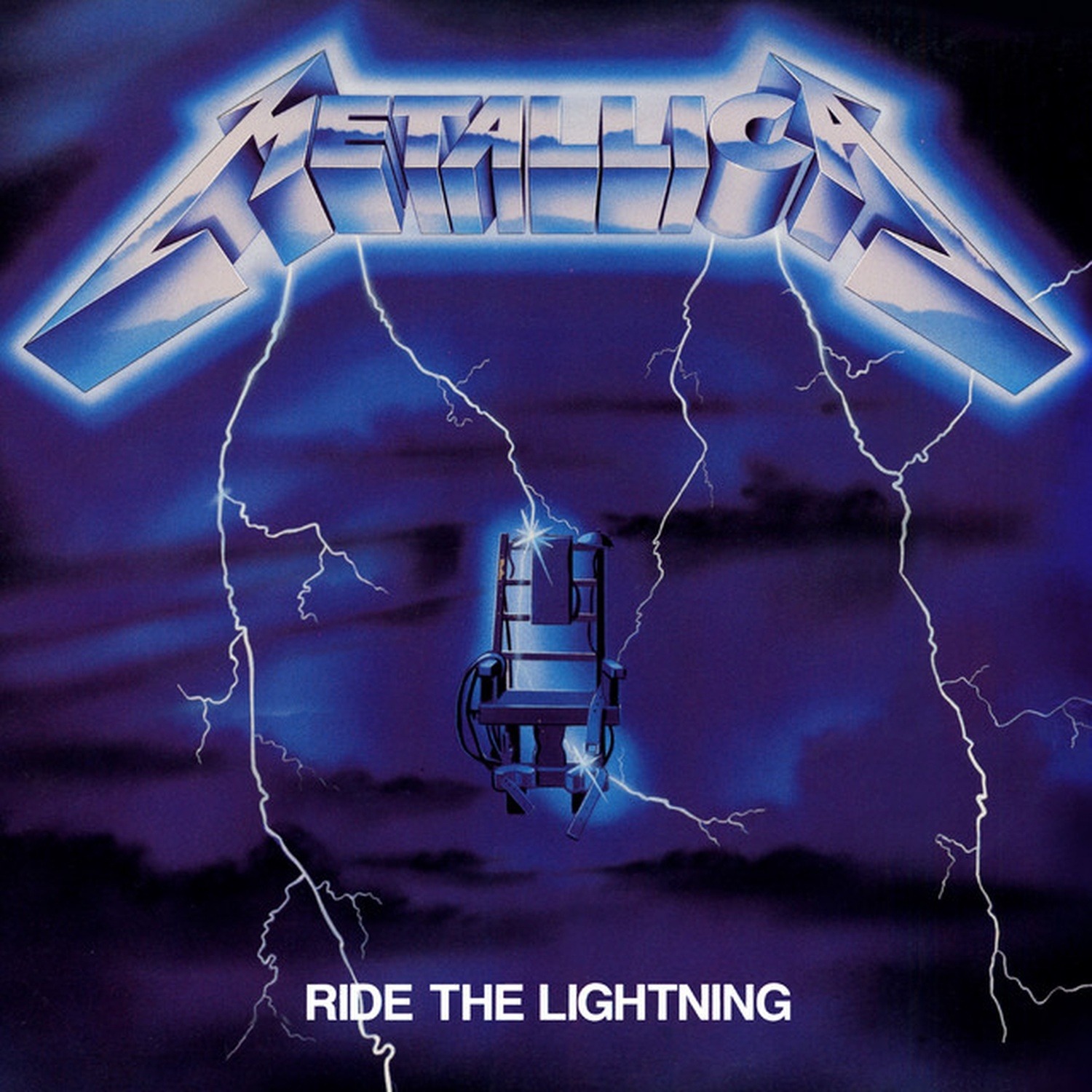
We're doing Ride the Lightning and I. This is may possibly, possibly potentially the greatest album.
Chris3:24
No, you have. You actually say like, because we've gone between, haven't we? We've gone between this.
Neil3:29
I am such a flip flopper. But yeah, I, I. If you'd have asked me a year ago. Yeah, I'd have, I'd have put Master masterpuppets greatest album on the planet ever. And that would have gone up there. And I would have totally took. If you just said, oh, it's Ride the Lightning. I'd have been like, yeah, there's so little between the two. For me. There's so little between the two. But I've definitely gone for Master.
Chris3:57
Yeah. In fact, you did on the podcast. Yeah.
Neil4:02
Prove it. That's totally not provable. Might be proven now.
Chris4:06
We had that conversation on that podcast where it's like, it's between this and this and Ride the Lightning. And I said it was his Master. I think it's. But now we didn't Ride the Lightning.
Neil4:12
It's Ride the Lightning. It's now Ride the Lightning. So here's the thing that's happened. Well, one of the things that happened. We discussed my car and I have a compact disc player in it. I have Ride the Lightning. I have so many copies of Right. The Lightning. It's not, it's, it's genuinely embarrassing how many copies of Ride the Lightning. I have, I've got a couple of copies of Master Puppets. So I've got, I've got, I've got one reissue of Master and I've got two original vinyl copies of Master One. And one of them's got like some cool sleeve notes. It was a promo version and I, I really like. So I had to get. That's. I'm trying to justify why I got, why I got that Ride the Lightning. I've got loads of copies, but I've particularly. I've got Ride the Lightning on CD and it's in the car.
Chris4:55
Yeah.
Neil4:55
So I quite often listen to this album, certainly over the past few weeks.
Chris4:59
Yeah.
Neil5:00
More. And I noticed some interesting stuff about them. So I think like, technically the playing on Master Of Puppets is better.
Chris5:13
Yeah.
Neil5:14
I think the drumming is more technical.
Chris5:18
Yeah.
Neil5:19
I think a lot of the guitar work is again, more technical. I think James is singing is better on our master.
Chris5:32
Yeah. It was 19, wasn't it?
Neil5:35
It was 20 for this album.
Chris5:36
20, sorry.
Neil5:37
It was 20 for this album. So Master had been like 22. But I think here, Ride the Lightning. Like that technical stuff hasn't crept in yet. That extremely. Pushing it to the. To the next level. So like the drum fills. Ye are like absent here almost. There's some cool drumming here, but by and large it's. It's. It like fits with the song.
Chris6:08
Yeah.
Neil6:08
And the songs are very guitar driven, so it's all about. You know, there's the really cool rhythm guitar, there's some like super cool layering here and there's like some of the. The melody and some of the song structure I just think is just really, really cool, you know, And. And like Call of Ktulu at the end. And Dave Mustaine wrote most of that. But super. Super cool. But. But not like. Are you. I've not got a drum fill every three seconds. Whereas when you go to master that, that like almost excessive drumming comes in.
Chris6:42
Yeah.
Neil6:43
And then it peaks with. And Justice. Like, so you've got. Here, you've got Kill Them all, which is. I mean, it's like. It's like dry as. You're like kind of punk thrash, you know, fast. But it's not very complicated.
Chris6:57
No, no.
Neil6:58
And then here you've got. You've got this musical vision, this Cliff Burton musical vision, but the band aren't technically capable yet. They're not like super. So interesting. So the songs have got a little. For me, the songs here, they're a little bit. I. I just. I prefer the simplicity that kind of paired down nature. And then when you get to master, the complexity starts to come in a little bit more. You've got those kind of super complex, like, rhythm pieces where the drums are kind of becoming like a. I know. Coming more alive. And then if you. Then if you scroll on to. And justice, where the drums are kind of just, you know, it's all about the drums, really. The drums are so forward, the bases back, the vocals are back. And it's like super complicated. The drumming on and justice is like mega complicated properly. Lars trying to show off. And then you get the Black album, which all of that's gone again. And the drums are simple and it's paired back and all that kind of stuff. So like as you go in the arc that. That journey, if you like all of the stuff I absolutely adore about Master of Puppets is. I think he's. Is more obvious.
Chris8:17
Yeah.
Neil8:17
And clearer and you know, has space on this album. On Ride the Lightning, like the songs, the melody. I really like James's voice and this is the first, this, this is the first one where he sings.
Chris8:30
Yes.
Neil8:30
So like on Killer More, it's all screaming.
Chris8:33
Yeah.
Neil8:33
And on here, Fleming Rasmussen, who produced this constantly. All of the interviews with him, he's constantly recalls having to force James to slow down and stop screaming and. And sing. It's like for Fade to Black and all bunch of other tracks and they're like just. Just kind of, you know, calm down, slow it down. Sing. Sing the. Sing the words. You don't have to scream everything. So it's. Yeah. I don't know this for me, I think it's probably one of the most perfect albums. Like this, this happen stance right where you. You've got the. You've got a thrash band. Just come off the back of Kill Them all and it's 1984. Nobody cares.
Chris9:17
Yeah, yeah, yeah.
Neil9:17
Like this is not an album. It was recorded for $20,000. Well, the, the budget was $20,000 and it cost $30,000. But no one cared. I mean this is. We think about. Think about 1984.
Chris9:31
Yeah, yeah.
Neil9:31
1984 was Van Halen hair metal. Do you know what I mean? Like this was, I don't know, like Metallica. What Metallica were doing here was not popular. Nobody noticed at all. It was tape trading.
Chris9:49
Yes, of course. Yep, yep.
Neil9:51
And. And then, and then it's. For me, it's this album that kind of just breaks out of that. That underground tape trading.
Chris9:58
Wasn't this originally on an indie label? It was out on an indie.
Neil10:02
It was. Yeah. And then it was done and then I think it was Electra.
Chris10:05
Yeah.
Neil10:06
Picked it up.
Chris10:07
Yeah.
Neil10:07
Afterwards. And then re released. And it was all because of the numbers and the. The indie chart. Like the indie labels would publish their numbers and so many people wanted this album.
Chris10:21
Yeah.
Neil10:22
And it was funny that there were the stories of like in. In the Bay where they were in the Bay area. They. There were people with like reel to reel tapes that would kind of go and get a copy of it, spin up on their reel to wheels, and then. And then cut tons and tons of, like, you know.
Chris10:39
Yeah. So that's San Francisco, isn't it?
Neil10:41
Y. Bear.
Chris10:41
Yeah, the bear.
Neil10:42
And it's funny because that. Again, that's a funny one because the bat's not where the band were from. That's where Cliff Burton was. Now, I didn't know that. So, Cliff Bird. The history behind the band at this point is worth talking about because. So if we. The. I mean, Metallica started with Lars and James, so that, like, Lars wanted to pull a band together and James answered the. You know, the. The thing in the. In the press that last. Hey, I want to go and put a band together. If you like these bands, you know, and they started to play, and then There was Ron McGovney, Dave Mustaine, and that's kind of the. That's kind of the. The band at that point. Right.
Chris11:25
So Ron on bass.
Neil11:26
Ron McGovney was on bass. Yeah. And Dave Mustaine is the lead. The first original lead guitarist.
Chris11:30
Yeah.
Neil11:31
Now for this record, you've got. Ron McGovney was replaced by Cliff Burton.
Chris11:38
So was that Kill lineup?
Neil11:42
Yeah. It's making me question it. I don't know whether Ron McGovney played on Kill Them all or not.
Chris11:49
Right. Or whether it's Cliff.
Neil11:50
Yeah. I'm gonna ask.
Chris11:52
There's a thing. While you're looking, there's a thing that you were talking about when we were. And I suddenly had a bit of a light bulb go off. Because these two albums are the same band playing them.
Neil12:06
Yes.
Chris12:06
In the same studio.
Neil12:07
Yeah. Yeah.
Chris12:08
Same producer.
Neil12:09
Yeah.
Chris12:10
For. For Ride the Lightning and for Master and that. That suddenly. That suddenly made. Had a bit of a light bul. And that's why you like them so much, because it's the same ingredients for each one. Although the plane was different.
Neil12:22
It's really similar, you know, in terms of, like, the.
Chris12:24
You know, the ingredients in the cake, if you like. Yeah, they're all the same things.
Neil12:28
It's. Yeah, I think you're right. So Ron McGovney left before.
Chris12:34
Before Kill Him.
Neil12:35
Before Killer More. Yeah. Now he left because Dave Mustaine was really mean.
Chris12:39
Yeah.
Neil12:39
To him. So Dave Mustaine bullied him massively. Like, the stories of you, like, pouring beer in his, like, pickups and stuff like that. Just. It was a really unpleasant guy to. To Ron. So then Ron left, and then Cliff. Cliff Burton replaced him. And Cliff plays on. On Kill 'Em All.
Chris12:55
Yeah. So where were they based at that time? You clear one clear on that.
Neil12:59
I think that was. I think that was San Francisco because they wanted Cliff Burton and Cliff Burton wouldn't move. He wanted to stay where he was. So they ended up being there. Now one of the bits that I think is really interesting as well here is that Dave Mustaine. There's a big, big falling outs with Dave Mustaine. There's some brilliant. If you're curious about this, there's some fantastic video footage on YouTube about Dave Mustaine talking about it and about it was on there.
Chris13:28
Some kind of monster as well.
Neil13:30
Yeah, he talks about. He talks about James kicking his dog. And then. So Dave Mustaine then like Dave Mustaine did martial arts. So then he like beat. Yeah, I can't remember who. So he had a. A big fight and then the band all get together and they're like, oh, actually, you know, probably a good idea if you weren't here.
Chris13:57
Yeah.
Neil13:59
And. But then there's tons of music that was from that period. I mean, what happened with. With Dave. He was a brilliant guitar player. Still is. I mean, he quite clearly is an exceptional guitar player. So a lot of those riffs that Dave had written actually got carried through into. They came in to kill them all. But also in Lightning and. And in Puppets after Dave Mustaine talks about. About that. I call it. Call it Coutulo, I think is mostly. But so Dave Mustaine goes, right, and now they need a lead guitarist. Now Lars Orich knows Kirk Hammett. Now Kirk Hammett had started Exodus. Oh, so he was the founder of Exodus.
Chris14:49
Right.
Neil14:49
And. But it's funny. So although he was a founder, that
Chris14:53
Bay Area stuff, they were all. It was quite a mixing pot, wasn't it? In and out of each other's bands.
Neil14:57
Yeah, there was a lot of that sort of stuff being seen and then. But then where it gets interesting, I think is they. So he. He's like, they need to record this. And he gets a phone call. So Kurt gets a phone call from Metallica saying, can you need to come up? And then he. He like joins the band. And then he talks about the guilt that he feels for Exodus. Cuz like that was. That was like a proper, you know, proper thing where he. Yeah, that was his thing, his baby. He'd started it and then ends up moving over to Metallica. And one of the things I think is fascinating at this point. So if you think about that melting pot now you've got Kirk Hammett coming across with Exodus riffs. So I mean, not that he took all of the Exodus, Rift. But, you know, there were. There was. Do you know what I mean? There's stuff that he wrote there and stuff that.
Chris15:46
Well, that's a band.
Neil15:47
Yeah, that's what I mean.
Chris15:49
It's an extraction of a band and some of that stuff comes with it.
Neil15:52
And then you'd got Cliff Burton, who's got, like, his riffs and the bits and pieces. And then you'd also got Dave Mustaine's riffs that were written prior to the Kill Them all getting recorded. So it's funny that there's this, like,
Chris16:04
why Metallica is just riff, riff, riff, riff, riff. It's just this.
Neil16:07
Yeah, but it's like, mad, isn't it? It's like these. These like. Like absolutely phenomenal players and writers all kind of, you know, buzzing around and producing this and then, you know that just picking the best bits out of the. Yeah. Of those experiences and just putting them. Putting them in the album.
Chris16:27
But. Yeah. Yeah.
Neil17:42
Life, it seems Will fade away Drifting further every day Getting lost within my SA Nothing that is no one else I have lost the will to live simply Nothing more to give
Chris18:08
There is
Neil18:08
nothing more for me. Sam. Things not what they used to be Missing one inside of me Deathly lost this can't be real can't stand the spell I feel Emptiness is filling me to the point of growing Darkness Taking dawn I was me but now in.
Chris20:00
Sa.
Neil20:32
Why should he try? It's good. It seems as though it never existed It Dreams be warm now I will just say goodbye It's. I don't know. I think we're pretty lucky. This Kill Em all really hit the underground really hard. And then a lot of bands started catching on after that. Yeah, I think we had a head start on a lot of them. Yeah. Well, we saw the new wave of British metal that was coming out. We knew it was going to hit, like, you know, a couple years before. Knew it was going to hit the States fairly soon. So, you know, we like doing it and, you know, we were doing it down in LA and a lot of people didn't know what, you know, what the hell was going on. They didn't see any hairdos or makeup or anything, just going up there bashing it. Incredible, really. And then. And then that lineup stays. So that lineup of
Chris23:31
Laws.
Neil23:31
James. James. Yeah. And.
Chris23:34
And Cliff.
Neil23:35
And Cliff. Yeah, that. Then stay for. For the duration until. Until Cliff dies on the Master Puppets tour. And then. And then you've got Jason Newstead coming after that.
Chris23:48
Yeah.
Neil23:48
Yeah. And again that. That.
Chris23:50
That changes it again.
Neil23:52
Yeah, it's funny. I. I've seen some recent interviews with Jason. I think it's the anniversary of the Black Album.
Chris23:59
Right. Okay. Yeah.
Neil24:00
And as much as Jason got about, like, if you think about it, Jason had a really tough time with the band and justice, he didn't really get, like, his bass guitar work wasn't heard on the Black Album. It was. And you can. I mean, it's phenomenal player. But, like, financially, Jason makes a fortune. Like, Jason doesn't need to. You know what I mean? He's like, well chilled and he makes enough money off those. Those albums. He doesn't need to. To. To worry too much. And it gets. He always speaks about it like. Like a blessing almost. Like, is it. You know, if I was still in Metallica, I'd still be doing Metallica things, he said. But now, like, I. I can get up and go and do, like, whatever I want.
Chris24:41
Yeah. Yeah.
Neil24:41
I mean, I don't have, like, I have enough money to kind of cope and, yeah. Do what I want to do, but the reality is, if I want to go and do like a jazz band, I can do that. If I want to do. I can do whatever I want to do. While I was in Metallica, I didn't have that creative outlet. And, yeah, that was for my mental health. That was really, really bad. So it's funny. Lot of people think that he regrets that. You know what I mean? It was like, he's like, oh, I should have stayed in.
Chris25:07
Yeah, yeah. But actually he's quite happy doing this thing.
Neil25:09
Yeah. I think he thinks he. You know, it was for the best and he made a. Made a good decision.
Chris25:14
If you heard shuffling about a minute or a couple of minutes ago, that
Neil25:18
was just because handing the fruit.
Chris25:20
I was dealing with the fruit pastels because what we had was initially the. The strawberry kitten things. Sweets.
Neil25:27
Oh, the. I mean, let me read these. The Candy Kitten Wild Strawberry Flavor Gourmet Sweets of Lond.
Chris25:34
Yeah. So that was my Father's Day present.
Neil25:36
Oh, was it?
Chris25:37
So we had those and then we went to get Cokes of which actually, because we've got a four pack, there's actually potentially two for the bongos. But I quite fancy another kind of Coke.
Neil25:47
I'm so hot in this room. And again, for. For our. For our American listeners, this is where you get to laugh at us.
Chris25:54
It's.
Neil25:54
I would say, I think it's probably about 25 degrees Celsius in here right now, which is, I don't know what, like 4 million Fahrenheit or something. Like that. I don't know, many more. More Fahrenheit than. Than Celsius. I know that much. But like, it's not like, like, you know, but if it feels too hot, if that's the right way, tell me. It doesn't. It's not pleasant at all, is it? It's like it's too hot and it's given up. We've been told it's going to be like mid-30s this week. I've just opened my can of Coke.
Chris26:31
I think you have to down tools, don't you, at that point?
Neil26:39
I don't like it though.
Chris26:40
No. No. And there was a time when we did this podcast where I'd be very obsessed about the sound quality.
Neil26:48
Yeah.
Chris26:49
And that, you know, there wouldn't be any shuffling allowed or, or passing around in fruit pastels or cans, but.
Neil26:55
Don't care now, do you?
Chris26:56
No, no. Well, I think, you know, in the, in the, in the age of algorithm authenticity. Perfection.
Neil27:01
Yeah.
Chris27:02
I'm all for whatever. I think I put a video out the other day and it was just filmed on my phone. I don't think I've ever done that. I've always had to have a studio
Neil27:10
and mics and I think that this obsession with perfection. I don't like it.
Chris27:19
No. No.
Neil27:19
I just don't like it.
Chris27:20
With the music, like, all the music is suddenly grungier. All the music I love.
Neil27:24
Yeah. Violet Grohl I love. She's gone. Really? I like that. Did I think there'll be a real reaction against AI? I think AI is a bad thing. I think that AI's got its place the same as everything else does. But I think it's unfortunate what it does is it like. Like genericizes everything. You're right. All the writings reads the same.
Chris27:48
Yeah.
Neil27:49
All the music it creates. Oh, nice. All the art, you know, everyone's people are worried, oh, you know, it's going to get rid of art, it's going to get rid of music, it's going to get rid of all these things. And the thing is, I'm a software developer. If I just point AI and make it do some software, it generates the most generic thing imaginable. It's all like kind of regression to the mean. It's like the, like. So it's like the most generic music it would create, the most generic art it would create. And, and I don't know, I just think there's. There's something.
Chris28:25
I think. I think it's gonna. It's gonna make what it is going to do is. I think it's going to. It's going to eke out mediocrity and I. I actually think, you know, some of the art that's going to come now because generic art can be created by AI.
Neil28:42
Yeah.
Chris28:42
I think people are going to go, well, we're gonna have to do something generic then.
Neil28:46
Yeah, yeah, yeah.
Chris28:47
And I think actually it's probably going to lead to a little bit of a revolution in that. Where it's actually. And. And, you know, in the same way that you had the Darda movement or.
Neil28:56
Yeah.
Chris28:56
That kind of stuff where it was. It was a challenge. It was a challenge to the mediocrity and convention and I, you know, so.
Neil29:02
Because it is. It's just so like, you know, one of the hardest things I find is if I've got a new project, like coming up with a name for it, and you would imagine I would be brilliant to that, wouldn't you? And it's terrible. And she's coming up with these. Just these generic lists of names.
Chris29:18
Yeah.
Neil29:19
And it's just like a bit soul destroying, really.
Chris29:21
Yeah.
Neil29:22
But, yeah, I don't think.
Chris29:23
Very good, though, at calculating.
Neil29:25
It is. It's very good.
Chris29:26
That's what I've tried to exploit because people are. Some of my friends who are a little bit more negative about AI.
Neil29:31
Yeah.
Chris29:31
I've just said it's just a big calculator. It's a big clever calculator that does, you know, interesting things with data.
Neil29:38
Maybe. Maybe it's probably. It's probability of words and it's. It's fine. But.
Chris29:44
Yeah, sorry, I'm saying calculators in numbers. I don't mean numbers. I mean as in it's. It's a system. It's a system.
Neil29:51
It's funny that there is. And I forget who said this, but. But technology above a certain, you know, level appears like magic. Right. You can't tell the difference. And unless you're a trained mathematician, AI is magic.
Chris30:07
Yeah. Yeah.
Neil30:08
Right. It's a black box. It does. Does math. Does. Does. It's just probability at the end of the day. Or say it's just probability. It's very complicated probability. But. But it's. That's what it's doing. But I think you. You apply that to something like music.
Chris30:24
Yeah.
Neil30:25
And what you get out of it is this perfect.
Chris30:27
Yeah.
Neil30:28
Generic music or generic beat or whatever you've asked it to go and do,
Chris30:33
which, which has a purpose, which can be functional.
Neil30:36
But think about it. If you like, if you. If you've got an idea for a song. And you're not a musician, you could now get that out of you.
Chris30:45
Yeah.
Neil30:46
And I think there's a place for that. I just. I genuinely think there's a place where I was like. Like an indie developer can do his own music for. For a game.
Chris30:55
Yeah.
Neil30:55
Or whatever. And. And, you know, do so. I mean, it's his creative vision, their creative vision to go and do that. I think that's quite cool.
Chris31:01
Yeah.
Neil31:02
But I can't see it ever. Doesn't matter how good it gets. I can't see it getting to a point where we get a ride the lightning from it. I can't see it where we get a rage against the machine.
Chris31:14
Yeah.
Neil31:14
I can't see it where we. You know what I mean? I just.
Chris31:16
Because it's the product and not just singular humanity, that lovely. We say, melting pot of YouTube, but that lovely concoction of different bits of creativity and ego and.
Neil31:29
Yeah.
Chris31:30
Skill and performance and like, I play guitar in a totally different way to another guitarist might play. So. So a song that we might write, even if it was the same chords, even if it was the same building probability.
Neil31:43
Yeah. Yeah.
Chris31:44
Because of the way that we do our thing.
Neil31:46
Yeah.
Chris31:46
It ends up there. And then imagine that five times because
Neil31:49
you've got five different people and it's.
Chris31:51
Of course, you've got, you know, the initial kill them, kill them all. Then you've got these two albums here. Then you've got the albums afterwards. They were all different little melting pots of people in these bands.
Neil32:00
The thing that I. I always forget about until I read about these. These albums was how much Joe Satriani was involved. Because Joe Satriani was Kirk Hammett's guitar teacher.
Chris32:13
Oh, I didn't know that. There's so much I'm learning.
Neil32:16
So many stories. The songs just kind of just happened, bro. The songs just kind of just happened. We just started playing and they just happened. I remember walking into the room and there's Cliff playing over and over again. The intro to the. For whom the bell to bell tolls and.
Chris32:36
And.
Neil32:37
And I remember Laura saying, that's pretty cool. And then the next thing you know, it's the intro to the song. I remember.
Chris33:05
Sa.
Neil34:22
Sat until deep inside shouting gun how they run through the endless grave how they fight for the right yet but who still say For a hill men would kill why they do not know Stiffen wounds test the pride
Chris35:08
Men of
Neil35:08
five still alive through the raging mo Got insane from the pain and they surely no on the bell to. Take a look to the sky Just before you die it's the last time you will roar Builds the crumbling sky Shackled storm fills soul with a ruthless cry Strangers now are his eyes to this mystery here's the silence so loud Crack of dawn all is gone except the will to be now they see what will be Blighted Eyes to see bone the fell storm Hold Time watches on the bell. We're in a basement in New Jersey, right? And James starts playing this. This arpeggiated thing. And, you know, and then he has this, like, heavy part. And. And then I was going, oh, yeah, that's great. That's a good cycle. We can cycle through that. But it needs to. It feels like it needs to go to, like, another, like, melodic part for the end. And I said to Lars, here, how about this? And he said, yeah, that'll work. And so we put it all together in the basement, and that became Fade To Black. You know, Trapped Under Ice. Again, the same basement. We need to, like, write one more fast song, okay?
Chris37:59
Oh, okay.
Neil38:00
James has a riff. What do you got? I'm, like, listening to it and I'm like, oh, wait, I got a riff. I got a fucking riff. That's how Trapped Under Ice came. The initial songs that kind of, like, pushed off the beginning of that album was Creeping Death. And that riff, the main riff, was played slow, but the more we played it, the faster it got. And then at one point, we're. We. And we didn't even notice it was getting faster and faster and faster until we went back to the original, and we're like. And it was like. And we thought, well, if it's sounding better faster, let's speed it up way more. Ride the Lightning was another song that we.
Chris38:43
That.
Neil38:43
That kind of. It was pushed off, you know, the initial kind of, like, direction of Ride the Lightning, that rip was something that James had. And they had, like, four riffs put together. And I remember James and Lawrence just put that whole cycle together. And then I came in and put the whole middle section together, the whole instrumental section together with them. And then it wasn't finished, so we had to finish it in Copenhagen at. At Merciful Fates rehearsal place. We finished writing the song Ride the Lightning there in the rehearsals, like, because Joe Satriani didn't live far away, so. So Kurt Hammett had lessons from Joe Satriani that, you know, they had all of their gear started. So the Metallica had all their gear stolen before this. So there's. There's a mishmash of Stuff. Right. So this rented stuff, Anthrax. They borrowed some from Anthrax. The, like, chorus and tone pedals are from Joe Satriani.
Chris39:50
Really?
Neil39:50
Or. I don't know where they're from, I think.
Chris39:52
No, no, but I think that.
Neil39:54
Yeah, I think they were the ones that Joe recommended.
Chris39:56
And then.
Neil39:57
Because now Kurt had got to buy new stuff. Yeah, he went and bought the stuff that Joe recommended. But. But it's funny, like, I. I don't know that. That the story behind it, the, like the implausibility of all of this stuff happening, the improbability of all of this stuff happening and all of these people being, you know, at, at the same point in time and, you know, the gear being stole. The gear being stolen impacted the tone and choosing Fleming Rasmussen, who'd done nothing like this before, never heard of the band before, famously had to go and go to a record store in Denmark to buy a copy of Kill 'Em All to understand what the band were like.
Chris40:34
There's a bit in the blog where he put like. Or it might be one of the YouTube videos that we were looking at, but he was saying like, this. This is going to be hard work.
Neil40:42
Yeah, it's going to be loud. He said that the two things I realized after listening To Kill were going to be loud and difficult. Which again, I think is just really, really cool. But it's like, you know.
Chris40:54
You know, if you've got a business. Yeah. Loud statement or your logo underneath. Metallica. Loud and difficult.
Neil41:01
I could. I could totally get behind that. Do you know, we keep talking about doing merch for, like, doing T shirts and stuff for each one of these. Like Metallica. Loud and difficult would be.
Chris41:10
If you want.
Neil41:11
Lars would serious, probably, I'm sure. But it. But like the, the journey and improbability of this and the people and the human aspect and the gear being stolen and then being rebought and then Joseph Triani being involved and then riffs coming in from Exodus and Dave Mustaine's Rift. That. Yeah. And then, you know, and, and, and, and. Right.
Chris41:33
And then, you know, and, you know, actually something that we spoke a lot about before we hit Record Board was Cliff Burton's musicality. You know, he was kind of a class like. Like a classically trained pianist or something from quite a young age.
Neil41:47
From six, he was. His dad took him to piano lessons from six. His brother died when he was 13 and he switched to play the bass guitar. And there's this quote where. Where he. He says something like, I'm going to become the Best bass guitarist from. For my brother.
Chris42:07
Yeah.
Neil42:09
And. And so, yeah, he. He's got that classical training.
Chris42:15
Yeah.
Neil42:15
And then again, Kurt Hammett talks about this for. For the writing for this record. It was done in, like, a few different phases all the way over the. You know, the. You know, all the way over the globe. He said just some was done in the us some was done in Denmark, some was done on. On the road. But he talks about the influence from. From Cliff, particularly, would bring in concepts that the band had just never heard of before. So the. Like bringing in classic music theory.
Chris42:46
Yeah.
Neil42:47
Of, you know, absolutely sequences and how the melodies work and how they could layer things and get, like. They never thought about that before. You know, you had these exceptional natural guitar talents, like in Dave Mustaine and in Kirk Hammett and then. And. And, you know, I think you've got James as well. I mean, I think. I don't think he gets the credit he deserves for writing and the Riff. Yeah. Riff mongery. But you've got these, like, exceptional natural talents.
Chris43:24
We have to rename the podcast now Riff Mongery Mongers.
Neil43:28
But. But I think that, like. And I don't mean this in, like, a disrespectful way, but I don't think they understood, like. I think they're a bit like Dave Grohl.
Chris43:38
Yeah.
Neil43:39
Dave Grohl classically says he can't play the guitar, has no idea what any of the notes are.
Chris43:42
Yeah.
Neil43:42
But if he makes the fingers like this, it makes that sound and he likes that. And then it does like this, and it makes that sound, and he likes that. But he can't tell you whether that's a C or an F sharp. I do this with my fingers. And he talks about watching guitarists play and looking where they're putting their fingers.
Chris44:00
Yeah.
Neil44:00
And then doing the same thing.
Chris44:01
Yeah. Yeah.
Neil44:02
No idea what's happening with, you know, with the notes or anything. It's just what he likes. And I suspect that's what's happening across Metallica for a large part of that. And then Cliff Burton is. Yeah, but actually, you know. Well, that's an E. Yeah. And we should then it. Because we're doing that here. We should do this next and this next. And then, you know, you can just imagine him going like. And having that knowledge.
Chris44:27
This album is the perfect marriage of chuggy, chuggy riff riffs and these. These layered, melodic kind of journeys.
Neil44:35
Yeah.
Chris44:36
Yeah.
Neil44:36
I don't. I can't think of another band that were doing anything like this at this period. Of time. Like I, I think like Testament would go there later. Alex Skolnick was classically trained, so still one of my favorite guitarists, Alex Skolnick, I think he's phenomenal. My Testament would kind of go there to some degree that they had these beautiful. And in fact. Yeah. A lineage wise for me. Like if I, you know, everyone say, everyone gets grumpy about their favorite Metallica albums and I don't like the Black album of this. Like if, if Lightning era Metallica was your favorite then like for me, yeah, like almost it branches to Testament. Right. That, yeah, they almost took that kind of melodic classical music theory, like heavy metal and, and run around with it. They're very, yeah. Very similar, I think, in, in, in the way they, they developed. But I just think it, I don't know, I, I, that whole melting pot of things. Like imagine if you took AI that we had today and you took it back to 1984. It's not going to produce this.
Chris45:44
No.
Neil45:45
And, and so I think that the AI we've got today is not going to, to produce the 2026 version of this. Right. There's got to be, it's going to
Chris45:52
be people, it's going to be human, it's going to be messy, it's going
Neil45:54
to be loud and difficult. Yeah, yeah. And it's like, who is loud and difficult? And, and there must be, you know, I love the resurgence of pop punk at the minute and there's a bunch
Chris46:04
of other things going on.
Neil46:06
Isn't there a bunch of other things that are happening. Which is well smart. But yeah. I don't know. It's like, and I'm not, like you said, I'm not sure that AI is, is, is. I don't know whether it's a positive thing. I don't know. Right. For music particularly. I don't know what it's going to be. A 12 year old kid in his bedroom somewhere.
Chris46:22
Yeah.
Neil46:23
Who's just decided, I'm gonna be the best. Yeah, whatever. Right. And, and, and they're gonna go off and do their thing and I don't think it's gonna leave AI trailing in his wake. But. Yeah, but I think you're right. I think it's, it's all a bit generic and it's just, you know, the
Chris46:40
other thing that again, this was a sort of. We did a lot of faffing today, but actually the faffing wasn't normally. The faffing is doing stuff. The faffing that we've done today was like three conversations I don't feel like
Neil46:53
I've done anything today. I've not got a table. Normally I'll sit at a table.
Chris46:57
Yeah.
Neil46:57
And I'm on. I'm on a couch. Which feels quite cool.
Chris47:01
Yeah.
Neil47:01
It's quite. Quite relaxed. I've got my feet upon what looks like a drum stool.
Chris47:04
Yeah.
Neil47:06
Which is good.
Chris47:06
You've won, mate.
Neil47:07
I feel this is brilliant.
Chris47:08
One in life. You've got pastels.
Neil47:12
These Cokes were ice cold when we came in here and now they're like a bit tepid. But, yeah, I'm. I'm well chilled here. I've got. Yeah. Couch.
Chris47:21
But before we hit record, we were listening through a few tracks and moments of the record and. And I suddenly had that thing of like. That's why SNM worked.
Neil47:31
Yeah, yeah.
Chris47:33
Because a lot. Because as you mentioned, like Cliff's, you know, almost like classical training or whatever, you know, his music, his knowledge of music theory lends itself beautifully to orchestration of these songs and these riffs. And actually, you know, we were reflecting on. There's a bit of the Black Album. But quite a lot of the S M album was. Yeah, this and Master of Puppets, which, of course, which was, you know, where Cliff was really vocal.
Neil47:55
I can still remember my. My friend Chris Greenwood. We went to college together and he. Chris Greenwood. Where'd that come from?
Chris48:08
He's got his own theme now.
Neil48:09
That was Porno Chris. Yeah. So Porno Chris, Chris. He. I can't. I don't know whether he was Porno Chris at that point, but he would have gone on to be Porno Chris. But we went to college together and then I ended up at unit. He went to university and did his. He did electronics and I ended up doing like engineering. I ended up doing like applied maths and acoustics and stuff. So I ended up hanging around for a bit longer than he did. He finished and then set up his own I T. Consultancy.
Chris48:41
Right, Right.
Neil48:42
So he'd got like. He had a. He had a BMW. He had three series BMW, which I thought was the coolest thing ever.
Chris48:47
Yeah.
Neil48:47
And he had a shop. Well, not a shop, like, like a premises. Right. So we had like a little office thing. And I remember he picked me up. I would Derby, I think, somewhere. And I remember coming out of the university and he picked me up in his like almost brand new 3 Series BMW, which was like, you know, it was like a. I mean, I had not a penny to my name. I remember we got in there and he just got the S and M. Right.
Chris49:14
Wow. Okay.
Neil49:15
And we listened to it on the way back to. We went from Derby to Burton on Trent. And I just remember this thinking, this is. Yeah, like, what even is this? Like, I recognize the songs.
Chris49:27
Yeah.
Neil49:28
And I like, what is this even about? And it will, you know, quite heavily, lightning and puppets stuff. But it was just, I don't know, just mind blowing. Another album that's done that to me recently is Architects.
Chris49:43
Yes.
Neil49:43
So, you know, a lot of people talk about, oh, oh, who's going to be the next big band? Who's going to take over. When I made night, it's Architects, but they. They would download as well.
Chris49:53
Yeah.
Neil49:53
I didn't catch them on that day. They are. Yeah, they're phenomenal, but, you know, extraordinary. But they did for those who Wish To Exist. But they did a. A version of for those who Wish to Exist at Abbey Road.
Chris50:08
Yeah.
Neil50:09
Oh, yes.
Chris50:09
Yeah, I remember that.
Neil50:10
With an orchestra. And again, that hit me in the same. The same way. It's funny, like, I've seen a few bands try and do this with orchestras before and sometimes it works and sometimes it doesn't.
Chris50:22
Well, SNM worked so well. They did too, didn't they?
Neil50:24
Yeah, well, I mean, rarely is it exceptional, though, do you. I mean, rarely is it, like. I think.
Chris50:29
I think Michael Kamen had a lot to do with it though, didn't he?
Neil50:31
The original S M was just. Yeah, like S M2 is great.
Chris50:35
Yeah.
Neil50:35
But it's not. I think. I don't know, maybe it's the first. And it was like. Like, for me, that. That car journey, you know, I mean, I just. Just the. I. I was just like, no one
Chris50:45
else was doing anything.
Neil50:46
Like, what even is this? Do you know what I mean? And, and I mean, like, yes. And M2 didn't, but the architects one did. The architects one was like, oh, this is like.
Chris50:55
Yeah, yeah, yeah.
Neil50:56
This is extraordinary. Absolutely extraordinary. These, like, quite complicated songs now kind of interwoven with, you know, with, with. With full orchestra and stuff.
Chris51:09
I think that's why I love. There's an album by Silver Chair called Diorama that.
Neil51:13
Yeah.
Chris51:13
That ever fits into our.
Neil51:14
We said we were going to do that, didn't we?
Chris51:16
Yeah, yeah. There's a couple. There's a couple that. Yeah. I was thinking about Bleed American as
Neil51:21
well, because, Jimmy, I wanted Blink 182. I don't know. I don't know. At that point, they see we're around there. Take off your pants and jackets.
Chris51:28
Yeah, yeah, yeah.
Neil51:31
Loads of stuff around that area which is like that, that, that Turn of the century.
Chris51:34
Yeah.
Neil51:35
There's just tons of stuff cool. Like. Like the Limp Biscuit and there's loads of. Really. I think just like.
Chris51:41
Like.
Neil51:41
I don't know.
Chris51:43
Yeah, But Diorama has that. That same thing, the orchestration.
Neil51:46
Oh, does it?
Chris51:47
Yeah, yeah. The songs are beautiful and very, like, very complex, really.
Neil51:51
Yeah.
Chris51:52
But Van Dyke Parks, who orchestrated a lot, the Beach Boy stuff.
Neil51:57
Yeah.
Chris51:58
He. He was involved with the orchestration of that record. Yeah, Yeah.
Neil52:03
I did not know that.
Chris52:04
But that works. That. But the S M. Yeah. It's not like the songs are reimagined, but they're being enhanced by this orchestration.
Neil52:15
It's still the song, isn't it? And then maybe that's what Architects got right as well. The songs are still. The songs. They're still. They've not, like, radically changed. They've just got this layer on top of them. And. Yeah, it's. I don't know, there's almost something, like, indescribable about them because, like, for me, S M is like. S M2 is great. It's really good. And I really enjoyed that when it came out, but I didn't listen to it, like, when S M came out. Yeah. I mean, I remember, like, begging Chris, like, just make. To make. Make me. I need a copy of this idea. You need to make me almost. I think we got back and I was like, I need. No, no, now. I need it right now.
Chris52:57
Yeah.
Neil52:59
And I felt similarly with the Architects. I remember hearing, like, the Architects one and then bought the vinyl, you know, probably before the album's finished playing through. And then, you know, the. There are. There are some that just. They just seem to work and. But there's like. It's this. This magic almost. It's like. I don't know, they elevate the songs. They don't. They don't replace. They're not like. Like you said, they don't feel like different songs. They just feel. It almost feels like that's what they were always meant to be.
Chris53:28
Yeah. Yeah. It becomes. I always talk about. Particularly with records and recordings and songs.
Neil53:36
Yeah.
Chris53:36
That you have a relationship.
Neil53:38
Yeah.
Chris53:39
You develop with those things. And I think in particular with S M, I remember having that moment where I was listening to it and I felt like. I felt like it was kind of like, this is a really strange thing and it's. It's going to come out, but egoing. And that's not how I mean it.
Neil53:56
It.
Chris53:57
But it was almost like it. They're performing it to me, and for me if that makes any sense at all. They're talking to me through this record.
Neil54:06
Yeah, yeah, yeah.
Chris54:07
There's something about. There's a connection there.
Neil54:10
There was some.
Chris54:10
And. And there's a lot of records that have done that for me. Where. And I think that's. I spoke about it before. I. I always have more of a relationship with a record than I do with, like, a song live, for example.
Neil54:22
Yeah.
Chris54:22
I always build a relationship with. With the recording of a song. And. And I. I remember having that with. With. With SNM going, no, no, this was kind of like, you know, built for me to have a. To continue my relationship with these songs, if that makes any sense at all. Might be a bit waffly, but.
Neil54:48
No, I think. I don't know. We talked about this relationship with albums and stuff, haven't we, in the past? Almost.
Chris54:59
Almost like. Almost like we were talking. I was being with Patty today. We were talking about this stuff, this idea that. So Ride the Lightning was a point in time.
Neil55:18
Yeah.
Chris55:18
And they captured the songs at that point in time. Yeah, S M. Yeah, the same songs, the same composition, the same idea captured at a different point in that journey.
Neil55:28
Yeah, yeah, yeah.
Chris55:29
And that song has evolved into something else very slightly.
Neil55:32
Yeah, they've evolved. Yeah, yeah, yeah.
Chris55:35
But the version that exists on. On S M is the same DNA as a song. Well, from the. From the original part, but it's kind of been changed because of the change within the band and how that Kirk
Neil55:47
rarely plays the same thing twice. He doesn't, like, play. So he's like, there are. Obviously, I wrote them. I played the songs I played on the. The album, you know, as it was recorded. Yeah, but he said when you had to play it live 500 times, he said, he loses its thrill.
Chris56:08
Yeah.
Neil56:09
So he said. He said, I will play what I feel. I will play what I feel like playing in that song every night that I play it. It's how I feel and that's what I do. Whatever. There's a lot of people think you sold out just because you're on a major label and are very popular, or maybe you don't play a thousand miles an hour the whole time or, you know, I mean, we just. We'd be doing the same thing if we were still on, you know, independent label. We have, you know, we're up on around 30 in the charts. No, Hardly any radio play on the major stations. A lot of college stations are helping out, but no video, no mass media, and still there's a huge buzz going on. And I Think it's because of our music. That's what's great. We're doing it our way and a lot of the major magazines are picking it up and not putting a bunch of hype and we're doing it our way.
Chris57:05
It's great.
Neil57:05
Right. There are bits that you can't change. So there are, There are bits within the structure of the solos and in the songs. Yeah, but particularly the solos that you, you. They have to be the way that otherwise it becomes unrecognizable. Yeah, but he said that a lot of the rest of it I will just play
Chris57:23
Crows. Very similar with his vocal. Yeah, a lot of the. Is very different, you know, each time.
Neil57:29
But. And one thing I didn't realize at the time as well, there were. There's one of my all time favorite Metallica songs is a song called no Leaf Clover.
Chris57:38
Yep. Yep.
Neil57:39
And I, I love the song. I think it was probably. I mean it still stands up today as one of my favorite Metallica songs. I love the intent behind it. So the concept behind it is a. If a four leaf clover is lucky, then a no leaf clover is. Is unlucky. But I didn't realize that that was written specifically for the S M recording. So it doesn't exist anywhere else. It was, it was written. Okay, but only for. For that. And it's like. I think it's really against. With that in retrospect when you go back and listen to it clearly from the same era of stuff that they would. They were doing. But it feels like it would fit
Chris58:19
on because where was it in time where that was done? Was that in between Black and Load Reload or was it somewhere around there?
Neil58:27
Yeah, I'm gonna find. What was it?
Chris58:28
Yeah.
Neil58:28
Year was it done? I'm gonna.
Chris58:31
I'm gonna say it's 1993, which is probably one of the best years of music ever.
Neil58:35
I. I'm. I'm looking 1999 later, much later. Concerts were recorded in April 99 at the Berkeley Community Theater.
Chris58:46
Oh, miles off.
Neil58:47
Yeah, but it's weird, isn't it? It's like. But it's. Yeah, it's. It's a. It's a. Yeah. Bizarre. A bizarre time, I think. But yeah, I didn't like that. It was funny that I, I. It's only going back. I mean.
Chris59:05
Oh God.
Neil59:06
I probably would probably been SNM. I think when S M2 came out, I wrote. I wrote a review for that for Louder Than War. And I think as part of that I went off back and started to reread S M. Yeah. And then realized that, like, my favorite. I always assumed that my, like no Leaf clover came from something else. Like it was a B side or something else. And they. But there were two. There was no Leaf clover and I think a track called Human. And they were both new just for that, for, for. Done for, For S M. Where.
Chris59:36
Where are we in time around S M with the Napster stuff around there?
Neil59:46
Yeah, Bang on it. Yeah.
Chris59:47
You see, I. I wonder whether it was about. Look you. Here's a new version of this song you actually have to buy.
Neil59:52
Yeah, yeah. This is very much Lars full on Napster.
Chris59:57
Yeah.
Neil59:57
We hate you all.
Chris59:58
Yeah, yeah.
Neil59:58
We're going to send you to prison, which is not a great way to endear yourself to your fans.
Chris1:00:03
You wouldn't steal a car.
Neil1:00:04
You wouldn't steal a car, would you? It is. But it is weird though, that. Don't you think? Like that the way technology changes. The, the. I mean, no one saw this coming in the music industry. Like just an overnight thing. It's just like, oh, we, you know, we've got MP3 codecs now and.
Chris1:00:25
Yeah. That world.
Neil1:00:26
Yeah. Just overnight.
Chris1:00:28
Yeah.
Neil1:00:28
Yeah. It just. Boom. And it was like. Yeah, it was, it was fun. I mean, it was exciting. It was really exciting. The Internet was exciting back then. It was all kind of new and exciting and you could talk to people and share music and all this kind of cool. And it was like, you know, phenomenal.
Chris1:00:43
Yeah.
Neil1:00:44
But the impact on the recording industry, like, no one made money from music anymore. And it's funny, isn't it? Like, no, that was. No one's ever intent. You know what I mean? Nobody, like, nobody spun up these protocols and codecs.
Chris1:00:57
No, exactly.
Neil1:00:57
To destroy the music industry.
Chris1:00:59
Yeah, yeah, yeah.
Neil1:01:00
It was just because they. What? There's a whole bunch of things they wanted to do. And then I was, I, I read.
Chris1:01:07
I always remember having an argument with my friend about physical media.
Neil1:01:11
Yeah.
Chris1:01:11
Because I was saying, I was saying at one point, you won't have any of that.
Neil1:01:14
Yeah, yeah.
Chris1:01:14
I was saying, like, you won't have a CD or a Dude.
Neil1:01:16
Isn't it funny how it's coming back?
Chris1:01:18
Really falling out, you know, like, it was quite. And not falling out, you know, I mean.
Neil1:01:22
Yeah.
Chris1:01:22
You know, conversation about it. What are you on about? Of course it will go away.
Neil1:01:26
I, I think it's phenomenal how that's coming back. I, I just think it's. It's like we were in where the Hell Were We? Carlisle Lizzie Ran the Wall, which is an ultramarathon, which was 70 miles. She ran from Carlisle to Newcastle along Hadrian's Wall.
Chris1:01:46
I probably wouldn't do that.
Neil1:01:48
No, I. I'm with. We. I had the boys and we. We dicked about in a record shop in Carlisle. We did an escape room.
Chris1:01:56
Yeah.
Neil1:01:57
We found a place that sells cake. We did a museum which talked about Romans, which is really watched a movie about Roman soldiers on the wall.
Chris1:02:04
Okay.
Neil1:02:05
Which was. Which was great. Apparently it was dead boring and nothing ever happened.
Chris1:02:09
Yeah.
Neil1:02:09
And that was a 20 minute movie. You could have, like, just. Why make a movie.
Chris1:02:14
Yeah.
Neil1:02:14
About something that was like. Honestly, they trained, like, probably hardcore training. Lightning.
Chris1:02:19
Yeah.
Neil1:02:20
To protect. It was the edge of the Roman Empire.
Chris1:02:22
Yeah.
Neil1:02:23
And then because the war was really big and the. The, like the. The Celts of the hordes were like. I mean, why. Why would they go and throw themselves at a wall?
Chris1:02:32
Yeah, yeah, yeah.
Neil1:02:33
So they just went and did something else.
Chris1:02:34
Yeah.
Neil1:02:35
So no one ever attacked the wall and nothing ever happened.
Chris1:02:37
Yeah.
Neil1:02:37
So the. The Roman soul just basically died of boredom. Basically just to sit on this wall. I'm like, that was the most boring movie I've ever watched. And then. And then we went off and did. Did. You know, maybe it was a piece actually.
Chris1:02:50
Maybe it was a piece of art.
Neil1:02:52
It was.
Chris1:02:52
Yeah.
Neil1:02:54
Yeah. This is how bored. Yeah. We're gonna just. You just have to sit here with your own thoughts for a bit. So then. Then we went and watched a movie and. Which was great. So it was a lovely time. But the thing that hit me in the. In Carlisle. I've forgotten the name of the record store. Didn't have any records I cared about. But, like, by and by, it was a beautiful used record store.
Chris1:03:14
Yeah.
Neil1:03:14
You know, you have to go and look through everything. Lots of copies of, like, Michael Jackson and pop music. Yeah. Had a copy of the debut from inxs, which I nearly bought.
Chris1:03:27
Yeah.
Neil1:03:27
Because I quite not touched on them. They're kind of a little bit on the poppy edge for us. But I quite liked In Excess. I thought they were dead cool.
Chris1:03:34
Yeah.
Neil1:03:36
And what else was in there? Oh, the new. The new Foo Fighters yes album he'd got in there. Which again, I quite like.
Chris1:03:42
Yeah.
Neil1:03:42
But I don't like it enough to get it on vinyl. But the thing that hit me, like, we go in there, my boys, obviously, they're not that excited about me browsing through old records. So in one end of the record store was a cake shop.
Chris1:03:55
Yeah.
Neil1:03:56
So they went and sat down and had cake. And I think they were arm Wrestler. They were doing something annoying. Anyway, they went off and started arm wrestling and I was browsing the record and every time I looked up there was like somebody who looked. Didn't look old enough to drive.
Chris1:04:09
Yeah.
Neil1:04:09
Do you know what I mean? Like some 13 year old. They're probably like 20, right? They looked about 13 years old to me in there. It looking fashionable.
Chris1:04:17
Yeah.
Neil1:04:18
Browsing through old albums.
Chris1:04:21
Yeah, yeah, yeah.
Neil1:04:22
And it just hit me like there was nobody else my age in there. Everybody was. They were all a lot younger. And it's like I remember on like it made me kind of contemplate a little bit as I was stuffing myself with cake later on. Like do you know, I mean it's funny, it feels like there's almost this resurgence is the wrong word.
Chris1:04:43
Return to wanted to touch something, feel something.
Neil1:04:46
Yeah.
Chris1:04:47
There is physical.
Neil1:04:48
This kind of like. Because I read again, I read something else this week which said that a hi Fi gear is dying off. So like the people that have two speed, you have an amplifier and a. A CD player and multiple speakers like that audience is as they die. It's dying. So there's like there's no one filling.
Chris1:05:11
Yeah.
Neil1:05:12
Filling that in. If that makes sense. Because like when, when I was a young audio file, getting excited about sound and stuff, I went into the used audio stores and I would be buying like Rotel and. And stuff back from the 70s, you know, and Trio and all of these kind of old, old 70s brands and you could get them cheap because they were back from the 70s. Like it's funny now, like they're. There's no. I don't know, there seems to be this weird thing where they're like going to buy physical media.
Chris1:05:47
Yeah.
Neil1:05:48
But then playing it.
Chris1:05:49
Yeah.
Neil1:05:50
On these like crappy like single speaker.
Chris1:05:55
Yeah.
Neil1:05:56
You know, setups and stuff which I found. It's a bit weird. That's a bit conflates. I don't get it. It's a bit weird but. But there does seem to be a resurgence for physical media. Yeah, for sure.
Chris1:06:08
Yeah. Yeah, yeah.
Neil1:06:09
Which I quite like. It's not. I like it. We gave somebody a lift. Me and Barney gave somebody a lift the other day and he, he. Barney. Barney had to show him. He's 23, I think.
Chris1:06:23
Yeah.
Neil1:06:24
23, 24.
Chris1:06:24
Yeah.
Neil1:06:26
And Barney had to show him how to use the CD player.
Chris1:06:28
Yeah.
Neil1:06:30
He never, never used a CD player.
Chris1:06:32
Yeah.
Neil1:06:33
He said I've never seen. He said. I said I've seen pictures of a CD but I've never seen a c. Can you believe that.
Chris1:06:39
Yeah. It's crazy, isn't it?
Neil1:06:40
Never seen a CD before. Didn't know which way to put it in.
Chris1:06:43
Yeah. Like the same. It was all. I remember the floppy disk is the save icon on, you know, and. And kids. And kids going, what, that. Yeah, press that button there. And they didn't know what it was,
Neil1:06:55
whether it was all changed now, isn't it? That's all. If, you know, if you. I saw somebody talking about this the other day. It's not been like that for like five years. That the, the. Those, Those icons for the large pot. Those icons have all changed. Other kind of. The fluent icons and the bits and pieces of all. They've all changed.
Chris1:07:09
Yeah.
Neil1:07:10
But it is weird. I. I like that. I don't know. Like, there was something really cool about getting stuff on floppy disks.
Chris1:07:18
Yeah. Yeah.
Neil1:07:18
And it's the noise as well. We.
Chris1:07:21
The click, all the satisfying clicks.
Neil1:07:22
The hard drives, the clanky hard drive. Liz's uncle's laptop has failed.
Chris1:07:30
Yeah.
Neil1:07:30
So I went over to see him and we kind of had a look at it. I was like, dude, this is, you know, like 700 years old. It's not. Not happening. But it was. It was a clicky, hard, old mechanical hard drive. And both of the boys were with me going, why is he making that noise? Is that why it's broken? Broken? That's the only bit that's working. Like, the. Everything else is. Is like, you know, the, the. It's overheating, the battery is failing. That. Like the screens coming on and off, but the hard drive's still working bizarrely. But like, it's. It's weird.
Chris1:08:00
Yeah, yeah, yeah.
Neil1:08:01
I like all that stuff.
Chris1:08:02
Yeah.
Neil1:08:02
An old. Have you been to the computer? There's a computer museum. There's two. There's one near to us. There's one. There was one in Ashby.
Chris1:08:10
Yeah.
Neil1:08:10
And then there's also one at.
Chris1:08:13
It's in Derby somewhere.
Neil1:08:15
No. Where's. Oh, God, no, not Tamworth. The. The place where the. The Germans did the thing. Oh. Oh, God. What's the thing? What was the thing?
Chris1:08:30
The commentary.
Neil1:08:31
The typewriter thing.
Chris1:08:32
Oh, the Enigma code.
Neil1:08:33
Enigma. Where was that done? Bletchley Park. Bletchley. Bletchley. I want to say Berkeley.
Chris1:08:38
Okay.
Neil1:08:39
So if you go there, they've got.
Chris1:08:41
Is that close to here? No, no.
Neil1:08:42
Oh, it's just so. So you can go there.
Chris1:08:47
Yeah, I want.
Neil1:08:48
I'm trying to get the school to take the computer science kids down there, but anyway, they've got old, proper old computers, like old like 286s, 386s. And they. When they. But you forget how loud they were. It's like. It's like someone clattering inside with a hammer. Blah, blah, blah, blah, blah, blah. Just dead good. Yeah, yeah, I miss all that.
Chris1:09:09
Yeah, yeah, yeah.
Neil1:09:10
And then the clunky keyboards. Yeah, I miss that. I don't. I don't. Don't use. Well, I watched a documentary about the impact of Amiga on audio production in the 90s and how. Because it had the Amiga, there was a couple of others.
Chris1:09:29
There's Atari.
Neil1:09:29
Atari. Because they had a discrete silicon to handle audio. They were the first computers that were used to, like, digitize audio and make, you know, let you do digital music production.
Chris1:09:45
Yeah.
Neil1:09:46
In the 90s, because that was. There was that. That big change, you think this one 1984 analog tape. No. You know, this was spliced everywhere. It was like you were trying to get things done in single takes, little bits and pieces, you know, by the time they did S M, I mean, that's gone straight. I mean, that's straight to digital. It's all, you know, 500 computers run into to deal with it. So.
Chris1:10:10
Yeah.
Neil1:10:11
Different sounding beast.
Chris1:10:12
Yeah.
Neil1:10:13
You know, we talked about as well. Do you know I haven't done on this one. Shall we look at what the dynamic range is?
Chris1:10:22
Yes. Yeah, yeah.
Neil1:10:24
I don't know.
Chris1:10:24
What.
Neil1:10:24
I don't know.
Chris1:10:25
You've got a tool, haven't you?
Neil1:10:26
I. Yeah, I have got a tool.
Chris1:10:27
Audio Forge.
Neil1:10:28
I'm going to run the tool. Audio Forge. Forge dynamic range report. Yeah, I'm doing it now.
Chris1:10:36
So can you download Audio Forge from the App Store?
Neil1:10:38
It's on the App Store, yeah, yeah, it's on the apps and the Mac App Store.
Chris1:10:42
Yeah.
Neil1:10:43
Because I need it on a Mac, so it's only on a Mac with dynamic range.
Chris1:10:48
And just to be clear, you build that software?
Neil1:10:50
I did, yeah. Yeah, because we need to. I mean, the. This will shock nobody. I got really grumpy because the one we were using, it went to a subscription. I don't mind paying for software. Yeah, yeah, but he want. He went to a subscription. He wanted, like, however much a month, so I don't care. I just want. You were raging, I remember, maybe really angry. I paid for it. I paid for version one.
Chris1:11:12
Yeah.
Neil1:11:13
And then he released version two. Pulled version one from the store.
Chris1:11:16
Yeah.
Neil1:11:17
Released version two and switched it to be a subscription.
Chris1:11:21
Yeah.
Neil1:11:21
And I just thought, enraged, in rage, I built audio. Anyway, so the dynamic range of this album is 12, which is mad. Compared to like most modern metal albums will be eight. Yeah, yeah, seven or eight. Do you know, there are some modern albums that are brilliant for dynamic range. You know Fear Inoculum.
Chris1:11:49
Which one's that
Neil1:11:52
at all?
Chris1:11:52
Ah, okay.
Neil1:11:53
Yeah, yeah, that's got. And Stephen bloody Wilson. Not Stephen bloody Wilson, Steven Wilson. He. Steven Wilson's his stuff. All of his stuff is really high dynamic range as well.
Chris1:12:05
Yeah.
Neil1:12:06
But it's funny proper though, in he.
Chris1:12:08
Oh yeah.
Neil1:12:08
I reckon if we went to look at Wilson's Proper.
Chris1:12:11
Proper.
Neil1:12:12
I reckon if I went to look at the Black Album, it wouldn't have anywhere near the. The same, the same range. But it's, it's. Yes, it's, it's funny. I think this, this stuff is. It's like. It's. Yeah. You. I don't. I, I feel like I can hear, I feel like I can hear it.
Chris1:12:35
Yeah.
Neil1:12:35
Here that. Cuz you have to turn it up.
Chris1:12:38
Yeah.
Neil1:12:39
And for me that's the bit that makes it work. So if I listen to this at home, I'll go and put. Let's, let's go and put the like the original vinyl copies of this. Everyone's used to modern vinyl, which is quite hard. You could kill somebody with the modern vinyl record. I think they're quite robust, aren't they? And the vinyl records we got in the 80s weren't like that. They're kind of quite floppy. Floppy almost. If I go and put that on, it's quite quiet. You have to. The remastered version of this is obviously much louder, but the original versions of it are fairly quiet. You have to wind the volume up. And because you have to wind the volume up, you get more, you get, you get quieter quiet bits and louder loud bits and it's like, I don't know. Do you know what, the thing that's weird as well that I've, I might have gone off piste, but something I read about that said that classical music had not gone down the same compressed route as almost every other kind of. It's not just unique to rock music. Almost every kind of music is heavily compressed.
Chris1:13:38
Yeah.
Neil1:13:40
Except for classical music.
Chris1:13:41
Really. That's interesting.
Neil1:13:42
They, they don't, they don't do that as much, which I think is weird.
Chris1:13:48
Which explains why if you ever put classical FM on or something like that, for example, you feel like you have to turn it up.
Neil1:13:53
You have to turn it up. Yeah, I think you should always do just turn it up. But it's weird though, isn't it? I, I, you know, like for me, this album Sounds like as. As perfect. And I think the dynamic. Dynamic range is part of it. I think the, The. The playing, the production. Fleming Rasmussen, that. That kind of approach to, To. To. To playing famously wouldn't like this album is. I don't think there's a great deal of compression on here at all. Um, famously. When Bob Rock started to do the Black Album.
Chris1:14:27
Yeah.
Neil1:14:31
They. He wanted to compress James's guitars and James was just like, absolutely. Just over my dead body.
Chris1:14:39
Yeah.
Neil1:14:39
He compressed Lars's drums.
Chris1:14:41
Yeah.
Neil1:14:42
And the vocals.
Chris1:14:43
Yeah.
Neil1:14:44
And everything else. But you're not touching my guitar tone. And it's. It's interesting. Isn't it, though? Like that. That was the own. Almost the only bit of the Blackout album that didn't get. Didn't get compressed. So the drum sound is. That's what I think. That's what the drums sound like. Huge on the Black Album.
Chris1:15:01
Yeah.
Neil1:15:03
But James's guitars just did. It didn't, didn't. Didn't get. Didn't get compressed. But. But on here. I mean, there's bound to be compression on here to some degree. Yeah, but it's really subtle.
Chris1:15:16
Yeah.
Neil1:15:16
You know, and you look at the waveform and look at the audio. Forge gives you a spectrogram. Did I show you the spectrogram?
Chris1:15:23
Yeah, yeah.
Neil1:15:24
It looks really cool. I like. I like a spectrogram. I'm going to showing Chris the spectrogram of. Look.
Chris1:15:30
Yeah. Yeah.
Neil1:15:31
Isn't that pretty? Yeah, isn't it pretty? But you. You can kind of see it in there. That it's. It's. There's. There's. There is energy in the track, like all. All the way across. When you look at one that's been heavily compressed.
Chris1:15:44
Yeah, it's all the bottom. Bottom.
Neil1:15:45
Yeah, it's just this thump of a. Of a thing, but there you go. I. I think that's why it sounds well smart. Master Puppets is similar. There's not a huge. No, it's not a huge difference between. Between them. I wonder if I should do a dynamic. Should I do a. Have I got it on here?
Chris1:16:07
We did before, so you should have it.
Neil1:16:08
I'm just looking. Oh, yeah, I've got it. Look. Shall do it. You know, I'm saying that there's no difference. I'm actually. Actually gonna do it to prove it. I'm gonna do it.
Chris1:16:17
So the last one was what, 12, did you say?
Neil1:16:19
Yeah, 12.1.
Chris1:16:25
Yeah. So.
Neil1:16:26
So they're basically the same. But then we did. We've done the Black album as well, haven't we.
Chris1:16:32
Yep.
Neil1:16:34
Did we? Oh, that was last. That was 20.
Chris1:16:37
That might have been an early iteration before we did it.
Neil1:16:41
Do you know what? I can't find. Find it. I can't, I can't find. No, I'll have to go and get it from somewhere. But there's some others we've got here, you know, which you could have a look at. Siamese Dream.
Chris1:16:54
Yeah.
Neil1:16:54
What do you reckon that is?
Chris1:16:55
I think that, I think that'll be the same, though, because there was a lot of dynamic range to the Pumpkin stuff. You did have to turn it up.
Neil1:17:03
I'm doing it. Dynamic range. This is brilliant podcasting, isn't it? So that's 10.
Chris1:17:11
Yeah. Okay. Yeah.
Neil1:17:12
Which is. Yeah. It's interesting, isn't it, that it's like, like heavy metal.
Chris1:17:18
Yeah.
Neil1:17:18
In the, in the early 80s having more dynamic range.
Chris1:17:24
Yeah.
Neil1:17:24
But I suppose the kind of fuzzy guitars that kind of fills in the gaps to some degree, doesn't it? But it's louder. The, the Pumpkins one is like the, because you can see the peak.
Chris1:17:36
Yeah.
Neil1:17:36
Where they, you know where they are. There's like that theoretical peak and it's a louder record.
Chris1:17:41
Yeah.
Neil1:17:43
But it's funny. I, I, There is something about, I wonder, I think I, I, I'd love to know what the kids of the day think of it. They, they go back and listen to Lightning. Now, does it sound crappy?
Chris1:17:52
Yeah, yeah, yeah, yeah.
Neil1:17:53
Because I remember, listen. I remember going back and listening to old music and thinking it sounds a bit crappy.
Chris1:17:57
Yeah.
Neil1:17:58
Do you know what I mean? Like, you go back, then he goes
Chris1:18:00
down back to the 70s and everything sounds awesome.
Neil1:18:02
It does, doesn't it? Yeah, yeah, yeah. That is very true. But there will be, there will be stuff that I, I, I, I remember listening to and just think, oh, this doesn't sound brilliant, you know, and then, but then, like you say a lot of the 70s still. I think it's just paired back and simpler.
Chris1:18:18
Yeah.
Neil1:18:19
And analog. It's got that kind of warmth to it.
Chris1:18:22
Yeah.
Neil1:18:23
You know, whereas, I don't know, everything sounds, it's interesting actually, the, the CDs in the car.
Chris1:18:30
Yeah.
Neil1:18:31
They've got quite a harsh.
Chris1:18:32
Yeah.
Neil1:18:33
You know, people say their CDs have got that harsh edge. Absolutely. Definitely true. If I turn the volume up too loud in there, it's got this kind of ringing to it, which is almost just a car thing to some degree. But CDs had that really hard edge to them, which you just didn't get on, on vinyl at all, you know. You got other issues, but you didn't get those that hard. Ed.
Chris1:18:59
It. It. Apparently Call of Cthulhu is a very good RPG game. You know, like. Yeah, there's one called Call of Ktulu. Yeah. Which is apparently very good.
Neil1:26:32
I did not know that.
Chris1:26:33
There we go. Lots of learning tonight.
Neil1:26:35
Oh, just all over it. A couple of things, actually. So Call of Cthulhu, the. I think a lot of that was from Dave Mustaine.
Chris1:26:43
Yeah.
Neil1:26:45
Which I think is interesting in. In and of its. In and of itself. The other thing that I think is. Is interesting about this album is that my youngest son, Barnaby, who's 11, gets this one and Back in Black from ACDC mixed up.
Chris1:27:11
Okay.
Neil1:27:12
Because they've both got songs about bells in.
Chris1:27:17
And there we go.
Neil1:27:18
And there we go.
Chris1:27:19
Yeah, yeah. And actually saying that there's a distinct lack of songs about bells these days. The Darkness did one today. Yeah. They're, like, done at the Bell's end. Chris. Christmas one.
Neil1:27:33
I've been listening to a lot of ACDC this week. They. They do sing a lot about Bells.
Chris1:27:38
Yeah.
Neil1:27:38
And the weird song titles like Mistress for Christmas.
Chris1:27:42
Yeah. Yeah.
Neil1:27:43
Which is weird.
Chris1:27:44
Yeah.
Neil1:27:44
Great song. Weirdy beardy concept. I don't get what it's about, but, yeah. I don't know. This is just a well, cool album. If this is your first time listening to this album. If you're. If you're new, if you're, like, under, like, 70 or whatever. Like, whatever. Like, if I. I can't just imagine, like, just. I don't know, like, how awesome. I remember the first time I heard Paranoid.
Chris1:28:11
Yeah, yeah, yeah.
Neil1:28:12
And I was just like, oh, God. This is just. You know, there's albums that, at a young age that you. You pick up and they influence you.
Chris1:28:20
I had similar experience of Paranoid.
Neil1:28:22
Did you?
Chris1:28:23
I think my dad had it on record or something.
Neil1:28:25
I remember just thinking, like, this is. It's too old, don't care. Too old, don't care. Too old, don't care. Just take it away. Take it a bit like that with Pink Floyd. Just, you know, it's old man music. I don't do old man music. Take it away and then eventually listening to it.
Chris1:28:38
Oh, my God.
Neil1:28:38
I get it. Yeah. This is. This is well cool. But, yeah, this. There's. There's a handful of albums that did that to me over the. Over the years. And this. Ride the Lightning. Absolutely did it. Master did it as well.
Chris1:28:52
Yeah.
Neil1:28:53
You know, it's funny. You know what I would love to do next? I'd love to do Peace Elves. I'd be doing Mega Death Peace Sells again. One of my favorite. I think I've got many copies of that as well.
Chris1:29:05
Yeah.
Neil1:29:05
Yeah. But again, I really like it. It really show showcases Dave Mustaine's genius, I think. You know, it just showcases how. How awesome is not a really nice natural progression.
Chris1:29:18
Yeah.
Neil1:29:19
And then we could, you know, we could do Exodus as well. We could go back and do like something like Bonded. Yeah. Something that, that Kirk.
Chris1:29:28
Because he, he would have been involved in that.
Neil1:29:30
I can't remember which ones would it have been.
Chris1:29:32
Would it have been like that Dave Mustaine thing where it was, you know, like a hangover?
Neil1:29:36
Yeah, he'd written tons of material. Written tons and tons of that material. And then. Yeah. And then, then ended up. Yes, I'd written tons of that material. And then. And then obviously just that's written. It's is Exodus material by that point. Just because he's.
Chris1:29:53
Yeah.
Neil1:29:54
Left it's, you know, it still stays. So there was tons of that. I can't remember it was Bonded by Blood or Fabulous Disaster. That, that. I think it was Bonded by Blood. But we could do one of those. That would be quite cool.
Chris1:30:05
Yeah.
Neil1:30:05
And then I'd really love to go and do like, like there's a couple of that. I, I, I, I would love to do some of the two. Like that 2000. That kind of just turn of the century 2000, 2001. Yeah, we can just some of that because it was nuts. I love that. Limp Bizkit are back now. Being called Fred Durst is just. I don't know, I think he's, he's like a. It's just cool. We've done some of the Linkin park stuff already, but there's like a whole bunch of like cool pop and there's a lot of pump pop punk stuff. Before that we didn't really cover Blink 118. What was the. They did take off your pants and jacket in 2001. What was the debut? This one before the State. Yeah, that will be a big one. Cuz that one we did do Key.
Chris1:30:54
Yeah.
Neil1:30:55
And for me like do Key and Enema of the State. They were kind of around at the same time, weren't they? Similar time.
Chris1:31:01
Yeah. I think Blink was a little bit later.
Neil1:31:02
But yeah, but they, they. Those two, I mean those two, those, Those two were CDs in the car for a long, you know.
Chris1:31:07
Yeah.
Neil1:31:08
Saturday night out. One of those two would be in the car for sure.
Chris1:31:10
Yeah.
Neil1:31:11
So that would be quite cool as well. But I'd love to go down and kind of re. Explore a little bit of that and see. I don't know.
Chris1:31:17
Yeah, it's good. So I keep coming back to Bleed American.
Neil1:31:20
Yeah, of course.
Chris1:31:21
That fits. That's such a good album.
Neil1:31:23
I didn't matter if it fits or not.
Chris1:31:25
No, because we can't. We've got about 25 year rule, haven't we?
Neil1:31:28
Oh, yeah, we can't. But it's the only. Do you know that's the only rule we've never broken.
Chris1:31:34
Yeah, we've done well.
Neil1:31:36
Yeah, we're not broken any. That's just it, isn't it? Yeah, we had. We tried to. Do you remember we tried to have a rule where we. We had the computer that would pick the albums for us.
Chris1:31:44
Oh, yeah.
Neil1:31:44
Remember that?
Chris1:31:45
Yeah.
Neil1:31:45
And I didn't like what it recommended, so we didn't. We didn't use that for very long. And then we tried all kinds of stuff over the years, haven't we?
Chris1:31:54
Yeah, yeah.
Neil1:31:56
I think I better just winging it.
Chris1:31:57
Yeah.
Neil1:31:58
I. You know, I genuinely think it works better where we just go through the show.
Chris1:32:02
Yeah.
Neil1:32:02
And then you have a bit of a pause and do some editing.
Chris1:32:04
Yeah.
Neil1:32:05
And then you kind of spin around on your chair and you go, what should we next?
Chris1:32:08
Yeah.
Neil1:32:08
And then it's that kind of. It's because I think what naturally happens is you've just been talking about that album and that people go somewhere else. Yeah. And it reminds you. You're just like. Oh, well, I. I remember.
Chris1:32:19
Yeah. Yeah.
Neil1:32:19
Like, it suddenly like, reminded me of Peace Els and like, hearing looks. I. I was a. I was big into Metallica. I was really big into Metallica. I loved where Slayer were at this time as well. And I remember not picking up on Peace Cells when it was released. Yeah, yeah, yeah. And hearing a friend's copy of it and that bass guitar, like. And. And just thinking, this is like, what is this? This is amazing. I have to. You know. And then. Oh, it's Megadeth. And then just, you know, falling in love with that album. Yeah, but it's a really cool record. Like, I think Dave Mustaine doesn't get. He gets a lot of credit for being a great guitarist. I don't think he gets a good enough amount of credit for things like the. I don't mean the lyrics. I mean, like the songcraft. Yeah, the. Like the song. Oh, the. The subject matter. Like the subject matter that he picks. And his, like, ability to, you know, his. His ability to. I know it's not really storytelling. Necessarily, but it's kind of.
Chris1:33:33
It's like world building, isn't it?
Neil1:33:35
Yeah, kind of. It's. It's that. It's that rage. He manages to get that rage and anger, you know, out.
Chris1:33:42
Yeah.
Neil1:33:43
You know, which I just think is. I don't know. I think it's, well smart as, well. Cool.
Chris1:33:47
So we got a plan.
Neil1:33:49
We have unusually.
Chris1:33:51
Yeah.
Neil1:33:51
Sorry, sorry.