No matching lines.
Chris0:00
Sam.
Neil0:32
Sa.
Chris1:00
Michael Jackson bit Michael Jackson.
Neil1:02
Do you know, I. I loved. I can't. What was. Oh, BO selector, wasn't it?
Chris1:06
Yeah, yeah, yeah. I don't allow to watch that anymore.
Neil1:09
Apparently it destroyed Michael Jackson's career. I think he probably did a good job of that himself. But, but, but also Craig David.
Chris1:18
Yes. Oh, yeah. No.
Neil1:19
And yeah.
Chris1:20
He was on Hootenanny.
Neil1:21
Was he?
Chris1:22
Craig David was. I. I love the fact a full drink on Tuesday. I forgot a drink on Wednesday.
Neil1:28
Who was the guy that did both select? I've forgo guy that did it.
Chris1:30
It's the guy with Keith Lemon into it.
Neil1:32
But they. They lucky so he did it. And they did this interview with it, Martin Jarvis, and they said, why did you like. Why did you pick on Craig David? I know I. I don't know, like destroyed the dude's career, but feels.
Chris1:46
I think he generally feels remorse. But about it now, Lee Francis.
Neil1:49
That's what, that's what it was about. It was. The interview was about. And he was literally saying, look, I said I. I was a comedian and I just thought it was funny. Yeah, he was this megastar. I was nobody and I just made fun of him. I just imagined that he had a. Had a kestrel and I just thought that would be funny. And then I just. And then I went down this rabbit hole of like inventing this character. Nothing to do with Craig. I just went down the role of like, wouldn't it be funny if.
Chris2:15
Yeah, yeah.
Neil2:16
And then. And then.
Chris2:17
Which you do.
Neil2:17
Yeah. He said, but he said as I wrote it, I was. I was like, you know, I was literally in my bedroom in my pants. Like no one knew who I was. And Craig David was the biggest megastar in the UK at the time. So like that, that, you know, I picked on the biggest. No, I was this new tiny little nobody in my pants and I picked on Craig David. And then both selector blew up and all of a sudden it was not cool to be Craig David. Yeah. As I never intended that.
Chris2:46
Sorry, Craig.
Neil2:46
Yeah, sorry. But it's still very. It's still very funny. Weird, isn't it?
Chris2:53
I'm Chris.
Neil2:53
Oh, yeah. I'm Neil. This is Follow G. And we're doing. What are we doing?
Chris2:57
We're doing Siamese Dream, which has been a long time coming, I think. And I'm glad because last week when we, when we started speaking about this.
Neil3:05
Yeah.
Chris3:05
I was talking about like, oh, maybe what if we did like a later one? What if we did like a door or machine or, you know, one of these later albums.
Neil3:13
Yeah.
Chris3:13
And you put your foot down a bit. You were sort of like, no, we're doing Siamese Dream.
Neil3:17
Yeah.
Chris3:18
And I'm glad. I'm glad you did choose Siamese. There's a real story to it. The interviews that we've got, and they're all from. Pretty much from Rick Beato and. And. And spliced it from there. When we do these interviews, we basically. We basically steal them.
Neil3:33
Just steal them off anywhere we can get them.
Chris3:36
Yeah, we just steal stuff and then. But make it fit our podcast. So if we're not allowed to do that, really sorry.
Neil3:40
But Rick will come and goes. He's not as shy, is he? A knock on the door.
Chris3:45
Yeah. Yeah. But actually, if you don't want to, you know, shut us down, go listen to his stuff because he's really good.
Neil3:54
Don't tell him about. Don't tell him that we did this. Yeah. Don't tell him we. His interview. So. He's a lovely guy, Rick. I think he's not. He's been funny. First time I listened to his, I thought he was a little bit pretentious. Do you know, he's kind of. A little bit. You know. But the more I listen to him, the more I like.
Chris4:07
He's great. I think he's really passionate about music. And I like the. The one arm scissor one he did about. At the drive in. He did. They did like, a breakdown of that. It was so good.
Neil4:18
I've done some of the metal ones. I love it when he. When he, like, he's like. He's talking about chord structures and stuff and. And he tries to play along and. And like, he's playing along with, like, a metal band.
Chris4:27
Yeah.
Neil4:27
And it just grabbed. It'll just grab like an acoustic car and just. And he's just dead good.
Chris4:31
Yeah.
Neil4:31
It's just. He's just like, listen, like. Oh, yeah. Dead good.
Chris4:35
Yeah.
Neil4:35
But anyway, we. We decided Simon's dream.
Chris4:37
Yes. Yeah. And I, you know, like, even just. And I was facing the other way and I played the intro to Cherub Rock.
Neil4:47
Yeah.
Chris4:48
Just while warming up, and I teared up.
Neil4:49
Oh, no.
Chris4:50
That's how much this album means to me. It's so.
Neil4:52
It is.
Chris4:53
It's so strange. Like, it's such a. It's such a. A pivotal album for my musical development. This. This one. Because it's. And I have such a strange. A strangely emotional connection to it. Like, if any of the songs ever come on, there's no point in even trying to have a conversation with me. Because I'm not. I'm not in the world. I'm with the album, if that makes sense. Because. Which is strange because I never had the. When someone said recently, like, go, you know, will you come and watch the Pumpkins live with me? And I'm like, no, because my relationship isn' with watching the Pumpkins live. My relationship with the Pumpkins is me on my own in my room with Soma on repeat.
Neil5:35
Yeah. Four.
Chris5:36
Four hours.
Neil5:37
I'm a bit the same. I like going to live gigs and stuff, but I tend to. I often tend to do it on my own. Like when I was shooting gigs as a photographer, I'd often. I. I found I enjoyed that much more.
Chris5:50
Yeah.
Neil5:51
Because I could do what I wanted. I could go, you know, there were bits that I wanted to. To follow and. And I don't know, but it's just. For me it's a. Quite a personal. Yeah, there's a personal relationship with. With the bands.
Chris6:01
But my journey this week with this record has been learning about the story. And I didn't know. I. I had no idea. The band was sort of on its last legs for a lot of this era of his life. Like, it only just started, really. Yeah, they've done one album and it was about. Done, like they're about all done with it.
Neil6:19
No, obviously you're like a super fan. Liz is a super fan.
Chris6:22
Yeah.
Neil6:22
Of the Pumpkins. And so, you know, that's kind of how I'd go. I mean, so Lizzie's Pink Floyd as well. So she. That's where my pick. I mean, I. I mean my. I'm not particularly mature. Right. So my music taste was, you know, Prong and Slayer and. And, you know, but. And then. And when I grew up a little bit, I quite like. I like death metal. And so this stuff at the time absolutely passed me by. And then discovering that over the. The last 20 years or so, you know, these have become records that I really like, but I don't know nothing about them and I don't really know anything about that scene at the time. Yeah, I just wasn't part of it, so I didn't really get it. And preparing for this show, there's just the story behind this, you know, everything about it, like, kind of sets this up for being. Having an interesting story, but also like so close to failure at every point. Gish before had been an indie release.
Chris7:29
Yeah, there was a shoegaze thing. All the songs were 5, 10 minutes.
Neil7:33
Solid, solid indie record and made them really, really popular. And they'd Kind of established that relationship, established that, the credibility as a solid indie band. And then you had Nevermind. Go crazy.
Chris7:50
Yeah.
Neil7:50
And then all of a sudden everybody's focused on the Pumpkins, kind of going, well, you've got to create now the next record.
Chris7:57
Yeah.
Neil7:57
And like, you know, the Pumpkins have done. They're just sitting at home doing. Yeah, well, they're out on tour with Gish, right. So they're not thinking about Nirvana. And all of a sudden every press interview is asking them, you know, what do you think about this? How are you going to do this? So they're under this massive pressure to do that. Billy's now in this situation where he's got to write a follow up to an album that he didn't write in the first place. He's just minding his own business. And all of a sudden everyone's going, you've got to write a follow up to. Never mind.
Chris8:26
But not only that, the Butch. Butch Fig was the producer they work with of all of all of these things.
Neil8:32
Yeah, yeah.
Chris8:33
So like he. So he's in this really interesting position because they've. They've got a relationship with. Between Billy and Butch. And then suddenly Butch has gone off to do this mega album.
Neil8:42
And now and.
Chris8:42
And there's this great story which will play just now, which is like Butch, Butch and Billy kind of having it out a little bit because Billy's gone. You've taken my guitar. Yeah, My guitar thing that I do.
Neil8:55
Yeah.
Chris8:55
You've used that for Kurt. And now Kurt's done Smells Like Teen Spirit. But that's kind of like my thing. That's kind of the like. And that's got to be really hard.
Neil9:04
I was at Smart Studios the day Butch got the Nirvana job for Nevermind. There was originally another producer that was supposed to be on the session with him. And when I said, why do they want you to work with this other producer? Well, they don't trust me. I'm too young. Kurt wants me. But they need the other producer to be an adult in the room. Something like that. I'm paraphrasing. That producer dropped out. So then it became Butch's job. So we were very close to Butch. Butch bangs off to go do what became Nevermind. As I've told this story a few times. We're sitting with him on a Wisconsin Lake on July 4, whatever the year would have been. He says, you want to hear the new Nirvana? He's got a boombox. He presses it and it's Teen Spirit. And you know, as the Sun's going down on a beautiful Wisconsin summer day. And I had two reactions. First of all, I was like, oh, he ripped off Boston more than a feeling. Interesting. And then when the song kicked in, I looked at Butch and I said, you ripped off my guitar song Motherfucker. And he kind of was like, I guess I did. Because everything that he took into that was stuff I taught him. Butch didn't need me to teach him how to mic up a cabinet, but the way I would layer guitars, Butch was like, oh, I'll take that. So now Nirvana's on the radio every 18 seconds. And of course, every time I hear the guitar, I'm like, oh, there's my guitar sound. And, you know, Nirvana blows up big. Pearl Jam blows up big. And like I said, you know, when we talked, you know, we were under this tremendous pressure. So it was a bit of sibling rivalry, to use the term loosely, and our guy is now the number one rock producer in the world. Literally overnight. We were with Butch. The night he found out Nevermind went to number one, we were having an Italian dinner in Madison, Wisconsin. We literally toasted Butch. Vic, congratulations, you're the number one producer in the world.
Chris11:11
You know, and. But then. But then to come back and. And all of a sudden you're sort of in Kurt's shadow. And. And. And I think Billy will recognize, like, her was a talented songwriter, he could write songs. And, yeah, there's a respect there for sure, you know, but there was that thing of, like, I don't know, you like the expectation of Butch and Billy and the band following, like, Nevermind. Success to go, your turn. Then what?
Neil11:34
Didn't. Didn't the. I mean, you hinted at this when we started to talk about this, but when the band. At this point, so. So Billy's. We talked about. He's under pressure. Billy's crushed by this point. He's like. There's interviews of him talking about. I think it's the track today where he writes that after deciding not to kill himself. Yeah. So he. So he'd written his own eulogy and sold all of his possessions and was essentially like, I'm just not going to go on with life anymore. This is. It was not just a passing thought of suicide. He was planning, you know, planning this. And then Today is the track where he makes that decision. And he writes today after deciding not to kill himself. And the rest of the band are also in a mess. I was going in, making the coffee, answering the phone, the machine, cleaning the tape decks, ordering pizza. It started to build Slowly. But I started feeling all this pressure about doing Siamese Dream, because people would say to me, oh, my God, you're going to do the next Pumpkins record. It's going to be huge. Especially because Gish had done really well. And I didn't like hearing that pressure. I sort of had to shut it out. And that was one good thing about being in Madison. We could be sort of left to our own devices, you know, living in LA or New York probably would have been tougher, but I didn't really like it. So I just sort of kept my routine, you know, I just stuck with recording Smart. I already had a bunch of bands booked even before Nevermind took off. Like a band called the Cosmic Psychos from Australia, who were a hoot and really fun. I did some more work with Killdozer. There was a band called Overwhelming Colorfast, I think was on Caroline Records that came in and I had managers calling saying, you should be recording in New York or coming to la. We can set you up with a room. You'll have your own studio. You'll only be working with a list bands. You'll have the pick of the chair. You can cherry pick any band you want to work with. I was like, mmm, I'm happy here at Smart, just doing my thing. We had done Gish at Smith Smart Studios in Madison. We decided we didn't want to do the second album there. We thought about going to New York, thought about going to la, but then thought, too many record people, too many distractions. We considered going to Ardent in Memphis, which I love the studio. I'd been in there before but never recorded there. And we also flew up to Toronto and looked at some studios in Toronto. Okay. And then somehow, out of the blue, someone suggested Triclops in Atlanta. And the reason we liked it was because it had a big tracking room. They had a vintage Neve console in there. We thought we would be kind of removed from any influence or any bad behavior. And a lot of that was because of Jimmy. We wanted to keep him on the straight and narrow path because he had some issues back in the day. And within two days, I think every drug dealer in LA was making path through Triclops and back, bringing these little briefcases in and walking out. So that kind of all went out the window on the second day because you can find pretty much whatever you want in any city you go to. But the good thing was we were far removed from the record company and I think that was just good for us to focus. We really didn't do anything except go to the studio. We would take, initially, the first three months. We would take sometimes a Saturday night off so people could go out and have dinner. We would take Sundays off. But after about three months into the five months of recording, we realized we were way behind schedule. We worked seven days a week. I'd go in at like 11 or noon and work till 2 or 3 in the morning. Seven days a week. Because you had Jimmy Chamberlain, who was a heroin addict, a fairly significant heroin.
Chris15:24
Addict, in the end, you know, post melancholy, that he departed from the band. So he wasn't in the band for quite a long time because of that and because of the death of the keyboard player, sort of the Melancholy era.
Neil15:37
Yeah. I mean, so that was difficult. And that was partly the reason why they chose to go and record out of Chicago, out of town. So they were kind of hidden away from somewhere. But then Billy says that, like, the drug dealers would just appear and then, you know, and then they would take him away. But on top of that, James and Darcy.
Chris16:00
Yeah, I didn't know this at all. At all. I didn't know this bit then.
Neil16:02
And then. And then broke up on the road while they were touring. Gish. So the. It was the. It was the night before the 1992 Reading Festival in the UK. Those two split up. And then. Yeah. And then still had to go and function.
Chris16:18
Yeah.
Neil16:18
So, you know, the band, as they go into Siamese Dream, they're. I mean, as dysfunctional as it gets. I mean, we've talked about this in a band, a bunch of different albums, you know, and I'm kind of thinking somewhat here about Fleetwood Mac, that kind of thing. Yeah, you had Fleetwood Mac. I mean, Pink Floyd. Floyd, yeah. As well. You know, the albums that came up for Guns N' Roses after Appetite Again, that. That's a dysfunction. That's a very dysfunctional band at that point. And it's interesting, isn't it? Like, I think you've said in the past that a lot of this stuff is just like mates, you know, you just a bunch of mates in a studio making music. Right. And it's a different. It must be a very different atmosphere. Feel more like a 9 to 5 job role.
Chris17:08
Right.
Neil17:09
When you're doing that in an environment that's so, like, combative.
Chris17:13
Yes.
Neil17:13
And everybody's, I'll say, doesn't want to be there, but. But, you know, everyone's carrying their own because often. And, you know, on a slightly different level, I guess. But you see this with projects. Sometimes I'll kind of get asked to go and look at why a project's not progressing. And often it will be personal. It's not a technical problem, it's a personality kind of problem. And usually what happens is there's always on a team of people, a bunch of people carrying their own baggage, but you need one or two that are not. That can support and cope with the rest of. And if you have that often, then, you know, things carry on moving forward. But like the pumpkins here.
Chris17:58
No one.
Neil17:59
Yeah, there's no one. You know, Billy's just decided not to kill himself, which is great, obviously, but he's still not, you know, he's still not like sunshine and light kind of thing.
Chris18:07
But the other thing is that, is that, you know, I don't think it's any secret that Billy is a big personality in a musical environment and context and that he. And in the sense that he's a visionary.
Neil18:19
Yeah.
Chris18:20
And, you know, there won't be any compromising. There won't be any. Like, if you're not in the mood to play the bass, I'm going to play it for you.
Neil18:27
And you know what happened. Yeah, I. And again, reading this, it's, it's. I mean, it's interesting as you read some of the articles about this, it's like, oh, yeah, Billy played all the instruments.
Chris18:39
Right.
Neil18:39
But he did all the thing. Played all the instruments. And you think, oh, okay, you know, fair enough. It's Billy's vision. And I kind of get that to some degree. I think, okay, I kind of get that to some degree. But then how would the other members of the band feel? You know, you. You go in and you, you work on this stuff together and you perhaps lay down your. Your pieces, you go back to the hotel or wherever. It was kind of residential, I think, wasn't it, when you were here? So, so you come back to your room or whatever, or you go and, you know, you go and have a cup of tea and. And then before you know it, you come back in again.
Chris19:13
Yeah.
Neil19:14
And Billy's re. Recorded your part.
Chris19:15
Yeah.
Neil19:16
And not told you.
Chris19:16
You know what I mean?
Neil19:17
And it's like, oh, hang on, I didn't play that. That's changed. And. And you know.
Chris19:24
I, I have to be really careful, you know, because I, I could quite easily do that.
Neil19:29
Yeah.
Chris19:30
And it's. It's never in a. Like you're. What you did isn't good enough.
Neil19:36
Yeah.
Chris19:37
It's never in a sense of like, I need to replace the thing that you did.
Neil19:40
It.
Chris19:40
It's. I've Got an idea right now, and I need to capture this.
Neil19:43
And you're not here.
Chris19:44
And you're not here.
Neil19:46
Yeah, yeah, yeah.
Chris19:46
And I really have to, like, rein myself in sometimes that. So I know where that comes from.
Neil19:51
Yeah.
Chris19:51
So I see that from where someone else might see that as like, oh, you're just trying to take over and be a control freak. You're not going to let everyone else have a say.
Neil19:58
Yeah.
Chris19:59
You know, from a musical perspective, I try and curb it in other projects and things I do, but certainly from a musical concept, I'm like, I'll just play everything.
Neil20:07
Yeah.
Chris20:07
And I'll put all the vocals on and I'll do the law. And. Because, Because I, Because I can. And I can do it quick.
Neil20:12
But we've talked about this before, though. It's the vision, isn't it? The vision. And do you know, I think this is one area we talked about AI last week, and I think this is kind of an area where AI is going to be a really democratizing thing where I think there are loads of people out there with a vision.
Chris20:30
Yeah.
Neil20:30
And they don't have the musical or the artistic or the technical skills to, to, like, manifest that vision. So it just doesn't go anywhere.
Chris20:41
Yeah. Yeah.
Neil20:42
But then, but now you don't need to know about how to write code or how to play an instrument necessarily. You can use AI to do that to a degree. You could. You know what I mean? You could, you could use that to get these visions to be, to be there. I think, I think it might be good at that.
Chris20:56
That's really interesting, though, because I come from the slightly other angle of like, but you're taking away the humanity from it. But you're kind of not, because you're using it as an assistant. And I think we've had this before, isn't it?
Neil21:11
Yeah. For me, it's the, it's the, it's that I think, like, not having, you know, I think if you didn't have a vision and just go like, write me an album.
Chris21:19
Yeah.
Neil21:20
I don't like that at all.
Chris21:21
No.
Neil21:21
Write me an album like Siamese Dream. I don't like that at all. But I, I, I do like the idea of somebody being able to, hey, look, I've got this idea. I've been able to hum a melody.
Chris21:37
Yeah.
Neil21:37
Or I've got this idea for a year for, you know, or I've got this idea for a melody and I can play the keyboard, but I want that to be strings instead. And I want that to be Something different. And I need. I need you to help me. You know, how do I structure this song? I've got a verse. I've got this. I want to connect this together. Together, but I don't have the skills to know how to do that.
Chris21:58
Yeah, yeah.
Neil21:59
And I like that. I kind of. That, for me is like, it's. It's taking a human and like turning them up to 11. If you like the Matrix, it's like, you know, I know kung fu. Is that kind of. Oh, I can play the violin. And I like that. I think that's really. I don't like the, you know, write me a novel.
Chris22:18
Yeah.
Neil22:19
I think that's just.
Chris22:20
Yeah.
Neil22:20
Weak and boring.
Chris22:21
Yeah, yeah, yeah.
Neil22:22
But I do like the idea that somebody could say, do you know what? I've got this story in my head. I have got this idea of a character and a story, and I kind of know the arc and I know exactly how things are going to. Going to work together, but. But I can't quite get. I can't get it out.
Chris22:38
Yeah.
Neil22:38
I mean, I can't. I don't know. There is definitely a. A place for it there. I think. I just hope that we find good uses for AI. And the slop stops.
Chris22:48
Yeah, yeah.
Neil22:49
Stop the slop.
Chris22:50
Stop the slop.
Neil22:52
Where was I? There was. I was going on this thing.
Chris22:55
We're talking about the difficulties that the band were having at the time.
Neil22:57
Oh, yeah, yeah, yeah. So. So I think so the band being in that super dark place, you know, Billy's clearly under a huge amount of pressure to produce something and I think it drove some, like, what now don't seem that bizarre, but at the time seems super weird decisions. So. And by that, what I mean is this was recorded to analog tape and the layers in this record are phenomenal. Yeah, they are like just like layer after, especially for the guitar work.
Chris23:35
Yeah.
Neil23:36
And, you know, there was a bit that I read where Butch said something like they had to draw. To draw a diagram of all of the different guitar layers because they were getting totally lost with what was where and. And how that was gonna. Gonna work. She let me out down no secrets I can keep Close your eyes and sleep don't wait up for me Hush now to you speak to me. Wrapped my heart in you and took my shelter in the pain. Of play Is your broken heart how you Handsome. As I always. And I. Kiss for me. One last kiss good night. I feel the promise Made out to you.
Chris26:47
How bad you I know bad.
Neil26:52
I still yes, I've always known. Sam, I'm glad you came. Out of.
Chris28:26
Myself.
Neil28:30
As I always. Ram. We knew we had to write a pop record, but we weren't a pop band. So we did our best effort to write songs that we thought would maybe work in that atmosphere. Disarm. It wasn't like there was a song like Disarm on the radio. There wasn't a song like Chairbrok on the radio. No. Today was maybe kind of sort of like other stuff, but it wasn't like. You wouldn't say Today was like Smells Like Teen Spirit. No, nothing like it. We felt outside pressure to make a grunge record, and our reaction was to go, we're gonna not going to make a grunge record. We're going to make a Smashing Pumpkins record, whatever the hell that meant. So we went to the Nines to figure out a language that was wholly our own. The shoegaze influences, whether it was Deep Purple or Sabbath or. We went. I mean, we got a ton of shit in reviews. When Siamese Dream came out because it was overproduced. Well, in 1993 terms, it meant we were trying too hard. So of course, I doubled down in interviews and said, no, we were just trying to do Boston and Queen, which, by the way, is not something you're supposed to say in alternative circles. And if I'm going to make a record, I'm going out like Tom Schultz. But we took a lot of junk for that because somehow layering guitars was something you weren't supposed to do. Or using strings, and we were criticized for using strings. And I was like, it's Glen Campbell. It's. It's, you know, John Paul Jones on the Mellotron, on the Zeppelin. I mean, what's the difference? Different. This ostensibly is like an indie grunge band, right? Like Nirvana. I mean, it's interesting because the guitar were kind of on. On Nevermind. Like quite. Quite interesting, I think. But. But it's. That's got a bit more produced. Right? But. But none of the other grunge bands were like this.
Chris31:15
No, no.
Neil31:16
This is like.
Chris31:17
It was almost orchestrated.
Neil31:18
The obsession.
Chris31:19
Yeah, yeah, yeah.
Neil31:20
To the guitar tone and sound and the soundscape that came out of. Of this record. For me, I think this record sounds phenomenal. I. Again, it's one of those records. I mean, it's been reissued. It was reissued in 2011. I think they've just redone another reissue of the reissue where they changed the. I mean, the history of. Honestly bloody record company. So they. They reissued in 2011, changed the COVID yeah. And then reissued did in 2024, I think, on, on high quality vinyl and change the COVID back to the original.
Chris31:55
Yeah, yeah.
Neil31:55
I'll just get, Just stop. There was no. And there's no need for any of that. That original version that came out was great at best. It needed digitizing.
Chris32:08
Yeah.
Neil32:08
Do you know what I mean? So just to go and pull out all the detail off the analog tape. But yeah, I, I don't know. I think the production on this was. Was phenomenal. And the bit that's interesting is like most of the reviewers gushed over it and said it was like the amazing record. I think it sold 6 million copies or something like that. So it did pretty well. But there were critics saying that it was overproduced.
Chris32:36
Yeah.
Neil32:36
It was too produced. Now I think you're talking about a time where it was analog.
Chris32:44
Yeah.
Neil32:44
I mean, it might have been done to click, but I don't, I don't, I don't know. I don't know whether this would have been done to click or not.
Chris32:49
It definitely wasn't.
Neil32:51
I mean, it doesn't sound.
Chris32:52
Or if it was. It was, it was a click that was played in. If that makes sense, obviously, because it's analog.
Neil32:56
Right, right, right.
Chris32:57
They set the tempos for the Pumpkins, Gish this. Because they do, they do quite long jams.
Neil33:03
Yeah.
Chris33:04
And there's no chance of holding that to a temple.
Neil33:06
There's more of it. They are more of a jam band, I think. Yeah, but, but yeah, I don't know. It's like for me, overproduced in, in the Early Night. I don't know whether you can. I mean, you, you get, you get that with Hysteria, you know, you get the critique from Hysteria Lang. And I, I don't know. I mean, I suppose, I suppose to a degree. But. But to get it to be overproduced in this, in this era, you know, this isn't running something through a computer over and over and over again. This is recording it over and over and over again. You're striving for perfection and only accepting. You know what I mean? Looking, just driving for perfection.
Chris33:48
Yeah. But this, this record say about the simpler time in terms of tracking as well.
Neil33:55
It doesn't sound over produced to me. I mean, I, I get that Compared to Gish, it probably. Yeah, the, the, the production sounded different and even to Nevermind, it's, it's, it's, it's a different.
Chris34:07
But it paved the way for Melancholy. And Melancholy is very produced, you know.
Neil34:11
It'S very, It's Taking it to the next level.
Chris34:13
Yeah. I mean, that is a magnum opus, though it's constantly referred to as. It's a. It's a proper mood. There's two. It's an album of two movements, really.
Neil34:22
You know, See, this one, this one. This one is one I would put on and listen to. So I'm. I'm kind of a. More of a. I guess a casual.
Chris34:29
Yeah.
Neil34:29
Pumpkins fan. And like, it's the. It's the best of stuff. Or it's the. The Apple Essentials. It's kind. The one I often will listen to for these. As albums go. This is the one.
Chris34:40
Yeah. Yeah.
Neil34:41
Melancholy is just too. It's too much. It's like, you know, I really like cake, but if it's a cake that's the size of a car. And that for me, that's kind of the reality of it for me is that the. Some of the songs are Melancholy, are just incredible. But as an album, end to end.
Chris34:58
Yeah. It's just too vast.
Neil35:00
It's overwhelming. For me, that's huge as a. As a. As a record and the same. There's a couple of albums I really want to do in the future that. I like that because I really want to do Metallica's Load and Reload.
Chris35:14
Yeah. Yeah.
Neil35:15
And I really want to do use your illusion 1 and 2. And the reason is because. And this is a hot. It's not really a hot take. It's kind of a very considered take. I think both of those should have been one album.
Chris35:26
Okay. Yeah. Yeah.
Neil35:28
I think there should have been a lot left on the cutting room floor for both of those records.
Chris35:32
Yeah.
Neil35:33
So I think at some point over the year, we'll have to do, like, those four.
Chris35:36
Yeah.
Neil35:37
Like back to back while we kind of go through and talk it through. Or we'll do, like, one episode, you know, with Use your Illusion and one with the load Reload stuff. Yeah, but. But yeah, because I think that this just. I don't know, it might just be me. Everyone's probably screaming things. Idiot.
Chris35:56
Favorite album. Well, how dare you? The sacrilege.
Neil35:58
Yeah, but I think there's some brilliant. Like, across all of them. I think there's some epic stuff, but there's a lot of skipping for me on both. And all four of those. There's just a huge amount of skipping. It's kind of. Oh, bored already.
Chris36:10
Yeah. Yeah.
Neil36:11
Oh, this is good. I like that. You know what I mean? So I think that's some point where the. I don't know. I wonder if that's where the vision.
Chris36:24
It gets lost in translation.
Neil36:26
There's no one there to say, are you sure?
Chris36:28
You know what? There's a thing about this. So this is a really interesting thing. Segue because they've obviously just this last weekend the Pumpkins have released a reworking of Zombie oh.
Neil36:39
With Young Blood.
Chris36:39
I really. Which is great.
Neil36:41
I like it. We talked about this before. I like Young. I'm. And this is probably again we'll get canceled for this but I like Young Blood. I think he's, I think he's the real deal. I really do. And I know lots of old people are again rocking aggressively in their chairs with. Waving their sticks at me, but I think he's the real deal. I, I love the stuff we did with Aerosmith. I love the stuff we did with Ozzy. Whenever you hear him talk, he's, he's a fan.
Chris37:04
Yeah.
Neil37:05
He loves the genre. Yeah. I mean, yeah.
Chris37:07
He loves music, he loves people.
Neil37:08
He uses auto tune and he's, he's young and, and good looking and for that we should hate him.
Chris37:12
Yeah.
Neil37:13
And we do. But actually I think he's, he's. I think it's the real deal. I think he's a genuine, you know, he's a generational David Bowie or, you know, I think he's, you know.
Chris37:23
Yeah. There's something.
Neil37:24
There is a good deal. And I like the, like you say the COVID of this.
Chris37:27
Yeah.
Neil37:27
I didn't know this was coming. You posted this to me yesterday, I think it was. And I was kind of waiting for it to appear on, on the various sites so I could listen and it's a good. That covers. But it's bigger, heavier.
Chris37:38
Yeah.
Neil37:38
It's Great Pumpkins guitars.
Chris37:40
Yeah, yeah, yeah.
Neil37:41
Bring this to life, I think and, and Billy's voice.
Chris37:43
Brilliant. It's produced really nicely and. But I think. So the point I wanted to make is that I, I and this is. And I need to be really clear here. Billy, Billy is probably my, my single most musical idol in the world.
Neil37:56
Yeah.
Chris37:57
Like I, absolutely. I, yeah, no, obviously he is, he's. He's the person who I. But I think he needs a producer. That isn't him.
Neil38:05
He's.
Chris38:05
He's a producer. Right. He's a songwriter.
Neil38:07
Yeah.
Chris38:07
He's a producer. He's an incredible talent. But I, I've sort of, I can see where it's coming from. So I've come across this myself in that you can't really produce your own stuff very well.
Neil38:17
Right.
Chris38:18
Really difficult thing to do because you're in that creative sort of that bubble almost.
Neil38:23
Yeah.
Chris38:24
And actually someone like Billy, like the. The best stuff that I've heard of the Pumpkins, there's a little bit of conflict there. There's a little bit of tension. There's a little bit of having to work and. And work with somebody else. And then that kind of friction sort of creates the magic. And I think if Billy kind of does his own thing, I'm not sure if the results are kind of as good as when he's really being pushed.
Neil38:49
Yeah.
Chris38:50
Or made to fight for something.
Neil38:52
But, I mean, Butcher famously does that. He's quite good at that.
Chris38:56
Yeah.
Neil38:57
Yeah. That's interesting.
Chris38:58
Yeah. And I think with that Young Blood one, I don't know if he produced it or not. I assume he didn't. I assume there was a separate producer.
Neil39:03
Yeah, he works with a producer. He's got a really tight team around him, I think.
Chris39:07
Yeah. So. But when it. But when. But. But that collaboration aspect of it obviously worked really, really well. Like, I'd love to hear, you know, what some of these last things that the Punks have done, like Atom and There's been a couple of albums around there. I wonder what would have happened if there was there was a. Just a little more conflict, a little more fighting. A little more.
Neil39:27
Yeah.
Chris39:27
You know, fighting for what it should be, rather than just, you know, Billy's kind of soul vision, which I'm. Sound like I'm doing it out. It's all incredible. I'm not.
Neil39:35
Yeah.
Chris39:36
You know, but I wouldn't. I wonder if there was something else there, you know, if. If there was that. Just that little bit of something to fight against.
Neil39:42
Yeah. Just a bit of. A bit of anger that comes through. I. I do. I was reading the interview with Youngblood about the. The track Zombie that he did with. With Billy. And he wasn't just with Billy, it was with the Pumpkins. It's basically Youngblood and that's the band, isn't it, that do the. The. The collab with him. But he talks about the fact that quite a few of the tracks on Idols, like, he was influenced hugely by the Pumpkins.
Chris40:09
Yeah.
Neil40:10
And, you know, and he like, kind of waxes lyrical about, like, the influence of. Of how. How the Pumpkins wrote songs and how that influenced him to. To want to go and do things. So it was interesting. Like, he didn't go out to, like, the world and his dog. Hey, I want to go and do something. He was very like, you know, I love that.
Chris40:32
I love your band. I want to work with you type thing.
Neil40:34
Yeah. And then, but then he was like, look, hey, I, I, I don't, I forget. And there's a lovely bit where kind of. It was an email. He emailed Billy basically directly. And, and the, the wording was something like, hey, look, this, this needs to be as. I would really like this to be as. Either we do this as personal as possible.
Chris40:53
Yeah.
Neil40:53
Or we don't do it.
Chris40:54
Yeah.
Neil40:55
You know, I kind of need you.
Chris40:57
Yeah.
Neil40:57
I need you to come and take an own and I'll sing along with you kind of thing. But I, I want you to. This needs to be a, you know, a, a rethinking of this, of this track. So. Yeah, I don't know. I liked it. I thought it was good. We'll be dead by the time we can cover Idols on, on this particular show, but I, I, yeah, I think, I think it will age quite well. To me, it feels like it's going to age.
Chris41:28
Good songs on it. Yeah, there's some good songs on it. I think that's it. I think you've got. You've got good songs. They'll stand the test of time because songs are a wish. They won't.
Neil41:35
I had gone down in the summer before we started the record to hang with Billy, and he was going to play me demos, and so I picked him up in my car. He hopped in, and we were driving around suburbs and neighborhoods of Chicago, and he'd play a song I'd hear a little bit, and then he'd stop it, and I'd go, hmm, let me play something else. And I'd go, what's that called? And one of the songs was Rock It. I remember that. And he played maybe five or six things, but he'd start playing things and stop right away. And after about 45 minutes, I was like, you can just let it play, man. I'm not being critical. I just want to hear what you're doing. And he said, I'm not done writing. He said, I just realized playing all these songs for you, I'm not happy with where we are, and I need to write more. And that would have been another six months of hang time while I just waited while he kept writing in that six months he wrote today, Cherub, Rock and Disarm, at least those three and Maynies I know were all written in that. In that time, going up to that, because he just felt like he had songs, but he knew that the whole record had to have great songs all the way through, and it had to have A kind of epic feel to it. So I was cool, man. I just said, I'll just wait. So we. We had a studio on hold. I think it was Triclops. And we called, said, hey, hey, can we put this on hold until we know we have the songs? They're like, sure. You know, they were totally cool about it. So we just delayed it six months, and it was all for the. I think there are people that are. When you hear them talk, like. Like Lizzie Hale from Hailstorm, she's so passionate about. I've seen her in tons of interviews, and as soon as you get her talking about, like, Kiss and Aerosmith and, you know, Black Sabbath, like, she's a super fan. Yeah. She just loves it and, you know. Yeah. Absolutely epic. And the same with Youngblood. I think you get that same. I get the same impression. The band that made Siamese Dream, we were totally like this. Nirvana, Pearl Jam, they're on. You know, Eddie's and Kurt are on the COVID of Time, mtv. Every time I turned around, Kurt and Courtney, my former girlfriend, it was like. It was intense, and it was an intense time. It's like making a diamond. The pressure, the moment, the. You know, that's why I always love the famous Eminem song, Lose Yourself. Oh, you lose yourself. I mean, what a perfect song about the hustle. Yes. And if you think about it, that song on some level, and I don't want to put words in his mouth, because he doesn't need me to do that, but my sense of it was, he recognized the moment, and he owned it. I'm here, it's my time. And that song makes me feel that way every time I hear it. Like, that's the game. So the guy that made that, like, under all that pressure and duress and the record label were breathing down my neck and Butch Vig trying to get another quadruple platinum album out of a bunch of Motley Fools. The guy sitting there 20 years later, like, yeah, I guess I'll give you a Siamese Dream song. It's not. You're not even in the same zip code. You see what I'm saying? Yes, I can do it. And I like to taunt fans with the idea. Like, I could make them siamese dream 2.0. I could really do it. No problem. I'm the guy who did it. I have the blueprint up here. I know exactly how I did it. In fact, I still have the same guitar pedals. I can do it, but that's not the spirit of it. Can we talk about the BBC thing and the track Disarm, because I think that's an interesting story and I did not. I wasn't aware of this at all. So. So one of the singles was Disarm.
Chris45:11
It's a beauty. It was. That was the. I think that was the single most song that gave me the. That was like the gatekeeper for the album. Was it the gateway to the album?
Neil45:20
Because it's got a stringy. It's acoustic. Yeah. And I mean, ostensibly Billy talks about this being the relationship between him and his parents and how that wasn't as great as it. As it could be. And there's a few bits in there, the few lyrics in there. The killer in me is the killer in you, which was addressed to kind of the hook. He's mom and dad. Yeah. But interestingly, it was banned by the BBC, so. Because of the Jamie Bulger stuff was happening about the same. About the same time, which I suppose.
Chris46:00
I suppose the American listeners, this probably won't understand that story. So it was. It was where effectively a couple of young teenage boys kidnapped a younger boy and actually killed them. You know, that was the idea, wasn't it? It was like a children killing other children. It was an awful, awful thing.
Neil46:15
It was. It was brutal. Now I remember that. I remember the Jamie Bulger stuff on the tv.
Chris46:20
Yeah.
Neil46:20
But I don't remember this track being anything to do with it. But the BBC bandit.
Chris46:25
Well, yeah, because we. But it's. It's a strain, isn't it? Because it wasn't written about this and it wasn't really in reflection, this. It was written years and years and years before lyrically. And yet because of the association, because of happenstance, not because of any kind of reality and how people might view those. Those lyrics through a different lens.
Neil46:45
Yeah.
Chris46:45
It had an impact on whether the song was used or not.
Neil46:47
It was interesting because the band were obviously touring and promotion on the. On the Back of Siamese Dream and asked to go on Top of the Pops, which would have been standard issue stuff. Right. And then Billy was asked to change the lyrics and Billy being Billy.
Chris47:07
Yeah.
Neil47:07
Said no. And they played a different song. But it was interesting. I don't know, I just find it fascinating that that was something that totally passed me by. I did not pick up on that at the time.
Chris47:18
No.
Neil47:34
You with a smile Cut you like you want me to cut that little child inside of me Inside your part of you is burning and what I choose is my choice what's the boy supposed to do? The killer in me is the Killer in you. Send this smile on you. Leave you like they left me here to wither and denial But I miss some one who's left alone. So in my sh. What I choose is my voice what's the point Supposed to do the killer in me and the killer in you My love I'll send this smile on you the killer in me is the killer in the. You smile killing me is the killer in you Set this smile to you the killer in me is the killer in you Send the smile.
Chris50:29
It's a beautiful song. I. I love singing that song. I love playing and singing it. It's such a nice little down picks downward strumming.
Neil50:36
Yeah.
Chris50:36
For a lot of the song. And you can just get. You can really get into it. It's a song. You can really get into it when you sing it.
Neil50:41
I think it's. It's fascinating for me that looking back at the history of that, you know, 93, 94. The. That somebody somewhere would have taken a decision.
Chris50:55
Yeah.
Neil50:55
Like that. You know. You know, the stuff that was going on. I mean, the. The TV shows at the time would have been like the word who. There were like, no rules. You know, it didn't feel to me like there were any rules.
Chris51:09
Yeah. Tfi Friday, all that sort of stuff. Yeah. Maybe tier five a little bit later. But it was that world, though, wasn't it? It was all. It was all to play for. There was a lot of like chaos, really.
Neil51:19
There was. I mean. And interestingly, even though it was banned, it was still. Still, still made number 11 in the UK charts. It's still.
Chris51:27
It's still so for me because I. I discover. It's weird because I didn't discover the pumpkins at the time. I was probably a little bit too young. It was a bit later for me. And I remember hearing Melancholy first and. And not really getting it.
Neil51:41
Oh, that's interesting.
Chris51:43
And. And being like my friend was like. Because I was. It was. I was still Time. Counting Crows, Stereophonics.
Neil51:48
Yeah.
Chris51:48
I was sort of in that zone Big. But like just come out of this Green Day Offspring thing.
Neil51:52
Yeah.
Chris51:54
And I remember my friend Danny Bennett, like show, like lending me. He lend me the. It must have been on t. CD or tape. I can't remember. Maybe cd. And he lent me Melancholy when. You will absolutely love this. This is right of your street, you know. It's a big album. It's an. Oh, my love you. You would love it. And I put it on and went, yeah, it's all right. You know, it's.
Neil52:12
Oh no way.
Chris52:13
Yeah, yeah, yeah. It was like. Wasn't that enamored with it? And then. Because my palette wasn't that stuff.
Neil52:22
Yeah.
Chris52:22
So then suddenly maybe I was a little. I was a little bit older. I remember being. So. I actually. I remember distinctly. I was in year. Year 11 and I was walking to school and it was the Walkman, it was the cassette Warman.
Neil52:35
Yeah.
Chris52:36
And somebody I knew made me a tape. It might have even been Danny, actually made me a tape of Siamese Dream to put on whilst walking to school. And I wonder if that's why the tearing up happened, because it just take. It takes you back to. I didn't have a particularly amazing time at school. It wasn't a good time for me, but it was a time where I was really exploring myself musically.
Neil52:55
Yeah.
Chris52:55
And this album, you know, I was one that I was just. Just inside. Yeah. Totally inside this album. So for me, those walks to school, listening to these songs over and over again, like, Disan was one of those songs where I knew the song before I even learned it on guitar.
Neil53:13
Wow.
Chris53:13
You know, I didn't. You know, I sort of knew I'd not even picked up a guitar, but I knew every chord, every moment, every lyric, everything inside out before I even picked up a guitar and tried to play it.
Neil53:23
Funny, isn't it, that you don't like those. I mean, I was the same that. That. That kind of age, you know, I guess between 13 and 17.
Chris53:30
Yeah. Yeah.
Neil53:31
You know that the connection to albums in that period of time is radically different than the ones I get now. You know, there. There are albums that I really like now, but I have a radically. I suppose the Brain is in.
Chris53:45
Yeah, yeah.
Neil53:45
Have a radically different connection to them and a different memory and different feelings.
Chris53:50
Yeah, absolutely. And. And subsequently to falling in love with. With, you know, Siamese Dream. And again, not like. Not really, because I had to think about if I liked a song, I'd learn it and I'd sing it. And I didn't do that with this. I didn't. Not really. No. And I like listening to it and I like my relationship to be very kind of like, it's. You know, I didn't really learn these ones. I learned all of them on Melancholy.
Neil54:13
Yeah.
Chris54:14
But with this record, it wasn't until later that I started trying to sort of work them out and stuff other than disarms. Be fair. That one. Yeah, no, I did get into that one quite quick. But anyway, subsequently to this, that was when I tried Melancholy again. And then when this is the Greatest record ever created. That's it. And I've never dropped that feeling.
Neil54:33
Yeah. When you connect to things.
Chris54:37
But it took the. It took the Gateway of Siamese Dream.
Neil54:39
To do it for me to. Yeah, yeah, yeah. Can we talk about the artwork a bit?
Chris54:45
Yeah, yeah, absolutely.
Neil54:47
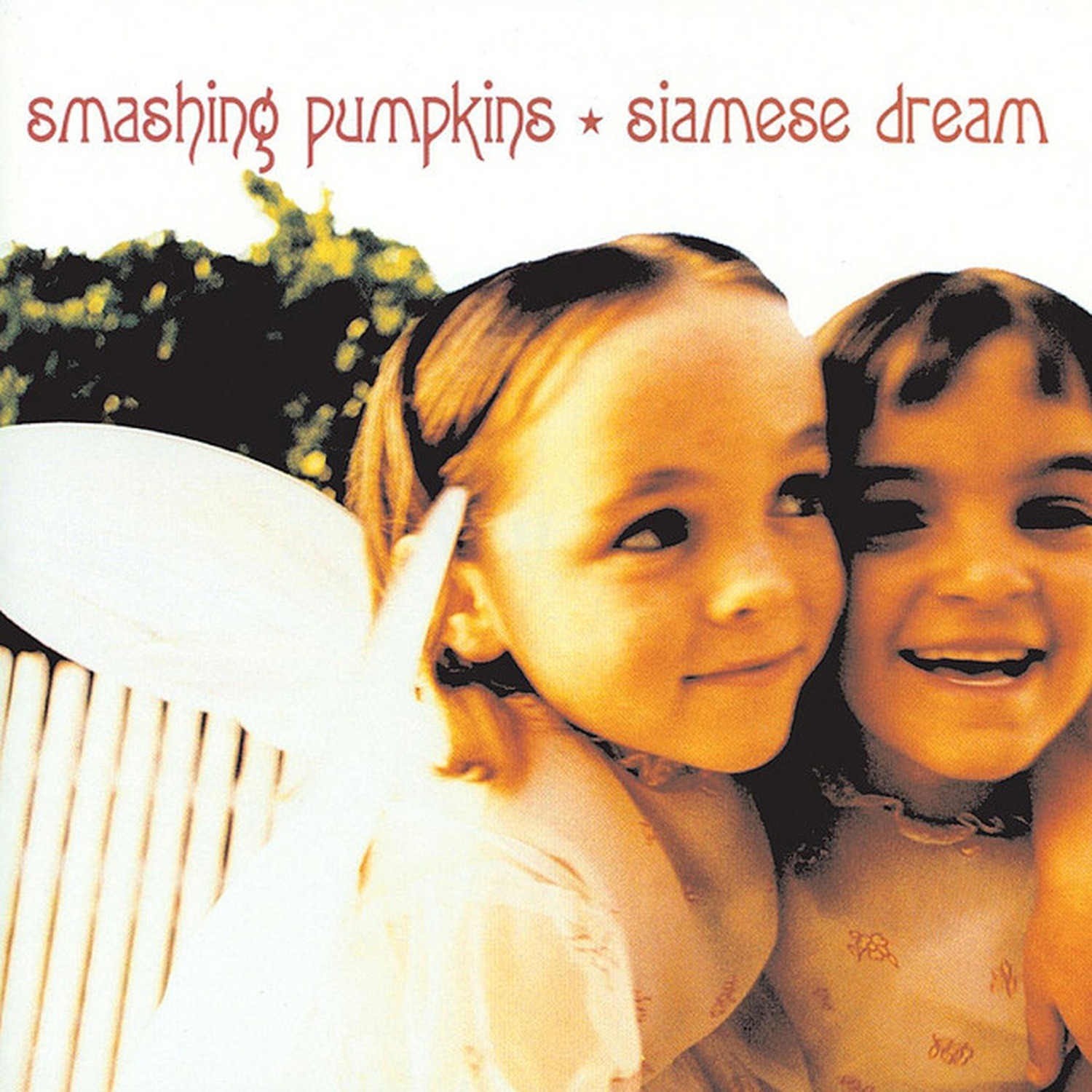
So again, the story of the. There's so many good stories on this album. And the story of the COVID art.
Chris54:54
The two girls. Yeah.
Neil54:55
So originally it was supposed to be completely different. So Billy had got a totally different idea, argued with the record company. So it went out on Virgin and Virgin and Billy argued all the way through over what the COVID should be. Yeah, the. The COVID art. And eventually it got to a point where we need cover art and it wasn't ready. So they came up with this idea, you know, the. The whole Siamese Dream thing. Billy said that it wasn't. It's not about Siamese twins. It's about this intercon. Interconnected world. This kind of. The yin and yang kind of thing. It has actually nothing to do with Siamese twins. And the idea was that they were going to have. Have this. The COVID art. And he kind of planned and designed it. The two girls on there are not conjoined twins. They're not even twins.
Chris55:51
No.
Neil55:51
They're just.
Chris55:51
Yeah. They're not related.
Neil55:53
They'd never met before that day. It was shot by Melody McDaniel who's like an independent. Independent photographer. But the lovely thing about it. So a. It wasn't meant to be the COVID Yeah. Of the. Of the album. It was kind of a last minute thing that was. That was. That was changed the twins. They're not. The twins are not twins or conjoined in any way. They just like look alike. Kids that were. That were there and they're posed cheek to cheek. It was this kind of, you know, poetic notion of duality and interconnectedness. But then no one knew who the twins were. No one knew who the girls were. So. And then. And then. I mean, the thing about the pumpkins that I guess I hadn't really realized until I started to dig into this is so much lore to it. There's like. Yeah.
Chris56:38
Just make stuff up. There's worlds. Yeah. Phenomenal. That may or may not be real. Yeah. Yeah.
Neil56:43
And. And it was brilliant because Billy like. Billy like stoked this over the. Over the years and they like. They didn't really. And it kind of ebbed and flowed. Who the girls. Who the girls were. And then. And then there was like a reunion in the late 2000s where Billy posted a tonguing cheek message on the band's.
Chris57:07
Blog.
Neil57:09
Saying he was looking for the girls from the Siamese Dream cover to try and try and find them. And then he kind of joked, they're not conjoined anymore, as far as we know. Obviously he would have known they weren't.
Chris57:19
Conjoined in the first place.
Neil57:22
The bit that's really interesting as well from there is he said they had a new bass player joined them. Nicole Fiorentino.
Chris57:29
Yeah.
Neil57:31
And she joined in 2010. And Billy posted saying that she was one of the girls on the COVID and that kind of stoked this massive kind of thing. And you know, obviously then people started to realize that like, mathematically that wasn't possible. But it stirred up. Yeah, stirred up this huge kind of Internet driven, driven thing.
Chris57:56
Yeah. Like some sort of serendipity thing.
Neil57:58
Yeah, yeah, yeah. But then again. So what gets really interesting is then as they were going out on the tour for. Go through my notes here. Yeah. So. So as they were going out on. On their oh so bright shiny and oh so bright reunion tour, the two girls who are now women in their 30s, sat on a couch with Billy Corgan and announced the tour together. So now we're kind of.
Chris58:28
Yeah.
Neil58:29
And it kind of. The serendipity of that.
Chris58:33
It's a nice thing for the fans, isn't it? It is a really nice thing for the fans.
Neil58:36
I do, you know me. I love. I love album art and I love the story with this one. I love the fact that it's. It's a bit like, you know, we saw it with Nevermind too right. The kind of, you know, the baby on the front and then grew up and sued Nirvana for you.
Chris58:52
A future a few times. A few pops keep suing. Yeah, yeah, yeah.
Neil58:58
But, yeah, no, I like that. I think that was really, really cool. And is. And again that the reissue has like a red cover.
Chris59:06
Yeah, yeah, yeah.
Neil59:07
The original was like a white.
Chris59:08
Yeah, yeah.
Neil59:10
The background was kind of white and.
Chris59:12
Then it's quite bleached out. Yeah.
Neil59:13
And then the reissue one goes red and then. Then the re reissue has now gone back to being white. I prefer the white one.
Chris59:19
Yeah. If I'm honest, I think at the time there was. It was this kind of tear garden by Kaleidoscope, I think. I think the. The album's called. But he was working on a few different concepts at the time which may or may not have turned into other things. But the. The look was very psychedelic and they really kind of leaned into that. That sort of thing. So it might Be. It might be that the artwork that they. They had for Melancholy was a sort of reflection of that a little bit as well. Yeah, I did, like you mentioned. Oh, so bright oh, oh, shiny oh, so bright. Yeah. Oh, shiny. Yeah, the. The. The ep.
Neil59:54
Yeah.
Chris59:54
Yeah, nice. And Malta, that's on. That is one. I think it's one of the best songs.
Neil59:57
Yeah. Yeah.
Chris59:59
Absolutely gorgeous. That one is.
Neil1:00:00
It's. They're a funny band. For me, they have. And there are a few other bands out there. Counting Crows are the same and they've got these massive. They've got. They've got this like, huge catalog of. Of hit singles.
Chris1:00:13
Yeah, yeah.
Neil1:00:16
But actually, you. You are not. Not that they're not great songs, because they are, but it's the. It's the album tracks that kind of. They grow on you.
Chris1:00:25
Yeah.
Neil1:00:25
And they're the ones that, for me, become the favorites, if that makes sense.
Chris1:00:29
Yeah.
Neil1:00:29
So. But yeah, they. They have a. Yeah, I mean. I mean, when we went to. So we saw them at Download the Pumpkins and it was. For me, it was incredible. Like a seeing the Pumpkins headline. Download.
Chris1:00:44
Yeah.
Neil1:00:44
Which, you know, they're not a heavy metal band. To see them do that was great. And to see the reaction from the crowd was really, really.
Chris1:00:49
Yeah, yeah.
Neil1:00:50
But then their set was just like epic. Yeah. And you forget they've got such. And again, accounting crows are like this as well for me.
Chris1:00:58
But the eclectic. Yeah.
Neil1:00:59
You kind of almost forget.
Chris1:01:01
Yeah.
Neil1:01:01
That. That these songs are theirs.
Chris1:01:03
Yeah. Yeah.
Neil1:01:04
You know, they're like. Oh, God.
Chris1:01:06
Oh, that's theirs as well. Oh, God, that one. Yeah, yeah, yeah.
Neil1:01:08
They're a phenomenal band. They have such a strong.
Chris1:01:11
Yeah. And to be. Yeah. I mean, the one for me was to share the lineup that weekend. To be on that same bill was just like.
Neil1:01:18
Oh, because you were playing.
Chris1:01:18
Of course.
Neil1:01:19
Yeah, yeah, yeah, yeah, yeah. Very, very cool. You're on the T shirt. Yes, you are on the T shirt on the back of the Download T shirts. It's got every band that played.
Chris1:01:28
Yeah.
Neil1:01:28
And you're. You're.
Chris1:01:29
Yeah, we're a bit smaller than the Pumpkins, but we're on there.
Neil1:01:33
It's relative, isn't it? It's relative. If you go back a couple years. We met on a Wisconsin street. He's Butch Vig, the nobody, and we're the Smashing Pumpkins. We're nobodies. So in that short time, we have a major label deal. We have the biggest selling independent album of all time. Now he's Butch Vic, the big rock producer. It was like, how do we navigate this new thing? I think the way we navigated it was we went and made Siamese dream together. And I think I'm trying to put this in a way that would translate in this context. I think Butch loves us and loved us. Loves us. And I think the way he repaid his love to us was, I'm going to make sure you guys get that opportunity. I'm going to go all the way. It makes him emotional because I get it now in a way as an adult that I wouldn't have as a child. I'm going to give you everything I have, including the gravitas of my buzz. I'm going to make sure that the Pumpkins get across the line, too, and not turn you into Nirvana. Let the Pumpkins be the Pumpkins. It's very emotional to me when I look back on it now because I realize he did us a good deed in that. Because I can't imagine who was blowing up his phone after that record. Butch going into that bunker with us at Triclops and spending that five months of hair pulling, arguing, and making that crazy record was his way of showing fidelity to Pumpkins. And in particular, me, because we had a very strong symbiotic relationship as producers. I influenced him. He definitely influenced me. Not everybody likes it when I talk about my influence in that particular way, because. But I'm a producer. I mean, why shouldn't I talk about it that way? If I was just the producer of the Smashing Pumpkins, nobody would have a problem with what I'm saying. It's not that I want to take credit. Kurt was easily the most talented person in our class. It's not a problem for me to say that, but it was weird to be in a situation where your guy. Your guy is now this other guy, and you're watching him navigate fame, money, pressure, and then trying to ameliorate that back into the Pumpkins world, which was very specific. And we had a very specific relationship. And we weren't the type of band that was going to act different because now it's Butch Vic. We didn't give a shit. We weren't going to treat Butch any different because he was Butch Vic. We were going to still do what we were going to do. And then by extension, and not to overly belabor it, he and Jimmy had a very. And continue to have. Jimmy and Butch just worked together on something recently. I think Butch's side project thing. He did Jimmy, Butch have a very intense symbiotic relationship, probably even more Intense than. Definitely a drummer thing. Butch and I is more of a producer visionary. His version versus my version. But it's a good. It's a good combo. And it. And it. And it went on to be important for both of us. But the thing between him and Jimmy is more like. It's like brothers or something. They're bound. Shall we talk about some facts?
Chris1:04:57
Facts?
Neil1:05:00
I'll go through the blog and pick up some facts. So this album is called Siamese Dream. It's got nothing to do with Siamese Twins.
Chris1:05:05
No.
Neil1:05:06
Which.
Chris1:05:07
They were a dreamscape band, though, like, if you guess, it's quite dream sounding. Shoegazing. Not so much on this because they had more. More songs. Although saying that is over an hour long and there aren't many songs on it.
Neil1:05:18
62 minutes, 13 songs.
Chris1:05:20
You see that for you. That's a long album, isn't it?
Neil1:05:22
It's hard work, I have to be honest. This is one. Some albums feel long. This doesn't.
Chris1:05:28
No, this doesn't feel like. It doesn't feel like an hour at all.
Neil1:05:31
No, it doesn't. I think a lot of that is the hooks and the melody and the song structure that. That. That we've got through it released in The United States, July 27, 1993. Released on Virgin Records. It On a big proper record label. And Billy famously banged heads with Virgin almost throughout the entire process.
Chris1:05:52
Yeah, Billy bangs heads with all labels, I think.
Neil1:05:54
Yeah. He did not. Yeah. It's interesting. And again, and I might get this wrong, you have to correct me, but I think is it Cherub Rock, which is about that indie scene stuff and like, Billy's kind of like, displeasure, if you like, at how that stuff all kind hangs together. But I think. So he was like, fighting with indie scene that he came from and the, you know, the. The machine. Big record machine as well. So, like, he didn't really like anybody.
Chris1:06:25
No. But I think that's where, you know, you get. You get the sense that he's kind of a very. A very passionate songwriter. But he's. There's a. There's an aspect of being a kind of bit of a lone wolf. Like he wants. He wants to do it his way.
Neil1:06:38
He's got his vision, hasn't he? It's really articulate. I think he's really. He comes across incredibly well in interview.
Chris1:06:43
And he interviews other people well as well. Yes. He's got the Magnificent Others podcast.
Neil1:06:48
I love his podcast. I don't. There's a lot of music podcasts that I struggle with. I love his so good. Really, really good. If you've not checked that out, it's worth checking him out because he's as nearly as good as we are. But no, he's. I love his podcast. Really cool. Recorded December 92 to March 93 at Triclops Sound Studios in Marietta, Georgia. Chosen large because they wanted to get.
Chris1:07:17
Out of the way.
Neil1:07:18
Yeah. And they kind of want to get drugs out of the system and stuff. So it was. There's a lot of that.
Chris1:07:22
Could I just comment on something here? There was a film called View for you that I believe was out on vhs and it was like one of these things where it was sort of. I think it was Siamese Dream era and a little bit after.
Neil1:07:37
Yeah.
Chris1:07:37
And they were capturing the experience of the band and. But also kind of. It's got a few live bits on there. I wonder if it was before Siamese Dream. It might have been between. I don't know where. Where it fits into the. Into the timeline.
Neil1:07:52
Yeah.
Chris1:07:53
But it might have been afterwards. It might have been between Siamese Dream and Melancholy. But anyway, the point I want to make is that you can see the tension in the band. Oh, I was watched it thinking, oh, they're just be kind of being ironic and a bit nerdy and a bit like. But actually that, you know, like, it's. It's straight up. They kind of don't really get on.
Neil1:08:14
They're not mesh. Yeah.
Chris1:08:15
Yeah.
Neil1:08:16
Not banding.
Chris1:08:17
Not banding.
Neil1:08:18
Not banding. Singles. We had Cherubrok Today, Disarm and Rocket, all of which were just like bloody massive. I think they were all just like phenomenal. Produced by Butch Vic, who they did Gish with and had just come off the back of Nirvana. So at the time, I mean, context wise, this is like, you know, Nevermind was the biggest album on the planet. Nirvana were the biggest band on the planet at the time. And Butch was the biggest producer on the planet at the time. But she essentially stole Billy's guitar sound for Nirvana. And then it kind of felt like. I mean, you see that in some of the interviews where Butch kind of did them a favor. It was like, you know, lending some of his now gravitas, if you like, Back to the. Back to the Pumpkins, which I think is really. I don't know, it's really interesting, I think film and media use.
Chris1:09:20
Yeah. Today's been used a lot, hasn't it?
Neil1:09:22
Yeah. So it was used in the Watchmen 2009. So that was the track today, which. Yeah. Is when Platform going out, actually. Yeah. It's interesting. And then there was another film. Salto al Visayo 1995 features disarm Netflix series Beef, which uses today. It was, you know, mtv, Beavis and Butthead and stuff. Video games as well. It was in Guitar Hero 3. Like everything was in Rock Band.
Chris1:09:59
Yeah.
Neil1:09:59
People love. But I remember playing those kinds of things with. With the Wii, which is. Yeah. Interesting. There was an. A TV series called Paradise City, which I've not seen. No, I keep seeing. It keeps coming up when we're doing research and stuff. But they. The band in there play a cover of the track Disarm.
Chris1:10:20
Yeah.
Neil1:10:21
Which is interesting. And then in the. In these blogs, we always do five things. Five things that. That you might not know. We've covered some already. But the. The band was basically like totally dysfunctional at the beginning of making this record. So Billy's in a really dark place. You've got the band having breakups and then. And then the impact of heroin. Billy Corgan played almost every guitar and bass part on the album in the whole whole thing, which is. Which is nuts. And the track Space Boy, his brother. When I'm cool with this, it's about his half brother. Yeah. It's written about his half brother who was born with developmental disabilities, Mild Celebration, Cerebral Palsy and Tourette's. And Billy was like, really protective of him. So in the track Space Boy, he's kind of writing about him being from another planet almost and trying to. Trying to find a home. So.
Chris1:11:19
Beautiful song that is. There's funny about that song because it's got this kind of like melotron strings.
Neil1:11:24
Yeah.
Chris1:11:24
Sound on it. And I believe it was that. It was the. It was the plane with the melotron strings on that song in that kind of way. Which led to perhaps the intro of the Melancholy album which carries that. That melon sing string sound became quite a signature kind of pumpkin stage event.
Neil1:11:41
Yeah, yeah, yeah, yeah, yeah.
Chris1:11:43
I wonder if. I wonder if that was sort of the first. You know, the first in the first impetus of that instrument.
Neil1:11:48
Yeah.
Chris1:11:49
Interestingly, it's a little bit out of tune. Like, if you listen to it, it's. I. I think it's slightly flat.
Neil1:11:54
I don't think Butch will allow you to say that. I can't imagine. I can't imagine it might have been.
Chris1:12:00
To do with the tape speed and stuff. Like it was. No one's performance or playing. It was. But there's something. There's something about melon and it's used. It's used purposefully where it's just. It's very, very, very slightly. Kind of Just slightly sharp or flat. It creates a kind of texture.
Neil1:12:16
Yeah.
Chris1:12:17
A slightly unsettling kind of ambience is interesting as well.
Neil1:12:20
That's really cool.
Chris1:12:21
Yeah. And I've just ruined that song for everybody now because everyone's gonna listen to God tune.
Neil1:12:26
So. Yeah. And then the. We'll talk about the song Mayonnaise. It was kind of just made up, spelled incorrectly. And Billy. I mean, you told me this, that Billy basically said that he spent more time justifying the name of the song than it took to write the song, which I think is interesting.
Chris1:12:44
It's a great song. We're close with that one, actually.
Neil1:12:46
Pavement.
Chris1:12:47
Yeah. Oh, yeah.
Neil1:12:49
Yeah. They wrote a diss track about the Pumpkins, basically saying that they were, like, boring and a bit pointless. And you. And so Billy. Billy. The band. The Pumpkins were headlining. Lollapalooza and Pavement were reportedly on the bill. And then Billy was like, if they're playing, we're not playing. So he got them kicked off the. Kicked off the bill.
Chris1:13:12
Oh, got Pavement kicked off.
Neil1:13:14
Yeah. Oh, wow. Which I think that's really. I think that's really interesting. I said, just be nice to people.
Chris1:13:20
Yeah.
Neil1:13:21
To be. You don't need to do all that, do you, Courtney Love? Did you read that Courtney Love claimed that all of songs on Siamy's Dream were written about her except for the one that was written about his brother?
Chris1:13:32
Yeah, Yeah.
Neil1:13:33
I just.
Chris1:13:33
Yeah.
Neil1:13:34
And Billy said that there were actually a lot of the songs were written about his. The. The girl he'd split it with just be. Just before that. But, yeah. I don't know. I. I do. I do love Courtney Love's ability to, like, just. It's all about me.
Chris1:13:49
Yeah. Yeah.
Neil1:13:51
That's what it's all about. And I think that's it. Yeah. So I've already talked about remasters and all of that stuff. The original sounds, they're good. There's no point remastering it. But if you look at Listen on the social medias, I think the only version you get now is the 2011 remaster with the red cover. And again, it's one of the things that annoys me because why can I not go and listen to the original version? That annoys me massively. So you have to have the originals. It's why you should buy copies of music, I think, because you can listen to the version that you like. Although I have to say, the. The 2011 version did come with a bunch of demos and rough mixes. Like session material and alt versions and other bits and pieces and some live stuff. So it was not all terrible. But I don't like it when they pull the original versions from. From there and that's it, really. That. That is all the facts that I got for this one.
Chris1:14:45
Yeah.
Neil1:14:45
I'm fact it out now.
Chris1:14:46
I think the. The. One of the things I want to just say before we. Before we start winding is. Is in particularly. Jimmy Chamberlain's drumming on this record is. Is exquisite throughout.
Neil1:15:00
He.
Chris1:15:01
He thing is with. With Jimmy is he plays the drums like an instrument and he arranges drum parts like they're an instrument. And that sounds ridiculous, but I mean, the way he uses hi hats and cymbals.
Neil1:15:16
Yeah.
Chris1:15:17
May not be considered a conventional way of using those things in the sense of things. He uses them to speak. That's the only way I can see the drums.
Neil1:15:25
Are his voice like a conversation.
Chris1:15:27
Yeah, absolutely. Any. And he treats the drums as his method of communicating to the. To the world, I think like a thing, a story, an idea, a concept.
Neil1:15:36
Yeah.
Chris1:15:37
Because he does it quite. He's quite. I think. I don't like a jazz background or something, but there's something about the way that he plays that is mesmerizing, I think, is the only word I can use to describe it.
Neil1:15:49
But you.
Chris1:15:49
But it's like the drumming itself sucks you into the Smash and Pumpkin.
Neil1:15:52
I'd agree there is something like. Like super delicate about the way he plays. But then. But then there's this like, explosion of energy and it's just. Yeah, I would agree there is something really. I won't say really special. It's really unique about the drumming to this record.
Chris1:16:12
I. You know, I've only ever known him from the Jimmy Chamberlain Complex, I think it's called, which is a solo stuff, which is quite jazzy, to be fair. And then this stuff that he's done with the Pumpkins. I don't know if he's kind of done lots of other stuff I assume he will have done, but.
Neil1:16:28
He.
Chris1:16:29
I can't imagine. I can't imagine if he'd fit on other stuff because of the way he plays. He doesn't play like a standard drummer could put it, you know.
Neil1:16:36
I wonder if he would. I think. I think he could play on anything, but he would make it sound like the Smashing Pumpkins.
Chris1:16:41
Yeah.
Neil1:16:41
There's that lovely thing where they. You know, in Guns and Roses. So the. Obviously Axl took the Guns N Roses name and started to do Chinese Democracy and the rest of the band had Got nothing to do for a bit. And they were. They were kicking around in LA trying to figure out what to do. And it was about the same time that Sebastian back had been kicked out of Skid Row Row. And they all knew each other.
Chris1:17:05
Yeah.
Neil1:17:05
So they were like come down. I mean, this is the best thing ever. Like, Seb's voice is phenomenal and we've got the best band. There is a no brainer here. This is going to be the best thing ever. And it sounded like. Like. I forget what they called it, but essentially they said it literally sounded like someone took Guns N Roses and Skid Row and mashed them together.
Chris1:17:24
Right.
Neil1:17:24
And that's what it's. And like no one. That's not what we do. What. I mean, it didn't sound like an. It didn't sound like his own thing. It sounded like. Like Seb's voice made it sound like.
Chris1:17:33
Like.
Neil1:17:34
Like Skid Row.
Chris1:17:35
Yeah.
Neil1:17:36
And like, you know, Axel's solos and stuff made it sound like.
Chris1:17:39
Yeah.
Neil1:17:40
Guns N Roses. And it's interesting. I. I do like. I do wonder if. If we. If you did get Jimmy Chamberlain and it would. It. Do you know what I mean? It would make any band sound more like.
Chris1:17:50
Well, there's a couple of albums that Jimmy didn't play on with the Pumpkins and I. You know, I can tell, like. Yeah, it'd be interesting to see what he would do with those records.
Neil1:18:00
Drummers are. You get this with Slayer as well with. With the ones that have got, you know, they. They've got a couple of different drummers. They've got Dave Lombardo and then Paul Bostaff and they're both phenomenal drummers. But there's a. There's a different. Very different energy.
Chris1:18:21
Yeah, yeah, yeah. Across them. Yeah. No, for sure.
Neil1:18:25
Sure.
Chris1:18:26
Right. We'll play mayonnaise then. And then we'll talk about next week.
Neil1:18:30
Sweet. Sam full of sorrow Run away with me tomorrow. Ease the pain somehow feel must say well now I know where our secrets go Sing hi to all my dearest when love is so, so dreary Drinking. I move to the street and narrow While the habits of my pillow. I try to understand the way I can. Sam. Shut my mouth and strike the demons Cursed you and your reasons out of land and out of season out of love and out of feeling soon bad When I could not you I. Is. I just want to be me. You look back and you don't realize how people. Whether it's the hand of God or something, they just. They add something that's so magical, but you can't. You couldn't put your finger on it. Butch would go home and we would stay for a couple hours and just jam on riffs and just play music and just talk about what was great about, I don't know, Ian Pace or something. You know, sometimes you just need somebody who's not in your orbit, who's not on your weird death trip, who can say, hey, have some fun, lighten up, it's good, I like what you're doing. Or come in and say, I like what you guys are doing. Ah, a little bit of confidence, you know, that goes a long way, especially to a young musician. Sometimes you need. Because we were very much. Particularly with Butch, we were in that sort of paternalistic relationship. Butch was our first real producer. So Butch was like, dad.
Chris1:23:54
So we've moved from 10 degrees to 14 degrees since we've been here.
Neil1:23:57
Honestly, we haven't talked about it today. We've not. We've not gone off piece. We've been. We've been on. I don't think we've done. We've not gone off piste at all. No tangents, no tangents.
Chris1:24:07
Very focused, very good.
Neil1:24:08
But I started today, so I. I volunteer at the local parkrun. So for our American colleagues, what happens is here in the UK, on a Saturday morning at 9am, pretty much every park in the country, you can just turn up and run 5K. And it's like a timed 5K thing and it's. It's really cool. So if, in fact, if you're, if you're interested in that, if you, if you're in the UK and you want to do fitnessy things, that's a cool thing to do, right? Because you can walk, you know, you don't have to be particularly fast. There are fast people there, slow people there, people walk, people take their dogs. It's just a cool way to get out and do something. Just. Good. I went there this morning and I opened my app, my weather app. I was the run director today, so I was in charge. So I had to get a place early and I got out of my app and it said, minus two, feels like minus eight. And all of a sudden, you know, if I hadn't looked at the app, I knew it was cold, right? And then I looked at it as soon as, like, I felt this, like, like all of the heat just leave my body and I was like, oh, my God, this is so cold.
Chris1:25:09
Yeah.
Neil1:25:10
And then. And then as I did that faffed around there for, for, for a Few hours and then came here and I've not got. I've not warmed up.
Chris1:25:17
I've never really felt the cold until the last couple of years.
Neil1:25:21
And now.
Chris1:25:22
Now it's terrible.
Neil1:25:22
I'm off. I get. I'm so worse with it now. I. I, like, when I get home, I'll go, we'll have a heated blanket. I've got like a double. I have a double heated blanket that lives on the. On the sofa. We have one on each, like the double sofas. And I will just wrap myself in that for like half an hour and until I get. Till I get warm like a sausage.
Chris1:25:44
Roll for more and then.
Neil1:25:47
But, yeah, it's mad, isn't it?
Chris1:25:48
The one time he was doing the. The. The YMCA did this thing called Sleep Out.
Neil1:25:52
Oh, I remember seeing you do that.
Chris1:25:54
We did that for a few years.
Neil1:25:55
I wanted to do that with you.
Chris1:25:58
It was rubbish.
Neil1:25:58
And then just thought, I'm not doing it. I really want to. I know that.
Chris1:26:02
But it makes you think, you know, like when the cold's in your bones and that, you know, you can't get warm again.
Neil1:26:06
You can't. It's. It's.
Chris1:26:08
There's one that you sleep in, like a church churchyard. So we were sleeping on these kind of like having a box on a, you know, graveyard thing. And. Oh, God. And it was raining and it was freezing cold.
Neil1:26:19
Definitely an age thing.
Chris1:26:20
Yeah.
Neil1:26:20
Like, for me, I remember being in. Like, I remember being 20 and I ran from Misham to Ashby, which is about five miles, and it was minus five. It snowed while we were in the pubs. It was New Year's Eve. It was snowed while I was in the pub. And then I just walked back home.
Chris1:26:34
No.
Neil1:26:34
You know, with a T shirt.
Chris1:26:35
Yeah.
Neil1:26:36
Do you know what I mean? And you're like, oh, yeah, I'm fine. Yeah.
Chris1:26:40
Right.
Neil1:26:40
Now just. If I look outside and it looks cold, I'm not very happy. Don't like that very much. But, yes, I. I very much struggled today. And you can hear my voice is a bit hard. So I think I've. I've survived over Christmas. I've not picked up anybody's colds and stuff, but. But I. I feel like I'm getting it. Yeah.
Chris1:26:59
Yeah.
Neil1:27:00
And I had to do shouting today.
Chris1:27:01
Yeah.
Neil1:27:01
You know, I mean, run that way. Well, a little bit of that. A little bit of, like.
Chris1:27:05
Did you point in?
Neil1:27:06
I do point in, yeah. And. And it's a bit of that. But you have to, like. Do you have to, like, do. Do important things.
Chris1:27:12
Yeah.
Neil1:27:13
And Explain how it works.
Chris1:27:14
Yeah.
Neil1:27:15
To people that have not been before. So. Yeah, I swear that's not made my voice any better.
Chris1:27:19
No.
Neil1:27:20
And then came to do a podcast.
Chris1:27:21
Yeah.
Neil1:27:22
So that's good. I know what we're doing next, by the way.
Chris1:27:26
Yeah, cool, cool.
Neil1:27:27
So our biggest two podcasts ever in the history of Riffology ever are Pink Floyd podcasts. We.
Chris1:27:34
Okay. We did Dark side of the Moon.
Neil1:27:36
Yeah, we did. We did Dark side. And I want to do.
Chris1:27:42
I want to do Wish you the wall, didn't we?
Neil1:27:43
We did the wall.
Chris1:27:44
Yeah.
Neil1:27:45
And I want to do Wish you were here.
Chris1:27:47
That's a great idea.
Neil1:27:48
19. Yeah, that really comes out 75, the album.
Chris1:27:53
Yeah.
Neil1:27:54
And.
Chris1:27:55
Oh, it flows nice off the back of this one. That does. Yeah.
Neil1:27:57
I think it'll be really interesting. It's got. Yeah, it's got Shine on. Welcome to the machine. Have a cigar. Wish you were here.
Chris1:28:07
Wish we hears another song like this arm that I play a lot, you know.
Neil1:28:10
It's extraordinary song. Proper Headphone album.
Chris1:28:14
Yes. Oh, God, it is, isn't it?
Neil1:28:17
And, yeah, I. I did anyway, I thought that's what we would do.
Chris1:28:20
Yeah, that's a great shout.
Neil1:28:22
That'd be a nice one.
Chris1:28:23
Yeah. Yeah. I don't know. I don't know anything about. I don't know anything about the band.
Neil1:28:27
Well, yeah, we did Dark side, didn't we?
Chris1:28:30
And then we did.
Neil1:28:31
We did the War. And, like, the war for me is kind of where. I mean, that's like a Roger Waters.
Chris1:28:35
Yeah. Yeah, exactly. Yeah. Yeah. But Wish you were here was where Dave Gilmore took. Took the helm, didn't he, really?
Neil1:28:43
A little bit. Yeah.
Chris1:28:44
There's a.
Neil1:28:44
There's. There's a little bit of that. Yeah, there was definitely a little bit of that going on here. So I. Yeah, I'm looking forward to it. I think. I. I tend to not like I listen to Dark side as an album.
Chris1:28:58
Yeah.
Neil1:29:00
But there's a. A thing called A Foot in the Door. Like a compilation.
Chris1:29:06
Yeah.
Neil1:29:08
And I listened to that a lot as well, and a lot of Pink Floyd. So I'm looking forward to. Yeah.
Chris1:29:12
Because. Good shout. You've got rabies.
Neil1:29:15
I'm gonna die. See you next week.
Chris1:29:18
See ya.