No matching lines.
Speaker0:00
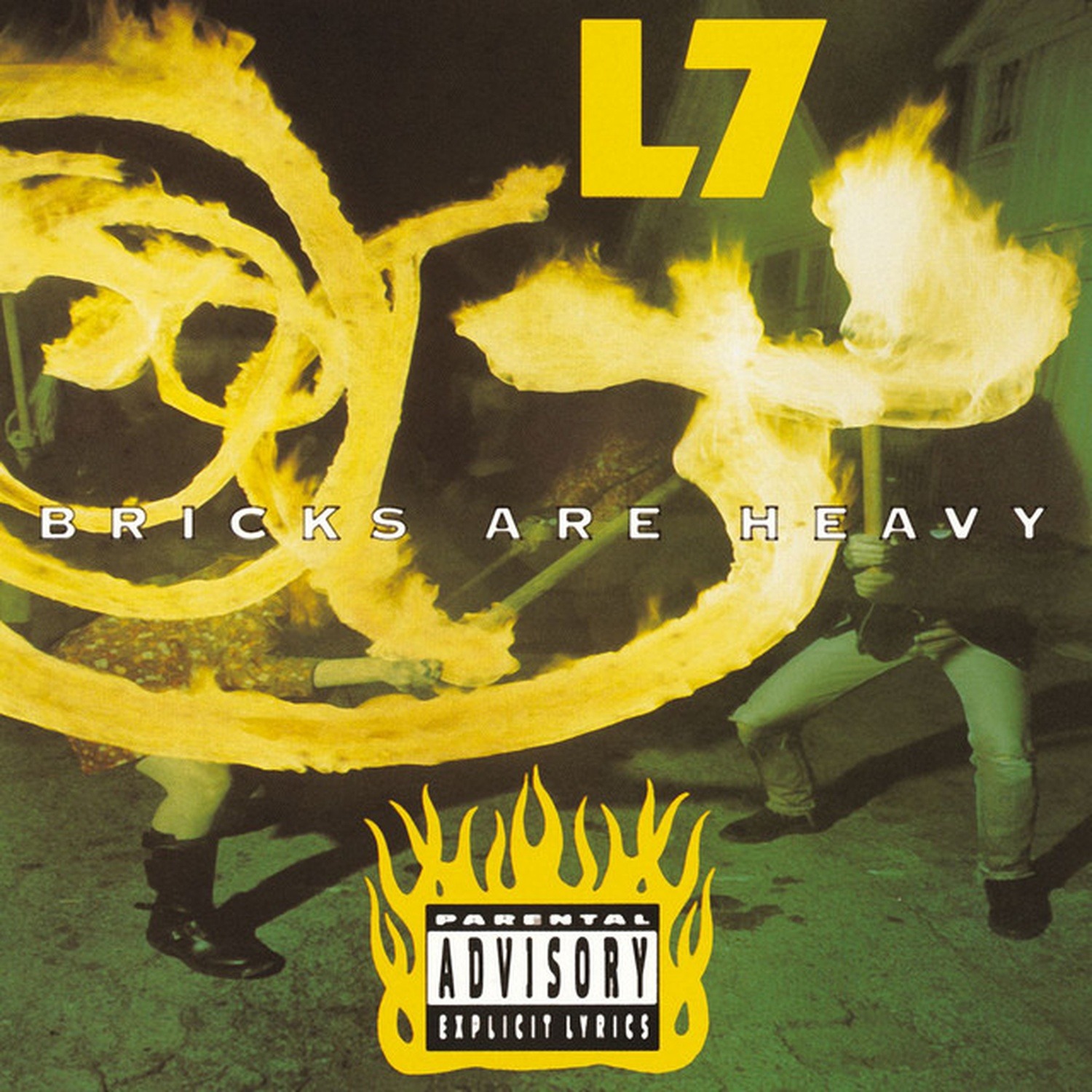
I'll see you next time. L7. L7, which is a square. It is. We didn't know it. I didn't know. And then they said on one of the interviews that we've done that when you put the L and the 7, do your L with your left hat, left hat, left hat. Does it matter which one? No. L. Oh, I don't know. It depends whether you're looking at it or someone's looking at you, doesn't it? If you make a square out of L and then 7, like that, that you can see. So the L is the bottom left bit and the 7 is the other bit. It makes a square. When you do it with your fingers. So apparently it was an American high school slang for squares. If you're in L7. We got into music to play music. Because we're completely unemployable in all other areas of life. It's the only thing we know how to do. We didn't want a name that, you know, had gender attached to it. We, you know, wanted people to hear of the band, not like associated with a female band kind of thing. You know what I mean? It's a, it's an American slang word for a square. If someone's an L7, they're uncool or because an L and a 7 make a square. It's in Wooly Bully as well. Yeah, that's another L7 song. Come and learn to dance, Wooly Bully. Could you, do you know, I don't know. It's changed my world. I didn't know that, you know. 1992, this album came out. Yeah, so it's taken 30, 30, 30, yeah, that's right, 33, 33 years, 33 years. It's a long way, isn't it? Yeah, to learn that. I was going to tell you, you know, we know when we came here, like you were already here. That really hurt, that maths did, didn't it? You know, when we came here. Yeah. Today. Yeah. And you were already here. Yeah. And I had to go and get like fruit pastels and things. Yeah, it's put us out, hasn't it? And I went to the, I went to the shop we normally go to, but it had a petrol tanker and I couldn't get in. Yeah. And I put, they put all the cones out and I had to go to Sainsbury's local, which is lovely, obviously, Mr. Sainsbury's, no, no offence to Mr. Sainsbury's, but don't sell. No red and black fruit pastels. Red and black fruit pastels. But, and it was a bit of a disaster, right? So anyway, I went there and I got some sweets, which is great. As I was going round. Yeah. There was a man there in motorbike gear. Yeah. And. Oh, this is a new part of the story. Yeah. Then you've not heard this. Yeah. No, no, no, no. Man, there are motorbike gear. And there was a girl who was, um, uh, stacking the shelves. Yeah. So she's like organizing things. Right. And then the guy in the motorbike gear, I like came past me, like not mega, not didn't like push me out of the way, but he was, he was quite, um, in, in, in a, in a very, what's the word for it? Agitated. He was, he, he, he, he, he was doing things quickly. Okay. Yeah. He was on a, on a, on a, on a, on a mission. Um, and then he went to behind this guy. So Ben, when the girl's stacking the shelf, she's not really paying much attention. Yeah. Goes behind her. He's like six feet. Yeah. Yeah. Yeah. Scary biker, man. And he just went, he just went, tomato puree. And I, I honestly, I just, I just crapped myself and I was like, at the end of the aisle, like what? Poor girl. Gee, she was, I mean, she was in some kind of. What a great story. She was just like in some kind of horror movie. I think where she was just like, don't kill me. Take what you want. He went, no, no, tomato puree. And you can just see the look at it. Oh, it's over there. And it just killed me. So I thought I would share that with you. That was really good. I'm glad you saved it as well. You saved it to a press record. It made me giggle massively. We've been faffing for over an hour. We always did a bit of faffing, don't we? Yeah, yeah, yeah. Yeah. It's like minus one million degrees. It's not that cold. It's been colder this week. Yeah, no, it has been colder. But it is cold. It is. I don't like it when it's cold. You know. You've got your hat on, haven't you? I'm not a cold weather kind of person. I'm wearing the hoodie you gave me. Oh, yeah. Look at that. It's nice. Yeah. I live in this now. Do you? Yeah, yeah. They're nice and furry inside. I've got my favourite hoodies as well. I've got my favourite hoodies that I live in. And what I do is I put my hood up like that. You know, if I'm coding, I put my hood up like that, look. Yeah. And I think that I'm like a hacker. Yeah. Do you know, like a 90s hacker? And then I kind of do that. And then. So that's what I do. Yeah, yeah, yeah. We didn't finish the story about the fruit pastels and where we ended up though. And so we've got all the sweets. We've got fruit pasta, normal, standard issue green fruit pastels, which are adequate. Yeah, yeah. They're okay. Yeah, yeah, yeah. We've got some round trees. Jelly tots. Jelly tots. To be fair, mate. I like them. I think they're a contender for the future. They're nice of jelly tots. Yeah. I like them. They are. But they're the tangy ones. You've got to bite to them. Yeah, I like the tangy ones. You know, it's how I imagine you would react if you drank battery acid. They've got that. You know, and your kind of face twists a bit. You're like. Yeah. But then, like, and it's not all together pleasant. No. But then immediately you're like, I want another one of them. Yeah, yeah, yeah. And then we've also got more sour sweets that I found at the garage at Marquette in Ireland. Yours are nice as well, actually. On the way back through. They're slight squishies. But they're all vegan. It's very good. No gelatin anywhere. There's no meat in them. No meat. No pig. No pig in our sweets. Meat sweets. Yeah, we did all right, didn't we? Did all right there. I think we're okay. And it's good. And we've started. And that's good. And we do. In L7, bricks are heavy. Yeah. Oh, you're Neil. Yeah. Yeah. And I'm Chris. Chris, yeah. And we did. Last week we did. Bush. I like saying Bush. It's good, isn't it? We did Bush. Yeah. And we talked about grunge and alt grunge. Yeah. Neo grunge. Post grunge. Post grunge. Post grunge we talked about. Yeah. Proto. Toto. Proto. Now, one of the things we talked about was post grunge. Yeah. Basically being grunge. Yeah. But with some niceties and, you know. Tune guitars. It was, I think I would describe. Yeah. It polished. Yeah. It was a bit polished. Yeah. And the production, we had a lot of rock production. Yes. But it's still basically grunge. Yeah. Yeah. And as we talked about that, we were going through a whole bunch of other things and bands that kind of got lumped into the grunge scene. And one of the bands that we wanted to cover for ages was L7. Yes. And we liked that because mostly, like Bush, Bush were. Say Bush again. Go on. Bush. Bush. Bush were a British band recorded in London, sounded American. Yeah. Big, thick, fuzzy guitars. Basically produced to go on the radio, right? Yeah. Yeah. Yeah. There was never any, like, facade that it was, like, you know, punk rock and he's, you know what I mean? This was, this was proto-produced. Yes. I don't know what that means. Very good. Yeah, yeah, yeah. But it was, it was beautifully produced. And then we talked about L7 and the fact that theirs wasn't their first records, they were kind of punk rock. Yeah. They were not really. It was more of that spiky hole thing. Yeah. They were just, like, rage and grace, right? They were just kind of raging at the world and doing the punk rocky thing. Haphazardly bumped into Butch Vig. Yeah. As you do. While Nirvana were recording Nevermind. Yes. Because they knew Nirvana. And then Butch Vig basically, for Bricks Are Heavy, made them record the drums in Sound City. Because the drums sound good in Sound City. And suggested that it would be great if they tuned their guitars before they recorded an album. And the story goes that no one had ever suggested to them that they'd tuned their guitars before. So they were a bit shocked. Yeah. Tuned their guitar. And then Butch was like, no, no, no. You've got to tune them like, we've got to tune every string. And we've got to do it before every take. Yeah. He's a masturbating animal. Well, basically, he's really patient. But in the old loose screws department, he makes Phil Spector seem very stable. So he's pretty crazy. He's nuts. He's a kook. He's a kook. But we love him. He's a very sweet kook. He knows a lot. We've had our experiences in the studio, so we helped each other out. I mean, it was co-produced by us and him. But he was very open-minded to suggestions, you know, stuff that we wanted to experiment with, like, our bongo track and stuff. He was cool. We actually used a sample on this record, which we had never done, and he knew how to push the right buttons on that button board. We sampled Yoko Ono screaming on our record. He's got a secret weapon, too. I'm not supposed to go in and have it. It's called the Nirvana weapon. He just pushes a button and everything churns out. It's like Nirvana. Amazing. For me, it's really interesting because he didn't go any, I didn't go much further than that. No, no. So it does retain the energy, doesn't it? Yeah, you end up with this, like, raucous, energetic record. So I think this is, like, verging on perfect for this, that kind of, like, raucous, like, kind of, I mean, I suppose it fell into grunge, didn't it? Yeah, yeah, yeah. But it was, like, I don't know, there's just something, like, really authentic about it. But it's sweet enough and sounds good enough for the radio. Yeah, yeah, yeah. So it's kind of believable. You know what I mean? It's believable. You kind of, the energy level's there and it's, it's, it's not like, it's not polished. No, no. But it's in tune. Yeah. And the drums sound good. Yeah. And, and it sounds really basic, but actually. Yeah, yeah, yeah. For me, it's almost like, it's like a tidy hole. It's like, it's like hole, but tidy. But it's, it's hole between the, what was the name of the record that we did of hole? Live through this. So it's, it's, it's, it's, it's hole. Yeah. Between live through this and celebrity skin. Yeah. It's like, it's like, oh, this, this L7 album is like some, in the spectrum of like, yeah. It's like in the middle of those two. And it's quite poppy in places. Yeah, it is. There's a lot of pop hooks to it. Um, and yeah, it's, it's, I don't know, it's a, it's a, it's a very easy album to listen to. It is. Yeah, yeah, yeah. It reminds me, I hadn't listened to, you know, we did, um, therapy. Yeah. Yeah. And so, uh, I'd not listened to that for forever. And I, as we were going to do the record, as we were going to do the show on it, I thought, oh, I'll just listen to it. And then I'd, I'd listened to it like three times. Do you know what I mean? And I, I, I, I was, I was just enjoyed it. Like the third run through, I was enjoying it just as much as the first run through. So like 30 years or so later, this was the same for me. Like, you know, pretend we're dead, you know, but a lot of the album tracks I'd probably not heard for 30 years. No, no. But it's such an easy record to listen to. It is. Yeah. It's on there and it's there and it's, it is. Yeah. It's, um, pleasant. It's pleasant on the ear despite having the energy. Yeah. But I mean like for, um, yeah, there, a lot of that kind of punk material, it's, it's, it's like designed to sound spiky. Yeah. The lyrics are spiky. It's not pleasant. It's about, they're not, um, they're not like love songs or, you know, songs about, you know, pretty things. They're kind of raging against the, the man, right. And the universe. And so for me, it's always been a bit like, like a lot of the metal stuff and a lot of like, um, you know, kind of the hardcore scene as well, but the music fits the lyrics a little bit, you know, the lyrics are dark and spiky. So the music should be dark and spiky. Yeah. Um, and this is, I, this is, I think this is fab. I mean, it's like wargasm was about, um, the, like the Middle Eastern wars, wasn't it? Yeah. Yeah. Um, so, so maybe the Gulf Wars. Yeah. Yeah. And it's like, well, not very nice. Do you know what I mean? Not a, not a lovely, pretty thing. And the music kind of fits it. Yeah. Yeah. Yeah. But I was, I was, I was just scanning through our blog that you put together and it talks about activism being a big part of what the band became. Yeah. Even if not at the time. So, you know, where they've sort of been since. A lot of punk bands. Activism is a really, really important thing to them. A lot of punk bands did, uh, did that, didn't they? And Brian Adams. And Brian Adams. Brian Adams was an activist. He was, honestly. Yeah, yeah, yeah, yeah. I just, I just imagined that Brian Adams being a punk. Yeah. I can imagine that. I like Brian Adams. Yeah, he's all right. Good. We've not done Brian Adams, have we? No, it'd be nice to do, um, one of his. Waking. The one with the wheel on. Waking the Neighbours. Waking Up the Neighbours is a good one. There's the one before that. And so far, so good. That was a good one. Reckless. Reckless. I like Reckless. Yeah. Good singer. Really good singer. He reminds me of. Canadian. He is Canadian. Good photographer. Do you know who, do you know, uh, um, who, my favourite Canadian band is a band called Annihilator. Right. Thrash band. Yeah. They're Canadian too. Yeah, yeah, yeah. They don't sound like Brian Adams. Um, it's like the anti-Brian. I don't know. No. But it's not, they don't sound like each other at all. You wouldn't get them confused. But I do, I do get confused often with Brian Adams and Joe Elliott. Oh, do you? Off of deaf. Oh, with the vocal sound. Their vocal sound. Yeah. And people are probably scowling and launching things at their radio. They're not the same at all. They sound so bloody similar, especially waking the neighbours and like adrenalize and hysteria. Well, it's the same era and the same producer, wasn't it? Oh, yeah. Same. I think they recorded in the same bits of the world as well. Yeah, yeah, yeah. Anyway, there's a lot. I think those two boys have got very similar voice holes. Yeah, yeah, yeah. And they're very pleasant. Yeah. Very good. Yeah. I don't know how we got there. No, and he did that nice MTV acoustic unplugged. So L7, going back to there momentarily, this was MTV era, wasn't it? Big old MTV. Yeah. They did a video for Pretend We're Dead, which was bleh bonkers. Yeah. Like you'd expect from L7. And yeah, it was great. They, that video was like slammed on MTV everywhere. It was just, you couldn't, couldn't get away from it. Yeah. It was at that, that time where, and not that like, this isn't the way with the youth of today anyway, but it was that kind of, well, you felt that, you felt like there was a movement at this point. This was kind of actually, that we're not, we're not happy with the world at the minute. Yeah, yeah, yeah, yeah. And we're, we're doing our thing. Yeah. And it wasn't punk and it wasn't like hair metal and it wasn't classic rock. It was, it was just this new thing, this kind of grunge thing. You kind of either know who we are or, or you don't know who we are because we're, we've always been kind of an Island, you know, we're, we were originally art punks, you know, punk rockers who started a heavy band and just stripped it down and took away a lot of the shredding because we don't, quite frankly, we can't shred in that manner of like the diddler diddler diddler stuff. So we just played a stripped down Flintstones version. Very definitely something sceny about it, even though they like the scene for grunge was Seattle. Yeah. And, and L7 were Los Angeles. Yeah. Yeah. They were really the, the sort of West coast thing, weren't they? Yeah. But they were doing it before most of the, you know, they were grunging before many of the grunge bands, the Seattle grunge bands. Yeah. Yeah. Yeah. Yeah. So I don't know. I think it's interesting. Yeah. Susie and I started the band in 1986, I guess. We had a different rhythm section then who just did not work out because they were very mentally unstable. We came along before the glam scene in LA pretty much. We're at about the same time. We didn't, we don't do anything in reaction to anything else. We were just the way we are. You know what I mean? So, I mean, we have to see those dorks walking around up to town all the time, but you know, and they do look better in spandex than we do, by the way. And makeup. Their first record was on Epitaph. Yes. I like Epitaph. Yeah, I do. A lot of my friends, like Million Dead, Offspring. Yeah, yeah, yeah, yeah. Some really great. Million Dead is. There's no effects Epitaph for a bit. Oh, I don't know. Or Rancid, one of those. Oh, Rancid, yeah. I think they were. So Million Dead is where Frank Turner came off of, for those that know Frank Turner. I don't know, I'm very aware that a majority of our audience are American. I don't know whether Frank Turner is American. But you might, if you are. Does it seem like you'd be into him in America? If you are American and you listen to this and you think, who the bloody hell is Frank Turner? Get on it. You should have a listen to Frank Turner. Yeah, yeah, yeah. Don't listen to his new stuff, it's awful. Check out an album called Poetry of the Deed. It's kind of this cross between folk and hardcore and it's epic. It's very cool. Man's got a lot to say. Very good songwriter. Very good. Bit like Bob Dylan. Bob Dylan. Again, now all the Bob Dylan fans are hissing. I think so. You can't possibly say that. I'd say a bit like Bob Dylan. He's a writer, he's a lyricist, he's a lyrical. Yeah, yeah, yeah. I don't know. He's a lyricalist. So I think Frank Turner may be, at some point, supported by an artist called Dave House. And not the Dave House that we know. Not the Dave House. We know a Dave House. And you, to fill in, right, so Chris sent me a WhatsApp saying, hey, you should check out Dave House. And Dave House is in a band as well. And I'm like, oh, yeah, yeah, yeah, yeah, great. And I said to you something, oh, I've not heard from Dave for like a few weeks. I don't know what's going on. And then it was, oh, no, this is a different Dave House. Yeah, it's spelled H-A-U-S-E, not as in H-O-U-S-E. I bet they're both called Housey. I bet they're both called Housey. He can sing. Is he? Yeah, both of them. Both of those Dave Houses can sing. But yeah, the guy, I think he's supporting Frank Turner somewhere. Oh, right. But really good. Really good. Yeah. Good songwriter. Really great singer. Very commercial, you know, very kind of, it's like, it's like really pretty. Brian Adams singing the whole steady kind of vibe. Yeah. There you go. We've gotten off piste already, which is brilliant. I think that's quite good for us. Yeah. What else was I going to say? Oh, you were talking about the Activision stuff. They co-founded Rock for Choice. And that had bands like Nirvana and Pearl Jam and Red Hot Chili Peppers. They were all kind of knew each other. They were all pretty good, pretty good mates. The other thing I think that's fascinating about L7 is they, they were feminists. Like for me, they were feminists without making a big deal about being feminists. They're feminists without making a big deal about being female. Yeah. Do you know what I mean? They, they were kind of like, I think one of the first female bands that like never mentioned that. Yeah. It was never this, oh, well, we're a girl band. We're, oh, we're, you know. Yeah, this girl power thing. Yeah. They were just like, no, no, no. We're, you know, we're, this is what we do. Yeah. And there was no, yeah, I didn't, I always thought that was really like uber cool of them. Yeah, yeah, yeah, yeah. They were kind of, we're leading by example. We're doing our thing. Yeah. We don't, you know what I mean? Yeah. Leading by doing. Yeah, yeah, yeah. We're not, we're not making a big, big deal out of it. And they would virtually never mention it. Yeah. Their interviews were a little bit, the word is like a school playground. They were kind of just like just kids having fun, weren't they? They were just, you know, when we pulled the interviews for like Pink Floyd or Tool. Yeah. You know, they're kind of very measured and, you know what I mean? They're very, um. Yeah, listening to this, like, it's like listening to ourselves trying to do a podcast. Oh God, they're just. Just tangents and. They're just like puppies, aren't they? They're just, I don't know, like, say tits. Do you know what I mean? And it's just, the interview's just full of them mucking about. Yeah. And you just think the energy, it's infectious, the energy. Yeah, yeah, yeah, totally. Yeah. But you can also hear the slight frustration in all the interviewers' voices. Yeah. Going, can you just answer the question? Yeah, yeah. It's just, yeah. Well, the thing is, that was very common of the punk era before. Yes, yeah. Where you would interview, I remember seeing the Sex Pistols. Oh gosh, yeah, yeah, yeah, yeah, yeah. Yeah, some legendary footage of that, isn't it? Oh, just brutal. Yeah, yeah. And I think that's kind of what they grew up on. Yeah. You know, the Melvins and all of that. I think they grew up on all of that stuff. Bad Brains, I guess, as well. All of those kinds of punk bands that were, you know, that's how they did interviews. Just did not do as they told. Yeah, exactly. Yeah. Did not answer the questions, yeah. That's a big bit of it, isn't it? It's just not doing, like, not doing what you're told. But yeah, I think, yeah. And it comes across in the interviews when you hear them. But I think that's kind of what made them, I don't know, it's what made them who they are. That authenticity, I think that's what connected them. You know what I mean? I think if L7 had come across, you know, Alanis Morissette, when she is interviewed. Yes. For me, she leaps off the page when she's been interviewed. Yeah. She's so articulate and intelligent. Yeah, yeah. Beautiful, yeah. And you kind of don't expect, you know what I mean? No, no, no. I don't expect it. It's not like she's, you know, a PhD in virology or rocket scientist. But she comes across like a philosopher. She's sharp, yeah, yeah, yeah. She's really, really smart. Yeah. And I think that's interesting for me. That connects her to her audience. That connects Alanis to her audience. And she's a great storyteller. Yeah, that is true. Yeah, yeah, yeah. Well, you imagine L7 starting to talk about, you know, I don't know, like the universe and philosophy just wouldn't work. It wouldn't, you know, L7 need to be hanging from the rafters and saying their pants on fire. Yeah. That's who they are. That's what we wanted. What were they talking about in the interviews list too? Bottomless crowd surfing. Bottomless crowd surfing. But I, yeah, I don't know. I just think there is, there is like a, there is an authenticity to L7 at this time. Yeah. That connected them to the audience. And that was a big part of that whole scene. You know, that scene didn't exist before. It was fuzzy. It was blurry guitars. It was, you know, vaguely in tune. Yes. And every, you know, all of the elder rockers were going, what's that all about? Yeah, yeah, yeah. You know, the hair metal crew were just like, well, where are the guitar solos? Yeah, yeah, yeah, yeah. You know, everybody hated grunge. And then there's this group of disaffectioned kids that were like, actually, we, you know, and that, that scene started and then just blew up. Yeah. And actually there's tons of disaffected kids that were, you know, able to attach to the same thing. Yes. And like L7, for me, L7 with that. Yeah. And, you know, Nirvana too, to some degree. Although, like, like Kurt Cobain was too intelligent. You know what I mean? I think L7 were just, they were just having a great time. Yeah, yeah, yeah, yeah. And I think, yeah, Kurt Cobain was obviously a troubled individual. He was having a hard time with the world. Yes. But even when you listen to the interviews, like sometimes the interviews from Kurt Cobain are a little bit similar. They're a little bit, you know, combative. Yeah. Stupid. Yeah, yeah. And then, but then other times the interview will catch him and he'll be on a philosophical day. Yes. And you're kind of down the rabbit hole. And get some gold. Yeah, you're down the rabbit hole with him and he's, you know, he's got your questioning life at its core. Yeah, very true. Yeah, yeah, yeah. I didn't realise how connected L7 were to Nirvana, they. No, no, I didn't either. No, and they were all friends. It all seemed like there was a, you know, a gang of them that were all, we were all friends. Yeah. But it's interesting how L7 didn't get the same legendary status that, let's say. No, they didn't. I wonder if that's because they were like, you know, pants on fire. Yeah. Raging. And, you know, you needed that kind of. If you think about a lot of the grunge scene from Seattle, there was a lot of people a lot of, like, miserable boys. Yeah, yeah. Do you know what I mean? Yeah. There's a lot of misery, a lot of miserable boys that were, that were doing that. It was all about, and L7 were a little bit. Yeah. Do you know what I mean? They were a bit more shouty, weren't they? They were a bit more, I don't know. It's interesting, isn't it? Because it's more of that, like, I didn't think before, but with you talking about the West Coast thing, it's more like the way the glam rockers were behaving. Yeah, yeah. Than the Seattle guys were behaving. Yeah. In terms of the party thing, the, you know, the kind of, the kind of. Well, it was LA, wasn't it? So, yeah, yeah, yeah, you, you, you, you could be right, actually. They, they were, um, I don't know, the, just, just. It's like Youth Gone Wild, isn't it? Yeah. It's all that stuff, yeah. And then, and then, but lumped it, the same fuzzy guitars, the same, you know, and then lumped in with, um, with the grunge scene. I mean, the, the, a vast majority of the grunge scene is like, you know, sad boys crying into their socks. And then you've got L7, you know what I mean? Yeah, yeah, yeah. Doing their bit. Yeah, yeah. But I don't know, yeah, I don't know, it, um, I, I didn't really think of L7 being grunge. I know they're kind of. No, it's almost like there's, there's a, there's a grunge, there's a sort of grunge punk attitude. Yeah. But it's a hard rock sound. Yeah, well, yeah, I mean, it's in tune. That's, that's one of the things. It's in, it's in tune. Um, and it's got, I mean, it's, you can, yeah. There are not many producers that I think would have sprinkled the magic dust on it like Butch did to this. I think if you'd have got. And he was the man of the moment, wasn't he, really, when it comes to that sort of stuff. If you'd have picked, I don't know, probably any of the other big producers of the time, I'm not sure, that I think they'd have either, like, backed it off and let it be wild, like, too wild, or it'd been overproduced. Yeah, yeah, yeah. Do you know what I mean? It'd have been a little bit, a little bit overly polished. Yeah, yeah. Um, I might have said this before. Yeah. But have you watched the Rick Beato one-armed scissor breakdown? No. Miles Walter. Not Miles Walter, the other, at the drive in the pre-Miles Walter. I don't think so. I don't believe I have. So, that is a really good example of this. Yeah. In terms of the capturing of the energy of the song, and the song being the song. Yeah. But then when you dive into the guitars, you dive into the separate, um, instrument tracks. Yeah. They're a mess. Is that the one where they're all out of tune? Yeah. But it sounds... Yeah, but when you put it all together, somehow it just works. But you hear it, you hear it like... Do you think that's just, like, um, accidental? Like, the guitars were out of tune, but sounded all right when they played them? Or do you think it was, like, by design? I don't think it was by design. I think it was just, they were just in that zone at the time. Gotcha, yeah, yeah. I don't think they purposefully just teach it. I think it was just, they were hitting it hard, and there was a bit of overbending. There was, you know, because they were hitting it hard, the strings were dropping out as the song went through. As they were playing, yeah. Yeah, and that sort of thing. So, yeah, it was definitely... But it's so strange when you hear it. It's like, oh, God, that's horrible. Yeah. And then you put it together, and it's like, that's one-off scissor. That's the... How weird is that, then? Yeah, yeah, yeah. It's so strange. It's like, well, you did a demo last week where you were playing multiple chords, and you played octaves. Yes. You did a demo. Oh, yes, I did. Do you remember the E? Yeah. E. Yeah. And then you played one octave higher than the other. Yes, yeah. And there's a way you can do that, even if you, you know, if you hit that hard, that can be interesting, because then, you know, you're not getting quite the same note, and it makes quite an interesting sound. Yeah, it's... Yeah. There is that, there's something weird there, I think, where you can get that kind of odd sound. The attack, yeah. I don't, I think, the thing is with this L7 record, I don't hear any dissonance on it. No, no, no. I don't hear anything, or there's nothing on there that makes me kind of wince. It's all just big and thick and, like, heavy and chuggy, and then the melody's in there. I think, you know, the other thing is that they, didn't they play on David Letterman? Oh, I don't know. I think they ended up playing on David Letterman. And, I don't know, there's just, it's that kind of, like, immediately you'd think, oh, it's probably not that kind of record. But actually, it was poppy enough that I think it probably was an appeal. That it landed, yeah. Yeah, yeah, yeah. Like, but certainly pretend we're dead. Yeah, yeah. Yeah, I don't know. There is definitely, there is definitely a sweetness to this record. There wasn't, if you listen to, like, this was their first kind of proper album, but if you listen to the stuff they'd recorded before, if you can go and find it, it doesn't sound like this. No, no. It's got a real punky. It's more like that early hole stuff, like. Yeah, very, very punky, very spiky. And it's, yeah, it's interesting. They, there's some lovely bits in the interviews that I read where, you know, they, they were, they were talking about this, you know, that those melodies were always there, just kind of hidden under the, the, the fuzz. Yes. And so, you know, making that decision, yeah, making that decision to pull, pull some of that stuff out, right, and to, you know, I think Donita Sparks did a lot of the, the writing, but, but that, the decision to pull those melodies, those hooks out of the fuzz and, you know, give them some space. Yeah, yeah. That's, but, but not too much, you know. No, no, it's still, it's still there, isn't it? It's still rock, it's still, yeah, yeah, yeah. I mean, you're not, you're not trying to get into, like, The Offspring. No, no. But you're, you know what I mean? Yeah. I mean, there's enough hooks and melody in there to keep you interested. Yeah, yeah, yeah. They're touring again in a minute, aren't they, The Offspring? They're always touring, aren't they? Yeah. I love it, I love the fact that there's a lovely interview with The Offspring where they, they were talking about where the band came from, and they said that we, none of us were good enough to be, we'd just started, like, high school and none of us were good enough to be in the football team. So we were on the track and field team, and none of us were good enough to be on the track and field team. So then they, they put us on this, like, cross-country running team, like, almost like they made it up for us, and that's where we all met. And I was just, oh, yeah. Very good. It's interesting, this is an album that, I was looking at how it did in the charts. Yeah, yeah. Now, Pretend We Dead, I thought that was massive. Yeah. But it wasn't. No. It got to the 8 in the US rock chart, it got to 21 in the UK singles chart. And that seems to be the story of this band. And I don't think I included this interview, but there was one that we're talking about, you know, the expectation because of the buzz around the band was that there'd be a gold or a platinum record. Yeah. But they didn't make it. No. It was like tin or copper or something like that, they were joking. Whatever, yeah. Yeah, they didn't. Yeah. And like the other single, there was Everglade, a monster. And they're like, they just didn't chart very well. You know, Pretend We Dead was there, a big one. The other one that's interesting is Shitlist. Yeah. I would have sworn, I would have bet you some fruit pastels. For four pounds. Yeah. That it was a single. Yeah. It wasn't. It wasn't. No. A single. Do you know why it was famous? No. I had to dig this out because I was so convinced. It was in a movie called Natural Born Killers. Oh, I remember that film. Yeah, yeah. Woody Harrelson. Yeah. It's Oliver Stone's. Yeah, yeah, yeah, yeah. So, yeah. It's, yeah, it's, it was in there. So everyone, that's why everyone knows it. But it was not a single, which, yeah, I would have fought you over that. And I'd have been wrong to do that. Yeah. I'd have felt sad afterwards. The other song that I really liked, that really jumped out at me. Because I, I, not, not really, the first, this week's been the first time I've properly gone through it, you know, in terms of like, I knew a few songs, but to sort of sit and listen to it. One More Thing, that was the one for me. Oh, yeah. I thought it was such a good, because it's a bit slower. Melancholic. Yeah, it is. Yeah, yeah. It's a bit slower than the others. And I, and I really, yeah, I agree. I seem to do that where, you know, when these albums where they're quite fast, punky ones. Yeah. If there's a slower one, they're the ones that I always hook into. I just about had enough, and I've run too much time, and I get scared when the telephone rings. So I'm looking back about One More Thing. One More Thing to put in line, one more thing to waste my time, one more thing that I can't take, one more thing and I'm gonna break. One More Thing to put in line, two more thing to waste my time, one more thing to waste my time. One More Thing to put in line, two more time, one more thing to waste my time, one more thing to waste my time, and I'm gonna have to throw you back. One More Thing to put in line, one more thing to waste my time, one more thing to waste my time, one more thing that I can't take, one more thing and I'm gonna break. One More Thing to put in line, one more thing to waste my time, one more thing to waste my time, and I'm gonna break. One More Thing to put in line, one more thing to waste my time, and I'm gonna break. One More Thing to put in line, one more thing to waste my time, and I'm gonna break. One More Thing to put in line, one more thing to waste my time, and I'm gonna break. One More Thing to put in line, one more thing to waste my time, one more thing to waste my time, one more thing that I can't take, one more thing and I'm gonna break. One More Thing to put in line, one more thing to waste my time, and I'm gonna break. One More Thing to put in line, one more thing to waste my time, and I'm gonna break. One More Thing to put in line, one more thing to waste my time, and I'm gonna break. One More Thing to put in line, one more thing to waste my time, and I'm gonna break. One More Thing to put in line, one more thing to waste my time, and I'm gonna break. One More Thing to put in line, one more thing to waste my time, and I'm gonna break. One More Thing to put in line, one more thing to waste my time, and I'm gonna break. One More Thing to put in line, one more thing to waste my time, and I'm gonna break. One More Thing to put in line, one more thing to waste my time, and I'm gonna break. One More Thing to waste my time, and I'm gonna break. One More Thing to waste my time, and I'm gonna break. One More Thing to waste my time, and I'm gonna break. One More Thing to waste my time, and I'm gonna break. One More Thing to waste my time, and I'm gonna break. One More Thing to waste my time, and I'm gonna break. One More Thing to waste my time, and I'm gonna break. One More Thing to waste my time, and I'm gonna break. What fuels our fire most is probably what angers us, I guess. And that, you know, but we don't exclude romance, or we just, you know. We're very romantic people. We are, truly, very romantic people. There's a couple songs that deal with personal emotions. A song called Slide. A song called One More Thing deals with depression. So, it's not just all other issues. Things that affect us, whether it be things in the world, or our landlords, or something, you know what I mean? Anything that is in our environment. We think we cover pretty universal themes. Unless you're, like, a hardcore Christian, or a right-wing jerk, I guess. You can relate to our music. So, I mean, some of it's like, if I go through the list, right? So, Wargasm is about the Gulf War. Mm-hmm. Like, so, Scrap is just about fighting. It's about kind of, you know, grindhouse humor and stuff. Yeah. Pretend We're Dead was about a breakup. Mm-hmm. Where she broke up with somebody and then was pretending they're dead. Right, okay, yeah. And then it was like, no, I'm not writing a song about you. Pretend We're Dead. Yeah. And then that's where the hook came from. Yes, yeah, yeah, yeah. Um, and then you've got, like, Diet Pill. Um, yeah, Everglade. Uh, Everglade apparently is about reclaiming space and calling out people in the pit. Yeah. In their live shows. Um, and then you've got Slide. I quite like Slide. That was a breakup song. Is it? Which is, like, really rare. You don't get that. Yeah, I like that one as well. One More Thing. Um, again, like, kind of, uh, it's about burnout. Mm-hmm. Which I think is pretty cool. Um, Mr. Integrity. It's like a sarcastic rant. Yeah. About hypocrites. Um, Monster. Like, it's kind of a, I don't know, kind of feels a bit love song-y. Yeah. I'm not really sure what it's about. Mm-hmm. But, um, again, it's a lot of dynamics in that. Yeah, yeah, yeah. In that one. Um, yeah. Uh, Shitlist, uh, it's just kind of, it's just a raging song, like I say. But it's an angry song. When I get mad and I get pissed. I grab my pen and I write out a list. Of all the people that won't be missed. You've made my shitless. For all the ones who pulled me out. Shitlist. For all the ones who feel my head went down. Shitlist. For all the squares who got me pissed. Shitlist. You've made my shitless. Shitlist. Yeah, I love. I'll grab my pen in the right of the lens. Of all you assholes that want me mad. You've made my shit run. Jet, land. Yeah, I love. Jet, land. Jet, land. Jet, land. I mean, our record before that, Smell the Magic on Sub Pop, we would hear that on college radio. And we would be thrilled. Like, "Oh my God, they're playing the show! Oh my God!" You know, calling your friends as quickly as you could, you know, to like, "Turn on KXLU!" But yeah, when Bricks Are Heavy came out and they started playing Pretend We're Dead, it was like, "Wow, how cool is that?" And then the same pleasure it finishes with, but it's quite grindcore almost. It's got this kind of grinding groove to it, which I quite like. Yeah, yeah. It's quite a lot of cool stuff on the album. Yeah, yeah. For me, it was an album that, you know, like how you have a strong start and then it kind of tails off on an album. For me, this was the other way around. This was like, for me, the album gets more and more interesting the further it gets into it. Yeah. I don't know if that was tracked by, you know, the track order was by design. Like, there's loads of good riffs and song and melodies at the start. But to me, the music gets more and more interesting as it goes through. And varied almost. Because the first few songs are quite sort of similar in tone or dynamic or whatever. Yeah. And then it sort of changes it up a bit as it goes through. It does a bit, doesn't it? Yeah. Hmm. I don't know. It was like part recorded in different studios, wasn't it? So some of it was in West Coast, some of it was other studios. It was a bit... So that's interesting. And I wonder if that was done by layer or by song. Yeah. So is it that certain instruments were recorded in particular places or is it more like those songs were recorded there and those songs were recorded there? Because that could have an interesting impact on the sound. Where the song was recorded, yeah, it governed how it came out. Yeah, yeah. Can we talk about the cover? Yes. I'm showing you a picture of the cover. Yes. I don't know anything about it. It's... I think it's the band. It looks like the band. Yeah. Kind of just swaying fire. Yeah. Around. I kind of looked and tried to find some information about it. And I couldn't find a great deal. It... Basically, all I could find was the cover aligned to the band's visual identity at the time. But I don't know where it came from. I don't know who did it. Yeah. But this was a time where, although you've got like what we would say are perhaps iconic album covers now, there weren't or ordinarily like created in synergy with the music or based on the music. There were just a good picture. Yeah. I like the idea that somebody would have said what we're going to do is just swing these bits of wood around with fire on the end. Yeah. And that's the album type. Yeah. A bit like Wish You Were Here. Yeah, yeah, yeah. We're going to set fire to a man. Yeah. And that we're going to give him 30 quid or whatever. Yeah. Yeah. It'll be fine. Yeah. So I like that. Yeah. But it's not... It doesn't feel like it's particularly tied to any songs or music in a conceptual way. No. It's just kind of rage, isn't it? Yeah, yeah, yeah. I suppose. They toured very hard on this album. Mm-hmm. And I think they did the Bricks Are Heavy tour in 1992, 1993. So they built... They were renowned live. Mm-hmm. Do you know, there's a few bands that I think have got this kind of reputation. Mm-hmm. So like Pantera, one of them, and Slayer were another one of them. just where their live shows are, you know, just otherworldly. Yeah, yeah, yeah. And L7 definitely had that. Right, right. There was definitely a thing about their live show being bonkers. A lot of it's probably sparked by Reading. Right, okay. Where they... So Donita threw a used tampon into the hostile crowd. Oh, was that that gig? That was that gig? Yeah, she was unhappy about... Well, the crowd were a bit miserable. Yeah. I don't think they were very grungy. Yeah. I weren't fans of that. So she launched a used tampon into the crowd. Yeah. Which I think is excellent. Yeah. Reminds me of... God, who else at Reading? I remember that story, but I didn't know that was this band. Right, okay. So who... Greg, Greg Pugiotto from Dillinger Escape Plan. Yes. Was at Reading. Yeah. And they were a bit grumpy. Yeah. He launched it into the crowd. And I just... On stage? Yeah. Poo in a bag? He literally found... Yeah, live. Got a plastic bag, dumped in it, and then launched it into the audience. I mean, that's just great, isn't it? Do you think he actually just needed a poo? I don't know. I don't know. And then created like a... I don't know, but... A sequence from it. But there was a ton of stuff written about that in the press. I'd like to think that. They were very much not invited back to Reading, apparently. Right, okay. So there's a handful of bands that are not allowed to play at Reading. Yeah. And the Dillinger Escape Plan are one of them. Yeah, yeah. Well, that's on the list then, isn't it? If you don't want to play Reading, then do a poo in a bag and throw it. Do one of those things. Yeah, yeah. That's what you should do. They toured with Nirvana. They had support slots with Nirvana, Beastie Boys, and Red Hot Chili Peppers. I also found some interesting critical comments from them. But you know when we did Bush, and everyone said rubbish. Yeah. You can't sing. You can't act. Well, it's ridiculous, isn't it? Terrible. He's got a wicked voice. This, and how many copies did 16 Stones sell? I was going to say, yeah, they did very well, didn't they? Like one bazillion. Yeah. Gillian million. The NME, Rolling Stone and Kerrang, like voted, said this was like the best thing. The best thing. The perfect album. This is kind of like the opposite of some of the other albums we've done. So the label's got such high hopes of it. Yeah. It gets really great reviews. Yeah. And then it just doesn't catch fire. Yeah. Whereas there's loads of other albums that would almost be opposite of that. The labels haven't really pushed it. No. You know, it's a bit meh, or even like, you know, reviews are bad. And then suddenly it catches lightning and off it goes. It just shows that you just don't know, do you? Yeah. I think. Yeah. Labels are rubbish, aren't they? I have no idea what they're doing. When you think about it, they're kind of predicting what kids are going to buy. Yeah. Yeah. There's got to be a certain amount of arrogance to be a AOR guy or, you know, a record signer. But there. Yeah. Anyway, as I go down, I'm going down my list of interesting things. Yes. It was Tunes, Drop D, mostly. Yeah. Which is the superior tuning, in my opinion. Is it? Yeah. Very Black Sabbath-y, isn't it, Drop D? Yeah, it is, yeah. All the stuff from Iversilts, Drop D. Is it? Pretty much everything, yeah. Yeah. There you go. That's the best way to do it. Yeah. Drums all recorded at Sound City. Yeah. Drummer was Dee Plakas. Yeah. Plakas. Now is this, because they had a change of rhythm section, didn't they? They did, yeah. Is this the one that stayed? Yes. Okay, right. Yeah, yeah, yeah. So that again came from Butch Vig. Yeah. And yeah, I think it's interesting that there was a big production shift and that was all Vig. Yeah, yeah, yeah. You can, I can just imagine that, you know, just the, I love the idea of him working with Nirvana. Nirvana stuff's a little bit, you know, I don't know, raucous and stuff. Yeah, yeah, yeah. And they're like, oh, this is going to be great. And then, and then Butch turns up, tune your guitars. Yeah, tune them again. Yeah. I bet they'd be like, what? What do you mean? I've just tuned it. No, new take now. You've just done Nirvana. Yeah. Yeah. I have to say, I'm a bit of a tune in. Tune up tyrant. Tyrant. Are you? Yeah. Tune up. Tune up. Come on. Every take. Yeah. Oh, yeah. Oh, it's an interesting one as well. So MTV, they were big on MTV, which we've talked about already. So "Pretend We Dead" was huge. That was everywhere. But "College Radio" played them. They were quite big on "College Radio". There was a lot of the other album tracks that did really, really well. The other thing that they did a really great job of is they embraced the alternative press. Yes. So they were, you know, they would be far more likely to give a good interview to the fanzines and the kind of, you know, mail-in stuff. Yes. And the smaller magazines. Yeah. Than they would have done to, you know, the big, the kind of big stuff at the time. They appeared on The Word. Do you remember The Word? Yeah, yeah, yeah. That was always... I used to like The Word. It was on Friday night, wasn't it? Yes. So we'd go out to the pub. Yeah. You'd have a few beers. Come back. Put The Word on. Watch The Word. Yeah. Okay, yeah. And I'd dial up and we'd play Quake online and I'd listen to The Prodigy. Yeah, yeah. That's what I did quite often. That's an idyllic, that was an idyllic time, wasn't it? Banging. Yeah. Banging. My dad was always, my dad was working shifts, right? Yeah, yeah, yeah. So I'd put my headphones on and then I'd just like spam that through to like four in the morning. Yeah, yeah, yeah. And then you'd be like in between like Quaking or IRC. Yeah. So you do a bit of programming and you'd always go, there was different IRC networks. So you'd, I'd like probably patch a bit of code on ours and then I'd go and try and attack somebody else's. Loads of that. Yeah. It was great. Absolutely great. I'd survive and then I'd probably have another, I have a couple of cans. Yeah. Some peanuts. Yeah. And then I'd go to bed at four. Yeah, yeah, yeah. And then that was, that was it. That would be my teenage. Yeah, I think that's, that's heaven. Brilliant, isn't it? Yeah, yeah, yeah. I don't know how the world was back then. Yeah. Very, very cool. Yeah. Um, see, I wasn't, I would have been, have some ice cream, play Monkey Island. Oh, nice. Yeah. Um, and, and then, yeah, that was it. Oh, Final Fantasy probably when I was a little bit older. Yeah, yeah. Because the Final Fantasy game was out on the PlayStation. That was, that was nearly hours in the morning game. And this was 92, wasn't it? So this would have been. For you, yeah. I mean, my age of when I did that was obviously a bit later on. 92 would have been full bore Amiga. Yeah, yeah. Everything would have been running on Amiga. So we wouldn't have been quaking at this point. We would have been. A bit earlier. Like Dune 2. Okay, yeah, yeah, yeah, yeah. That kind of stuff. Team 17. Lemmings. Yeah, lemmings. Anything from Team 17 we'd have been playing. Worms. Worms, yeah, we're like worms. Yeah. You wouldn't have been dialing up though at this point. Not just yet. No, no. We wouldn't have been doing the dialing up at this point. No. That would have been a bit later, I think. Yeah. How exciting. Yeah. But still listening to this kind of stuff. There would have been a lot of this kind of gringy stuff. Headphones at night. So I didn't wake anybody up. Mm. Um. Uh. We talked commercially a little bit. Mm. It didn't perform that well. It peaked at 160 on the US billboard. Mm. Um. As an album. Yeah. Yeah. Uh. It became their best selling album eventually past 300,000 US sales. Yeah. Yeah. Yeah. Not much. No. Not in the grand scheme of things. Not for an album that everybody knows. No. So interesting, isn't it? Because again, I don't know if I've included this in the interviews. I don't think I did. But there was a part of the interviews that was listed to earlier where they were talking about like, they haven't really got any money. Like, cause they're still putting stuff out now, aren't they? They're still doing stuff. Yeah. Yeah. And there was this thing about, yeah, we're probably not going to do another album. Cause you know, we can't afford it. Yeah. And it's like, wow. You just forget. You forget. And they've probably all got normal jobs and. Yeah. You know, it's all that stuff. Oh, absolutely. Absolutely. They've got a normal. It's, it's fascinating. We don't really have the monetary resources to like, I think people think that we're like wealthy people and we are not wealthy people. So, um, without that kind of help from a record label, it's unlikely we'll be doing another album, but that's okay. Cause I kind of like the idea of doing a song and dropping it as the kids say. Like the penny dropped when I was, uh, there's a ton of thrash bands that I absolutely loved talking about is probably about three or four years. You're talking about getting back on the road. Yeah. And they'd all got. Yeah. Families. It's really hard. Cause you've got to get time off work. I don't mean time off work. You're, you know, you're a massive band or you were a massive band. Yeah. It's yeah. It just does. It doesn't. Yeah. It is a bit mad. Um, it must be weird though, because obviously when they were doing that, there wasn't money to be made in the music industry and that kind of isn't so much now, not in the same sense. They would have been good. 92 or so. This is, this is pre Napster, pre internet, pre pre downloading music for free. Yeah. Um, you, if you wanted it, you, you, one of you would have bought it. And I'm like, one of your friend circle would have bought this. Yeah. Yeah. Yeah. 92. So what would you, you've had it on CD probably. Probably. Yeah. Yeah. And then, and that, but, but someone would have bought it. Yeah. Um, yeah. Whereas as you scrolled on a little bit, you know, if you've been towards the late nineties, no one would have bought it. No, no. Um, but, but the interesting part is I wonder, I wonder if, if their expectations are managed by, you know, managers or tour managers or, you know, like, look, it's, this is, it's not like that anymore. It's all merch now. Yeah. Yeah. So you've got a good t-shirts. Yeah. Sell you beanies, whatever else. I don't know what you sell. Yeah. Just those two things. I think they could sell tampons. If you've not done that, that's a totally missed opportunity. Your PR guys rubbish. Um, I've been some reissues on the vinyls. Yeah. Um, I did look at it. Uh, so there's a 2017 vinyl reissue. Yeah. They're not that hard to get hold of. Right. Right. Relatively straightforward. Um, they did a 30th anniversary tour. Yeah. In 2022. Yeah. Which is nice. I did spot a video. Yeah. Sorry. Talk about the reissue. Yeah. Um, and that was, I think it was re mixed and mastered or remastered maybe by Butch Vig. Oh yeah. So he was involved in that process in some way, shape or form. Cause it's a video. Just made it louder. Wasn't he? Yeah. Yeah. Um, and then 30th anniversary tour. They actually went out. So they did 30th anniversary, um, vinyls and things, and then they went off and did, um, uh, that thing where they just did the album. Did the album. Yeah. Front to back. Front to back. Yeah. Yeah. Yeah. Yeah. Yeah. Yeah. Yeah. Maybe. Um, I think as well, it's, I was reading a bunch of people writing about, uh, people were reflecting on the history cause they, if the anniversary, um, and it was considered like a real gateway album into heavy music for girls. Yeah. Yeah. Yeah. So there's a lot of girls kind of quoting it as being, uh, you know, it's, it's kind of like a gateway of getting into heavier music. Yeah. Yeah. Yeah. Um, which I think is really cool. I mean, other bands, we had like heart and Vixen and Joan Jett. And so it's not like there was a massive gap. No. No. There, but they, they weren't quite, well, I suppose Joan Jett, they weren't kind of punk Rocky there, were they? Do you know what I mean? They were like Vixen were, you know, in heart. They were, they'd got their big hair and they all looked like poison. Yeah. Yeah. They had the, the lipstick and they had all of the, you know, uh, glam. Mm. Whereas the L7 girls were like feral. Yeah. Yeah. They, they were not. And I think they spoke to a different audience. Yes. Yeah. Maybe a group of girls that hadn't had those role models previously or in quite the same way. Yeah. Yeah. Yeah. So I think that, I think that's pretty cool. And do you know, there's quite a bunch of, I read blogs. I was sitting in a Costa this afternoon reading about, um, there was a bunch of people talking about the fact that they said it's, it almost showed another way to be a feminist. It showed that you can be a feminist. Yeah. Without, without whinging and complaining about the world around, you know what I mean? Yeah. You, you, you don't have to be, um, like weak and pathetic. You can, you can be a feminist and you can be this kind of, you know, larger than life and not constantly reminding everybody that you're a, you're a girl, if that makes sense. Yeah. Yeah. Yeah. You know what I mean? You just kind of, we go out there, you do your thing. Yeah. They just blazed their own way of being feminist. You know, they, they would, they were not, I mean, I guess they were standing on the shoulders of giants to some degree, but they, they blazed their own path and they, um, were feminist in their, in their own way. And I think probably brought a whole bunch of girls with them. Yeah. Yeah. They wouldn't have considered themselves feminists before that, which I think is really interesting. Um, there's another article that I read as well, which is talking about how albums age and they called this one out as an album that has aged particularly well. Right. Yeah. And I think it's interesting. Some albums that I love haven't aged very well. Right. So you're just into them now and you think, Oh no. Yeah. So Motley Crue, I think Dr. Feelgood, Motley Crue is, yeah, it's a brilliant record. I love it of its time. Yeah. It's not aged that well. No, no. Um, whereas like I say, I think a large proportion of the albums that we've covered, we did cover on the show. They have aged really well. Yeah. And this for me is one of them. It's, it's an old record, but it's, I dunno, this is, it stands up timeless. Yeah. It's phenomenal. It really is. Yeah. Yeah. You see what? So I'm just thinking about the whole oasis thing at the minute. I was, I was, I was doing an acoustic gig today and, and I've done a couple over the last few days and you chuck in an oasis song now. Everyone goes mad. Yeah. But it wasn't, didn't you say that for a while that if you did it like two, three years ago, no one would have. No, no, no. It would have been like, Oh God, you're not playing that. Oh yeah. It was a proper light. You had a bit of a thing about it. I have a mantra. Don't shit on your hit. Yeah. Cause that's a song, you know, it's like you go to see a band sometimes and they don't play. Yeah. Low. Yeah. Lola. You know what I mean? It's like, come on, Ray. Come on, man. Sing it brother. And, and, and he doesn't play, you know, the kinks don't do Lola. And it's like, um, and Prince would pull that shit sometimes too. I mean, I can say that because he's passed away, but I love Prince, but sometimes you'd go to a Prince show and man, it was just all over the place. What was cool three years ago? What was cool? Yeah. The kooks. Oh, um, I don't know. Naive. I don't know any of their works. Yeah. Stuff like that. What about the sex on fire one? No, that's gone a bit. Has it? Yeah. It's not. If they're drunk, they like it. What about this Scottish lad who cried at Glastonbury? What's his name? Lewis Capaldi. Lewis Capaldi. Do they like him? Um, I think they do, they do, they do like him. Um, but no one really plays his songs in that sense. No, no. It was great. He's back now, isn't he? Yeah, back. Yeah. Stop crying. Tell you who is good. Sam Fender. What does he do? He's just won Mercury music. Has he? He won the Mercury music and then, then donated the winnings. Yeah. To the music venue trust. Oh, you see, I like him. Top dude. I like him already. The music sounds cool. Wicked. They're good. Sounds good. I like him a lot. Um, what did I want to talk about? Oh, yes. Um, so we talked about the critics. Yeah. Um, I could really only find one critic that gave it a bad. Right. Okay. A bad critic. Yeah. Bad, bad, bad words. Everybody just gushed over it. Yeah. Um, I found one that said the songs were great. Hmm. Production. Hmm. It's not very good. Really? Hmm. I think Butch Vig would have had something to say about that. It would have killed him. Probably has. Yeah. Yeah. Yeah. Dad. Butch Vig has ended him. Like the police turned up to Butch Vig is like, what? I don't do it. Yeah. And they're like, oh, okay. All right. So he didn't do it. Sorry, Butch. Sorry, Butch. Don't, don't kill us. Yeah. Interesting. I think that you, um, reminded me when I read it. Um, that we, we have a massive conference that we do this time every year called Ignite. And it's, it's like as a kid, a kid from a tiny little British town. Yeah. Yeah. Yeah. Um, when you go to these conferences and honestly, there's like 50,000 people. Yeah. Yeah. Yeah. Yeah. Yeah. Yeah. It's just no, no mind, mind boggling. So there'd be a room with like lots of people in there. And then afterwards you would get feedback. Yeah. Yeah. And the feedback for one of us, I remember reading the verbatim for the feedback and it would, it will be like, um, uh, the room was too hot. And then the room was too cold. Yeah. Speaker was too loud. Yep. Couldn't hear the speaker's voice. Yeah. And then you ended up with, you know, the whole speaker spoke too quickly. It was too slow. It was too boring. Yeah. You, you, you can't like please all the people all the time. No, no. Well, there you go. I have a funny feeling if much big hadn't produced this, it would not have done as well. Mm. I think if it had kept the raucous. Yeah. Untuned. Punky vibe. Yeah. Uh, spiky vibe. Yeah. It wouldn't land. Yeah. I don't know. I do wonder if, um, pretend we're dead would have still caught on, but I don't think it would have done quite as well. Mm. Um, and that's, I don't know. That's kind of, um, it's kind of all I've got for this one. I don't have much, much more to be honest. No, I think that's good. I have to say this is an album. Again, we talked about this a few, a few times. This is an album I prefer now than I did at the time. Mm. I quite liked it at the time. Yeah. Yeah. It totally passed me by. Yeah. Yeah. I quite liked this at the time. I had quite a few friends that were, that were kind of into this. Mm. Um, but it wasn't my scene. No. 92 would have been Pantera. Yeah. And Metallica and Slayer and all that stuff for me. Yeah. Yeah, yeah, yeah, yeah. But I kind of, I was aware of this and I quite, I did quite like it. Mm. Um, but, and again, similar to Therapy, I keep going back to that, but there's a few of these records where I kind of know about them. I liked them and not listened to them for close to two decades, probably. Yeah, yeah, yeah. Maybe even longer than that. Yeah, yeah. Um, listening to them now, you're in that kind of, I wouldn't say analytical, but listening to them in a focused kind of, I want to understand this record. Yeah. I enjoyed it way more than I did at the time. Yeah, yeah, yeah. It's fun, isn't it? Yeah, really interesting. Yeah. Shall we play a song and then talk about next week? Oh, next week. Yeah, I haven't thought about that. I put your stuff out on the porch. Break the slide. You fist in your pants and put on the torch. Break the slide. Who's better to battle with your headache? Break the slide. I'm on kicking you out and you know why. Yeah, I've been with this slide. I'm on kicking you out and you know why. Yeah, I've been with this slide. You've been on the right. You've been on the right. Yeah, I've been with this slide. Yeah, I've been with this slide. Yeah, I've been with this slide. Yeah, I've been with this slide. Yeah, I've been with this slide. Yeah, I've been with this slide. Yeah, I've been with this slide. Yeah, I've been with this slide. You've been on the right. Yeah, I've been with this slide. Yeah, I've been with this slide. Yeah, I've been with this slide. You've been on the right. Yeah, I've been with this slide. Yeah, I've been with this slide. Yeah, I've been with this slide. Yeah, I've been with this slide. Yeah, I've been with this slide. Yeah, I've been with this slide. Yeah, I've been with this slide. Yeah, I've been with this slide. Yeah, I've been with this slide. You've been on the right. You've been on the right. You've been on the right. Yeah, I've been with this slide. Yeah, I've been with this slide. Yeah, I've been with this slide. Yeah, I've been with this slide. Yeah, I've been with this slide. Yeah, I've been with this slide. Yeah, I've been with this slide. Yeah, I've been with this slide. Yeah, I've been with this slide. Yeah, I've been with this slide. Yeah, I've been with this slide. Yeah, I've been with this slide. Yeah, I've been with this slide. Yeah, I've been with this slide. Yeah, I've been with this slide. Yeah, I've been with this slide. Yeah, I've been with this slide. Yeah, I've been with this slide. Yeah, I've been with this slide. Yeah, I've been with this slide. Yeah, I've been with this slide. Yeah, I've been with this slide. Yeah, I've been with this slide. Yeah, I've been with this slide. Yeah, I've been with this slide. Yeah, I've been with this slide. Yeah, I've been with this slide. Yeah, I've been with this slide. Yeah, I've been with this slide. Yeah, I've been with this slide. Yeah, I've been with this slide. Yeah, I've been with this slide. Yeah, I've been with this slide. Yeah, I've been with this slide. Yeah, I've been with this slide. Yeah, I've been with this slide. Yeah, I've been with this slide. Yeah, I've been with this slide. Yeah, I've been with this slide. Yeah, I've been with this slide. Yeah, I've been with this slide. Yeah, I've been with this slide. Yeah, I've been with this slide. Yeah, I've been with this slide. Yeah, I've been with this slide. Yeah, I've been with this slide. Yeah, I've been with this slide. Yeah, I've been with this slide. Yeah, I've been with this slide. Yeah, I've been with this slide. Yeah, I've been with this slide. Yeah, I've been with this slide. Yeah, I've been with this slide. Yeah, I've been with this slide. Yeah, I've been with this slide. Yeah, I've been with this slide. Yeah, I've been with this slide. Yeah, I've been with this slide. Yeah, I've been with this slide. Yeah, I've been with this slide. Yeah, I've been with this slide. Yeah, I've been with this slide. Yeah, I've been with this slide. Yeah, I've been with this slide. Yeah, I've been with this slide. Yeah, I've been with this slide. Yeah, I've been with this slide. Yeah, I've been with this slide. Yeah, I've been with this slide. Yeah, I've been with this slide. Yeah, I've been with this slide. Yeah, I've been with this slide. Yeah, I've been with this slide. Yeah, I've been with this slide. Yeah, I've been with this slide. Yeah, I've been with this slide. Yeah, I've been with this slide. Yeah, I've been with this slide. Yeah, I've been with this slide. Yeah, I've been with this slide. Yeah, I've been with this slide. Yeah, I've been with this slide. Yeah, I've been with this slide. Yeah, I've been with this slide. Yeah, I've been with this slide. Yeah, I've been with this slide. Yeah, I've been with this slide. Yeah, I've been with this slide. Yeah, I've been with this slide. Yeah, I've been with this slide. Yeah, I've been with this slide. Yeah, I've been with this slide. Yeah, I've been with this slide. Yeah, I've been with this slide. Yeah, I've been with this slide. Yeah, I've been with this slide. Yeah, I've been with this slide. Yeah, I've been with this slide. Yeah, I've been with this slide. Neil has got his hood on. I put my hood up. He is hooded. It's getting very cold. It has gone cold. Even though there's a 23 on the heater. I don't know that I believe that. It's definitely not 23. No, I'm not feeling that. I'm not feeling like I can take my hood down. I've got to take my hood down a little bit. Yeah. There you go. I've still got my hat on. It's very late. My watch has gone orange. My watch goes all funny. Well, when it's late. Yeah, it's kind of going to bed, Johnson. We've had later nights. Late nights. Oh God, we have. I don't do late nights. No, you're not great at that. I'm a night owl. I'm a night owl. It's been the Las Vegas Grand Prix. Oh. And that means I've had to get up at 3:30 a.m. Of course, the Formula One, which I like a lot, has been on. Like in Las Vegas, it's a night race in the US. Yeah, yeah, yeah. So they do it. I think it's 8:00 p.m. The whole purpose of it is nighttime. They shut the strip down and they run the race cars down the strip. It's very, very cool. Yeah. But because of that, the timing's like super weird for us here in Europe. Right, right, right. So it's on at 4:00 a.m., I think. So I've been getting up at 3:30 a.m., waking up my 11-year-old. Yeah. Who, "Oh, you better wake me up." And then when I try and wake him up. I'm not into it. He's just, "Oh, I hate you." So we've been doing that and then obviously watching it and then falling asleep and then. Yeah. So I'm a bit tired. I'd bother mate. I'd, you know, if he was the biggest fan of something. I love it. Half 3:00 is not a time in the morning I'm not really into. I do. Not unless it's the other way. Like I stayed up till half 3:00. I'd be okay with that. I don't like staying up late and I don't like getting up early. I just, I really like, I found, you know, I found I really like not being upright. I really love just being a bit horizontal. Yeah, yeah, yeah. I agree. No one wants you about that when you get older. Yeah, no, no. They'll go. A nice lie down. Yeah. That's a thing. They'll be like, you'll get arthritis and you'll need glasses and you'll forget what day it is. Yeah. All of that's true. No one says to you. Like there's two things I love every day. One is doing a sit down wee. Yeah. How do you do sit down wee? I love a sit down wee. And the second thing I really like is I get to that point in the day and I just think I'm going to go horizontal now. And that's what I do. I like that. Sometimes, you know, it'll be not bedtime. Yeah. And I'll just decide to go to bed and put the covers on me. Yeah, I do that as well. And I like when I get in tonight, because it'll be like midnight. Yeah. Yeah. And so when I get in, I'll get my warm worm, which we've already talked about. Everyone's been on to Amazon and bought warm worms. It's basically like it's like a meter long yard long. If you're in America, then you fill it with boiling water. It tells you not to put boiling water. You should definitely put boiling water in it. Yeah. And then you just put it down and it's brilliant. Yeah. It's the best thing ever. Yeah. I love that. I want to do suicidal tendencies. Lights camera revolution. Is that what we're doing? Was that the question? Yeah. I want to do it. Yeah. That's what we're doing. Do you know why? Because I've been decorating. I've been like Barnaby. Barnaby's been living like he's my youngest. He's 11. He's been living basically in our box room. Yeah. Yeah. Yeah. For the last two years. He's having his room. And I did his room for him over the past, like, like three weeks. So I did built in wardrobes. Yeah. Yeah. The whole thing out all like back to, you know, back to the frame of the building basically. Yeah. Yeah. Yeah. It had been used for, we'd had like foster cats in there and all kinds of, so like the, all of the floor came up and we, so we've done, but we've done it between us. It's been, it's been, we've really enjoyed it. We've been working together and doing it together. Um, the last week has basically just been me fiddling with decorating. So it's been, all of the hard work's been done. It's just kind of the, you know, the, the, the kind of making it all look neat and pretty and stuff. And I've been listening to suicidal tendencies while I did it. And it reminded me how awesome it was. It's got Rob Trujillo on it off of Metallica, um, who is awesome. And I don't think he gets enough credit for how funky and awesome. He's guitar players and some of the lyrics and some of the, the, the stuff. This was a crossover record between like punk and rock against kind of skatey stuff. Yeah. Um, yeah. And again, very similar to L7 for me, kind of as an underground. Yes. Underground mega record. Yeah. But didn't worry the charts. Yeah. Okay. All that much. So I think it's really cool. Interesting record. Um, that's it. I'm done. So we're done. Yeah. And it's just, ah, yeah, it's a cool record. Yeah. Um, and yeah, so I, I, I feel like we should say sorry. I don't know why I'm apologizing. Sorry. It's very Canadian to say that apparently. Sorry. My friend, Chris, he's not, not you. Yeah. Um, he's Canadian. Yeah. And he says sorry a lot. Does he? Yeah. Say sorry a lot. No, it's not. Apparently Canadians say sorry more than we do. Really? Yeah. And I felt like, I felt, um, I don't know. Kinship. No, not kinship. I felt like this sudden urge to like compete. I was like, no, you don't. I say sorry more. Competitive apology. Yeah. That's, that would be, that would be very cool, wouldn't it? I'm more sorry than you. Imagine that. Yeah. Yeah. Like global apologizing. Um, and, uh, what else did I want to tell you about? Uh, pluribus. Watch that. What is it? Pluribus. That's not even a word. You're going to like it. That's not a word. P-L-U-R-I-B-U-S. Pluribus. Apple TV. When you get home, don't sleep. Do it. Is it? Yeah. You'll like it a lot. Okay. It's your, it's, it's so your kind of. Really? Do you want a summary? Go on, go on. So the summary is, so, so the, um, you kind of follow a bunch of people, right? A bunch of people, but you've, you kind of following this, this author in the first episode. And it's all great. And she's on a book tour and it's lovely. Right. And she's like a bit, bit semi-famous. Right. She's a bit like, you know, um, the Harry Potter woman, Harry Potter woman. No, Rowling, JK Rowling. Yeah. Let's just call her the Harry Potter woman. Yeah. Um, so there's her, right. And, um, she, you know, super, super famous, semi-famous writer. Anyway, she's out there. And then all of a sudden everyone just kind of goes into this like weird seizure. Right. Right. So everybody but her. Yeah. So she's fine. Yeah. And like everybody, like hundreds of people around her. She's in a bar or something. And like everyone's just literally in this kind of like, like kind of mild seizure kind of thing where they're all kind of just shaking. Right. Wow. Um, that lasts for like about 10 minutes. Yeah. Yeah. Yeah. And they just go about this business. They could go about their business. Yeah. And, um, it all, so right at the very beginning, it's the very beginning of the show is one of those radio telescope. Right. Places. Yeah. And they've received this signal. Yeah. Like a massive, like on, like a ridiculously large signal. Yeah. Yeah. They can't figure out what it is. They think it's DNA. They start doing DNA testing and stuff. Like somebody gets kind of bitten and stuff and then it kind of wobbles off. And then, uh, and then that, that DNA is like infected the whole of the human race. Right. Okay. Yeah. It's not taken, I think for 12 people. Yeah. She's one of them. Okay. But when they wake up the bit that I think you're going to love about it. So that's not even the best bit. Yeah. The bit that I think you're going to love about it. When they wake up. Yeah. The entire population acts like a hive of bees almost. Right. They all have everybody's knowledge and experiences. Yeah. Literally everybody has everybody's knowledge. Yeah. So, so, um, if, uh, like if one person needs a surgeon, uh, and anybody can do it. Yeah. If they need to fly something from one place to another, anybody can just get on the plane and fly it. Um, but everybody acts in the self interests without any self interest. So everybody acts in the, in the best interest of the human race. Yeah. So they're all, or not the human race necessarily, but they're all acting. Yeah. It's a hive thing. It's a hive thing. And they're all acting for this common good and they're all happy. Yeah. All the time, except for the, the, our, our kind of one of our lead characters called Carol. Mm. Who's quite grumpy. Yeah. Carol is a grumpy name, isn't it? They kill. So her, her like partner, I guess, they don't make it really clear. I think it's a part. She's like her, um, her agent or whatever, but she, she dies. Right. In the process. Yeah. And they say, uh, they said that because they had to, uh, rush forward this thing, apparently the, the DOD spotted something was happening. So they had to do it faster than they would normally expect. And, and like more people died and should have done. Um, and her friend, her like producer was all per agent was one of them. Yeah. So she's really, really angry. Um, but it's phenomenal. So you've got this like grumpy antagonistic, angry woman versus the entire population of earth. Yeah. Who were all happy. Yeah. And they're all coming together and they're all trying to help and do things. And it's just, it, it is just, it's beautiful. It's, uh, Gill, Vince Gilligan who did breaking bad. Okay. Right. Okay. And it's the attention to detail and it is phenomenal. Oh no, I'm going to watch that. Um, but I love, I knew you were not interested in a minute. So I need, I love that concept. I just love this. It's brilliant. Cause it's like, yeah. Apple TV stuff though, isn't it? It's good. The concept behind it just blows my mind. So it's an alien race essentially that's taken over the human race and made it better. Yeah. And Carol is really grumpy and really angry and she's our best hope. Yeah. She's the person trying to say, you know what I mean? And I just think it's like, I don't know. It's like that everything's turned on its head. Like the aliens have done, like, do you know what I mean? Like people are not dying. Yeah. People are not in poverty. People are not, there's no wars. Yeah. All of that just stops overnight and everyone's like, uh, you know, everything is, um, I mean, you don't really know, but yeah, everything's kind of beautiful. There's no, you know, there's nothing. Oh no, I look forward to that. There's nothing bad. Yeah. But Carol hates it. Yes. Yeah. And, and it's, yes, it's, and it goes on. It's fascinating. Obviously now she's trying to figure out how to unmake it, but, but everybody wants to keep it the way it is. Yeah. Yeah. Anyway, you should do that. It's called pluribus. Don't know what pluribus means. Um, I love the beginning of it cause it's got the nerd. I love anything with nerds. It's got the beginning. It's got loads of nerds in it. And I like that. And Carol's really grumpy. Yeah. And she does some quite good swearing. Okay. Let's go for it then. Which is really good. Let's watch that. Yeah. Yeah. Anything with good swearing. Yeah. So Carol this week, suicide tendencies next week. Yeah. We should, we should have another podcast. Yeah. Uh, TVs, TV shows. It'd be brilliant. Yeah. Wouldn't that be dead good? Yeah. We're good. Yeah. What should you call it? Uh, don't they? Smegology. What upset me about smeg? I used to love smeg and then they, then they made fridges. Yeah. Yeah. It's not cool anymore. No, no, no. No, I used to call everyone a smeghead. Smeghead. Yeah. It's brilliant. Some of that, you know, some of the best written comedy and some of the best written humor anywhere on the planet. Yeah. Has been the, um, holograms in Red Dwarf. Yeah. All of them. Krypton and Holly. Holly's my favorite. Yeah. Yeah. Yeah. If you were going to have an, if I was going to have an AI, you know, you know, obviously if I was Elon Musk and I was making an AI and he called his Grok. Yeah. You'd have Holly. Holly. Yeah. And you'd also have it be a bit like, do you know what I mean? You'd do that whole. A bit sarky. Really sarky. And like you play practical jokes on people. Yeah. You're all going to die. Yeah. April 4. And then, and then what was it? April. And then, and then he said, um, he said, you're all going to die. There's an asteroid coming. You're all going to die. And then, and then eventually it goes April 4th. And they go, but it's not April. Yeah. But I couldn't wait. Which is so good. Oh, good old hole. I forgot what we're doing. Suicidal tendencies. Yeah. Light's camera revolution. It's brilliant. We'll do it next week. Bosh.