1. INTRODUCTION
It’s February 2000. *NSYNC’s No Strings Attached is about to obliterate first-week sales records. Britney Spears owns Total Request Live. Eminem is priming The Marshall Mathers LP for a May detonation. Carlos Santana’s Supernatural is still lingering on the charts after its Grammy sweep. And somewhere in the middle of all that pop megawattage and hip-hop dominance, a four-piece rock band from a town most Americans couldn’t locate on a map drops a debut album that quietly — and then very loudly — becomes one of the year’s biggest records.
3 Doors Down’s The Better Life didn’t arrive with industry hype or a bidding war worthy of tabloid headlines. It arrived because a fifteen-year-old kid wrote a song in algebra class, a local Mississippi radio station couldn’t stop playing it, and a New York club showcase convinced the right people that the magic was real. In a year when rock was being squeezed between nu-metal’s aggression and pop’s gloss, The Better Life carved out a lane of its own — melodic, muscular, emotionally direct post-grunge that connected with an enormous audience who didn’t need pyrotechnics or controversy to feel something.
The album went on to sell over seven million copies in the United States alone, land four singles on rock radio, and produce “Kryptonite,” one of the most enduring rock tracks of the entire decade. If you were alive in 2000 and had a radio, you heard that song. You probably heard it hundreds of times. And here’s the thing — twenty-six years later, it still hits.
This is the story of how it all happened.
2. QUICK FACTS
| Detail | Info |
|---|---|
| Album Title | The Better Life |
| Artist | 3 Doors Down |
| Release Date | February 8, 2000 |
| Label | Universal Records / Republic Records |
| Producer | Paul Ebersold |
| Recorded At | Ardent Studios, Memphis, Tennessee |
| Mixed At | The Record Plant, Los Angeles, California |
| Mastered At | A&M Mastering Studios, Hollywood, California |
| Genre | Post-grunge, alternative rock, hard rock |
| Track Count | 11 |
| Total Runtime | Approximately 42 minutes |
| Billboard 200 Peak | No. 7 |
| US Year-End (2000) | 11th best-selling album of the year |
| RIAA Certification | 7× Platinum (certified February 26, 2020) |
| US Sales | Over 7 million units |
| Worldwide Sales | Reports vary; over 7 million globally |
| Key Singles | “Kryptonite,” “Loser,” “Duck and Run,” “Be Like That” |
| Notable Credits | Mixed by Toby Wright; mastered by Stephen Marcussen; art direction by P.R. Brown (Bau-Da Design Lab); photography by Andrew MacNaughtan |
3. THE BAND’S STORY UP TO THIS POINT
3 Doors Down formed in 1996 in Escatawpa, Mississippi — a small, unincorporated community in Jackson County, not far from the Gulf Coast cities of Pascagoula and Biloxi. The founding trio were childhood friends: Brad Arnold on drums and vocals, Matt Roberts on lead guitar, and Todd Harrell on bass. All three were high school kids who bonded over a shared love of rock music, particularly bands like Bush, Pearl Jam, and Metallica.
The band name itself has a great origin story. While playing a gig in Foley, Alabama, the guys spotted a building with a damaged sign — the faded lettering read “Doors Down.” With three members in the band, they tacked “3” on the front and ran with it.
Arnold ended up as the singer largely by default. As he’s put it over the years, nobody else wanted to do it. Todd Harrell’s girlfriend heard Arnold sing and encouraged him to stick with it. So there he was: a teenager simultaneously drumming and singing, fronting a band from behind the kit. Their earliest gigs were local — backyard parties, small clubs on the Mississippi Gulf Coast, a celebratory event for a friend where their four-song set included a Bush cover, a Metallica cover, and a couple of originals.
In 1997, the band began recording studio material at Holly House Recording in Biloxi. Arnold later described it as “a pretty decent little studio” that cost the band “a couple thousand dollars.” Their self-titled demo, mixed and mastered by Clyde Holly, was released in the spring of that year with an initial pressing of 1,000 copies. Six of those demo tracks would eventually be re-recorded for The Better Life.
The demo’s trajectory is one of those classic stories that sounds almost too good to be true. Those first 1,000 copies took two years to sell. But then “Kryptonite” caught the ear of someone at local radio station WCPR-FM in Biloxi. Operations manager Kenny Vest liked the track and added it to rotation. Within weeks, it was the station’s number-one most-requested song, and it held that position for over fifteen weeks. A second station, WXTB in Tampa, Florida, picked it up after their operations manager Brad Hardin heard the EP and played it for his staff. The request lines lit up.
In 1998, Chris Henderson — previously playing in a local band called Burning Bridges — joined as rhythm guitarist, rounding out the lineup to a four-piece. That same period saw the band’s big break. WCPR’s program director sent the song to manager Phin Daly, who worked for Bill McGathy at In De Goot Entertainment. A showcase was booked at CBGB in New York City — that legendary, now-shuttered club that launched punk rock but was also, apparently, the launchpad for Mississippi post-grunge. Daly later told HitQuarters the moment he knew: “Once they got on stage and started playing, it was apparent the magic was in the music. So we moved to sign them.”
Universal Records and Atlantic Records both came courting. The band went with Universal, signing to Republic Records (a subsidiary). Monte and Avery Lipman, Republic’s co-founders, took the chance on what was, at the time, a small company betting on a completely unknown band from the Deep South. It was a bet that paid off spectacularly.
By 1999, Republic released a sampler CD with audio clips of six songs from the upcoming album to start building buzz. The machinery was in motion. All those Mississippi teenagers needed to do was make a record.
4. CREATING THE ALBUM
The Better Life was recorded in 1999 at Ardent Studios in Memphis, Tennessee — a facility with serious pedigree. Ardent had hosted sessions for Big Star, ZZ Top, Led Zeppelin, and R.E.M., among others. For a bunch of guys from Escatawpa who’d only ever recorded in a small Biloxi studio, it must have felt like levelling up in a very real way.
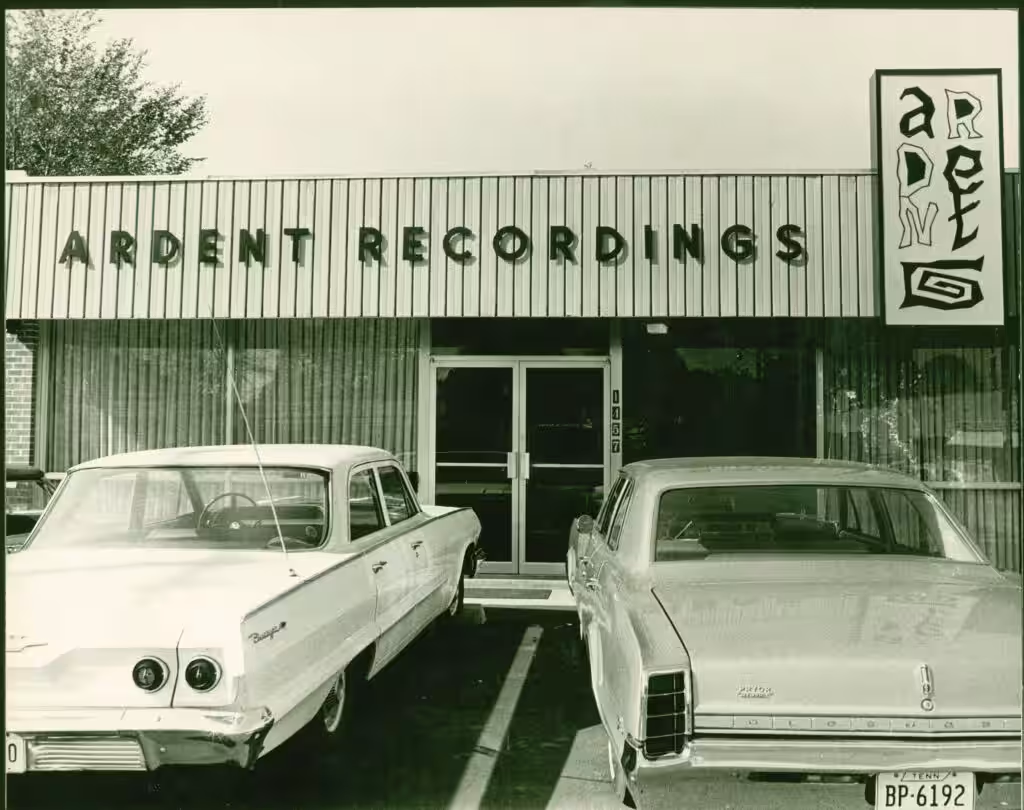
Producer Paul Ebersold was at the helm. Ebersold, who had previously worked with Sister Hazel, guided the band through the process of translating their raw demo energy into a full-length debut. He also served as a recording engineer alongside Matt Martone. The mixing was handled by Toby Wright — a name that should ring bells if you’re into heavy music, as Wright had mixed records for Alice in Chains, Korn, and Sevendust. Stephen Marcussen mastered the album at A&M Mastering Studios in Hollywood.
Here’s the thing that makes this album unique in 3 Doors Down’s catalogue: Brad Arnold played drums on the entire record in addition to singing. This is the only studio album where he did both. The dual role was a holdover from the band’s origins — he’d always been the drummer-vocalist — but it meant the recording process had a particular workflow. Arnold would lay down drum tracks and then record vocals separately, giving the performances a lived-in quality that came from the same person inhabiting both roles.
Crucially, not all the songs were written from scratch for this album. “Kryptonite,” “Loser,” and “Duck and Run” had already been recorded in their 1997 demo sessions and were re-recorded for the album. Arnold has spoken about the deliberate decision to keep certain songs close to their demo versions. As he explained in a 2021 interview: “Some songs like ‘Kryptonite,’ we strived to make it sound very much like the demo version because we got signed on the back of those demos thanks to our local radio stations in Mississippi from playing those songs, so the last thing we want to do is change it.”
Five tracks — “Duck and Run,” “Not Enough,” “Be Like That,” “Better Life,” and “So I Need You” — were reportedly recorded after the band had already signed with Universal, suggesting these were newer compositions written with the album specifically in mind. Additional keyboard parts on a few tracks were provided by session musician Kevin Paige, who added texture to “Loser,” “Duck and Run,” and “Be Like That.”
The digital editing was handled by Andrew Garver, and assistant mix engineer Mike Butler supported Toby Wright during the mixing sessions at The Record Plant in Los Angeles. The copyright date on the original release reads 1999, indicating the album was completed before the year was out, giving Universal a couple of months to prepare the February 2000 release.
Sonically, the band was aiming for something that balanced aggression with accessibility — crunchy guitars but singable melodies, dark lyrical themes but hooks that stuck. If you think of the post-grunge landscape of that era — Creed, Fuel, Matchbox Twenty, Vertical Horizon — 3 Doors Down occupied a space that was heavier than the soft-rock end but more melodic than the nu-metal bands dominating MTV. Wright’s mixing gave the record a punchy, radio-ready sheen, even if some critics later noted the production felt a bit compressed.
5. THE SONGS — TRACK BY TRACK
1. “Kryptonite” Written by Brad Arnold, Matt Roberts, and Todd Harrell. All lyrics by Arnold. This is the one. The song Arnold wrote during math class at age fifteen — reportedly the third or fourth song he’d ever written. The distinctive, skippy drum pattern originated from Arnold tapping on his desk. Musically, it’s in B minor with a tempo around 100 BPM in a double-time feel. The Superman metaphor — “If I go crazy, will you still call me Superman?” — isn’t just asking whether someone will be there when you’re down. Arnold has explained it’s also asking whether they’ll still be there when you’re doing well. A surprisingly nuanced question for a teenager’s algebra daydream. Released as the lead single in January 2000, it became one of the defining rock songs of the year.
2. “Loser” Written by Arnold, Roberts, and Harrell. A darker, heavier track that Arnold wrote about a friend who got caught up in drugs. He’s clarified that the title wasn’t him calling his friend a loser — it was how his friend viewed himself through the haze of addiction. The riff has a gnarly, Alice in Chains–adjacent quality to it, and the lyrics hit harder when you know the backstory. Released as the second single, it became an absolute monster on rock radio.
3. “Duck and Run” Written by Arnold, Roberts, Harrell, and Chris Henderson (Henderson’s first co-writing credit, reflecting his 1998 addition). One of the album’s heavier tracks, with a knotty guitar riff that gives way to a more accessible chorus. The song was featured on the soundtrack to the 2001 thriller The Hole. Released as the third single.
4. “Not Enough” Written by Arnold, Roberts, Harrell, and Henderson. One of the tracks recorded after the Universal signing. Kevin Paige contributes keyboards here, adding atmospheric depth. A mid-tempo number that deals with feelings of inadequacy and frustration — classic post-grunge territory, but delivered with conviction.
5. “Be Like That” Written by Arnold and Henderson. One of the album’s lighter, more acoustic-leaning tracks, and arguably the most pop-friendly moment on the record. Kevin Paige’s keyboard work is again present. The song explores the fantasy of living someone else’s life, of wanting things to be different. It was released as the fourth and final single, and notably re-recorded with alternate opening lyrics for the American Pie 2 soundtrack in 2001.
6. “Life of My Own” Written by Arnold and Harrell. (Listed as “Life on My Own” on the physical 20th Anniversary Edition.) A more introspective cut that doesn’t get the attention of the singles but holds its own as a deep cut. Fans who’ve lived with this album for years tend to cite it as an underrated moment.
7. “The Better Life” Written by Arnold, Roberts, Harrell, and Henderson. The title track, recorded after the signing with Universal. A straightforward rock track that encapsulates the album’s thematic core — the desire for something more, something better than your current circumstances. It’s aspirational without being saccharine, which sums up the band’s appeal pretty well.
8. “Down Poison” Written by Arnold, Roberts, and Henderson. One of the album’s harder-edged tracks, with a driving riff and Arnold at his most intense vocally. A deep cut that rewards repeat listens and tends to be a favourite among fans who prefer the heavier side of the band.
9. “By My Side” Written by Arnold, Roberts, and Harrell. A slower, more emotional track — not quite a ballad, but definitely the album’s most vulnerable moment. It benefits from Arnold’s ability to convey sincerity without tipping into melodrama.
10. “Smack” Written by Arnold, Roberts, and Henderson. At around two and a half minutes, the shortest track on the album, and one of its most aggressive. A quick burst of energy that functions almost as a palate cleanser before the closer.
11. “So I Need You” Written by Arnold, Roberts, Harrell, and Henderson. The album closer and another post-signing recording. A power ballad–leaning track that brings the record to an emotional conclusion. Arnold’s vocal on the title phrase has been noted by listeners over the years for its, shall we say, distinctive delivery.
The Best Buy edition of the album included bonus tracks recorded live at The Roxy Theater in Atlanta, Georgia, and at WMFS in Memphis, Tennessee, mixed by Brian Sperber and mastered by Tony Gillis at The Hit Factory in New York.
6. ALBUM ARTWORK & PACKAGING
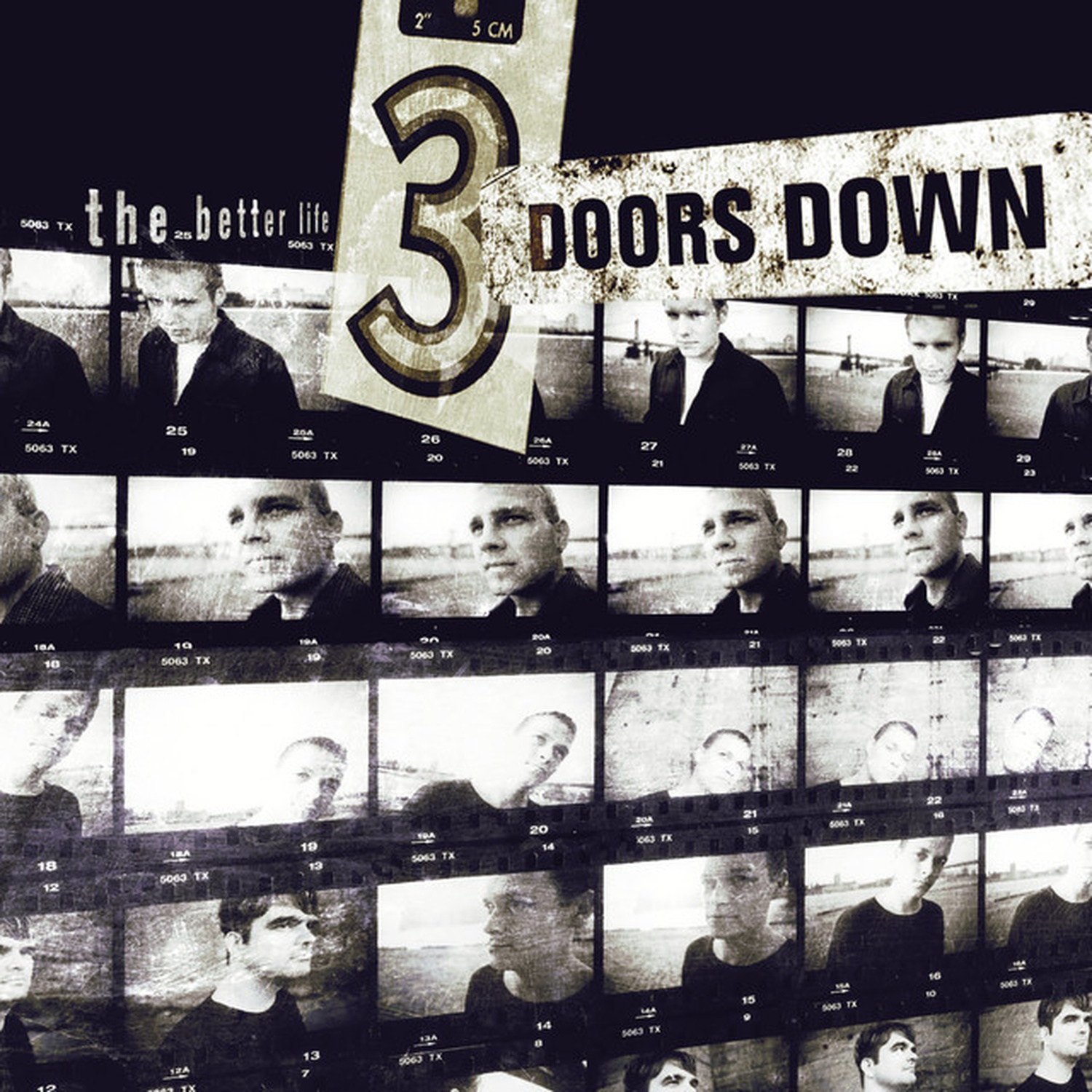
The art direction and design for The Better Life were handled by P.R. Brown at Bau-Da Design Lab, Inc. — a designer who has worked extensively in the music industry. Photography was by Andrew MacNaughtan, a Canadian rock photographer who shot artists ranging from Rush to Our Lady Peace.
The original cover features a moody, blue-toned image that evokes a sense of contemplation and longing — fitting for an album steeped in themes of yearning and self-doubt. The original CD was issued in a standard jewel case with a clear tray and an eight-page booklet containing liner notes and full lyrics.
For the 2009 remastered reissue (“The Even Better Life Ultimate Fan Pack”), new artwork was created. The 2020/2021 20th Anniversary Edition also received updated visual treatment. The 2007 Deluxe Edition, a two-disc set supervised by Bill Levenson, Phin Daly, and Tom Mackay, featured additional design work by Meire Murakami and live photography by Douglas Sonders.
7. RELEASE & RECEPTION
The Better Life was released on February 8, 2000, and its commercial trajectory was remarkable for a debut by an unknown band. It peaked at No. 7 on the Billboard 200 and finished the year as the 11th best-selling album in the United States, moving over four million copies during that first year alone. By the end of its commercial run, it had been certified 7× Platinum by the RIAA (as of February 2020), representing over seven million units in the US. It was later ranked as the 46th biggest-selling album of the entire 2000s decade.
Critical reception was more mixed. The AllMusic review acknowledged the band’s competence and confidence but found the songwriting “uninspired and clichéd,” drawing unflattering comparisons to a grab-bag of Pearl Jam and Goo Goo Dolls influences. That assessment, fair or not, became a recurring theme: critics saw the album as polished but generic post-grunge, while audiences heard songs that resonated with their lived experience. It’s a gap that has defined the band’s legacy — critically underrated, commercially massive.
On the strength of “Kryptonite,” the band won “Favourite Pop/Rock New Artist” at the 2001 American Music Awards and received a Grammy nomination for Best Rock Song. Billboard listed 3 Doors Down as the No. 30 act of the entire 2000–2010 decade. Over time, perception has softened somewhat. In 2025, Loudwire named The Better Life the best post-grunge release of 2000 — a meaningful nod from a publication that covers the genre closely.
8. SINGLES & MUSIC VIDEOS
“Kryptonite” (Released: January 2000) The lead single and the rocket fuel that launched everything. It peaked at No. 3 on the Billboard Hot 100 (the highest-charting rock single of 2000), spent nine weeks at No. 1 on Billboard’s Mainstream Rock Tracks chart, and an astonishing eleven weeks atop the Modern Rock Tracks chart — the most successful song on both rankings for the entire year. It also topped the Pop Airplay chart for five weeks. Internationally, it reached No. 6 in Canada, No. 7 in Australia, and No. 13 in New Zealand. The single has since been certified 8× Platinum by the RIAA. As of October 2024, it had surpassed one billion streams on Spotify.
The music video was directed by Dean Karr — known for his work with Marilyn Manson and Ozzy Osbourne — and filmed in March 2000. The concept follows an ageing former TV superhero from the 1950s, now living in a rundown apartment building. The band performs on the rooftop while the old man witnesses a domestic dispute, dons his hero costume, and dives through a skylight to save the day. Arnold initially had mixed feelings about the treatment but has acknowledged it was a key factor in breaking the band. The video went into heavy rotation on MTV.
“Loser” (Released: mid-2000) The second single peaked at No. 55 on the Hot 100, No. 2 on Modern Rock Tracks, and spent a staggering 21 weeks at No. 1 on the Mainstream Rock Tracks chart — which was, at the time, the longest run at the top in that chart’s history (dating back to 1981). It stayed on the Mainstream Rock chart for 53 total weeks. Certified Platinum by the RIAA in December 2024.
The music video was directed by Liz Friedlander and shot from August 7–9 in California. It features the band performing in a dimly lit high school setting — moody, atmospheric, and grounded in the same kind of small-town restlessness that fuels the lyrics.
“Duck and Run” (Released: late 2000/early 2001) The third single reached No. 11 on Modern Rock Tracks and No. 1 on Mainstream Rock Tracks for three weeks. It peaked at No. 10 on the Bubbling Under Hot 100 chart, narrowly missing the main Hot 100 listing. A music video was produced showing live performance footage that captured the energy of the band’s increasingly hectic touring life.
“Be Like That” (Released: 2001) The fourth and final single peaked at No. 24 on the Hot 100, No. 22 on Modern Rock Tracks, and No. 10 on Mainstream Rock Tracks. An alternate version with revised opening lyrics was re-recorded for the American Pie 2 soundtrack, introducing the song to an even wider audience. A second music video accompanied the American Pie 2 version.
9. TOURING & PROMOTION
With The Better Life blowing up, there was a logistical problem: their frontman was behind the drum kit. The band hired Richard Liles as a touring drummer so Arnold could step out front and command the stage. Liles served in this role from 2000 to 2002.
The band toured relentlessly throughout 2000 and 2001, graduating rapidly from small club dates to theatres to amphitheatres as each successive single pushed the album further. Arnold later reflected on the sheer intensity of that period: “It was like a different lifetime and we were all, well I’ll use the word ‘work’ loosely, but we did so much back then. We were just doing everything for the first time. I’d never been out of Mississippi much.”
The Best Buy edition bonus tracks confirm the band was playing notable venues like The Roxy Theater in Atlanta during this era, along with radio station sessions at WMFS in Memphis. The pace was relentless and, by Arnold’s own admission, sometimes dangerous. He’s spoken candidly about how volatile that period was.
Television appearances followed the album’s success, and the band’s visibility on MTV through their music videos was a significant driver of awareness. The 2001 American Music Awards appearance further cemented them as one of rock’s biggest new acts.
10. IN TV, FILM & MEDIA
Several tracks from The Better Life found their way into film and television:
“Duck and Run” was included on the soundtrack to the 2001 British thriller The Hole, starring Thora Birch and Keira Knightley.
“Be Like That” received a special re-recording with alternate opening lyrics for the American Pie 2 soundtrack in 2001 — a massive placement given the franchise’s commercial reach. This version is commonly referred to as the “American Pie 2 Edit.”
“Kryptonite” became ubiquitous in sports arenas and sporting event broadcasts throughout the 2000s, functioning as a de facto stadium anthem. The song’s broader cultural impact is hard to overstate — it became a reference point for an entire generation of rock listeners and continued to appear in various media contexts for years after release.
The band later contributed “Citizen/Soldier” (from their 2008 self-titled album) for a high-profile National Guard commercial campaign, and “Let Me Be Myself” appeared in a GEICO commercial — demonstrating that the media-sync pipeline opened by The Better Life‘s success continued to serve them well across their career.
11. FIVE THINGS YOU MIGHT NOT KNOW
1. “Kryptonite” was only the third or fourth song Arnold ever wrote — period. Not his third single, not his third album track. One of the first handful of songs he ever composed. He was fifteen, beating on a desk in math class, and he produced a track that has now been streamed over 1.2 billion times on Spotify. The desk-tapping rhythm became the foundation for the song’s distinctive drum pattern.
2. “Loser”‘s 21-week run at No. 1 on Mainstream Rock was largely invisible to the band. Arnold has admitted that at the time, they were still so focused on “Kryptonite” being the big song that “Loser” setting a historic record barely registered. He later realised it was the single that prevented 3 Doors Down from becoming a one-hit wonder, calling it “the deal-maker.”
3. The album was completed and copyrighted in 1999 — before the first single dropped. The copyright on the original pressing reads ℗©1999 Universal Records Inc. The album was finished and sitting in the can while the label strategised the rollout, releasing “Kryptonite” in January 2000 to build momentum ahead of the February album launch.
4. The first 1,000 demo CDs took two years to sell — then the next 1,000 sold in ten days. That dramatic acceleration happened once WCPR-FM started spinning “Kryptonite.” The contrast between those two numbers — 730 days versus 10 — is the story of the band’s rise compressed into a single data point.
5. Brad Arnold married his high school sweetheart in 2001, the same year the album was peaking. He wed Terika Roberts (no relation to bandmate Matt Roberts) as the whirlwind of fame was at its most intense. They later divorced in 2007, and Arnold remarried in 2009 to Jennifer Sanderford. Arnold later credited country legend Charlie Daniels with helping him through alcohol rehabilitation and a deepening of his Christian faith during those turbulent years.
12. LEGACY & WHAT CAME NEXT
The Better Life album cycle set a pace that 3 Doors Down maintained with impressive consistency. Their sophomore effort, Away from the Sun, arrived in November 2002, debuting at No. 8 on the Billboard 200 and eventually going 4× Platinum (later updated to 5× Platinum). That album produced “When I’m Gone” and “Here Without You” — two more huge singles that proved The Better Life was no fluke. Canadian drummer Daniel Adair joined for the touring cycle after Richard Liles departed (Adair would later join Nickelback). Session drummer Josh Freese played on the studio recordings.
From there, the band scaled even higher on the charts: Seventeen Days (2005) and their self-titled fourth album (2008) both debuted at No. 1 on the Billboard 200. Time of My Life (2011) peaked at No. 3. Us and the Night (2016) reached No. 14. In total, the band sold over 20 million albums worldwide.
But the band’s journey was not without darkness. Co-founder Matt Roberts departed in 2012 due to health issues and died of a prescription drug overdose in 2016. He was 38. Bass player Todd Harrell faced multiple legal issues, including a vehicular homicide conviction in 2013. Arnold remained the sole original member still performing with the group, the constant through every lineup change and every challenge.
In 2003, inspired by the album that started it all, the band launched The Better Life Foundation — a charity dedicated to improving the lives of children and young people in their home region. They’ve held annual benefit concerts for years, with guest performers including Lynyrd Skynyrd and Tracy Lawrence, and expanded their scope to help Gulf Coast communities in the aftermath of Hurricane Katrina.
The story of The Better Life took on a new poignancy in 2025 when Brad Arnold announced a diagnosis of Stage 4 clear cell renal cell carcinoma — kidney cancer that had metastasized to his lungs. The band cancelled their summer tour. Arnold faced the diagnosis publicly with characteristic directness and faith. On February 7, 2026 — almost exactly twenty-six years after The Better Life was released — Brad Arnold passed away peacefully at age 47, with his wife Jennifer by his side.
The tributes poured in from across the rock world. Creed, Daughtry, Black Stone Cherry, and countless others shared their grief. Republic Records co-founders Monte and Avery Lipman wrote: “The impact Brad Arnold and 3 Doors Down had on us is immeasurable.”
It’s a statement that extends well beyond the business side of music. The Better Life was the sound of a kid from small-town Mississippi writing about real feelings — doubt, loyalty, frustration, hope — and discovering that millions of people felt exactly the same way. It wasn’t the most critically adored rock album of its era. It didn’t reinvent any wheels. But it connected. Deeply, widely, and for a very long time.
That song written on a school desk during algebra class has now been streamed over a billion times. The album it anchored helped define what mainstream rock sounded like at the turn of the millennium, positioning 3 Doors Down alongside Nickelback, Creed, and Staind as the pillars of early-2000s post-grunge. Whether you consider that a compliment or not probably says more about you than it does about the music.
About the Author