Introduction
In the late 1980s, the hard rock scene was dominated by big hair, flashy guitar solos, and flamboyant frontmen. Amidst this glam metal explosion, a band of four young musicians from Boston emerged with something a little different up their sleeve. They called themselves Extreme, and in March 1989 they released their self-titled debut album, Extreme. While the band would later become world-famous for the acoustic ballad “More Than Words” in 1991, their debut album showcases the raw funk-metal firepower and playful swagger that first put Extreme on the map.
This comprehensive deep dive will explore the story behind Extreme’s debut album – from the band’s formation and inspirations, to the making of the record, its artwork, how it was received, and the aftermath. We’ll uncover anecdotes from the era, compare Extreme with their rock contemporaries, and highlight some facts even die-hard fans might not know. So, turn up your volume and let’s step back to 1989, when Gary Cherone, Nuno Bettencourt, Pat Badger, and Paul Geary were four hungry musicians ready to take on the world with Extreme.
Quick Facts: Extreme (Debut Album at a Glance)
| Album Title | Extreme (self-titled debut) |
| Band | Extreme (Gary Cherone – vocals; Nuno Bettencourt – guitar; Pat Badger – bass; Paul Geary – drums) |
| Release Date | March 14, 1989 |
| Recorded | Late 1988 (various studios, produced during winter 1988) |
| Label | A&M Records |
| Producer | Reinhold “Mack” Mack (with Extreme) |
| Genres | Glam Metal, Funk Metal, Hard Rock |
| Length | 45:00 (11 tracks) |
| Billboard 200 Peak | #80 (United States) |
| Notable Singles | “Kid Ego”, “Little Girls”, “Mutha (Don’t Wanna Go to School Today)”, “Play With Me” |
| Key Themes | Youth and growing up, adolescent adventures, tongue-in-cheek humor |
| Chart/Sales | ~300,000 copies sold (US); “Kid Ego” reached #38 on Mainstream Rock chart |
| Pop Culture | “Play With Me” featured in Bill & Ted’s Excellent Adventure (1989) and Stranger Things (2022) |
Extreme’s Discography: Where the Debut Fits In
Extreme’s debut album is the first chapter in a discography that would span decades. Here’s a quick look at their major releases and how the Extreme album fits into their career:
- 1989 – Extreme: The debut that started it all. A solid introduction to the band’s blend of funky hard rock and flashy glam metal. Though not a multiplatinum blockbuster, it laid the groundwork for their style and future success.
- 1990 – Extreme II: Pornograffitti: The breakthrough album. This is the record that catapulted Extreme to international fame, thanks largely to the #1 hit ballad “More Than Words” and the funk-rock anthem “Get the Funk Out.” Pornograffitti showed the full flower of Extreme’s musical prowess, mixing heavy metal, funk, pop, and acoustic styles.
- 1992 – III Sides to Every Story: A creatively ambitious third album that expanded Extreme’s sound further. It combined hard rock with Queen-influenced orchestration and conceptual songwriting. While not as commercially huge as its predecessor, it was a critical success and showcased the band’s depth.
- 1995 – Waiting for the Punchline: The fourth album, released as the glam/hair metal era had given way to grunge. It had a rawer, stripped-down sound and was the last album before the band’s mid-90s breakup.
- 2008 – Saudades de Rock: After a long hiatus (and various side projects, including singer Gary Cherone’s brief tenure as Van Halen’s frontman in the late ’90s), Extreme reunited and released this album. It rekindled their classic style for longtime fans.
- 2023 – Six: Their most recent album (aptly titled Six for their sixth studio release) proves that Extreme continues to create new music decades on, with the same spirit and virtuosity that made them stand out in the first place.
As the very first album, Extreme (1989) stands as the band’s foundation. It’s the album where fans were introduced to the fiery guitar heroics of Nuno Bettencourt and the dynamic vocals of Gary Cherone. In the context of Extreme’s catalog, the debut might seem modest next to the double-platinum success of Pornograffitti, but it’s an essential piece of the puzzle – the first step in Extreme’s journey from local Boston heroes to international rock stars.
The Road to the Debut: From Boston Bars to a Record Deal
Every album has a backstory, and Extreme is no exception. The journey to this debut record is a tale of four Massachusetts musicians and a fateful meeting (and melee) that brought them together:
Early Days and Formation: The roots of Extreme go back to the mid-1980s Boston rock scene. Vocalist Gary Cherone and drummer Paul Geary had been playing together since their teens – they formed a band called The Dream in 1980 (originally “Adrenalin” in 1979). On the other side of town, guitar whiz Nuno Bettencourt was cutting his teeth in a local metal outfit named Sinful, and bassist Pat Badger was part of a Berklee College-based band called In The Pink. Each member-to-be was chasing the rock ’n’ roll dream in different groups, playing the city’s clubs and trying to stand out in a crowded scene.
According to band lore, the four crossed paths on the local circuit many times – and one encounter in 1985 was especially explosive. As the story goes, all four ended up sharing a cramped backstage area at a Boston club after separate sets. Tensions between the rival bands ran high, egos clashed, and a backstage brawl broke out! It might have been a dust-up at the time, but in hindsight it was the catalyst for something special. After cooler heads prevailed, Gary, Paul, Nuno, and Pat started talking and realized their musical chemistry and ambitions aligned. They decided to ditch their old projects and join forces. Extreme was born out of that unlikely meeting – proof that sometimes great band chemistry starts with a punch or two thrown!
What’s in a Name? The newly formed band chose the name “Extreme” as a clever play on words. Gary Cherone and Paul Geary’s previous band had been called The Dream; since they were now ex-Dream members, “Extreme” was a fitting pun (and let’s face it, a cool name for a hard rock band in the ’80s). With the lineup solidified – Gary on lead vocals, Nuno on guitar, Pat on bass, and Paul on drums – Extreme began writing songs and honing their act.
Influences and Local Buzz: Extreme’s musical influences helped shape the sound of their debut. All four members grew up on ’70s rock giants and had eclectic tastes. They idolized hard rock legends like Led Zeppelin, Aerosmith, Queen, Deep Purple, and Van Halen, as well as art-rock and funk. You can hear these inspirations in Extreme’s music: the theatrical harmonies of Queen, the funky grooves and swagger of Aerosmith, and the flashy guitar virtuosity of Van Halen (Nuno’s hero was Eddie Van Halen, and it showed in his finger-tapping solos). In fact, the local press would often compare Gary Cherone and Nuno Bettencourt to David Lee Roth and Eddie Van Halen – Boston’s answer to Van Halen’s iconic singer-guitarist duo. Gary had the extroverted, energetic frontman persona, and Nuno was the young guitar wizard with jaw-dropping skills, much like Eddie was a decade earlier.
Through 1985 to 1988, Extreme gigged relentlessly around New England. They became a fixture at well-known Boston rock clubs like The Channel, Bunratty’s, and T.T. the Bear’s, often packing these venues with a growing fanbase. In 1986 and 1987 they even took home the award for “Outstanding Hard Rock/Heavy Metal Act” at the Boston Music Awards – a testament to their local popularity. By 1987, record labels had taken notice of the buzz surrounding Extreme. The combination of Gary’s powerful voice and showmanship and Nuno’s fiery guitar pyrotechnics made them a hot commodity on the East Coast scene. Their huge hooks (and equally huge hair) fit right in with the glam metal era’s aesthetics, drawing comparisons to chart-topping contemporaries like Mötley Crüe, Poison, Ratt, and Dokken. But Extreme also had a funky, soulful undercurrent to their sound that set them apart. In a time when many glam bands were sticking to a formula, Extreme’s willingness to inject funk grooves and multi-part vocal harmonies gave them a unique edge – more on that later.
Signing with A&M Records: In 1988, after a few years of paying dues in clubs and writing a catalog of original songs, Extreme scored a major record deal. Bryan Huttenhower, an A&R director at A&M Records, saw the band’s potential and signed them. It was a big break: A&M was a major label (home to artists like Sting and Soundgarden at the time), which meant proper tour support and distribution for the band’s music. The timing was perfect – they signed just as the 80s hair metal wave was cresting, giving Extreme a chance to ride it upward.
With a record deal in hand, Extreme immediately set out to record their first album. The label paired the band with a veteran rock producer/engineer, Reinhold “Mack” Mack, to produce the debut. Mack was an intriguing choice: a German producer best known for his work at Musicland Studios in Munich with the likes of the Scorpions, The Rolling Stones, and – most impressively to Extreme – the legendary Queen. (Mack co-produced Queen’s 1980 album The Game, even earning a Grammy nomination for it.) For these young musicians who counted Queen among their idols, having “Mack” behind the console was exciting and maybe a bit intimidating. But it turned out to be a match made in heaven, as Mack understood how to capture both the bombast and the polish in Extreme’s sound.
In the Studio: Creating the Debut Album
Extreme’s self-titled album was recorded in the winter of 1988, as the band – bursting with energy – hit the studio for the first time. Under Mack’s guidance, they aimed to craft a record that would introduce them to the world and stand out in a crowded field of late-80s rock releases.
Songwriting and Themes: By the time they entered the studio, Gary Cherone and Nuno Bettencourt had already developed a fruitful songwriting partnership. The songs on Extreme were almost all co-written by the duo (with a few contributions from former bandmates on one song). Interestingly, many of the tracks on the debut revolve around a common theme: youth and growing up. Whether by coincidence or design, several of the singles and key songs touch on aspects of adolescence, coming of age, and the mischievous spirit of youth. For example:
- “Little Girls” – despite its provocative title, it’s a song addressing the experiences of young women (and perhaps the perspective of young men towards them) in a tongue-in-cheek way.
- “Kid Ego” – as the name implies, a swaggering track about a brash young guy whose confidence outweighs his experience.
- “Mutha (Don’t Wanna Go to School Today)” – a playful hard rock anthem channeling that universal teen sentiment of wanting to skip school and have fun.
- “Play With Me” – an absolutely frenetic song about indulging in childish play and games, cranked up to 100 mph.
This youthful thread running through the album gave it a kind of concept unity (even if loosely). Gary Cherone’s lyrics often didn’t take themselves too seriously – he’d throw in humor and innuendo, keeping with rock tradition but also winking at the listener. Some critics at the time knocked Extreme for being lyrically sophomoric or drenched in sexual innuendo (which was par for the course in glam metal). But in truth, Gary delivered a lot of lines with a tongue-in-cheek attitude. The band wasn’t aiming to be poetic sages; they wanted to rock hard and have fun, and the lyrics reflected that. Tracks like the cheeky “Wind Me Up” or the lusty teacher-crush fantasy “Teacher’s Pet” made it clear the band wasn’t above some naughty humor – yet there was a sense that they were in on the joke, not oblivious to the campiness. This self-awareness set Extreme apart from some of their peers who played it painfully straight.
Recording and Sound: Under Mack’s production, the sound of Extreme is crisp and energetic. Mack had worked with Queen, so he knew how to layer vocals and make guitars pop – techniques that served Extreme well. On songs like “Watching, Waiting” and “Rock a Bye Bye,” you can hear richer arrangements with multi-tracked vocals, harmonies, and even strings and piano, hinting at Extreme’s broader musical ambitions beyond party-rock fare. In fact, “Rock a Bye Bye” is almost a mini-epic, closing out side two of the album with a dramatic flair (Brian May-esque guitar harmonies and lush vocals galore). The guys in Extreme were eager to show they could wow you with technical skill while still delivering catchy rock songs. Mack helped them strike that balance – capturing Nuno’s guitar wizardry and the tight rhythm section, but also allowing for creative touches.
Guitarist Nuno Bettencourt in particular shines all over this album. Though he was only about 22 when recording Extreme, Nuno was already a formidable player with a distinctive style. On the debut, he admittedly wears some of his influences on his sleeve – you’ll hear a lot of flashy finger-tapping solos and dive-bombing whammy bar tricks reminiscent of Eddie Van Halen. (At times it’s almost like Nuno is saying, “Hey world, here’s what I can do!”) But even within the Van Halen-esque framework, there were hints of Nuno’s unique flair that would blossom later: funky syncopated riffs, rapid-fire picking with classical flourishes, and an impeccable sense of melody in his leads. The intro of “Mutha (Don’t Wanna Go to School Today)” is one standout moment – Nuno erupts with a burst of Hendrix-like feedback and pyrotechnics to kick the song off, surely grabbing any guitar aficionado’s attention within seconds. Throughout the album, from the grooving riff of “Little Girls” to the breakneck shred of “Play With Me,” Nuno Bettencourt announced himself as a new guitar hero on the scene.
A Touch of Funk and Harmonies: While Extreme is often labeled a glam metal record (and indeed it has all the hallmarks: big hooks, big choruses, and some big hair in the band photo), there’s more to it. The band’s love of funk and classic rock sneaks into the music. There are moments of funky rhythm guitar tucked into tracks like “Flesh ‘n’ Blood” and “Little Girls.” Pat Badger’s bass lines aren’t shy to groove, and Paul Geary’s drums have a swing that’s closer to Aerosmith’s Joey Kramer at times than, say, the straight 4/4 of AC/DC. Also notable are the vocal harmonies – Gary and Nuno often sing together or layer backing vocals, something they’d develop further on later albums (most famously on “More Than Words”). Here you get a taste of it: the chorus of “Watching, Waiting” has a sweet, melodic blend, and “Rock a Bye Bye” feels almost Queen-like with its stacked choir of voices. These elements made Extreme’s sound a bit richer than the average pop-metal debut in 1989.
All in all, recording Extreme was about capturing the band’s confident youthful energy on tape. And by all accounts, they delivered an accomplished hard rock album that showed a band brimming with self-assurance and skill. If the production has a glossy 80s sheen (Mack made sure it would sound good on the radio next to Def Leppard or Bon Jovi), the heart of the record is still the band’s raw talent and chemistry that had been forged in those sweaty Boston club shows.
Album Artwork: Big Hair and Bold Designs
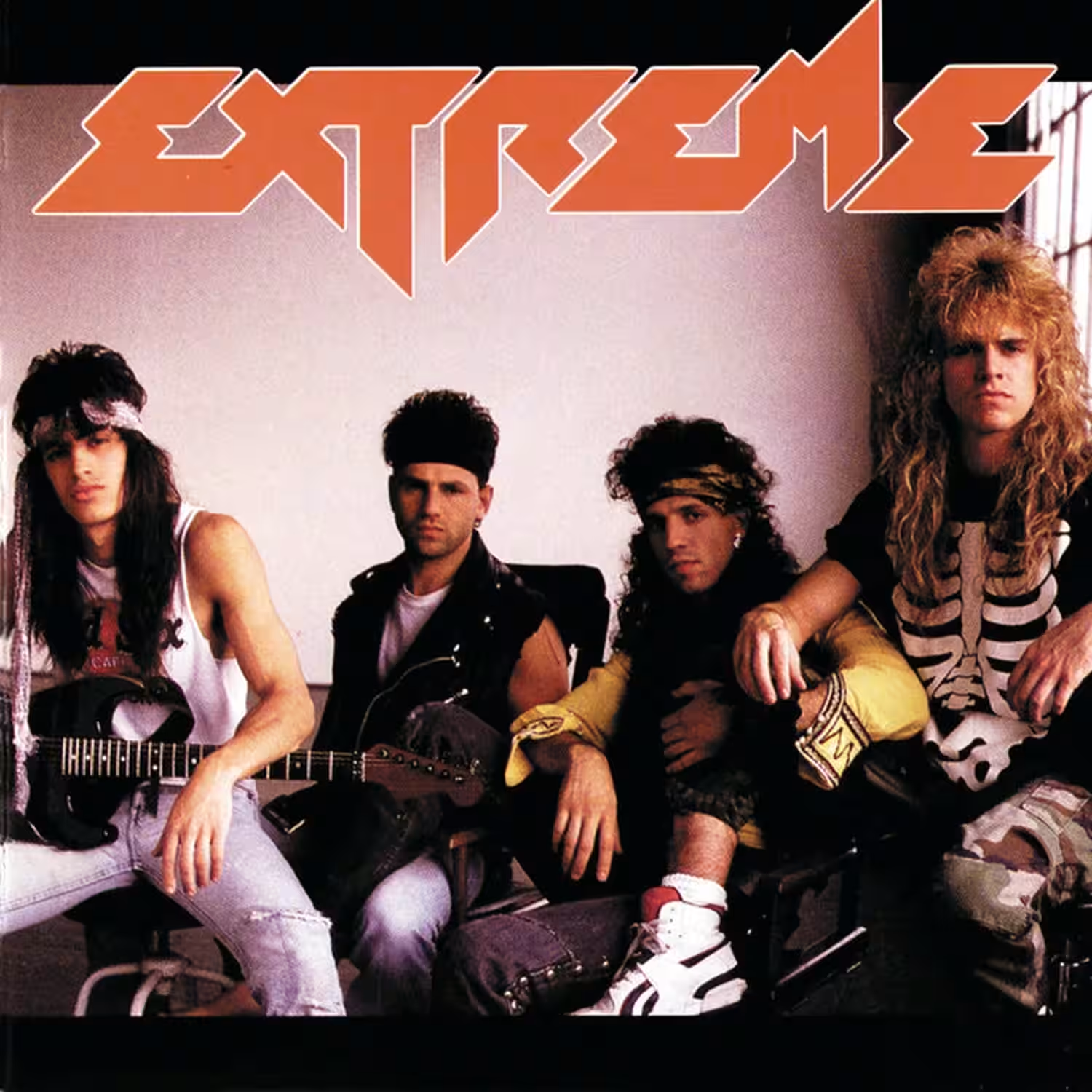
Take one look at the Extreme album cover and you know exactly what era this is from. The cover features the four band members front and center, exuding late-80s rock attitude. They’re posed like a gang of glam-metal bad boys: leather jackets, bandanas, ripped jeans, and plenty of Aqua Net hairspray holding those voluminous locks in place. Each member’s expression says “We’re young, we’re cool, and we’re ready to rock your world.” It’s the kind of photo that could easily have been on a poster in a teenager’s bedroom in 1989, fitting right in with the images of Mötley Crüe or Skid Row.
Across the top of the cover, in bold red lettering, is the band’s logo – EXTREME – stylized with a sharp, geometric font. Interestingly, this logo was actually created by members of the band themselves. Both Gary Cherone and Paul Geary are credited with the design and concept of the album’s artwork and logo. That’s a fun bit of trivia: even before they made it big, Extreme had a hands-on approach to their presentation, literally crafting their own brand image. Gary, being the lyricist and a creative mind, collaborated with Paul (the drummer, who also had an artistic side) to come up with the logo’s look. The result is a logo that became instantly recognizable to fans – a sort of graffiti-meets-metal aesthetic with the first and last letters elongated. That logo would grace their stage banners and merchandise for years.
The background of the album cover is relatively simple – it might be set in a gritty alley or industrial setting (it’s a bit dark around the edges of the photo), which helps the band members stand out in the foreground. The overall vibe is streetwise rockers ready for action. There’s a youthful defiance in how they carry themselves on the cover, which perfectly matches the music inside.
Inside the album sleeve (for those who had it on vinyl or CD with liner notes), listeners would find photos of the band performing, lyrics to the songs, and credits. Flipping through those, fans might have noticed a whimsical credit: “The Lollipop Kids” are listed as providing backing vocals on a couple of tracks (“Mutha” and “Play With Me”). Who were the Lollipop Kids? In reality, it was just a nickname for a handful of people (possibly some actual kids or friends) who came into the studio to sing the childlike chants in those songs’ choruses. It was one more playful touch that tied into the youthful theme of the album, even embedded in the credits.
In summary, the album artwork for Extreme was on-brand for 1989 – flashy and fun – but also showed that the band had a vision for themselves. They wanted you to see four distinct personalities unified under that bold logo. It’s the kind of album cover that practically screams “Debut album by a hungry new rock band – play this loud!”
Release and Initial Reception (1989)
Extreme hit record store shelves on March 14, 1989. For Extreme, this was the moment of truth: would the wider rock audience embrace their music? How would critics respond? The initial reception was mixed but promising – the album didn’t turn the band into overnight superstars, but it made a solid splash in the hard rock world.
Chart Performance and Sales: The album entered the Billboard 200 and peaked at #80 – a respectable showing for a debut release by a then-unknown band. It sold approximately 300,000 copies in the U.S., which, while not multi-platinum, was a decent number for a first outing. It showed that there was genuine interest in Extreme, especially among rock and metal fans who were always on the lookout for hot new talent. Those sales were enough to convince A&M Records that Extreme had potential for growth (indeed, the label green-lit a follow-up album, which would pay off big time a year later).
One factor that helped boost the album’s visibility was the inclusion of the song “Play With Me” on the soundtrack of a popular movie that came out in early 1989: Bill & Ted’s Excellent Adventure. The zany time-travel comedy featured a memorable mall chase scene set to the hyperactive shred of “Play With Me.” This meant a lot of teenagers heard Extreme’s music while watching Bill and Ted cause chaos. That exposure was valuable – even if viewers didn’t know who the band was at first, the song lodged in their minds. Some might have checked out the soundtrack or the album just to find that “song from Bill & Ted.” In an era when placement in a movie or TV could significantly boost a song (think of how Top Gun made Berlin’s “Take My Breath Away” a hit, etc.), having “Play With Me” in Bill & Ted gave Extreme a nice little boost in awareness.
Critical Reception: Reviews for Extreme in 1989 were somewhat mixed, though generally positive about the band’s talent. Many critics recognized that Extreme were musically a cut above the average glam metal newcomers, but some felt the album was uneven or that the band was still finding its unique voice.
- AllMusic (later on) would retrospectively give the album around 3 out of 5 stars, commenting that Extreme’s first effort showed them “struggling to shed their influences, particularly Van Halen, and develop a style of their own; consequently, it’s wildly uneven, but guitarist Nuno Bettencourt is always worth hearing.” That pretty much captures the dual nature of the reception: on one hand, yes, Extreme the album wears its influences openly (Van Halen-esque flourishes, some Def Leppard-style gang vocals, etc.), but on the other hand, even skeptics had to admit that Nuno’s guitar work was dazzling and worth the price of admission.
- Rolling Stone magazine, which at the time was giving a lot of the glam/hair bands lukewarm coverage, actually gave Extreme’s debut a decent nod. Reviewer Kim Neely rated it 3 out of 5 stars and called it “an extremely good listen.” Not exactly a rave, but not a pan, either – Rolling Stone recognized that Extreme had strong musicianship and a sense of fun that made the album enjoyable.
- Some rock magazines and fanzines praised Extreme’s musical chops. They noted songs like “Watching, Waiting” and “Rock a Bye Bye” as evidence that this band had more to offer than just party anthems. Those tracks, with their more serious tone and complex arrangements, hinted that Extreme could mature beyond the clichés of the genre.
- On the flip side, a few critics found the album lyrically or thematically immature (there’s that word “immature” that dogged them in some reviews). The cheeky sexual innuendos in “Little Girls” or “Teacher’s Pet” didn’t impress critics who were looking for depth. One later commentator even referred to the debut as “rote glam metal.” But fans of the genre would argue that Extreme executed fun glam metal extremely well, and that was the point.
Fan Reception: Among heavy metal and hard rock fans, Extreme garnered a small but enthusiastic following. The band’s videos and singles got moderate airplay on MTV’s Headbangers Ball, which was the prime avenue for reaching rock/metal youth at the time. Songs like “Kid Ego,” “Little Girls,” and “Mutha (Don’t Wanna Go to School Today)” all had music videos that were shown on Headbangers Ball in 1989, giving the band exposure to the late-night headbanger crowd. Fans who discovered Extreme often did so because of Nuno Bettencourt’s growing reputation – word started circulating in guitar magazines and on the street that “you gotta hear this guitarist in Extreme, he’s the next big thing.” Sure enough, Nuno’s solos and flashy technique drew comparisons to the greats, and guitar-centric fans paid attention.
In summary, when Extreme was released, it didn’t top the charts or earn unanimous critical acclaim, but it successfully put Extreme on the radar. It performed well enough to avoid being a flop, and it established a foothold for the band to build on. Extreme was now in the conversation alongside other up-and-coming rock acts of the era. The modest success of the debut set the stage for the band to really swing for the fences on their next album – and swing they did, but that’s a story for later.
Supporting the Album: Tours, Tours, and More Tours
How does a new rock band support their debut album in 1989? By touring their butts off, that’s how! Extreme hit the road vigorously to promote the Extreme album, and they were non-stop road warriors throughout 1989. This constant gigging not only helped album sales inch upward, but it also sharpened the band’s live performance to a razor edge and expanded their fanbase one city at a time.
Club Circuit to Bigger Stages: Right after the album’s release in spring 1989, Extreme set out on a U.S. tour that took them to clubs, theaters, and any venue that would have them. They crisscrossed the country playing their own headlining club shows – imagine sweaty, packed rock clubs with maybe a few hundred people, where Extreme would unleash tracks like “Kid Ego” and “Mutha” with ferocious energy. These gigs were high-octane; Gary Cherone was (and still is) an incredible live wire on stage, leaping and kicking, working the crowd, while Nuno’s fingers flew on the fretboard, leaving audiences in awe. Songs from the album lent themselves well to a live setting – they were full of shout-along choruses and flashy instrumental breaks that could get a crowd going.
Extreme’s showmanship began to draw larger crowds, and soon they found themselves opening for bigger acts as well. In fact, by late 1989, Extreme had opportunities to play support on some major tours. One particularly cool hometown connection: Extreme scored some opening slots for Aerosmith’s “Pump” tour. Aerosmith, Boston’s most famous rock export, was touring their hit Pump album, and Extreme got to warm up the stage for them at certain shows. For a young Boston band, opening for Aerosmith was like a dream – not only did it put them in front of arena-sized audiences, but it was a nod of approval from the local rock gods. (Aerosmith’s Steven Tyler and Joe Perry had to appreciate Extreme’s talent; after all, Aerosmith themselves blend funkiness and hard rock, something Extreme was carrying forward.)
Additionally, Extreme performed at some festival-type events and multi-band bills. Notably, in October 1989, they made their Japanese live debut, playing a few shows in Japan. To the band’s delight, their music was very well received there – Japan has a long history of embracing high-energy rock and virtuoso guitar players, so Extreme’s style found an instant audience. Those Japanese shows reportedly had rabid fans and even led A&M Japan to release some exclusive Extreme material (like a Japan-only EP called Extrakraft in 1990). Extreme would nurture that Japanese fanbase, as it would remain strong for years to come.
Media and Promotion: Besides touring, Extreme did the usual promotional rounds – interviews on rock radio stations, features in magazines like Metal Edge, Hit Parader, and Circus (all the big hard rock mags of the day). They also made some TV appearances. While they weren’t mainstream enough yet for something like The Tonight Show, they did perform on a few regional TV programs or recorded live concerts for broadcast. One milestone event prior to the album’s release: in December 1988, Extreme appeared in the WBCN “Rock of Boston” concert at the Boston Garden (a big annual showcase of local and national acts put on by the city’s top rock radio station). Sharing the stage with other Boston-area favorites and some national names gave Extreme a taste of a large venue (the Boston Garden) before they even had a record out – a confidence booster for sure.
Throughout the 1989 tour run, Extreme’s setlist naturally leaned heavily on the Extreme album songs, but they also threw in a few surprises. They had some songs that didn’t make the album (maybe early versions or B-sides), and they likely played a cover or two for fun. (Extreme has long been known to bust out interesting covers – everything from Queen medleys to Zeppelin – but in ’89 they may have kept it to their own material to establish themselves.)
The relentless touring paid dividends: by the end of 1989, Extreme had significantly grown their fan following. They were gaining notoriety as a must-see live act, with one concert reviewer dubbing them “the band to watch” due to their high-voltage performances and Nuno’s increasingly talked-about guitar solo spots.
International Footprint: We mentioned Japan, but it’s also worth noting that Extreme’s music was finding audiences overseas in places like the U.K. and Australia. The album had been released internationally through PolyGram (which had bought A&M). For instance, “Kid Ego” got some airplay on UK rock radio, and Kerrang! magazine (the UK’s premier metal mag) gave the album some coverage. Extreme wasn’t a worldwide name yet, but seeds were planted in various countries through touring and press.
By the time they wrapped up touring for the debut (heading into early 1990), Extreme was a well-oiled machine live, and they had the momentum needed to head back into the studio for album number two. In a sense, the Extreme album cycle – modestly successful though it was – built the infrastructure for their explosion in 1990-1991. They had loyal fans waiting for the next record, they had impressed other big artists, and they had learned the ropes of the rock ’n’ roll highway.
Singles and Songs: The Highlights of Extreme
Extreme’s debut album had four main singles, each showcasing a different side of the band’s personality. Let’s break down these songs (and a couple of notable album tracks) to see what made them tick:
1. “Kid Ego” – This was actually the band’s first single and one of the first tracks many listeners heard from Extreme. “Kid Ego” is a brash hard rock tune with a chugging riff and a cocky attitude – essentially, an anthem about being young, confident, and maybe a little too full of yourself. In the song, Gary Cherone belts out lyrics that poke fun at a self-centered “kid” who thinks he’s the king of the world. It’s easy to imagine Gary drawing on experiences from the club days, or even poking at himself and Nuno as kids on the scene with big ambitions. The chorus has a great hook (“He’s got a kid ego!”) that made it a singalong favorite at concerts. On MTV, the “Kid Ego” video introduced Extreme as a bunch of lively, leather-clad rockers playing in what looks like a warehouse, with Gary strutting and Nuno spinning out a wild solo. The song achieved a bit of chart success: it hit #38 on Billboard’s Mainstream Rock chart, meaning rock radio picked it up in rotation. Interestingly, in later years Gary Cherone confessed that “Kid Ego” made him cringe a bit – perhaps feeling the lyrics were a bit juvenile or that it was very much a song of its time. Regardless of his later feelings, “Kid Ego” did its job in 1989, announcing Extreme to radio listeners as a fun new band with attitude.
2. “Little Girls” – Released as a single in mid-1989, “Little Girls” is a riff-heavy song with a mischievous vibe. The title might raise eyebrows – and indeed some people misunderstood it – but the song is not literally about little girls in a creepy sense. It’s more about the youthful games in relationships and a young man’s perspective on the girls he encounters. Musically, “Little Girls” has a bouncy hard-rock groove. Nuno lays down a funky riff in the verses that almost has a Aerosmith-meets-Van Halen feel, while the chorus opens up into a catchy chant (“Little girls, they make you feel alright!”). The music video for “Little Girls” leaned into a playful interpretation: it featured the band playing in a colorful, cartoonish set and intercut with video vignettes of schoolgirls causing trouble for their teachers – reinforcing the notion it’s about teen hijinks. On Headbangers Ball, this video got a decent amount of spins, further building Extreme’s image as cheeky rockers. While “Little Girls” didn’t chart as high as “Kid Ego,” it kept the momentum going and remains a fan favorite for its funky feel. It also features one of Nuno’s tastiest solos on the album – a short but blistering guitar lead that made young guitarists everywhere sit up and take notes.
3. “Mutha (Don’t Wanna Go to School Today)” – Often just referred to as “Mutha,” this track might be the most outright “glam metal” sounding single of the bunch, with a shout-along chorus that could have been on a Twisted Sister album (think “We’re Not Gonna Take It,” but about ditching school). Released towards the end of 1989 as a single, “Mutha” encapsulates that teenage rebellion fantasy: begging mom to let you stay home from school so you can rock out and have fun. The song opens, as mentioned earlier, with Nuno’s guitar fireworks (a dive-bomb and harmonic squeals that grab attention), before settling into a grooving verse. The chorus is pure hook: “Mutha, don’t wanna go to school today, I think I’d rather go outside and play!” – delivered with a gang vocal (likely with the help of those so-called Lollipop Kids chanting along). It’s silly, it’s anthemic, and it’s the kind of thing that made it perfect for MTV’s late-night rock block. The music video showed the band clowning around – including scenes of them in a classroom setting causing chaos, as well as performing live. Perhaps the most memorable part of the song (aside from the earworm chorus) is the breakdown, where Gary does a speak-sing bit in the persona of a nagging mother, and the band responds. It was all done tongue-in-cheek, showing Extreme didn’t mind a bit of comedic theater in their music. “Mutha” got moderate airplay and is one of those tracks that really captures the late-80s rock spirit – rebellious but in good humor.
4. “Play With Me” – Now this one is special. “Play With Me” was technically one of the first songs from the album to get exposure (being featured in Bill & Ted), but it was released as a single later on. It’s the final track on the album and serves as the grand finale of Extreme’s debut – and what a finale it is! “Play With Me” is a fast-paced, shredding tour-de-force. The song is all about the joy of play – referencing toys, games, and childhood fun – but it’s delivered at breakneck speed. Nuno Bettencourt really lets loose here, packing the song with rapid-fire guitar riffs and solos that border on insanity. In fact, “Play With Me” includes snippets of classical melodies amidst the rock chaos. If you listen closely, Nuno weaves in a bit of Mozart’s “Rondo Alla Turca” (the famous Turkish March) during one of the guitar breaks, and even a touch of Vivaldi’s The Four Seasons. It’s like he threw down a gauntlet saying, “I can rock out and quote Mozart in the same breath.” These classical-inspired licks fly by so fast you might miss them, but they added to Nuno’s growing legend among guitar fans. Lyrically, the song name-checks everything from Little Bo Peep to nursery rhymes, all to celebrate the idea of not wanting to grow up too fast – very fitting as the coda to an album obsessed with youth. Thanks to its placement in Bill & Ted’s Excellent Adventure (during the mall chase scene where historical figures run amok – Beethoven playing keyboards wildly as “Play With Me” blares, a perfect cinematic marriage), the song gained cult status. Years later it even popped up in popular culture again, featured in an episode of Stranger Things (Season 4) to evoke that ’80s vibe, and as a playable track in the video game Guitar Hero Encore: Rocks the 80s. “Play With Me,” with its dizzying tempo and flashy technique, is often cited as one of Extreme’s standout early songs. It’s the kind of song that leaves you a bit breathless after listening.
Beyond the singles, the album had other noteworthy tracks: – “Watching, Waiting” – A power ballad of sorts, but more moody and serious. It didn’t get released as a single, but it’s a fan-loved deep cut. Fun fact: Gary Cherone has mentioned that the song was inspired by the story of the Crucifixion of Christ (not a typical glam metal subject!). Its thoughtful lyrics and slower, emotive build showed a more earnest side of Extreme. It also features lovely acoustic guitar passages from Nuno and showcases Gary’s range as a vocalist, going from a whisper to a wail. – “Rock a Bye Bye” – The album’s quasi-epic final song (just before “Play With Me” on the CD tracklist, though on vinyl “Play With Me” wasn’t included in some regions). “Rock a Bye Bye” is almost six minutes and has distinct sections, giving it a mini-suite feel. With piano and string arrangements accompanying the band, it nods to Extreme’s Queen influence. Gary’s vocals are powerful here, and Nuno even plays some Brian May-like guitar harmonies. For a debut album to have a song like this was bold – it hinted that Extreme had prog-rock or art-rock tendencies that could flourish later.
Each song on Extreme contributed to painting a picture of who the band was: energetic, technically skilled, cheeky, and also capable of depth. From the cocky fun of “Kid Ego” to the all-out shred fest of “Play With Me,” the album’s songs covered a lot of ground. If you were a teen in 1989 listening to this cassette, you likely had multiple favorites depending on your mood – maybe headbang to “Mutha” one day, then feel a bit emotional with “Watching, Waiting” the next.
Pop Culture Footprint: Extreme in Media and Beyond
Even if Extreme wasn’t a blockbuster album on release, it left its fingerprints in pop culture in some interesting ways over the years. For a debut record, it managed to sneak into movies, TV, and games – often thanks to one particularly frenetic song we’ve talked about, but not solely.
- Bill & Ted’s Excellent Adventure (1989): As mentioned, “Play With Me” found a perfect home in this cult-classic film. The scene of Beethoven gleefully jamming on multiple keyboards in a mall music store as security guards chase him – all scored by the hyperactive guitars of Extreme – is an absolute delight. Many moviegoers who saw Bill & Ted came out humming that crazy chase music, and some eventually discovered it was Extreme. For Extreme, a young band, getting their music in a Hollywood film was a significant coup that helped them reach an audience beyond just rock radio listeners. The movie became iconic, and by extension “Play With Me” gained a sort of evergreen association with it. Decades later, if you rewatch Bill & Ted, that scene is still a highlight, and the music still kicks butt.
- Television – Stranger Things (2022): Fast forward to the 21st century: the Netflix series Stranger Things, known for its nostalgia-driven 1980s soundtrack, included “Play With Me” in the opening episode of Season 4. This was a fun surprise for rock fans. Suddenly, a whole new generation of viewers (many of whom weren’t even born when Extreme’s debut came out) heard the blistering riffs of “Play With Me” setting the tone for an ’80s-themed show. It goes to show that the song – and by extension the album – has a lasting, cross-generational appeal. The Stranger Things placement actually caused a spike in streaming for “Play With Me” as curious young viewers went to find that cool piece of music. How many bands can say a deep cut from their 1989 debut found new life in 2022?
- Video Games – Guitar Hero Encore (2007): The rhythm game craze of the 2000s also shone a spotlight on Extreme’s debut. “Play With Me” was included as a challenging track in Guitar Hero Encore: Rocks the 80s. Anyone who has played those Guitar Hero games knows that they often featured notoriously difficult songs to master on the plastic guitar controller – and “Play With Me” was indeed one of those finger-twisting expert-level songs. It introduced players to Nuno’s wild guitar work in a very interactive way. Many a gamer likely developed a new respect for Extreme after failing “Play With Me” at 95% completion for the tenth time!
Overall, while Extreme the album didn’t dominate the charts in 1989, it quietly became part of the fabric of pop culture via these placements. And importantly, it laid the groundwork for Extreme’s reputation. By the time they were skyrocketing with “More Than Words” in 1991, people could look back and realize, “Oh yeah, I remember that band – they had that crazy song in Bill & Ted!” or “I think I saw one of their videos on Headbangers Ball a couple years ago.” The debut album gave Extreme a foothold that helped make their later takeover possible.
Five Things You Might Not Know About Extreme (the Album)
Even if you’re a big Extreme fan, here are five interesting nuggets about the debut album and its era that might surprise you:
- It All Started With a Backstage Fight: Believe it or not, the classic lineup of Extreme might never have formed if not for a chance fight in a cramped backstage. In 1985, Gary Cherone and Paul Geary’s then-band and Nuno Bettencourt’s band were sharing a tiny dressing room at a Boston club. Tempers flared, punches were thrown, and chaos ensued. After the dust settled, the musicians actually got to talking and realized they respected each other – leading them to join forces rather than stay rivals. So yes, Extreme literally came together swinging!
- “Extreme” is a Punny Name: The band’s name isn’t just a generic 80s “cool” word – it’s a clever play on their past. Gary and Paul had to rename their old band The Dream (because a TV show took the name), so when they started a new band, they jokingly thought of themselves as the “Ex-Dream.” Say “Ex-Dream” out loud… sounds like Extreme, right? That’s how the name was born. It’s a little homage to their roots, hiding in plain sight.
- Gary Cherone Cringes at “Kid Ego”: “Kid Ego” may have been Extreme’s first single and a fan-fun track, but Gary Cherone has admitted that he cringes when he hears it now. In later interviews, he reflected that the song’s boastful lyrics and youthful cockiness perhaps haven’t aged as well and that it feels a bit embarrassing to him in hindsight. Don’t be too hard on yourself, Gary – it’s a product of its time, and plenty of fans still love it for what it is: a playful hard rock tune. (Besides, what rocker hasn’t looked back at an old song and winced a little?)
- Classical Easter Eggs in a Metal Song: Extreme wasn’t just dabbling in funk; they even snuck classical music into their metal. The blistering track “Play With Me” contains guitar passages that quote Mozart’s “Rondo Alla Turca” (Turkish March) and riffs inspired by Vivaldi’s The Four Seasons. You heard that right – amid the shredding, Nuno threw in a bit of Mozart. It goes by fast, but it’s unmistakable once you catch it. This clever incorporation of classical motifs showed Nuno’s musicality and sense of humor. How many glam metal debut albums hide Mozart licks? Not many!
- A Spiritual Ballad on a Party Record: While most of the album is fun and games, one song has a surprisingly deep inspiration. The semi-ballad “Watching, Waiting” is reportedly based on the crucifixion of Christ – quite a serious and spiritual theme, especially compared to songs about schoolyard crushes and skipping class. The lyrics are somewhat metaphorical, so it’s not obvious on a casual listen, but knowing this, lines like “Watching, waiting, I’m endlessly drifting on” take on a more poignant tone. It’s an early hint of Gary Cherone’s more reflective side that would emerge more in later works.
(Okay, we promised five, but here’s a quick bonus fun fact: The Extreme logo you see on the album cover – that sharp, jagged lettering – was designed by the band members themselves, with Gary and Paul leading the charge. They literally stamped their identity on their product in more ways than one!)
Stories and Anecdotes from the Extreme Era
The period around 1988-1989 was an exciting, hectic time for Extreme. Here are a couple of anecdotes and stories that give a flavor of what the band was experiencing around the time of their debut release:
The Night at the Boston Garden: In December 1988, a few months before the album dropped, Extreme got the chance to play at the Boston Garden – the city’s largest arena – as part of a holiday season radio concert. They were the local heroes on a bill that included various rock acts. For a band used to clubs, stepping onto the legendary Garden stage (where the Celtics played and rock legends like The Who had performed) was both nerve-wracking and exhilarating. Gary Cherone, in an interview years later, recalled looking out at thousands of people in their hometown arena and thinking “This is unreal – we were playing to 200 people at The Channel not long ago, and now we’re here.” They played a short set, including early versions of songs like “Mutha” and “Play With Me.” The response was fantastic – Boston’s rock faithful were proud of their up-and-coming band. That show not only boosted the band’s confidence, it also caught the attention of industry folks. Some record execs in attendance reportedly said, “These guys have what it takes to handle big stages.” It was a hint of things to come.
Studio Shenanigans with Mack: Working with producer Reinhold Mack was both educational and entertaining for Extreme. Mack had a dry wit and a no-nonsense approach in the studio, which sometimes clashed with the band’s youthful exuberance. One humorous tale from the sessions: Nuno Bettencourt, known for being a bit of a perfectionist, kept trying to nail a particularly tricky guitar overdub (could have been one of those quick classical runs in “Play With Me”). After dozens of takes, Mack bluntly told Nuno, “If you don’t get it on the next one, I’m gonna call Brian May to do it for you!” – referencing the Queen guitarist, since Mack had worked with him. Nuno, both star-struck and challenged by the comment, burst out laughing and then nailed the take on the next try. Mack’s way of lightening the mood clearly worked.
Meeting Their Idols: As Extreme’s profile grew in 1989, they had chances to meet some of the rock stars they looked up to. One particularly cool story: at an industry event, Eddie Van Halen himself crossed paths with Nuno and Gary. Van Halen’s band was aware of Extreme (especially after hearing about this hot-shot guitarist from Boston being compared to Eddie). Nuno has recounted how he felt like a nervous kid but went up to Eddie to pay his respects. To his astonishment, Eddie Van Halen grinned and said, “I know who you are – I’ve heard Play With Me. Great stuff, man!” Gary stood by, likely equally stunned that one of their heroes knew their music. That kind of validation was huge. It energized Extreme to keep pushing their boundaries, because if Eddie Van Halen gave a thumbs up, they must be doing something right!
The Japanese Superfans: When Extreme visited Japan in October 1989 for the first time, they were taken aback by the intensity of the fanbase there. Despite being a new band, Japanese fans greeted them at the airport with flowers and gifts. At one show in Kawasaki, the crowd sang along to album tracks that weren’t even singles, like “Wind Me Up,” proving that some had memorized the whole record. Pat Badger joked that he felt like Beatlemania had hit, seeing fans holding up signs with their names and even sketch portraits of the band. That experience gave Extreme a taste of international rock stardom early – and they loved it. They made a point to always include Japan in future tours. In fact, decades later, Japan remained one of Extreme’s strongholds, partly thanks to the impression made during this debut album tour.
These stories underscore a common theme: during the debut album era, Extreme were experiencing a lot of “firsts” – first big stage, first time working with a legendary producer, first encounters with idols, first time overseas – and they handled it with a mix of awe and adrenaline. It was the crucible that hardened them into a band ready for the big time. The fun, the mishaps, the victories of that era all fed into the making of their next album and the superstar ride that followed.
Aftermath and Legacy: Beyond the Debut
By the end of the Extreme album cycle, the band had built steady momentum. The modest success of the debut gave Extreme the credibility and fanbase to go bold on their second album. And go bold they did – Extreme’s next album, 1990’s Pornograffitti, was a game-changer. With veteran producer Michael Wagener at the helm (known for working with Dokken and White Lion, among others), the band amped up everything: the funk was funkier, the metal was heavier, the ballads were more beautiful, and the songwriting was sharper. Pornograffitti spawned “More Than Words”, the acoustic ballad that became a #1 mega-hit in 1991, truly putting Extreme on the global map. It’s somewhat ironic: Extreme’s biggest hit was an acoustic love song utterly unlike the party rock of their debut. But it showcased the band’s versatility and Gary and Nuno’s knack for melody and harmony. Also from the second album, the song “Hole Hearted” (another acoustic-driven tune) hit #4, and the funk-rock single “Get The Funk Out” became a signature track (famously, its cheeky title posed a problem for some radio stations).
With the success of Pornograffitti, many new fans discovered Extreme for the first time and then went back to explore the debut album. Some were probably surprised! “This is the same band that did ‘More Than Words’?” – because the debut is a lot heavier and rowdier. But those who did a deep dive found a new appreciation for Extreme’s origins. In retrospect, songs like “Mutha” and “Play With Me” became gems that hardcore fans cherished, even if they weren’t played on mainstream radio.
Extreme didn’t slow down: in 1992 they released III Sides to Every Story, an ambitious record that took their musical experimentation even further (a mix of hard rock, broadway-esque orchestration, and introspective lyrics). By this time, the musical landscape had shifted – grunge was the new king, and many of Extreme’s peers from the 80s glam scene were struggling. Extreme, to their credit, attempted to evolve with the times, and while III Sides went gold and had some beloved songs, it didn’t reach the stratospheric heights of Pornograffitti. After one more album in 1995 (Waiting for the Punchline, a back-to-basics hard rock record with a darker tone), Extreme disbanded (or went on hiatus) in 1996.
One notable chapter post-Extreme (at least for a while) was Gary Cherone’s stint as the lead singer of Van Halen. Yes, the guy once hyped as “Boston’s David Lee Roth” actually got to stand in David Lee Roth’s shoes for a moment. In 1998, Gary joined Van Halen and recorded Van Halen III with them. It was a wild full-circle from being influenced by Van Halen to fronting Van Halen. Though that era was short-lived (and divisive among Van Halen fans), it added to the legend of Extreme’s members. Meanwhile, Nuno Bettencourt released solo work and other projects (like Mourning Widows, and he toured with artists like Rihanna as a hired guitar gun – talk about versatility!). Pat Badger and Paul Geary pursued other musical endeavors too; interestingly, Paul eventually stepped away from drumming and became a successful artist manager, working with the likes of Godsmack – another Boston band, but from a later generation.
The good news for fans was that Extreme eventually reunited in the mid-2000s. They remembered the magic of their chemistry and returned with the excellent album Saudades de Rock in 2008, proving they could still rock with the best of them. The band continued to tour internationally, often selling out mid-sized venues and even larger festivals, capitalizing on both nostalgia and the enduring quality of their musicianship. In 2015, they did a special tour celebrating the 25th anniversary of Pornograffitti, playing it in full. And in 2023, Extreme put out Six, their first new album in over a decade, to strong reviews – showing that their spark from 1989 still burns brightly.
Legacy of the Debut: When we look back at Extreme (1989) now, over three decades later, it’s clear that while it wasn’t the band’s commercial pinnacle, it was absolutely crucial to their story. It introduced the world to one of the finest guitarists of his generation, Nuno Bettencourt, and to a charismatic frontman in Gary Cherone. It captured a band at their most youthful and exuberant stage – a snapshot of late-80s rock that’s both nostalgic and timelessly enjoyable for fans.
Songs like “Play With Me” have entered the canon of fun rock tracks that never fail to energize, and “Watching, Waiting” still tugs at heartstrings. And importantly, the album shows the roots of what made Extreme special: the genre-blending (funk + metal), the vocal harmonies, the sense of humor, and the virtuosity. Many hair metal bands fell by the wayside as trends changed, but Extreme’s talent allowed them to transcend that era. That’s why in 2020s, you’ll see them playing festivals and hear people citing Extreme as an influence (ranging from metal guitarists who idolize Nuno to younger rock bands who appreciate their musicianship).
In conclusion, Extreme’s debut album is a testament to a band bursting with potential and joy for what they do. It’s a fun, riff-packed ride that launched a notable career. If you dust off that record today (or fire it up on your streaming service of choice), you’ll not only get a rush of ’89 adrenaline, but also a deeper appreciation of how Extreme’s journey began. After all, every legend has an origin story – and Extreme was the explosive start for these Boston bad boys who would soon take the world by storm.
So, whether you’re an old-school fan revisiting the classics, or a new listener curious about Extreme beyond “More Than Words,” give the Extreme album a spin. It’s a rollercoaster of flashy solos, big hooks, and youthful charm that captures a band on the cusp of greatness. And as the band might say, if you don’t like it… well, you can Get the Funk Out! (But we think you will like it.) Rock on!
About the Author