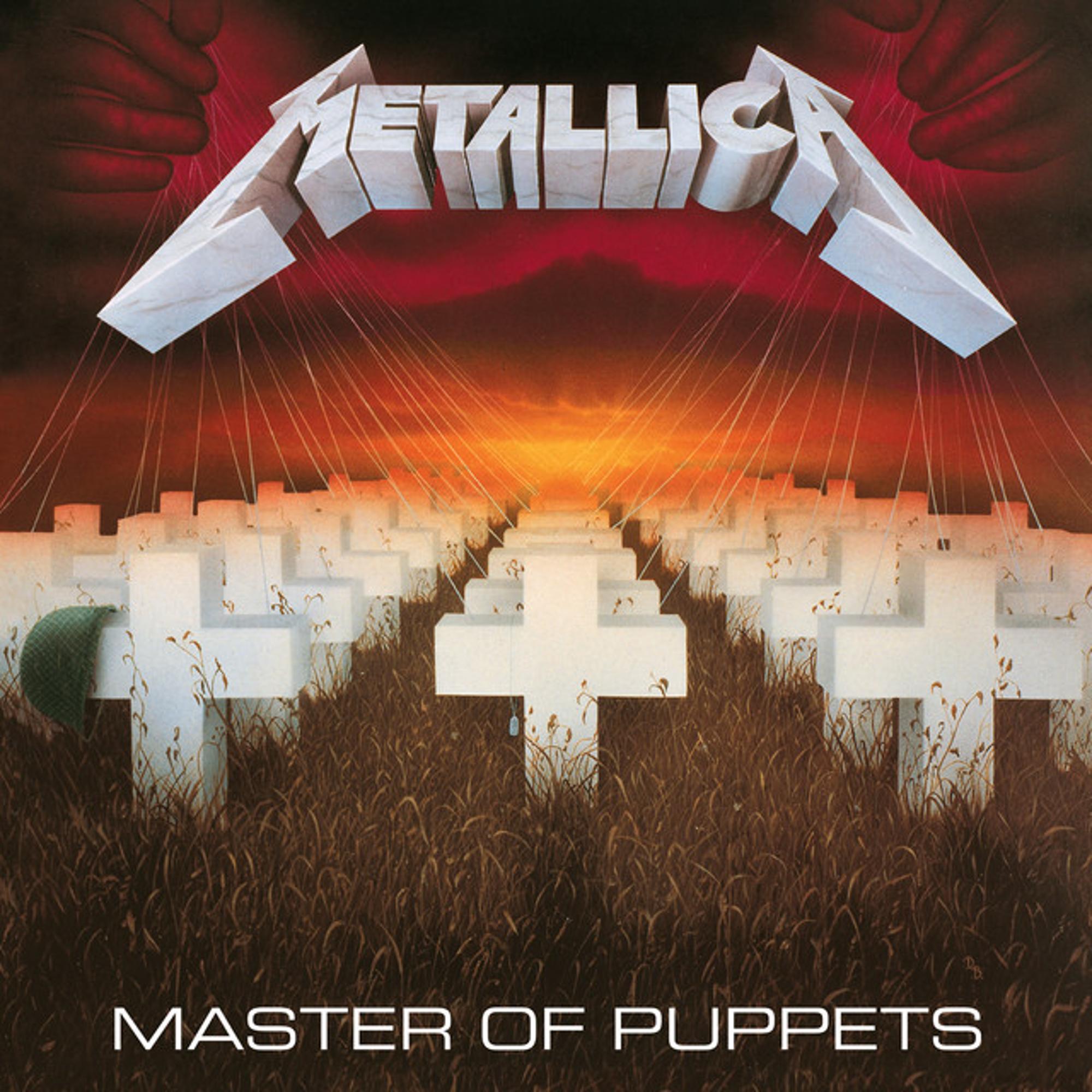
Metallica’s Master of Puppets isn’t just another album – it’s often hailed as one of the greatest metal records ever made. Released in 1986 at the height of the thrash metal wave, Master of Puppets propelled Metallica from underground heroes to metal legends. With its aggressive riffs, complex arrangements, and dark themes, the album pushed the boundaries of heavy music. It was the last Metallica album to feature bassist Cliff Burton, making it a poignant milestone for the band. Decades later, Master of Puppets still resonates with fans new and old – a testament to its enduring impact on metal and popular culture.
This deep dive will explore the story behind Master of Puppets. We’ll look at where it fits into Metallica’s discography, the band’s journey leading up to its creation, the making of the album (including its iconic artwork), and how it was received upon release. We’ll also examine how Metallica supported the album through touring (and the trials they faced on the road), the singles (or lack thereof) from the record, and instances where Master of Puppets has popped up in TV, film, and other media. Plus, we’ll highlight five lesser-known facts about the album, and share some interesting stories from the Master of Puppets era. Whether you’re a die-hard Metallica fan or just curious about why this album is so revered, read on for a comprehensive look at Master of Puppets.
Facts Table
Before diving into the narrative, here’s a quick rundown of key facts about Master of Puppets:
| Attribute | Details |
|---|---|
| Album Title | Master of Puppets |
| Band | Metallica (James Hetfield, Lars Ulrich, Kirk Hammett, Cliff Burton) |
| Release Date | March 3, 1986 |
| Recording Period | Sept–Dec 1985 (at Sweet Silence Studios, Copenhagen) |
| Producer(s) | Flemming Rasmussen and Metallica |
| Label | Elektra Records (USA); Music for Nations (UK) |
| Genre | Thrash metal (with progressive and heavy metal elements) |
| Length | 54:52 (eight tracks) |
| Previous Album | Ride the Lightning (1984) |
| Next Release | The $5.98 E.P. – Garage Days Re-Revisited (1987) |
| Billboard Peak | #29 on Billboard 200 (USA) |
| RIAA Certification | 8× Platinum in the US (8 million+ sold) |
| Notable | Last album with Cliff Burton (bassist); First heavy metal album added to National Recording Registry (LoC, 2015) |
Discography and Where This Album Fits
Metallica’s Master of Puppets is the band’s third studio album, sitting at a critical point in their discography. To put it in context, here’s a quick look at the band’s album timeline around Master of Puppets:
- 1983 – Kill ’Em All: Metallica’s debut album came out in 1983 and essentially laid the foundation for thrash metal. It was raw, fast, and aggressive, establishing the band’s reputation in the underground metal scene. Songs like “Seek & Destroy” and “Whiplash” introduced Metallica’s high-energy, no-frills approach to heavy music.
- 1984 – Ride the Lightning: The second album arrived just a year later and showed significant growth. Ride the Lightning featured more sophisticated songwriting, broader dynamics, and even a power ballad (“Fade to Black”). This album proved Metallica wasn’t a one-note act – they could incorporate melody and complex structures while still being heavy. Ride the Lightning caught the attention of major label Elektra Records, who signed Metallica in late 1984 and reissued the album. Off the back of Ride, Metallica’s fanbase expanded as they toured larger venues and even played big festivals like England’s Monsters of Rock in 1985.
- 1986 – Master of Puppets: Now enters Master of Puppets, building on the momentum of the first two records. It’s often seen as the culmination of Metallica’s early years – combining the raw thrash intensity of Kill ’Em All with the refined songwriting of Ride the Lightning, and then upping the ante even further. At this point, Metallica had something to prove: they wanted to show they could top their previous work and also silence any critics who thought metal lacked musical depth. As we’ll see, they succeeded beyond all expectations.
- 1988 – …And Justice for All: Though outside the immediate scope of this article, it’s worth noting the follow-up. After Master of Puppets, Metallica faced the tragic loss of Cliff Burton (more on that later) and eventually released …And Justice for All in 1988 with new bassist Jason Newsted. That album took a more progressive turn and gave Metallica their first mainstream hit single (“One”), but it all rests on the groundwork Master of Puppets laid down.
In summary, Master of Puppets sits at the heart of Metallica’s classic period. It’s the album where the band’s early vision reached its peak and before major transitions (like lineup changes and a shift toward a more polished sound in the 1990s). Within Metallica’s discography, many fans and critics consider Master of Puppets the band’s magnum opus – the record where everything clicked and heavy metal as a genre was elevated to new heights.
What Led Up to the Creation of the Album
The road to Master of Puppets began in the mid-1980s, when Metallica was a hungry young band determined to push themselves creatively. Here are the key factors and events leading up to the album’s creation:
- Riding High from Ride the Lightning: After the success of their second album in 1984, Metallica had serious momentum going into 1985. Ride the Lightning had proven that the band could write heavier songs with depth and melody, and it had attracted major-label support. By 1985, Metallica were touring extensively and had a growing fanbase worldwide. This gave them both the confidence and the pressure to make the next record even better. As drummer Lars Ulrich described it, they had “the momentum of a successful album and world tour behind them, and the confidence of a world class athlete” heading into the writing of Master of Puppets.
- Songwriting in Mid-1985: Metallica began writing new material for Master of Puppets around the summer of 1985. Remarkably, they wrote most of the album in a span of just six to eight weeks. James Hetfield (vocals/rhythm guitar) and Lars Ulrich (drums) were the primary songwriters, crafting songs by piecing together riffs and ideas they had collected. They worked on new music in a modest house they rented in El Cerrito, California – a place fans nicknamed the “Metallica Mansion.” It was in this garage-like setting that classics like “Battery” and “Disposable Heroes” first took shape, with Hetfield and Ulrich jamming out structures for the songs. Lead guitarist Kirk Hammett and bassist Cliff Burton contributed as well, adding guitar solos, harmony lines, and arrangement ideas. In particular, Cliff Burton’s love of classical music influenced the songwriting, inspiring more complex harmonies and instrumental sections (especially evident in the epic instrumental “Orion”). As Loudwire noted, Cliff is widely credited for encouraging Metallica to incorporate classical elements into their thrash sound.
- Aiming to Top Themselves: The mindset going into this album was essentially “outdo Ride the Lightning, but make it even bigger, heavier, and more advanced.” Producer Flemming Rasmussen (who had worked on Ride) recalled that Metallica’s goal was to raise the bar in every way: “We more or less wanted to redo Ride the Lightning, just a lot better… [Metallica] challenged their own technical ability all the time”. The band members even took steps to improve their musicianship before recording. Lars Ulrich took drum lessons to sharpen his timing and double-kick technique, and Kirk Hammett went back to study guitar under his old teacher Joe Satriani to refine his lead playing. This dedication to craft shows in the intricate guitar riffs and tight rhythm sections all over Master of Puppets.
- Influences and Evolving Style: By 1985, Metallica had a clearer identity and broader influences. They were leaders of the thrash metal movement, but they drew inspiration from various sources. The New Wave of British Heavy Metal (bands like Iron Maiden, Judas Priest, Motörhead) had been a big influence on Metallica from day one. On top of that, classic hard rock and heavy metal (Deep Purple, Black Sabbath) as well as punk (the Misfits, for example) fed into their style. Cliff Burton’s penchant for classical composers (like Bach and Beethoven) also seeped into the music, giving some songs a quasi-symphonic depth. All these influences converged as Metallica wrote Master of Puppets, resulting in songs that were at once brutally heavy and musically layered. Compared to other metal albums at the time, Master of Puppets was ambitiously structured – featuring tempo changes, complex bridges, and longer songs than typical thrash fare. (For instance, the title track “Master of Puppets” runs over 8 minutes with multiple sections, something practically unheard of in mainstream metal then.)
- Major Label Support & Budget: Having Elektra Records behind them meant Metallica had a bigger budget and more resources for this album than on their previous independent releases. The band headed to Sweet Silence Studios in Copenhagen, Denmark, to record with producer Flemming Rasmussen beginning in September 1985. They chose to return to Copenhagen (where Ride the Lightning was also recorded) to escape distractions and focus on the music. The recording sessions ran from September through late December 1985. By all accounts it was an intense, workmanlike process – the band was perfectionist in capturing powerful performances. They recorded most instrumental parts live in the studio in single takes to maintain a raw, “real” sound, while still making good use of overdubs for harmony guitars and such when needed. The total recording cost was modest (around $30,000) – Metallica was still careful with finances – but they squeezed every bit of quality out of that budget.
In short, the creation of Master of Puppets was fueled by Metallica’s drive to elevate their craft. They were young, hungry, and had something to prove – to themselves, to their fans, and to a music industry that largely ignored thrash metal at the time. The combination of intense songwriting sessions, improved musicianship, and a supportive label set the stage for Metallica to make an album that would define their legacy.
Album Artwork
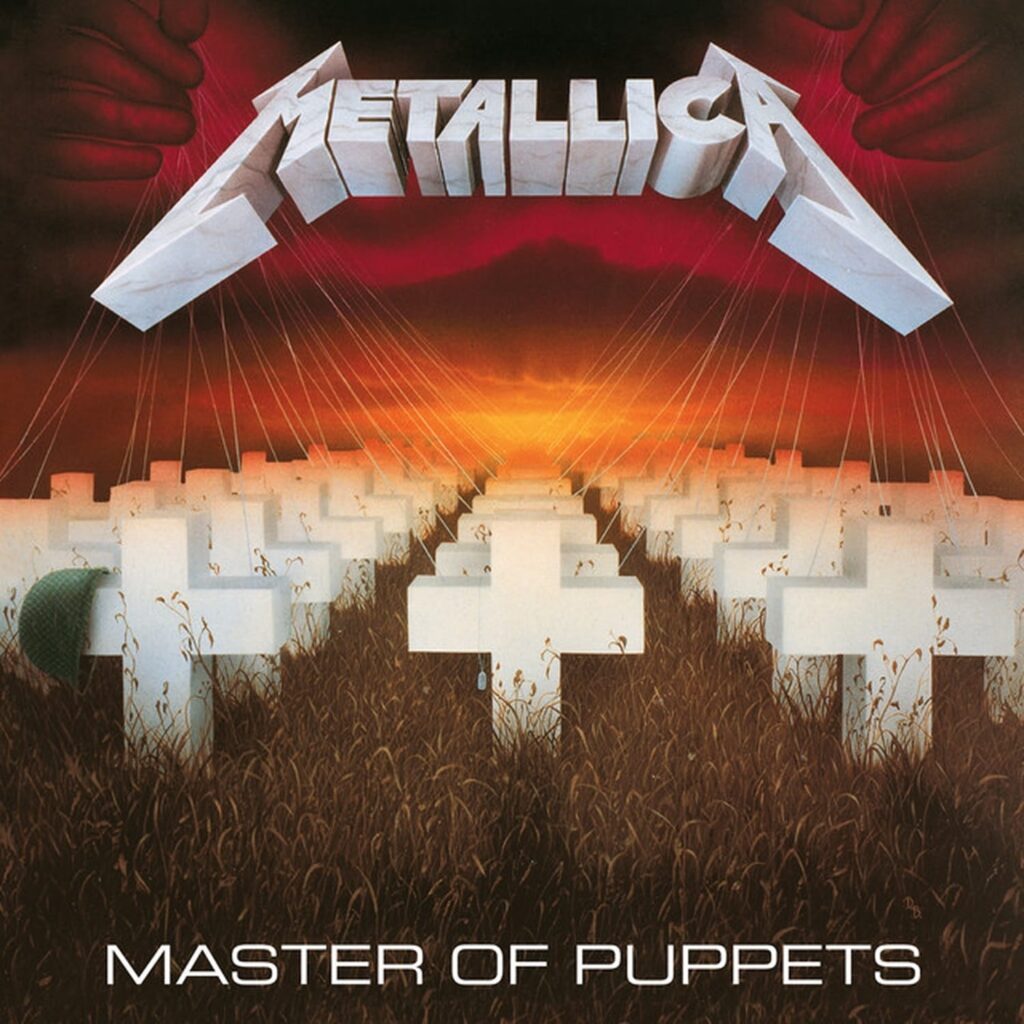
Album cover of Metallica’s Master of Puppets (1986), concept by the band and painted by artist Don Brautigam. The artwork depicts a field of graves with white crosses, controlled by an unseen “puppet master” – a visual metaphor for the album’s themes of control and death.
The album’s cover art is as iconic as the music itself. If you’ve seen Master of Puppets, you won’t forget it: a hellish red-orange sky, giant hands manipulating strings, and below them a battlefield cemetery of white crosses stretching into the distance. This haunting image perfectly encapsulates the album’s themes of manipulation and the loss of life/control. Here’s the story behind it:
- Concept Origin: The concept for the Master of Puppets cover came from the band – specifically a sketch by James Hetfield. James doodled an idea of a cemetery with military-style graves (the white crosses) being controlled by hands from above. The idea was to represent the “Master of Puppets” theme: it ties into how people (like soldiers or addicts) can be controlled by a higher power or fate, with the graves symbolizing the tragic end of those being manipulated. Hetfield has said the title track “Master of Puppets” is about being controlled by drugs – “instead of you controlling what you’re doing, it ends up controlling you” – and that image of graves on strings captures the bleak message.
- The Artist – Don Brautigam: To execute this vision, Metallica and their management turned to an accomplished artist named Don Brautigam. Brautigam was an American illustrator known for creating album covers for rock bands (he’d done artwork for bands like AC/DC, Anthrax, and others). They sent James’s rough sketch to Brautigam as a guide, and he went to work painting the final piece. Brautigam stayed very true to Hetfield’s design – in fact, he copied the sketch so literally that the puppet-master hands in the painting have a somewhat childlike look (missing fingernails and all), just as James had drawn them. The resulting painting is full of details: if you look closely, Brautigam even snuck his initials “D.B.” into the grass at the bottom of the image as a subtle signature.
- Striking Imagery: The finished cover art features dozens of white crosses (resembling war graves at Arlington cemetery) set in a reddish-brown earth, each attached by strings up to a pair of looming hands in the sky. There’s also a soldier’s helmet on one of the crosses and a fiery glow on the horizon, suggesting perhaps a sunrise or an explosion. It’s a powerful visual that can represent the song themes: war (“Disposable Heroes” on the album deals with soldiers as puppets of commanders), death, and puppet-like control (the title track about drug addiction, or “Leper Messiah” about televangelists controlling believers). The image is both political and eerie without using any explicit text beyond the band’s logo and album title. Many fans and critics consider it one of metal’s greatest album covers, instantly recognizable even in pop culture.
- Legacy of the Artwork: The Master of Puppets cover stands as a classic piece of album art. It’s been printed on countless T-shirts and posters and often ranks in lists of best album covers. One fun fact: the original painting by Don Brautigam was sold years later at auction – in 2008, the original Master of Puppets artwork was auctioned off and fetched $28,000, showing how valued it became as a piece of rock memorabilia. Brautigam’s work, combined with Metallica’s concept, gave the album a visual identity that’s just as intense as the music.
How Was Master of Puppets Received on Release?
When Master of Puppets hit record stores on March 3, 1986, the response was immediate and overwhelmingly positive – from both the growing metal fanbase and many critics who normally paid little attention to thrash metal. Here’s a breakdown of how the album fared commercially and critically upon release:
- Commercial Performance: In the United States, Master of Puppets initially entered the Billboard album chart at a modest #128, but it didn’t stay low for long. Thanks to word-of-mouth among fans and Metallica’s relentless touring (opening for a major act, Ozzy Osbourne – more on that later), the album steadily climbed the charts. It eventually peaked at #29 on the Billboard 200 in 1986. That was an impressive feat at the time for a thrash metal album with no hit single or music video on MTV promoting it. In fact, Master of Puppets sold about 300,000 copies in its first three weeks purely on the strength of the music and the band’s reputation, without radio play. By November 1986 (roughly 8 months after release), the album was certified Gold (500,000 copies sold in the US) – sadly, this happened just weeks after Cliff Burton’s death, meaning he never got to receive his gold record. Master of Puppets went on to have a long chart life, remaining on the Billboard charts for 72 weeks (well over a year). Over the years, the album kept selling steadily, eventually achieving multi-platinum status. It was the first thrash metal album to be certified Platinum in the US (achieving that in 1988). As of today, Master of Puppets is certified 6× Platinum by the RIAA (meaning 6 million+ copies shipped in the US), and in 2025 it was updated to 8× Platinum (8 million) reflecting ongoing sales and streams decades later. Worldwide, it’s also Platinum in the UK and multi-Platinum in Canada and other countries. These numbers are remarkable considering the album had virtually no mainstream radio singles at release – it gained its sales over time as its legend grew.
- Chart Positions: Aside from the U.S. success, Master of Puppets also charted in various countries. It never quite cracked the Top 40 in the UK (peaking just outside at #41 on the UK chart), but did perform well in parts of Europe. For example, it hit #4 in West Germany and the Top 5 in Finland, and Top 20 in several other European nations. This showed Metallica’s international appeal was on the rise, even if mainstream pop charts weren’t always sure what to do with a heavy thrash album in 1986.
- Critical Acclaim: Critically, Master of Puppets received widespread acclaim, a bit of a rarity for extreme metal albums at that time. Many rock and metal magazines praised its musicianship and depth. Even some mainstream critics took notice. Rolling Stone magazine, for instance, reviewed the album in 1986 and was impressed. Writer Tim Holmes wrote that Metallica had “taken the raw material of heavy metal and refined all the shit… right out of it”, and declared “Master of Puppets is the real thing.” In other words, Metallica elevated heavy metal’s artistry with this record, in Holmes’ view. This was a significant nod, considering Rolling Stone in the ’80s was not always kind to metal. Kerrang!, the UK’s premier metal magazine, lauded Master of Puppets as well, crediting it with “putting Metallica in the big leagues.” Many critics noted the album’s lyrical improvements – tackling themes like war, insanity, drug abuse, and religious hypocrisy in a more mature way than the typical “sex, drugs, rock’n’roll” fare of other bands. The political and social commentary in songs like “Disposable Heroes” (about soldiers in war) and “Leper Messiah” (about televangelist frauds) earned Metallica respect outside the metal community for being thoughtful songwriters. Of course, not every single critic was on board – influential Village Voice critic Robert Christgau, for example, gave the album a lukewarm B- rating, acknowledging Metallica’s momentum and political bent but sniping at the band’s image and the genre’s excesses. But such dissenting views were in the minority. Overall, Master of Puppets was a game-changer in critical perception, often cited as the album that made non-metal audiences realize thrash metal could be artistically significant.
- Fan Reception: Among metal fans, the album was almost immediately canonized as a classic. Tape trading and word-of-mouth praise turned songs like “Master of Puppets” and “Battery” into anthems. Many fans at the time would point to Master of Puppets as proof that Metallica were at the top of the metal heap – surpassing even their Big Four thrash peers. (It’s worth noting that 1986 also saw Slayer release Reign in Blood and Megadeth release Peace Sells…, both landmark thrash albums, but Master of Puppets was and is often regarded as the most influential and accomplished of that bunch.)
In short, upon its release Master of Puppets elevated Metallica’s status tremendously. It sold well by the standards of the day, proving that an extreme metal album could thrive without commercial compromises, and it garnered critical respect. Over time, its reputation has only grown – it frequently appears on “greatest albums of all time” lists (Rolling Stone even ranked it #2 on their Greatest Metal Albums list and placed it in the top 100 of all genres). But even in 1986, it was clear that Master of Puppets was something special, and it set the stage for Metallica’s domination of rock in the years to come.
How Did They Support the Album? (Touring and Promotion)
Given that Metallica didn’t rely on hit singles or MTV videos to promote Master of Puppets, the band took a very grass-roots, hard-hitting approach to getting the album out there: they toured like madmen. The touring cycle for Master of Puppets, known as the Damage, Inc. Tour, is legendary for both its triumphs and tragedies. Here’s how Metallica supported the album:
- Hitting the Road with Ozzy (U.S. Tour): Right after Master of Puppets was released in March 1986, Metallica scored a coveted spot as the opening act for Ozzy Osbourne on his spring/summer 1986 American tour. At that time, Ozzy was a huge name (promoting The Ultimate Sin album), so playing arenas with him was a massive opportunity for Metallica to reach new fans. They were essentially the “unknown” thrash band warming up crowds for the famous Prince of Darkness. But night after night, Metallica proved their worth – their intense performances often blew away audiences who had never seen such speed and precision on stage. In fact, there’s an oft-told anecdote that Ozzy’s camp grew concerned because Metallica was too good as an opener; Ozzy himself admitted years later he sometimes dreaded following Metallica’s high-energy set. Thanks in part to this tour, sales of Master of Puppets surged (as mentioned, many fans discovered Metallica at these shows and went out and bought the album, helping it climb the charts). The U.S. leg with Ozzy lasted several months, exposing Metallica to tens of thousands of new listeners.
- Relentless Tour Schedule: After the Ozzy tour, Metallica continued with their own headlining and festival dates through 1986. All told, the band performed over 140 shows across North America, Europe, and Asia in support of Master of Puppets. In August 1986, they played the famous Monsters of Rock festival at Castle Donington in the UK, sharing the bill with the likes of Def Leppard and Ozzy. In Europe, they also had fellow thrashers Anthrax as a support act for some shows. The setlists on the Damage, Inc. Tour naturally featured many of the new songs – “Battery,” “Master of Puppets,” “Welcome Home (Sanitarium),” and the crushing closer “Damage, Inc.” were regular highlights. Fans and critics noted that Metallica’s live energy was on another level; the band earned a reputation for raw, loud, and tight concerts. A review of a September ’86 show in England marveled at Cliff Burton’s extended bass solo (the famous “(Anesthesia) – Pulling Teeth” piece he would do) and the band’s intensity, saying it left a lasting impact on everyone there.
- No Music Videos, All Word-of-Mouth: One unusual aspect of the Master of Puppets era is that Metallica did not release any official music videos for the album’s songs at the time, and they didn’t focus on radio singles (in fact, as we’ll detail in the next section, the album’s promotion didn’t hinge on singles at all). This was a deliberate stance; Metallica had a bit of a punk/underground ethos then and had publicly said they weren’t interested in making MTV videos (they eventually would, but not until 1988’s “One”). Instead, their philosophy was “let the music speak for itself – and go win fans in concert.” This approach clearly worked: by driving around the country (and later the world) in a tour bus and playing shows nonstop, they built a fierce fan loyalty. As one of the five facts we’ll mention later, Master of Puppets was promoted solely via touring and word-of-mouth with no music video or big radio campaign. This was pretty unusual for a rising rock band in the mid-’80s, when MTV was king – but Metallica proved you could succeed outside the mainstream channels.
- Triumphs and Tragedy – Cliff Burton’s Death: The promotional tour for Master of Puppets was not all glory; it was marked by a devastating tragedy. On September 27, 1986, during the European leg of the Damage, Inc. Tour, Metallica’s tour bus skidded off the road in rural Sweden and crashed. In that accident, Cliff Burton was killed when he was thrown from the bus. He was only 24. This was an earth-shattering loss for the band, happening right at the peak of their success. The night before, on September 26, 1986, Cliff had performed what would be his final show (in Stockholm, Sweden). The band was understandably distraught. They canceled the rest of the tour’s European dates at that time and returned home to attend to Cliff’s funeral and figure out their future. For a while, Metallica wasn’t sure if they would even continue. But ultimately, they decided to persevere and honor Cliff’s legacy by moving forward.
- Continuing the Tour with a New Bassist: In October 1986, just weeks after Cliff’s death, Metallica auditioned a number of bass players to fill his spot. They eventually selected Jason Newsted (from the band Flotsam and Jetsam) as the new bassist by late October. Astonishingly, Metallica bounced back quickly – they resumed touring Master of Puppets in early 1987 with Newsted on board to fulfill remaining commitments. The band played some makeup dates and a tour of Japan in 1987, and even a few U.S. shows in early ’87, effectively wrapping up the extended Damage, Inc. Tour by the spring of 1987. It was a rough period emotionally, but those shows proved Metallica’s resilience. (Fans sometimes noted that the vibe on stage had changed – Jason was the new guy and the band was grieving – but the performances were still ferocious. And the crowds often chanted Cliff’s name in tribute at shows.)
- Notable On-Tour Anecdotes: The Master of Puppets tour era has its share of stories. One famous incident: James Hetfield broke his wrist in a skateboarding accident in the middle of the tour. James was known for skateboarding as a hobby, and on July 26, 1986, before a show in Evansville, Indiana (during the Ozzy tour), he took a bad fall on his skateboard. He shattered his wrist, which meant he couldn’t play guitar on stage that night – or for several weeks after. Rather than cancel a bunch of gigs, Metallica brought in a temporary guitarist, their roadie (and friend of Kirk) John Marshall, to play James’s rhythm guitar parts on stage. James continued to sing, but with his arm in a cast. Aside from the one show they missed on the exact day of the injury, the band kept the schedule, performing with this adjusted lineup from late July until James healed in late September. It’s a testament to Metallica’s dedication that they didn’t let a broken arm stop the tour – they literally went on stage with James as just the vocalist, which was highly unusual for a band known for its guitar attack! (Fun fact: John Marshall would later fill in again in 1992 when James had another injury, and Marshall went on to join the metal band Metal Church. Clearly, he was a reliable stand-in.)
- Road Life: During this era, Metallica also solidified their reputation for wild off-stage behavior. They were young and had a lot of ahem energy, earning the tongue-in-cheek nickname “Alcoholica” for their legendary drinking habits. They were known for partying hard after shows – yet impressively, when it came time to perform or work on music, they were all business. Lars Ulrich noted in an interview that fans would be surprised how seriously Metallica took the songwriting and recording process, versus the craziness of touring life. This dual nature – disciplined musicians but rowdy rockers on tour – only fueled their mythos on the road. Tales from the Damage, Inc. Tour include typical 80s rock hijinks: destroying dressing rooms, pranking other bands, etc. One often-cited story is that on the last night of the Ozzy tour, Metallica’s crew and Ozzy’s crew engaged in prank wars (with things like flour and pie fights). It was a chaotic, hedonistic time, as many 80s metal tours were.
In conclusion, Metallica supported Master of Puppets the old-school way: by touring relentlessly and building a formidable live reputation. The tour helped turn a great album into a full-blown phenomenon, as more and more fans were converted at shows. Despite facing huge challenges – from James’s injury to the devastating loss of Cliff – Metallica pushed through and kept the Master of Puppets era on track. By the end of the touring cycle, Metallica had graduated from supporting act to a headline attraction in their own right, setting the stage for their next chapter. The band’s perseverance and powerhouse performances during this time solidified the legend of Master of Puppets as not just a studio triumph, but a live one as well.
Singles from Master of Puppets
One interesting aspect of Master of Puppets is how it was handled in terms of singles. Unlike many albums – even in the rock and metal world – Master of Puppets was not a record built on radio-friendly singles. In fact, Metallica’s philosophy in 1986 was almost anti-single. They cared more about the album as a whole and playing live. However, there were a couple of releases that technically count as singles:
- “Master of Puppets” (title track): The song “Master of Puppets” itself was released as an official single – but this didn’t happen until July 2, 1986, a few months after the album came out. This single was likely a promotional move mostly for markets outside the U.S., or simply to have a 7-inch/12-inch for fans. The title track is over 8 minutes long and far from a conventional single, but it’s the signature song of the album. It actually achieved a bit of chart success in the UK: “Master of Puppets” (the song) reached #35 on the UK Singles Chart in 1986. That’s notable because it meant a ferocious thrash metal song was charting, albeit modestly, in a major market. In the U.S., there wasn’t really Top 40 radio play for it (and certainly it didn’t hit Billboard Hot 100 or anything), but rock radio stations and college radio did play the track, helping spread it. The single release of “Master of Puppets” typically featured the album version and maybe a live B-side or something; it wasn’t a heavily pushed pop single.
- “Welcome Home (Sanitarium)”: The second most famous song from the album, “Welcome Home (Sanitarium),” was issued as a promotional single in some territories. A promo single usually means it was sent to radio stations or given limited release, but not a full consumer single release. “Sanitarium” is a mid-tempo, moody track (almost a ballad until it gets heavy) and perhaps the most accessible song on the album in terms of having a singable chorus and big guitars. It did get some airplay on rock stations. However, there was no music video or huge marketing around it. It wasn’t uncommon in the 80s for metal bands to release a promo single for a slower song to radio; in this case “Welcome Home (Sanitarium)” served that role to some degree, but it wasn’t pushed hard.
- No Pre-Release Singles: It’s important to note, Metallica did not release any single ahead of the album release. In other words, when Master of Puppets launched in March ’86, fans got the whole album at once – there was no teaser song or video out a month before. This was a stark contrast to typical industry practice, where labels would drop a lead single to build hype. Metallica essentially said, “the hype is our reputation from the last album and tour; here’s the record.” As mentioned, they then relied on touring to promote it rather than singles.
- B-sides and Extras: The singles didn’t really have new songs as B-sides (since Metallica didn’t record extra studio tracks for this album beyond the eight on it). In later years, live versions of Master songs or demos have appeared on re-releases, but in 1986 the main collectible was maybe a limited edition vinyl single of “Master of Puppets.” There was also an EP in 1987 (The $5.98 EP: Garage Days Re-Revisited) but that was after Cliff’s death and with Jason Newsted, and not directly tied to Master of Puppets except that it was the next release.
Master of Puppets was not a singles-oriented album at all. The one official single, “Master of Puppets,” was more of a fan collectible and did make a dent in the UK chart, while “Welcome Home (Sanitarium)” got some promo exposure. Crucially, no music videos were made for any of the songs at the time, which was unusual in the MTV era. Metallica wouldn’t film their first music video until 1988 for the song “One” on the next album. This approach meant that Master of Puppets gained popularity through its album reputation and live shows rather than through a hit single on radio or MTV. In hindsight, that makes its multi-platinum success even more impressive – the album itself was the “hit.” And indeed, today songs like “Master of Puppets” and “Battery” are considered classics, even though they were never traditional commercial singles.
Uses in TV/Media
Over the years, the music of Master of Puppets has not only influenced countless bands, but also popped up in various films, television shows, and video games. For a long time, these songs were beloved mostly within the metal community, but recently one track in particular had a massive pop culture moment. Here are some notable uses of Master of Puppets tracks in media:
- “Master of Puppets” in Stranger Things (2022): Perhaps the most famous media usage – and one that introduced Metallica to a whole new generation – was the inclusion of the song “Master of Puppets” in the Netflix series Stranger Things. In the season 4 finale (released July 2022), a character named Eddie Munson performs an epic rendition of “Master of Puppets” on guitar during a pivotal scene set in 1986. The show, which is known for its ’80s soundtrack, created a huge buzz with this scene. The result? “Master of Puppets” (a 36-year-old song at that point) shot up the music charts again, trending on Spotify and even entering the Billboard Hot 100 for the first time ever, purely from new streaming and downloads. Metallica themselves were thrilled, and they even jammed with the actor who played Eddie in a TikTok. This Stranger Things moment demonstrated the cultural longevity of the song – it resonated just as strongly with young viewers in 2022 as it did with metalheads in 1986. It was a major masterstroke (pun intended) of media placement, cementing Master of Puppets in pop culture history.
- “Battery” in Films and Games: The album’s explosive opener, “Battery,” has been featured in a few movies and video games. For instance, the high-octane party movie Project X (2012) included “Battery” in its soundtrack. The indie drama Hesher (2011), which actually starred Joseph Gordon-Levitt as a metalhead character, also used “Battery” – fittingly, since Metallica’s music was almost like a character in that film. “Battery” can also be heard in the dark comedy On the Count of Three (2021). In video games, “Battery” was featured in Guitar Hero: Metallica (2009 edition) and Rock Band 2 (2008), allowing players to virtually jam along with the thrash classic.
- “Disposable Heroes” in TV and Compilations: “Disposable Heroes,” the anti-war track from Master of Puppets, showed up in an episode of the TV series Colony in 2018. Additionally, Metallica did an acoustic rendition of “Disposable Heroes” for the Bridge School Benefit in 2007, and a recording of that was released on The Bridge School Concerts 25th Anniversary album in 2011. It’s an interesting twist because the original song is extremely heavy and electric, but the acoustic version gave it a new vibe.
- Other Tracks (rarer usage): Some songs on Master of Puppets are less commonly found in media. “Welcome Home (Sanitarium)” might have appeared in the background of a show or movie, but a notable instance was that Metallica themselves performed it live in the 2012 video game Guitar Hero: Metallica (it’s part of the game’s setlist). “The Thing That Should Not Be” and “Leper Messiah” are deep cuts that haven’t been prominently used in movies or TV as far as records show (likely due to their heavy nature and niche lyrical themes). The instrumental “Orion” would be great soundtrack material, but aside from being beloved by fans (even played at Cliff Burton’s memorial), it hasn’t famously featured in a film or such.
- Video Concerts and Documentaries: Master of Puppets era songs also appear in many concert videos and music documentaries about Metallica. For example, the band’s 1989 Seattle live performance of several Master songs is featured in the Live Shit: Binge & Purge box set. The making of Master of Puppets is detailed in the 2001 documentary series Classic Albums, which often airs on music channels. So the album gets further exposure through these channels as well.
In summary, while Master of Puppets didn’t start out with mainstream media exposure (since Metallica didn’t do videos then), its songs have over time seeped into movies, TV, and games – especially the title track’s huge comeback via Stranger Things, which may well be one of the most significant pop culture crossovers for any metal song. These media placements show how the album’s music transcends its era, finding new life and new audiences years later.
(As a side note, seeing kids headbang to “Master of Puppets” in 2022 thanks to a Netflix show was a joy to long-time fans – truly a full-circle moment for this 1986 classic.)
Five Things You Might Not Know About Master of Puppets
Even if you’ve listened to Master of Puppets a thousand times, there are always some interesting tidbits and lesser-known facts about the album. Here are five facts you might not know about Metallica’s Master of Puppets:
- 1. It’s the First Metal Album in the U.S. National Recording Registry: Master of Puppets has not just fan acclaim, but official cultural recognition. In 2015, the Library of Congress added Master of Puppets to the National Recording Registry, making it the first heavy metal album ever to receive that honor. The National Recording Registry picks recordings that are “culturally, historically, or aesthetically significant” to preserve for posterity – so Metallica’s masterpiece is literally preserved alongside the likes of Beethoven and The Beatles in the American archives!
- 2. The Original Album Artwork Sold for $28,000: Remember that striking cover art we discussed? The original painting by Don Brautigam is a collector’s item. In 2008, the Master of Puppets original artwork was auctioned at Rockefeller Plaza and sold for $28,000. Considering its iconic status, one might even say $28k is a bargain. The buyer got a piece of metal history to hang on their wall (and yes, Brautigam’s tiny “D.B.” initials are on it). Most album art from the pre-digital era was hand-painted, and this one has clearly become quite valuable.
- 3. No Music Videos or Radio Singles Promoted the Album: We touched on this earlier – Master of Puppets gained fame without the typical marketing frills. When it was released in 1986, Metallica put out zero music videos and had no major radio singles to plug the album. This was almost unheard of in the mid-’80s for a rock band on a major label. The band instead toured non-stop and relied on the metal underground network to spread the word. Only in mid-1986 was the title track sent out as a single (and that too mostly for the UK market). So the album’s success was very much an organic, fan-driven phenomenon. In hindsight, it adds to the album’s credibility – it wasn’t forced onto anyone; people sought it out.
- 4. The Title Track Resurfaced on the Charts in 2022 Thanks to Stranger Things: One of the coolest recent facts is that “Master of Puppets” (the song) found a new generation of fans in 2022. As mentioned, it was featured in the Stranger Things TV show and subsequently saw a huge spike in streams and downloads. The song climbed onto digital charts worldover and introduced Metallica to Gen Z in a big way. The band even saw the Master of Puppets album re-enter the Billboard charts as young listeners checked out the full record. It’s rare for a decades-old song to suddenly trend, but Metallica pulled it off – a testament to the timeless power of that galloping riff!
- 5. It Was Cliff Burton’s Last Album with Metallica: This is a more somber fact, but very important in the band’s history. Master of Puppets is the final studio album to feature bassist Cliff Burton, who died tragically in the bus accident during the album’s tour. Cliff’s playing and musical ideas are all over Master of Puppets – from the intro of “Battery” (which he helped harmonize) to the sweeping bass solo in “Orion” (Cliff wrote much of that instrumental’s middle section). Many fans feel Cliff was at his creative peak on this album. His death in 1986 shook the metal world. As a result, Master of Puppets carries an emotional weight as the end of an era – the last testament of Cliff Burton’s genius. The band has often said that Cliff was extremely proud of this album; his father Ray Burton once noted that Cliff considered Master of Puppets his proudest work. If there’s any silver lining, it’s that Cliff’s swan song was an album this magnificent, which immortalized his talent.
Those are five key facts, but certainly not the only interesting things about Master of Puppets. For instance, did you know the band members improved their skills (Lars and Kirk taking lessons) before recording, or that the instrumental “Orion” was played at Cliff’s funeral? The album’s lore runs deep. But the five points above highlight some unique aspects of Master of Puppets that underscore its significance and legacy in the music world.
Stories from the Master of Puppets Era
The era around Master of Puppets (1985–1987) is filled with stories – some inspiring, some tragic, some just plain wild. We’ve touched on a number of them throughout this article, but let’s round up a few notable anecdotes and tales involving the band during this time:
- The Night of the Bus Accident (September 1986): One cannot discuss this era without acknowledging the tragic story of Cliff Burton’s death. While traveling between tour stops in Sweden, in the early hours of September 27, 1986, Metallica’s tour bus slid off an icy road and flipped onto its side. The band members were asleep. Cliff Burton was thrown from his bunk through a window and the bus tragically landed on him, killing him instantly. The others were shaken and bruised but survived. There’s a somber detail: earlier that night, Cliff and Kirk Hammett had drawn cards to decide who got the preferred top bunk bunk in the bus – Cliff won with the ace of spades, so he slept in that bunk, which fatefully put him in harm’s way. After the accident, the band was in shock. James Hetfield has said he wandered the crash site in disbelief and anger, at one point even accusing the bus driver of being drunk (an investigation later cleared the driver, attributing the crash to black ice on the road). This incident is a defining moment in Metallica’s history. The remaining three members flew back to the U.S. with heavy hearts. At Cliff’s funeral, “Orion” was played in his memory, since that instrumental was a showcase of his work on Master of Puppets. The story of Cliff’s death is one fans still talk about with reverence – it marked the end of Metallica’s first chapter.
- Metallica’s Determination to Continue: In the face of losing a brother and key member, the easy route would have been to fold the band. But a powerful story from this time is Metallica’s resolve to carry on. After a short break, James, Lars, and Kirk made the hard decision that Cliff would have wanted them to keep going – that quitting would be the last thing he’d want. So in October 1986, they held auditions for a new bassist in San Francisco. Dozens of hopefuls came through. The band famously prank-tested them (like one guy was asked to bring them liquor as a joke errand). Jason Newsted, who was a huge Metallica fan himself, impressed them by knowing all their songs (even the newest ones) and by his enthusiasm. They even jammed “Battery” and were surprised Jason knew the fast riffs perfectly. Jason got the job. Then – here’s where the story is almost superhuman – Metallica was back on stage by November 1986, just about five weeks after burying Cliff. They played a show in California as a sort of low-key debut for Jason, then embarked on a short Japan tour in late 1986 and a U.S. tour in early 1987. The fact that they managed to finish the Master of Puppets tour commitments with Jason (wrapping up in Feb ’87) is a testament to their fortitude. Fans at the time were incredibly supportive; though many grieved Cliff, they welcomed Jason warmly, and Metallica’s fire was far from extinguished.
- The Skateboarding Injury: On a lighter note (and one that the band can chuckle about now), there’s James Hetfield’s skateboarding mishap on the Damage, Inc. Tour. James loved to skateboard to blow off steam. On July 26, 1986, in Evansville, Indiana, a few hours before a show, he decided to skate a downhill slope near the venue. He wiped out hard and broke his wrist. The immediate story from that day: Metallica had to cancel their set that night as James was taken to the hospital (Ozzy played an extra-long set to appease the crowd, though apparently he didn’t actually extend it much). The longer story: James’s arm was put in a cast, but the tour must go on. Rather than cancel weeks of gigs opening for Ozzy (which would have been a major setback), Metallica hired their roadie (and Kirk’s friend) John Marshall to play rhythm guitar on stage while James just sang. Fans on the remaining dates saw something unique – Hetfield stalking the stage just on vocals, with his right arm in a cast, while Marshall stood back by the amps chugging out the riffs. This arrangement lasted for about two months of shows (late July through September 1986). As soon as James’s wrist healed enough, he gleefully strapped his guitar back on. The band also learned a lesson: they eventually banned James from skateboarding on tour, though he broke his wrist again in a skate incident in 1987 off-tour, after which he really hung up the skateboard for good. The image of a heavy metal frontman in a cast, refusing to stop performing, showed Metallica’s “show must go on” attitude – and became part of tour lore.
- “Alcoholica” and On-Tour Antics: The Master of Puppets era was prime time for Metallica’s partying ways. They were young guys in their early 20s, let loose on the world – and they acted like it. They even had a banner made that read “Alcoholica” with the tagline “Drank ’Em All” (a parody of their own Kill ’Em All album) that sometimes hung near the stage or on their equipment. One famous anecdote: during the European leg in early ’86, Metallica and Anthrax toured together. There’s a story of destroyed dressing rooms and food fights – for example, Metallica might trash Anthrax’s dressing room as a joke, and Anthrax retaliating by bolting Metallica’s dressing room door shut from the outside so they almost missed their stage time. Another one: apparently, on the final date with Ozzy Osbourne, Metallica’s crew (or maybe Anthrax, accounts vary) doused Ozzy’s band with flour and shaving cream on stage, and Ozzy’s crew dropped eggs on Metallica – the typical prank war that bands do on the last show of a tour. These stories underscore that despite the serious music, Metallica had a lot of fun (and caused some chaos) on the road. It’s part of their legend that they could drink most other bands under the table and still play a killer set the next day.
- Influence on Fellow Musicians: Another story from this era is how quickly Metallica’s peers recognized Master of Puppets as a milestone. For instance, the members of Slayer and Megadeth (other Big Four thrash bands) have often cited Master as a benchmark. Megadeth’s Dave Mustaine, who was Metallica’s original lead guitarist, begrudgingly praised the album as “setting the bar for everyone else”. And thrash fans in ’86 would engage in friendly debates like “Master of Puppets vs Reign in Blood – which is heavier?” The fact that major figures in metal immediately acknowledged the album’s impact is a story in itself. Decades later, at Metallica’s 30th anniversary concerts in 2011, members of Anthrax, Megadeth, etc., joined Metallica on stage and many of those guys have said, “We wish we had an album like Master of Puppets in our catalog.”
Each of these stories paints a picture of Metallica during the Master of Puppets timeline: a band at their creative peak, experiencing the highs of critical and commercial success, the camaraderie and craziness of youth, and also enduring a profound loss. These anecdotes are part of why fans find this era so fascinating – there’s triumph and tragedy interwoven. The album wasn’t created or promoted in a vacuum; it was a product of real human experiences, from the rehearsal room to the tour bus.
For fans, hearing these behind-the-scenes tales adds an extra layer of appreciation when listening to Master of Puppets. You might picture Cliff headbanging on stage one last time during “Battery,” or James singing with a broken arm, or the band raising a drink backstage proclaiming “Alcoholica!” – all while their music was quietly making history.
Remasters, represses, and the MetalliPress era
Master of Puppets hasn’t just survived the vinyl revival — it’s become one of its reference points. In the modern Blackened Records era, Metallica have taken a deliberate approach to remasters and represses: keep the album constantly available, sounding as close to the original intent as possible, without sanding off the aggression or rewriting history. The widely available pressings today trace back to the band’s remaster campaign, which wasn’t about “fixing” Master of Puppets so much as revealing it — tightening the low end, improving clarity, and letting the guitars and drums breathe while preserving the bite that made the album so intimidating in 1986. It’s less polish, more precision: the same record, just with the lights turned up.
Where things get properly fun is in the deadwax — the runout groove area that most people ignore, but collectors obsess over. Metallica have used this space to leave little messages etched next to the matrix numbers, turning modern pressings into inside jokes for anyone nerdy enough to look. Master of Puppets proudly carries the line “Obey your Re-Master!”, joining a growing family of vinyl gags across the catalogue:
- Kill ’Em All – Vinyl Up Your Ass!
- Ride the Lightning – Vinyl Up Your Ass!
- Master of Puppets – Obey your Re-Master!
- …And Justice for All – …And Vinyl For All!
- Metallica (The Black Album) – You just stood there pressing Vinyl
- Hardwired… to Self-Destruct – Hardwired to Make Our Own Vinyl
- 72 Seasons – 33 RPM or Nothing!
What started as deadwax humour became something much more literal in 2023, when Metallica acquired a majority stake in Furnace Record Pressing. In other words, Metallica don’t just approve their vinyl anymore — they effectively control how it’s made. They don’t own the plant outright, and Furnace still presses records for other artists, but Metallica now have real influence over capacity, quality, and timing. Suddenly, those “MetalliPress” jokes etched into the runout don’t feel like throwaway gags — they feel like mission statements. When you drop the needle on a modern pressing of Master of Puppets, you’re not just hearing a remaster; you’re hearing a band that decided the best way to protect its legacy was to take control of the machinery that keeps it alive.
Conclusion
Master of Puppets isn’t just an album – it’s a cornerstone of heavy metal. From its genesis in a flurry of inspired 1985 songwriting sessions, to its painstaking recording in Denmark, to the meteoric impact it made in 1986 and beyond, Master of Puppets represents Metallica at the top of their game. The album took the thrash metal template and elevated it to something epic and enduring, blending aggression with complexity and intelligence. It’s the record that turned Metallica from underground upstarts into a force to be reckoned with, and its influence reverberated throughout the metal scene (and still does – countless bands cite Master of Puppets as a key inspiration).
In this deep dive, we’ve seen how the album fits into Metallica’s journey – the climax of their early years – and how it was shaped by the band’s determination to outdo themselves. We explored that unforgettable album cover that visually captures the album’s themes. We discussed the rapturous reception Master received, proving that great music can find an audience without commercial gimmicks. We followed Metallica on the road as they brought these songs to life on stage, overcoming adversity (broken bones and broken hearts) in the process. We identified the sparse singles and noted how this album didn’t need hit singles to make its mark. We saw how Master of Puppets songs have taken on a life of their own in movies, TV (hello, Stranger Things fans!), and video games, showing up in some unexpected places. We uncovered a few lesser-known facts – from Library of Congress honors to auctioned artwork – highlighting the album’s unique lore. And we recounted stories from the era that humanize the legend: the triumphs, the tragedies, and the antics of a young band carving its name into music history.
Nearly four decades later, Master of Puppets stands tall as a metal masterpiece. In 2020, Rolling Stone ranked it among the 100 greatest albums of all time (of any genre) and the #2 metal album ever. Such accolades affirm what fans felt back in ’86: this album was something special. Its songs – “Master of Puppets,” “Battery,” “Welcome Home (Sanitarium),” “Orion,” and the rest – remain staples in Metallica’s live shows and are beloved by generations of listeners. Every time you hear that opening acoustic guitar of “Battery” explode into a thrash assault, or the machine-gun riff of “Master of Puppets” kick in, it’s a rush that hasn’t dulled with time.
For Metallica, Master of Puppets was a milestone that sadly also marked the end of an era (with Cliff Burton’s passing), but it propelled them forward. They built on its legacy with …And Justice for All and then The Black Album, becoming the biggest metal band in the world by the 1990s. Yet, many will say that Master of Puppets is the crown jewel – the album where the stars aligned and metal perfection was achieved.
Whether you’re cranking the album to get your adrenaline up, analyzing its intricate compositions, or just marveling at how a group of 22-year-olds made an album this impactful, Master of Puppets delivers on every level. It’s the kind of record that turns casual listeners into die-hard fans. As the title track’s lyrics imply, the music can take on a power of its own over you – “Obey your master!” – and indeed, generations of headbangers have gladly been puppets to the masterful metal that Metallica unleashed in 1986.
In the end, Master of Puppets tells a story: of four young musicians pouring their everything into creating something lasting, of the wild ride they took bringing it to the world, and of a legacy that only grows. It’s more than an album; it’s a piece of music history that still whips the llama’s ass (to borrow an old Winamp phrase) every time it’s played. So if somehow you haven’t given it a focused listen – do yourself a favor, grab the volume knob and “Lay down your soul to the gods rock’n’roll” (as they say) with Master of Puppets. Just be warned: you may not escape its strings.
About the Author