Pink Floyd’s Wish You Were Here is often hailed as one of the greatest albums in rock history – a soulful, atmospheric journey that followed the band’s mega-hit The Dark Side of the Moon. Released in 1975, it marked a turning point for the band, blending heartfelt tribute with sharp critique. In this deep dive, we’ll explore the story of Pink Floyd leading up to Wish You Were Here, the creation of the album, its artwork, reception then and now, how the band supported it, its singles, uses in media, some little-known facts, and a few memorable anecdotes from that era. Wish You Were Here wasn’t just another album; it was a deeply personal elegy for a lost friend and a scathing commentary on the music industry, all wrapped in music that still resonates today. Let’s uncover how this classic came to be and why it endures.
We did a podcast all about this album here:
Wish You Were Here Facts
| Album | Wish You Were Here (Pink Floyd) |
|---|---|
| Release Date | 12 September 1975 (UK); 13 September 1975 (US) |
| Studio & Location | Abbey Road Studios, London (January–July 1975) |
| Label | Harvest (UK/Europe), Columbia (US) |
| Producer(s) | Pink Floyd (the band members themselves) |
| Genre | Progressive rock, Art rock (concept album) |
| Length | ~44 minutes (5 tracks) |
| Billboard Chart | #1 in US (fastest-selling Pink Floyd album) |
| UK Chart | #1 in UK (reached in its second week) |
| Previous Album | The Dark Side of the Moon (1973) |
| Next Album | Animals (1977) |
| Notable Tracks | “Shine On You Crazy Diamond,” “Wish You Were Here,” “Have a Cigar,” “Welcome to the Machine” |
Wish You Were Here is Pink Floyd’s ninth studio album. It had the unenviable task of following The Dark Side of the Moon, one of the most successful albums ever. Remarkably, Wish You Were Here not only met expectations but has become a classic in its own right – blending haunting tribute, rich soundscapes, and biting social commentary. The album’s first release on Columbia Records in the US came after the band left Capitol/EMI, reflecting Pink Floyd’s rising clout in the industry.
Where Wish You Were Here Fits in the Discography
In Pink Floyd’s discography, Wish You Were Here sits at a peak of the band’s creative journey. It followed 1973’s The Dark Side of the Moon, the record-breaking concept album that turned Pink Floyd into global superstars. As the ninth studio album, Wish You Were Here continued the band’s run of ambitious, thematic works in the 1970s. It forms a bridge between the atmospheric psychedelic/progressive style of Dark Side and the darker cynicism of later albums Animals (1977) and The Wall (1979). By 1975, Pink Floyd had evolved far from their 1960s roots under founding frontman Syd Barrett – they were now masters of the concept album format, alongside peers like Yes, Genesis, and The Who’s rock operas. But unlike some contemporaries who explored fantasy or mythology, Pink Floyd stayed grounded in Wish You Were Here with real-world themes of absence, loss, and music-industry angst, making the album both deeply personal and universally relatable.
To put it in context, Wish You Were Here arrived during the golden age of progressive rock. While bands like Yes and Genesis were pushing musical complexity to the limits, Pink Floyd carved their own niche – focusing on emotional depth and atmosphere over virtuosity. This album’s five epic tracks fit perfectly into the band’s trajectory: it builds on the sonic polish of Dark Side, yet its mood foreshadows the alienation and critique that Roger Waters would amplify on Animals and The Wall. In short, Wish You Were Here is a cornerstone of Pink Floyd’s catalog – often considered one of the band’s finest achievements during their 1970s heyday.
What Led Up to the Creation of Wish You Were Here
After the massive success of The Dark Side of the Moon, Pink Floyd found themselves in a new, somewhat unsettling position. The 1973 album’s “gargantuan popularity” bought them time and freedom in the studio, but it also drained the band members physically and emotionally. Drummer Nick Mason later described their mood in early 1975 as one of “relaxed desperation,” joking that the band was cushioned by success yet struggling to find a direction. Each member was now around 30 years old, some with families, and they were no longer the hungry young upstarts of the 60s. Pink Floyd had to reassess why they were making music, having already achieved the rock-star dreams of fame and fortune.
The initial studio sessions (at Abbey Road from January to July 1975) were difficult and aimless at first. The band would often procrastinate – playing darts, drinking, and indulging in distraction – because they truly weren’t sure what to do next. Keyboardist Rick Wright called it a “difficult period,” and Roger Waters found the writing process “torturous”. They even flirted with experimental dead-ends: one “daft, but fascinating” idea was to create music entirely with household objects – no instruments at all. (This so-called Household Objects Project produced eerie recordings of rubber bands, wine glasses, and more, but ultimately “went absolutely nowhere,” Mason admitted.) Interestingly, a few sounds from those abandoned sessions did survive – the glassy drone at the start of “Shine On You Crazy Diamond” was made by running a wet finger around the rims of wine glasses, an atmospheric touch carried over from that scrapped experiment.
Eventually, the band found inspiration by looking both inward and backward. Roger Waters began to visualize a new concept, fueled by feelings of absence and disenchantment that everyone in the band shared. They dusted off three compositions they had tested live on tours in 1974 as a starting point. The centerpiece was “Shine On You Crazy Diamond,” a sprawling, 20-minute suite reminiscent of earlier epics like “Echoes.” During an improvised jam, David Gilmour hit upon a four-note guitar phrase so haunting that it made Waters immediately think of Syd Barrett, Pink Floyd’s former leader. This melancholic riff became the heart of “Shine On,” a musical motif that echoed Syd’s fragile brilliance and tragic decline. Encouraged by Waters’ reaction, Gilmour and Wright expanded “Shine On” into a majestic tribute, even weaving in a subtle reference to Barrett’s 1967 song “See Emily Play” toward the end of the piece.
Roger Waters – increasingly the band’s chief lyricist and conceptualist – proposed structuring the new album around Syd Barrett’s absence and the band’s disillusionment with the music industry. Waters decided to split “Shine On You Crazy Diamond” into two halves (bookending the album) and in between include two new songs addressing the soullessness of the record business. Guitarist David Gilmour initially disagreed with chopping up “Shine On” but was outvoted by the others. The concept won out, and the thematic threads fell into place. The band set aside two other new songs – “Raving and Drooling” and “You’ve Got to Be Crazy” – because those didn’t fit the album’s concept of absence and industry cynicism. (Those tracks would resurface later, transformed into “Sheep” and “Dogs” on 1977’s Animals.)
As recording progressed, Pink Floyd channeled their frustrations into art. The track “Welcome to the Machine” took shape as a dystopian synth-driven piece exposing how the music biz chews up artists. “Have a Cigar” became a biting satire of record industry fat-cats, complete with the now-famous line “By the way, which one’s Pink?” – a verbatim quote from a clueless executive the band had met. Waters’ lyrics dripped with sarcasm and disgust at the clichés and glad-handing they’d been hearing since hitting it big. Meanwhile, the title track “Wish You Were Here” emerged as a poignant, plain-spoken acoustic song that addressed the human side of all this – both the absence of Syd and the band’s own sense of alienation amid fame. With its simple folk-like melody (strummed by Gilmour) and yearning lyrics, “Wish You Were Here” grounded the album’s emotions in a universal feeling of longing for lost connection.
One of the most legendary moments during the creation of Wish You Were Here came on June 5, 1975. The band was in Abbey Road Studios, finalizing the mix of “Shine On You Crazy Diamond,” when a heavyset man with a shaved head and eyebrows wandered into the studio, carrying a plastic bag. At first, none of Pink Floyd recognized him. Roger Waters was baffled, David Gilmour assumed it was an EMI staffer, and Richard Wright thought perhaps a friend of Waters had dropped by. Suddenly, they realized with shock: this man was Syd Barrett, their former bandmate and the very inspiration behind “Shine On.” Syd had completely changed in appearance – gone was the vibrant, spark-eyed youth they remembered. He was now overweight, with a blank gaze, almost a “spectral presence” of his old self. Wright was so overwhelmed he broke down in tears upon recognizing Syd. The encounter was heartbreaking and surreal: here was the “fallen star” to whom they were effectively dedicating the album, standing in the studio as they mourned him in song. Syd purportedly listened to the playback of “Shine On” without showing any sign he understood it was about him, and offered to help out, only to wander off shortly after. It was the last time all four members of Pink Floyd would ever see Syd Barrett in person. This unexpected visit poured even more raw emotion into the album – Roger Waters even revisited some lyrics afterward, sharpening the theme of lost presence and “distance” that runs through the songs.
In the end, those tumultuous months of writing and recording yielded an album that was remarkably focused and personal, despite the messy start. As Nick Mason later observed, Wish You Were Here became perhaps Pink Floyd’s most heartfelt statement – an album “born from pain, regret, and frustration, yet delivered with profound beauty and introspection”. It simultaneously confronted the band’s past (the tragedy of Syd) and their present (the hollowness they felt in the star-making machinery). This honest self-reflection set Wish You Were Here apart. Whereas Dark Side of the Moon had explored universal themes like time, money, and madness in a polished conceptual framework, Wish You Were Here brought things closer to home – the songs grapple with Pink Floyd’s own experiences of guilt, loss, and disillusionment after achieving stardom. The album asks tough questions about the cost of fame and the fragility of the creative spirit, and crucially, it feels those questions in every note. This authenticity is a big reason why, decades later, Wish You Were Here remains so emotionally resonant with listeners.
Album Artwork and Packaging
One hallmark of Pink Floyd’s classic albums is their striking cover art, and Wish You Were Here is no exception. In fact, the album’s packaging was one of the most elaborate and symbolic in the band’s history. Longtime Floyd collaborators Storm Thorgerson and Aubrey “Po” Powell of the design group Hipgnosis set out to visually represent the album’s core theme: absence (or as Thorgerson put it, “unfulfilled presence”).
They took this concept quite literally. When Wish You Were Here hit record stores in 1975, the cover image itself was initially hidden. The LP was shipped inside an opaque black shrink-wrap, concealing the artwork so that the sleeve appeared “absent” at first glance. On the outside of this black wrapping was a sticker of two mechanical hands clasped in a handshake – a logo designed by artist George Hardie. The handshake (portrayed as robotic, lifeless hands) was meant to symbolize the fake, often empty gestures in the music business, tying into songs like “Have a Cigar” and “Welcome to the Machine”. It’s as if the album was warning you: behind the showbiz greeting lies something absent or insincere.
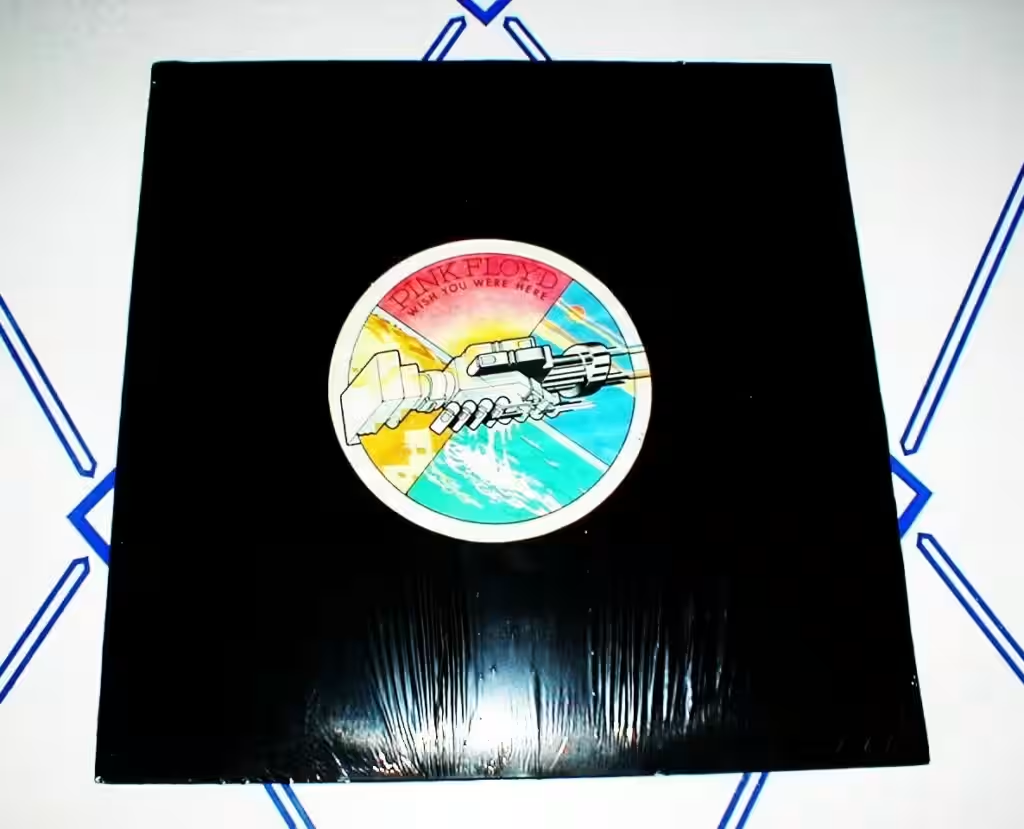
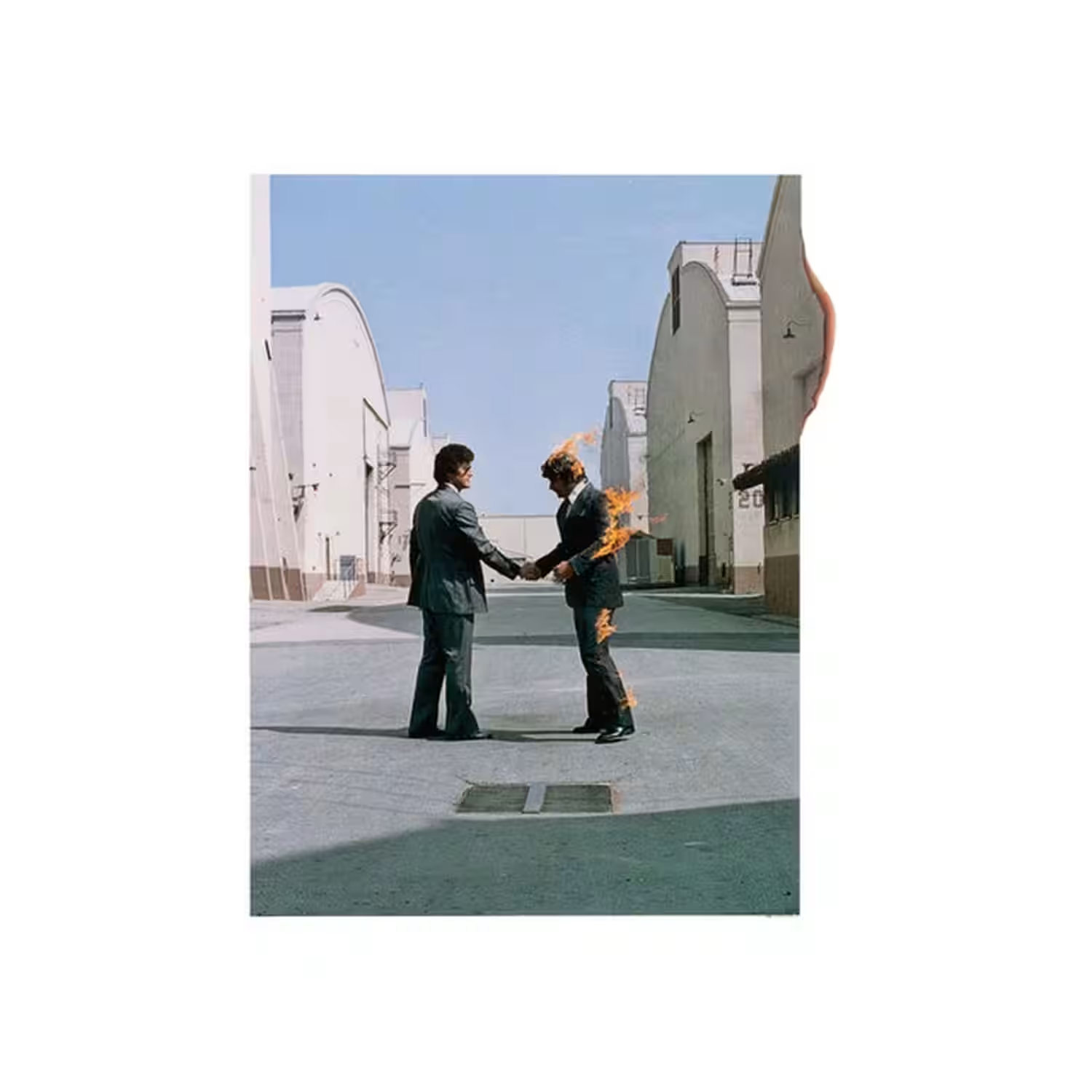
Once the black wrap was removed, buyers were treated to one of rock’s most iconic cover photographs: two businessmen shaking hands in a Hollywood studio lot – and one of them is on fire. . This dramatic image was captured at Warner Bros. Studios in California. Because this was the pre-Photoshop era, it had to be done for real. Hipgnosis hired two stuntmen for the shoot: Ronnie Rondell Jr. (dressed in a business suit over a flame-retardant suit) and Danny Rogers. As they shook hands, Rondell was literally set ablaze. The idea, Powell explained, was a visual pun on the phrase “getting burned” – something artists often say after bad deals in the industry. It also represented how people mask their true feelings for fear of getting burned emotionally. The shoot was risky: Rondell had to stay still while on fire, since a gust of wind could turn him into a “human blowtorch”. They did about 15 takes; on one, a wind shift did singe his moustache, but fortunately no serious harm was done. (Rondell later joked that out of thousands of stunts in his long career, this album cover was the thing everyone remembered!). In the final image used, the two men actually swapped positions from an earlier shot and the photo was mirrored – this was done because in some takes the “wrong” person was on fire, so they simply reversed it in printing. The end result is surreal and unforgettable: a handshake where one party is literally getting burned by the deal.
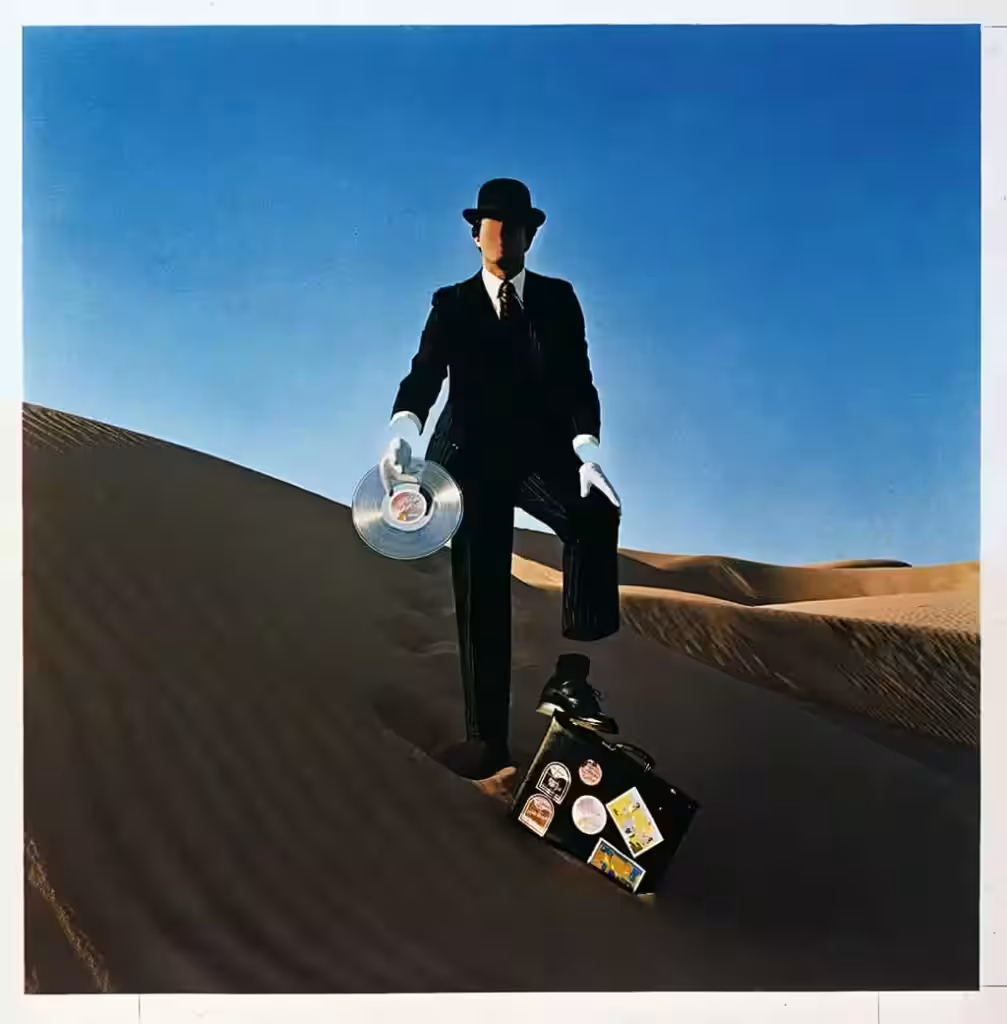
The back cover continued the absence theme in a more subtle way. It shows a “Floyd salesman” – a faceless man in a suit – selling an empty invisible product in the middle of the desert. Shot in the Yuma Desert, the character is an “empty suit” (his face and limbs obscured, as if he has no identity) selling his soul. Inside the gatefold sleeve were yet more dreamlike images: one photograph of a veiled, nude woman in a windswept grove, and another of a diver jumping into a lake without making any splash. (The splash-less diver was photographed at Mono Lake, California – and a postcard of that image was included with early vinyl copies.) Each piece reinforced the feeling of something missing: no splash, no face, no reveal. Thorgerson and Powell essentially turned the album package into an art gallery of absence.
It’s worth noting that the band’s U.S. record company hated the idea of hiding all this gorgeous artwork behind black plastic – they spent good money on cover art only to initially conceal it!. Columbia Records pushed back, but Pink Floyd by this point had full creative control and stood their ground. The concept was too perfect to budge. The band members were thrilled with the final design – when Hipgnosis presented a mockup of the complete package (black wrap and all), Pink Floyd reportedly broke into a spontaneous round of applause. They understood that the visuals of absence, emptiness, and being “burned” complemented the album’s music and lyrics on a profound level.
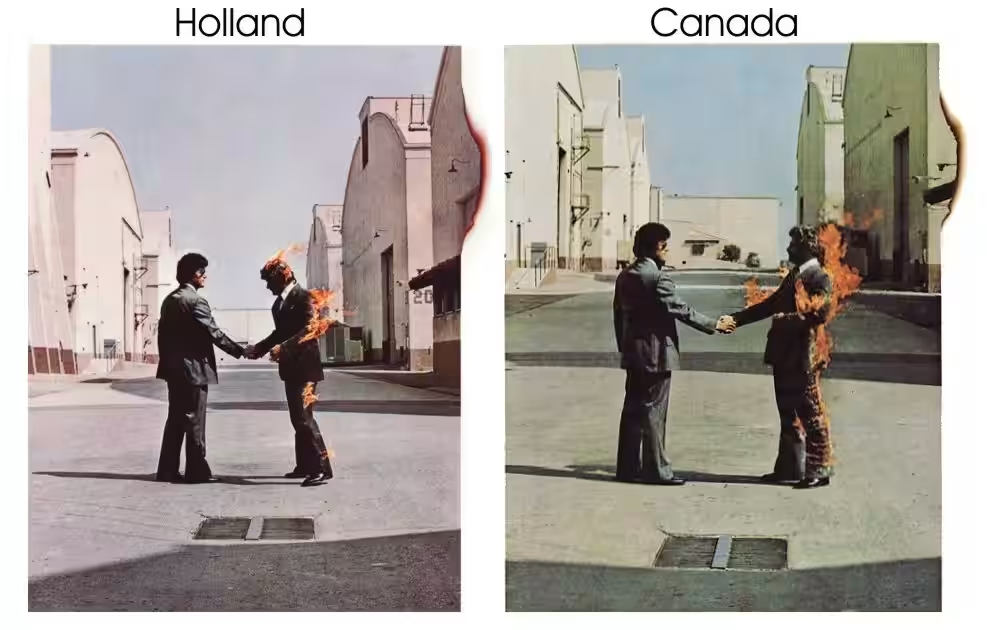
It’s also worth noting that there were many regional variations of the cover, take these two from Holland and Canada.
In the end, the Wish You Were Here album cover became almost as famous as the music itself. It’s frequently cited as one of the great album covers in rock. Storm Thorgerson later reflected that he chose the theme of absence after listening carefully to the album’s lyrics – “the songs were concerned with unfulfilled presence,” he said, more so than just being about Syd Barrett’s illness. That abstract concept gave us tangible imagery: the faceless salesman, the ghostly diver, the veiled woman, and of course the flaming handshake – each a metaphor for the emotional or creative voids Pink Floyd was grappling with. Together, the music and artwork of Wish You Were Here form a cohesive artistic statement. As Aubrey Powell put it, they wanted to “add to the joy” of the album by offering fans multiple images and even a bit of mischief (hiding the cover like a secret gift). Decades later, those visuals remain iconic – a true testament to how well the art suited the album’s themes.
Release and Initial Reception
Wish You Were Here was released in September 1975 to enormous commercial demand. In the UK, it debuted at #3 and hit #1 the following week – fueled by a quarter-million advance orders. In the U.S., the anticipation was even more intense: Columbia Records (Pink Floyd’s new American label) had taken 900,000 advance orders, the largest pre-order in the label’s history at that time. The album quickly reached #1 on the Billboard 200 in its second week, becoming Pink Floyd’s fastest-selling album ever up to that point. Clearly, the success of The Dark Side of the Moon had primed audiences worldwide for the follow-up – this was “the most eagerly anticipated rock album ever released” at the time, as one historian noted.
Critically, however, Wish You Were Here initially received mixed reviews. Some prominent music journalists didn’t immediately recognize the album’s genius. For example, Rolling Stone’s reviewer, Ben Edmonds, was underwhelmed – he accused Pink Floyd of a “lackadaisical demeanor” and said their treatment of the emotional subject matter (Syd Barrett) felt oddly unemotional. Edmonds quipped that the band gave such a matter-of-fact performance “they might as well be singing about Roger Waters’s brother-in-law getting a parking ticket”, concluding that Pink Floyd seemed “devoid of the sincere passion” that some other space-rock acts had. The UK’s Melody Maker was similarly unimpressed, calling the album “unconvincing in its ponderous sincerity” with a “critical lack of imagination in all departments.” These reviewers perhaps expected another Dark Side and were surprised by the more somber, subtle mood of Wish You Were Here.
Not everyone panned it, though. Notably, Robert Christgau of The Village Voice gave the album early praise. He highlighted the music’s “simple and attractive” qualities and the way it achieved “symphonic dignity” that Dark Side had only “simulated”. Christgau would later call Wish You Were Here his personal favorite Pink Floyd album, saying “It has soul… It’s Roger Waters’s lament for Syd”, which moved him even if he didn’t share Waters’s hero-worship of Barrett. In retrospect, drummer Nick Mason felt that a bit of critical disappointment was inevitable given the monumental expectations placed on any follow-up to Dark Side. The hype was so high that even announcing the album’s release date made headlines. With such sky-high anticipation, some critics perhaps expected Wish You Were Here to be instantaneously earth-shattering, and instead they found an album that was more of a grower – requiring a few attentive listens to fully appreciate its emotional depth.
Over time, of course, the critical opinion shifted dramatically. The very elements that some early reviewers found underwhelming – the atmospheric space, the introspective tone – have proven to be strengths that give the album enduring appeal. In the years and decades after 1975, Wish You Were Here has been frequently named one of the greatest albums of all time. For instance, Rolling Stone magazine’s readers and critics have consistently ranked it highly: it appeared on their 500 Greatest Albums of All Time list (peaking at #209 in the 2003 edition), and the magazine also declared it the 4th greatest progressive rock album ever in a 2015 ranking. Other polls and publications echo this reverence – Prog Magazine’s readers voted it a top-ten prog album, Q magazine’s audience placed it among the greatest British albums, and in one German radio survey it was voted the #1 album of all time by listeners.
Importantly, Wish You Were Here is not only loved by fans and critics in hindsight – it’s beloved by the band members themselves. Both David Gilmour and Richard Wright later cited it as their favorite Pink Floyd album. Wright once said, “It’s an album I can listen to for pleasure, and there aren’t many Floyd albums that I can,” emphasizing how special it was even to him. Gilmour agreed, saying he’s “very, very happy” living with Wish You Were Here as a piece of work. Roger Waters, the principal songwriter, has called Wish You Were Here (and Dark Side of the Moon) the band’s “most complete” albums, though he noted that by Wish You Were Here and Animals, the interpersonal dynamic of the band was changing, signaling “the end of the band as it had been before.” In hindsight, one can sense that Wish You Were Here captured Pink Floyd at a crossroads – it was both a peak of collaborative artistry and the start of Waters’ dominance in steering the ship.
Commercially, the album’s success has only grown with time. Wish You Were Here has sold millions upon millions of copies worldwide (estimates above 13 million), and it continues to be a staple of classic rock radio (particularly the timeless title track). The album was certified Gold in the US within weeks of release in 1975, and decades later it reached multi-Platinum status (7x Platinum in the US as of 2025). But perhaps more telling than any award or sales figure is the intangible legacy: Wish You Were Here endures because of its unflinching honesty and emotional resonance. It’s an album that fans don’t just listen to – they feel it and connect with its themes of longing, empathy, and disillusionment. Many would agree that it sounds as poignant today as it did in 1975, proving that Pink Floyd did indeed create an equally momentous chaser to Dark Side, one with its own unique soul.
How Pink Floyd Supported the Album (Touring and Promotion)
Unlike many bands who do a big tour after an album’s release, Pink Floyd took an interesting approach with Wish You Were Here: they hit the road before the album was even out, using live concerts to workshop and introduce the new material. In 1975, Pink Floyd embarked on what’s commonly called the Wish You Were Here Tour (also referred to as the 1975 North American tour, with a closing show in England). This tour ran from April to July 1975 and was explicitly billed as in support of their forthcoming album Wish You Were Here.
During these shows, the band gave audiences an early taste of the album. Notably, they debuted “Have a Cigar” on stage and performed the “Shine On You Crazy Diamond” suite split into two halves – just as it would appear on the album – with the song “Have a Cigar” played in between the two parts. This live arrangement mirrored the album’s sequence and must have been a treat for fans who got a sneak preview of what was to come on vinyl. Interestingly, the other two new songs, “Wish You Were Here” (the title track) and “Welcome to the Machine,” were not performed on that 1975 tour at all. Those tracks, with their more acoustic and studio-layered nature, wouldn’t be played live until 1977’s In the Flesh tour (for the Animals album). So in 1975, even concertgoers had to wait to hear the poignant title song; Pink Floyd focused their live set on the grander, more expansive pieces.
A typical setlist on the Wish You Were Here Tour was a two-part epic. The first set featured new material – not only Shine On (Parts I–V) and “Have a Cigar”, but also early renditions of “Raving and Drooling” and “You’ve Got to Be Crazy” (which as mentioned were shelved for Animals). Essentially, fans in ’75 heard half of Wish You Were Here and a sneak peek of the Animals album to come. The second set of each show was a full performance of the entire Dark Side of the Moon album – a testament to how confident and proud the band was of that opus (and probably a crowd-pleaser, since Dark Side was already a phenomenon). They would often encore with “Echoes,” the classic from 1971. So, these concerts were marathons, showcasing Pink Floyd’s past triumph, present work, and future ideas all in one night. The combination of Dark Side and Wish You Were Here material made the 1975 shows a progressive rock spectacle, complete with the band’s trademark quadraphonic sound system and mind-bending visuals (such as a giant circular screen with animated films, and an elaborate light show).
One particularly famous concert was the Knebworth Festival on July 5, 1975 in England, which turned out to be the final show of the tour. At Knebworth, Pink Floyd headlined a massive outdoor festival and delivered what many consider a legendary performance. An interesting footnote from that day: singer Roy Harper – the same man who provided guest vocals on “Have a Cigar” – was also on the festival’s bill, and he joined Pink Floyd on stage to sing “Have a Cigar” live with them. It must have been a cool moment for fans to see Harper stand in as the vocalist, just as he did on the record. (Behind the scenes, there was a bit of chaos: Harper, known for his mercurial temperament, was frustrated at Knebworth when his stage outfit went missing. In a fit, he actually vandalized one of Pink Floyd’s equipment vans and injured himself, delaying Floyd’s setup! Despite that rockstar drama, the show went on and is remembered fondly.) The Knebworth set was also historically significant because it was the last time Pink Floyd would ever perform “Echoes” and the entire Dark Side of the Moon suite with Roger Waters on bass. After that, the band would move on to new tours and Waters’ eventual departure in the 1980s meant those classic full-album performances became a thing of the past.
Aside from touring, Pink Floyd’s promotion for Wish You Were Here was relatively low-key by today’s standards. The music spoke for itself. The band wasn’t one to do a lot of TV appearances or talk show interviews, especially given their preference for mystique. There were no lead-off music videos in 1975 (though the band did have animated films for some songs that they used in concerts). In fact, they famously didn’t even release any UK singles from the album – Pink Floyd generally treated the album as a complete piece to be experienced as such. Columbia Records did release a single in the U.S.: “Have a Cigar” (backed with “Welcome to the Machine”) came out in late 1975. But the band members themselves were never very interested in the singles market by that point in their career, so there wasn’t a big single-centric push.
The real “support” for Wish You Were Here was the album’s own reputation and the band’s well-earned aura of album-oriented artistry. Word of mouth and critical discussion (even when mixed) drove curious listeners to check it out. By delivering grand concerts where fans could feel the music in a live environment, Pink Floyd reinforced the album’s impact. Their 1975 tour’s strong attendance and positive reception helped cement Wish You Were Here as a success even before many people could drop a needle on the record. And by the time the album was out and topping charts, Pink Floyd had already moved on to resting and conceptualizing their next move (they would take 1976 off from touring to write Animals).
In summary, Pink Floyd supported Wish You Were Here in a way that was very true to who they were: they let the music and the mystique do the talking. Through innovative live shows and minimal press antics, they proved that even without traditional promotion, a powerful album with a solid concept will find its audience. The strategy clearly worked – the album became a smash, and the 1975 tour is remembered as one of the heights of 70s Floyd, with fans still swapping bootlegs of those concerts to this day (indeed, Nick Mason noted that parts of the new Wish You Were Here deluxe set in 2025 were sourced from bootleg recordings of the ’75 tour!).
Singles from the Album
Pink Floyd has never been a typical “singles band,” especially in the 1970s when they were focused on album-length experiences. Wish You Were Here was no exception – in the UK, no singles were released from the album at the time. However, in the United States (and some other markets), the record label did put out a single to satisfy radio demand. The chosen single was “Have a Cigar,” the album’s scathing satire of the music biz. Columbia Records released it in November 1975, pairing it as a double A-side with “Welcome to the Machine” on the B-side.
It might seem ironic that a song mocking record executives (“Oh by the way, which one’s Pink?”) was used to promote the album within the very industry it lampooned – but “Have a Cigar” was arguably the most uptempo and accessible track on Wish You Were Here. It clocks in at a relatively radio-friendly 5 minutes and has a catchy chorus and riff. The single did get some airplay, though it wasn’t a massive chart-topping hit or anything; Pink Floyd’s audience was more inclined to buy the whole album.
Interestingly, “Have a Cigar” features Roy Harper on lead vocals, not Roger Waters or David Gilmour. Neither Waters nor Gilmour felt their own vocal takes fit the song’s snarling tone, so they enlisted their friend Harper (a British folk-rock singer who happened to be recording in the next studio at Abbey Road at the time) to sing it. Harper’s voice added a different flavor, and many casual listeners didn’t even realize it wasn’t one of the band singing. Waters later expressed some regret about giving that vocal away – feeling he could have done it – but the unique collaboration certainly adds to the song’s story. When the single came out, however, it wasn’t heavily advertised that “oh by the way, that’s Roy Harper singing.”
Other songs from Wish You Were Here were not released as singles in the 1970s. The title track “Wish You Were Here” itself, now one of Pink Floyd’s most famous songs, was not originally a single. It did chart years later in certain contexts – for example, a live version recorded by the band in the 1980s was released in 1988 and got some rock radio play, and it’s been covered by numerous artists as singles – but in 1975 the idea of chopping up Pink Floyd’s immersive albums into singles didn’t appeal to the band. The focus was on the album as a whole.
That said, “Wish You Were Here” (the song) quickly became a staple on FM radio and one of Pink Floyd’s signature pieces, even without a single release. Its enduring popularity is evidenced by digital and streaming charts in the modern era (the song racks up huge play counts) and by its use in tribute events. For instance, when Pink Floyd reunited with Roger Waters for the Live 8 concert in 2005, “Wish You Were Here” was one of the few songs they performed – essentially serving as a “single” in spirit for the band’s legacy.
So, in summary: Wish You Were Here generated one notable single at the time – “Have a Cigar” (often heard on classic rock stations, with its funky opening riff and that famous music-business punchline). “Welcome to the Machine” as the B-side meant listeners got a double-dose of the album’s cynical side on that single. Pink Floyd’s reluctance to release more singles underscores how Wish You Were Here was conceived as a cohesive piece; the songs gain power from their context together. It’s a testament to the album’s strength that, without hit singles, it still sold millions and is remembered as a classic. The songs themselves have transcended the need for a 45 rpm release – they live on in full album plays, radio blocks, and streaming playlists enjoyed by generations of listeners seeking the depth that Pink Floyd offered.
Wish You Were Here in TV, Film and Pop Culture
Even though Pink Floyd maintained a certain mystique and didn’t heavily market their songs for soundtracks or commercials (especially not in the 1970s), the music of Wish You Were Here has nonetheless made its way into popular culture over the years. The emotional pull and iconic status of these songs make them attractive choices for filmmakers and showrunners looking to evoke a mood of nostalgia, melancholy, or critique of society.
One of the most memorable uses of “Wish You Were Here” (the song) in film comes from director Richard Linklater’s acclaimed movie Boyhood (2014). In one scene, a college student is strumming the song on guitar, and the main character (a young boy growing up) listens, reflecting on his past and absent father. It’s a poignant moment where the song’s theme of longing for someone resonates deeply. The film explicitly ties the song to the boy’s memories of his dad and childhood home. The gentle acoustic chords of “Wish You Were Here” perfectly underscore the Boyhood scene, emphasizing nostalgia and the ache of missing people – exactly the feelings the song was written about. This scene introduced the track to a new generation of viewers in a heartwarming (and heart-tugging) way.
The title track also featured prominently in the 2016 film War Dogs, a dark comedy about two young arms dealers. Director Todd Phillips used “Wish You Were Here” during a montage sequence – notably one showing the characters reveling on a beach after securing a big contract. The song’s wistful vibe added a layer of irony to the hedonistic images on screen, highlighting the hollowness behind the characters’ apparent triumph. It was an inspired musical choice; the contrast between Pink Floyd’s soulful melody and the chaotic arms-dealing story accentuated the film’s commentary on disillusionment.
Another medium that embraced Pink Floyd’s Wish You Were Here-era material is television. For example, the TV series Person of Interest (a crime drama with science-fiction elements) made powerful use of “Welcome to the Machine.” In the Season 4 finale (episode titled “YHWH”), the show concludes with “Welcome to the Machine” playing as a super-intelligent AI – named “the Machine” – is being shut down and rebooted. The song underscores the scene where the AI communicates with its creator, apologizing for failing him. It’s a chilling and perfect sync: Waters’ lyrics about a dehumanizing system “telling you what to dream” mirror the show’s themes about surveillance and loss of control. The creators of Person of Interest no doubt chose this track for its dystopian, mechanical sound and thematic relevance. Hearing the eerie synths and the line “Welcome my son, welcome to the machine” as a literal machine struggles for survival gave fans goosebumps. This instance shows how Pink Floyd’s critique of the music industry in 1975 (portraying it as a faceless machine) could be reinterpreted decades later to comment on technology and power in a TV thriller.
It’s worth noting Pink Floyd historically has been selective about licensing their music – you’re not going to hear “Have a Cigar” selling you a car or “Shine On You Crazy Diamond” in a bubbly soda commercial. The uses tend to be artistic and carefully chosen, often in films that treat the music with respect. For example, director David Fincher included a snippet of a Wish You Were Here-era track in The Girl with the Dragon Tattoo (2011) – in one scene, the character Lisbeth Salander blasts “Orinoco Flow” by Enya on headphones to drown out her surroundings, but if you listen closely earlier, a muffled Pink Floyd track from this album era is playing in the background, as an Easter egg nod to her eclectic taste.
In summary, Wish You Were Here’s music has slipped into the cultural bloodstream. Whether evoking tears in a coming-of-age film like Boyhood, adding classic rock gravitas to a movie montage, or punctuating a TV drama’s climactic scene about a “Machine”, Pink Floyd’s work from this album continues to find new life long after 1975. It’s a testament to the songs’ emotional power and thematic versatility. Just as the album has grown in stature, its presence in media shows how timeless and broadly relatable its messages are – from personal loss to societal critique.
Five Things You Might Not Know About Wish You Were Here
Even if you’re a big Pink Floyd fan, here are a few intriguing tidbits and behind-the-scenes facts about Wish You Were Here that might surprise you:
- Roy Harper Sings Lead on “Have a Cigar”: That gritty vocal on “Have a Cigar” isn’t Roger Waters or David Gilmour – it’s British folk singer Roy Harper! Harper was recording next door at Abbey Road and stepped in when Waters and Gilmour weren’t satisfied with their own takes. His sarcastic snarl gave the song extra bite. (Waters later half-regretted not singing it himself).
- Stephane Grappelli’s Secret Violin Solo: During the recording sessions, famed jazz violinist Stéphane Grappelli was invited to play on the title track “Wish You Were Here.” Grappelli (then in his 70s) recorded an elegant violin solo for the song. In the final mix, however, his contribution was almost muted – only a barely audible hint of violin remains on the album. For years this was just a rumor, but it was confirmed on later anniversary editions that included the violin take. Imagine: Pink Floyd nearly had a jazz violin feature!
- Wine Glasses as Instruments: The ethereal, humming sound at the start of “Shine On You Crazy Diamond” isn’t a synthesizer – it’s music from wine glasses. The band had experimented with playing tuned wine goblets (rubbing the rims to create tones) as part of an abandoned project using household objects instead of instruments. They scrapped that project, but the wine-glass recordings made it onto the album as the ambient intro to “Shine On”, setting a haunting mood before the synths and guitar kick in.
- Car Radio Effect in “Wish You Were Here”: The album’s title track begins with the sound of a car radio being tuned off-station, which then segues into Gilmour’s famous acoustic riff. That wasn’t created with studio trickery alone – it was literally David Gilmour’s car radio. They recorded Gilmour twisting the dial, catching a snippet of classical music (Tchaikovsky’s Fourth Symphony, in fact) before he starts playing guitar, as if you’re hearing someone find the song on the radio. It’s a wonderfully organic effect that makes the listener feel like they’ve stumbled upon a distant broadcast.
- Sold in Shrink-Wrap to “Obscure” It: In an unprecedented move, the initial LP release of Wish You Were Here was wrapped in opaque black shrink-wrap. This meant the striking cover art (the burning handshake) was hidden from view until you bought and unwrapped it. The idea was to emphasize absence – the package came “absent” of artwork at first, tying into the album’s themes. A stylized sticker of two robotic hands shaking was the only clue on the outside. Columbia Records was nervous, but Pink Floyd insisted on this playful concept. It turned buying the album into a special experience – like unwrapping a present to reveal the art inside.
These little details show how much thought and creativity went into Wish You Were Here. From unique collaborations to experimental sounds and presentation, Pink Floyd weren’t afraid to push boundaries – sometimes in ways only discovered years later by curious listeners. It’s all part of what makes revisiting this album so rewarding.
Stories and Anecdotes from the Wish You Were Here Era
The period surrounding Wish You Were Here (1974–1975) is rich with Pink Floyd lore. Here are a couple of standout stories that capture the band’s state of mind and the album’s zeitgeist:
1. Syd Barrett’s Heartbreaking Visit: The most famous story from this era is undoubtedly Syd Barrett’s unexpected appearance at Abbey Road during the final mixing of the album. As detailed earlier, Syd – Pink Floyd’s estranged founding member – showed up unannounced in June 1975, looking so changed that his old friends didn’t recognize him. Roger Waters was reportedly moved to tears seeing Syd in that condition. The band was stunned; they were literally in the midst of crafting a tribute to Syd (“Shine On You Crazy Diamond” and the title track mourn his absence) when the man himself materialized like a phantom. This surreal convergence of art and reality left a profound impression. Waters even adjusted some lyrics after Syd’s visit to sharpen the sense of loss and “distance” in the songs. For the band, it was as if Syd’s ghost had come to grant them closure – or perhaps to remind them of the human being behind the legend. It’s a bittersweet tale: on one hand, Syd seemed not fully aware of what was happening around him; on the other, his brief presence in the studio gave Wish You Were Here an extra emotional charge that you can still feel in the grooves. The incident also underscores the irony that Syd was physically there with them for a moment, yet mentally and emotionally unreachable – the ultimate embodiment of the album’s theme of absence. After that day, none of the band (save Waters, who spotted Syd in a shop once later) would ever see him again. Syd Barrett passed away in 2006, but Wish You Were Here remains a poignant eulogy written thirty years prior, when the wounds were still fresh.
2. “Which One’s Pink?” – Clueless Execs and Industry Frustrations: Another anecdote that often comes up involves the origin of the joke in “Have a Cigar.” The song’s lyrics string together absurd compliments and questions presumably spoken by record executives – “You’re gonna go far… You’re never gonna die, you’re gonna make it if you try… By the way, which one’s Pink?”. That last question – asking a band literally named Pink Floyd which band member is “Pink” – wasn’t made up out of thin air. It actually happened for real. Sometime in the early ’70s, a clueless industry person (variously reported as an American promoter or record label rep) met the band and casually asked, “Oh, by the way, which one of you is Pink?” The band was flabbergasted – it perfectly epitomized how out-of-touch some business folks were about artists. Roger Waters seized on that real quote as the ultimate satire of how the industry fails to understand the art. Thus, “Have a Cigar” was born, with Roy Harper spitting out lines on behalf of these figurative fat cats. The story behind it would become part of rock folklore – a cautionary tale of Spinal Tap-level obliviousness years before Spinal Tap existed. Next time you hear that line, know that Pink Floyd actually had to explain that “Pink” is not one of them!
3. Roy Harper’s Van-SMASH at Knebworth: We touched on this earlier, but it’s such a rock ‘n’ roll anecdote that it’s worth recounting in full. At the July 1975 Knebworth Festival, Pink Floyd were headlining and folk singer Roy Harper (who sang on “Have a Cigar”) was also on the bill. Harper was set to perform earlier in the day, but just before his set he discovered that his stage outfit (a custom-made silver suit) had disappeared. In a fit of anger – perhaps fueled by substances and nerves – Harper vented his fury on whatever was nearby. Unfortunately for Pink Floyd, what was nearby was one of their equipment vans. Harper smashed the windshield and trashed the van, injuring his hand in the process. This outburst delayed Pink Floyd’s crew from setting up the PA and gear for their own set, causing quite a headache. Eventually, things got sorted, Harper bandaged up, and he actually joined Floyd onstage later to sing “Have a Cigar,” as planned. Nick Mason dryly noted in his memoir that dealing with this sort of chaos was not exactly what they expected from a folk singer friend! It became part of the lore of that festival – a reminder that even amid the refined artistry of Wish You Were Here, the 70s rock lifestyle could intrude in crazy ways.
4. Internal Changes – The Last Truly Collaborative Floyd Album?: Another story (more of an internal band narrative) is that Wish You Were Here marked the end of an era in how Pink Floyd worked together. Nick Mason has pointed out that it was the first Pink Floyd album where he had no writing credits at all. The writing was becoming more dominated by Roger Waters, with the others contributing in a more performance-oriented capacity. During these sessions, the band members weren’t always working in unison – they would come and go from the studio, sometimes leaving Gilmour or Waters to tinker alone. Mason joked that if things got boring, they’d just “go away for the weekend and leave Dave to carry on with the guitar parts”. This was a stark contrast to the Dark Side sessions, where all four were present collaborating most of the time. The distance growing within the band (partly due to personal lives, partly creative differences) mirrored the album’s themes of disconnection. Still, they pulled together to make the album great – but Waters later noted that Wish You Were Here and Animals were where the classic “four musketeers” spirit of Pink Floyd started to fracture. It’s a behind-the-scenes story not evident in the music itself, but knowing it adds a layer of poignancy: even as they sang “we’re just two lost souls swimming in a fishbowl”, the four souls of Pink Floyd were starting to drift apart in how they worked.
Each of these anecdotes – Syd’s visit, the “which one’s Pink” quip, Harper’s antics, the shifting band dynamics – gives a glimpse into the world in which Wish You Were Here was born. They reveal the human side of making such an artful album: the joy, the sorrow, the absurdity, and the change. For fans, these stories are like the bonus tracks on an album – they enrich the listening experience by connecting the music to real moments in the band’s lives.
Aftermath and Legacy
After Wish You Were Here, Pink Floyd’s journey continued, but the road would twist in new ways. The album’s success affirmed that the band could achieve immense commercial triumph without sacrificing artistic integrity. Buoyed by that confidence, Roger Waters took an even stronger lead in shaping Pink Floyd’s next projects. The very themes explored in Wish You Were Here – absence, alienation, critique of the system – laid a conceptual foundation for what came next. In 1977, Pink Floyd released Animals, a dark, satirical album that amped up the cynicism. Using Orwellian animal metaphors (dogs, pigs, sheep), Waters skewered social and political themes. Animals actually repurposed the two leftover songs from 1974 (“Raving and Drooling” became “Sheep,” and “You’ve Got to Be Crazy” became “Dogs”), giving them biting new lyrics. It was a more aggressive follow-up, and one can trace a line from the critique of the music industry on Wish You Were Here to the broader social critique on Animals. Musically, too, the expansive instrumental sections of Wish You Were Here carried over – Animals has long, intense pieces that satisfied the progressive rock appetite of fans.
Then, in 1979, Pink Floyd unveiled The Wall, arguably their most ambitious project. The Wall was a rock opera about isolation and psychological trauma – essentially Roger Waters’ magnum opus on alienation. Nick Mason has noted that the themes Waters was working through on Wish You Were Here acted as a “prelude to the thinking on The Wall”, particularly the feelings of distance between people and the cost of stardom. Indeed, one can view Wish You Were Here (1975), Animals (1977), and The Wall (1979) as a kind of unofficial trilogy where Pink Floyd dug deeper and deeper into the psyche: from missing Syd and hating the biz, to decrying society’s ills, to constructing a metaphorical wall around oneself. Each album got more conceptual and, notably, more dominated by Waters’ personal vision. By the time of The Wall, Richard Wright was briefly fired from the band (he’s only a session player on that album) and tensions were high. The collaborative spirit of Pink Floyd that had peaked with Dark Side and Wish You Were Here was giving way to a more Waters-centric approach.
In the early 1980s, the cracks became irreparable. After one more album (The Final Cut in 1983, which was practically a Waters solo album in all but name), Roger Waters left Pink Floyd in 1985. The split was acrimonious – Waters even tried to declare the band finished, but David Gilmour and Nick Mason pressed on without him. They, along with a returning Richard Wright, released A Momentary Lapse of Reason in 1987 and The Division Bell in 1994 under the Pink Floyd name, proving the band’s enduring popularity even without Waters. Those later albums (and tours) were hugely successful, though creatively quite different from the 70s heyday. Fans often debate which era they prefer, but there’s no doubt that the spirit of camaraderie and experimentation that birthed albums like Wish You Were Here was a special time in Pink Floyd’s history, unlikely to be repeated.
What’s the legacy of Wish You Were Here today? It’s massive. The album is frequently found on “greatest of all time” lists and is cherished by generations who weren’t even born when it came out. Its influence can be heard in the way later artists approach concept albums and heartfelt songwriting. Bands ranging from U2 to Radiohead have cited Pink Floyd as an inspiration for blending atmosphere with personal themes. Wish You Were Here, in particular, demonstrated that rock music could be deeply personal and universally accessible at the same time. It wasn’t about sci-fi or fantasy; it was about human feelings – and that’s one reason it stands out among prog-rock records. The vulnerability in songs like “Wish You Were Here” (the song) showed that even superstar rockers could lay their souls bare, paving the way for more introspective work in a genre that sometimes favored grandiosity over intimacy.
In terms of the band’s story, Wish You Were Here is often seen as the last album where Pink Floyd operated as a near-equal quartet. As mentioned, it’s beloved by both Gilmour and Wright, who saw it as a high point of musical synergy. Waters, too, felt it was “complete.” After this, the power balance shifted. So fans treasure Wish You Were Here not only for its music, but for what it represents: the culmination of the classic Pink Floyd sound forged by four distinct personalities working together before things got too strained.
Through countless reissues, remasters, and anniversary box sets, Wish You Were Here continues to shine. In 2025, a 50th Anniversary Deluxe Edition was released, featuring remastered audio, demos, live tracks from the 1975 tour, and even a new Dolby Atmos mix. Nick Mason, listening back to the album on vinyl for the first time in ages, marveled at the “air around it” and the quality of the recording, crediting the Abbey Road engineers for their meticulous work. He also reflected on how hard the album was to make – “harder work than almost any album we ever did” – but that in the end, “we came out with something that we’re still talking about today.” That really says it all. Decades later, we are still talking about Wish You Were Here, still moved by it, still finding new layers in its sound and meaning.
About the Author